Artery Plaque Reset
 Facebook ad: “GetJacked Cayenne Pepper Softgels - 300mg 12-in-1 Liquid…”
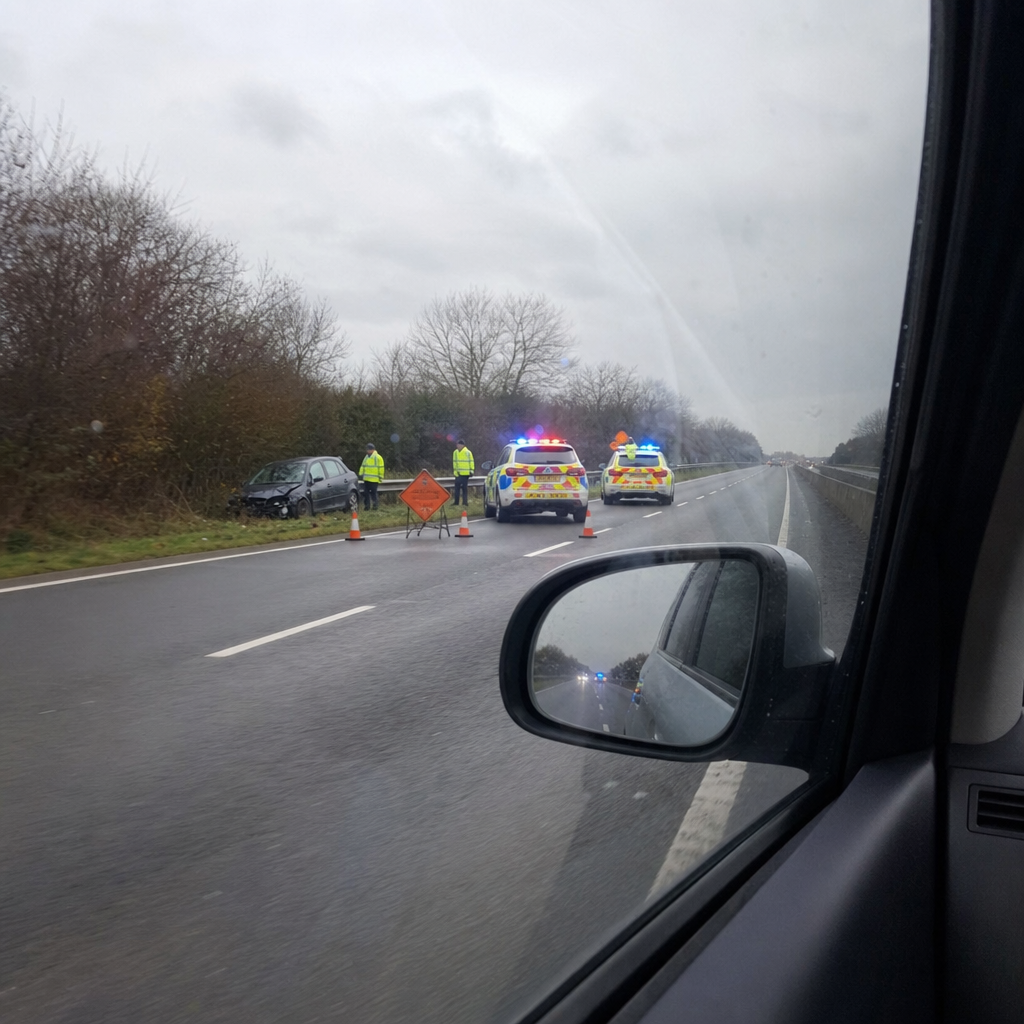
Ran for 5 days, from October 6 to October 11, 2026, the last day Crush saw it.
Run by Artery Plaque Reset on Facebook. Crush is not the advertiser and does not verify its claims. See this ad in Meta's Ad Library(opens in a new tab)
Make your own version of this ad
Crush makes it, launches it in your own Meta ad account, scales the winners and pauses the losers.
About this ad
- Meta Ad Library ID
- 2913976792295090
- Platforms
- Facebook, Instagram, Audience Network and Threads
- Relaunches
- 1
Ad text
A 61-year-old man died in a car crash on the M6 last Wednesday. He wasn't drunk. He wasn't on his phone. His heart stopped behind the wheel on a straight, empty stretch of motorway. A massive cardiac event, the kind that drops you inside four seconds. His hands went slack. His foot slid off the accelerator. The car drifted across the rumble strip and went straight into the central reservation barrier at seventy miles an hour. His 8-year-old granddaughter was in the back seat. She survived. He didn't. I've been a cardiac nurse for 27 years. I was on shift when the paramedics wheeled him through. His appointment card was still in his coat pocket. Two stents, six pills a day. He'd had the second stent put in thirteen months after the first. His cardiologist had cleared him at his last follow-up, the kind of visit a man walks out of believing the blockage has been handled. Handled. Managed. Well under control. He did everything right. The patients that stay with me aren't the ones who ignored their hearts. They're the ones who did everything their cardiologist told them to do. Took the pills every morning with breakfast. Showed up to every follow-up at the clinic. Watched the blockage get opened and the numbers get handled. The ones where I pull the chart and find two stents that went in clean and a medication list that hasn't changed since the last administration. And they're still here. In a hospital bed. Or on that table one floor down. Because something was still working on them that nobody in the chart was naming. If your cardiologist has you on a statin, a beta-blocker, a blood thinner, a nitrate, or put a stent in and told you the blockage is handled, keep reading. If you've got that heaviness in the chest under load, the band that shows up carrying the shopping in and is gone by the time you sit down, the one they tell you is just your age. If you get winded on the stairs by the landing and you've started taking them one at a time. Keep reading. If the afternoon falls out from under you by two o'clock and no amount of coffee touches it. If you grip the rail on stairs you used to take two at a time. If the tightness comes and goes without any pattern and you've stopped mentioning it because nobody seems to know what to do about it. Keep reading. If you keep bogging down under load no matter how many pills get added to the pile, or if you got cleared for moderate activity and the stairs still say otherwise. Keep reading. Because after 27 years, I finally understand why the fix keeps failing the people who trusted it most. I've had three patients in the last eighteen months alone who came into my unit after cardiac events already fixed on paper, stented, cleared, handled. A 68-year-old retired dinner lady. A stent four years earlier, cleared and on the pill stack. Her cardiologist had called her textbook. She collapsed while hanging washing in her back garden on a Tuesday afternoon. Her husband found her twenty minutes later, slumped against the fence post, unable to stand. She couldn't speak properly for six days. Four months on, she still can't hold a pen in her right hand. A 59-year-old plumber. A double bypass five years back. Cleared, and six pills every morning. He was under a kitchen sink on a Saturday morning fitting a new drain pipe. His apprentice came in from the van to find him slumped against the kitchen unit. Massive cardiac event. Dead before the paramedics got through the front door. And the man from Tuesday. His granddaughter was in the back seat. Every time, the same conversation at the bedside. The family looking at me. "But his cardiologist said he was handled. How did this happen?" After years of that conversation, I stopped being able to accept the answer nobody was giving. Coronary disease is dangerous. Nobody disputes that. But if the stent opened the spot and the pills are doing their job and patients are still landing in my unit, still landing on that table one floor down, then opening one spot and lowering one number isn't enough. Something else is happening that nobody is fixing. I carried that question for years. I followed the protocols. I handed out the discharge sheets. I told families the blockage had been handled. Then last September, our annual staff health screening ran the week of the fifteenth. Blood draws and a scan done in the conference room off the main hall. I got mine done between a heparin drip and a line change and didn't think about it again. Eight days later I opened the patient portal on my phone during a break to check the results. A calcium finding where I didn't want one. A narrowing in a vessel. The start of the same thing I'd watched walk through my doors for 27 years. I sat on the plastic chair in the staff room and stared at the screen. I was reading my own scan in the exact unit where I'd watched three patients deteriorate that year already fixed on paper. My GP rang me the following Monday. "Diane, you know the drill. We start a statin. Standard first step. We'll recheck in a few weeks." I said fine. I picked up the prescription from the pharmacy at the end of the road on my way home and put the bottle in the kitchen cupboard. I never took the first pill. Because that bottle was the same one sitting in the chart of every patient I'd watched deteriorate while they looked handled on paper. It would lower a number. I'd already seen what came next. I wasn't going to become one of my own patients. So I started reading. Really reading. Not the laminated handouts on the clinic wall. Not the discharge sheets we hand people on their way out. The actual research. The medical databases at midnight with a cold cup of coffee, one paper leading to the next, following every citation. And what I found in three weeks made 27 years of watching patients decline after their fix suddenly make sense. Here's what they teach you after a stent. You had a spot where the artery narrowed. We go in and open it. You take the statin to work on the cholesterol. The heart gets its blood supply back. Your risk drops. The playbook is straightforward. The stent opens the spot. The statin works the number. Less narrowing means less danger. Risk drops. The first part is true. But it stops short of what's actually happening across the rest of the network, and it stops short of why you still bog down under load after the spot is open. Your arteries aren't rigid pipes. They're living tissue. Every artery in your body is lined with a single-cell-thick layer called the endothelium. It's the most active tissue in your cardiovascular system and it does one critical job. It produces a molecule called nitric oxide. Nitric oxide is the signal. It's what tells the muscle wrapped around your artery to relax. When the lining releases nitric oxide, the vessel opens. Blood flows through with less resistance. The vessel does exactly what it's supposed to do the moment you ask it to work. When the lining is healthy, it makes nitric oxide on demand. Your arteries open when you climb the stairs. They open when you carry the load. Your blood moves where it should the moment your heart calls for it, without anyone having to force anything. Now here's what goes wrong. You've seen what happens to a garden hosepipe left out over winter. The rubber goes stiff. It cracks at the joints. It doesn't flex the way it used to. One year it's supple. Three years later it's rigid and splitting. The same thing happens inside your arteries. Cholesterol, calcium and inflammatory toxins harden in the vessel wall like rock, in the whole network the stent never reached, and that hardened lining slowly stops making the nitric oxide it used to. The cells don't die all at once. They go quiet. Gradually. Silently. Less nitric oxide means the vessel can't open on demand. It stays partly clamped. Partly stiff. The blood your heart is trying to push through meets more resistance than it should. And the first place you feel it is under load, on the stairs, with the bag, in the cold. But it's worse than that. Because that hardened lining doesn't just stop making nitric oxide. It starts feeding the problem. More inflammatory toxins, the same ones that hardened it in the first place. The tissue that was supposed to keep the artery open becomes part of what's closing it. So more cement hardens in the network. More nitric oxide drops away. The vessel stiffens further. The load gets harder to carry. And the harder you push against it, the more the lining goes quiet. A cycle that feeds itself. Year after year. That's why it was just a twinge at 48 and a stent at 58 and a second stent thirteen months after that. That's why the pills keep getting added. That's not ageing. That's cement hardening across a network underneath one spot somebody opened, and the spot is the only thing anyone is looking at. And if that cycle keeps running, one of three things happens. The first is the one everyone knows. The event in the car park. The one under the kitchen sink. The call your daughter gets at six-thirty in the morning from a number she doesn't recognise. The second is quieter. The bypass your neighbour had last spring. The next stent. The six weeks of cardiac rehab where you walk a treadmill wired to a monitor while a nurse watches for something to go wrong. The pill list that grows from two to four to six. The third is the one nobody prepares you for. The slow bogging down that never drops you, just tightens a little more every year until you can't get to the post box without stopping. The recliner you spend more of the day in than you used to. The grandchild you can't lift out of the car seat anymore. The version of the next twenty years you didn't picture for yourself. Three doors. The cycle picks one. Now here's why the things you take every morning aren't stopping any of it. Your statin does one job. It goes into the liver and slows the cholesterol your body makes, which over years can calm what's building. Less new buildup, a number your cardiologist can show you, a box ticked. Your cardiologist says good. The box gets ticked. But here's what none of it does. It doesn't reach the network the stent never touched. The lining across the rest of your arteries, the tissue that's gone quiet, the cement the stent was never built to reach, the statin leaves exactly as hard as it found it. The stent propped open one spot from the inside. Neither one ever flips the switch the lining is supposed to use on its own. It's like turning the mains pressure down while the pipes underneath are still corroding. The gauge on the boiler looks better. The pipes are still falling apart. And it doesn't just leave the rest alone. That ache in your legs, the one you feel on the stairs, the one they tell you is just the statin or just getting older. When the muscle isn't getting the blood it's asking for, it complains. It doesn't stop. It drags at you. For some people it's a dull background thing. For others it's the reason they gave up walking the dog and told themselves it was the weather. The breathlessness on the landing. The fatigue that's bone-deep by mid-afternoon. The tightness that drifts in and out. The liver enzymes your cardiologist has to check every year because the statin itself puts strain on the organ it runs through. Those aren't random. Those aren't ageing. That's the gap a fix leaves when it opens one spot and never touches the rest. It opened one spot. It added to the pile you swallow every morning. It never touched the cement. I want to be honest with you. I didn't accept any of this the first time I read it. Twenty-seven years of handing families a discharge sheet that said the blockage was handled doesn't turn around in an afternoon. So before I looked anywhere unusual, I did what any nurse would do first. I looked at the things already sitting on the shelf. If there was a legitimate one, I wanted to find it. Cayenne capsules were the first place I looked, because they're the ones everyone tries. The kind you grab at the health food shop, "cayenne" or "capsaicin" printed on the front in big letters. The active ingredient they're selling is capsaicin, the heat in the pepper. It's real, and there's real science behind what it does to a blood vessel. The problem is a dry capsule of ground cayenne never gets where it needs to go. It sits in the stomach and burns. It's broken up by stomach acid long before it reaches a single artery. And even the fraction that gets through doesn't arrive at the vessel wall in any concentration that matters. You're swallowing a stomachache in a pill. That's it. Citrus bergamot was the second place I looked. It has a modest effect on a cholesterol number, and some of the data shows a small change. But it works on what's floating in the blood, not on the lining of the vessel itself. It doesn't flip the switch. It doesn't open anything under load. One piece of a bigger problem. CoQ10 was the one I understood the appeal of. It's involved in how your cells make energy, and there's decent evidence it helps some people on statins feel a little better. But it doesn't open a stiff vessel in any way that matters, and it doesn't touch the lining's on-demand signal. Another piece. Not the one that counts. Fish oil has real anti-inflammatory activity. But it works everywhere at once. It doesn't cross into the vessel wall and it doesn't bring back the nitric oxide. It does something somewhere else while the network keeps hardening. Every one of them worked on something in the body. Not one of them worked on the wall. That was the blind spot. That was the pattern I'd been watching for 27 years. The answer came from a direction I didn't expect. It came from a patient. A man I'll call Mr. Hughes. Sixty-four years old. He'd had a stent two years earlier, then a second one. Then the full pill stack on top. Two procedures and six pills a day, and he still couldn't carry the shopping up his own front steps without stopping. His cardiologist had been seeing him at his regular follow-up. The man was carrying things up the front steps again. He was walking the dog again, getting through the day without the ceiling he'd lived under for two years. His cardiologist hadn't changed a thing on his chart and hadn't seen a man turn around like that without a new procedure or a new drug. He asked him what he'd changed. He told him his wife had started him on a cayenne supplement about five months earlier. Not a regular cayenne capsule. A specific kind. A liquid softgel. His wife had come across it after reading about a small company that suspended real cayenne in a liquid softgel so it reaches the bloodstream instead of sitting in the stomach, the way the pepper has been used to move blood for thousands of years before the supplement aisle started cutting corners. His cardiologist wrote it down. Then he mentioned it to me on his way off the ward because he knew I'd been asking questions. I wrote it down too. That night at my kitchen table I opened my laptop and started pulling papers. What I found wasn't wellness blogs. It was vascular research on capsaicin and a receptor on the artery wall. Work on how the pepper's heat makes a blood vessel open. Published studies in peer-reviewed journals. The kind of literature you cite when a consultant asks you to defend a claim. Within a couple of weeks I had a stack of them. And by the end of it, I understood something I hadn't understood in 27 years of walking patients through discharge. The fix wasn't the only thing my patients had been counting on. And the thing that could have closed the gap it left had been sitting in published research for decades, kept alive by a handful of researchers while everyone else kept opening spots and writing prescriptions. Here's the mechanism. I want to walk you through this carefully, because it's the part that took me the longest to accept, and then the part I couldn't stop thinking about once I did. Capsaicin, the heat in cayenne, lands on a receptor on the artery wall called TRPV1. When it does, the lining right there releases its own nitric oxide, the exact signal that opens the vessel. But it only works if the capsaicin actually reaches the wall. A dry pill of ground pepper never does. A liquid softgel is everything a dry capsule isn't. It doesn't sit in the stomach. It doesn't burn and stall. It enters the bloodstream directly. It reaches the wall where the trouble is. And once it's at the wall it does something no stent and no statin on the market can do. It flips the switch. Vascular researchers studying capsaicin found that it activates the TRPV1 receptor on the lining of the artery, and the vessel answers by releasing the nitric oxide that opens it. The pepper doesn't force anything, it asks the wall to do the one thing it was built to do. The vessel relaxes. It opens. The blood moves through it the way it's supposed to the moment the heart calls for it. And it works in people already stented, already on the pills, because it reaches the network the stent never touched and flips the switch the pills never did. That heat has a history. People have grown and eaten chilli peppers for six thousand years. Thirty thousand fresh cayenne peppers go into a single serving of what I'm about to tell you about. That's not a marginal supplement effect. That's a mechanism the body already knows how to answer. But the history wasn't the part that stopped me. This was. Capsaicin flips TRPV1, and the wall releases the nitric oxide it was supposed to make on its own. Read that again. The lining that went quiet across the network the stent never reached. The switch it was built to use and stopped using. Capsaicin flips it, and the nitric oxide comes back on demand, right there on the wall, the moment the load calls for it. And it doesn't stop at the switch. Cold-processed beetroot holds open what the capsaicin opened. Less time clamped means more blood getting through. More blood getting through means the load gets easier to carry. And an easier load means you stop living under the ceiling. Not forcing the vessel open by propping one spot from the inside. Asking the wall to open the way it was built to, across the whole network. And here's the part that made me close my laptop and sit with it. Capsaicin works on the wall through TRPV1. It has nothing to do with the cholesterol the statin chases. Nothing to do with the one spot the stent propped open. Nothing to do with any of the pathways the fix was already using. Which means everything you're already doing stays untouched. Your stent keeps holding its spot. Your statin keeps working its number. Your pills keep doing their jobs. Nothing you depend on gets undone. Something that reaches the network the fix never did. Without undoing a single thing your cardiologist put in place. Without going through any of the pathways the procedures and the pills are already using. I sat at my kitchen table long after midnight and I thought about the man from Tuesday. About his granddaughter in the back seat. About the dinner lady who can't hold a pen. About the plumber whose apprentice found him on the kitchen floor. Their fix had opened a spot and lowered a number. It had left them with aching legs and breathlessness on the landing and a ceiling nobody could explain. It had never touched the cement. There was something that could have reached it. Nobody told them. By the end of that reading, I understood something I hadn't started out looking for. The mechanism itself was one thing. What the research also made clear was that almost no cayenne supplement actually gets the capsaicin where it has to go. Because capsaicin only works if it reaches the wall. A dry capsule of ground pepper never makes the trip. It sits in the stomach and burns. That's most of what's on the shelf, pressed powder rushed into a capsule because it's cheap. The form that the science was built on is a liquid that enters the bloodstream. Dry powder isn't enough. The delivery is wrong. The capsaicin that actually reaches the wall is a fraction of what the label implies. And most brands don't even think about delivery, they measure milligrams of powder, which is a weight on a shelf, not a dose that ever reaches an artery. They're measuring the wrong thing entirely. For a cayenne supplement to actually get capsaicin into your bloodstream and onto the wall at a level that matters, three things have to be true. If any one of them is missing, you're swallowing pepper dust and a placebo effect. The first is the form. The cayenne has to be in a liquid softgel that enters the bloodstream, not a dry powder pressed into a capsule. Not ground. Not pressed. The delivery is the whole thing and there's no shortcut around it. Get the form wrong and you've got the right pepper on the label and none of it reaching a single artery. The second is real pepper, not filler. The cayenne has to come from whole peppers, concentrated, the heat that does the work actually in there, not a scoop of cheap ground spice bulked out with flour. Capsaicin is what flips the switch. If the potency isn't real, you have no way of knowing whether there's a working dose in the softgel or a trace left over from a cheap fill. The third is the rest of the formula. The capsaicin flips the switch, and cold-processed beetroot holds open what it opened. A softgel with a pinch of pepper and nothing to hold the effect is not the same thing as 300 milligrams of cayenne from thirty thousand fresh peppers in a full botanical formula. The formula has to back the mechanism. Three things. All three have to be true. If any one is missing, you've got a bag of pepper-scented softgels and no reason to expect the stairs to get any easier. I had the name Mr. Hughes's wife had mentioned written on the same notepad I'd been using for my research. GetJacked. I went to the website before I ordered. I read every page. Real cayenne from thirty thousand fresh peppers. Three hundred milligrams a serving, suspended in liquid softgels that enter the bloodstream instead of sitting in the stomach. A 12-in-1 botanical formula with cold-processed beetroot to hold open what the capsaicin opens. Two hundred and forty softgels to a bag, three a morning. Printed on the bag, not buried in a vague "proprietary blend." The form the science was built on, not pepper dust in a pressed pill. I checked every one. All three passed. I ordered two bags that evening. I kept a plain notebook by the coffee maker that same week, not a monitor and not a mood diary, a record of what I could actually do, the flights before I stopped and the load I could carry in from the car. I've been a nurse long enough to know my standard is the stairs, not a feeling. When the bag arrived I took three softgels every morning with my coffee, no burn, no pepper taste, no aftertaste, nothing, wrote down what I could do each day, and told myself I'd give it the full 120 days before I decided anything. The first three weeks, nothing I could point to. The wall doesn't open in a fortnight. The network takes time to answer. Week three, the sleep changed. For a couple of years I'd been waking between three and four in the morning, that bolt-upright alertness that comes from a heart that never quite settles. The kind I'd stopped mentioning to my husband because there was nothing to say about it. I started sleeping through to my alarm. It happened enough nights running that I stopped waiting for it to come back. Week five, the afternoon wall was gone. For a couple of years I'd been hitting a fog around two o'clock that no amount of coffee could shift. I'd catch myself losing the thread of handover or forgetting what I'd walked into the stock room for. I started making it through twelve-hour shifts without either. At week eight I carried two full supply boxes up to the third floor. I didn't stop on the landing. Something I hadn't done since the scan came back. In eight weeks. No statin. Nothing else changed. I sat with the notebook at my kitchen table for a long time. I didn't tell anyone at first. A stack of supply boxes isn't a paper you can publish. I wanted to see if it held before I said anything. It held. Week twelve, I was carrying the load up without thinking about it. The first person I told was Donna, another nurse on our unit. Sixty-two, a stent six years back that blocked up and got redone, on the pill stack ever since, so wiped by the end of a shift that she'd sit in the stock room the last hour with her feet up and let the ward run without her. I told her what I'd been doing. She talked to her cardiologist and ordered a bag that night. Twelve weeks in, her cardiologist ran her full workup and kept every medication exactly where it was. She was finishing her shifts on the ward again. Back carrying, back moving, no stock-room hour for the first time in years. The next person I told was my dad. Seventy-four, four years out from a double bypass, six pills every morning, so grey by the time he'd walked in from the car that he'd stopped coming to Sunday dinner because the front steps did him in. I called his cardiologist first, one of the ones willing to look at what a patient brings him, and got his sign-off to try it alongside the six pills, not instead of them. Six weeks in, my dad called me on a Wednesday morning. The colour was back. He said he'd walked in from the car and up the front steps and didn't have to stand in the doorway to get his breath. He came to Sunday dinner that weekend. After that I stopped keeping it to myself. There's a man I'll call Mr. Boyd who'd been a patient of mine two years earlier after a small heart attack that kept him on our unit for five days. Sixty-seven, retired long-haul lorry driver. He'd had a stent and been on the pill stack since the event, and the last time I'd run into him at his outpatient follow-up he was telling me he still couldn't get a bag of feed up onto his tailgate without stopping halfway. When he came back last spring I told him what I'd been doing. He asked me two questions, wrote the name down, and ordered a bag from the hospital car park before he drove home. Twelve weeks later he called the unit asking if I was on shift. He'd just come from his cardiologist. He'd put a twenty-five-kilo bag of feed on the tailgate that morning and not had to stop. The first time he'd done it since the stent. At month four I brought my notebook and my dad's story to my own doctor. She read it. She read it again. She was quiet for a bit. Then she asked me the question I'd been waiting for her to ask. "Diane. Are you still not on the statin?" "No." "And this is what you've been doing instead." "Yes." She didn't push the prescription. She asked me to send her the papers I'd read. I sent her seven of them that evening. She wrote back the next morning saying two of them had genuinely surprised her and asking me to come back in three months. I walked out of that office and sat in my car in the car park for a while. I thought about the man from Tuesday. About his granddaughter in the back seat. About the dinner lady who can't hold a pen in her right hand. About the plumber who died on a kitchen floor before the paramedics got through the front door. Their fix had opened a spot and lowered a number. It had left them with aching legs, breathlessness, and a ceiling nobody could explain. It had never touched the cement. The one thing that could have reached the network the stent missed, the mechanism the studies had been sitting on for decades, had been published in peer-reviewed journals the whole time. Nobody had told them. I'd been on the unit when they came in. I'd told their families that everything possible had been done. Everything possible except the one thing nobody knew to name. That was six months ago. At month eight I'm still carrying the boxes up all three flights. Still off the statin. Nothing else in my life changed. Donna is finishing full shifts and hasn't touched the stock-room chair in five months, still on everything her cardiologist gives her. My dad has made every Sunday dinner since, still on all six pills at seventy-four, and he walks in from the car with his colour now. Mr. Boyd has been getting the feed onto his tailgate for six months and just started walking his grandchildren to school in the mornings. I want to say this directly to you, if you've read this far. The stent you had and the pills you take every morning are each doing one job. The stent is holding one spot open and the pills are working the numbers they were built to work. They are not reaching the network the stent never touched. They are not bringing back the nitric oxide your lining is supposed to make on demand. They are not doing anything about the cement that's been hardening across your arteries year after year. Meanwhile the fix leaves you with legs that ache on the stairs. Breathlessness on the landing. Fatigue that's bone-deep by mid-afternoon. A ceiling under load that nobody can explain. Those aren't random. Those aren't the price of getting older. That's the gap a fix leaves when it opens one spot and never touches the rest. Capsaicin reaches what the stent and the statin can't. It lands on the wall through TRPV1, the lining releases its own nitric oxide, and it does it without going through any of the pathways the fix is already using. The stent keeps its spot. The pills keep their jobs. Nothing gets undone. The network starts answering under load again. GetJacked is the only one I found that gets real cayenne where it has to go, in the form the science was built on. Real pepper from thirty thousand fresh cayennes, 300 milligrams a serving. Suspended in liquid softgels that enter the bloodstream, not pressed into a dry capsule that sits in the stomach, printed on the bag, not estimated. A 12-in-1 botanical formula with cold-processed beetroot to hold the effect, three softgels with your coffee in the morning. They're running a buy-one-get-one-free offer right now, so your second bag comes free with your first. The same formula, the same bag, the same thing I put in my own coffee every morning. They back it with a 120-day money-back guarantee tied to real results. Order it. Take it as directed. Give it the full 120 days and watch what comes back under load. If nothing changes, send the bag back, empty or full, and every penny comes back with it. A company that will bet its own money on your stairs is a company that knows what its product does. It's not on Amazon. It's not at Holland & Barrett. It's not at any health food shop or chemist. GetJacked controls the quality end to end, and they ship through one website, the link below. Let me tell you what I've watched happen in the last eight months. Me: from stopping on every landing to carrying two full boxes up three flights. No statin. Donna: back on full shifts, no stock-room hour, still on everything her cardiologist gives her, for the first time in years. My dad: back at Sunday dinner, up the front steps without stopping in the doorway, still on all six pills at seventy-four. Mr. Boyd: the twenty-five-kilo feed bag up on the tailgate again, first time since the stent, and walking his grandchildren to school in the mornings. Four people I know personally. Four things I watched come back that had been gone. All four turned in the same direction inside twelve weeks. I need to be clear about one thing before you go any further. I am not telling you to stop your statin, skip a pill, or walk away from anything your cardiologist put in place. That decision is between you and your cardiologist. What I am telling you is that the fix opened a spot and worked a number the disease doesn't live in, and there is something that reaches where the fix cannot. My dad added it next to his six pills and his cardiologist watched him turn around. Donna did the same. Mr. Boyd did the same. I never started the statin because after 120 days of watching what came back I decided I didn't need it, and my doctor agreed. Your path is yours. Bring it to your cardiologist and let your cardiologist decide. If you are the person who got fixed and still can't make the stairs, please try it. Give it the 120 days. Watch what comes back for yourself. If it's your husband, your dad, your brother, your wife, please send them this. That's how this moves. One person telling one other person that there was something the stent and the prescription pad were never going to mention. I have watched too many people get fixed and bog down anyway in a direction I could do nothing about. I am not staying quiet about this one. https://get-jacked.co/products/cayenne-pepper-softgels Diane Fletcher, RN Cardiac Care Unit, 27 years --- P.S. Don't give up on this early. The first two to three weeks are going to look like nothing. The network answers slowly, the lining comes back on demand at the level of the cell long before it shows up on a flight of stairs, and arterial tissue is some of the slowest to turn around in the body. What GetJacked is doing in those first weeks is happening below the level you can feel. The symptoms turn first, usually somewhere between weeks three and six, sleep, energy, the fog lifting, the legs easing. The load comes back next, most of the time between week eight and week twelve, the stairs, the bag, the walk you'd given up. If you order this and don't feel anything by week two and send the bag back, you're sending it back the moment right before the mechanism was about to show up. Give it the full 120 days. That's exactly what the guarantee covers. https://get-jacked.co/products/cayenne-pepper-softgels P.P.S. If your cardiologist already called you handled, please don't dismiss this. The man from Tuesday had two stents and six pills a day. His cardiologist had called him handled. The dinner lady had her stent and her clean follow-up. The plumber had a double bypass behind him. These were the patients whose charts came back with the box ticked. The cement was hardening across the network the whole time, underneath the one spot somebody opened. If you've been cleared and your pill list keeps growing anyway, if your legs ache on the stairs, if the breath won't come on the landing, if the fatigue is worse than it should be, if you wake at three, the clean follow-up is not the same thing as the disease in your arteries. It never was. That's the entire point of this. P.P.P.S. Two more nurses on our unit started after seeing Donna back on the ward. One is five weeks in and her afternoon fog is gone. The other is on week ten and just walked the whole unit twice without her chest tightening, the first time since her own diagnosis. She stopped me by the drugs trolley last Wednesday and asked me, quietly, why nobody in her cardiology rotation had ever told her about any of this. I didn't have a good answer. I still don't. P.P.P.P.S. If your dad braces a hand on the tailgate and waits before he lifts. If your husband has stopped taking the stairs. If his pill list keeps growing and he keeps bogging down anyway. Please. Show them this. You don't have to argue with them. You don't have to convince them. My dad took it because I asked him to. Mr. Boyd took it because I told him what I'd seen. That's all it takes. One person in the family who knows what the fix never reached, and one bag sitting next to the coffee maker in the morning.
Where the ad sends people
get-jacked.co
GetJacked Cayenne Pepper Softgels - 300mg 12-in-1 Liquid Formula
Everyday support for healthy circulation, blood pressure, and heart health.
Learn more: get-jacked.co(opens in a new tab)