Jessica Bennett
 Facebook ad: “Feel Like Yourself Again”

Running for 22 days since October 9, 2026. Crush last saw it on October 31, 2026.
Run by Jessica Bennett on Facebook. Crush is not the advertiser and does not verify its claims. See this ad in Meta's Ad Library(opens in a new tab)
Make your own version of this ad
Crush makes it, launches it in your own Meta ad account, scales the winners and pauses the losers.
About this ad
- Meta Ad Library ID
- 29488059524131115
- Platforms
- Facebook, Instagram, Audience Network, WhatsApp and Threads
- Relaunches
- 0
Ad text
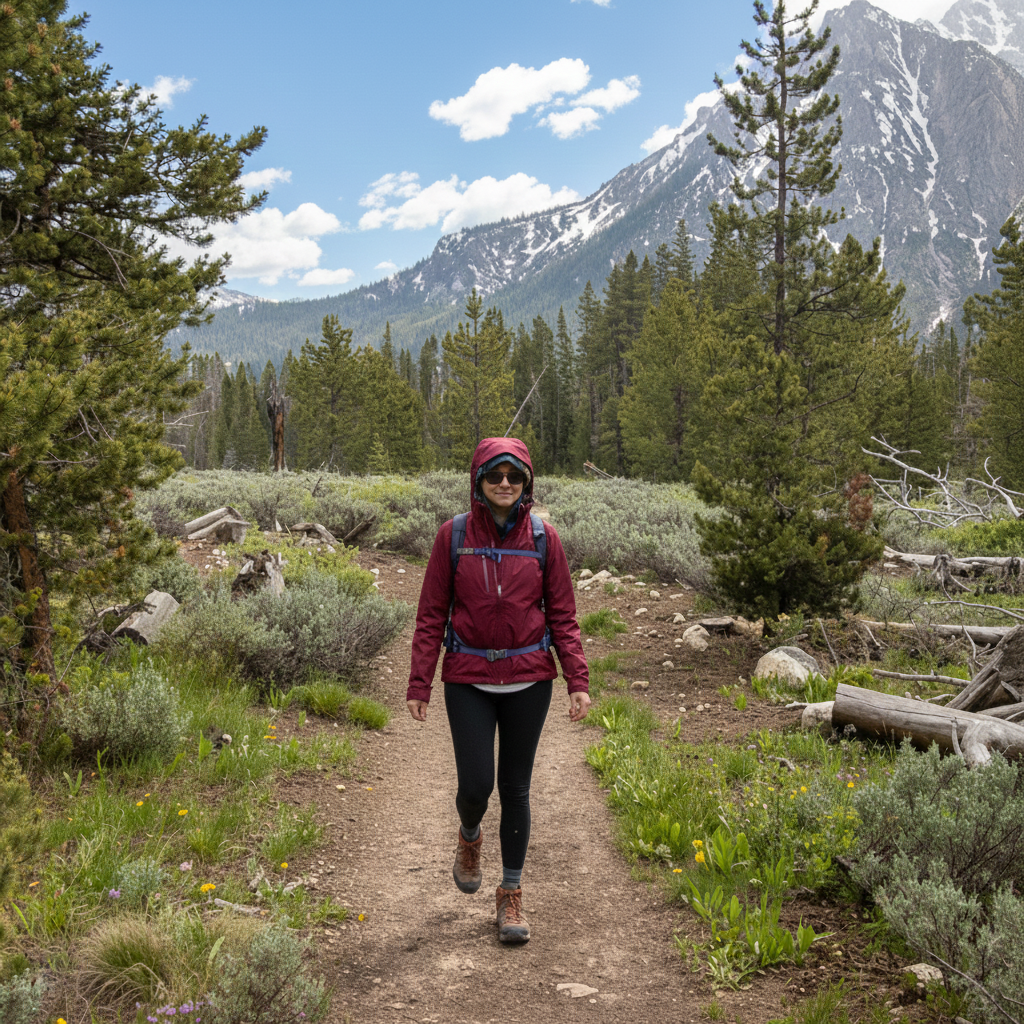
Bette was wearing shorts at the family reunion last June and I almost said something about it. Not because anything was wrong with that. Because for the last 4 or 5 years, Bette had been a cover-up person. Linen pants in July. Cardigans in August. A dark cardigan buttoned over everything, even at outdoor events, even when the rest of us were fanning ourselves with paper plates. I'd made a mental note of it without saying anything, because that's what you do when you watch a woman you love quietly shrink into her own clothes. She was not shrinking at this reunion. She had shorts on and sandals and she was carrying a deviled egg tray across my Aunt Patsy's backyard with both hands and talking to my Uncle Dale and laughing. Not politely laughing. Actually laughing, with her head tipping back the way she used to in our twenties, like she'd forgotten to manage herself. I was standing at the cooler with a cup of sweet tea and I just stopped. I watched her for about 10 minutes before I trusted what I was seeing. My name is Jessica Bennet. I'm 51 years old. I teach 7th grade art at a middle school in Springfield, Missouri. I have been teaching for 23 years, which means I have spent 23 years surrounded by 12 and 13-year-olds who are at the exact worst moment of their own bodies and I have loved them anyway. I have a husband named Greg who manages the flooring department at a home improvement store. I have 2 kids who are mostly grown and occasionally need money. I have a house on a street where everybody waves from their driveway. I have a good life. And I also have the last 3 years, which have been a different kind of thing. The fatigue came first. Not tired the way you're tired after a hard week. Tired in a way that doesn't have a specific cause and doesn't fully lift after a full night's sleep. I started going to bed at 9:30, which is something I'd never done before. I'd fall asleep easily and then wake up at 4:22 AM and lie there for an hour, wide awake for no reason, with my heart beating slightly too fast. Then the weight settled in around my middle. Not a lot. But enough. And it had never done that before. I'd been the same size, more or less, for 20 years. Then I wasn't. And nothing I did moved it. I cut out the desserts I was already barely eating. I started walking 4 mornings a week. The weight looked at all of that and didn't move. Then the fog. This is the one that scared me most, because teaching requires your whole brain. I'd be in the middle of explaining something to a student, a technique I'd explained 200 times, and I'd lose the thread. Just briefly. Just long enough to notice. I started keeping more notes. I started writing things on my hand. Greg noticed something was different but he didn't know what to say about it. He's not a man who volunteers conversations about feelings. He'd ask if I was okay, I'd say I was fine, and we'd both move on. I wasn't lying, exactly. I was fine. Nothing was catastrophically wrong. I was just operating at about 80% of what I'd been, and the 20% I was missing had quietly taken a lot of things with it. My OB-GYN said it was perimenopause. She said it at my appointment like she was stating the weather. Perimenopause. Here's what's happening hormonally. Here's what to expect over the next few years. Exercise, sleep, minimize stress. Come back in a year. I drove home. I did not minimize stress. Stress is not a thing you can minimize when you teach 130 seventh graders every day and come home to a house that still runs on your organizational systems. But I added the walks and I cut the sugar and I tried to be in bed by 10 and nothing changed enough to matter. I was 3 years into that when I saw Bette at the reunion. Bette is my first cousin on my mother's side. She's 55. We grew up 40 minutes apart and were close until life did what life does and made us annual reunion people instead of monthly phone call people. She lives in Columbia now with her second husband, Tom. We see each other at Thanksgiving and at Patsy's summer reunion and sometimes Christmas, if schedules allow. I'd noticed her changing over the last few years the same way I'd been changing. The cardigan over everything. Moving a little carefully. A kind of flatness behind the eyes that I recognized because I felt it myself. The kind of flatness that isn't sadness exactly, just less brightness than there used to be. I had not seen her since Thanksgiving. So when she walked into Patsy's backyard last June in shorts and sandals carrying deviled eggs and actually laughing, something in me went very still. After the food was eaten and the paper plates were in the trash and the kids had migrated to the garage and most of the uncles were watching something on TV inside, I followed Bette out to her car. It was dusk. Her trunk was open and she was loading a casserole dish she'd brought. The fireflies were coming up from the grass and the sky was that pale orange that makes everything in Missouri look briefly beautiful. I said, "Bette. What happened to you?" She stopped what she was doing and looked at me. "What do you mean?" I said, "You know what I mean." She set the casserole dish down and leaned against the car and crossed her arms. Not defensive. More like settling in, like she'd been waiting for someone to ask. She said, "You want the long version or the short version?" I said, "I've got nowhere to be." It started at her doctor's appointment in January, she told me. Her OB-GYN, a woman she'd seen for 11 years, said something at the end of the visit that surprised her. Bette had been describing the same things I'd been describing to my own doctor. The fatigue. The weight around the middle. The sleep that didn't restore anything. The fog. Her doctor had said everything Bette expected her to say about the hormonal picture. And then she'd said something extra. She said, "There's a piece of this that we don't talk about enough. The hormonal changes are real. But they're happening inside a body that's also carrying years of accumulated oxidative stress. And those 2 things are not separate problems." Bette said she'd asked her to explain what she meant. Her doctor had explained it like this. Estrogen, among its other roles, is a natural antioxidant. It helps protect cells from oxidative damage. So as estrogen declines during the hormonal shift of midlife, the body loses some of that protection. At the same time, years of ordinary life, processed food, stress, and just the wear of existing, have been building up oxidative stress in cells and tissues. When estrogen's protection starts to ease off, that accumulated oxidative load becomes more of a problem. The body is suddenly handling more oxidative damage with fewer resources to manage it. And that oxidative damage doesn't stay in one place. It affects how well your cells respond to insulin. Insulin resistance is one of the most consistent findings in women going through perimenopause, and oxidative stress is a direct driver of it. When your cells become less sensitive to insulin, the blood sugar management that used to happen without effort starts requiring more effort. More insulin in circulation. More metabolic drag. And that shows up as the weight that won't move, the energy that doesn't come back, the 2 AM wakeup that doesn't have a name. It also affects cortisol. There's an enzyme in your body called 11β-HSD1 that's involved in how your body processes cortisol at the cellular level. When oxidative stress is high, that enzyme gets more active. Locally elevated cortisol is a significant driver of abdominal weight gain, disrupted sleep, and the kind of low-grade anxiety that doesn't have a specific cause but just sits in your chest. Bette said her doctor told her that some of her patients had been researching pomegranate peel extract specifically for this upstream problem. Not as a hormone treatment. Not as something that changes the fundamental hormonal picture of perimenopause. But as a source of compounds that have been studied for their role in supporting the antioxidant pathways and the metabolic pathways that oxidative stress is wearing down. Bette looked it up that night. She found a specific compound in pomegranate peel called punicalagins. They're what make pomegranate peel different from any other fruit and from most pomegranate products on the market. They're concentrated in the peel, not the juice. And they've been studied in the context of insulin resistance specifically in women with hormonal imbalances, with a large, careful clinical trial showing improvements in insulin sensitivity, metabolic markers, and body composition. She also found the cortisol enzyme connection. The same 11β-HSD1 enzyme her doctor had mentioned appears to be influenced by pomegranate compounds. And in a study that looked at both men and women consuming pomegranate, mood and anxiety scores improved significantly across the board. Not dramatically. Not overnight. But in the direction of feeling more like themselves. Bette said, "I know how that sounds." I said, "It sounds like you've been doing a lot of reading." She said, "I had 3 years of being 75% of myself and I was done with it." She told me about Auniva Pomegranate. Organic pomegranate peel extract, standardized to punicalagins. Not just a generic pomegranate supplement. Not juice. The concentrated peel, which is where those specific compounds actually live. Made in the USA. 2 capsules a day. She'd been taking it since February. "And?" I said. She glanced down at her shorts. Then back up at me. She said, "The weight around my middle started moving again. Not fast. But moving. For the first time in 2 years." She said, "The fog lifted enough that I felt like I could think clearly again. Not perfectly. But enough." She said, "I sleep through the night more often than not now. That 4 AM thing I was doing, where I'd lie there with my heart going, that's mostly gone." She said, "Tom noticed before I did. He said I seemed like I was back. And I didn't know what to say to that because I hadn't realized I'd gone anywhere." That last part sat with me the whole drive home. Greg was watching baseball when I got in. I sat on the couch next to him and I didn't say anything for a few minutes. He muted the TV. He said, "You okay?" I told him about the reunion. About the shorts. About the fireflies and the driveway conversation and everything Bette had explained. He listened the way he listens, which is carefully, without interrupting. When I was done he said, "So you want to try it?" I said, "I think so." He said, "Then try it." Sometimes he is exactly what I need him to be. I ordered Auniva Pomegranate that night. It arrived on a Wednesday and I started Thursday morning, 2 capsules with my breakfast. I want to be honest about what happened, because I think honesty is the only thing that's useful here. The first couple of weeks: nothing I could clearly point to. I kept taking it. I had decided to give it 8 weeks before I made any conclusions, because that's what Bette had said and I was trying to be scientific about it. Week 3, the fog started thinning. I was in the middle of a lesson on perspective drawing, something I've taught so many times I could do it in my sleep, and I realized I hadn't lost the thread once. That I was all the way in the room. That my brain was doing what it was supposed to do without me having to manage it around the edges. I noticed it. Then I went home and didn't make a big thing of it and waited to see if it happened again. It happened again. Week 5, the 4 AM thing was less frequent. I still woke up some nights. But not every night. And on the nights I did wake, I'd fall back to sleep instead of lying there until 6. That sounds like a small thing. It is not a small thing. That hour and a half I'd been losing, lying there in the dark with nothing to do, was taking something from every day that followed it. Week 6, I noticed in the mirror that my face looked less puffy in the mornings. I have a 23-year-old photo of myself in a frame by the bathroom mirror, from the year I started teaching. I looked at it. Then at myself. Then back at it. There was still a difference, obviously. I am 51 and she is 28. But the distance between us felt shorter than it had in a while. By week 8, Greg said something unprompted. We were making dinner on a Sunday and he said, "You've been in a good mood lately." He said it very casually, the way you say something you've been noticing for a while and finally find a moment to mention. I said, "Yeah. I think I am." I have now been taking Auniva Pomegranate for 5 months. I still take 2 capsules every morning. I still walk 4 mornings a week. The walks feel different than they did before, meaning I come back from them restored instead of just technically done. The weight around my middle has moved more in these 5 months than in the 3 years before them. Not all gone. But meaningfully moved. I called Bette on a Tuesday night last month to tell her. She picked up on the second ring and said, "I've been waiting to hear how it was going." I said, "You could have asked." She said, "I figured you'd call when you had something to report." She knows me. I don't want to oversell this. I am not telling you that a pomegranate supplement replaced my OB-GYN or solved perimenopause. Those hormonal changes are real and they're going to keep doing what they do. But what I am telling you is that the upstream problem Bette's doctor described, the oxidative load that was piling on top of the hormonal picture and making everything harder, seems to have responded to what I've been taking. And the 3 years of being 80% of myself have started feeling like something that might ease. That is not nothing. If any of this sounds like where you are, the product is called Auniva Pomegranate. You can find it at auniva.co/pom/5. Organic pomegranate peel extract, standardized to punicalagins. Not generic pomegranate juice. Not a supplement standardized to ellagic acid. Peel-based, punicalagins specifically, because that's what the research Bette and I both read was pointing at. 2 capsules a day. If after 90 days it's not right for you, you send it back and Auniva refunds you in full. That's the guarantee they offer and they stand behind it completely. I'll tell you what Bette told me at the driveway. Give it 6 to 8 weeks before you decide. The oxidative picture that built up over years doesn't turn around in 2 weeks. Week 3 and week 5 were when things started to shift for me. Week 8 was when Greg noticed. That's the timeline. Plan for it. 👉 https://auniva.co/pom/5 P.S. Something Bette explained that I want to pass along because I found it genuinely useful. Most pomegranate supplements at the pharmacy or grocery store are standardized to something called ellagic acid. Ellagic acid is found in strawberries, raspberries, walnuts, and a lot of other fruits. It is not specific to pomegranate. It is also not the same thing as punicalagins. Punicalagins are unique to pomegranate peel and they are the precursor compounds that do the upstream work I described above. When a supplement says "pomegranate" on the label and standardizes to ellagic acid, you cannot know from that label whether you're getting real concentrated peel extract with meaningful punicalagin content, or something much more diluted. Auniva's product is peel-based and states punicalagins specifically. That's the version I use and the version Bette recommended. P.P.S. On the timeline again, because I know from my own experience that the first 2 weeks can feel like nothing is happening and it's easy to conclude the thing doesn't work. It's not that it doesn't work. It's that you're asking it to address something that built up over years, and that takes longer than 14 days. Bette said her shift happened around week 5. Mine was week 3 for the first signal, week 5 for the sleep, week 8 for the mirror and for Greg noticing. Give it the 8-week window at minimum. And since the guarantee covers 90 days and requires you to return the bottle, you have nothing to lose by going the full distance before deciding. P.P.P.S. My aunt Patsy pulled me aside at the end of that reunion last June, before I found Bette at the car. She had been watching me watch Bette for most of the afternoon. She said, "Honey, whatever Bette's got going on, find out what it is." Patsy is 71 and does not waste words. I thought about that in the driveway while Bette was talking. I thought about it on the drive home. I thought about it when I put in the order that night. I am thinking about it now, 5 months later, standing in front of a 7th grade art class that is fully receiving me because I am fully there to give. Find out what it is. I did. I'm glad. 👉 https://auniva.co/pom/5
Where the ad sends people
auniva.co
Feel Like Yourself Again
"This actually worked, thank you so much." - Emily T.
Learn more: auniva.co(opens in a new tab)