
Better Living Daily
Active· since Jun 7, 2026
- 107
- days running
- 0
- relaunches
Ad copy
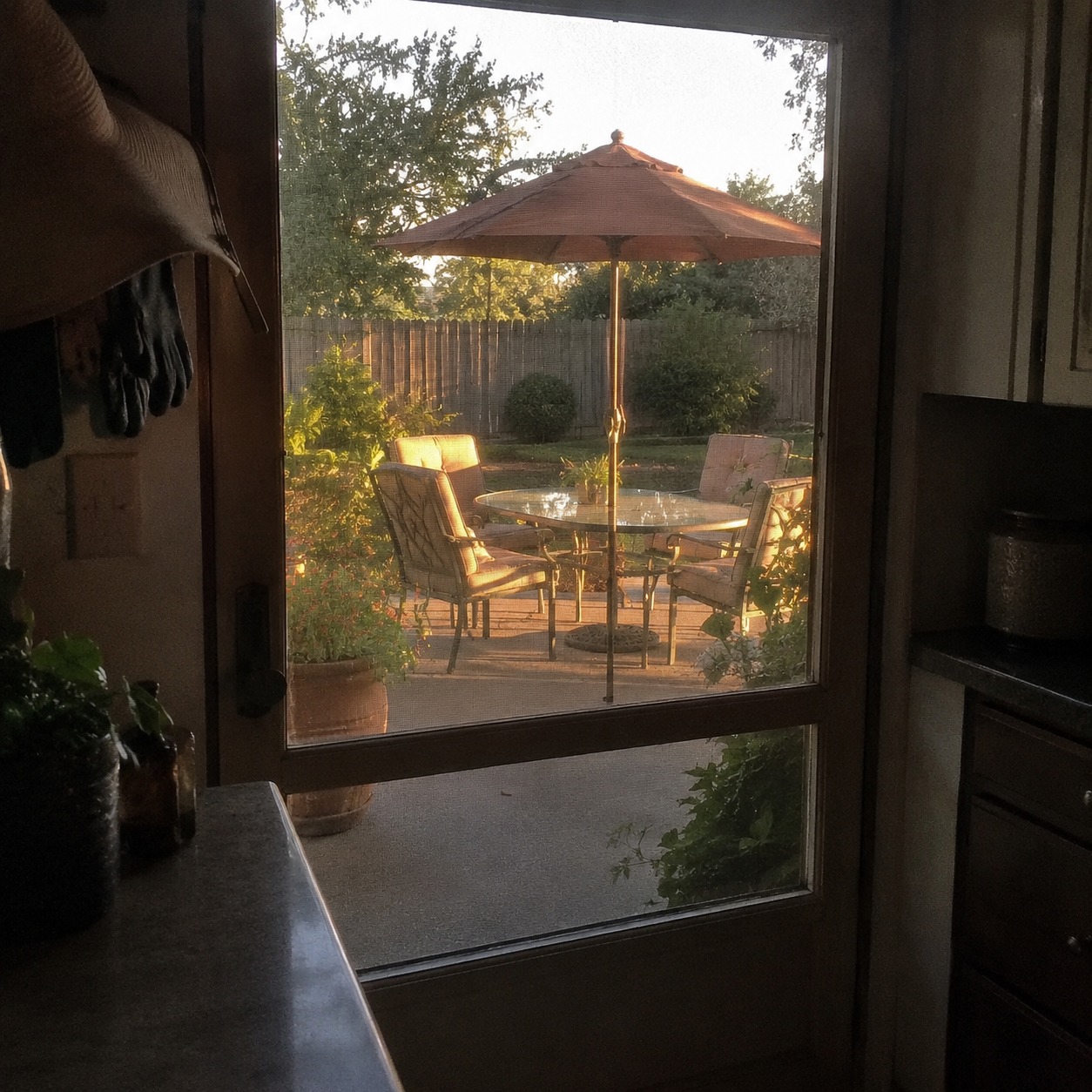
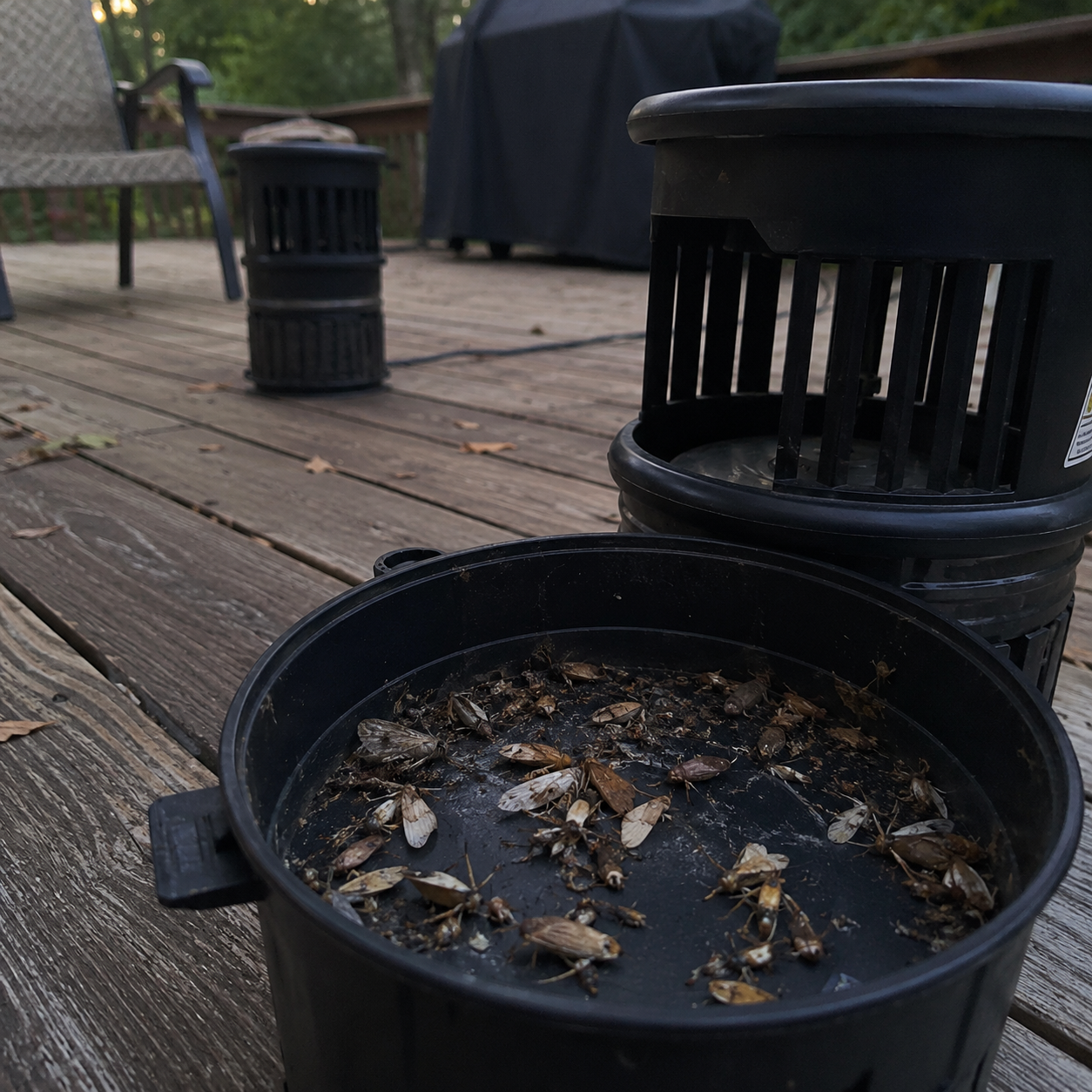
"The DynaTrap doesn't work for mosquitoes" is what I told my husband after I opened the collection tray at the end of our first season with it. I couldn't explain why at the time. But I was right, and now I know exactly why, and if you've been doing what I was doing for three summers you deserve to hear it. If you've spent money on bug zappers, propane traps, Thermacell, spray services, or CO2 devices and the mosquitoes are still winning — the products probably aren't failing. The products were designed around the wrong signal. Here's what I mean. My husband Rich had been patient. That's the most charitable word for it. For three summers I had been the one researching, ordering, reading manuals, placing equipment exactly where the instructions said. I'm that kind of person. I had been a project coordinator for twenty-two years. I do not do things halfway. The first summer: a Flowtron bug zapper on each side of the patio. UV grid, half-acre coverage according to the box. We could hear it crackling through dinner. Convincing sound. I checked the collection tray every morning. Moths. Every morning. Moths and beetles and the occasional thing I couldn't identify. Not mosquitoes. I told myself it was helping with the ones I couldn't see. We stayed out sometimes. Not late. Not comfortably. The second summer, I upgraded. I had read enough by then to know that UV-only traps had a known limitation with mosquitoes. The DynaTrap was specifically marketed as solving this. Three-way protection: UV light plus a titanium dioxide coating that produces a CO2 trail that mosquitoes follow. Scientifically designed. I read the reviews. I ordered the mid-range model, about ninety dollars. I read the placement guide carefully. I ran it for the entire season. At the end of the season, I opened it. Moths. I stood over the collection tray for a while. Rich watched me from the doorway. He did not say anything because Rich is a man who knows when not to say things. I put the DynaTrap in the garage. The third summer, I didn't try anything. I had spent close to two hundred dollars across two seasons and I had moths in my collection trays and mosquitoes on my ankles and no reason to believe a third product would be different. So we ate inside. We had a beautiful patio. Stone pavers Rich had laid himself over a full weekend four years ago. A table that seats six. An umbrella. A gas grill I felt guilty about because we were using it less and less. We ate inside. Rich stopped asking if I wanted to try eating outside. I stopped suggesting it. Neither of us said anything. It became what summer looked like at our house. The thing I want to tell you about happened in September of that third summer. Not May, not the beginning of the season when I might have been able to do something about it. September. I was sitting at the kitchen table one night doing nothing in particular and I started reading about mosquito biology. I cannot tell you why. I just started reading. I want to tell you exactly what I found, because this is the thing nobody put on the DynaTrap box, and it is the thing that explains three summers in a single sentence. Mosquitoes do not navigate by light. They never have. This is not a fringe claim. It is documented entomology going back decades. The University of Notre Dame ran controlled studies tracking what UV bug zappers actually killed. In two separate studies, mosquitoes accounted for 4.1% and 6.4% of the daily catch — the rest were moths, beetles, midges. Beneficial insects. Not mosquitoes. The University of Delaware ran six residential UV zappers for ten weeks. Of 13,789 insects killed, 0.22% were biting insects. Twenty-two hundredths of one percent. The American Mosquito Control Association has confirmed this publicly. Wirecutter wrote about it. Consumer Reports wrote about it. The science is not obscure. It is simply not on the packaging. Mosquitoes navigate primarily by carbon dioxide. The CO2 you exhale every time you breathe. They detect it from thirty to forty feet away and track the concentration gradient directly to its source. That is the primary signal. UV light is not in that signal chain. Think of it this way. On your patio, there are two signals competing: the faint trace CO2 from the DynaTrap's titanium dioxide reaction, and the full continuous plume from you — a warm-blooded person breathing out CO2 every few seconds. The mosquito thirty feet away is tracking concentration, following the gradient upward. Every time, that gradient leads to you. The trap cannot compete. It was never going to compete. Of course the mosquitoes followed me. They couldn't have done anything else. Now, before I tell you what I found, I want to address something. Because the first thing most people ask when I explain this is: what about citronella? What about Thermacell? What about the spray services? Citronella works by masking your CO2 signal with a competing scent. In low wind conditions, close to the candle, there's some effect. The moment you move more than a few feet, or the wind picks up, or more than one person is sitting outside, the masking breaks down and you become the signal again. Which is why citronella produces the specific experience of working for the first ten minutes and then not working. Thermacell creates a chemical repellent zone. It works if you're sitting still, in calm air, in the exact zone it covers. Step outside it, bring guests, have children running around, or deal with any breeze, and the zone collapses. Spray services work. For about ten days. Then the mosquitoes come back — because you haven't addressed the breeding population, only the adults present on treatment day. The service runs every three weeks because that's how long the effect lasts. You are renting a solution rather than addressing the signal problem. Propane CO2 traps get the mechanism right in theory. CO2 is the correct attractant. But propane cartridges run out, and during those gaps you become the primary source again. Output is inconsistent. Maintenance is ongoing. The units break down. All of them have the same core problem: they either mask the signal temporarily, suppress the population for days, or produce CO2 inconsistently. None produce a continuous biological CO2 signal strong enough to consistently outcompete a person sitting twenty feet away all night. That is what I went looking for. I want to answer the question you are probably asking right now, because I asked it myself. If yeast fermentation produces such a reliable CO2 signal, why isn't it in every mosquito trap on the market? I looked into this specifically. The answer is manufacturing economics and shelf life. Yeast-based solutions are biological — they begin activating when they contact moisture, which means they have to be kept dry until use and have a finite active window. A trap built around yeast fermentation requires the consumer to mix the solution themselves and replace it on a schedule. That's more effort than plugging something in. It also doesn't produce the visual spectacle — the crackling, the light, the drama — that makes a trap feel like it's working in the moment. UV zappers are cheaper to manufacture, longer to sit on shelves, and produce immediate sensory feedback: the crack, the spark, the light. They look like they're working. Yeast fermentation is quiet. It works the same way bread rises — continuously, without drama, producing exactly the signal that brings mosquitoes in. The products that look most impressive in the hardware store are solving the wrong problem. The one that actually competes with you is the one that runs silently, powered by the sun, producing the same biological signal you produce just by being alive. I found BiteShield that September evening. BioLure is a powder you mix with water inside a clear jar. The yeast activates and begins producing CO2 — a sustained biological signal running through the night. The fermentation also produces organic volatiles, the additional scent compounds mosquitoes track alongside CO2 as part of their host-seeking sequence. The UV light in the jar draws flying insects broadly. The BioLure draws mosquitoes specifically. Both working together, in a solar-powered jar, producing a signal more compelling than the people on the patio. If the products you've tried were a whisper, this is a broadcast. That is the mechanism. That is why the collection tray looks different. If you've already decided this makes sense, the link is at the bottom of this letter. I read the reviews. Not the five-star ones. The one-star reviews. The DynaTrap one-star pattern: moths, no mosquitoes. The BiteShield one-star reviews: placement issues. Jar positioned wrong. Timing expectations set too early. Mechanism complaints were almost absent. Nobody said it caught moths instead of mosquitoes. I noticed the pattern across hundreds of positive reviews: homeowners describing the same arc. Tried zappers. Tried DynaTrap. Found BiteShield. Stopped eating inside. A woman in Georgia who had given up her backyard for three summers — back outside by Memorial Day. A man in South Carolina who had cancelled a two-year spray service. Homeowners across Tennessee, Ohio, Virginia, Florida, Texas all describing the same moment: staying outside after dark for the first time in years. The pattern was consistent enough that I stopped having doubts. I ordered it that September. It sat in a box through the winter. I set it up the second Saturday in May. Mixed the BioLure powder into water, hung the jar from the shepherd's hook near the back edge of the patio — fifteen feet from where we sit, oriented toward the tree line where the mosquitoes came in. Solar panel facing south. That evening, Rich asked if I wanted to try eating outside. I said yes. The first week: noticeably better, not transformed. I tracked carefully and got two bites across the first five evenings. I noted them without saying anything to Rich. But here is what I noticed first, before I had enough data to say whether it was working. I stopped looking at the time. For three summers, eating outside had involved a running calculation — what time is it, when did the sun go down, how many more minutes before this becomes untenable. That calculation ran automatically. I was not conscious of doing it. That first week, I looked at my watch and it was eight-thirty and I had not looked at it in two hours. That was the first thing I noted. The second week, I stopped noting the bites. There wasn't enough to note. Week three, I went inside because I was tired. Not because of the mosquitoes. That distinction — going in on my own terms — is the one I had not had in three summers. Rich started suggesting the patio again. On a Wednesday evening he said we should eat outside and I said sure and we did and that was the whole conversation. In July, Rich's sister and her husband came for the weekend. For two previous summers we had ended up inside by eight when they visited. This time we sat on the patio until nearly ten. His sister mentioned it felt different outside. Rich looked at me across the table. I am writing this because I think there are people who have done exactly what I did. Who bought the right product for the wrong mechanism. Who upgraded to the CO2 version and discovered it still caught moths. Who concluded that mosquito solutions simply don't work. You were not making bad decisions. You were reasoning correctly from incomplete information. Mosquitoes follow CO2. That is established entomology. It is simply not on the packaging of the products designed around a different premise. Every UV trap you ever bought was optimized for moths. Your mosquito problem was never going to respond to light because mosquitoes were never primarily following light. They were following you. BioLure produces a signal more compelling than you are. Continuous biological CO2 from yeast fermentation, running all night, powered by the solar panel on the lid. That is the entire explanation for every collection tray you have ever emptied and found wrong. If you're reading this during mosquito season — and if you're in most of the country, you are — the population peaks in July and August. The weeks you are losing right now are the worst weeks to be losing. Every evening spent eating inside on a patio you paid for is an evening that does not come back. Most people who order BiteShield order it in late July, after they've already lost June and most of July. The trap needs two to three weeks to meaningfully reduce the population. Order in late July, and you are protecting August. Order now, and you are protecting the rest of the summer. The mechanism doesn't change. The window does. The patio Rich laid himself is still there. The table that seats six is still there. The grill I felt guilty about is still there. They were waiting for the right signal. If BioLure's continuous CO2 mechanism doesn't noticeably improve your evenings outdoors within thirty days — if the biological signal doesn't change how you use your outdoor space — they refund you. No conditions. No documentation. No questions. That is the only guarantee worth attaching to a mechanism claim: either it works in your yard, or you don't pay for it. BiteShield hangs from anywhere with a hook. No cord. No propane. Mix the BioLure packet with water in the jar. Five minutes. Hang it fifteen to twenty feet from where you want to sit, oriented toward wherever the mosquitoes are coming in from. Solar panel charges during the day. Trap runs through the night. Then go outside and reclaim the evenings you've been eating inside on. — Dana https://pestproofco.com/pages/outdoor-space-reclaim P.S. The 0.22% number is the one I keep returning to. University of Delaware. Six residential UV zappers. Ten weeks. 13,789 insects killed. 0.22% were biting insects. 99.78% of what those zappers killed were not the insect they were sold to address. Not bad manufacturing. A fundamental mismatch between the signal the trap broadcasts and the signal mosquitoes actually follow. BioLure produces continuous biological CO2 through yeast fermentation. A sustained plume. Strong enough to outcompete a person. That is the whole difference between moths in the tray and mosquitoes in the tray. P.P.S. Things worth knowing before you order. Population reduction takes time. Week one is different from week three. The trap works by continuously reducing the local mosquito population — go in expecting gradual improvement rather than instant transformation. Placement is the most important variable. Fifteen to twenty feet from where you sit, oriented toward the direction the mosquitoes are coming from. People who see the least improvement have almost always placed it too close or in the wrong direction. Large yards near standing water take longer. The mechanism is correct. The timeline extends. P.P.P.S. Five minutes. Mix the BioLure packet with water. Hang the jar. Solar charges during the day. Runs all night. The jar has been on the shepherd's hook at the back edge of my patio since the second Saturday in May. Rich suggests the patio now. His sister asked what we had done differently. That is the whole update. P.P.P.P.S. Thirty days. Any reason. No proof. If BioLure's CO2 mechanism doesn't noticeably improve your evenings outdoors, get your money back. No conditions. No documentation. I have coordinated enough projects to know what confident terms look like. These are confident terms. P.P.P.P.P.S. Rich does not know I spent September reading mosquito biology while he slept. He knows about the jar now. He knows about the DynaTrap and the titanium dioxide CO2 signal that was never going to compete with us breathing. He looked at me when I explained it and said: so it was never going to work. I said: not the way we were using it, no. He said: why didn't you find this three summers ago. I told him I hadn't thought to look in September. He nodded. He is not a man who makes people feel bad about the timing of things. We sat outside until nine-thirty that evening. https://pestproofco.com/pages/outdoor-space-reclaim
Three summers. Full of moths. Not mosquitoes.
Want to get rid of mosquitoes in your backyard for good? Here
LEARN MORELike this ad? Make it yours.
Crush rebuilds this exact creative around your product — your brand, your colors, your offer — in about a minute.