
Inactive· since Jan 17, 2026
- 3
- days it ran
- 0
- relaunches
Ad copy
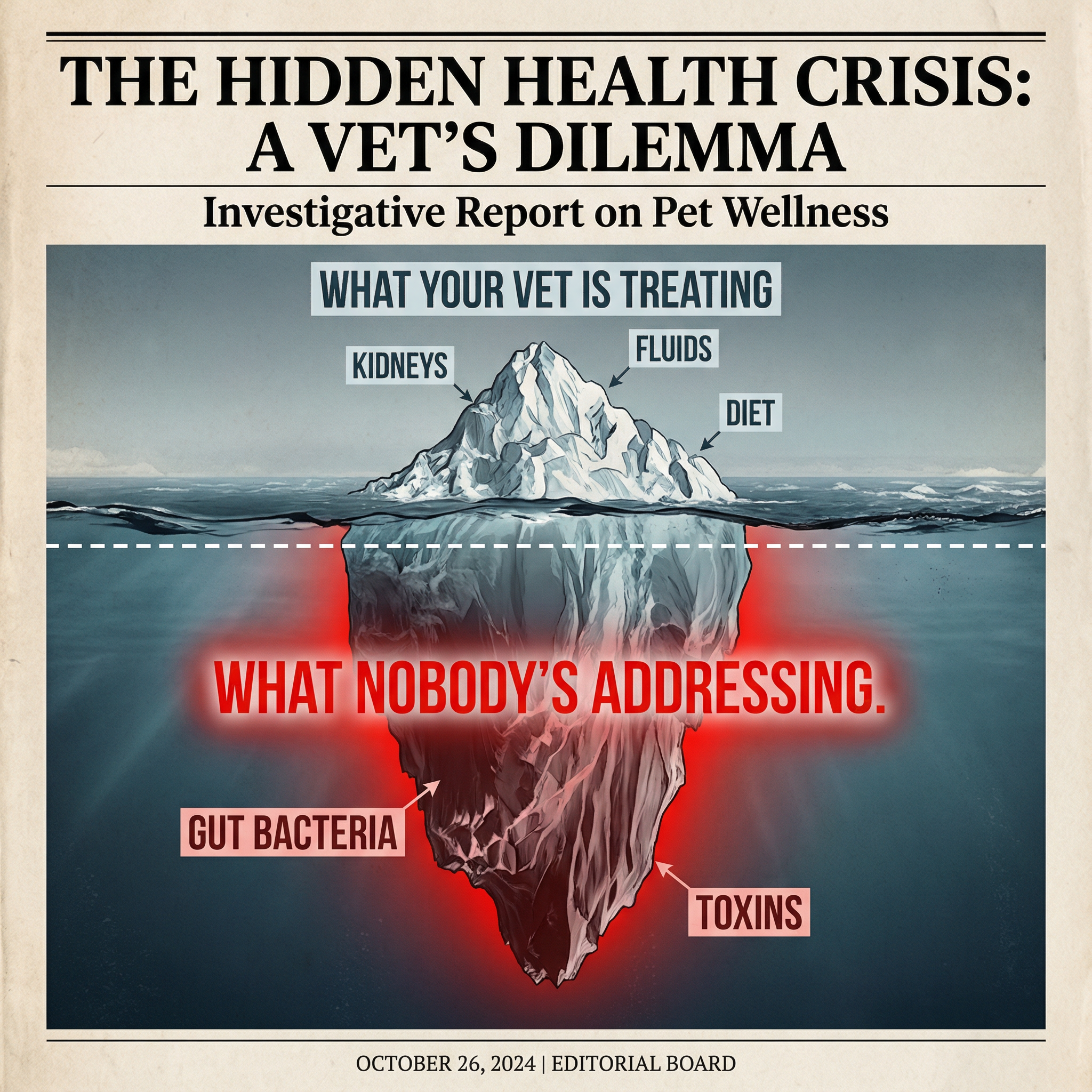
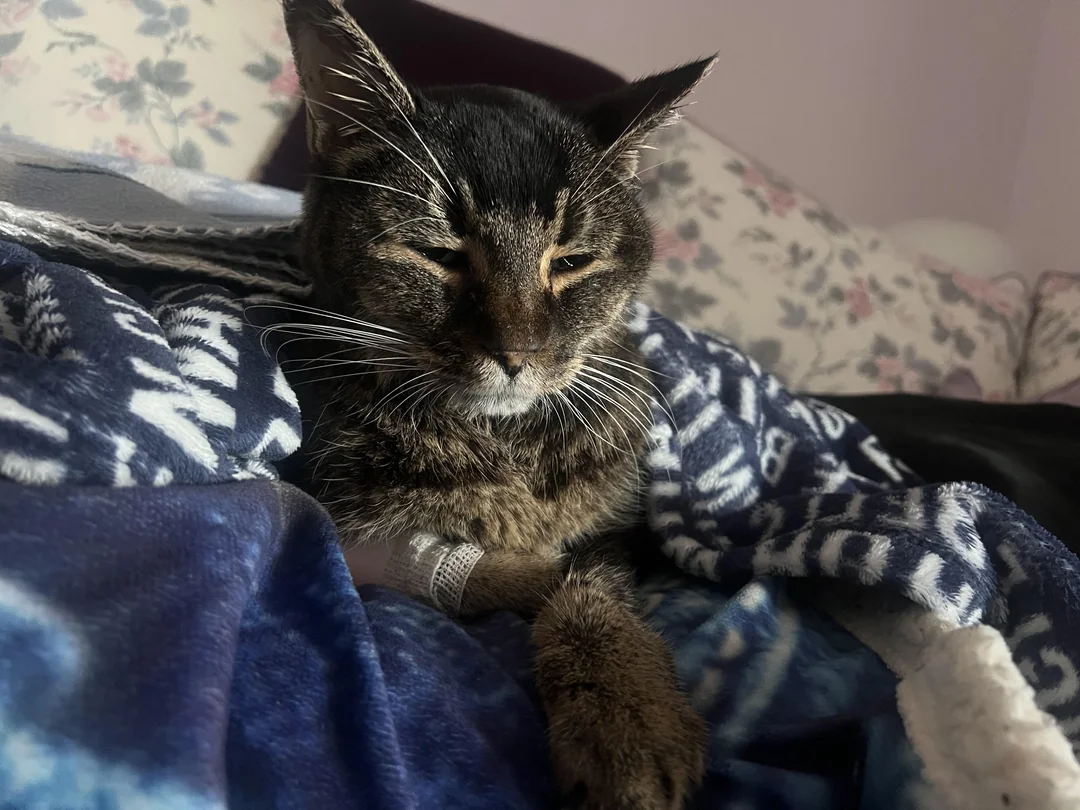
The vet said "six months to a year, maybe" and I felt the room tilt. --- Oliver was 13. The kidney disease was Stage 3, progressing to Stage 4. "We'll manage his symptoms," Dr. Patterson said. "Keep him comfortable. SubQ fluids. Prescription diet. Regular monitoring." I heard the words underneath: *There's nothing we can do. Just wait.* Six months. I kept thinking: That's only two more Christmases. One more summer watching him sunbathe on the porch. Maybe not even his next birthday. I drove home in complete silence. When I got there, Oliver was sitting in his favorite spot by the window. Watching birds. He looked so... normal. How could "six months" be sitting there, purring, looking out the window like any other Tuesday? --- I did everything Dr. Patterson recommended. Prescription kidney diet. Check. SubQ fluids every other day. Check. Phosphate binders. Check. Monthly bloodwork to "monitor progression." Check. That phrase haunted me. *Monitor progression.* Not stop. Not reverse. Not treat. Monitor. Like I was just supposed to watch a countdown clock. Three months in, his creatinine went from 3.8 to 4.2. "That's expected," Dr. Patterson said. "The disease is progressive." Progressive. That word made me want to scream. Five months in, Oliver started eating less. Lost half a pound. "Normal for Stage 4," she said. "We can try an appetite stimulant." Everything was "normal" or "expected" or "typical for kidney disease." Like there was a script and Oliver was following it perfectly toward the inevitable ending. I asked about other options. Stem cell therapy? Different medications? "Those are experimental. Expensive. And honestly, at his age and stage, I wouldn't recommend putting him through it." She meant well. I know she did. But I left that appointment feeling like I'd been told to accept his death sentence and just make him comfortable while we waited. --- Six months came and went. Oliver was still here. Thinner. Sleeping more. But here. The bloodwork kept getting worse. Slowly. Predictably. Creatinine 4.8. Then 5.1. Then 5.6. Each number was another step down a staircase I couldn't stop him from descending. I started having this recurring thought: What if I'm wasting the time we have left? What if instead of enjoying him, I'm just... maintaining him? Giving fluids. Forcing pills. Cleaning up vomit. Obsessing over whether he ate. Was this even a life? For either of us? --- Month eight. 2:34 AM. I couldn't sleep. I was doing what I always did at 2:34 AM—googling variations of "how to help cat with kidney disease live longer." I'd read everything. The forum posts. The blog articles. The survival statistics. Stage 4 cats live an average of 35 days after diagnosis. Oliver had beaten that. But for how long? I clicked on something I hadn't seen before. A veterinary journal article from a researcher in Japan. Boring title. Something about the gut microbiome and chronic kidney disease progression. The abstract mentioned that cats with CKD have disrupted gut bacteria that continuously produce uremic toxins—waste products that accelerate kidney damage. I almost clicked away. I'd read about uremic toxins before. That's what causes the nausea. Everyone knows that. But I kept reading. And on page 6, there was a sentence that stopped me cold: "The cycle of toxin production, reduced kidney filtration, and bacterial overgrowth creates an accelerating positive feedback loop that may explain why CKD progression is typically irreversible." I read it again. The toxins damage the kidneys. The damaged kidneys can't filter the toxins. The toxins build up and damage the kidneys MORE. The cycle speeds up. That's why the disease is "progressive." Not because kidneys can't heal—though that's true too. But because there's an accelerating cycle that conventional treatment doesn't interrupt. --- My hands were shaking. I kept reading. The study tested something simple: probiotics. But not regular probiotics. A specific strain that could survive stomach acid and reach the intestines, where these toxins are produced. The results: Cats receiving this probiotic showed significantly slower disease progression. Some even showed slight improvements in kidney values over 6 months. The researchers used the word "stabilization." Not cure. Not reversal. But not inevitable decline either. I looked at the date on the study. 2019. Five years ago. Why had no one told me about this? --- I brought the study to Dr. Patterson at Oliver's next appointment. She skimmed it. "Interesting. There's been some research on probiotics and kidney disease. The evidence is mixed." "But this shows—" "It's a small study. And probiotics are hit or miss. Many don't survive digestion. If you want to try it, it probably won't hurt. But manage your expectations." Manage your expectations. The phrase that means: Don't hope too much. I left with a printout of the study and a prescription for more phosphate binders. --- That night, I researched every probiotic I could find that used the strain from the study—Bacillus coagulans. Most pet probiotics use Lactobacillus or Bifidobacterium. They need refrigeration. They're fragile. Bacillus coagulans is different. It forms spores. Like a protective shell. Survives stomach acid. I found a product specifically formulated for cats with kidney disease. It had that strain. The reviews were strange. People talking about their cats' kidney values "stabilizing" or "improving slightly"—things I'd been told were impossible. One person said their cat was supposed to live 3 months and it had been 14 months. I wanted to believe it so badly it hurt. But I'd been disappointed before. --- It arrived three days later. Two drops mixed into Oliver's food, twice a day. He ate it. Didn't even notice. I marked it on the calendar. Day 1. "Manage your expectations," I told myself. Week 1: Nothing noticeable. Week 2: He seemed slightly more alert. Maybe. Or maybe I was imagining it. Week 3: He played with his toy mouse. Just for a minute. But he hadn't done that in months. Week 4: Bloodwork day. I was terrified. I'd started hoping. And hope is dangerous when you're dealing with a progressive disease. Dr. Patterson called that evening. "His creatinine is 5.4." My heart sank. Last time it was 5.6. Only a 0.2 difference. Then she said: "That's... actually not what I expected. It should have gone up. It's been going up every month for eight months." "Is that good?" "It's stable. Which for Stage 4 kidney disease is... unusual." Unusual. Not impossible. Unusual. --- Month two: Creatinine 5.2. Down. Dr. Patterson said: "Let's test again in a month. Could be lab variance." Month three: Creatinine 5.0. Still down. Dr. Patterson started asking questions about what I was doing differently. I told her about the probiotic. She wrote down the name. Month six: Creatinine 4.7. Oliver had gained back half the weight he'd lost. His coat looked better. He was eating without me hovering. Dr. Patterson looked at the results for a long time. "This is remarkable. I'm not going to say his kidney disease is reversed—it's not. The damage is permanent. But the progression has stopped. And these numbers are actually better than they were six months ago." She paused. "How long ago did I tell you six months to a year?" "Fourteen months." "He should have been in kidney failure by now. This is not typical." --- That was eight months ago. Oliver is still here. His bloodwork is still stable. Some values are even better than when he was first diagnosed. He's not cured. He still has kidney disease. He still gets SubQ fluids and eats a modified diet. But he's not declining. The vet used the word "managed" differently now. Not "managing decline." Just... managed. Like a chronic condition you live with, not a death sentence you count down. Last week, Oliver jumped onto the kitchen counter to steal a piece of chicken. He hasn't done that in two years. I yelled at him. Then I cried. Because it was the most wonderful, normal, frustrating thing. --- Here's what I've learned: The reason kidney disease is "progressive" isn't just because kidneys can't regenerate. It's because there's a cycle—toxins damage kidneys, damaged kidneys can't clear toxins, toxins keep being produced, damage accelerates. Every treatment I was given addressed the symptoms or the damage. Nothing interrupted the cycle at its source. The toxins are produced in the gut. If you can reduce production there—before they damage the kidneys—you can slow or even stabilize the progression. That's why Oliver stopped declining. Not because his kidneys healed. But because the cycle stopped accelerating. --- If your vet told you "six months" or "a year" or "it's progressive"... If you're watching bloodwork numbers climb and feeling helpless... If you've accepted that you're just buying time... I'm telling you: there might be another option. I'm not saying it's a cure. Oliver still has kidney disease. But he's not on that countdown clock anymore. I got my extra time. Not months. Years, hopefully. I got more mornings watching him sunbathe. More times yelling at him for stealing food. More ordinary, precious moments I thought were gone. The study was from 2019. The information has been there. But no one told me. I had to find it at 2:34 AM, desperate and googling. I'm sharing this because maybe you're at 2:34 AM right now. Maybe you're where I was—told to manage expectations and watch your cat decline. Look into Bacillus coagulans. The strain that survives digestion. That reaches the gut where toxins are made. It's not guaranteed. Nothing is. But "progressive" doesn't have to mean inevitable. Sometimes you can interrupt the cycle. I did. And I got back the one thing I thought I'd lost: time.
Like this ad? Make it yours.
Crush rebuilds this exact creative around your product — your brand, your colors, your offer — in about a minute.