
Inactive· since Jun 18, 2026
- 46
- days it ran
- 2
- relaunches
Ad copy
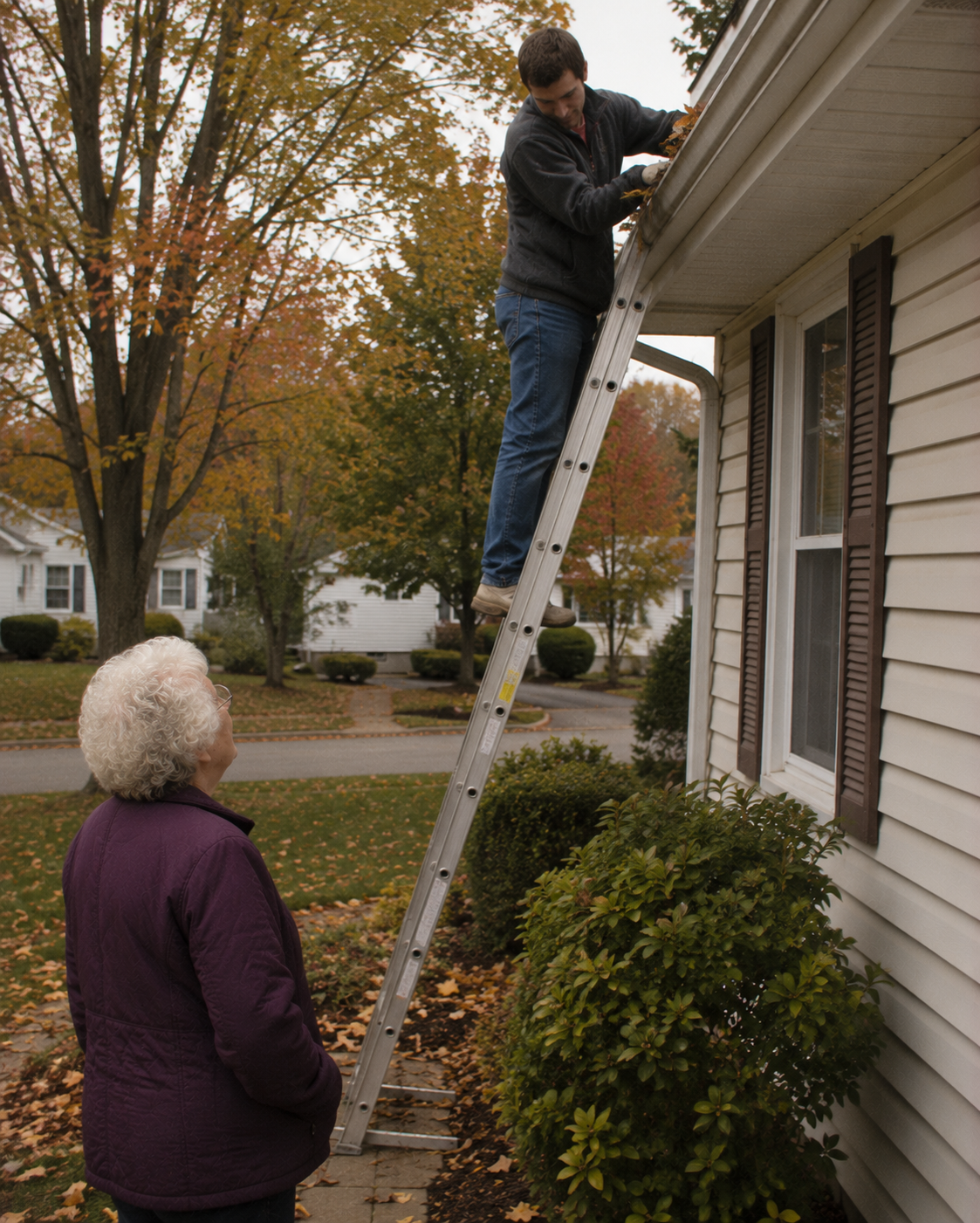
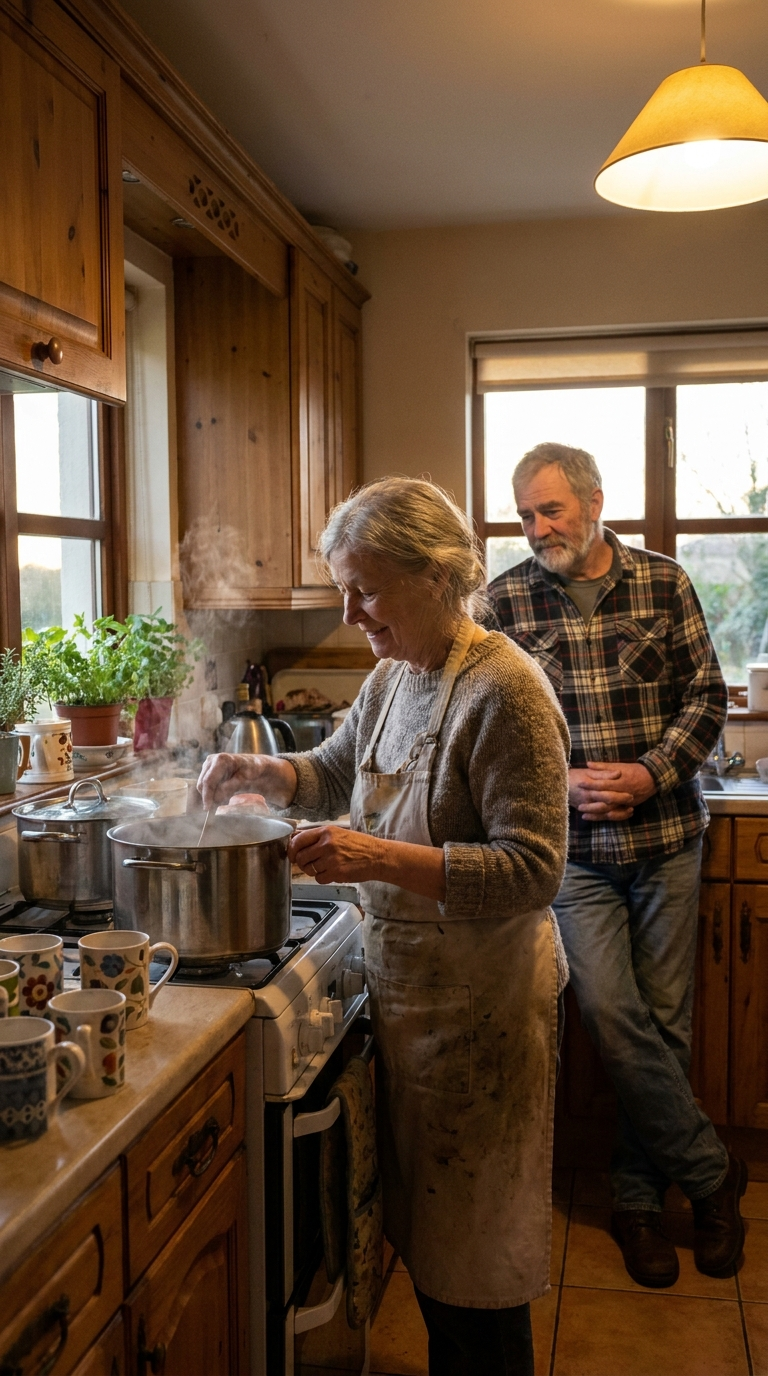
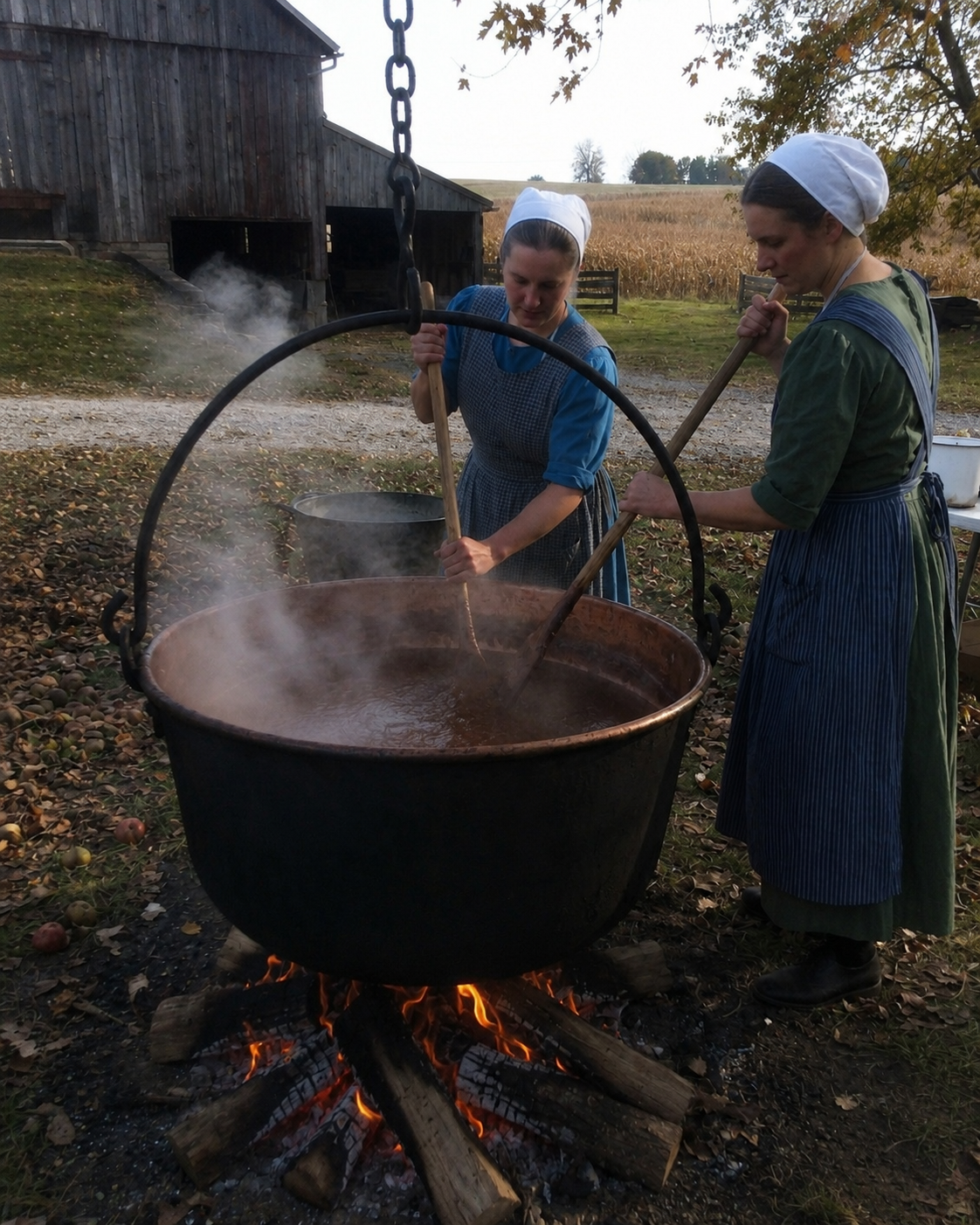
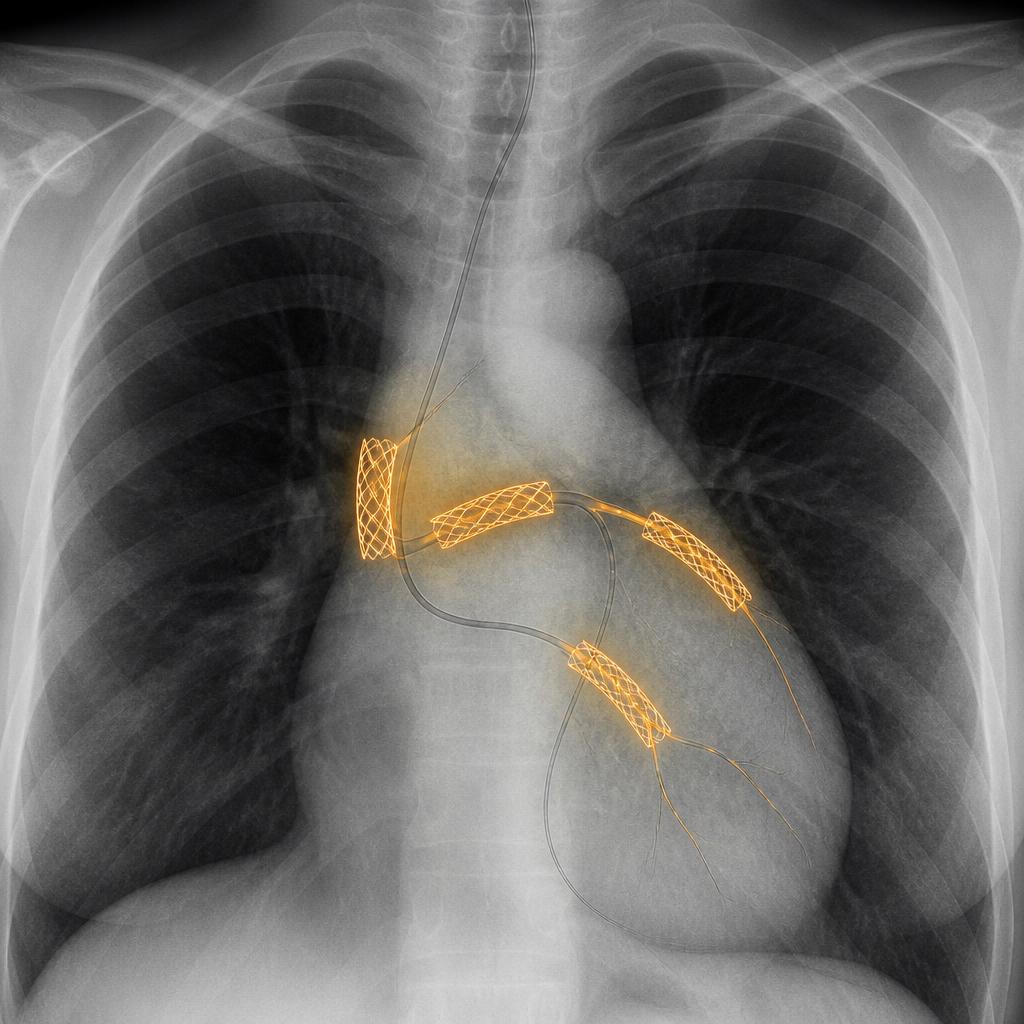
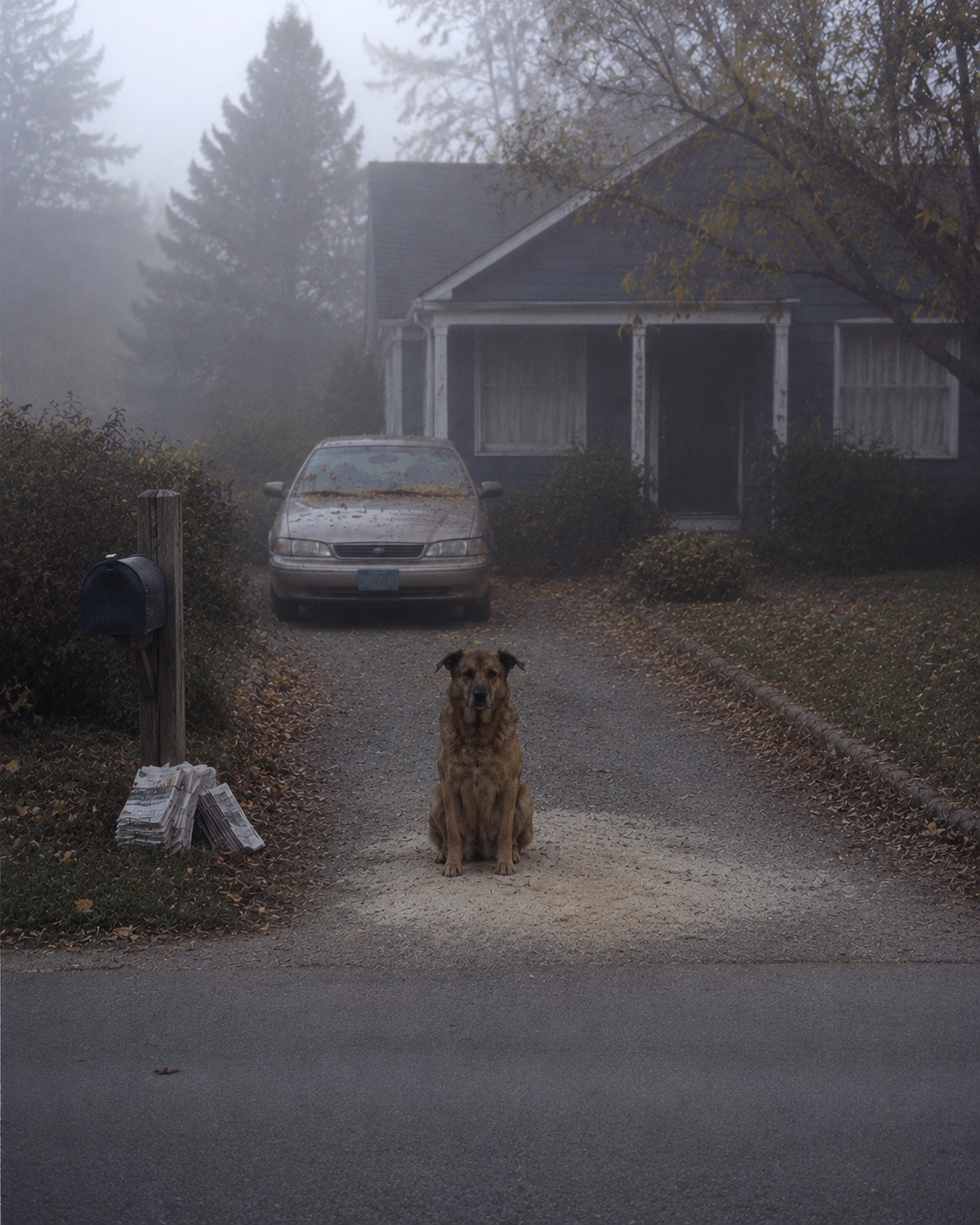
There was a dog on my route that spent every morning waiting at the end of a driveway for a man who'd been dead since June. Nobody had told the dog. At six o'clock he'd walk himself down to the same patch of gravel — the hour he and his owner used to start their walk — and sit there facing the road, watching for a man who was never coming home. The day I finally stopped, the man's widow opened the door four inches. She wouldn't quite look at me. "I can't walk him anymore," she said — and I understood she meant more than the dog. Then she started to close the door. I don't know what made me say what I said next. I just knew that if I let that door close, she was going to vanish back inside with everything her husband left behind. And that dog was going to keep his watch at the end of that driveway, every morning, for the rest of his life. And nobody was going to stop it. My name is Maggie. I'm fifty-one. I walk dogs for a living — six mornings a week, the same loop through the same streets, anywhere from four to eight of them on the leash at once. I've loved almost every day of it. This story starts in early October. I was coming up Bell Road with my pack when I first noticed him — a brown shepherd mix, sitting at the end of a driveway. Just sitting. Looking down the street like he was expecting somebody. I figured his owner was inside grabbing a leash, and I kept walking. Dogs wait. It's the most ordinary thing in the world. He was there the next morning too. And the one after that. By the end of the week I realized I'd never once come up the road and not found him there — same time, every time, like he'd never left at all. By the second week I'd started looking for him. He never barked at my dogs, never got up, never wandered off. He just watched the road. And the longer I watched him, the more I started noticing the things around him. The house behind him was dark every morning, curtains drawn. There was a sedan in the driveway with months of leaves caked on the windshield and a tire gone flat. The newspaper at the foot of the drive had been joined by another, and another, until there was a little drift of them yellowing in their plastic sleeves. And the gravel where the dog sat had been worn down to a smooth bare patch — packed flat and pale, the exact shape of a dog who had sat in the same spot, every single morning, for longer than I wanted to think about. That was the morning it landed on me: in all those weeks, I had never once seen the man come out. The dog wasn't waiting for someone who was running late. I kept walking. I told myself it wasn't mine to fix — that a daughter, or a neighbor, or somebody was surely handling it. For a few more days, I believed it. Then one morning I couldn't make myself walk past him again. So I crossed the road and walked up the drive. The dog watched me come the whole way. He didn't bark, didn't back off — just turned his head and tracked me. Up close, he wasn't neglected. Someone was feeding him; his coat was dull but clean. I crouched a few feet from him. "Hey," I said. "Who are you waiting for?" He thumped his tail once against the gravel and went back to watching the road. I knocked. It took a long time. When the door finally opened, it opened four inches, on a chain. The woman behind it was somewhere in her seventies. She kept one hand on the edge of the door and the other on the frame — the way you hold things when standing has started to cost you something. "I've seen you," she said. "Walking the dogs. On the road." "Every morning," I said. "I'm Maggie." I nodded toward the gravel. "Is he yours?" "He was my husband's." She looked past me at the dog, and her face did something I didn't have a name for. "I can't walk him anymore. My hip, and— everything, lately." She said it like a confession. "I let him out in the mornings and he goes straight to that spot. I can't make him stop, and I can't stand to watch it. So I quit looking out the front window." She started to close the door. "Then let me walk him." She stopped. "I'm already out there every morning," I said. "Four, five dogs on the leash. One more is nothing. I'll take him with me and bring him back to you. You wouldn't have to do a thing." She looked at me through the gap for a long moment, like she was waiting for the catch and didn't find one. Then she slid the chain off, opened the door the rest of the way, and lifted a leash from a hook just inside — an old leather one, stiff and darkened from years of a man's hand. "His name's Gus," she said, holding it out. "My husband was Hank." A pause. "I'm Nora." I clipped it onto his collar and told her I'd have him back within the hour — and that she didn't owe me a thing for it, I was out there anyway. She nodded, the way you nod when you're not ready to count on something. "We'll see," she said. And for the first time in months, Gus walked away from that driveway with someone. I'd only made it two houses down with Gus and my pack when a woman called out from her porch. "Well, I'll be," she said. "Somebody's finally walking that dog." Her name was Connie. She'd lived across from Nora and Hank for going on twenty years, and she came down to the sidewalk in her slippers to get a look at me, like she needed to confirm I was real. "He walked Gus every morning," she said, nodding down the road. "Hank did. Five-thirty, six, rain or snow, didn't matter. Two miles, down to the gas station and back, every day for years. That man was healthier than people half his age." She shook her head. "Last person on this street you'd have picked." "Picked for what?" "He dropped right there at the end of the drive — right where the dog sits now. June. Heart attack. Seventy-one years old, and not a thing wrong with him that anyone knew about. Gus was with him. Wouldn't leave him. The medics had to lift the dog off." I didn't know what to say to that. "Nora hasn't been the same since," Connie went on. "And she wasn't doing great before it, either — bad hip, a stent a few years back. Some days I don't think she gets off the couch. She won't let any of us in. I bring a casserole, she takes it at the door, and that's that." She looked over at the house. "She let you take him, though." "She handed me the leash. That's all." "That's more than she's given anybody since the funeral." Connie folded her arms. "That woman needs someone who won't look away. Everybody else has. They knock once, she tells them she's fine, and they're relieved to believe her." She wrote her number on the back of a grocery receipt and pressed it into my hand. "You keep walking that dog," she said. "And keep an eye on her. She's not as fine as she tells people." For the first week, the whole arrangement happened on the porch. I'd bring Gus back, Nora would open the door just enough to take the leash, say thank you, and close it again. I figured that was as far as it would ever go. Then one cold morning she had the door open before I reached the steps. "You're letting the heat out, standing there," she said. Which was the nearest thing to an invitation I was going to get. Inside, the house felt like a place that had stopped the day Hank died. A recliner with a quilt folded over the arm, and beside it, worn into the carpet, a flattened oval where a dog bed used to sit. Photographs on every surface — a younger Nora and Hank at a lake; the two of them in front of this same house; Hank on a porch step with a puppy that could only have been Gus. A pair of men's boots by the back door that nobody was ever going to wear again. Nora set a coffee in front of me and eased into a chair, slow, both hands on the table. "He found Gus the week he retired," she said, watching the dog circle once and drop at her feet. "Forty years at the plant, and the first Monday he didn't have to go in, he drove to the shelter and came home with that animal. Said a man needs a reason to get up in the morning." She almost smiled. "So every morning there was a reason. Six, on the dot. Rain or shine. The two of them, down the road and back." I looked at Gus, asleep now with his chin on her foot. "And he still gets up," she said. "Six. Right on time. For nobody." She said it without any drama at all. And that was the part that got to me — not the grief itself, but how used to it she'd gotten. We sat a while. The coffee went cold and neither of us did anything about it. "You'd think I'd be the one who couldn't let go," she said finally. "But it's the dog. He won't let the morning be any different. So neither can I." After that I started coming in most days. I'd unclip Gus, she'd put the kettle on, and for twenty minutes the house didn't feel so much like a place where something had ended. She was getting worse, though. I could see it even over those few weeks. How she had to think before she stood. How she'd lose the middle of a sentence and have to go back for it. How some mornings she didn't make it to the door at all, and I'd let myself in with the key she'd started leaving under the mat. I told myself it was grief. Or just her age. I'd find out later I was wrong about both. By November, the key under the mat may as well have been mine. I let myself in most days to a routine I could've done in my sleep: find Gus already up and waiting at the end of the drive, clip the leash, take him out with my pack, bring him home, sit with Nora while the coffee went cold. Some mornings she talked. Some mornings she didn't. Either way, I came. The leash was Hank's — the old leather one she'd handed me that first day, stiff and dark and worn soft in the middle where his hand used to ride. It was just the leash. Then one morning it let go. I'd clipped it to Gus's collar and bent to scratch his ears, and when I straightened up and took the slack, the leather simply parted — split clean through at the worn spot, the two ends hanging from my hands. Years of his grip, and then mine on top of it, and it had finally given out. Gus looked up at me as if he'd done something wrong. "It broke," I called toward the kitchen, holding up the two halves like an apology. "Hank's leash. I'm sorry — I think it was just old." Nora came to the kitchen doorway, slower than she used to, one hand on the frame. She looked at the leash in my hands for a long moment, and I waited for her face to fall. But she just nodded. "There's a spare," she said. "He kept one. In the drawer under the hook, with all his walking things." A pause. "Go on. He'd rather it got used than sat in there." I'd taken that leash off the hook a hundred times and never once opened the drawer beneath it. I slid it open. It was Hank's whole morning, kept exactly as he'd left it. A coiled spare leash, still in its packaging. A little flashlight for the dark winter walks. A folded stack of plastic bags. A half-empty box of dog biscuits — Gus's treat at the far end of the walk. A knit cap. A pair of gloves with the fingers worn clean through. The man had a system. A whole quiet routine for getting himself and his dog out the door at six every morning, and nobody had touched a piece of it since June. And tucked in the back corner, behind the biscuits, two orange prescription bottles. Everything else in that drawer belonged to the walk. The pills were the one thing that didn't. I took the spare leash. Then, instead of shutting the drawer, I picked the bottles up too. I almost put them right back. But I didn't. I turned the first bottle over and read the label. Hank's name. A refill date from last spring. And a drug name I'd seen a hundred times without ever once thinking about it. Atorvastatin. The second bottle was the same — an older refill, nearly empty. Half the men Hank's age on that street were probably on the very same thing. There was nothing strange about it at all. Except I kept hearing what the neighbor had told me that first day. Healthier than men half his age. Two miles every morning, rain or snow. Not a thing wrong with him that anyone knew about. And dead at seventy-one, on his own gravel, before the sun was all the way up. "Those were Hank's." Nora was watching me from the table. She said it gently, like she didn't want me to feel caught holding them. "His cholesterol pills. He was on them for years. Doctor said his numbers were perfect — right up to the end." She let out a small, tired breath. "Perfect numbers. They told me that at the hospital, too. Like it was supposed to be a comfort." I set the bottle down. "I'm on them now," she said. "Same ones. They started me after the stent." She turned her coffee cup a slow quarter-turn on the table without drinking from it. "Hank took his every morning for twelve years, and his heart stopped anyway. But I'm the one who's supposed to feel safer." I didn't answer. I was looking at her hands around that cup — the faint tremor in them, how thin they'd gotten — and thinking about every change in her I'd quietly been filing under grief. Under age. I am not a doctor. I walk dogs for a living. Standing in that kitchen, I had no business thinking what I was starting to think, and I knew it. But I couldn't make the pieces lie flat. A man does everything right — walks his two miles, takes the pill that's meant to guard his heart — and his heart quits anyway, with perfect numbers on the chart. His wife takes the same pill and dims a little more every week, and the whole world calls it getting old. And the one thing tying the two of them together was sitting in an orange bottle in my hand. I put the bottles back where I'd found them, clipped the spare leash onto Gus, and took him out with my pack, same as always. But my mind wasn't on the walk. It was on that bare patch of gravel at the end of the driveway — where Gus still sat every morning before I came for him, keeping watch for a man whose heart had given out while every chart said he was fine. I told myself I was being ridiculous. Millions of people take that pill every day. Who was I to wonder? I'd put the bottle back where it belonged. The question, I couldn't put down. It rode with me the rest of the route — four more houses, the rest of the pack, the whole loop back to my street. And then I came home. Ray was in his chair, asleep before the news again, the remote still in his hand, his mouth open. Fifty-nine years old. I stood in the doorway and looked at my husband like I was seeing him for the first time. Thirty-one years I'd been married to that man. He could rebuild a transmission blindfolded. For most of those years he could sweep me up off my feet and spin me around the kitchen. There was a pickup out in the garage now, up on blocks under a tarp, a year of dust on it — the project he kept swearing he'd finish. Every morning he worked his fingers open and shut on the edge of the bed for a minute before they'd close around anything, and neither of us ever said a word about it. I'd become the one who started the lawnmower, because the pull-cord had gotten to be too much for his hands, and we'd quietly agreed never to mention that either. He took the stairs one at a time now, a hand on the rail. And every time I'd noticed one of those things, I'd done exactly what I'd been doing with Nora. I handed it to his age. To the miles. To thirty years of concrete floors and cold engines catching up with a man. Ray had been on a statin for six years. I'd always known it — as ordinary a fact as the coffee in our cupboard. I'd refilled the bottle at the pharmacy. I'd moved it to wipe the shelf. I had never once stopped and held it in my hand and looked at it. That night I did. Same orange plastic. The same label I'd been staring at in Nora's kitchen. I stood there with it in my hand and listened to my husband breathing in the next room — the man whose fingers wouldn't close in the morning, who hadn't touched his truck in a year, who couldn't make it through the news. Hank had been the healthiest man on his street. Twelve years on this same kind of pill. Perfect numbers, right to the end. And he died face-down on his own gravel in June. I wasn't only afraid for Nora anymore. I was afraid for my own husband. I didn't sleep that night. I sat down at the kitchen table, opened my laptop, and typed the only question I had: Why do people on statins still have heart attacks? I read until the windows went gray. Then I did it again the next night, and the night after that. And piece by piece, the thing no one in any doctor's office had ever explained to Hank, or to Nora, or to Ray, started to come clear. I'd had it backwards my whole life. We all had. I'd always believed cholesterol was the enemy — that a high number was the thing that killed you and a low number was the thing that kept you alive. It's the whole story you get handed at the doctor's office. It's the story Hank's perfect numbers were supposed to prove he was winning. It was never the number. Your body makes cholesterol on purpose, because it needs it. Ordinary cholesterol moving through your blood doesn't clog anything. What clogs an artery is cholesterol that's been damaged — attacked by free radicals and turned rancid. Oxidized. And there's a simpler word for what oxidation is. Ray would know it before I finished the sentence. It's rust. Oxidized cholesterol is rusted cholesterol. That's the kind that turns sticky, works its way into the artery wall, builds into plaque, and one day breaks loose and stops a heart. Not the cholesterol. The rust. And here's the line that made me set my coffee down at two in the morning: lowering the number does nothing about the rust. A statin works by reaching into the liver and shutting the cholesterol production line down — all of it, the harmful and the harmless together. The number on the chart drops. The doctor nods. Everyone feels safer. But the oxidation — the rust that's actually doing the damage — the statin never touches it. It was never built to. It chases the number and leaves the real thing alone. And the rust doesn't just sit there. It feeds itself. The body treats all that rust as damage, and its answer to damage is to make more cholesterol — which is just more for the rust to feed on. More rust, more cholesterol, more rust again. So a man can swallow that pill faithfully for twelve years. He can have the best numbers in the room. And the whole time, beneath a chart that says he's fine, the rust keeps building — quiet, patient — until the morning it breaks loose at the end of his own driveway. Hank didn't die in spite of his perfect numbers. He died because everyone was watching the number instead of the rust. I had to get up and walk around the kitchen after I read that. Then I sat back down, and I found the second thing. The part that explained Ray. That same production line in the liver — the one the statin shuts down to lower cholesterol — it doesn't only make cholesterol. It also makes something called CoQ10. Coenzyme Q10. It's the fuel every cell runs on. Your heart needs it to keep beating. Your muscles need it to grip and lift. Your brain needs it to stay clear. Shut down the one, and you shut down the other. The research I read said a statin can cut the body's CoQ10 by as much as 40%. 40% of the fuel. Gone. And a body running that low on fuel does specific things. It loses its grip. It loses its energy. It loses its edge. I read the list, and it was my own house. The fingers that wouldn't close in the morning. The energy gone before the news was over. The stairs one at a time. The fog that rolled in a little earlier every year. For years I'd handed every last piece of it to Ray's age. To the miles. To thirty years of hard work. But age doesn't arrive the same season a man starts a new prescription. The miles don't drain 40% of a man's fuel on a doctor's schedule. It had never once crossed my mind to wonder if it was the pill he swallowed every morning to protect his heart. So there it was. The pill in Ray's cabinet — and in Nora's, and in Hank's drawer — did two things at once. It chased a number that was never the real danger. And it drained the one thing every cell in the body needs to stay strong. It managed the chart. It was hollowing out the man. And once I'd seen it, I couldn't look away from the question sitting underneath it: if the number was never the enemy, and the rust was — if the pill wasn't protecting them but quietly draining them — then anything that actually worked would have to do two things no statin had ever even tried to do. Stop the rust. And leave the fuel alone. So I made it a test. I wrote my two rules on the back of an envelope and started holding everything I'd ever heard of up against them. Fish oil went first. Good for some things — but it doesn't go after oxidized cholesterol at all. It never even aims at the rust. Out. The bergamot a neighbor swore by — it nudges the cholesterol number down, gently, naturally. The drug's exact mistake in a softer wrapper. Still chasing the number. Out. Plant sterols, the kind they fortify the "heart-healthy" margarine with — they lower the number too, by blocking absorption. Same mistake again. Out. That was the pattern. Nearly everything on the shelf was just a gentler way to chase the same number — the number that was never the danger in the first place. And then I figured the easy part had finally come. The enemy is oxidation. The thing that fights oxidation is — right there in the name — an anti-oxidant. Anti-rust. So I went looking at antioxidants. Vitamin C, vitamin E, the ones in every grocery aisle. They aimed at exactly the right thing. And most of them still did nothing. Because they scatter. Most antioxidants spread thin across the whole body — a little of everything, everywhere — and never concentrate on the specific oxidation eating at your LDL. Which gave me a third rule, the one I'd missed: whatever I was after had to hit the exact oxidation that mattered, focused enough to actually stop it. And somewhere past midnight, I found the one thing still standing. It wasn't a drug. It wasn't anything a doctor had ever mentioned to any of us. It was a compound called betalains — the deep red pigment that gives a beet its color. The same red that stains the cutting board when you slice one open. Betalains are antioxidants too. But they don't behave like the rest of them. Where the vitamins scatter everywhere and accomplish nothing in particular, betalains do one thing, and only one: they go straight at the free radicals oxidizing your LDL — the exact ones turning good cholesterol to rust — and neutralize them right there in the bloodstream, before any of it can cling to an artery wall. And they do all of it without touching the liver, without draining the fuel, without hollowing out the man to fix the chart. For the first time since I'd stood in Nora's kitchen holding that bottle, something cleared all three. Ray spent thirty years under the hoods of cars. He'd get it in a heartbeat: you don't rip out a good engine over a little rust. You treat the rust and leave the engine running. The statin ripped out the engine. The betalains just treated the rust. I sat back from the laptop with my heart going. For a second, I almost laughed — after the rust, and the fuel, and all those long nights, the answer was a beet. Then I read a little further, and it stopped being funny. Because the beet that does this isn't the one in your grocery store. The real thing had almost vanished. The problem was never the beet. It was what we'd done to it. Over the last hundred years or so, beets got bred for sweetness, for size, for the kind of shelf life that survives a truck to the grocery store. Season after season, growers saved the sweetest and biggest to plant again — and nobody was watching the deep red pigment underneath, the part that actually does the work. Bit by bit, they bred the candy in and the medicine out. The beet in your produce aisle still looks the part. Inside, there's almost nothing left. So I went looking for the exception. And it took me somewhere I never saw coming. Amish country. Lancaster County, Pennsylvania, where the same families have saved and replanted the same heirloom seed for more than a hundred and fifty years, never once crossed with the commercial stuff. They call it Blutwurzel. Blood root. The beet itself is smaller. Lumpy. Bitter. Dark purple straight through instead of just at the skin — and it still carries the old chemistry, up to ten times the betalains of anything on a store shelf. The medicine everyone else decided wasn't worth keeping. But even the right beet can be ruined before it reaches you. Betalains are fragile. The same reactive chemistry that makes them work is what makes them easy to destroy — and the way nearly every beet supplement on the market gets made destroys them. Heat. To turn a beet into a powder or a capsule, manufacturers dry it fast and hot, because fast and hot is cheap. And heat cooks the betalains right out. Most of what's sold as beetroot on those shelves is red powder that looks like medicine and is nothing but color — the active part burned off before it was ever sealed in the bottle. So now I was after something almost absurdly specific: the old heirloom beet, grown the old way, dried in a way that didn't kill the one thing I needed it for. Almost nobody was doing all of it. I found one that was. They're called Rosabella. They source the heirloom beets straight from those Amish farms — same seed, same soil — and harvest them after the first frost, when the plant pulls everything it has down into the root. Then, instead of the fast industrial dryers, they shade-dry every batch slow and cool. The betalains make it into the capsule intact. 1,300 mg a serving. Tested by an outside lab, with a certificate you can actually read. I sat back for a minute. The rust, the fuel, those perfect numbers on Hank's chart — all of it had come down to one bottle I could set on my own kitchen table. I ordered two that night. One for Ray. I didn't tell him yet. The bottles came in a plain brown box on a Tuesday. I took one myself before I gave Ray anything. I don't have a bad heart, far as I know — but I wasn't about to hand my husband something I hadn't tried first. I won't oversell it. I didn't see lights. But somewhere around twenty minutes in, sitting at the table with my cold coffee, I noticed I felt awake. Warm in the hands. A little clearer in the head than I'd been all day. Small — but real enough that I sat up and paid attention. Ray got home a little after six, slow up the back steps, one hand on the rail. I'd thought all afternoon about how to do it. I could have sat him down with my laptop and a dozen open tabs. I knew exactly how that would go — he'd nod, he'd say "huh," and he'd never take a single one. So I didn't. I just set the bottle on the table next to his plate. "What's this," he said. Not really a question. "Something I want you to try. For your heart." He picked it up, turned it over, read the front. A beet. I watched his mouth start to make the joke. "Don't," I said. "I know how it sounds. I'm not asking you to believe anything. I'm asking you to take two a day." He looked at me. Then he looked at me a little longer — long enough, I think, to see how badly I needed him to say yes. "Just take it," I said. "For me." He took it. Not because I'd convinced him. Because I'd asked. That was the whole of it. No grand decision, no big talk. A man at his own kitchen table, taking something on faith because his wife asked him to. He set the little red capsules on the windowsill, next to the statin he'd taken every night for six years, and went on with his night. For the first few days, nothing. And I'll be honest — I was watching him like a hawk, and finding nothing to see. Then, around the fifth day, something small. He came downstairs in the morning and went straight for the coffee — and it took me a second to register what was missing. He hadn't sat on the edge of the bed first, working his fingers open and shut until they'd close. He just came down and poured. I didn't say a word. I wasn't even sure I'd seen it right. By the second week, I was sure. He made it through the whole news without his chin sinking to his chest — sat up, watched the thing, argued with the weatherman the way he used to. Week three, he came down the stairs without the rail. I caught it from the kitchen and had to turn back to the sink so he wouldn't see my face. Somewhere in there, he stopped taking the statin. No announcement — I just noticed one morning that the orange bottle had quit going down on the windowsill while the little red one kept emptying. When I asked, he shrugged. "That one never did a thing I could feel," he said. "This one, I can." It scared me more than I let on. For six years a doctor had called that pill the thing guarding his heart, and here he was setting it aside for a beet. But I'd watched what the pill did to him over those six years, and what the beet did in three weeks. I didn't tell him to stop. I didn't tell him not to, either. And off the statin, he didn't slide back the way I'd braced for. He kept right on climbing. Then, one Saturday, it wasn't small at all. I came home from the dogs and heard the mower running out back. The mower I'd been starting for him for over a year, because the pull-cord had gotten to be too much for his hands. There he was, pushing it down the yard in a straight line, sweating, not thinking a thing about it. And then came the one I'd never let myself hope for. I walked in one evening to an empty kitchen and the back door standing open. I followed the light out to the garage — and there was Ray, flat on a creeper, halfway under the pickup that had sat dead under a tarp for a year. Wrench in his hand. Radio going. He rolled out when he heard me. Grease to the elbow. Grinning. "Figured it was about time," he said. I stood in that doorway, and I could not say a word. Ray had his life back. And I couldn't quite sit with that — because Nora was still on the same pill, and no one had told her a word of what I now knew. So I drove out to her place the next Saturday, a bottle in my bag and the research I'd printed at the library sealed in an envelope. Gus met me at the gate, the way he always did, and walked me up to the porch. I sat at Nora's kitchen table and set the bottle and the envelope down between us. "Nora. I want to tell you what I found." She read the whole envelope while I sat there, and didn't say a word the entire time. When she finished, she set the pages down and looked at the bottle. "Why didn't my doctor ever tell me any of this?" she said. I didn't have an answer for that. She picked up the bottle and turned it over. "It's a beet." "It's a beet," I said. "Two a day. Same as Ray." She held it a while. Then she looked past me, out the window to the end of the driveway, to the patch of gravel where Gus still kept his morning watch. "Hank did everything they asked of him," she said. "Every pill. Every appointment. His numbers were always perfect." She turned the bottle once more in her hands. "And not one of them ever really looked at him." "No," I said. "They were watching the number." She was quiet a moment. "He'd have wanted me to try this." And she took the first one right there at the table, while I sat with her. I kept coming for Gus every morning. At first nothing at the house changed. Nora would have him ready by the door, hand me the leash, and be back inside before I reached the road. The curtains stayed drawn. But somewhere in the second week, she started coming out onto the porch to see us off — just standing there in her robe, one hand on the rail. The week after that, she was dressed. I couldn't tell you the exact morning I noticed the rest. That she'd stopped holding the door frame to stand. That there was color in her face. That the curtains were open now, and you could see lamplight in the front room in the evenings, where for months there'd been nothing but dark. Then one morning she met me at the end of the driveway instead of the door — standing in the same gravel where Gus used to keep his watch, except the dog was sitting beside her now, not facing the empty road. "I think," she said, "I'd like to try walking him myself today." I handed her the leash. She didn't make it far that first morning — to the corner and back, slow, Gus matching her step for step like he'd been waiting his whole life for exactly this. But she did it. And the next morning she went a little farther. The dog stopped waiting at the end of the driveway after that. He didn't need to anymore. Someone was walking him again. The two checkups came within a few weeks of each other. Ray's first. I went with him — I wanted to see it for myself. The doctor pulled the new panel up next to the old one, and he got quiet in a way I'd never seen him get. He started reading the numbers off almost to himself. Ray's LDL — the number they'd watched for six years — was 107. "I've never gotten that under about 135 on you," he said, half to the screen. "Not in six years of trying." His HDL, the good one, was 58, up from 38, where it had sat the whole time. His triglycerides had fallen from 196 to 106 — better than cut in half. "These are the best numbers you've ever brought me," he said. "What have you changed?" So Ray told him. The beet — and that he'd come off the statin two months back. The doctor sat with that one. I watched him try to make it fit: the man had thrown away the pill that was supposed to be holding that number down, and the number had dropped anyway — lower than the pill had ever managed. His eyes went from the screen to Ray and back, like he couldn't get the two to agree. The file still read like a man winding down. The man in the chair was sitting up straight, itching to be gone. "Whatever you're doing," he said at last, "keep it up." He didn't reach for the pad. And he didn't tell Ray to go back on the statin, either. The thing I kept turning over on the drive home was this: Ray had quit the one thing every doctor had sworn was guarding his heart — and every number that actually mattered had turned the right way. The pill had kept one count looking decent on a chart while it hollowed out the man underneath. The beet had done the exact opposite. Nora's checkup came a couple of weeks after that. She asked me to drive her — and then, in the lot, to come in with her. I don't think she wanted to hear it alone. It went the same way. Her panel had come back better than it had in years — the good cholesterol finally up, the rest of it turned the right way at last. She'd done it off the pill too; she'd stopped hers not long after the beet, the same quiet way she decided everything. Her doctor read it through twice and landed on the same baffled look I'd watched cross Ray's — a chart that had finally caught up to the woman in front of him, the one who'd walked half a mile behind her dog that morning and couldn't wait to get home to her day. "Whatever you're doing," he told her, "it's clearly working." In the car after, she was quiet a while. Then: "All those years they called your numbers perfect, Hank. And the thing that killed you was never once on the chart." It's spring now. Ray finished the truck in February. He drives it to the hardware store on Saturdays for no reason I can tell except that he can. Some evenings I come into the kitchen and he catches me by the hand and spins me around it, the way he used to — back before either of us understood what we'd been quietly losing. Nora walks Gus herself every morning. I still pass them when I'm out with my pack: a woman and her dog, down the road toward the gas station and back, the same route Hank walked every morning for years. The bare patch of gravel at the end of her driveway has started to grow over. Nobody sits in it anymore. I think about it more than I expected to. What would have happened if I'd let that door close. If I'd believed her when she said she was fine. If I'd been running ten minutes behind that morning and walked on past. If I'd slid that drawer shut without picking up the bottles — which I very nearly did. If Ray had just gone on the way he was going. Three more years. Five. Twelve, like Hank. I think about a doctor telling me, year after year, that my husband's numbers looked great — while I watched him lose the strength to close his own hand in the morning. And I think about Hank. The healthiest man on his street, perfect numbers right to the end, face-down on his own gravel in June, his dog beside him, and not one person watching the thing that was actually killing him. That's the morning that would have come for Ray, too. I'm as sure of it as I am of anything. We just got to it first. And then I think about you. Maybe there's a man in your house whose hands don't work the way they used to first thing in the morning. Who's asleep in his chair before the news is over. Who takes the stairs one at a time now, a hand on the rail. And every time you've let yourself worry about it, someone in a white coat has looked at a chart and told you his numbers are perfect — so it must just be age. Or maybe you're the one taking the stairs slower. Maybe you're on Atorvastatin, or Lipitor, or Crestor right now, and the chart says you're fine, and you feel a little further from yourself every year, and you've been told there's nothing to worry about. I'm not a doctor. I walk dogs for a living. I'd never tell you to stop trusting yours. But I learned something standing in two kitchens, watching two people come back from a place I'd been told was just old age. And if some part of you has been talking yourself out of it — telling yourself you're being ridiculous, that it's nothing, that the doctor would have caught it — don't. I told myself the same thing standing in Nora's kitchen, and I was wrong to. You're not imagining this. You're right. The doctor is watching the chart. You're watching the man. You're closer to the truth. Rosabella. Two capsules, one glass of water, every morning. The betalains go after the rust the statin was never built to touch — the oxidized cholesterol that does the real damage — and they leave the fuel alone. They do the one thing the pill was supposed to do, without hollowing out the man to do it. It's the heirloom Blutwurzel beet, grown on the same Amish farms from seed saved for more than a hundred and fifty years, harvested after the first frost and shade-dried slow and cool so the betalains survive all the way into the capsule — 1,300 mg of the real thing, not the red powder that's nothing but color. You can find it at the link below. https://track.tryrosabella.com/bfcb877b-9f52-4175-9be6-9bc1a89ce3a8 P.S. — Nora called me a few weeks ago. She'd walked Gus all the way to the cemetery and back — the first time she'd been to see Hank since the funeral. She didn't go to say goodbye, she told me. She went to tell him she'd finally figured out the thing nobody in any office ever did. And that she had no intention of being the next stone in that row for a good while yet. P.P.S. — Ray took the truck out to help our neighbor pull an engine last Saturday. He was under that hood for three hours and came in filthy and happy and starving. A year ago he couldn't make it through the evening news. I still catch myself watching him across the kitchen like I'm making sure he's real. P.P.P.S. — The first dose is something you can actually feel. Two capsules, one glass of water — and somewhere in the first twenty minutes, most people notice it: a little warmth, a little more light in the head, the focus sharpening like someone turned a dial. That isn't the deep work yet — the deep work takes weeks. It's just the first sign that something has finally started. P.P.P.P.S. — There's a 90-day guarantee, and it's an honest one. Take it every day for 90 days. If you don't feel the difference — in your energy, your hands, the way you move through your day — you send the bottles back, empty or not, and they refund every dollar. The statin Ray took every night for six years never came with a promise like that. It came with a list of things it might do to him — and then it did them. Nobody ever offered him a penny back. That's the difference between something sold by people who are sure of it and something sold by people who are only sure you'll keep refilling it. P.P.P.P.P.S. — One thing worth knowing: the Amish farms only grow so much Blutwurzel a year, and there's no way to rush it or scale it the way the commercial beet scales. When a harvest runs out, it's gone until the next one. It does sell out. If you're going to give it the 90 days the guarantee asks for, that's 3 bottles right there — so while a harvest's in, I'd take the buy 3, get 3 free. That covers the trial with 3 bottles to spare. P.P.P.P.P.P.S. — But with the guarantee, the only thing you really stand to lose is the chance that this is the thing you've been looking for. I keep a bottle on my own windowsill now, next to Ray's. I think about Nora every time I reach for it. https://track.tryrosabella.com/bfcb877b-9f52-4175-9be6-9bc1a89ce3a8
Support stamina and heart health every day
LEARN MORELike this ad? Make it yours.
Crush rebuilds this exact creative around your product — your brand, your colors, your offer — in about a minute.