Carol Patterson
Carol Patterson Facebook ad: “Read this if your gums are receding”
Ran for 73 days, from March 9 to May 21, 2026, the last day Crush saw it.
Run by Carol Patterson on Facebook. Crush is not the advertiser and does not verify its claims. See this ad in Meta's Ad Library(opens in a new tab)
Want an ad like this for your product?
Crush makes new ad images for your product from this ad: your logo, your product photo, your offer.
Trials from $19.95 USD, then $79.95 USD a month. Cancel anytime.
About this ad
- Meta Ad Library ID
- 3363173113832309
- Platforms
- Facebook, Instagram, Audience Network, Messenger and Threads
- Relaunches
- 0
Ad text
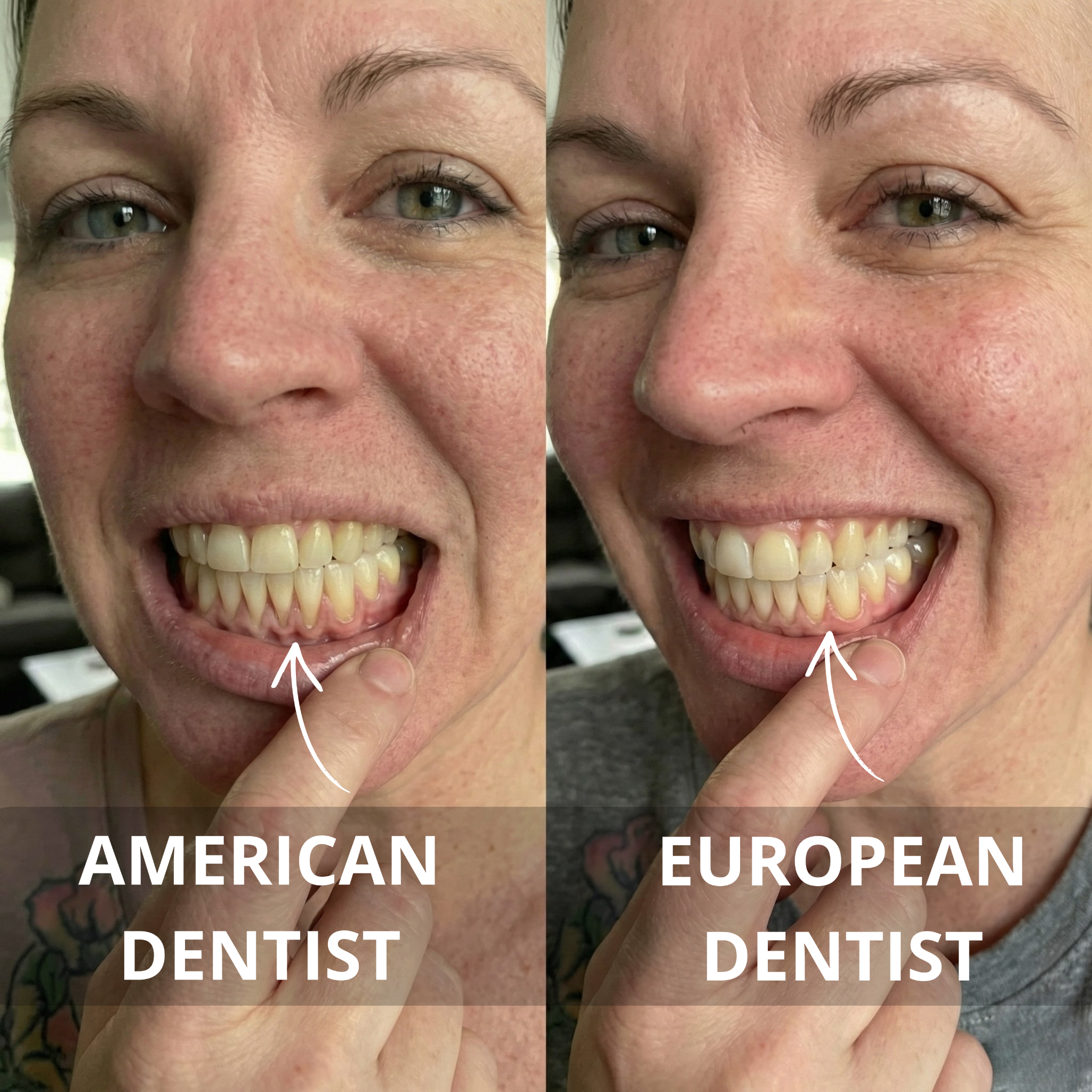
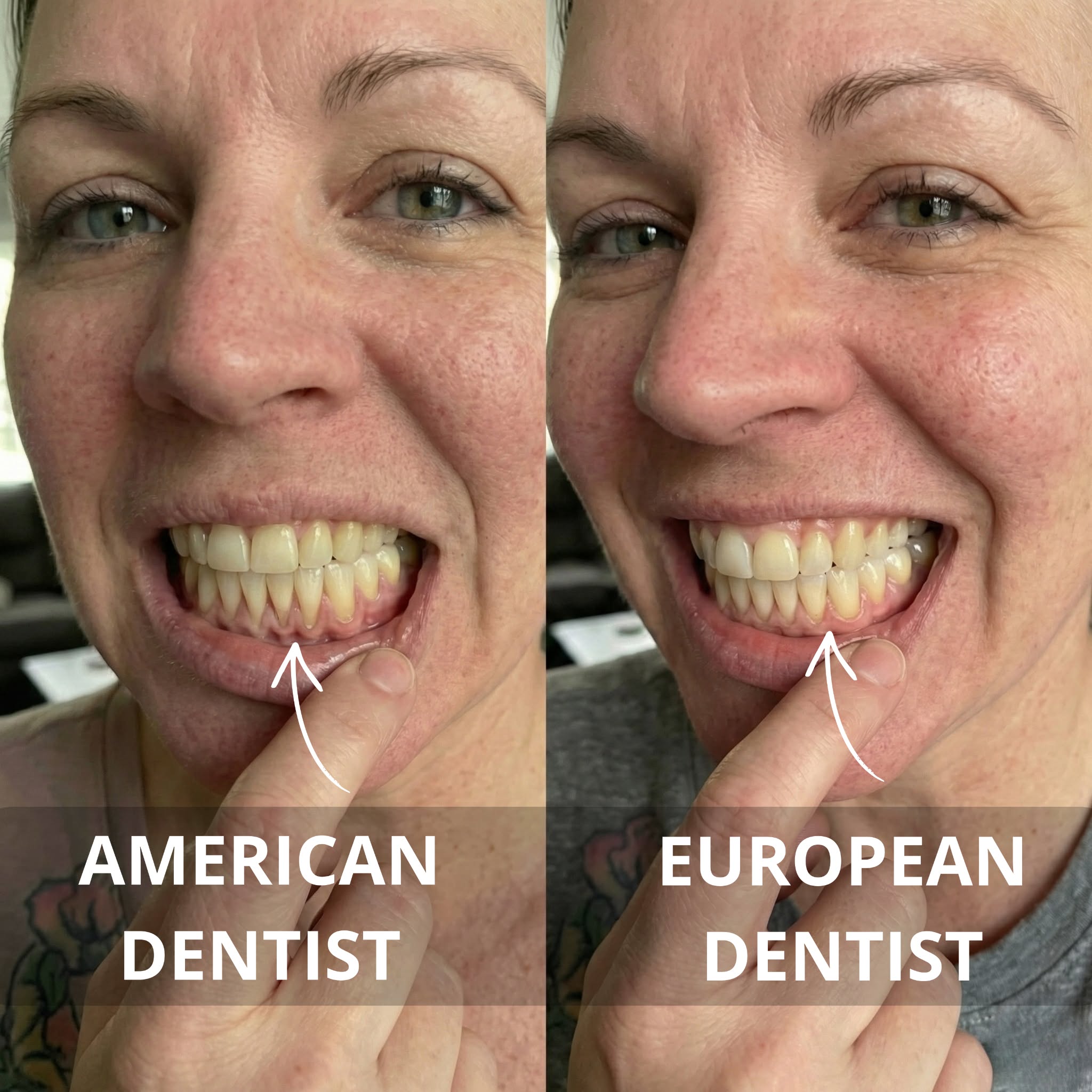
A dentist in Zurich looked at my gums and said, "Has anyone explained to you why this is happening?" Three years with my dentist back home. Exposed roots. Progressive recession. Not once had anyone explained why. I'm 52 years old. Last October, my husband surprised me with two weeks in Switzerland for our 25th anniversary. Lake Geneva. The Alps. Chocolate and cheese and mountain air. On day four, I bit into a piece of bread at breakfast and felt a sharp crack of pain through my lower front teeth. I'd been having sensitivity for months. Cold drinks. Ice cream. Sometimes just breathing in cold air. But this was different. This was constant. Throbbing. By that evening, I needed a dentist. The hotel concierge made some calls. Found someone in Zurich who could see me the next morning. Dr. Meier's office was on the third floor of a building near the university. Small. Immaculate. Nothing like the strip-mall dental practice I'd been going to for eight years back in Ohio. He examined my mouth. Took X-rays. Spent a long time looking at my gums. Then he sat back. "How long has your recession been progressing?" "About three years," I said. "My dentist has been monitoring it." "And what has he recommended?" "Soft brush. Sensitivity toothpaste. He said if it gets bad enough, I might need grafting." Dr. Meier nodded slowly. "Has he explained why your gums are receding?" I thought about it. Really thought. "He said it happens with age. And that some people are genetically prone to it." "But has he explained the mechanism? What's actually happening to the tissue?" I shook my head. Dr. Meier leaned forward. "Your gums are made almost entirely of collagen," he said. "Type 1 collagen. It's the structural protein that keeps the tissue firm, keeps it attached to your teeth, keeps it from pulling away." "After age 30, your body produces less collagen every year. By your early 50s, you're producing roughly half what you made at 25." He pointed at my X-ray. "Your hygiene is excellent. I can see that. But your gums are receding because they're running out of the material they're made of. You're not doing anything wrong. Your body just isn't providing what the tissue needs anymore." I stared at him. In three years of appointments, Dr. Harrison back home had never said any of this. "Why wouldn't my dentist tell me that?" Dr. Meier shrugged slightly. "American dental training focuses primarily on hygiene and surgical intervention. Monitor the problem, then fix it surgically when it becomes severe. The European approach—at least in some programs—focuses more on understanding why tissue fails and addressing the underlying cause." "So what do I do?" "There's research on topical collagen application," he said. "Applying collagen peptides directly to the gum line during brushing. It delivers the structural protein directly to the tissue that needs it." He wrote something on a notepad. "Type 1 collagen peptides. Topical. During brushing. Look into it when you return home." He fixed my immediate problem—the exposed root that was causing the acute pain—and sent me on my way. Total cost: 120 Swiss francs. About $140. But what he told me was worth more than three years of appointments with Dr. Harrison. That night, I couldn't sleep. At 11:15 PM, I opened my laptop in the hotel room while my husband snored. "Collagen gum recession" "Topical collagen peptides gums" "European research gum tissue" At 12:45 AM, I found a study from the University of Freiburg in Germany. They'd tracked 720 patients with gum recession over three years. Two groups. Group A: Standard protocol. Excellent hygiene, regular cleanings, monitoring. Group B: Same protocol, plus collagen peptides applied topically to the gum line during brushing. After 12 weeks, they measured. Group A: Recession continued to progress. Average worsening of 0.3mm. 28% eventually required surgical grafting. Group B: Recession stabilized in most patients. 12% showed measurable improvement in tissue thickness. Only 7% eventually required surgery. 7% versus 28%. Same starting point. Same hygiene. The only difference was addressing the structural deficiency. I read the methodology section three times. Dr. Meier had been exactly right. The German researchers explained it clearly: gum recession in patients with good hygiene is primarily a collagen deficiency issue, not a bacterial issue. Brushing removes bacteria but does not rebuild tissue. Topical collagen delivery addresses the structural cause that standard dental care ignores. I thought about Dr. Harrison. Three years of "we'll monitor it." Three years of "keep brushing." Three years of watching it get worse while he documented every millimeter. And not once—not a single time—had he mentioned collagen. Or explained why my gums were actually failing. Or offered anything except waiting for surgery. He wasn't malicious. He wasn't hiding anything. He just didn't know. His training hadn't taught him. His conferences didn't cover it. His dental journals apparently weren't publishing it. A dentist in Switzerland knew something my dentist in Ohio had never heard of. When we got home two weeks later, I searched for products. Most collagen supplements were pills or powders you drink. But the research was specifically about topical application—putting the collagen directly on the gums, not swallowing it and hoping some reaches your mouth. I found a company making exactly what the German study described. Type 1 collagen peptides for direct gum application. Arctic. $40. Ninety-day supply. I'd spent more than that on prescription sensitivity toothpaste that did nothing. I ordered it that night. When it arrived, I was skeptical. Three years of dental care hadn't stopped my recession. A powder I'd found because of a random dental emergency in Switzerland? But Dr. Meier's explanation made sense. The German research made sense. And I was tired of "monitoring" something that only got worse. The instructions were simple: brush with regular toothpaste, wet brush, dip in powder, brush gently along gum line for 30-60 seconds. Twice daily. I started that evening. Day 5: The constant background sensitivity I'd gotten used to was duller. Less sharp. Day 12: I drank ice water without wincing. First time in over a year. Day 18: I looked in the mirror after brushing. My gums looked different. Pinker. Less pale. Less of that thin, transparent quality they'd had. Day 25: I ran my tongue along my gum line. Fuller. Firmer. Like there was actual substance there. Day 40: I ate an apple. Bit right into it without thinking. No pain. I almost cried. Day 60: I took a photo. Compared it to one from before Switzerland. The difference was obvious. The roots were less exposed. The gum line looked healthier than it had in three years. Day 90: I went back to Dr. Harrison for my regular cleaning. The hygienist measured my recession. Then stopped. Looked at my chart. Measured again. "These numbers are better," she said. "That's unusual." When Dr. Harrison came in, he looked at the measurements. "Well," he said. "Your recession seems to have stabilized. Maybe even improved slightly in some areas." He looked at me. "Have you been doing something different?" I told him about Switzerland. About Dr. Meier. About the collagen explanation. About the German research. About Arctic. He was quiet for a moment. "I'm not familiar with that approach," he said. "We don't typically address recession that way. Our training focuses more on surgical options." "Dr. Meier said European training is different." Dr. Harrison nodded slowly. "I'd believe that. There's a lot of research we don't see here." He looked at my chart again. "Well, whatever you're doing, it's working. Keep doing it." That was fourteen months ago. My recession has been stable the entire time. My last measurement was actually slightly better than a year ago. No surgery. No grafting. No $15,000 bill. No weeks of eating soft food. I still use Arctic every morning and night. Thirty extra seconds. Same routine. And I think about Dr. Meier sometimes. Ten minutes in his office. A 120-franc appointment. And he explained more about my gums than three years with Dr. Harrison. Not because Dr. Harrison was bad. Not because he didn't care. Because American dental training is 15 years behind. Because "monitor and operate" is the model here. Because nobody teaches dentists to ask WHY tissue is failing—just how to measure it and when to cut. Here's what I wish I'd known three years ago: Your gums are made of collagen. When your body stops making enough, they break down. Brushing removes bacteria. It doesn't rebuild structure. "Monitoring" isn't treatment. It's watching the problem get worse. Your dentist isn't hiding the answer. They probably don't know it. European research figured this out years ago. American dentistry is still catching up. I'm not a dentist. I'm just someone who had a dental emergency in the right country. If your dentist has been "monitoring" your recession with no real explanation— If you've been told it's "genetic" or "age-related" with no solution offered— If you're doing everything right and still watching it get worse— You need to know what Dr. Meier told me in Zurich. What the German research proved. What American dentists aren't taught. Your gums are starving for collagen. And there's something you can do about it. Arctic has a 90-day guarantee. That's the same timeline as the research. Long enough to feel the difference. Long enough to see it. Long enough for your hygienist to measure it. I found this because my tooth hurt in Switzerland. You're finding it now. You don't have to fly to Zurich. You just have to try it. [GET ARCTIC NOW →]
Where the ad sends people
arctic-co.com
Read this if your gums are receding 👆
Arctic & Co
Learn more: arctic-co.com(opens in a new tab)