Natalie Harper
Natalie Harper Facebook ad: “Read This If You Feel Like Your Body Just Stopped Working”

Ran for 19 days, from April 21 to May 10, 2026, the last day Crush saw it.
Run by Natalie Harper on Facebook. Crush is not the advertiser and does not verify its claims. See this ad in Meta's Ad Library(opens in a new tab)
Want an ad like this for your product?
Crush makes new ad images for your product from this ad: your logo, your product photo, your offer.
Trials from $19.95 USD, then $79.95 USD a month. Cancel anytime.
About this ad
- Meta Ad Library ID
- 3474219036090052
- Platforms
- Facebook, Instagram, Audience Network, Messenger and Threads
- Relaunches
- 0
Ad text
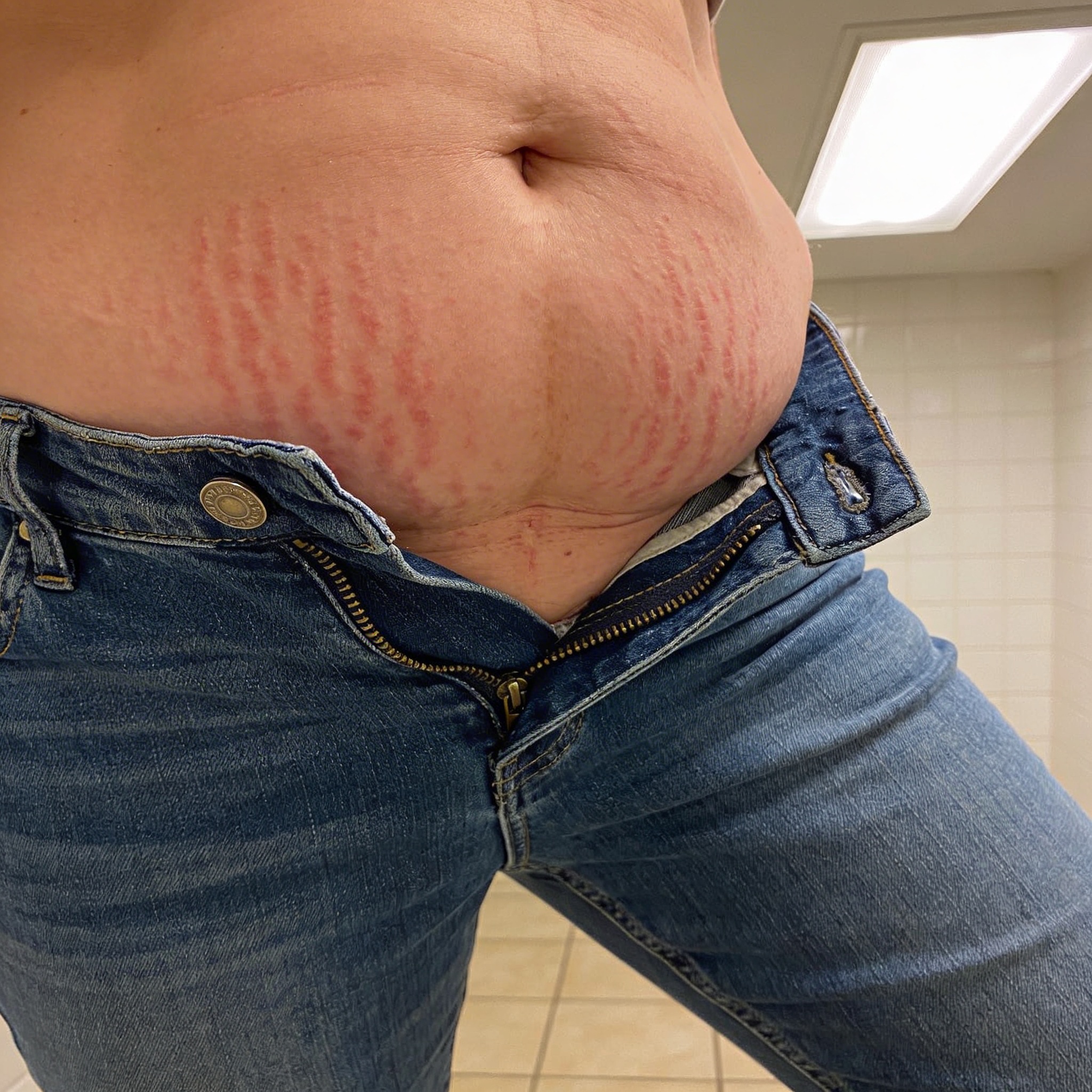
If you're on Zepbound and Miralax has gone from something you take occasionally to something you genuinely can't skip — this is why. And it has nothing to do with your constipation getting worse. I started Zepbound in March. By week three the constipation had arrived and I called my doctor's office. The nurse said to pick up some Miralax. Gentle. Safe. Osmotic — it's just water. Take it as needed until things settle down. I took it that evening. It worked by morning. Clean, reliable, no drama. I figured I'd need it for a few weeks while my body adjusted to the medication. That was seven months ago. The first two months I took it every morning without thinking much about it. It worked. The weight was coming off. Seventeen pounds by the time the weather turned. I was finally watching the scale move in the right direction consistently. The Miralax was just part of the routine. Like a vitamin. Fine. Then somewhere around month three I noticed something. I'd run out one evening and told myself I'd pick some up in the morning. No big deal. By 10 AM the brick below my ribs was so heavy I could barely concentrate. Nothing moved all day. By that evening I was more backed up than I'd been since the first week on the medication. One missed dose. That's all it was. I picked up the large tub the next morning. The one that lasts a month. I told myself it was just because I'd missed a day — that the constipation had just built up overnight. But I thought about it on the drive home. A few months ago, missing a dose wouldn't have done that. I started paying attention after that. Month four: one capful wasn't quite doing what it used to do. I started taking a slightly larger dose. Month five: I added Magnesium Citrate on the days the Miralax wasn't enough. The little bottle that tastes like flat lemonade. Worked once. Then I needed it again three days later. Month six: I was taking Miralax every single morning without exception, adding Magnesium Citrate twice a week, and still waking up with that brick more mornings than not. I called the office. Different nurse this time. "Some people need it longer term on this medication," she said. "It's safe to keep taking. Just stay hydrated." I told her the amount I needed kept going up. Brief pause. "That can happen. Just adjust the dose as needed." I hung up and sat there for a moment. Adjust the dose as needed. I'd been adjusting the dose for four months. Every adjustment bought me two or three weeks before I needed to adjust again. The amount kept going up. The relief kept getting shorter. My doctor had told me Miralax was safe. I believed that. I still believe it. What nobody had explained was why needing more of it every few weeks wasn't a dosing problem. The moment that broke me happened on a Friday evening in October. My sister was visiting from out of state. She'd booked the trip months earlier — one of those rare weekends where we'd actually planned things. Dinner reservation. A show the following night. A morning at the market on Sunday. Friday dinner was at a restaurant we'd both wanted to try for years. I got dressed feeling okay. We got there, ordered, and somewhere between the starter and the main course the brick arrived. Not gradually — suddenly. Like a valve had closed somewhere. By the time our mains came I was eating three bites and pushing things around the plate. By the time she suggested dessert I was counting the minutes until I could be somewhere I could undo my waistband. We skipped dessert. I said I was tired from the week. In the car on the way back she asked if I was feeling alright. I said I was fine. Just tired. She stayed for the weekend. I managed the show on Saturday with two Miralax and a Magnesium Citrate that morning. I skipped the market Sunday and told her I had some things to take care of. She flew home Sunday afternoon. I sat in the quiet house and thought about the weekend I'd been looking forward to for months. The dinner I'd barely eaten. The market I'd skipped. The fine and the tired and the managing. Seven months of managing. I made an appointment with a gastroenterologist that week. Not my Zepbound doctor. Someone new. He asked what I was taking for the constipation. Miralax daily, I said. Magnesium Citrate a couple of times a week. Have been for months. He nodded. "And you've noticed you need more of it than you used to?" Yes, I said. Significantly more. He leaned back slightly. "Here's something most people aren't told when they start taking osmotic laxatives long term," he said. "Miralax works by pulling water into the colon and flushing things through mechanically. It's effective. And your doctor is right that it's safe — there's nothing harmful in it." He paused. "But here's what it doesn't do. It doesn't involve your gut's own process at all. Your gut has its own natural way of moving things through — and that process needs regular use to stay strong. Every morning Miralax does the job, your gut's own process sits completely idle. It doesn't fire. It doesn't practice. It just waits." I asked what happened to a process that sat idle every day. "It gets weaker," he said simply. "Not because anything damages it. Just because it isn't being used. And a process that gets weaker needs more and more external help to produce the same result." He looked at me. "The escalation you've been living — needing more, more often, with shorter windows of relief — that's not your constipation getting worse. That's your gut's own process getting quieter every day Miralax does the job instead of it." I thought about seven months of the same morning. The capful that used to be enough. The larger dose. The Magnesium Citrate. The nurse telling me to adjust as needed. "So it's going to keep escalating," I said. "As long as you're bypassing the process instead of using it," he said. "Yes." I asked what actually used the process instead of bypassing it. "Your gut's own process starts with lubrication," he said. "Every day, the liver produces bile and releases it into the digestive tract. Bile coats the intestinal walls — and that coating is what allows everything to slide through. That's the natural process Miralax skips every single time. Miralax forces water in and produces output — but the walls were never lubricated. So the moment it wears off, everything stalls again. Dry walls, nothing moves, same brick by the next morning." He paused. "The liver releases bile in response to one specific thing — bitterness. Genuine, intense bitterness hitting the digestive system tells the liver to produce and release bile. Walls get coated. Things move through the way they're supposed to. And every time that happens, the gut's own process gets a use instead of a bypass." I asked why I couldn't just eat more bitter foods. "Think about the last time you ate something genuinely bitter," he said. "Not coffee. Not dark chocolate. Something that actually made you wince." I couldn't think of anything. "That's the problem. Modern food has had almost all its bitterness removed. Sweetened, processed, refined. So the signal was already weak before the medication. Zepbound — by suppressing appetite and slowing everything down — finishes the job. The liver barely gets the signal to produce bile. Walls run dry every day." He mentioned a product he'd started recommending to Zepbound patients in exactly this situation. Verdara Soursop Drops. Concentrated extract from the leaves and roots of the soursop plant — intensely, almost shockingly bitter. "The fruit itself is sweet," he said. "But the leaves and roots are a completely different thing. People across the Caribbean have used them as a digestive tonic for generations — long before anyone had language for why it worked. Now we do. The bitterness is concentrated enough to actually trigger a real liver response. Bile releases. Walls get coated. The gut's own process fires instead of being bypassed." He looked at me directly. "Every day you take Miralax, your gut's own process gets a little weaker. Every day something fires that process instead of replacing it, the process gets a use. A process that gets regular use stays strong. One that gets regular use after a period of weakness starts to rebuild." He paused. "Your doctor isn't wrong that Miralax is safe. But safe doesn't mean it has no cost. The cost is what you've been living for seven months. And it compounds every day you keep bypassing instead of firing." I went home and looked up everything I could find. The effect of GLP-1 medications on bile production is documented — it's in the prescribing information, it carries a specific warning. The connection between bile and gut motility is established physiology. What struck me most was the soursop history. People across the Caribbean have been using the leaves and roots as a digestive tonic for centuries — long before anyone had clinical language for why it worked. Now we do. The bitterness is intense enough to trigger a real liver response. Generations of use, and modern biology finally explaining what was happening. That was the first thing in seven months that felt like an actual answer. I ordered that night. I didn't stop the Miralax immediately. I wasn't ready to trust that yet. But I started the drops the same morning they arrived. Day 2: Something shifted higher up than I expected. Not lower, where the pressure had always lived. Higher. Like something upstream had loosened slightly. Day 3: I went to the bathroom without Miralax for the first time in seven months. I sat there for a long moment not entirely sure what had just happened. Day 5: I skipped the Miralax intentionally. Things still moved. Quietly. Without drama. Without the brick returning by noon. I didn't tell anyone. I didn't want to jinx it. Week 2: I stopped the Miralax entirely. The movement continued. That week I made plans without calculating how far I'd be from a bathroom first. I didn't notice until after — when I realised I hadn't done the calculation at all. Week 3: I got dressed one morning without checking the mirror sideways before I left. Week 6: My sister came back to visit. We did the dinner reservation. The one at the restaurant we'd both wanted to try. I ordered properly this time. Ate the whole thing. Said yes to dessert. She asked on the way home if I'd had a good time. I said yes. And I meant it completely. I thought about October. The three bites I'd managed. The market I'd skipped. The quiet drive to the airport on Sunday afternoon. Seven months of Miralax quietly making the next day without it harder. Three days on something that finally worked in the opposite direction. Verdara Soursop Drops are $35 for a 2oz bottle. 60-Day Money-Back Guarantee. If it doesn't work — full refund, no questions. You risk nothing. I can't make you try this. But I can tell you what I wish someone had explained to me in month one — before seven months of a daily dose that was getting larger every few weeks while I told myself it was safe. Miralax is safe. Your doctor is right about that. But every morning it does the job your gut should be doing, your gut gets a little worse at doing it. That's not a side effect listed on the label. That's just what happens to any process that gets repeatedly bypassed instead of used. Every day you keep taking it — the process gets quieter. The doses go up. The windows of relief get shorter. And the morning you decide you want to stop, you'll find it harder than you expected. Every day you take something that fires the process instead — it goes the other direction. Your doctor told you Miralax was safe. She just didn't explain what it costs. And the longer you keep paying that cost, the more you'll have to reclaim. You can check it out here: https://verdara.shop/products/soursop-drops P.S. — 60 days, full refund if it doesn't work. Pay attention to where the change starts — it won't be where you're used to feeling the problem. It starts higher up, before anything moves downstream. That's the bile releasing, the walls getting coated, the process firing instead of being bypassed. Give it a few days before you judge it. And if nothing changes — full refund, no questions. But if it does, you'll finally understand why the dose kept going up — and why it doesn't have to anymore.
Where the ad sends people
verdara.shop
Read This If You Feel Like Your Body Just Stopped Working
Verdara
Learn more: verdara.shop(opens in a new tab)