
Inactive· since May 12, 2026
- 120
- days it ran
- 0
- relaunches
Ad copy
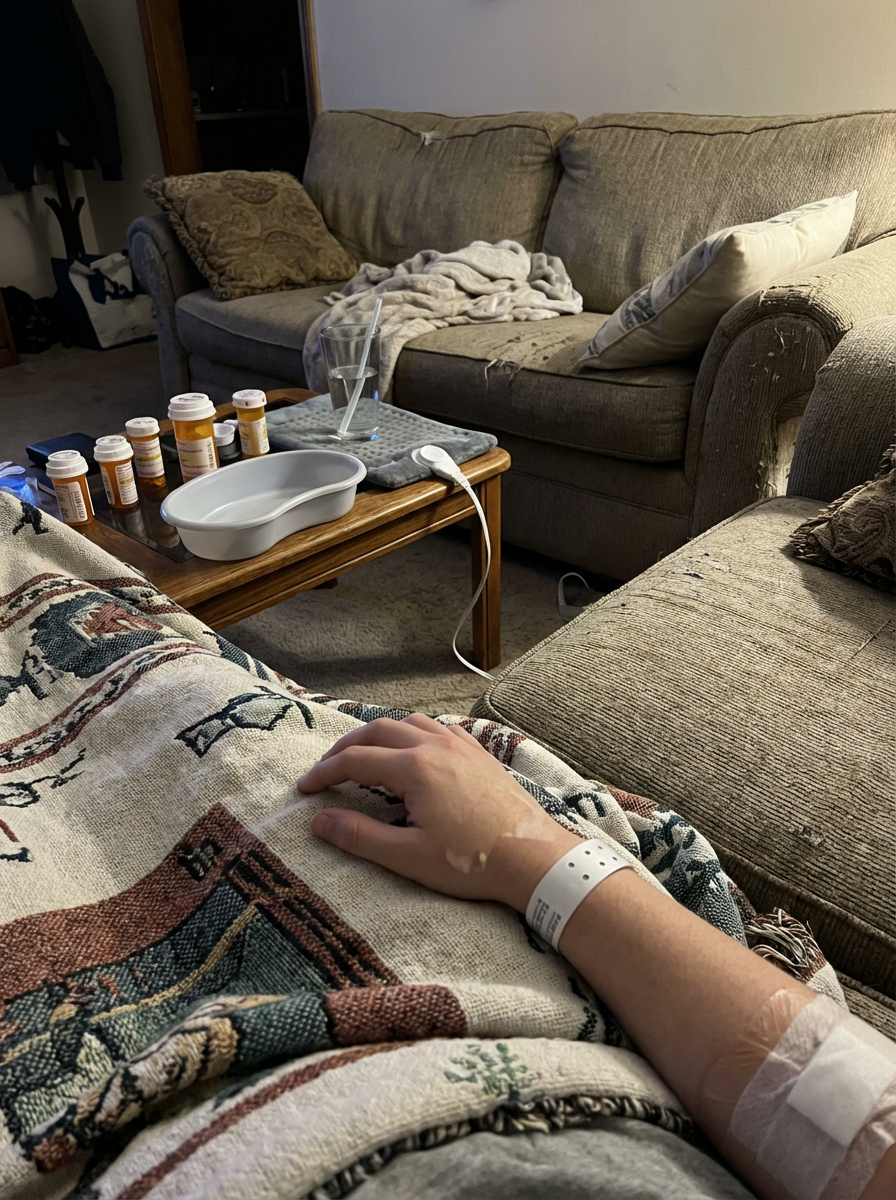
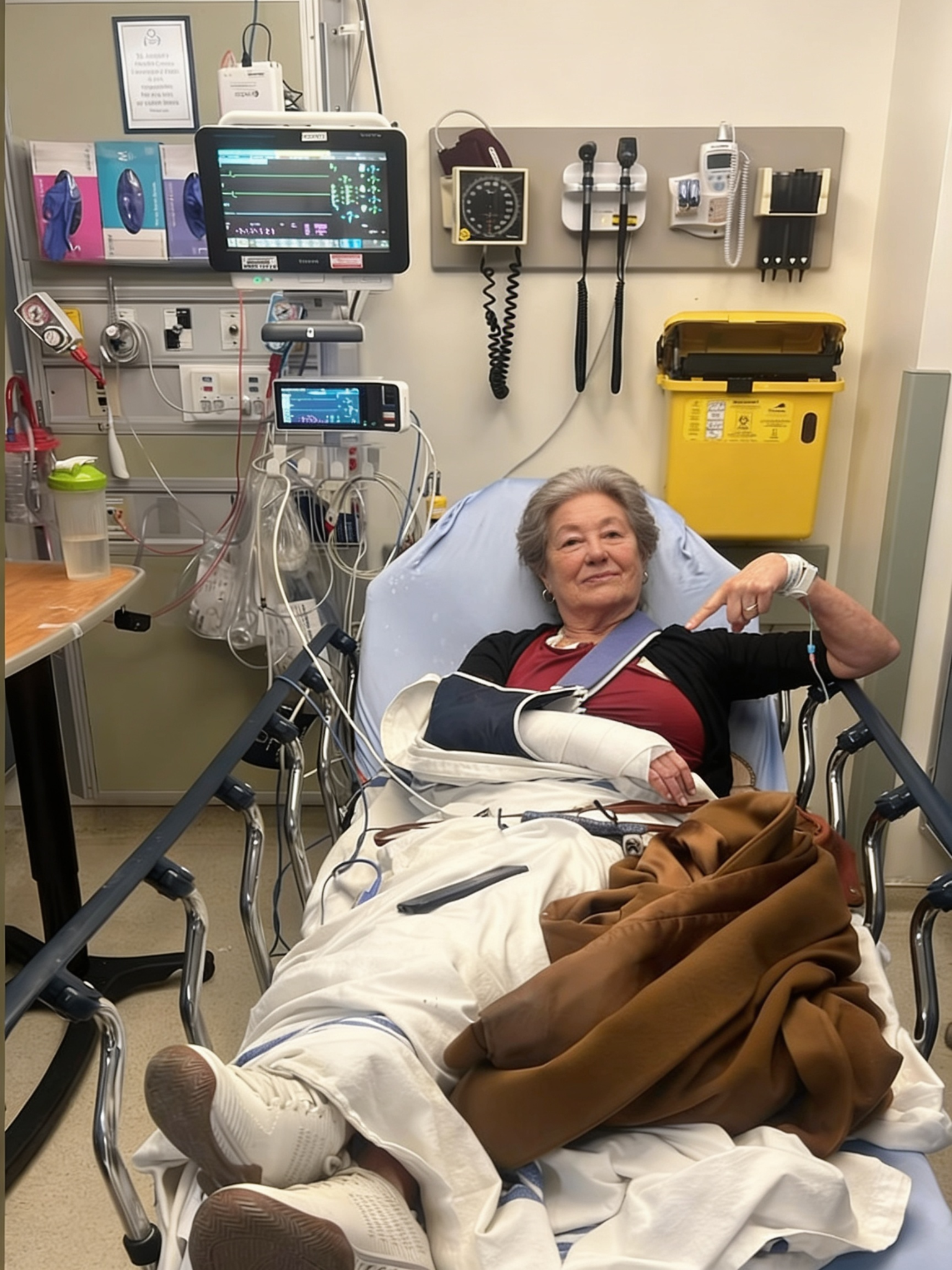
My wife stopped playing pickleball in the fall of 2022. She'd played three mornings a week for four years. Same group, same courts, same parking spot she'd claimed as hers. She was competitive in the way that made her fun to watch, she cared enough to actually try. She didn't announce it. She just stopped going. One Saturday I looked in the garage and saw her paddle propped against the wall, exactly where she'd left it. A little dusty. Not put away. Just left there, like she'd meant to come back. I didn't say anything either. That was the first sign I noticed. Not the burning at night, not the medication changes, not even what happened in the bathroom six months later. The paddle. Because the three mornings a week were the thing she'd built her whole schedule around for four years, and the week she stopped going, I understood something had changed that wasn't going to un-change on its own. My wife made me promise not to post this. She doesn't want people to worry. But if your spouse has diabetic peripheral neuropathy, I need you to keep reading. The neuropathy had been building for three years by then. It started the way she described it to me: tingling in her feet at bedtime. She mentioned it once in passing. Her doctor said circulation changes with age. She let it go. Then the burning started. I'd wake up at 2am and she'd be gone. I'd find her in the bathroom, sitting on the edge of the tub, running cold water over her feet. She'd look up and say "go back to bed, honey." I'd go back to bed. I'd lie there listening to the water run. She saw her neurologist. Nerve conduction test. Diagnosis: diabetic peripheral neuropathy. Gabapentin — 300 milligrams, three times a day. I watched what happened next. Nine months on gabapentin. The burning dulled a little. But she wasn't herself. She'd walk into a room and stop, trying to remember why she was there. She couldn't remember our neighbor Carol's name. Carol, who'd been bringing us tomatoes every August for 19 years. She gained 11 pounds in six weeks. She told me she felt like she was underwater. I went with her to the appointment where she told the doctor this. The doctor increased the dose. I pushed back. I said: you're increasing a medication that's making her feel like a different person. The doctor said the alternatives were worse. I didn't know what the alternatives were. That was the problem. She stopped driving after dark because she couldn't trust her foot on the pedal. She stopped going to the grocery store alone because she was afraid of falling in a crowded place. She stopped going to church because she couldn't stand for the hymns without swaying. She stopped meeting with her friends for pickleball. And one day I noticed a box in the back of the closet. A pair of black heels she'd worn everywhere, to our daughter's rehearsal dinner, to every occasion she'd had for years. In a box. Not thrown away. Just put away. She hadn't said anything about them. I didn't ask. On a Tuesday morning in March, I came home from the hardware store and found her on the bathroom floor. She'd stepped out of the shower. Her foot touched the bathmat and she felt nothing. No texture. No feedback. Her ankle rolled. She went down. Her wrist took the impact. She'd been on that floor for forty-five minutes. I won't describe the look on her face when she heard me come in the door. I've thought about it every day since. At the ER, they set her wrist and told her she was lucky it wasn't her hip. That night, after I helped her into bed because of the cast, I sat on the edge of the mattress for a long time. Then I said something I've regretted ever since. I said: "Maybe it's time we look at other arrangements." She knew what I meant. She didn't say anything. I turned off the light. I lay there in the dark and told myself I was going to find something else. That I wasn't going to make that call. That there had to be something I hadn't found yet. For the next two weeks, while she slept, I was on my computer. Not looking at facilities. Looking for something else. I'm a retired engineer. Boeing, 34 years. I don't take things on faith. I know how to find primary sources. I started with PubMed. Magnesium, B12, alpha lipoic acid, essentially every compound she'd been prescribed or tried. I read until 1 and 2am. I printed things out and made notes. What I kept running into was the same problem. Studies showing these compounds helped neuropathy mostly used intravenous delivery, straight into the bloodstream. The studies using oral supplementation showed inconsistent results. Reviewers kept noting that clinical significance of oral administration was unclear. I read that sentence in three separate meta-analyses. Unclear. Not that the compounds were wrong. That the delivery was. I started searching a different question. Not "what helps neuropathy" but "why doesn't oral magnesium reach peripheral nerves." Turns out, oral magnesium has a ceiling. Even in a healthy gut, 30 to 40 percent of what you swallow actually absorbs. In diabetics, gastroparesis — slowed digestive motility — is extremely common. Most people have it without knowing it. It compresses that ceiling further. You might be delivering 10 to 15 percent of what you swallow to your bloodstream. And then it still has to reach peripheral nerve tissue. The nerves in the feet are the last stop on the delivery chain. By the time those compounds compete with everything else in circulation, the periphery gets whatever's left over. She'd had B12 injections for six months. Her blood levels looked great. But blood levels aren't peripheral nerve tissue levels. Getting from the bloodstream to damaged peripheral nerves is a different problem. I found a study from the University of Sydney, published in the Journal of Palliative Medicine in 2023. Researchers applied magnesium chloride directly to the limbs of peripheral neuropathy patients every day for 12 weeks. Neuropathy symptom scores dropped significantly at weeks 8 and 12. Transdermal delivery — absorbed through the skin, bypassing the stomach entirely — showed real benefit where oral delivery hadn't. Same compounds. Different door. The stomach was the wrong door. I came into the bedroom one evening with my laptop and a printed stack of papers. She looked at me. "Before you say anything," I said. "Just look at this with me." She listened. I showed her the studies. She was quiet for a while. Then she said: "Dennis. I've tried magnesium for months. It didn't do anything." "I know," I said. "That's what I'm telling you. It didn't reach your nerves. That's the point. The delivery was wrong." She looked at the papers. "So what's different about a patch." "It skips the stomach. Goes straight through the skin. No absorption ceiling. No gut wall. No competing with everything else in your circulation before it gets to your feet." She picked up the study. Read the conclusion. She didn't say yes right away. My wife doesn't say yes to things right away. But she didn't say no. I'd already been looking. Most patches had one compound. Magnesium only. A few had two. None had the full stack — magnesium chloride, alpha lipoic acid, B12, and folic acid together — in a transdermal format. Then I found NerVana+. All four. One patch. I ordered it that night. The patches arrived eight days later. I helped her apply the first one because of the cast. Nothing happened. We didn't say anything about it. Day nine: she slept through the night. I woke up at 3am out of habit checking. She was asleep. I lay there listening. Week two: I watched her make coffee at the counter. She was looking out the window. She wasn't checking the floor. For two years she'd looked down every time she stood up, orienting herself, making sure she knew where her feet were. I'd gotten so used to watching her do it I didn't notice when she stopped. She didn't notice either. I didn't say anything. I didn't want to jinx it. Week three: She walked to the mailbox and back without holding the railing. She came back inside and said: "Did you see that?" I said: "I saw." Week five: She asked if she could take the car to her sister's for dinner. It was evening. I said yes. I stood in the driveway and watched her pull out. First time she'd driven after dark in fourteen months. Week eight: Neurologist follow-up. I drove her. The doctor ran a nerve conduction study. She came out of the exam room and looked at me across the waiting room. "She said 'whatever you're doing, keep doing it.'" I said: "I know." Last Sunday she drove herself to church. I stayed home. I had a project in the garage. She called me from the parking lot after the service. She said: "David. I stood for all three hymns." I didn't say anything for a second. She said: "Are you there?" I said: "Yeah. I'm here." The box with the heels is still in the back of the closet. We haven't talked about it yet. But she’s back playing pickleball with her friends now. Her first game back she came home like she never stopped. I'm not the kind of person who says I told you so. But I'm glad I didn't make that call. NerVana+ has all four compounds — magnesium chloride, alpha lipoic acid, B12, and folic acid — in a transdermal patch. No gut involved. No absorption ceiling. No last stop on the delivery chain that never gets reached. If you're watching someone you love lose things the way I watched my wife lose them, the driving, the activities with friends, the standing for hymns, the shoes she stopped wearing, there's a version of this where that's not where the story ends. They've been getting popular and I know they can't always keep up with demand. I want to apologize in advance because if you click the link below, you might see that they're sold out. If they're not, there's a 60-day money-back guarantee. 60 days. If it doesn't help, you get your money back. No argument. 👉 https://uk.avalaine.com/pages/avalaine%C2%AE-magnesium-nerve-relief-patches-story PS: I still have the folder printed out. It's on the kitchen counter. My wife calls it "Dennis's evidence." 60 days, full refund if it doesn't work. Worth trying before you make a decision you can't take back.
Diabetic Neuropathy Relief In Weeks
"I've been feeling like my old self again since starting with these patches. Years of pain erased."
SHOP NOWLike this ad? Make it yours.
Crush rebuilds this exact creative around your product — your brand, your colors, your offer — in about a minute.