Linsay - Menopause Matters
Linsay - Menopause Matters Facebook ad: “Over $800 worth of failed products in the trash”
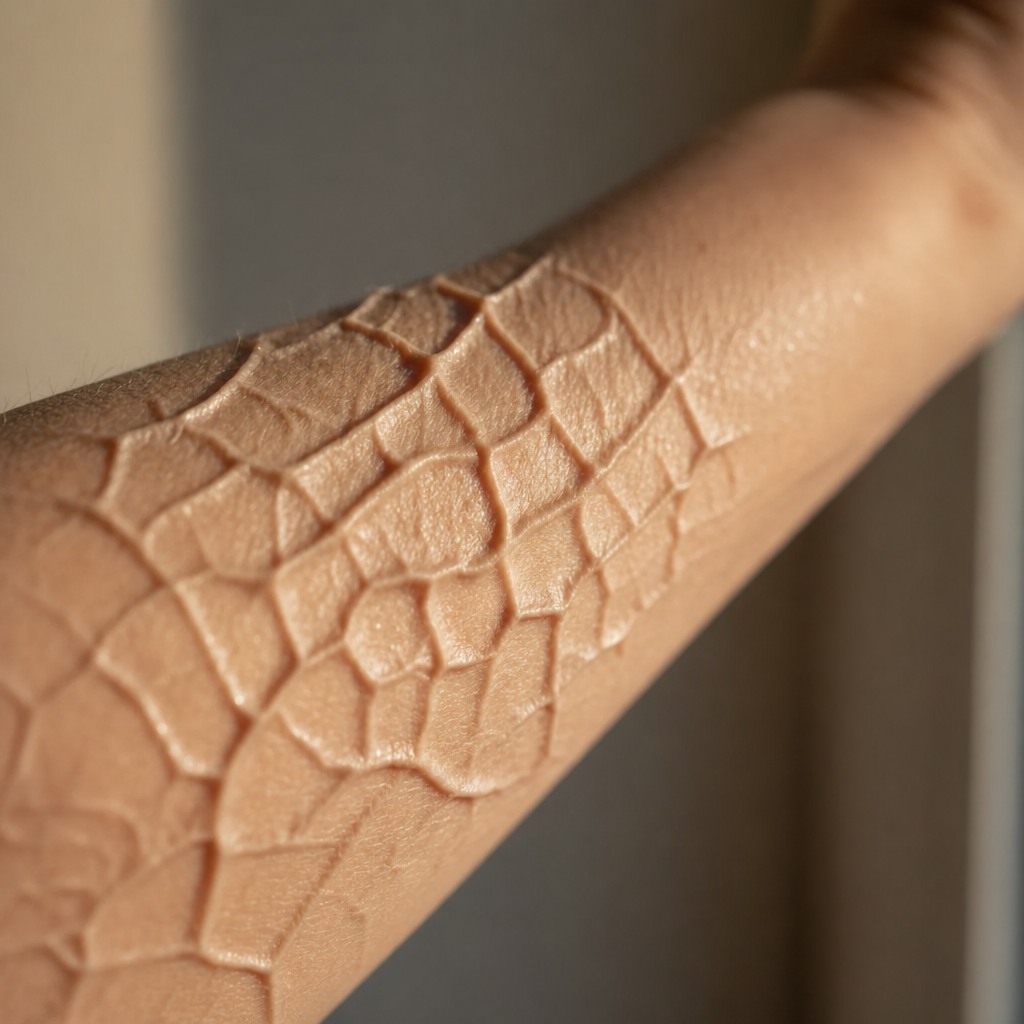
Ran for 9 days, from July 27 to August 5, 2026, the last day Crush saw it.
Run by Linsay - Menopause Matters on Facebook. Crush is not the advertiser and does not verify its claims. See this ad in Meta's Ad Library(opens in a new tab)
Want an ad like this for your product?
Crush makes new ad images for your product from this ad: your logo, your product photo, your offer.
Trials from $19.95 USD, then $79.95 USD a month. Cancel anytime.
About this ad
- Meta Ad Library ID
- 3620215591468226
- Platforms
- Facebook, Instagram, Audience Network, Messenger and Threads
- Relaunches
- 0
- Niche
- Skincare & Beauty
Ad text
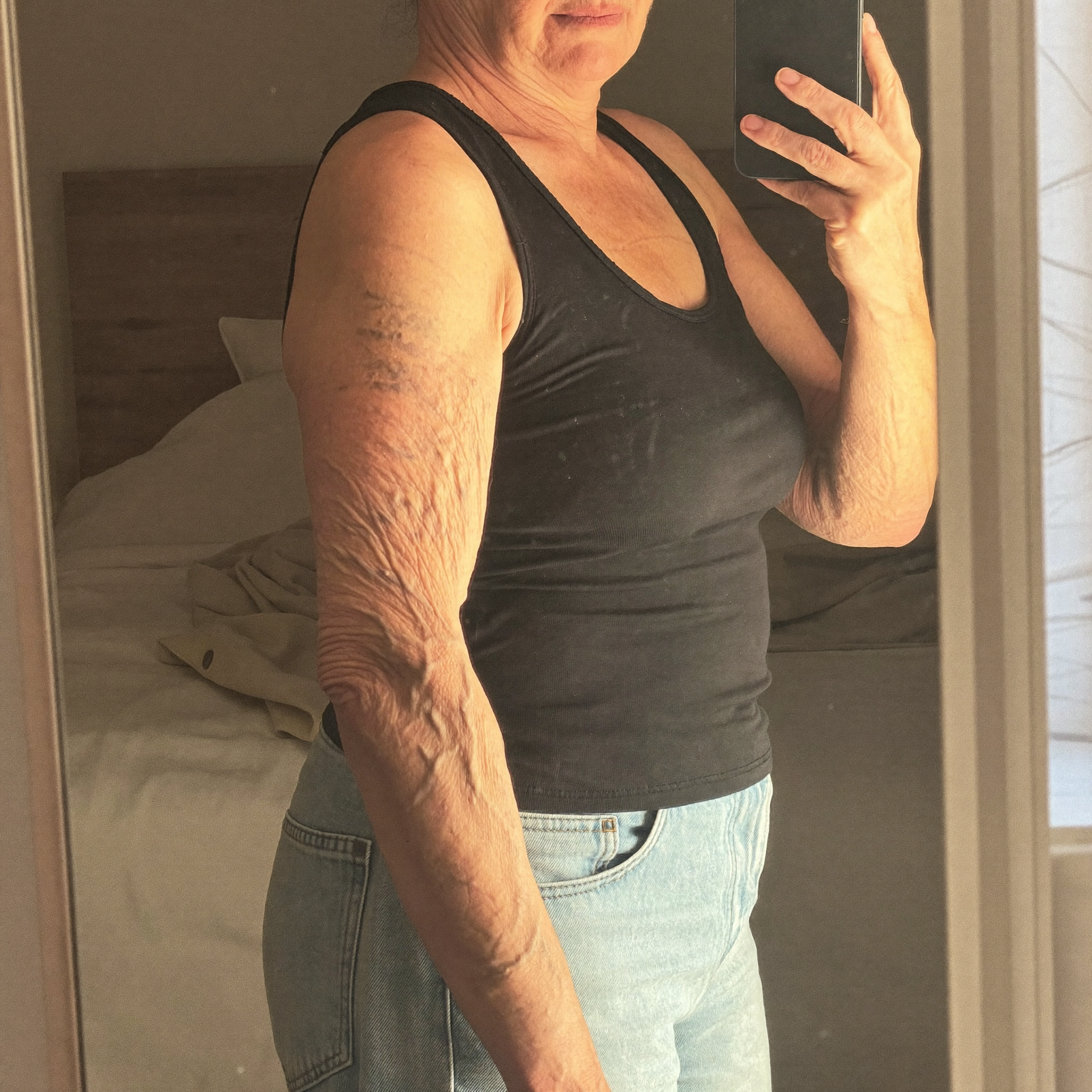
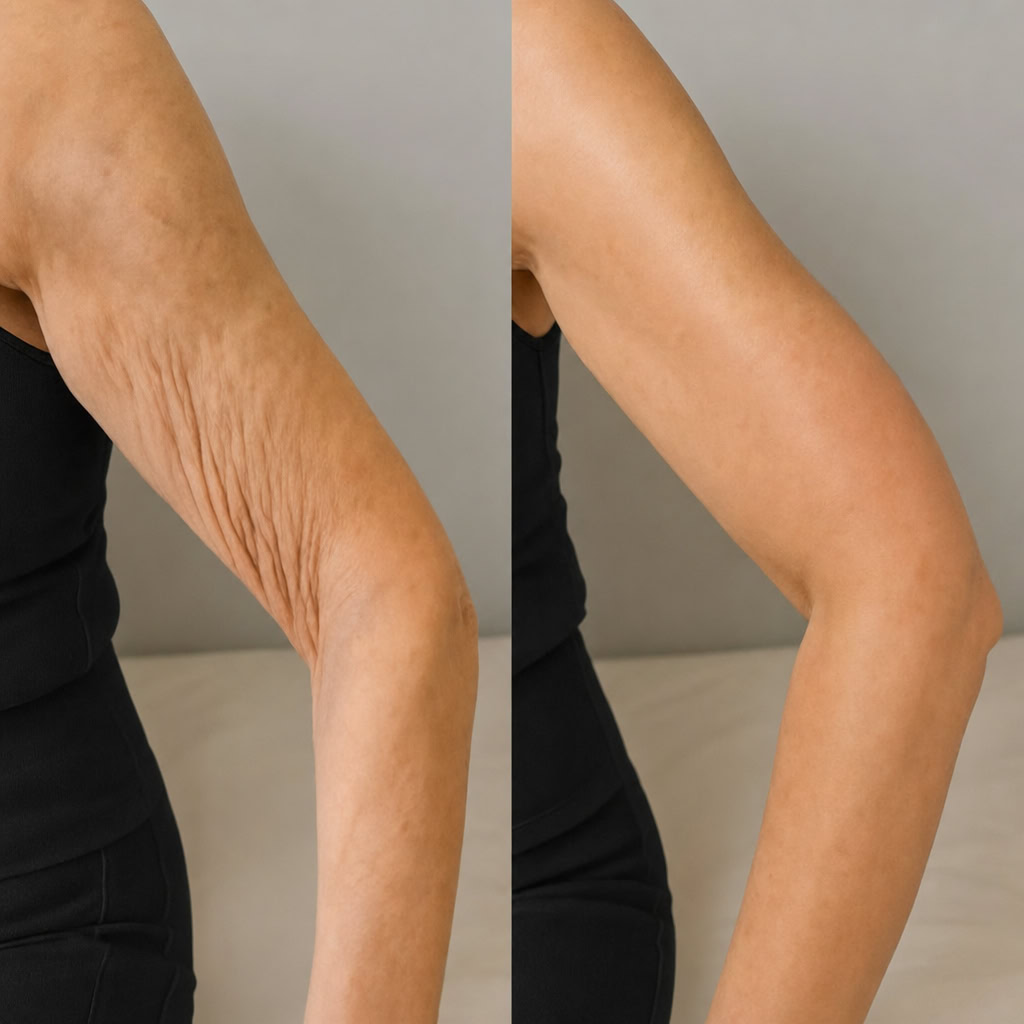
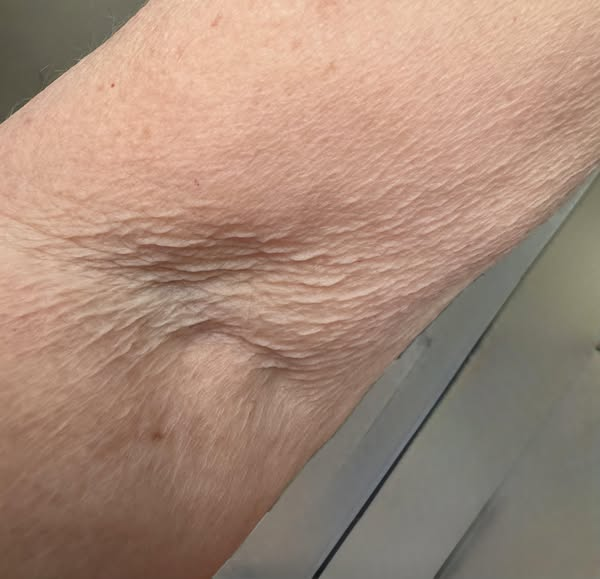
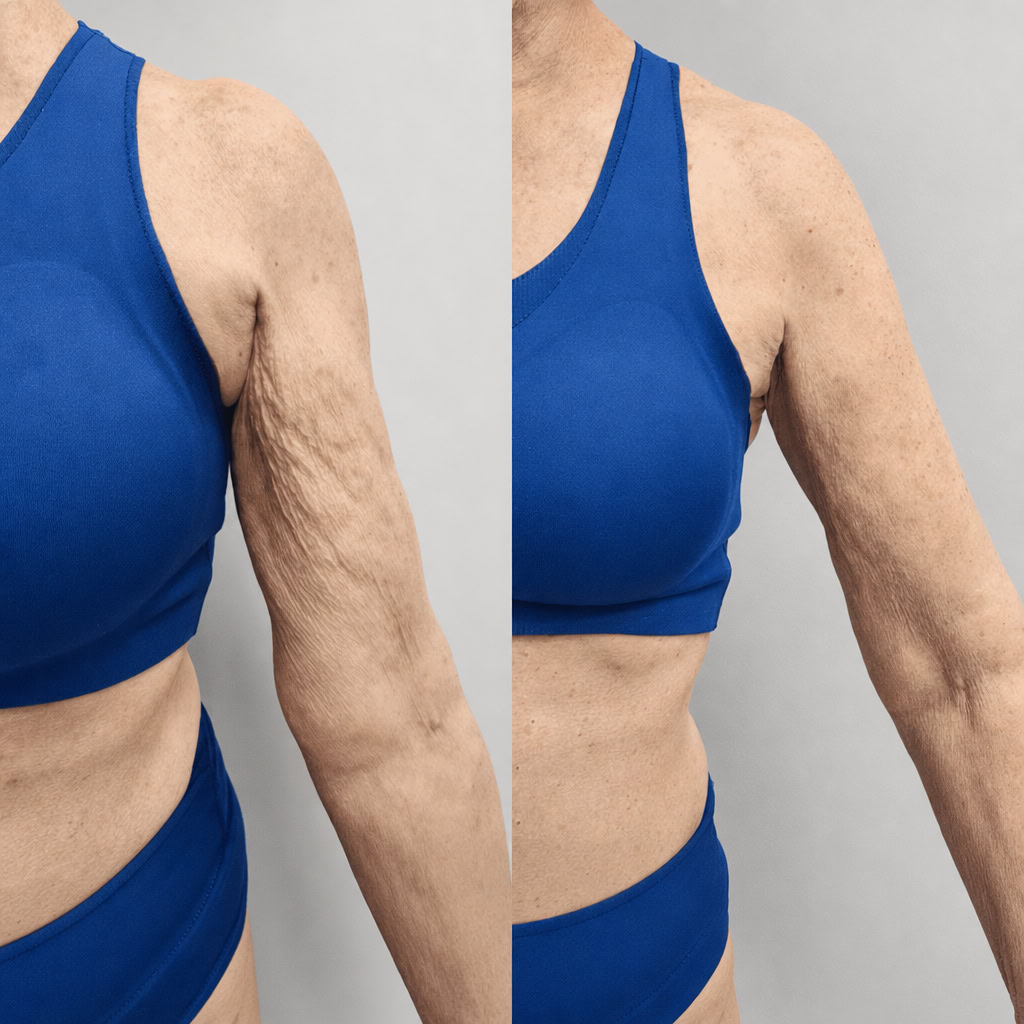
I've spent fifteen years taking care of my face. Serums, sunscreen, a dermatologist twice a year. My face is fine. It looks my age, maybe a little younger. And the inside of my arm turned to crepe paper in three months. Same body. Same age. Same hormones. How does half of me age normally while the other half collapses? ═══════ That question is what drove me crazy. Not the skin itself. The contradiction. Because I am not a woman who let herself go. The opposite. I'm 57 and I've done everything you're supposed to do. Vitamin C serum in the morning, cream at night, never outside without sunscreen — winter included, even to go get bread. Two dermatologist appointments a year, the way other people go to the dentist. And it paid off. My face holds. People guess me younger than I am, and I won't pretend I wasn't proud of that. Fifteen years of discipline shows. So when my arm gave out, the first thing I thought wasn't even this looks bad. It was: this makes no sense. ═══════ I noticed the arm one evening taking off my makeup. I was standing at the bathroom mirror, leaning forward, one hand on the edge of the sink. And I saw, on the inside of my forearm and above the elbow, a texture I had never had. Fine horizontal lines. Crepe. It pleated when I bent my arm, half-uncreased, pleated again. I raised my eyes to my face in the mirror. Smooth. Rested. Holding. I looked back down at my arm. Thirty years older. Same light. Same woman. Same second. Two different ages on one body. And I can tell you roughly when it started. Last summer I still had the arms I've always had. By September, no. Somewhere in between, something switched off. ═══════ What I did next, nobody sees. But you might know it. I kept taking care of my face, obviously. And I started hiding my arms. Three-quarter sleeves. A light shawl over my shoulders, even on a restaurant patio. I became an expert in sleeves. The absurd part is the mismatch. Up top, a woman who takes care of herself. Twelve inches lower, a woman in hiding. My daughter-in-law photographed me at a family lunch this fall. Lovely picture, good face, everyone said you look radiant. When she sent it to me, before I looked at my own smile, I zoomed in on my arms to check the sleeve had covered them. That's when I understood the problem wasn't in my arm. It was in my head. I was managing an angle, constantly. A woman who took fifteen years to like her own reflection, turned back into a woman monitoring one piece of herself. ═══════ I brought it up with my dermatologist. The one I've seen twice a year for fifteen years. The person best placed to answer me. I showed her. I said, "Look — my face is holding up fine, and my arm… I don't understand. It's the same skin. The same body." She looked. She was kind. She said: "It's age, and a bit of menopause. Body skin is thinner, and it's less looked-after than facial skin. It's normal. There are moisturizers for comfort, but for the texture itself, honestly, there isn't much." Normal. That word got stuck sideways. Because "less looked-after" didn't hold up. Fine — I've cared for my face for fifteen years. But my arm did not suddenly decide to age thirty years in three months because I hadn't put serum on it. Neglect shows up over twenty years. Not over one summer. I believed her anyway. You believe your dermatologist, especially yours, after fifteen years. And I left with the idea that I was supposed to grieve my arms. ═══════ What I bought after that, in order, because if you're reading this you've probably lived it: The body version of the same serum I use on my face, $74. Eight weeks. Nothing. A firming cream from the drugstore, $48. Ten weeks. Nothing. A retinol body cream, $39. It irritated my skin — tight, red — and for the texture, nothing. Collagen capsules, two boxes, three months, about $89. My nails grew faster. My arms, nothing. An at-home radiofrequency device I saw in an ad, $126. Ten minutes per arm, three nights a week, two months. Nothing. Total: $376 over six months. Five different things. Not one of them changed the texture in any way I could measure. And the worst part isn't the money. The worst part is that during those six months the clock was running, and I didn't know it yet. ═══════ It was a friend, Helen, who told me about Anne. Helen had the same problem I did, and she said, "Call her, she's in the city this month, she doesn't work like the others." Anne is a French esthetician, in her seventies, nearly forty years in practice working on women's skin after menopause. Exactly my case. I didn't really believe in it. I'd already paid $376 to be told there was nothing to be done. But Helen kept pushing, so I went. Anne pressed her thumb into the skin at the top of my arm. One second. She let go. The dent stayed. It took almost five seconds to come back. Then she did the same thing on my cheekbone. The dent vanished immediately. She looked at both, one after the other. Then she looked at me. "You've been taking care of your face for a long time, haven't you? Seriously, I mean." Fifteen years. Dermatologist twice a year. She nodded, gently. "Then you already have the answer to your question. You just don't know it yet. It isn't that your arm is aging faster than your face. It's that they were never the same skin to begin with. Your dermatologist isn't lying to you — she has the wrong category." ═══════ She sat me down and took out a sheet of paper. Normal aging, she explained, is about one percent of collagen lost per year. Slowly, steadily. That's what your face is living through, and that's what your dermatologist is trained to recognize. On a face, she's right — over twenty years, there isn't much to be done. "But look at what I just did. The same thumb, the same pressure, two places on the same woman. Five seconds on one. Instant on the other. That is not one body aging at two speeds. That is two different tissues." She drew two cross-sections, side by side. "Facial skin has a thick, dense support layer and it makes its own oil, all day, its whole life. The inside of your arm has one of the thinnest support layers on the body and almost no oil supply of its own. They have never been comparable." "So when the hormonal shift arrives, it hits both. But your face has enough structure to lose one percent a year and keep its shape. Your inner arm doesn't. When the cushion underneath deflates, there's nothing left holding the surface. It creases. Not over twenty years — over one summer." Same shock. Two tissues. Two completely different outcomes. Then she drew the depth. The surface, at the top. Then, four to five millimeters down, where the support lives. "That's where the collapse is. Not on the surface. Which is why nothing you put on top ever touched it — not the cream, not the serum, not the radiofrequency. They stay up here. The problem is down there. And that's also why your facial serum did nothing on your arm. It isn't that it's a bad serum. It's that no cream, however good, travels that far down. You were repainting a wall above a basement that was sinking." That explained everything. The contradiction that had been driving me crazy finally had an answer, and it wasn't the one I'd been given. My arm hadn't aged faster than my face. It had never been the same skin, and it had taken the same blow with none of the structure to absorb it. Then she said the thing that made my hands go cold. "From the moment it starts, you have roughly eighteen to twenty-four months during which the cells that build the structure — the fibroblasts — are dormant, not dead. Wakeable. After that, they settle into the sleep. Permanently. Count backward from the day you noticed." That evening at the sink was seven months ago. The window closes somewhere around twenty. I had, at best, a little over a year. ═══════ She didn't name a brand. She wrote three requirements on the sheet and said, "Find a product that does these three things. I don't care which one." One — it has to be an oil, not a cream. A plant oil light enough to cross the skin barrier and reach the layer four or five millimeters down. Creams stay on the surface; that's their nature. "You could have used the finest serum in the world on that arm. It would still have been paint on a wall above a sinking basement." Two — it has to contain something that wakes the dormant fibroblasts. She named bakuchiol: the effect of retinol, without the irritation or the sun sensitivity. Exactly what had made my retinol body cream fail. Three — it has to put back the lipids menopause removed, so the structure can rebuild. She talked about a camellia oil the skin recognizes as its own. "Your face has been making its own oil for fifty-seven years. Your arm never did. That's what you're giving it back." "All three. Twice a day. Otherwise it's pointless." She handed me the sheet. "Check it yourself. Read about cushion collapse. Then decide." ═══════ I searched for two evenings. It's a real subject. Real research, clinics in Paris, in Milan. Then I went into a Facebook group of women my age and typed arms. The same name kept coming up. Eraé Queen Oil. I read that thread twice. The same things kept surfacing. The thumb test going from five seconds to under two in ten weeks. A sleeveless dress at a wedding — the first since 2019. A woman who'd been hiding under shawls all summer, showing up to her granddaughter's birthday in a tank top, and the look on her daughter's face. Women whose dermatologists had told them nothing could be done, writing back at week twelve to say the texture hadn't improved — it had changed. I looked at the formulation. Bakuchiol. Camellia. Exactly Anne's sheet of paper. I ordered it that night. The shawl I'd been draping over my shoulders was still there, on the back of the chair, while I clicked. ═══════ I'm going to be honest, because I've been lied to enough times. The first week, nothing spectacular. The oil absorbs in thirty seconds, no greasy film, but I thought, here we go, another one. Day 12 — out of the shower, I looked at the inside of my arm. The fine lines seemed less hollow. Not smoothed over on top. Like something was filling in underneath. I told myself I was imagining it. Week 4 — I did the thumb test again. The dent came back in a little over three seconds. It had been taking five. Week 6 — at the bathroom mirror, taking off my makeup, I looked at my arm and my face one after the other. For the first time in months, the gap had closed. They were starting to be the same age. I did the test twice more to be sure I wasn't inventing it. Week 8 — I had lunch downtown with friends in a sleeveless blouse, and I only realized on the way back to the car. I hadn't brought a shawl. I hadn't thought about it once during the meal. That's what I wanted to tell you. It isn't the skin. It's that half of me stopped contradicting the other half. Being one woman again, the same age from top to bottom, instead of a woman managing an angle. ═══════ If your face is holding up but one part of your body has betrayed you — If your doctor told you it was "normal," that body skin is just "less looked-after" — She has the wrong category. It isn't that your arm is aging faster. It's that your arm was never the same skin as your face — thinner, with far less structure underneath, and no oil of its own. Same hormonal shift. Nothing there to absorb it. This isn't simply age. It's a recent collapse, triggered, and repairable — but not forever. From the beginning, the window is eighteen to twenty-four months. Most of us are already at twelve or fifteen by the time we understand what's happening. Most of us have less time than we think. Eraé Queen Oil does the three things on Anne's sheet of paper: ✓ An oil, not a cream — light enough to cross the surface and reach the layer where everything you've used, even the best of it, stayed sitting on top. ✓ It wakes the dormant fibroblasts — bakuchiol, the effect of retinol without the irritation or the sun sensitivity. ✓ It rebuilds — Camellia Japonica, which the skin recognizes as its own, restoring the lipid barrier menopause removed. Sea Buckthorn and Evening Primrose replace the structural lipids it stopped making. Four plant-and-sea-derived heroes. All three jobs, at once, twice a day. 60-day money-back guarantee. Full refund. No forms, nothing to ship back, no questions. A bottle you can send back. The months you have left, you can't. ═══════ I'm not giving you any stock urgency, any countdown. This isn't a promotion. It's a clock. The cells don't switch back on by themselves. No cream turns back time. There's a window, and at this minute you're inside it, or you're not. I'll put the link just below. P.S. Three months now. Second bottle. The math is almost insulting next to the $376 from the six months before — the body serum, the cream, the collagen, the radiofrequency device, all of it physically unable to reach where the problem was. I spent fifteen years giving my face something my arm was never built to give itself. It took three months to close the gap. P.P.S. My dermatologist isn't a liar. She told me what she was taught: body skin is thinner, less looked-after, it's age. For a slow decline over twenty years, she's right. For half a body collapsing in three months while the other half holds, it's the wrong floor. If one part of you gave out all at once while the rest held, count your months backward. Then decide while you still can.
Where the ad sends people
erae-paris.com
Over $800 worth of failed products in the trash
French Wisdom
Learn more: erae-paris.com(opens in a new tab)