
Laura Bennett
Active· since Nov 13, 2025
- 310
- days running
- 2
- relaunches
Ad copy
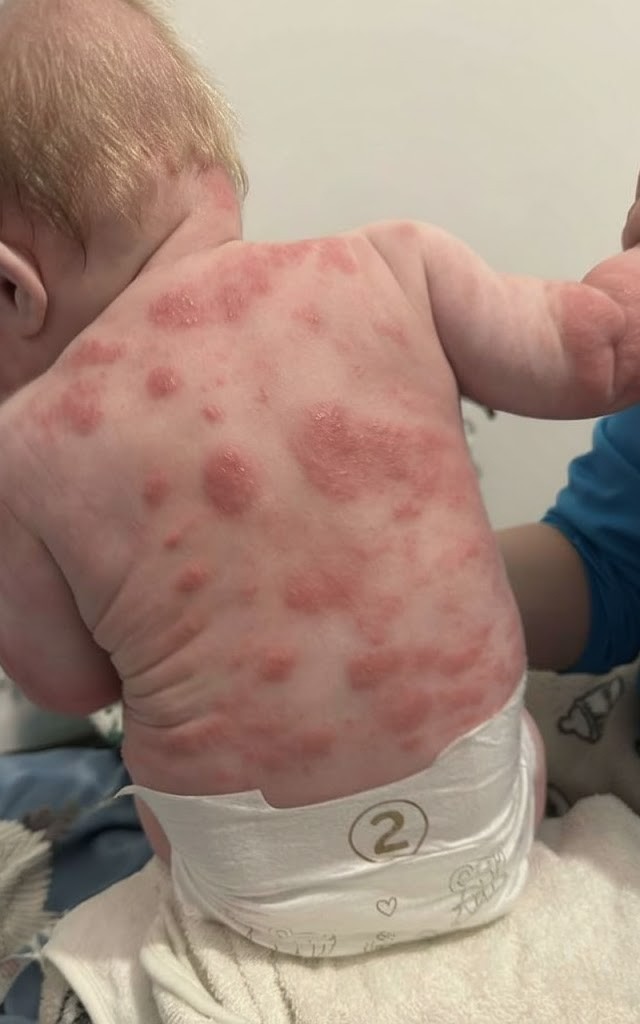
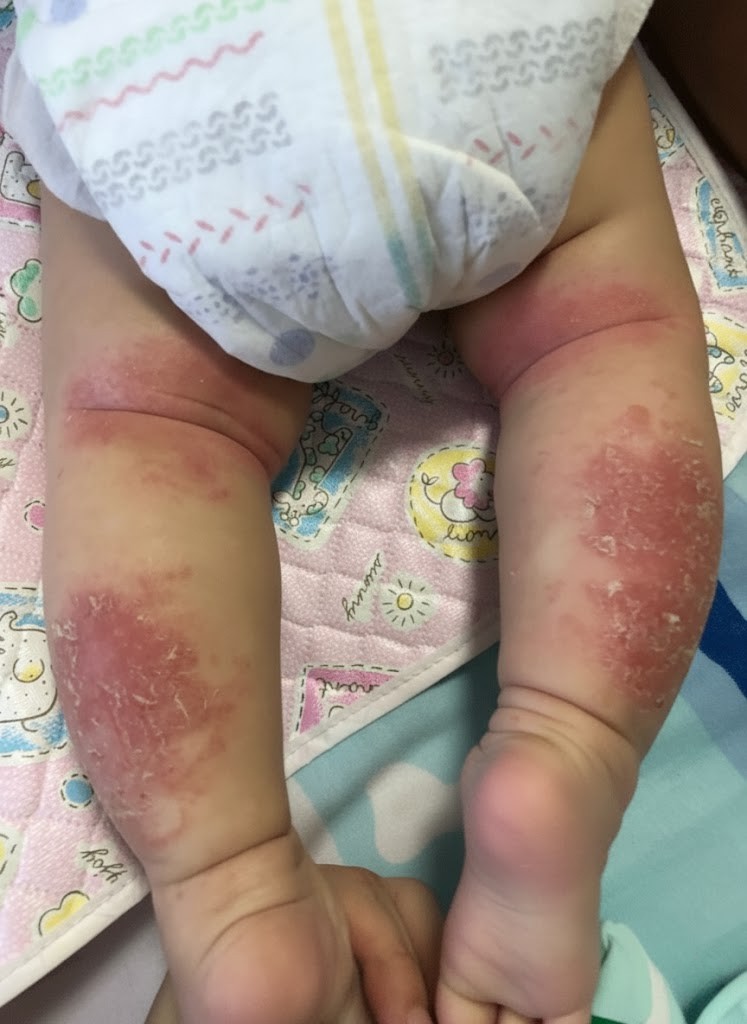
The moment my allergist saw my daughter's eczema cream, she said, “That’s WHY it’s not getting BETTER.” My 8 month old daughter was rubbing her face against the floor. Not the carpet. The hardwood. Raw cheeks dragging across the boards, the itch was so unbearable she’d use anything she could find to make it stop. And I just stood there. Holding another “miracle cream” in one hand and my phone in the other, scrolling through yet another forum post about elimination diets at 2 AM, wondering what else I could possibly cut out. I'd already eliminated dairy. Then gluten. Then soy, nuts, seeds, eggs. I was down to roasted sweet potatoes and chicken, the only foods left that didn’t make her flare. Most nights I cooked them one handed, because I couldn’t put her down long enough to use both hands. My kitchen looked like a crime scene investigation, every label photographed, every ingredient cross referenced, a journal tracking every flare against every food. But here's what killed me. I was doing everything right. Silk mittens. Cotton only clothing. Fragrance free detergent with no fabric softener. Humidifier set to exactly 42%. Air purifier running 24/7. I'd read every study. Joined every group. Tried every cream, Aveeno that stung her, Vanicream that did nothing, CeraVe that worked for three days before everything came back angrier. And still. Blood stained sheets every morning. Three hour sleep shifts with my husband because one of us had to stay awake to stop her from scratching. No restaurants. No family gatherings. No normal anything. And no matter how much I tried, nothing ever changed. My entire life had become eczema management. And it wasn't working. The doctor appointments were useless. "Try this cream. Give it two weeks. Come back if it doesn't work." They never asked why it wasn't working. They just handed me another tube and sent me home. So I kept trying. Kept researching. Kept cutting things out. I tested for mold. Tracked the weather. Switched formula brands. Tried bleach baths (they helped for a day). Tried oatmeal baths (they didn't). I became a different person. The kind of mother who vacuums three times a day, who reads ingredient lists like they're scripture, who can't enjoy a single moment because she's too busy scanning for triggers. And then one night, after she’d scratched until she bled through her mittens again, the thought I’d been avoiding for months finally hit me. What if I can never fix this? What if this is just who she is? What if I sacrifice everything, my sleep, my sanity, every shred of the life I used to have, and she still suffers? What if I'm just failing at the one job that should come naturally? I wrote that in a mom group at 4 AM. "We. Are. Tired," I typed with shaking hands. Dozens of mothers responded. They understood. They were living it too. Trial and error. Graveyard of failed products. Overwhelmed by advice that contradicted itself. But none of them had the answer. Because we were all fighting the same battle. And we were all losing. Then something small happened. I gave her a drink with citric acid and watched her face explode in redness within an hour. It was the pattern I needed. Not because citric acid was the answer. But because it made me ask a different question: What if I'm not failing because I'm not trying hard enough? What if I'm failing because I'm fighting the wrong enemy? What if all those foods, all those creams, all those environmental changes were just surface battles while something underneath, something I couldn't see no matter how many ingredients I eliminated, kept winning? What if there was a root cause I didn’t know about? One that explained why everything kept coming back angrier. Why control never worked. Why my perfect routine still left her scratching until she bled. By then, hope felt like a cruel joke. I’d tried everything, and nothing worked. Still, I couldn’t stop. I couldn’t give up on my baby, no matter how tired I was. But everything changed one night when I got a text. I opened my phone, and it was my mother in law. “Hey,” she texted, “I was talking to my friend, her daughter’s an allergist who’s been researching baby eczema. She might have something that could help. Want her number?” I stared at the message for a minute. I didn’t have the energy for more “miracle” advice. But what if… what if this was different? “Sure,” I wrote back. She sent the number. I sat there for an hour just looking at it. I didn’t think a phone call could fix anything. At that point I’d stopped believing anyone had answers. But my baby was still scratching in her sleep, and I couldn’t stand one more night of watching her bleed. So I called. As soon as she picked up, I started talking. I told her everything, the sleepless nights, the flare ups that never stayed away, the way she scratched until she bled. I didn’t even realize how much I’d been holding in until it all came pouring out. She just listened. Quietly. Not interrupting. Not rushing me. "Are you using a good moisturizer? Something thick, like Aquaphor or CeraVe?" "Yes. Both. Multiple times a day." There was a pause on the line. Then she asked, "Okay. Let me ask you something. When you apply the cream, does her skin look better for a little while, then get worse again?" "...Yes." "Does the flare up seem to get angrier after a few days, even with consistent moisturizing?" "Yes." She was quiet for a moment before she spoke again. "I’m going to tell you something most pediatricians don’t explain, not because they’re bad people, but because it’s easier to hand out a prescription than to educate exhausted parents." My stomach dropped. Here it comes. The thing I'd been doing wrong. “Eczema isn’t just dryness. That’s only the symptom you can see. The real problem is that when the skin barrier gets damaged, it lets bacteria move in and take over.” “The bacteria’s called Staph aureus. It triggers inflammation. The inflammation damages the skin barrier even more. And when the skin barrier breaks down, it lets in even more bacteria. It becomes a never ending cycle.” She texted me a diagram. I couldn’t really tell what I was looking at, but I nodded. “Moisturizers help with dryness, they can make the skin feel softer for a little while. But the creams you’ve been using only sit on the surface of the skin. The real problem is deeper, inside the skin.” “That’s where the bacteria keeps spreading, and that’s what keeps the redness and itching coming back. So you end up moisturizing constantly, but the moment you stop, it flares again.” “You’re treating the surface of the skin with creams, while the real problem underneath the skin keeps triggering new inflammation.” I felt something shift in my chest. "So I'm not... doing it wrong?" "You're doing everything right for a moisture problem. But your daughter doesn't just have a moisture problem. She has a bacterial inflammation problem disguised as dry skin." “Most parents with babies who have eczema think it’s just a moisture issue too, but it’s actually a bacteria problem deep inside the skin, where normal creams can’t reach.” When we hung up, I just sat there for a minute, replaying everything she’d said. It actually made sense, more sense than anything I’d heard from a doctor. I felt confused, but for the first time in months, a little hopeful. I didn’t rush to try another cream that day. Not because I'm anti medicine. But because I needed to understand this first. The root cause. The actual thing happening on my baby's skin. That night at 2:38 AM, I went down a research rabbit hole. I started reading everything I could find. Studies on Staph aureus in eczema. Articles about how bacteria can build up on broken skin and make flare ups worse. Clinical trials on natural ingredients that actually reduce Staph aureus on the skin, not just moisturize over it like regular creams. I even went through forum threads where other moms were talking about the same thing, comparing notes and sharing what worked for their babies. And everything the allergist told me started lining up. Every forum. Every study. Every story. Every article said the same thing, my baby didn’t have a moisture problem. She had a bacteria problem. And every cream I’d been using was trying to moisturize over that bacteria instead of actually getting rid of it. One thing kept appearing: medical grade honey. Not the organic honey from Trader Joe's. Not the raw honey from farmers markets. Medical grade. Specifically processed to preserve its antibacterial properties. I read study after study showing its effectiveness against Staph aureus. Its ability to reduce inflammation at the source. Its wound healing properties that actually helped repair the damaged skin barrier. Every article said the same thing, medical grade honey doesn’t just cover up symptoms. It actually goes deep into the skin and targets the root cause, the bacteria itself. While regular creams just sit on top, medical grade honey uses its natural antibacterial power to stop the bacteria from spreading in the first place. I found myself reading abstracts out loud to my sleeping husband at 4 AM. "Listen to this: 'Medical grade honey demonstrates significant antibacterial activity against Staph aureus and reduces inflammation in eczema.'" He mumbled something about going back to sleep. But I couldn't sleep. Because for the first time in eight months, I understood why I'd been failing. Not because I wasn't trying hard enough. Not because I was overthinking it. Because I was fighting a bacterial infection with moisturizer. The next morning, I started searching for products with medical grade honey. Around 80% of the articles I read said that for lasting results, you need to combine medical grade honey with colloidal oatmeal. The Medical Grade Honey helps fight the bacteria, while oatmeal helps calm irritation and protect the skin barrier. One dermatologist even said the amounts have to be balanced just right, or it may not work at all. I thought, “Okay, easy enough. There has to be something out there with both.” But there wasn’t. Everything I found was either medical grade honey by itself (meant for wound care, not babies), or skincare products with “honey extract” that was basically decorative. And the few that claimed to have both never said how much they used, or whether it was actually safe for baby skin. From everything I’d read, if the balance isn’t right, it’s either too harsh or it just doesn’t work. Then I found Beezema. It wasn’t just another “natural cream.” It had medical grade honey and colloidal oatmeal, the exact combination all the research talked about, plus beeswax and natural oils to seal in moisture without suffocating the skin. I finally found something that used the right ingredients, in the right balance, and was actually made for baby skin. It felt like I’d finally found the thing every article had been pointing me toward. Still, I was skeptical. I’d seen so many “miracle creams” before, and every one of them ended up sitting half used in the cabinet. But as I kept reading, everything was there, the same science, the same explanations the allergist and even the dermatologists had mentioned. The bacteria. The broken skin barrier. The inflammation cycle. It all lined up. So I told myself, I’ve got nothing to lose. And I ordered it that night. When it arrived two days later, I opened the jar expecting… I don’t know. Something medicinal. Clinical. Scary. But it just looked like cream. It smelled faintly of honey, but not overpowering. I put a small amount on her worst eczema patch, the one on her neck that had been oozing. She didn't scream. That was the first miracle. Every other cream I'd tried, she fought me. Arching her back. Crying. Like it stung or burned or just felt wrong on her raw skin. This time, she just watched me with her big eyes and grabbed her toes. The cream absorbed. Actually absorbed, instead of sitting on her skin like a greasy film. And then I waited. I didn't expect an overnight transformation. The allergist’s words were stuck in my head: "It's a cycle." Break the cycle, then healing could happen. But by day two, I saw it. The oozing had stopped. The patch on her neck was still red, but it wasn’t wet. Wasn’t bleeding when she scratched. For the first time, I actually felt a little hope, but I tried not to get ahead of myself. I just wanted to see how it would go over the next few days. Day four, the redness was fading. The rough, scaly texture was smoothing out. Day seven, I realized she stopped scratching her chest during tummy time. Week two, my mother in law visited again. She didn't say anything about the eczema at first. But I saw her looking at my daughter's neck. Her chest. The backs of her knees. Finally: "Her skin looks better." "Yeah." "What did you do differently?" I almost laughed. What did I do differently? I stopped treating the wrong problem. I found something that actually addressed what was happening under the surface of the skin instead of just moisturizing over an infection. But I just said, "Found a cream that works." She nodded. "See? Sometimes you just need to find the right lotion." I didn't correct her. Here's what I wish someone had told me months ago You're not failing. You're just fighting the wrong battle. If you've been moisturizing constantly and seeing no improvement, or even getting worse, it's not because you're using the wrong technique or missing some obvious step. It's because moisturizers can't touch bacterial inflammation. They're not designed to. They're designed for dry skin. But eczema isn't just dry skin. It's a compromised skin barrier that allows the bacteria called Staph aureus to colonize and trigger chronic inflammation. That's why the expensive boutique creams don't work. That's why the dermatologist recommended ones don't work. That's why you've got a cabinet full of half used jars and still no relief. You need something that targets the root cause, the bacterial overgrowth and the inflammation cycle. Medical grade honey does that. Not regular honey. Medical grade. The kind that's been studied in clinical trials. The kind with actual antibacterial properties that break down the bacteria’s protective layer and reduce inflammation at the source. That's what Beezema has. Medical grade honey, colloidal oatmeal, beeswax and natural oils. All working together to actually address what's happening on our baby’s skin, not just mask it temporarily. I’m sharing this because I remember exactly what it felt like to be there. I know that feeling of failing at something that should be basic. Of watching other mothers make it look easy while you drown in research and spreadsheets and guilt. I know the shame of having someone tell you you're overthinking it when you're actually just trying to help your child. And I need you to hear this: You are not overthinking it. You are not failing. You are treating a bacterial infection with moisturizer, and that's why it's not working. Find something that addresses the root cause. Give it two weeks to break the inflammation cycle. And maybe, just maybe, you'll stop feeling like you're failing at the one job that should come naturally. Because not being able to help your baby’s eczema isn’t actually failing. The creams you were using were just wrong. Look into Beezema. Read about the medical grade honey. If your baby’s skin sounds like mine did, it’s worth trying. You deserve to feel like a good mother. Your baby deserves skin that doesn't hurt. And both of you deserve better than seventeen different lotions.
Read this if your baby has eczema 👆
Beezema is the mama-created eczema cream made with medical-grade honey & oatmeal. Trusted by 1,000+ families for gentle, steroid-free relief.
SHOP NOWLike this ad? Make it yours.
Crush rebuilds this exact creative around your product — your brand, your colors, your offer — in about a minute.