
Active· since Jul 9, 2026
- 69
- days running
- 0
- relaunches
Ad copy
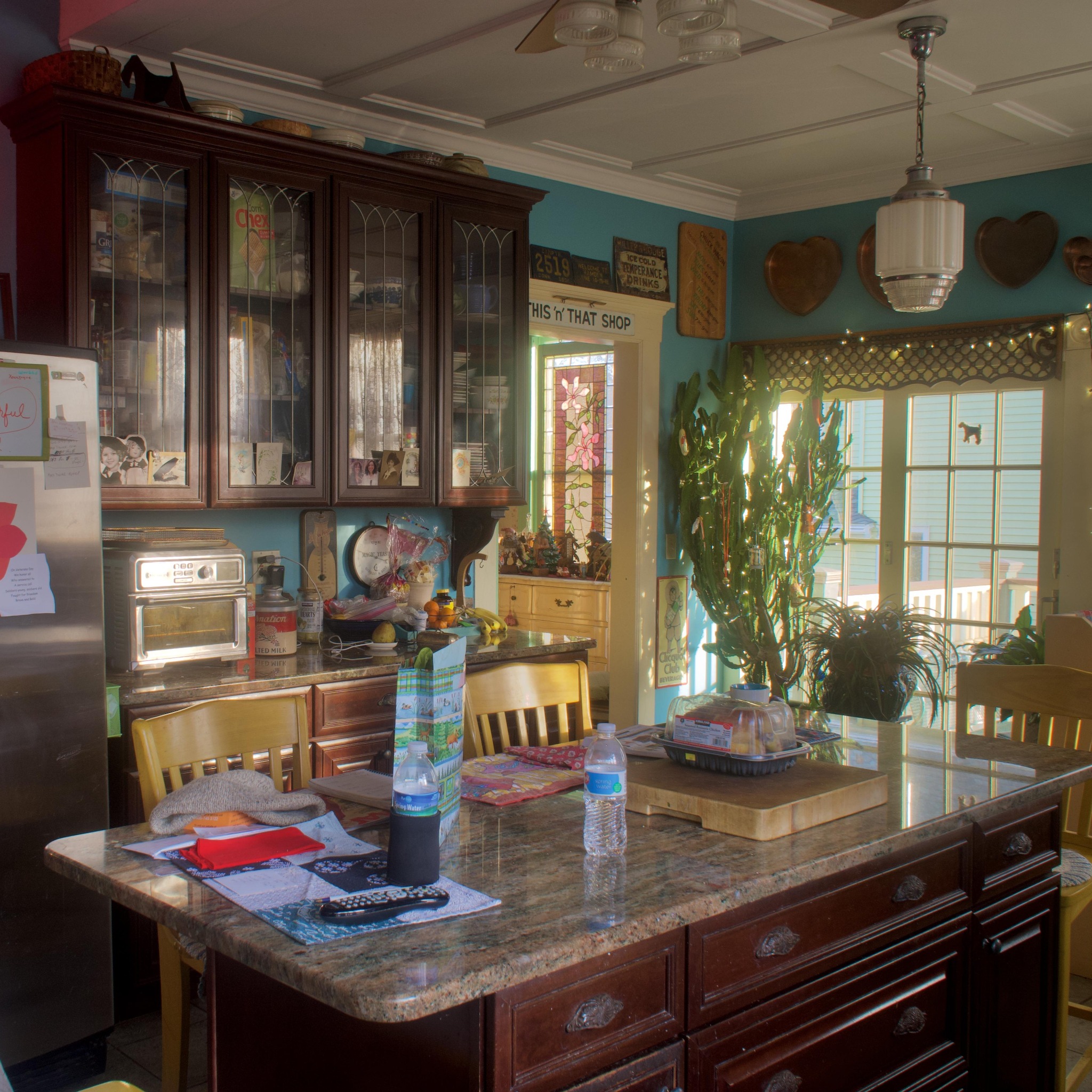
I wasn't supposed to go back a fourth time. That's the honest truth of it. I'd volunteered for the Tuesday meal program at Abiding Grace Baptist for going on 2 years, and my assignment was delivery runs, which meant I drove hot trays of food to homebound seniors in a 6-mile radius of the church. I had a list. I followed the list. I was not supposed to get attached to any one house over the others. But there was something about Dorothy Clemons and the house behind the post office. First time I went, I thought she was just quiet. Some people are. They answer the door, they take the tray, they say thank you, they close the door. No harm in that. These folks aren't obligated to talk to me. I'm just the woman with the food. Second time, she opened the door before I knocked. Like she'd been watching. Third time, she asked me to set the tray on the counter instead of handing it to her at the door, and when I stepped into her kitchen to do it I noticed the list on her refrigerator. I wasn't trying to be nosy. I just looked. It's the kind of thing you look at without deciding to. A handwritten list in careful small letters, held up by a magnet from a Pigeon Forge souvenir shop. Two columns. A left side that said what she didn't eat anymore. A right side with times. 6:30 breakfast. 12:00 lunch. 5:30 dinner. Three times a day, on the dot. And a list of things she'd stopped eating, which was longer than the list of things she still ate. I didn't ask. I set the tray down, I said goodbye, I went to my car. And I thought about that list the whole drive home. My name is Loretta. Loretta Jean Stovall. I'm 66 years old and I live in Jackson, Tennessee, which is where I was born and where I have lived my entire life except for 3 years in Memphis when I was in my twenties that I do not look back on fondly. I spent 28 years as an assistant manager at a Kroger on North Highland. I retired at 63 when my knees told me they were done with the tile floor, and I have been looking for ways to fill the time ever since. My husband Merrill says I would have driven myself crazy in the first year of retirement if it weren't for the church. He's probably right. I am not built for sitting still. I need a list and a purpose and something warm to carry from one place to another. The Tuesday meal route was good for all three of those things. And Dorothy Clemons was on my Tuesday list. The fourth visit, I knocked and she opened the door and she said, "I made extra coffee if you have a minute." I had a minute. I set the tray down and she poured 2 cups from a percolator she kept on the back burner of the stove, the old kind with the glass top that lets you see the water darkening. She took hers black. She offered me sugar and cream. I took both. We sat at her kitchen table. It was a small table, round, with a yellow vinyl cloth on it that had a little burn mark near one edge from what looked like a pot that got set down too hot. There was a windowsill planter with something trying to grow in it. A chipped rooster figurine on the counter. A paper towel roll and a bottle of hand lotion and a church bulletin from two Sundays back. Dorothy was 78. She was small and thin in the way people get when they've been precise about food for a long time. Not frail, exactly. Deliberate. Like every part of her day had been thought through. I didn't ask about the list right away. We talked about the weather and then about the church and then about her daughter in Murfreesboro who she spoke to on the phone every Sunday after service. We talked about how long she'd been in the house behind the post office, which was going on 34 years. She'd moved there with her late husband Clarence. He'd been gone 9 years. Then she got up to refill the percolator and I asked her. "I noticed a list on your refrigerator a few weeks back. I hope that's not forward of me to mention." She turned around. Not offended. If anything, looking almost relieved, the way someone looks when they've been waiting for a question and weren't sure it was going to come. "That's my management plan," she said. "For what?" She sat back down. Wrapped both hands around her mug. "My blood sugar situation." She told me it had started the way it starts for a lot of people she knew, which was slowly and then all at once. She'd had a physical at 68. Numbers were fine. Another one at 70. A little elevated but the doctor said watch what you eat. Another one at 72, and this time the doctor said she needed to be more careful. By 74 the numbers had moved enough that the conversation changed. Dorothy did what the doctor said. She did all of it. She changed what she ate. She cut the things you're supposed to cut. She walked every morning for a while until her hip made that harder. She took what they gave her. She came back for her checkups. And the numbers still drifted. "The hard part," she said, "is that you can do everything right and the direction doesn't change. That's what they don't tell you. You're not doing anything wrong. The system itself is just going the wrong way." She said she'd figured that out on her own, mostly. Through a lot of years of paying attention to herself. What happened after certain meals. What happened between meals. What happened if she ate at 6:30 versus 7:30. She'd been keeping track long enough that she'd developed a kind of intuition about it. The list on the refrigerator was the distillation of all of that. A schedule and a record and a set of hard-won rules she'd built for herself through trial and a lot of error. "Does it work?" I asked. "Better than not having it. That's the most I can say." She was quiet for a second. Looked at her mug. "My granddaughter found something about a year ago that made a bigger difference than the list did." I want to tell you about Dorothy's granddaughter Amara the way Dorothy told me about her, which was with real pride. Amara was 27, lived in Nashville, worked for a company that did something with health insurance analytics. Dorothy wasn't entirely sure what that meant in practical terms but she knew it meant Amara read research for a living and was comfortable finding things that weren't on the first page of a Google search. When Dorothy's numbers started requiring more active management, Amara took it on the way she took on everything, which was thoroughly and from first principles. She spent several weeks going down what Dorothy called "the internet rabbit hole" before she called her grandmother with anything, because she wanted to understand the mechanism before she made a recommendation. What Amara found, and what Dorothy explained to me at her kitchen table in the way she'd come to understand it over about a year, was something I had never heard about before. Dorothy said: your body has a pathway that controls how fast the food you eat turns into sugar. There's an enzyme, she said. Sits in your digestive system. Its job is to break carbohydrates down. When it's running right, it does that job at a controlled pace. Sugar comes into your blood gradually. Your body keeps up. Everything works the way it's supposed to. But that enzyme gets worn down. Over years. Over decades. Stress wears it down, and processed food wears it down, and the accumulated wear of just getting older wears it down. And when it's been worn down long enough, it stops doing its job at the pace it used to. Carbohydrates break down too fast. Sugar floods in instead of trickling in. Your body gets more, all at once, than it was built to handle in that timeframe. "That's the spike," Dorothy said. "That's the crash after. That's why the afternoon is hard. That's why you wake up at 3 in the morning hungry and don't know why." She looked at me over her mug. "And the tricky part Amara explained to me is that changing what you eat doesn't change the enzyme. It changes the inputs. But the system itself, the part that's supposed to be managing the speed, that's separate. And that part keeps wearing down regardless of what's on your plate." I sat with that for a second. "So what does Amara's thing do?" "It works on that pathway," Dorothy said. "Not downstream. At the system itself." Amara had found the research on pomegranate. Not the juice, Dorothy was careful to say, because that had been the first thing Dorothy asked about and Amara had been specific in her answer. The research that interested Amara was on pomegranate peel extract. The peel is where the most active compounds are concentrated, compounds called punicalagins, and they're not in the juice in any meaningful amount. Most people have never heard of the peel because nobody eats it. But the research on it is substantial, Amara had said. Real studies, peer-reviewed journals, not blog posts. And what the research was looking at was exactly the pathway Dorothy had just described to me. Punicalagins, Amara had explained, have been studied for their role in supporting the enzymes that control how fast carbohydrates break down into sugar. When those enzymes are better supported, the process can slow down. Sugar can enter the blood more gradually. The spike can ease. The crash can ease. Same food. Different speed. And there was another layer to it, which was that pomegranate peel extract also has one of the highest antioxidant profiles ever measured in a food source. That matters, Dorothy said, because the oxidative stress that wears the carbohydrate pathway down in the first place, year after year, that same stress is something the punicalagins can help address. So it's not just working on the speed of digestion. It may be helping protect the system from the kind of damage that made the speed a problem to begin with. Dorothy had been skeptical when Amara first told her all of this. She told me that plainly. "I've had a blood sugar situation for 6 years," she said. "I've heard a lot of things. I've tried a few of them. And some of them did nothing and some of them made me feel off and one of them I had to stop because it didn't sit right with my other things." "So what made you try it?" "Amara sat on the phone with me for 45 minutes and explained the mechanism. Not just what it does. Why. What part of the system it's working on and why that part matters and why what I'd tried before wasn't reaching that same part." Dorothy tilted her head slightly. "When someone can explain the why, I tend to believe them. Most things can't explain the why." The product Amara had found was called Alevia Pomegranate. A peel extract, concentrated, standardized to punicalagins. Made in the United States. Amara had looked specifically for something that listed the actual active compound on the label, not just "pomegranate extract" as a generic term, because the research she'd been reading was specifically about punicalagins and she didn't want to buy something that just had the name without the substance. Dorothy had been taking it for about 11 months when I was sitting at her kitchen table. She didn't describe it dramatically. That's not how Dorothy talks. She described it the way she described everything, carefully, with specific detail. She said the afternoons got easier first. The hard part of her days had always been 2:00 to 4:00, when things would get shaky and unclear and her hunger would turn urgent in a way that felt out of proportion. That window started calming down around the 4th or 5th week. Not gone. Calmer. She said mornings were next. She'd been waking up between 2:47 and 3:30 on most nights for years, hungry in that hollow specific way that blood sugar people recognize. That started fading around week 7 or 8. Not every night immediately, but the middle-of-the-night hunger started coming less and less. She said the list on the refrigerator hadn't changed. She still kept her schedule and still avoided the things that gave her trouble. But the list felt less like a fence holding something back and more like a habit that was working with her instead of barely keeping up. "It's not a miracle," Dorothy said. "I want to be clear about that because I don't trust things that call themselves miracles. It's more like the system got a little more room to work. Like something that was straining started straining a little less." She got up to rinse her mug. "Amara checks in every month. Asks me questions. Keeps notes. She's thorough." She said it with the warmth you use for a person who drives you a little crazy and you love them for it. "She's the one you want in your corner when something's going wrong." I sat in my car in front of Dorothy's house for a minute before I drove back to the church. I'm not going to pretend I wasn't thinking about myself. I'm 66. My mother was managing her numbers by the time she was my age. Her mother before her. There's a pattern in my family that I am old enough now to see from the inside rather than watching it happen to someone else. My own checkups have been fine so far. But fine so far is not the same as fine forever, and I am not naive about what the trend line looks like when I hold it up against the women in my family who came before me. I think about Dorothy's phrase. The system got a little more room to work. There's something in that framing that feels different from how most things are sold to people like me. It's not promising to fix anything. It's not talking about numbers magically changing. It's talking about giving a worn-down process a little support. Some protection from the thing that wore it down. And letting the body do what it already knows how to do, if it has what it needs to do it. I looked up Alevia Pomegranate when I got home. Found the same thing Dorothy described. The peel extract. Standardized to punicalagins. Two capsules a day. Made in the USA. And a 90-day guarantee, meaning if I try it and it's not working for me, I send it back and I get my money back. That's not a company that's afraid to be tested. That's a company that believes in what it's making. I'm two months in now. I don't have Dorothy's years of history to compare against. I can't give you the kind of careful accounting she gave me at her kitchen table, because I haven't been paying attention to myself for as long as she has and I haven't built the same kind of data. What I can tell you is that I haven't had the 3:00 urge in about 3 weeks. Not the way I used to. There was a particular pull that would hit me every afternoon between 2:30 and 4:00, the kind that sent me to the pantry even when I knew I wasn't actually hungry. That pull has gone quieter. I don't know what to make of that yet. But I notice it. And I sleep past 4:00 now more nights than not, which I have not been able to say for a couple of years. I go back to Dorothy's house every Tuesday. Still on the meal route. Still her delivery driver. We have coffee when she has it made and we talk about her daughter in Murfreesboro and about the church and about what's happening on the news and about whatever else comes up. A few weeks ago I told her I'd started taking the same thing she takes. She didn't say I told you so. She just nodded. "Give it until week 6," she said. "That's when Amara told me to start really paying attention. Before that it's too early to know anything." I'm paying attention. If what I said about the afternoons and the sleep sounds familiar to you, if you've been living with that pull or that pattern or that number that just keeps slowly drifting no matter what you cut from your plate, I think it might be worth understanding what Dorothy's granddaughter spent those weeks researching. Because nobody explained the why to me before Dorothy did, in her kitchen, over percolator coffee at a yellow vinyl table. The food isn't always the problem. The pathway that handles the food. That's the part worth thinking about. Alevia Pomegranate. The peel extract. Punicalagins on the label. That's what matters when you're reading the bottle. And they back it with 90 days. Try it, and if it's not the right fit for you, return the bottle and they'll give you your money back. That's the deal. Dorothy's been at this 11 months. I'm just at 2. But she was where I am once and she kept going, and she's still going, and she still has the percolator on and the list on the refrigerator and every Tuesday she opens the door before I knock. That's enough for me. 👉 https://alevia.com/pom/5 P.S. One thing Amara was specific about when she explained this to Dorothy, and that Dorothy passed along to me, is the difference between pomegranate extract and pomegranate juice. Most juice doesn't have the peel in it. The peel is where the punicalagins live. And most supplements that say "pomegranate extract" are standardized to ellagic acid, which is a related compound but not the same thing and not unique to pomegranate. You can find ellagic acid in strawberries and raspberries and a lot of other fruits. Punicalagins are specific to pomegranate and specific to the peel. That distinction is what Amara was looking for in the label before she recommended anything to Dorothy. It's what I looked for too. It's why I think the form of what you take actually matters here, not just the category. P.P.S. Dorothy told me something in our most recent conversation that I keep thinking about. She said the thing that surprised her most wasn't the afternoons or the mornings. It was the cravings. She said for most of her adult life she'd had a particular urgency around food, not hunger exactly but something adjacent to it, an insistence, a restlessness in her body around mealtimes and especially between them. She said that quieted in a way she hadn't expected and hadn't even known to hope for. She said she doesn't know how to explain it better than that. The insistence just got quieter. I think I know what she means now. I think that's what I'm starting to feel at week 8. P.P.P.S. The Tuesday meal route has 11 houses on it. I've been doing it for 2 years. Most of the people I deliver to are managing something. Some of them have told me about it and some of them haven't. I'm not going to say anything to anyone unless they ask or unless the percolator is on and we happen to end up at the table together. But if you're someone who has been watching something drift and telling yourself you're watching carefully enough, I'd say that's what I told myself for a few years too. Dorothy didn't make me feel bad about that. She just made me think that understanding the mechanism might be the part I'd been missing. Maybe it's the part you've been missing too.
Like this ad? Make it yours.
Crush rebuilds this exact creative around your product — your brand, your colors, your offer — in about a minute.