The Anxiety Doctor
The Anxiety Doctor Facebook ad: “Read if you stopped feeling anything after starting…”
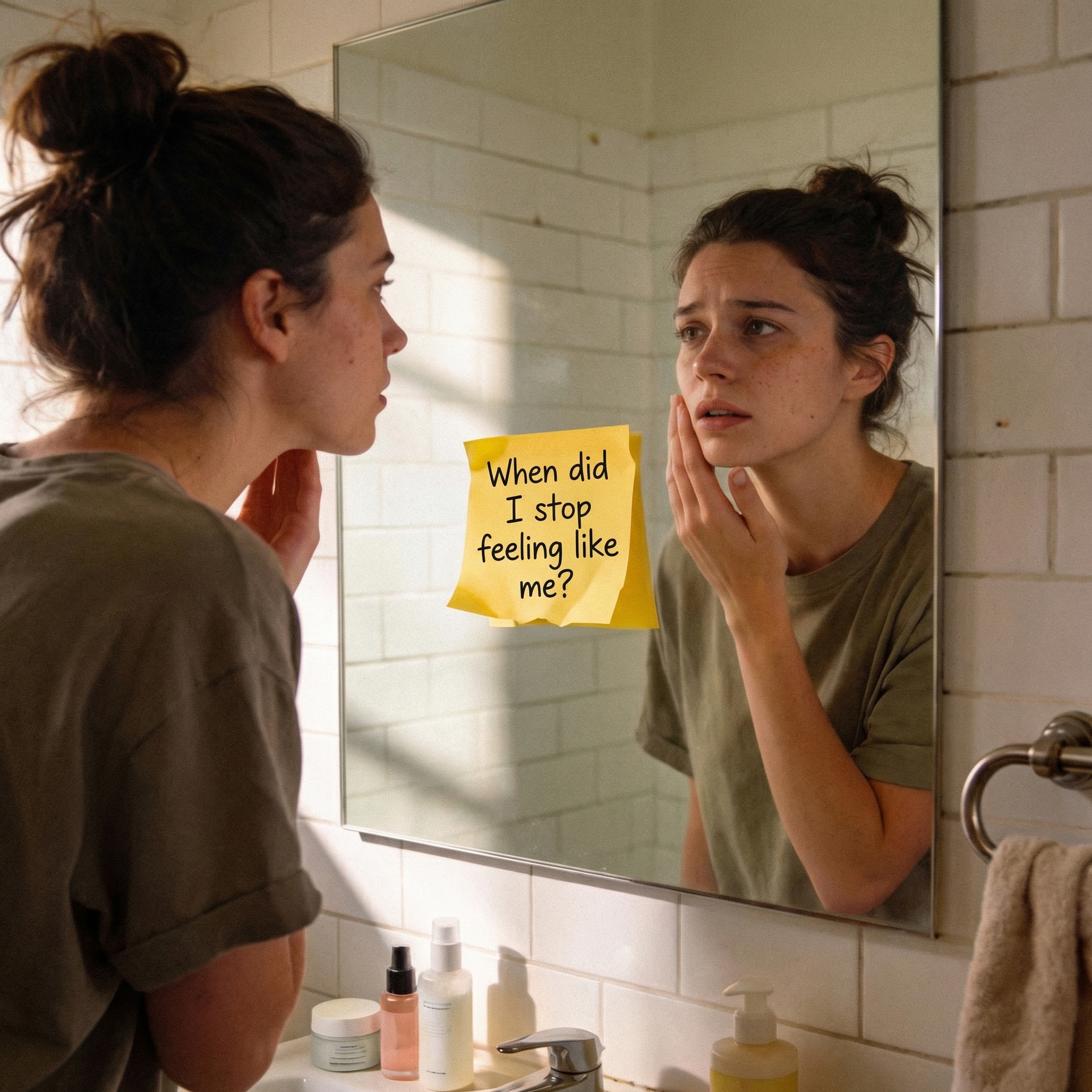
Ran for 2 days, from March 26 to March 28, 2026, the last day Crush saw it.
Run by The Anxiety Doctor on Facebook. Crush is not the advertiser and does not verify its claims. See this ad in Meta's Ad Library(opens in a new tab)
Want an ad like this for your product?
Crush makes new ad images for your product from this ad: your logo, your product photo, your offer.
Trials from $19.95 USD, then $79.95 USD a month. Cancel anytime.
About this ad
- Meta Ad Library ID
- 4353253964919465
- Platforms
- Facebook, Instagram, Audience Network, Messenger and Threads
- Relaunches
- 0
Ad text
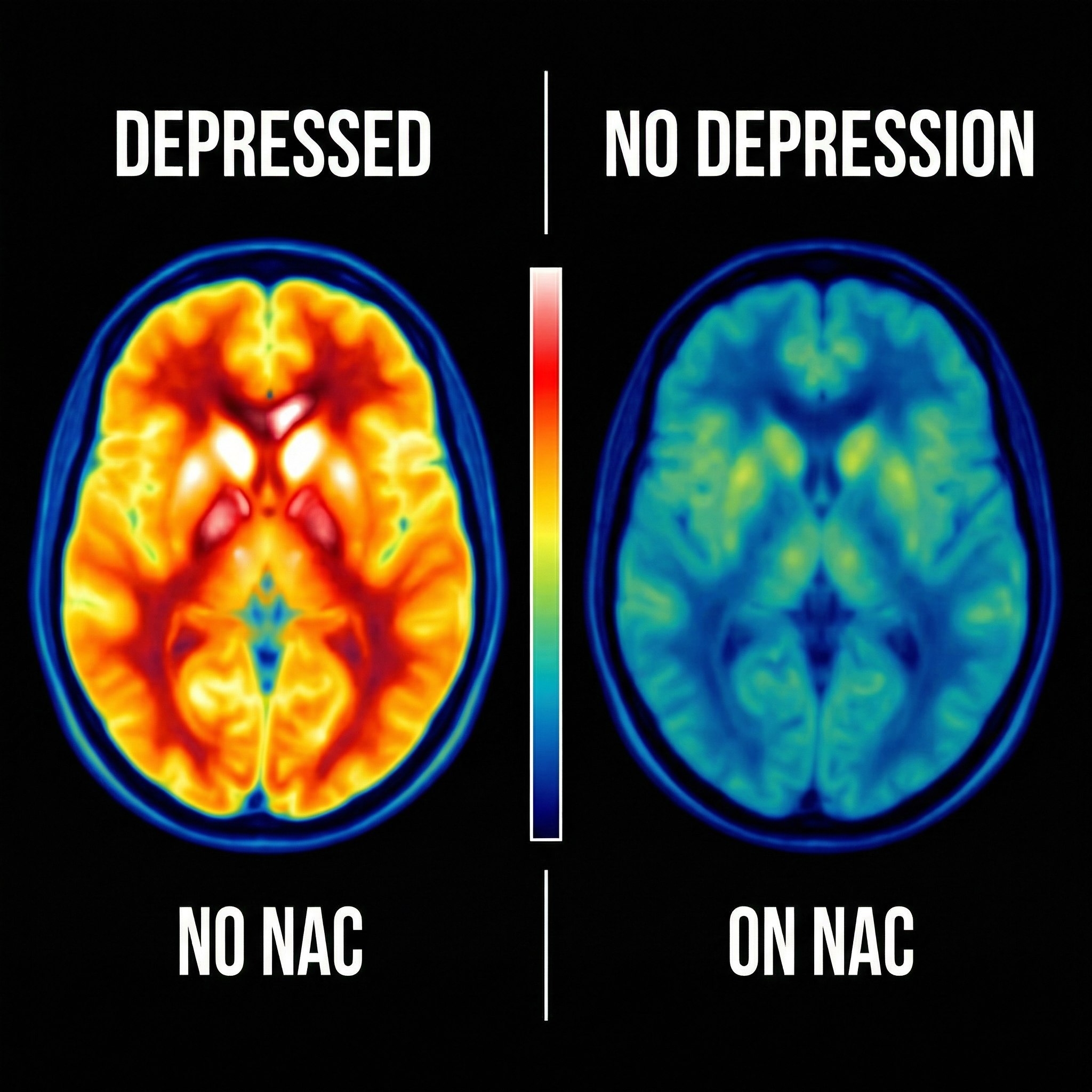
I keep a mental list of reasons I should be happy and I read it to myself every morning and it doesn't change a single thing about how I feel. I have a husband who loves me. Two healthy kids. A roof over my head. A job I used to enjoy. I know all of this. I recite it to myself like a prayer every morning before I open my eyes. Like if I can just remind myself hard enough that my life is good, the feeling will follow. It never does. The list is right. The logic is right. Everything on paper says I should be fine. But paper doesn't know what it feels like to lie in bed at 11am on a Wednesday with the curtains drawn, unable to move, while your brain replays every mistake you've ever made on an endless loop. Gratitude journals don't work when the mechanism that converts thought into feeling is broken. Positive affirmations don't work when the circuit that connects "I know this" to "I feel this" has been offline for months. Everyone says depression is a mindset problem. That if you just think differently, you'll feel differently. But what if it's not a thinking problem at all? What if the thinking is fine and the machinery underneath it is what's malfunctioning? That isn't a lack of willpower. That isn't some personal failing. That isn't "treatment-resistant depression." That's glutamate dysregulation. And here's what virtually nobody is telling you: you were never broken — your condition was being addressed with the wrong framework entirely. For decades, the medical establishment constructed a trillion-dollar infrastructure on a single premise: Depression is the result of insufficient serotonin. The "chemical imbalance" narrative. It's woven into every pharmaceutical ad. Scribbled on every prescription. Echoed in every hurried conversation with a physician who has 12 minutes before their next appointment walks in. "Your serotonin is low. Take this SSRI. It'll correct your brain chemistry." Except here's what emerging research continues to demonstrate: Depression — particularly the variety where you feel imprisoned inside your own skull, where thoughts replay on an infinite loop, where standing up feels like a physical impossibility — may not actually be tied to serotonin deficiency. It may be tied to glutamate dysregulation. Glutamate is your brain's chief excitatory neurotransmitter. It's the "throttle" for neural activity. It's the force behind thoughts firing, emotions amplifying, and mental spirals gaining speed. When your glutamate system falls out of balance, your brain gets locked into overdrive. An intrusive thought surfaces — and rather than floating through the way it would in a properly functioning brain, it seizes you. It compounds. It runs on repeat for three straight hours. You fight to make it stop, but you can't. Because the mechanism responsible for inserting a "pause" between stimulus and response has malfunctioned. That's the system SSRIs were never equipped to reach. Your SSRIs came up short because they were addressing the wrong neurotransmitter entirely. And it gets worse — by artificially saturating your brain with serotonin, SSRIs introduced a whole new set of problems: They suppressed your dopamine signaling, which explains why you gazed at your children and felt hollow inside. Why your favorite songs stopped moving you. Why physical intimacy became something you actively avoided. They bombarded serotonin receptors indiscriminately, which is why you couldn't preserve joy while eliminating anxiety. You didn't receive targeted relief — you received a flatline. They left the excitotoxic glutamate completely unchecked, still firing at full speed, which is why the intrusive thoughts never quieted down. The mental paralysis never broke. You simply stopped being as bothered by it because you stopped being bothered by anything. So you wound up emotionally vacant, physically disconnected, and still depressed. You surrendered your full emotional spectrum for partial symptom control. And when you reported this to your prescriber, they didn't respond with, "Perhaps we're going after the wrong system." They responded with, "Let's raise the dosage." Because here's what the medical establishment won't state directly: SSRIs were never engineered to resolve the root mechanism driving depression. They were engineered to contain symptoms. To keep you just functional enough to clock in at your job. To keep you just stable enough to not be an inconvenience. To keep you refilling a prescription you'll depend on for years — or decades — while the genuinely malfunctioning circuit in your brain remains malfunctioning. Repeat prescriptions = repeat revenue. And the system that generates profit from your ongoing dependency has no motivation to introduce you to another path. But here's something most people living with depression never even consider: Your psychiatrist genuinely doesn't know there's an alternative. Not because they lack competence. Not because they're indifferent to your suffering. But because the information supply chain they rely on is owned by pharmaceutical corporations. No drug company representative is strolling into your doctor's office with a polished pamphlet about glutamate modulation. Nobody is wining and dining your psychiatrist at a high-end steakhouse to discuss naturally occurring compounds that restore the excitatory-inhibitory equilibrium in the nucleus accumbens. Because nobody holds a patent on the compound that accomplishes this. No patent = no profit potential = no promotional budget = your clinician never learns it exists. And when someone did attempt to draw attention to it, the system moved to shut it down. In 2020, the FDA made an effort to prohibit this compound from being marketed as a dietary supplement. Not because it posed a safety risk. Not because consumers were being harmed. But because it presented competition to patented SSRIs. The justification? A regulatory loophole dating back to 1963. The compound had received approval as a prescription medication decades earlier for an entirely unrelated purpose (treating acetaminophen overdose), so on a technicality, it couldn't legally be classified as a supplement. Amazon yanked it from their marketplace without warning. Reddit went into a frenzy. Online biohacking communities sounded the alarm. People who'd been relying on it for years began hoarding bottles as if the supply was about to vanish forever. Because they understood what the FDA preferred you didn't: This compound delivers results. Not universally. Not as some magic bullet. But for a distinct subset of people — those whose depression stems from glutamate dysregulation rather than serotonin deficiency — it accomplishes what SSRIs fundamentally cannot. By 2022, the public outcry grew so intense that the FDA quietly walked it back. They issued "enforcement discretion" language that effectively permitted the compound to remain available for purchase. But the fallout lingered. The episode enlightened a small, well-informed circle — biohackers, PSSD survivors, participants in online mental health communities — but the wider public remains completely unaware this option is on the table. Your psychiatrist still isn't being briefed. And millions of individuals continue cycling through the SSRI pipeline, year after year, while published research demonstrating a superior approach collects dust in peer-reviewed journals nobody has a financial reason to open. The compound is N-Acetylcysteine. NAC. And every single time I bring it up, the reaction is identical: "Hold on... the amino acid?" "The supplement gym guys take?" "Isn't that for liver detox?" Wide eyes. Bewilderment. That look people get when something seems far too straightforward to actually be legitimate. And truthfully, I understand the skepticism. How could an amino acid accomplish what Zoloft, Lexapro, and Prozac failed to? But here's what you need to grasp: NAC operates nothing like SSRIs. Not even close. SSRIs function by inhibiting serotonin reuptake. They boost serotonin concentrations in your synapses, which influences ALL emotional processing — joy, sorrow, anxiety, love, grief, arousal. That's exactly why you can't cherry-pick the positive emotions and discard the negative ones. Serotonin has its hands in everything. It's a wrecking ball when the situation calls for a surgical instrument. NAC operates through an entirely separate pathway: It delivers cysteine, the rate-limiting amino acid your body requires to manufacture glutathione — your brain's primary antioxidant and the central regulator of the glutamate system. When you supplement with NAC, it rehabilitates something called System xc⁻, which recalibrates glutamate levels in targeted brain regions: The nucleus accumbens (the region governing motivation, reward processing, and your capacity to experience pleasure). The dorsal anterior cingulate cortex (the region responsible for error monitoring, conflict detection, and the "mental loop" mechanism that refuses to release intrusive thoughts). These are the precise circuits that are hyperactive in individuals with glutamate-driven depression. NAC engages inhibitory autoreceptors — specifically mGluR2/3 — that function as a "pause mechanism" between a trigger and your reaction. Here's what that translates to in your daily life: The intrusive thought still surfaces. But it doesn't hijack you anymore. You can observe it — "Ah, that thought again" — and watch it pass, rather than being sucked into a three-hour mental vortex you have no exit from. The depressive wave still arrives. But instead of nailing you to your mattress for an entire week, it moves through in a day. Perhaps two. The mental paralysis — the phenomenon that transforms brushing your teeth into what feels like summiting Kilimanjaro — begins to ease. Not because you've been "fixed." But because the circuit that was jammed in overdrive is finally receiving the regulatory input it was starved for all along. And here's why this approach preserves your complete emotional range in a way SSRIs are incapable of: Glutamate modulation is precise. It exclusively dials down the excess firing in overactive circuits — the ones manufacturing the intrusive thoughts, the obsessive rumination, the mental shutdown. It leaves your dopamine reward pathways entirely alone, which means no emotional numbness. No anhedonia. No staring at your children and feeling vacant. It doesn't interfere with the serotonin receptors that control sexual response, which means no dysfunction. No deadened sensation. No evaporated desire. It eliminates the mental "static" — the chatter, the spirals, the paralysis — while keeping the emotional "signal" fully intact. You're not making a trade-off between depression and emptiness. You're not making a trade-off between anxiety and a monotone existence. You're electing to repair the genuinely broken mechanism so you can feel like a real person again — struggling on some days, absolutely, but present. And published clinical research confirms this: A pivotal 2012 study examining OCD (which operates on the identical glutamate-driven intrusive thought pathway as depression) documented a 72.6% response rate among patients who had already failed on SSRIs. A 2008 investigation into bipolar depression (Berk et al.) demonstrated that NAC elevated mood without provoking mania or emotional blunting — the two primary dangers associated with conventional antidepressants in bipolar populations. A 2009 study focused on trichotillomania (Grant et al.) — a condition fueled by compulsive, intrusive impulses — revealed that 56% of subjects gained mastery over behaviors that had plagued them for years. This isn't pseudoscience. This isn't "wellness woo." This is peer-reviewed, published evidence showing that NAC delivers results for the precise population SSRIs let down: people experiencing glutamate-driven intrusive thoughts, compulsive mental loops, and depression that hasn't responded to standard treatment. But here's the thing nobody mentions about NAC: You're not going to open your eyes on Day 3 and feel transformed. This isn't a stimulant. It's not going to produce a rush or a wave of sudden motivation or instantly turn you into a productive person. Here's what the actual trajectory looks like: Week 1: You may notice the intrusive thoughts still arise — but they no longer hold you hostage for 45-minute stretches. You can shift your focus without waging a full internal war for an hour. Week 2: Ordinary tasks begin to feel less like insurmountable barriers. Getting in the shower no longer demands an entire day of psyching yourself up. Replying to a message no longer feels like conquering a summit. Not effortless. Just... manageable. Week 3: You glance at your spouse, your children, your pet — and something stirs. You feel a flicker of something. Not euphoria. Not "healed." Just... awareness. Engagement. The emotional deadness begins to thaw, and it dawns on you just how long you've been operating on autopilot. Weeks 4 through 8: The "crash back to zero" pattern starts to stabilize. Bad days still happen, but they no longer wipe out every inch of ground you've gained. Your baseline begins to climb. The intrusive thoughts gradually release their stranglehold. You begin recognizing yourself again — not flawless, but breathing. Living. This is what targeted regulation actually feels like. Not wholesale suppression. Not bartering away your humanity for symptom containment. Simply: the mental interference settles enough for you to function as a human being again. And here's the piece of this that carries the most weight: Every alternative people recommend demands energy you flat out do not possess. Therapy demands that you physically show up, make yourself vulnerable, work through painful material, complete exercises between appointments. Exercise demands that you get clothed, walk out the door, and sustain physical movement for half an hour. Cooking proper meals demands executive function, forethought, and the stamina to stand in a kitchen without being overwhelmed by the act of existing. Meditation demands that you sit quietly with your own thoughts — when your thoughts are the entire problem. But this? This asks you to take two capsules. That's the whole requirement. No elaborate routines. No morning rituals. No "you have to get yourself together before this can help you." Simply: swallow them. And I don't say that flippantly. I've been pointing people toward NAC for 3 years — individuals who show up at 25, 30, 35 years old, pinned to their beds, emotionally flatlined, branded as "treatment-resistant." People who've cycled through every SSRI that exists. People who've invested in cognitive behavioral therapy, dialectical behavior therapy, EMDR, somatic experiencing. People who've been admitted to inpatient facilities. People who've completely stopped trying. And three weeks down the road, they reach out with this stunned disbelief: "I brushed my teeth this morning and it didn't feel like climbing a mountain." "I answered a text message without agonizing over it for three days first." "I looked at my kids and I actually felt something real." Not because some switch got flipped and they're suddenly well. But because for the first time in months — or years — the mechanism that had broken down is beginning to come back online. The clinical trials I referenced earlier utilized a specific therapeutic range: 1,200mg to 2,400mg per day. That number isn't random. It's the concentration threshold at which NAC penetrates the brain regions that govern glutamate regulation. Most NAC you'd grab at a pharmacy? 600mg in a capsule. People purchase it, pop one pill, register zero change after seven days, and decide "supplements are worthless." But they never approached the dosage the research actually examined. They never had access to a sustained-release delivery system that prevents the mid-afternoon dropoff when standard immediate-release NAC clears out of your bloodstream. They never received the cofactors — selenium, molybdenum — that jumpstart the glutathione conversion pathway so the NAC actually transforms into the compounds your brain requires instead of passing straight through your gut unused. And they certainly didn't encounter the purity controls necessary to exclude fillers, flow agents, and inactive ingredients that sabotage absorption. I've spent years evaluating NAC brands on my own. Watching person after person burn through months on underdosed, poorly formulated versions, then abandoning the effort entirely before they ever approached a therapeutic threshold. The sole brand I've identified that checks every clinical box is a small outfit called Renoura. You won't find them at CVS or Walgreens. They don't pour money into massive ad campaigns. You'll never see them during a commercial break. But their NAC formulation delivers: 1,200mg per serving of pharmaceutical-grade N-Acetylcysteine. Produced domestically in an FDA-registered, cGMP-certified facility with independent third-party verification for purity, potency, and heavy metal content. Zero silicon dioxide. Zero fillers that obstruct the very pathways NAC is supposed to support. Stabilized with natural antioxidants to guard against oxidation (NAC breaks down rapidly upon air exposure, which is precisely why most budget brands hemorrhage potency within weeks of being unsealed). Formulated to align with the exact dosing protocols employed in published clinical studies on depression, OCD, and intrusive thought conditions. I take it every single morning. Two capsules. Glass of water. Finished. And now, so do thousands of others who hit a wall with SSRIs, who were labeled "treatment-resistant," who surrendered years of their lives to emotional numbness and cognitive paralysis. They read through the testimonials. They dig into the published research. They give it a chance. And three weeks later, they're the ones writing testimonials that sound almost unbelievable — because they'd forgotten what it was like to have access to their full emotional range. Renoura stands behind every order with a 60-day money-back guarantee, because the clinical evidence gives them that level of conviction. Most customers order at standard pricing, but there's currently a promotion running where you save considerably if you commit to the 90-day protocol — which happens to be exactly what the research literature suggests anyway. The one complication is that they're a boutique operation. And as NAC continues building momentum in mental health circles — Reddit threads, PSSD recovery groups, biohacking communities — their inventory keeps disappearing. So I'm giving you a heads up: if you tap the link below and discover they're temporarily cleaned out, I apologize. I've had people tell me they refreshed that page for weeks straight waiting for stock to replenish. But I'd encourage you to check right now to see whether they have anything available. Because if you're worn out from being lectured to "just try harder"... If you're fed up with pharmaceuticals that stripped away your humanity in exchange for a flatline... If you want something that goes after the actual mechanism producing your intrusive thoughts and mental paralysis without demanding energy you simply don't have to give... This is the answer. The published research your psychiatrist isn't seeing because no drug company is buying them lunch to present it. The compound the FDA moved to suppress because it threatened their patented medications. The option that millions of people still have no clue exists. Check availability below before they run out again.
Where the ad sends people
renoura.store
Read if you stopped feeling anything after starting antidepressants ☝️
A pharmaceutical-grade amino acid that restores glutamate balance in the brain regions where intrusive thought loops originate. NAC is the precursor to glutathione, your brain's master antioxidant and the key regulator of the neural circuits behind anxiety, rumination, and mental paralysis.
Learn more: renoura.store(opens in a new tab)