Dr. Lauren Mitchell, DVM
Dr. Lauren Mitchell, DVM Facebook ad: “I'm a vet. This is what actually worked.”
Ran for 37 days, from June 8 to July 15, 2026, the last day Crush saw it.
Run by Dr. Lauren Mitchell, DVM on Facebook. Crush is not the advertiser and does not verify its claims. See this ad in Meta's Ad Library(opens in a new tab)
Want an ad like this for your product?
Crush makes new ad images for your product from this ad: your logo, your product photo, your offer.
Trials from $19.95 USD, then $79.95 USD a month. Cancel anytime.
About this ad
- Meta Ad Library ID
- 4386386151689997
- Platforms
- Facebook, Instagram, Messenger and Threads
- Relaunches
- 0
Ad text
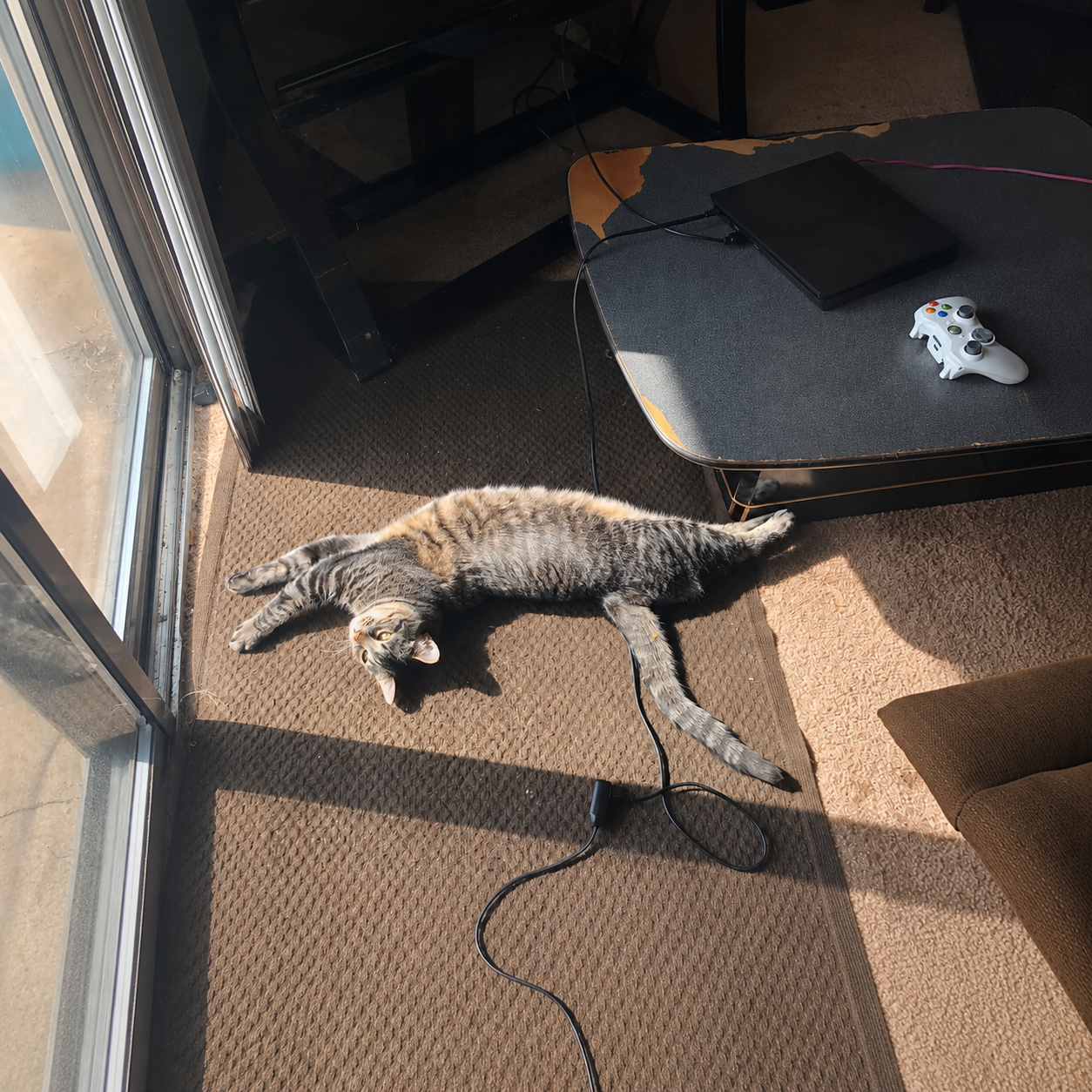
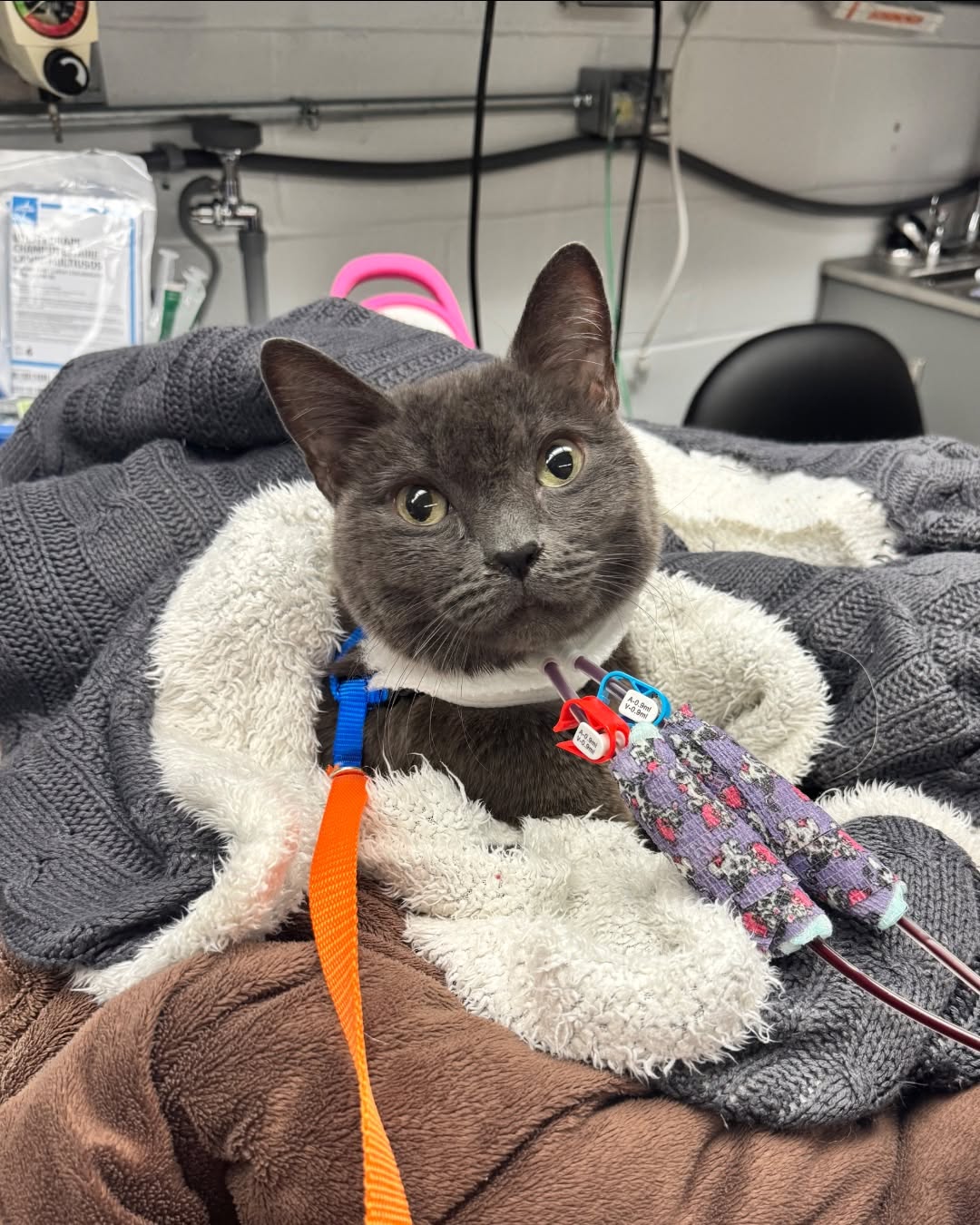
I'm a vet. My own cat has stage 3 kidney disease. I tried everything I had in my own toolkit, and the thing that finally turned it around wasn't anything I learned in vet school. I've been practicing for nineteen years. I have told hundreds of owners the same things about feline kidney disease. Put her on the renal diet. Start fluids. Here's an appetite stimulant. We'll monitor and keep her comfortable. Then it was my own cat sitting on my exam table. And I found out how little that toolkit actually does once a cat stops eating. Her name is Olive. A twelve year old tortie, nine pounds, the one who sleeps on my chest and headbutts me awake at 5am sharp. About eight months ago her routine bloodwork came back stage 3. Her SDMA was up, her creatinine had crept past where I wanted it. I knew the road. I just never thought I'd be driving it with my own cat. Within a few weeks, she started leaving food. At first it was small. She'd eat half, then a third, then she'd take two bites of the renal diet, look at it, and walk away. I told myself she was adjusting to the new food. I'm a vet. I know better. But it's different when it's your own. So I did what I tell my clients to do, and then everything I tell them not to bother with. I warmed her food to body temperature, because cats eat by smell and warm food smells stronger. I spooned the water off a can of tuna over the top. When that stopped working I started rotating flavors, I had nine open cans in my fridge at one point, pate, flaked, broth, the expensive stuff, the cheap stuff she used to love. I added the mirtazapine. It worked for about four days. She ate like her old self and I let myself believe we'd turned a corner. Then on day five she walked away from the bowl again and my stomach dropped. By the end I was sitting on my kitchen floor at 11pm, scraping a little food onto my finger and holding it to her mouth, this cat I've had since vet school. Some nights she'd lick it off. Most nights she'd turn her head away and I'd just sit there with food on my hand feeling completely useless. I could feel her spine through her fur when I picked her up. She'd dropped to seven pounds. Her coat, normally that glossy tortoiseshell, had gone dry and a little matted because she'd stopped grooming. She slept eighteen hours a day and stopped coming to the door. I am a veterinarian. Nineteen years. And I was on my own floor at midnight with no idea how to get my cat to eat. That's the part nobody tells you. Every single tool I had was aimed at her kidneys. Not one of them was actually getting her to eat. And the not eating was what was killing her, because a cat that won't eat wastes away no matter what her kidney numbers do. I knew exactly where this goes. I've watched it go there hundreds of times. I was not going to "monitor and keep her comfortable." Not with Olive. Here's what cracked it open, and it still embarrasses me that it came from a client and not from me. A Thursday afternoon, last patient of the day. A fifteen year old gray cat named Biscuit, CKD for three years, the kind of case I'd quietly written off in my head as a matter of time. His owner, a retired schoolteacher, had been bringing him in every few months while his numbers slid. But this visit, his weight was up half a pound. His coat looked better. And his bloodwork, which had been creeping the wrong way for two years, had held flat. I actually double-checked the chart because I thought I'd misread it. "Whatever you're doing," I told her, "keep doing it. What changed?" And she said the thing I've replayed a hundred times since. Her sister, a vet tech two states away, had told her that the reason a CKD cat stops eating usually isn't the food, and isn't even really the kidneys. It's the gut. I'll be honest with you. My first reaction was to dismiss it. I've heard every miracle-cure story in this job, owners swear by raw diets, essential oils, alkaline water, you name it. A gut theory passed down from somebody's vet-tech sister was exactly the kind of thing I'd normally smile at and move past. But I drove home that night and Olive ignored her dinner again, and I sat on that kitchen floor, and I thought, what exactly do I have to lose by reading. So I opened my laptop. And I didn't go to a forum. I went to the actual veterinary literature, because if I was going to take this seriously I wanted to see if it held up. It held up. I read until almost 2am. The gut-kidney connection, the bacterial toxins, the way they accumulate when filtration drops. And the further I read, the worse I felt, because I wasn't just reading about Olive. I was reading about Biscuit. And the orange tabby I lost last spring. And the little Siamese whose owner cried in my exam room. Every CKD cat I'd watched decline while I adjusted their phosphorus and told their owners we were doing everything we could. We weren't. I wasn't. For nineteen years I'd been treating the organ that was failing and completely ignoring the organ that was flooding it. Here is what I should have understood a long time ago. A cat's gut is full of bacteria, good and bad. When a cat gets sick, the bad bacteria take over. And they do one thing all day long. They take the protein from every meal and convert it into toxins. When the kidneys are healthy, they filter those toxins out and nobody notices. But once the kidneys are damaged, they can't keep up. So the toxins build up in the blood. And it gets worse than that. Those same bad bacteria don't just make toxins. They attack the gut wall itself, the thin lining that's supposed to keep everything in the gut where it belongs. Over time that lining gets worn down and leaky. And once it's leaky, the toxins don't just trickle out. They pour straight into the bloodstream, faster than ever, faster than damaged kidneys have any hope of clearing. So you have a gut producing poison, and a wall that's springing leaks letting it flood in. Two problems feeding each other. And toxins in the blood cause nausea. Constant, low-grade nausea, the kind where the smell of food makes your stomach turn. That was it. That was why none of my food tricks ever worked on Olive. She wasn't being picky. She was nauseous before she ever reached the bowl, because her own gut was producing poison faster than her damaged kidneys could clear it. The kidneys get the diagnosis. But the gut is making the poison. We treat the organ that's failing and ignore the organ that's flooding it. So my first thought, naturally, was just put her on a probiotic. I had samples in the clinic. It did nothing. I tried a second one, a well-known refrigerated brand I'd recommended for years. Nothing. That's when I went back to the research properly, and learned why. Most probiotics are general digestion strains. They can't even survive in a gut that's this far out of balance. And here's the part I'd never understood, even as a vet: just adding bacteria isn't enough on its own. It takes three things at once. You have to crowd out the bad bacteria with the right strains, so fewer toxins get made. You have to feed those good bacteria with a prebiotic, or they wash out in a couple of days and you're back where you started. And you have to repair that leaky gut lining, the wall the bad bacteria wore down, so it stops letting toxins flood into the blood. Crowding out the bacteria doesn't matter much if the door they broke is still hanging open. A single-strain probiotic does one of those, at best. That's why mine did nothing. That's why the refrigerated one did nothing. The only formula I found that did all three was the Gut-Kidney Shield, from PetLonga. And because I'm a vet and I read labels obsessively, let me tell you what's actually in it and why each piece is there. The crowd-out comes from six probiotic strains, from the Lactobacillus and Bifidobacterium families, chosen for the gut and kidney connection rather than just general digestion. They move in and push out the bad bacteria so fewer toxins get made in the first place. The feeding comes from a prebiotic fiber, inulin from artichoke. That's the food the good strains need to actually take hold and stay, instead of washing out in a couple of days. The lining repair comes from marshmallow root, which forms a soothing coat over the worn-down gut wall and helps it seal back up, so it stops leaking toxins into the blood. And there's a fourth piece I didn't expect, digestive enzymes. They help break protein down properly so there's simply less of it left over for the bad bacteria to turn into toxins. You're starving the problem from another angle at the same time. Four levers, one scoop. That's the difference between this and the single-strain probiotics that did nothing for Olive. It's made to be palatable enough that even the pickiest, most food-averse cats will take it. As a vet, I'll tell you that matters more than people think, because a cat who won't touch a pill or a new food will take this. You don't even need a full bowl to start. You mix it into the few bites she'll still take. It works on the gut, not the appetite directly. As the toxins drop, the nausea lifts, and the appetite comes back on its own. I started Olive that night. The first week, nothing. Honestly, the clinician in me started writing it off. Day twelve, she finished a small bowl on her own. No warming. No tuna water. I stood at the counter and watched her eat and didn't move. By week three she was headbutting me awake at 5am for breakfast again, the thing I used to complain about. By week four she'd put weight back on, her coat stopped looking rough, and she was back up on the windowsill in the sun instead of hiding under the bed. I ran her bloodwork myself, terrified of the number. Her values held. At stage 3, eight weeks out, I'd have expected them climbing. They hadn't moved. I'm not going to lie to you, and I'd lose my license if I did. Her kidneys are not healed. Kidney damage does not reverse, and any product that promises that is lying to you. But the toxic load coming off them, the flood from her own gut that was making her too sick to eat, that dropped. And the decline I was bracing for as her vet simply did not come. Olive is asleep on my chest as I write this. She headbutted me awake at 5 this morning. I've now put a dozen of my own CKD patients on this same approach, alongside everything else we already do. The pattern is the same almost every time. Within a few weeks the eating comes back. By the recheck the numbers that were sliding have held. I'm telling you this as the vet who didn't know it for nineteen years. If your cat has a kidney diagnosis and won't eat, it is almost certainly not pickiness. She is nauseous, and the nausea is coming from her gut. Keep doing everything your vet told you. The diet, the fluids, all of it. This is not instead of any of that. It's the one piece the protocol leaves out, the part that actually turns off the toxins. And keep her on it. This is the part I want to be a vet about for a second. Gut support is not a quick fix you do once and stop. The day you stop, the bad bacteria start taking back over and the toxins come right back, and you lose the ground you gained. It's daily, ongoing, for the rest of her life. I genuinely believe it's one of the most important things you can do for a CKD cat's quality of life, right alongside the diet and the fluids. That's why I keep several jars on hand and never let myself run out, not for Olive, not for a single day. Here's where I get Olive's: https://petlonga.com/products/probiotics-kidney I wish I'd known this before I lost the cats I lost. I'm telling you now, so you don't have to learn it the way I did. P.S. PetLonga backs it with a 60-day money back guarantee. If the eating doesn't come back, you get your money back. As a vet, the only thing that worries me is owners waiting. Every week a CKD cat barely eats, she loses muscle she can't get back, and the body wasting away has less reserve to fight with. The toxins have been running long enough.
Where the ad sends people
petlonga.com
I'm a vet. This is what actually worked.
PetLonga Advanced Cat Probiotic is a daily probiotic supplement for cats designed to support gut health, digestive balance, immune function, and overall wellness. Because the gut plays an important role in how the body processes waste and maintains internal balance, supporting a healthy gut microbio...
Learn more: petlonga.com(opens in a new tab)