Dr. Lauren Mitchell, DVM
Dr. Lauren Mitchell, DVM Facebook ad: “Why I recommend this to every cat owner I see.”
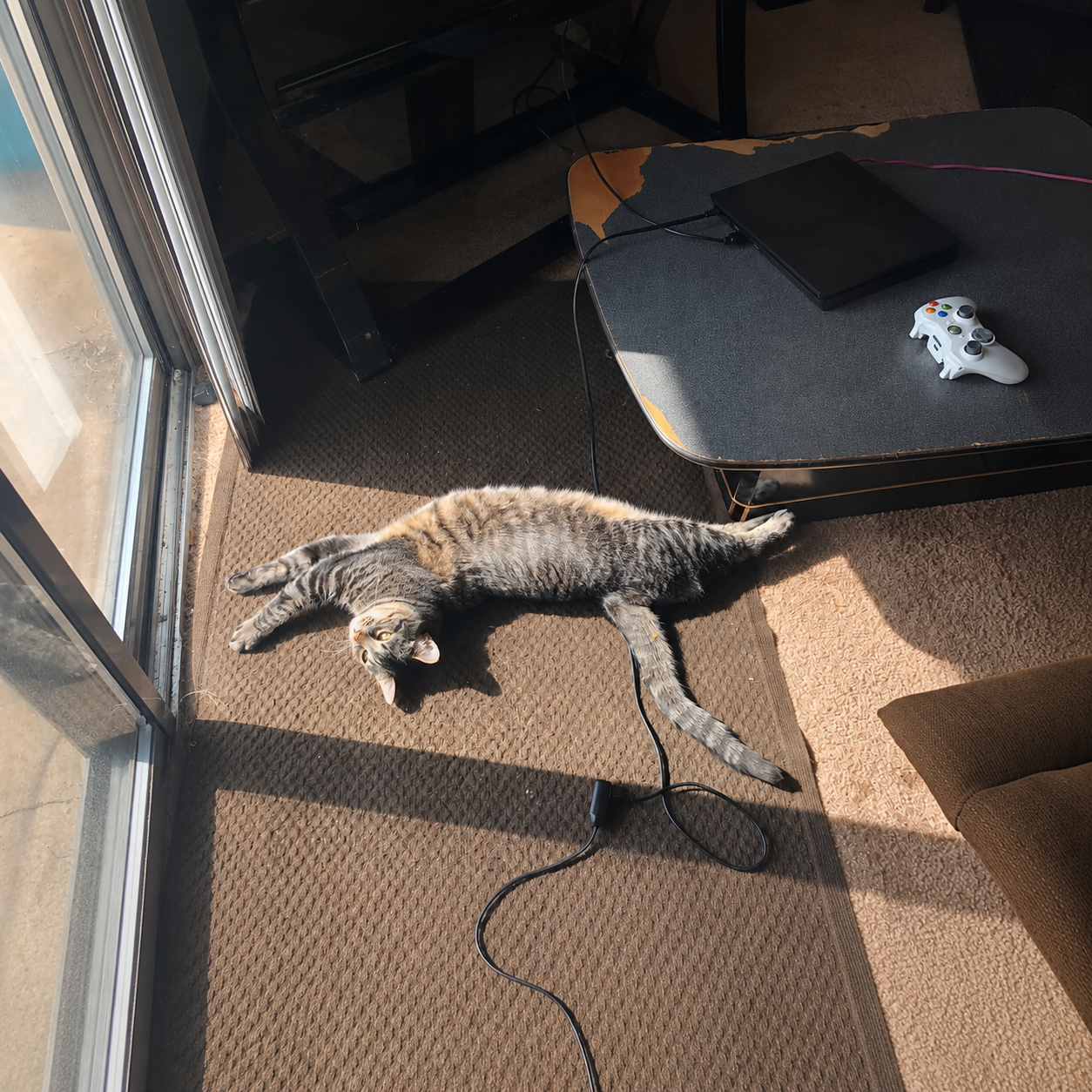
Ran for 12 days, from July 1 to July 13, 2026, the last day Crush saw it.
Run by Dr. Lauren Mitchell, DVM on Facebook. Crush is not the advertiser and does not verify its claims. See this ad in Meta's Ad Library(opens in a new tab)
Want an ad like this for your product?
Crush makes new ad images for your product from this ad: your logo, your product photo, your offer.
Trials from $19.95 USD, then $79.95 USD a month. Cancel anytime.
About this ad
- Meta Ad Library ID
- 797972723305515
- Platforms
- Facebook, Instagram, Messenger and Threads
- Relaunches
- 0
Ad text
Your cat's favorite sunny spot isn't just cute. After 12 years at a feline-only clinic, I finally figured out what she's actually doing there. And once you understand it, you'll never look at her the same way. I've worked with nothing but cats, five days a week, for over a decade. You see enough of them, you start noticing things the owners miss. Not because they're bad owners. Because they live with their cat every day. The changes happen slowly. Too slowly to register. But I see a cat once a year. Maybe twice. And I see the difference. There's this moment that happens with the older ones. The ones past eight, nine, ten. The owner brings them in and says the same thing almost every time. "She's slowing down a little. But she's fine. Just getting older." And I look at the cat. I look at the intake notes from last year. And I can already see what they can't. The weight shifted off one hip. The way she's holding her back legs. The coat getting rough in that one spot behind her shoulders, right where she'd have to twist to reach. They don't see it. I do. Cats are the greatest liars on earth. Not on purpose. It's survival. In the wild, showing pain meant getting killed. So they evolved to hide it. Perfectly. Completely. They don't limp like dogs limp. They don't cry. They just stop. Stop jumping. Stop climbing. Stop grooming the places that hurt to reach. And they do it so gradually that the people who love them most have no idea anything is wrong. By the time it's obvious, we've lost months. Sometimes a year. Sometimes more. That's the window where something could have helped. The time when her joints were stiff but not destroyed. When the damage was accumulating but hadn't become permanent. Owners don't know they're in that window. They find out when it closes. A few years ago I started asking a question during intake. "Does she have a favorite warm spot? Somewhere she goes every day?" Almost every owner says yes. The sunny patch by the window. The heating vent. The laptop charger. The spot on the couch where the afternoon light hits. They usually smile when they describe it. Because it seems cute. Then I ask the second question. "How long does she stay there?" The answer is almost always the same. Hours. All afternoon. Sometimes all day. And I started noticing something I couldn't explain. The cats with the worst joint damage were always the ones with the most intense attachment to that one warm spot. Every time. Without exception. I didn't know why. But I couldn't stop thinking about it. I brought it up with one of our vets during a slow afternoon. She barely looked up. "They're self-medicating," she said. "Or trying to." I asked what she meant. She explained it like it was obvious. There's a band of wavelengths in sunlight, red and near-infrared, that penetrates skin and reaches tissue. The mitochondria inside cells absorb it directly. Use it to produce energy. In a joint that's breaking down, energy is exactly what's running out. The cells can't keep up with the damage. Repair falls behind. Inflammation builds. The cat doesn't know any of this. She just knows the warm spot makes her feel less stiff. So she stays in it. I went home that night and couldn't stop reading. Everything I found confirmed it. The wavelengths that help are between 600 and 900 nanometers. Red and near-infrared. They're part of natural sunlight. And they do something specific to damaged tissue. Reduce inflammation. Support cellular repair. Improve blood flow. The same wavelengths. The same mechanism. The same effect. Then I found something that stopped me cold. This isn't new science. It's called photobiomodulation. Red light therapy. And it's been used in veterinary medicine for over a decade. For dogs. Post-surgical recovery. Hip dysplasia. Arthritis. Torn ACLs. Thousands of studies. Real results. I'd been watching cats chase the same wavelengths from window to window their whole lives. Lying in sunbeams for hours. Pressing their bodies against warm glass. And the entire time, there was a therapy built on the exact same principle. Cats just weren't getting it. I started mentioning it to owners. The ones with the arthritic cats. The ones who described the obsessive sun-seeking. I'd explain the connection, suggest they look into red light therapy. Most of them came back frustrated. The devices they found were panels. Wands. Handheld units you're supposed to hold against the cat for fifteen or twenty minutes. Dogs tolerate that. Cats don't. One owner told me she spent $300 on a red light panel and her cat ran from the room every time she turned it on. Another bought a handheld wand and couldn't get her cat to hold still for more than thirty seconds. The therapy worked. The delivery didn't. I started to wonder if anyone had figured this out. It took me almost a year to find something that made sense. A mat. Not a panel you point at them. Not a wand you hold against them. A flat, flexible, warm surface they could lie on. The idea was simple. You're not doing anything to the cat. You're putting the therapy where she already wants to be. She lies on it because it feels good. She stays because it feels better than anything else in the house. And while she's there, the light reaches the joint. I was skeptical. Cats are skeptical creatures. I figured they'd circle it for weeks before trusting it. That's not what happened. The first client I recommended it to had a fourteen-year-old named Mochi. Gray tabby. Matted coat along her spine. Hadn't jumped on anything in over a year. She spent all day on a heating pad in the closet. Wouldn't leave it. Three weeks after she got the mat, the owner sent me a video. Mochi was on the kitchen counter. The owner was laughing and crying at the same time. You could hear her in the background saying "she hasn't done this in two years." Same cat. Same age. Same joints. The only thing that changed was what she was lying on. What surprised me most wasn't the mobility. It was how fast cats claim it. I expected them to be suspicious. To take weeks to warm up. That's not what happens. Most of them figure it out within days. They walk over on their own. Lie down. Let out that sigh, the one where their whole body releases. Eyes half-closed. Breathing slows. Out cold before the session ends. Owners send me pictures constantly. Their cat sprawled across the mat like she's been waiting for it her whole life. It's instinct. The warmth and the light together. The exact combination she's been chasing from window to window, finally in one place, at full strength. She doesn't need to be convinced. She needs to be offered. I've tried a few different brands over the years. Most of them have problems. Wrong wavelengths. They glow red but skip the near-infrared. Without 850nm, you're not reaching deep tissue. Not enough power. Cheap mats warm the surface but nothing penetrates to the joint. Wrong size. Too small to cover the hip and lower back, the areas that matter most. The one I recommend now is called Petlonga. 660 and 850 nanometers. Both wavelengths. Enough power density to actually reach tissue, not just warm the fur. Big enough to cover her whole hip and spine. Flexible. Cordless. You can lay it flat and let her sleep on it. Drape it over her back while she rests. Wrap it around her hip with the straps if she's got one bad joint. I've recommended it to dozens of clients now. The feedback is always the same. She claimed it immediately. She's moving better. She did something this week she hasn't done in months. I don't sell them. I don't get anything for telling you this. I just got tired of having the same conversation every week. The one where an owner tells me their cat is "just slowing down" and I have to decide how much to say. Now I tell them everything. The warm spot isn't cute. It's a signal. And there's a way to give her more of what she's looking for. 60-day money-back guarantee. If she doesn't move easier, send it back. Full refund. You're reading this because you've already noticed something. Maybe she stopped jumping on the bed. Maybe she doesn't use the cat tree anymore. Maybe she's been in that one spot by the window for months and you told yourself it's just her favorite place. It is her favorite place. Because it's the only place that helps. And now you know why. petlonga.com/pages/cat-listicle
Where the ad sends people
petlonga.com
Why I recommend this to every cat owner I see...
PetLonga
Learn more: petlonga.com(opens in a new tab)