
Inactive· since Mar 23, 2026
- 15
- days it ran
- 0
- relaunches
Ad copy
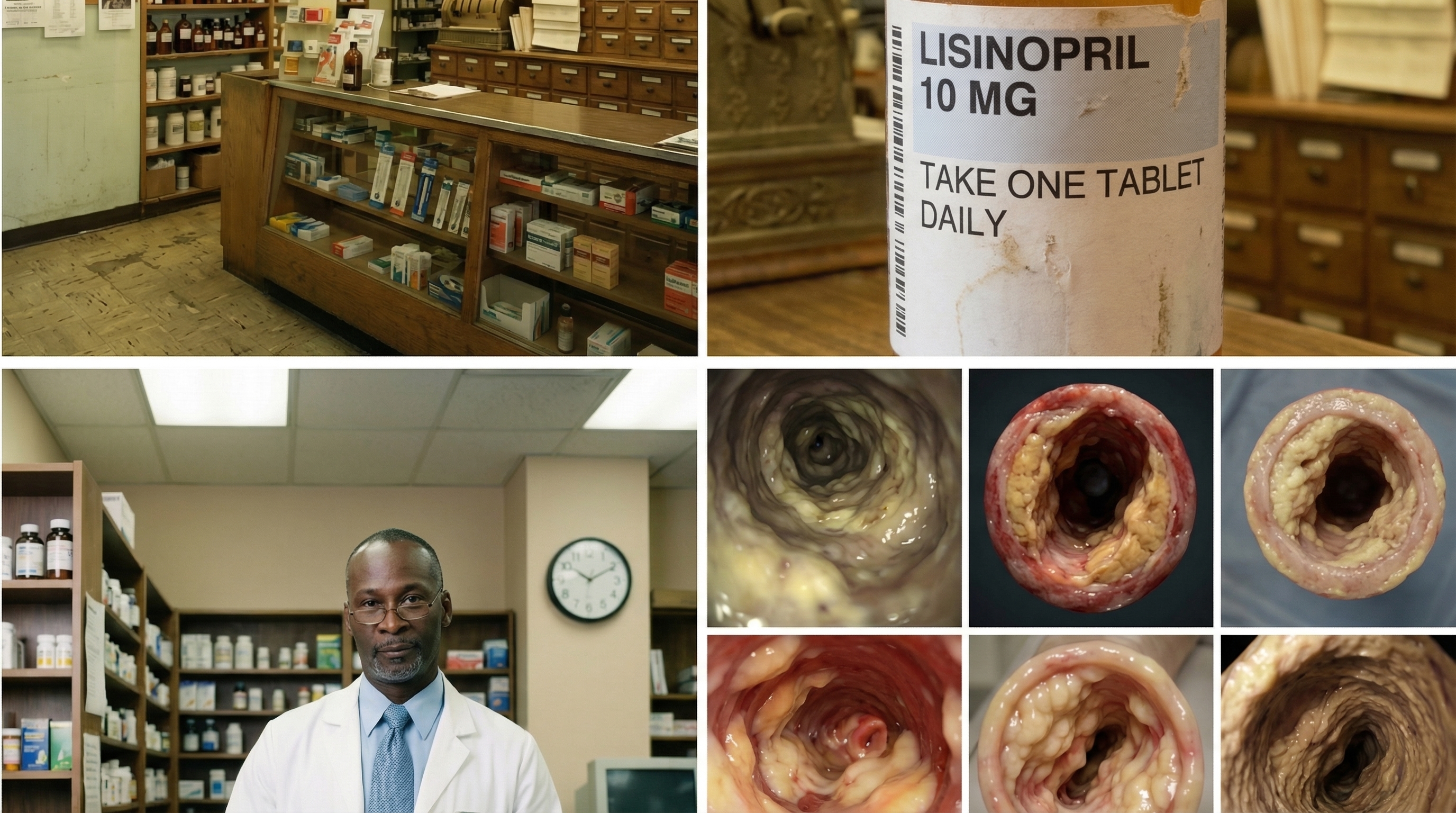
I've been a pharmacist for 28 years. A husband for 24. A father for 19. I've filled over 300,000 prescriptions. I carry 400 patients in my head — their names, their medications, their allergies. The man behind the counter who never forgets a name, never misses an interaction, never lets a bad prescription leave his hands. I've been on Lisinopril for nine. It gave me perfect blood pressure. Then it took my memory. I stopped four months ago. And what happened to my blood pressure — and to my mind — after I stopped is the reason I'm writing this instead of standing behind my counter right now. If your doctor put you on blood pressure medication and you've been taking it because you trust the system — the way I trusted the system, the way I WAS the system — you need to read this. All of it. My name is Marcus. I'm 54 years old. I own a pharmacy in a neighborhood I've served since I was 26. I'm not a chain store. No drive-through. No robot counting pills. I'm the pharmacist who knows your name. Knows your mother's name. Knows your medications, your allergies, your dosages, and the drugs your doctor prescribed that I had to call and question because the interaction would have put you in the hospital. I carry 400 patients in my head. Not in a computer. In my HEAD. That's not a system. That's 28 years of relationships built one prescription at a time in a neighborhood that doesn't trust hospitals, doesn't trust insurance companies, and barely trusts doctors — but trusts me. Which is why what I'm about to tell you guts me. Because for nine years, I was filling my own blood pressure prescription with the same blind trust I warned my customers against. My doctor found my blood pressure at 158 over 96 when I was 45. He prescribed Lisinopril, 20 milligrams. I didn't argue — I'm a pharmacist. I understood the mechanism. I'd dispensed thousands of blood pressure prescriptions. I knew the clinical profile better than most doctors writing them. I filled it myself. Peeled off the label, stuck it on the bottle, dropped it in my own bag. Routine. Ninety days later my blood pressure was 128 over 82. The drug was performing exactly as the pharmacokinetics predicted. For the first three years, I noticed nothing unusual. Then the forgetting started. Small things at first. A customer's name I'd known for a decade — gone. Just blank. I covered it — "Hey, sweetheart, how are you" — but I was scrambling inside. Flipping through mental files that had always opened instantly. Except I don't forget things. That's literally my job. My memory IS my pharmacy. Without it, I'm just a guy in a white coat counting pills. By year four the fog had a pattern. Worst in the afternoons. By 2 PM my head felt wrapped in gauze. I'd look at a prescription I'd dispensed a thousand times and the interaction profile would blur. I started writing things down. Sticky notes behind the counter. Drug interactions I'd had memorized since graduate school. Customer names. Things I could recite in my sleep were suddenly things I needed on paper. My pharmacy technician noticed. One afternoon she said — carefully, the way you talk to someone you respect — "Marcus, you okay? You seem a little off lately." A little off. Twenty-eight years into a career built on precision. And my own technician could see my mind slipping. I told my doctor. He ran bloodwork. "Your blood pressure is 124 over 78. These are excellent numbers, Marcus." I said: "I'm not asking about my blood pressure. I'm asking about my memory." He said the cardiovascular benefit significantly outweighed any potential cognitive concern. I've read those words on package inserts. I've recited them to customers who came to me worried about side effects. "The benefits outweigh the risks." I'd said it hundreds of times across the counter. Now those same words were being recited back to me. And for the first time, I heard what they actually mean: we've decided your side effects are an acceptable price. Acceptable to who? The hands came next. Opening childproof bottles — something I'd done 50 times a day for 28 years — started taking effort. Some mornings I'd struggle with the first bottle and have to run my hands under warm water before I could pop the cap. A pharmacist who can't open a pill bottle. Think about that. Then the fatigue. A heaviness that sleep couldn't touch. I'd wake up after eight hours and feel like I hadn't slept at all. And the dizziness — standing up too fast and grabbing the counter because the room was tilting. And the whole time, I was watching the same pattern unfold behind my own counter. A patient starts blood pressure medication. Numbers drop. Doctor's happy. Six months later — fatigue, fog, dizziness. A year later — dosage increase or a second medication. Two years later — a third. One prescription becomes three. Every new drug treating a side effect of the previous one. A pharmaceutical cascade. I watched it happen hundreds of times and never said a word. Until I became the patient. The day that broke me was a Tuesday in September. Curtis Williams walked in. Been coming to my pharmacy for 19 years. I'd filled prescriptions for him, his wife Gloria, his mother before she passed, his daughter in college. I knew his blood pressure medication. His diabetes medication. His statin. He walked up to the counter and his name — the name of a man I'd known for almost two decades — was gone. Not fuzzy. Not on the tip of my tongue. GONE. I stood there with my white coat on and a smile that was pure panic and said: "Hey, brother. How you doing today?" He slid his prescription across the counter. I looked at the name on the paper and felt sick. Curtis Williams. I'd known his name for 19 years. I didn't know it for those 15 seconds. And in those 15 seconds, I saw everything I was losing. Not a word. Not a fact. My IDENTITY. The pharmacist who knows everyone's name didn't know the name of a man he'd served for two decades. He said "Thanks, Marcus" and walked out. He knew MY name. I was the one forgetting. I locked the pharmacy that night and sat in the back room staring at the shelf of Lisinopril bottles. The same drug I'd put in my body for nine years. The same drug I'd dispensed to hundreds of people who trusted me. For the first time in 28 years, I didn't trust what was on my own shelf. I went home and opened my laptop. I didn't search "Lisinopril side effects" — I already knew those. What I searched was different: "Why do compliant blood pressure patients still have cardiac events." Because I'd seen that too. From behind the counter. Patients on blood pressure medication for a decade — compliant, consistent — suddenly disappearing for a month. Then the wife coming in with a new stack of prescriptions. Post-cardiac event. Blood thinners. Beta blockers. The blood pressure medication still on the list, plus four new drugs. Perfect compliance. "Excellent numbers." Still ended up in the ICU. What I found in the next two weeks destroyed everything I thought I understood about the drugs I'd been dispensing for 28 years. Here's what pharmacy school taught me: High blood pressure is dangerous. Medication lowers it. Numbers drop. Risk drops. Simple. Here's what pharmacy school never mentioned: Blood pressure medication doesn't fix the reason your blood pressure is high. Your body produces a molecule called nitric oxide. It's the primary signal that tells your blood vessels to relax and dilate. When nitric oxide levels are healthy, your vessels stay flexible, blood flows smoothly, and pressure stays in a normal range. It's how healthy blood pressure works — naturally. But nitric oxide production drops as you age. By your 50s, you're producing a fraction of what you made at 30. Your vessels lose the signal to relax. They stiffen. Blood has to push harder through narrower passages. The numbers creep up. That's the root cause. Not sodium. Not stress. Not bad genetics. The fundamental reason blood pressure rises with age is that your body stops producing enough of the molecule it needs to keep your vessels flexible. And Lisinopril — the drug I'd put in my body for nine years — does absolutely nothing to restore nitric oxide production. It blocks an enzyme to force vessels open artificially. That's it. Managing the number. Not fixing the system. In 28 years of pharmacy practice, nobody — not a drug rep, not a CE course, not a single prescriber — ever explained the distinction between managing blood pressure numbers and restoring the system that regulates blood pressure naturally. And nobody was looking at it. Not for my patients. Not for me. Then the dependency research clicked everything into place. When you take medication that forces your blood vessels open, your body gets the signal that the job is being done. So it produces LESS nitric oxide on its own. The same way a muscle atrophies when you stop using it — the pathway that produces nitric oxide starts shutting down because the medication is doing the work. My fog. My hands. My fatigue. Curtis's fog — he'd mentioned it across the counter once. Mrs. Patterson's daughter saying her mother "wasn't as sharp." Mr. Hendricks saying his legs ached so bad he needed deliveries. All on blood pressure medication. All the same symptoms. All their doctors charting it as "age-related." Age-related. The most convenient diagnosis in medicine. The one that explains everything and investigates nothing. And when nitric oxide levels keep dropping, the vessels stiffen further. The medication has to work harder. So they increase the dose. Or add a second drug. Or a third. The root cause keeps worsening underneath while the numbers on the screen stay managed. A vicious cycle. The medication was suppressing one number while the system underneath deteriorated year after year. Every supplement my customers tried was doing the same thing. Fish oil for circulation. Magnesium citrate tablets. CoQ10. Hawthorn berry. All working DOWNSTREAM. None of them restoring nitric oxide production at the source. None addressing the fundamental depletion that was eating my memory alive. The research that changed everything was on dietary nitrates and nitric oxide. I found it in the Journal of Nutrition. The American Heart Association had published on it. Researchers at multiple universities had been studying the connection for decades. Over 50 clinical trials showing dietary nitrates reduce systolic blood pressure by an average of 4 to 5 mmHg. More published research than half the supplements on my shelf. And in 28 years of pharmacy practice, nobody had ever mentioned it. Your body has a built-in biological pathway that converts dietary nitrates into nitric oxide. That word — built-in — is why everything else failed. Supplements work from the outside. They try to force a result downstream. Dietary nitrates feed the pathway your body already has — the one it used to run on before age depleted it. Not a drug mechanism. Not a synthetic intervention. A restoration. Giving the system back its raw material so it can do the job itself. And the single richest natural source of dietary nitrates is beetroot. The second piece: the average American diet has seen a 50% decline in dietary nitrate intake over the last century. Processed food. Depleted soil. Fewer leafy greens, fewer root vegetables. The raw material your body needs to produce nitric oxide — disappearing from the food supply while doctors prescribe more pills. In a pharmacy serving a predominantly Black neighborhood — where cardiovascular disease kills more of my customers than any other cause — I had never ONCE seen a doctor recommend increasing dietary nitrates alongside a blood pressure prescription. Never. In 28 years. I almost didn't try it. I'm a pharmacist. I evaluate drugs for a living. But the mechanism was different. Not different the way magnesium citrate is different from fish oil — both working downstream, both missing the target. Different at the fundamental level. Working upstream. Restoring the molecule the body stopped producing. Where the damage was actually happening. I tried three different beetroot supplements from Amazon first. Six weeks. Nothing happened. I almost gave up. Then I found a forum where someone explained why most beetroot supplements don't work — they're full of fillers and rice flour, barely any actual beetroot per capsule. But he'd found one that was different. Pure. No additives. High dose. Rosabella. 1300mg of organic beetroot powder per serving. No fillers. No garbage. Just one ingredient. And a 90-day money-back guarantee. I tapered the Lisinopril with monthly bloodwork. Ordered Rosabella that night. Day three — the fog was thinner. Like someone peeled off one layer of film. I stopped arriving an hour early. The drug names were there. The files were opening faster. Week three — the hands. The stiffness that made opening bottles a daily humiliation was gone. I walked into the pharmacy, picked up the first bottle, popped the cap. The way I'd done it for 28 years without thinking. Week six — Curtis Williams walked in. I saw him come through the door. And his name was RIGHT THERE. Not just his name — his medication history. His wife Gloria. His mother Annie Mae, God rest her. His daughter Keisha. All of it. Restored to exactly where it belonged. "Curtis. How you doing, brother." He grinned. "Same old, same old, Marcus. You know how it is." I did know. I knew again. Blood pressure at twelve weeks. Completely off Lisinopril for the last four. 118 over 74. On Lisinopril it had been 128 over 82. LOWER without the drug. Resting heart rate: 68. Down from 76. The cardiovascular system working more efficiently — not being forced, but actually functioning the way it's supposed to. I brought the results to my doctor. He looked at the numbers. Looked at me. "Your numbers are better than they've been in nine years. And you look like a different man than the one who sat here six months ago telling me he couldn't remember things." He didn't tell me to go back on Lisinopril. First time in nine years. I'm writing this for every person who trusts the system the way I trusted the system. Who takes the pill because a professional said to. Who's noticed their mind getting slower, their hands getting stiffer, their body getting heavier — and been told the benefits outweigh the risks. Maybe it's not aging. Maybe it's the drug. And maybe the number your doctor is celebrating has nothing to do with whether you're actually protected. Rosabella addressed the problem at the source. One serving. The dietary nitrates restore nitric oxide production — the thing the medication never touched. Your body converts them through a pathway it already has. No dependency. No cascade. No fog. No stiff hands. No forgetting the names of people you've known for 20 years. My numbers are better off the drug than they were on it. My resting heart rate dropped for the first time in nine years. My memory is back. Curtis Williams' name is right where it belongs. Twenty-eight years behind the counter. I thought I knew everything on my shelf. I didn't know the most important thing. P.S. — I started carrying Rosabella in my pharmacy. Not because anybody asked me to. Because I couldn't stand behind my counter watching the cascade happen and NOT offer an alternative. The first person I told was Mrs. Patterson — been on Amlodipine for eight years. She started Rosabella alongside it three weeks ago. Came in last Tuesday and said her morning brain fog was gone. Said it quietly, like she was afraid to believe it. Three more customers started after she told them. I didn't push it. I just put the information out there. That's what a good pharmacist does. I've been the wrong kind of good pharmacist for 28 years — accurate, careful, trusted, but inside a system I never questioned. Now I'm the right kind. P.P.S. — Here's my pharmacist challenge: take one serving of Rosabella. Set a timer for three days. If you don't notice the fog start to lift — a clarity, a sharpness, like somebody cleaned a lens you didn't know was smudged — then maybe this isn't for you. But if you feel it — and almost everyone I've recommended it to feels it — that's not placebo. That's dietary nitrates feeding a pathway your body has been starving for years. Something your Lisinopril has never done and never will. Something every supplement on my shelf can't do because they never work upstream where the depletion is happening. I'm a pharmacist. I don't say things work unless I've seen the mechanism and the data. Both are real. The fog lifting is something I felt on day three and have felt every morning since. P.P.P.S. — Rosabella has a 90-day money-back guarantee. If your numbers don't improve, every penny back. No questions. In 28 years of pharmacy, I have never seen a pharmaceutical company offer to refund your money if their drug doesn't work. Your Lisinopril comes with a lifetime commitment, guaranteed dependency, and a doctor who reads one number on a chart. Rosabella comes with a guarantee. The drug doesn't. P.P.P.P.S. — Rosabella is a small company. They sell out. I'm telling you this as someone who reorders inventory for a living — I had to wait 9 days for a restock and had customers waiting. If your next checkup is in 30 to 60 days and you want real numbers instead of medication-managed results your doctor's been rubber-stamping — check if they have stock now. Not next week. Now. Every day you wait is another day the vicious cycle keeps spinning and another day your Lisinopril keeps suppressing the system that should be doing the work on its own. I waited nine years. Don't be me. P.P.P.P.P.S. — Do not forget about their 90-day money-back guarantee. https://get.tryrosabella.com/beetroot/subtxt/blood-pressure
Support stamina and heart health every day
“I bought this for my husband after his doctor started talking about blood pressure medication. He was nervous about side effects — his father had a terrible time on those pills — so I wanted to find something natural to try first. Within a couple of weeks he started saying he felt more energy...
LEARN MORELike this ad? Make it yours.
Crush rebuilds this exact creative around your product — your brand, your colors, your offer — in about a minute.