Myrtle Carver
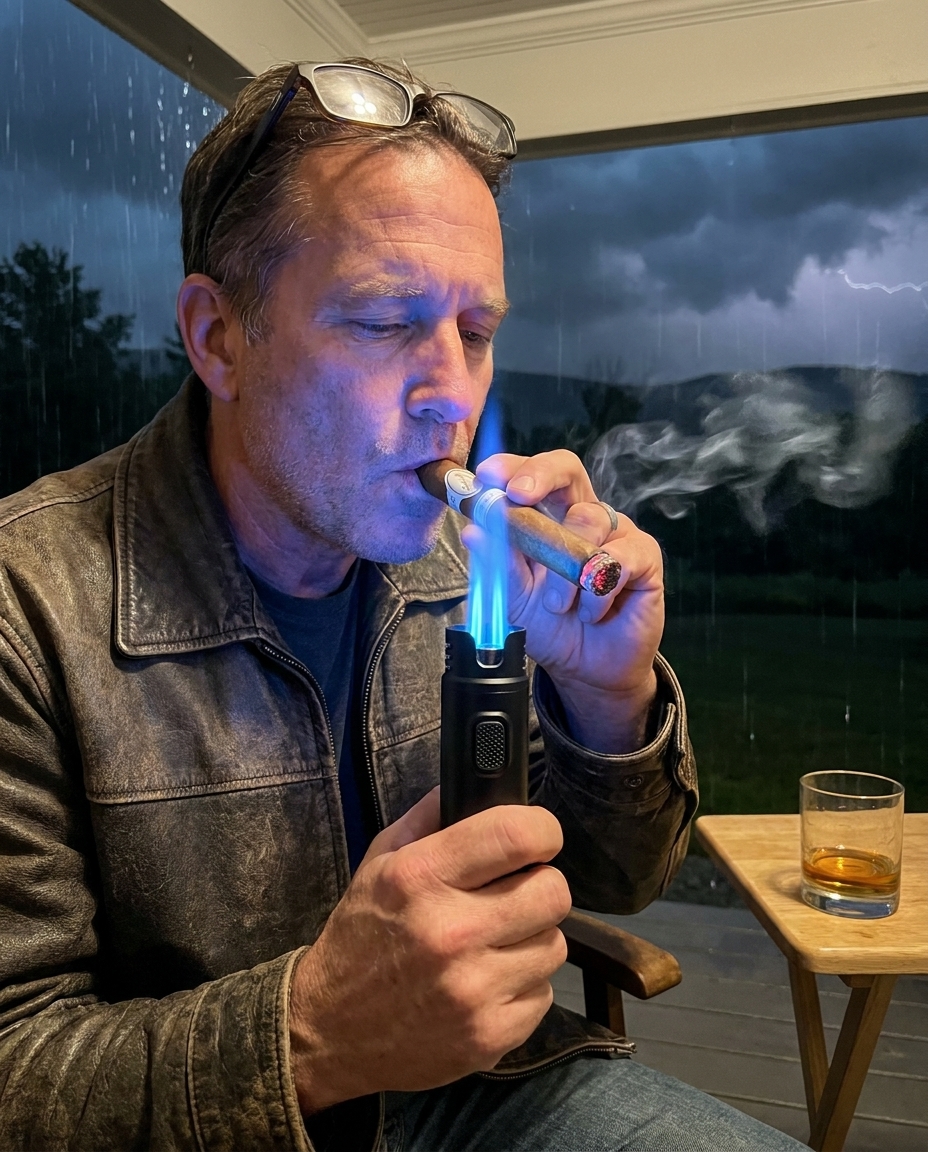
Myrtle Carver Facebook ad: “Lit a Davidoff in 38°F driving rain. First click.”
Ran for 7 days, from May 30 to June 5, 2026, the last day Crush saw it.
Run by Myrtle Carver on Facebook. Crush is not the advertiser and does not verify its claims. See this ad in Meta's Ad Library(opens in a new tab)
Want an ad like this for your product?
Crush makes new ad images for your product from this ad: your logo, your product photo, your offer.
Trials from $19.95 USD, then $79.95 USD a month. Cancel anytime.
About this ad
- Meta Ad Library ID
- 4418307418451656
- Platforms
- Facebook, Instagram, Audience Network, Messenger and Threads
- Relaunches
- 0
- Niche
- Gifts & Crafts
Ad text
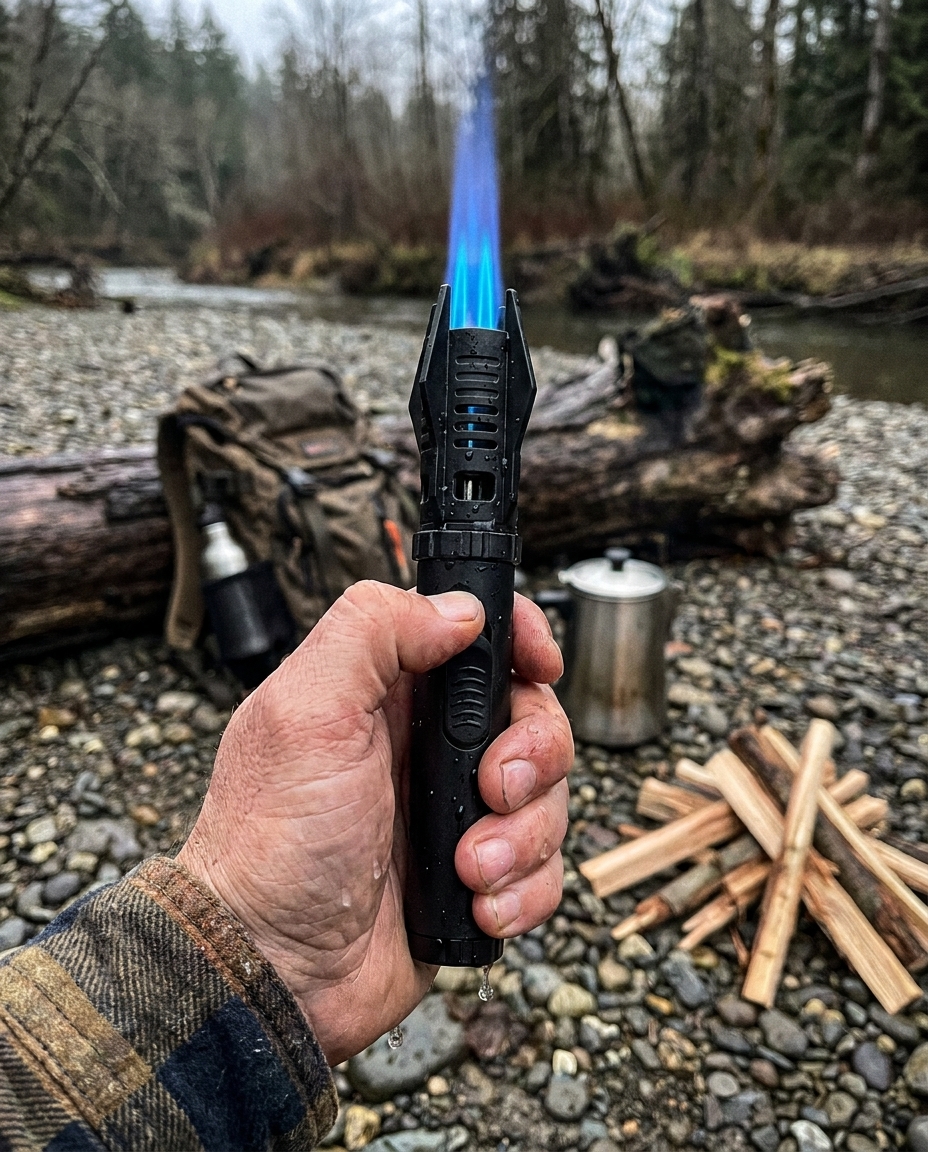
Three Bics dead on my porch by 8:47 PM. Butane was invented in 1932 and the mechanism has not really changed since — the flint wheel scrapes, the wet flint smells like a struck match that never got there, and the wind off Mount Mansfield erases the flame before it ever reaches the cigar. It was Tuesday. Thirty-eight degrees. Driving rain coming in sideways under the eave of the covered porch behind my house in Stowe, Vermont. I had a Davidoff Robusto Intenso in my left hand — a gift from my son for my fifty-sixth birthday — and I had been waiting eleven days for a clear Tuesday to smoke it. Vermont did not give me a clear Tuesday. Vermont gave me what Vermont gives you in late May. The first lighter gave me four dry clicks and the smell of wet flint. The second one lit, and the wind erased the flame in the four inches between flame and cigar foot. The third one lit and died twice in a row. I was standing on my own porch with a forty-two-dollar Davidoff in my hand and three dead lighters in the pocket of an old leather jacket, considering whether to give up. My wife Marian slid the porch door open and handed me something the size of a Zippo. Black anodized cylinder, slide-button on the side, a small fork-shaped wind shield at the top. 'Your son sent it. He said you would understand it before I could explain it.' Then she shut the door. I am 56 years old. Twenty-eight years as an electrical engineer at GE in Burlington, retired five years ago. Six years since as a high school physics teacher in Stowe. I taught vapor pressure to juniors three weeks ago. I can draw a butane vapor pressure curve on the back of an envelope and tell you exactly why every lighter in my pocket had just failed. Retired engineers keep receipts. So I can tell you what twenty-one years of one-cigar-a-week on this porch has cost me in lighters. A two-pack of Bics every sixty days at the gas station on Mountain Road. Eleven dollars and change. Roughly sixty-six dollars a year on disposable lighters. A Zippo I bought in 2019 thinking I was upgrading — twenty-four dollars. Then a four-ounce can of Zippo fluid every four months at six dollars. Two flint packs a year at four dollars. And the flint wheel itself wore flat after twenty-six months. I have rebuilt the lighter twice. The cigar nights wanted a real torch flame, not a Bic flicker, so I kept a refillable butane lighter going alongside the Zippo — another eleven dollars every two months on butane. Another sixty-six a year. In twenty-four months I have personally lost or buried fourteen lighters. Three off this exact porch. One went over the rail in a forty-mile-an-hour October gust — I was lighting a Padrón for my brother-in-law and watched a fifteen-dollar Ronson disappear into wet leaves I never found. Roughly one hundred and thirty dollars a year, every year, on fuel and replacements just to finish lighting one cigar a week. Here is the part I want to explain, because nobody at the cigar shop on Main Street explains it and I taught it for nine years. A standard butane lighter runs on a liquefied gas under modest internal pressure. The mechanism depends on the fuel having enough vapor pressure to push itself out the jet when you crack the valve. Vapor pressure is a function of temperature — the Clausius-Clapeyron equation is the formal version. The plain-English version is this. At seventy degrees Fahrenheit a Bic works fine. At forty, its vapor pressure has roughly halved. At thirty-two it is barely there. Below twenty Fahrenheit it is gone. The fuel is still in the tank. It just cannot push out. That is why your Bic works in your kitchen and dies on your porch in a Vermont May. Then there is the flame itself. A Bic flame is low-pressure — it comes out of a wide aperture at roughly six hundred degrees Fahrenheit. Any moving air past it carries away enough heat to break combustion. A four-mile-an-hour breeze kills it. A forty-mile-an-hour gust off Mount Mansfield is not a contest. Third failure point — the flint wheel. Ferrocerium rod scraped against serrated steel produces a shower of two-thousand-degree sparks. Wet flint, no sparks. A wheel worn flat after twenty-six months of scraping, no sparks. What my son had sent me is also a butane lighter — same fuel — but engineered around every one of those failure points. The fuel is JET-pressurized, not vented to atmosphere through a wide aperture. Two parallel burners under a heat-shielded fork at the top emit one column of flame straight up out of the top vent — roughly four centimeters tall, deep cobalt blue at the base, brilliant blue-white at the tip, audibly hissing under jet velocity. Tip temperature is two thousand five hundred Fahrenheit. Three to four times hotter than my Bic. Hotter than a Bunsen burner. And because the jet velocity is so much higher than ambient wind pressure, a forty-mile-an-hour gust off the mountain does not bend the column. It stays absolutely straight. The ignition is not a flint wheel. It is a USB-C-rechargeable electric igniter — the same family of compact high-voltage spark module you find in a modern gas range or a car ignition system. Slide the safety with your thumb, press the side button, and you get a clean electric click followed instantly by the hiss of the jet. Three hundred ignitions per ninety-minute charge. The same cable that charges my phone. Nothing to wear flat. No flint to soak. That Tuesday night on the porch, after the third dead Bic, I slid the safety with my thumb, pressed the side button, and heard the click and the hiss before I saw the flame. Then I saw it. Four centimeters of straight blue-white jet shooting up out of the top vent, rain hitting the heat shield and sizzling off, wind doing nothing measurable to the column. I touched the foot of the Davidoff to the tip and the wrapper caught in a clean even ring of cherry-red ember in under a second. First time in twenty-one years of porch nights I have lit a cigar in a Vermont storm on the first try and not had to relight it twice. That was eleven days ago. I have lit the cigar twice more on the porch since — once in another rain, once at twenty-eight degrees with the wind off the mountain. Same electric click. Same jet hiss. Same straight blue column. Same one-second light. Thirty-nine dollars. I have spent more than that on butane refills this year alone. The Zippo I retired cost me twenty-four to buy and then another forty-plus over its life in fluid, flints, and a wheel that finally surrendered. The Vector and Colibri jet torch lighters at the cigar shop on Main Street start at eighty and run to three hundred. This thing is thirty-nine — electric ignition included, sealed zinc-alloy body rated for accidental submersion, slide-lock safety, USB-C port on the bottom. Ninety-day money-back guarantee. Free shipping in the US. I am 56, retired from GE in Burlington, and I have taught physics to high school juniors for the last six years. I have buried fourteen lighters in twenty-four months. I am done. My son sent me the link last month. I will do what he did and leave it below for you. I am not selling these. The link is below.
Where the ad sends people
secure.buyignitex.com
Lit a Davidoff in 38°F driving rain. First click.
Retired GE electrical engineer in Stowe lit a Davidoff in 38°F driving rain on the first click. $39 USB-C butane jet torch. The flame didn't move.
Shop now: secure.buyignitex.com(opens in a new tab)