
Inactive· since Apr 8, 2026
- 163
- days it ran
- 0
- relaunches
Ad copy
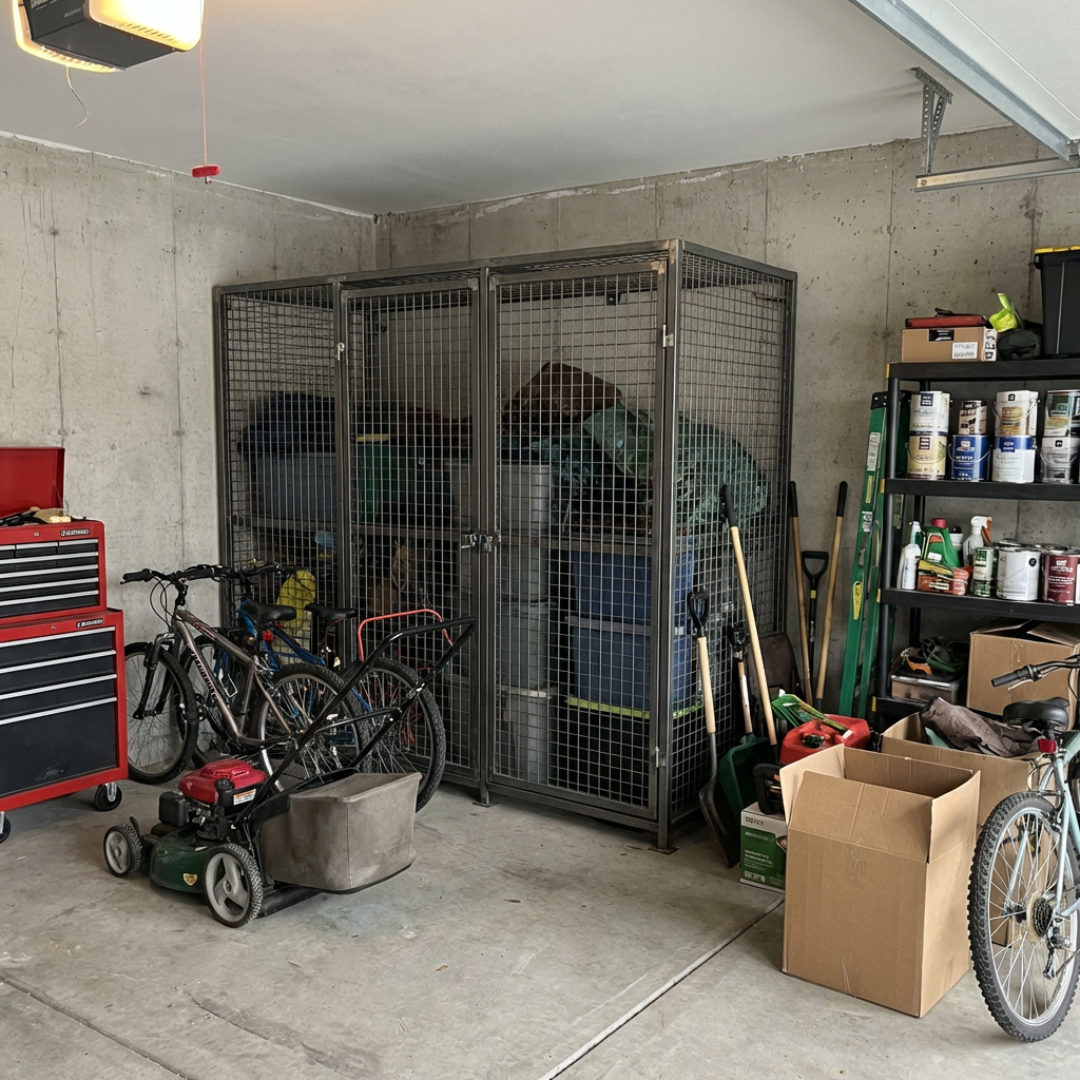
I saw a 10-foot metal cage in my buddy's garage when I went over for a cookout. Jeez… I almost dropped my beer when I saw it. Kevin and I have been friends for years. Our kids play together. He's an electrical engineer for one of the utility companies in our area. So when his youngest came running up asking for water bottles and Angela told me to grab some from the garage fridge, I didn't think anything of it. I walked in, found the fridge and grabbed the waters. Then I turned around. And there it was. Against the back wall, there was a steel frame maybe ten feet wide. Inside it — radios, a laptop, battery banks, some kind of solar panel controller. All of it organized on shelves behind this metal enclosure like it was supposed to be there. The rest of his garage looked completely normal. Lawnmower. Kids' bikes. Toolbox. Fishing rods. And then this thing. I just stood there holding water bottles, staring at it. Kevin came through the side door. "You get lost?" I pointed at it. "What the hell is that thing?" He looked at it the way you'd look at your workbench. Like it was nothing. "Faraday cage." "A what?" "Blocks electromagnetic pulses. If an EMP hits, anything electronic that's not inside something like this is done. Permanently fried. Stuff inside survives." I looked at the radios. The battery banks. The laptop. "Kevin. Why do you have this?" He grabbed one of the water bottles out of my hands. Cracked it open. Took a long drink before he answered. "You know what I do, right? Grid infrastructure. Substations, transformers, distribution networks. I've been doing vulnerability assessments for municipalities for three years." "Okay…" "So everything I'm about to say is public information. Government reports. Most people just don't bother reading it." He set the bottle down. "An EMP — doesn't matter if it's a high-altitude nuke or a purpose-built weapon — fries every unshielded electronic circuit in range. And I don't mean a power outage where you flip the breaker. I mean the components themselves are destroyed. Transformers, control systems, comms equipment. Gone." "Like… permanently gone?" "The transformers that run the grid take 18 months to manufacture. And we don't even make them here anymore. So after an EMP, you can't just flip the grid back on. You're waiting years. If the supply chain even exists to build replacements." I stared at him. "And you actually think this could happen?" "I think the capability exists and the people who have it are getting bolder. You watch the news at all? The overseas stuff? The escalation?" "Some of it." "The countries involved right now have EMP capability. That's in our own defense intelligence reports. That's not me being paranoid." He paused. Crossed his arms. "You want to know the part that actually keeps me up?" "Not really." "There's a congressional report — the EMP Commission — that estimated 90% of the American population would die within a year of a long-term grid failure." I felt my stomach tighten. "Ninety percent?" "And honestly that might be generous. Think about what actually stops working. Fuel pumps need power, so trucks stop running, so food stops moving. Hospitals go dark. Every perishable in the country spoils in days. Water treatment plants shut off and your taps go dry — that happens within hours, by the way, not days. Comms go down. The entire supply chain just… stops." He shook his head. "How many people in this country can actually grow food? Hunt? Find drinkable water without a faucet? It's less than one percent. And none of it comes back quickly. We're not talking weeks. Years." I didn't say anything for a minute. I just stood there picturing it. My wife turning the faucet and nothing coming out. My kids asking why there's no water. Me standing in the kitchen with no answer, no plan, and no idea when it's coming back. Not in a week. Not in a month. Maybe never. I thought about the twenty gallons I carelessly put in my pantry and felt sick. A week's worth. Maybe. Then nothing — for the rest of our lives. I looked around Kevin's garage again. Really looked this time. The Faraday cage on the back wall — communication and power. He's got radios, batteries, a laptop, solar charging. If everything goes dark, he can still know what's happening and run basic electronics. Covered. Food storage on the opposite side — rice, beans, canned goods stacked neatly. Maybe a month's worth. Not forever, but he's thought about it. Then it hit me. The one thing I had that he didn't have… was water. That was really strange because we can't survive 3 days without it — and one of the smartest guys I knew didn't have more than a couple of blue jugs on a shelf that would last maybe a week. "Kevin, where's your water?" He almost smiled. "I don't need tons of water storage." "That makes zero sense." He walked over to his workbench, opened a drawer, and pulled out a small blue tube. Maybe six inches long. He had six or seven of them lined up in there. He held one out to me. "This is my water plan." I took it. Weighed almost nothing. "You're serious." "Portable water filter. Hollow fiber membrane — filters down to a tenth of a micron. Bacteria are bigger than that. Parasites are way bigger. They physically can't pass through. Screw it on any water bottle and drink." "From where, the pond?" He pointed out the garage door toward the retention pond at the end of the road. "How many gallons you think are in that pond? Hundreds of thousands. The creek behind the elementary school — half a mile. Lake's fifteen minutes from here. When it rains, water collects everywhere. Gutters. Barrels. Ditches. With one of these, all of it's drinking water. No power. No boiling. No chemicals." "You've actually done this?" "Been drinking from that pond for over a year. Angela thinks I'm nuts but she's tried it herself. I test it every couple of weeks. Nobody's gotten sick. Not once. Because the things that actually make you sick from untreated water — bacteria and parasites — that's exactly what this thing removes." He set it on the workbench. "Each one's rated for 400 gallons. That's over three months of drinking water per person. I've got one for everyone in the family plus spares." I looked at the pond through the garage door. Then at the little blue tube on the workbench. Then I thought about the twenty gallons sitting in my pantry. "Here's the thing," he said. "Storage runs out. Doesn't matter if you have twenty gallons or a hundred. Eventually it hits zero and you're standing in the same line as everyone who didn't store anything. That's a countdown timer." He pointed at the filter. "That's not a countdown. That's capability. As long as there's a freshwater source within walking distance, you have water. Not for a week. Not for a month. For as long as the source exists." I kept turning it over in my hands. "I see stuff at work most people never hear about," he said, quieter now. "I hear things in meetings that would keep you up at night. I can't control any of that. But I can make sure that when something happens — whatever causes it — my family has water. That's the one thing I can solve right now. So I solved it." He closed the drawer. "Take that one home. Test it yourself. Don't trust me — fill a bottle from whatever's near your house. Filter it. Drink it. Wait a day. See how you feel. That's what I did before I ever let my kids near it." I drove home turning everything over in my head. The overseas conflicts escalating. The countries with EMP capability getting bolder. The transformers we can't replace for 18 months — if the supply chain even exists to replace them. Water treatment shutting down within hours. Ninety percent dead within a year. Probably more. And the fact that the guy who sees all of this for a living — who built a Faraday cage in his garage — said water was the first problem to solve. Not communication. Not food. Water. That Sunday morning, I walked down to the retention pond near our neighborhood park. Brought a clear water bottle. Filled it right from the edge. Water was greenish. Murky. Little bits of something floating in it. Smelled like a pond. I screwed Kevin's filter onto the bottle. Drank. It tasted like tap water. Not amazing, not bad. Just clean water. I waited 24 hours. Checked in with myself every few hours. Stomach? Fine. Nausea? Nothing. Any issue at all? Nothing. Completely normal. I called Kevin Monday morning. "It works." "I know." "Where'd you get them?" "Primitive Labs Research. Same ones the guys on our disaster response coordination team carry. Lifetime warranty — that's why I trusted it. If they're backing it for life, they're not messing around." He sent me the link. I ordered that night. Enough for everyone. One for each car. Each go-bag. Spares at the house. It's been three months since that cookout at Kevin's. I don't have a Faraday cage. I'm not there yet. Maybe someday. But here's what changed. I don't have twenty gallons of water bottles sitting in my pantry anymore. I keep about ten. Convenience supply. Enough for the first day or two of any disruption. But that's not my plan anymore. My plan is the retention pond at the end of my street. The creek half a mile out. The lake fifteen minutes away. Every puddle, rain barrel, and freshwater source within walking distance. All of it drinkable. Anytime. No power required. I was storing water like the problem was running out of bottles. The actual problem was never having enough bottles — it was having no way to drink the water that's already everywhere around me. Kevin figured that out because he sees infrastructure every day and knows what would happen to it if an EMP hit. I figured it out because I went to grab water bottles at a cookout and saw something in his garage that changed how I think. Most people won't figure it out until it's too late. I keep thinking about what he said standing in his garage. "I see stuff at work most people never hear about. I can't control any of it. But I can make sure my family has water. That's the one thing I can solve right now." I don't know when or if an EMP ever hits. I don't know how the overseas conflicts play out. Nobody does. But I know that if the grid goes down — for any reason, for any length of time — water is the first thing that stops. And your stored bottles aren't a plan. They're a countdown. The guys who actually understand what the grid can and can't survive? They're not counting bottles. They're counting water sources. Kevin's HYDRA-X1 water filters are from Primitive Labs Research: https://primitivelabsresearch.com/products/hydra-x1-portable-filtration-unit 400-gallon capacity. Two ounces. Lifetime warranty. Test it before you need it. That's what Kevin did. That's what I did. Because the day your taps go dry and your bottles run out, you don't want to be figuring this out for the first time. You want to already know it works.
If you're a parent or grandparent, please read this👆
Lightweight portable emergency water filter removes 99.99% of contaminants. Perfect for evacuations, disasters, and family emergency preparedness. Free shipping.
SHOP NOWLike this ad? Make it yours.
Crush rebuilds this exact creative around your product — your brand, your colors, your offer — in about a minute.