
Active· since Aug 24, 2026
- 18
- days running
- 0
- relaunches
Ad copy
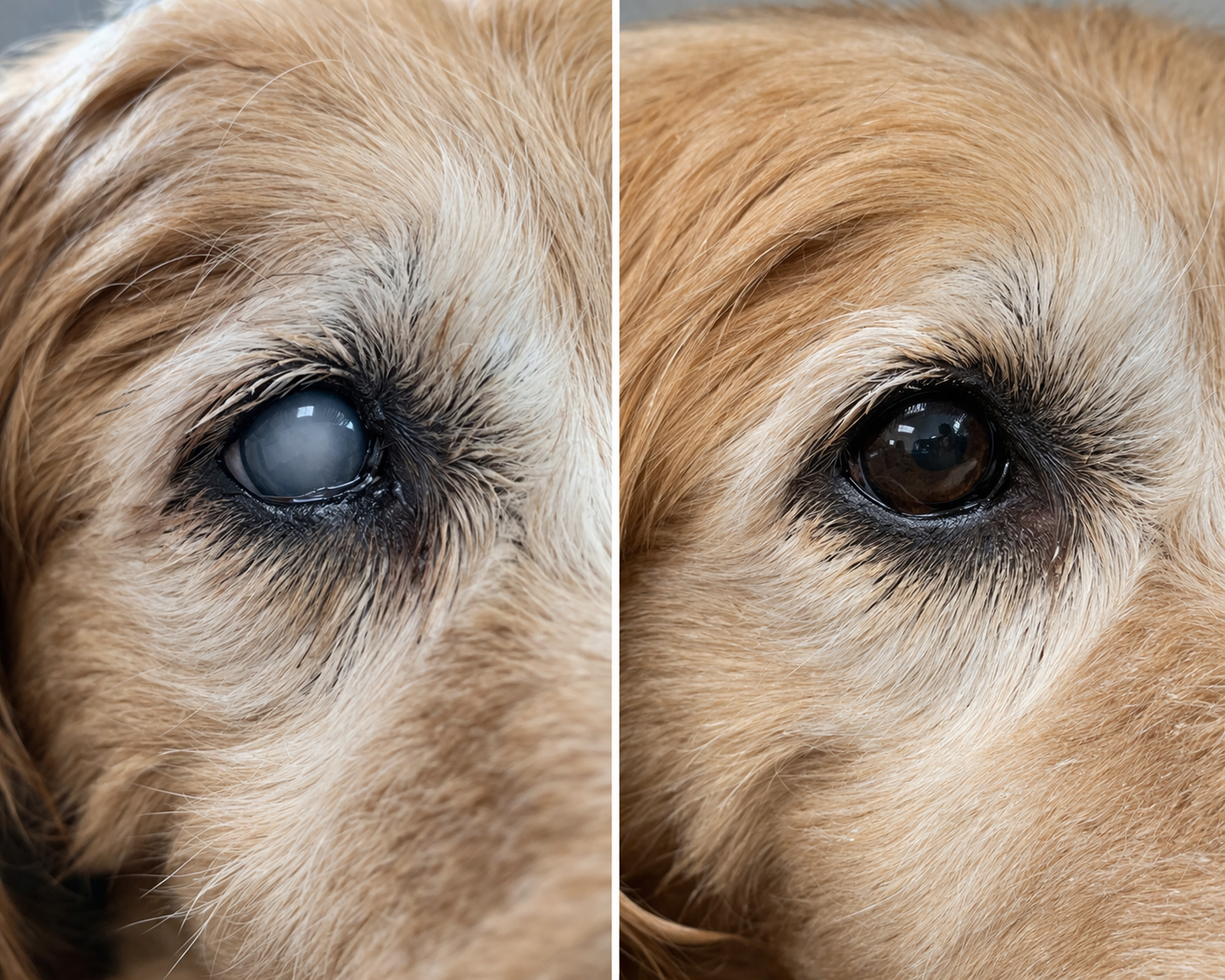
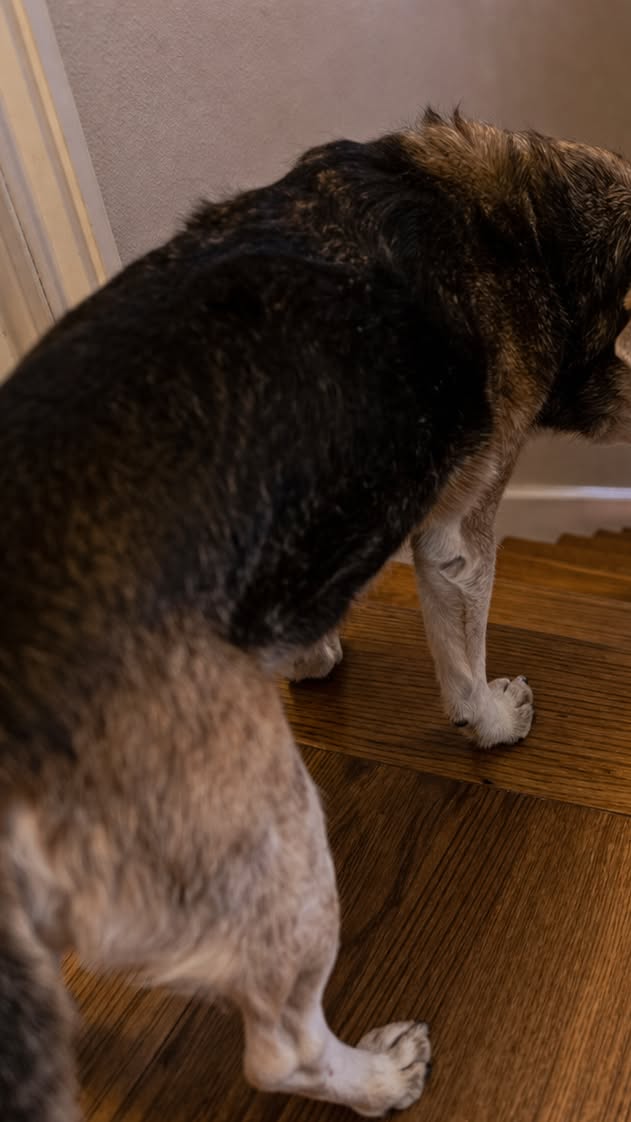
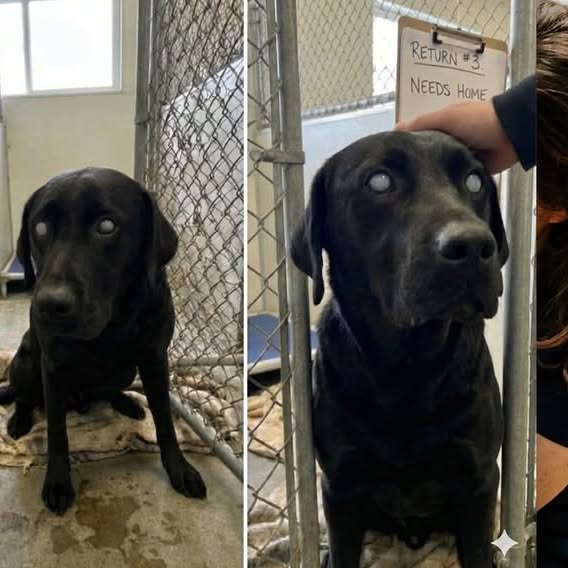
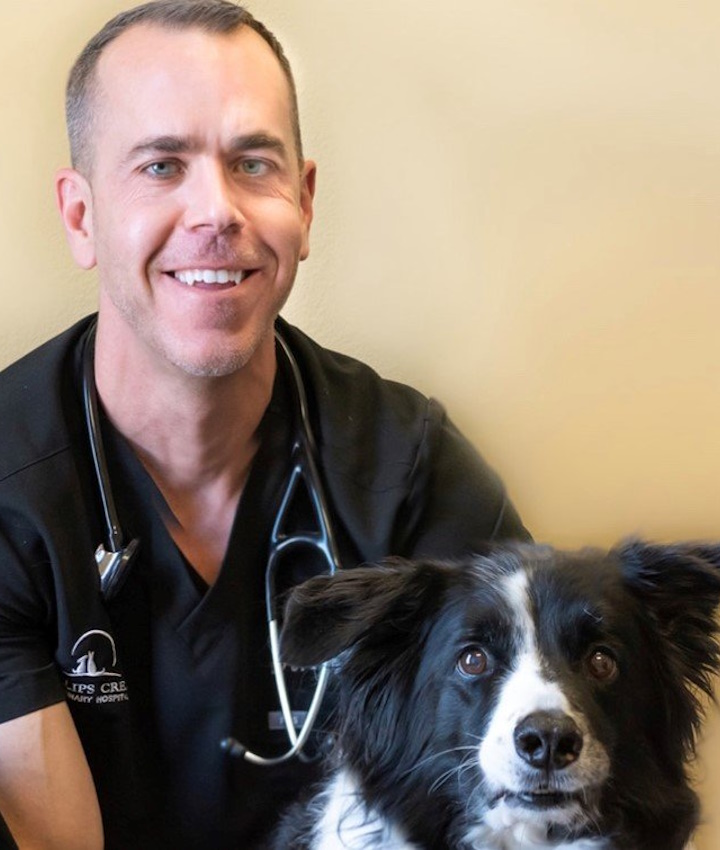
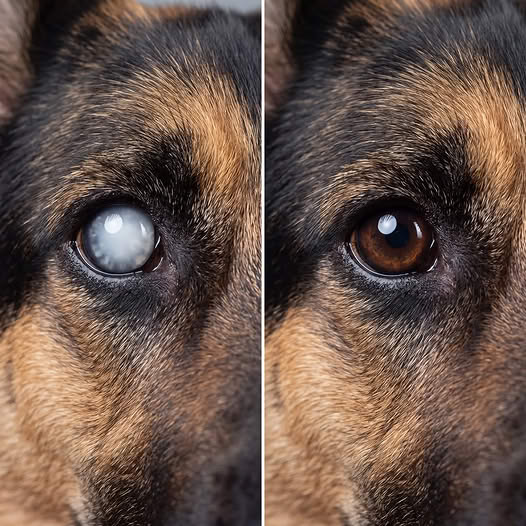
If your dog's eyes have started to look hazy… and your vet told you to "just monitor it"… please read this before you wait another month. Because I gave that exact advice for eleven years. And I had the causation backwards the entire time. My name is Dr. David Martinez. I spent eleven years at a county animal shelter and treated more than 9,000 dogs. And like almost every vet I trained alongside, I filed cloudy eyes in the same drawer as grey muzzles and stiff hips. Aging. Something that happens to a dog. Not something that does anything. Then a retired firefighter named Tom brought in his golden retriever, Cooper. Tom didn't come in about Cooper's eyes. He came in because Cooper had "gotten old, suddenly." Cooper had stopped meeting him at the door. He'd started freezing at the top of the stairs. He'd stopped chasing the ball. He'd watch it go and stay put. He'd gotten clingy at night. Tom thought his dog's body was giving out. I checked Cooper's hips. Fine. Bloods. Fine. Heart. Fine. His lenses had a faint haze. I noted it and moved on. And I told Tom what I told everyone: 👉 "He's just getting on. Keep an eye on it. We'll talk surgery if it progresses." A year later, Tom was back. The cataracts had advanced badly. The surgery quote was over $6,000. And he said the thing I've never been able to put down: "I wish someone had told me the eyes were the reason. I thought I was just losing him to age." Here's what I had backwards. I thought the cloudiness was a symptom of aging. It isn't. For a huge number of dogs, the cloudiness is what creates the aging. Think about what a dog actually does when the world goes soft at the edges. He stops jumping, because he can't judge the distance. He stops running, because he can't see what's in front of him. He stops greeting you at the door, because he can't tell it's you until you're close. He sleeps more, because moving stopped feeling safe. He gets anxious and clingy, because he's lost the sense he leans on most for confidence. Then his owner looks at all of that and thinks: he's getting old. But that isn't age. That's a dog navigating a world he can no longer see clearly. And here's the part that changed how I practise. Once he stops moving, he genuinely does age faster. Muscle goes. Joints stiffen. He gets less exercise, less stimulation, less engagement. And the mental decline follows behind it. So the vision loss doesn't just look like aging. It starts an aging process that wasn't due yet. Now here's the second thing almost everyone gets wrong. Most owners believe the cloudiness is the first sign. It's not the first sign. It's one of the last. By the time you can see a haze from across the room, the process inside the lens has been running for a long time already. 👉 The cloudiness isn't the event. It's the receipt. The real first signs are behavioural. And every one of them is easy to explain away: → A half-second pause before stairs or a kerb → Sticking closer to you on walks than they used to → Not tracking a thrown ball through the air anymore → Clipping a door frame in dim light → Startling when you come at them from the side Owners call that laziness. Or old age. Or a stubborn streak. It's usually the eyes. So here's a test you can run in your kitchen tonight. Stand a few feet from your dog. Toss a treat gently through the air, off to one side. Not straight at them. A dog with clear vision tracks it and moves. A dog with lens changes will wait for it to land, then hunt for it with their nose. Do it two or three times. If your dog is nosing the floor instead of watching the air, the process has already started. Whether or not you can see anything in their eyes. And this is why "let's monitor it" is the worst possible plan. Inside your dog's eye is a lens made of transparent proteins, stacked in near-perfect order. That order is the only reason light passes through. Free radicals, from UV light, from inflammation, from high blood sugar, knock those proteins out of shape. Damaged proteins clump together. Clumps scatter light instead of passing it. That's the haze. But here's the piece nobody explains: 👉 Damaged proteins don't sit there quietly. They generate more oxidative stress themselves. Which damages more proteins. Which creates more stress. So this doesn't progress in a straight line. It accelerates. The gap between "a little hazy" and "he can't find his water bowl" closes far faster than the gap before it. Which means monitoring is, in practice, a decision to stand back and let the fastest part of the process run unopposed. And there's one more variable nobody mentions. There is a defence system for exactly this. Three pigments, lutein, zeaxanthin and astaxanthin, sit inside eye tissue and absorb oxidative damage before it reaches the lens proteins. Here's the problem. 👉 Dogs don't manufacture a single one of them. They have to come in through diet. And commercial dog food contains essentially none. So a dog spends eight, ten, twelve years outdoors, in glare, in reflection off water and pavement, with the shield running on empty the entire time. That isn't aging. That's a nutritional gap that happens to take a decade to become visible. Which brings me to why most products fail anyway. I'd have argued with this five years ago. Owners try eye drops. Eye drops lubricate the surface. The damage is inside the lens, behind a barrier drops don't cross. It's like spraying the outside of a fogged window and waiting for the inside to clear. So they try supplements instead. And here the ingredient label barely matters, because the limiting factor isn't which compounds are in the tub. It's how many of them survive the trip. Powders and chews go through the stomach, then the liver. Most of the antioxidant load is broken down and filtered out before it reaches the bloodstream, let alone the eye. You paid for a therapeutic dose. Your dog absorbed a fraction of one. That's why owners do everything right for six months, see nothing, and conclude the whole category is a scam. 👉 It was never the ingredients. It was the delivery. Which is what led us to what we use now. And the first thing to say clearly, because the name confuses people, is that it is not an eye drop. It's a liquid you put in your dog's food. The compounds absorb through the mucous membranes and go into the bloodstream directly, skipping the digestive breakdown that flattens the dose in powders and chews. Five compounds, each with a specific job: ✔ Astaxanthin, which crosses into eye tissue more readily than almost any other antioxidant ✔ Vitamin C, which neutralises free radicals in the fluid of the eye ✔ Vitamin E, which protects the fatty membrane of the lens itself ✔ Bilberry extract, which supports the tiny vessels feeding the retina ✔ Grape seed extract, which switches on your dog's own antioxidant production Together they do three things. They neutralise the free radicals attacking the lens. They signal the body's cleanup system to break down protein that's already clumped. And they help flush the fragments out so the lens can clear. Ten seconds. Into the bowl they're already eating from. No wrestling. No pinning your dog down twice a day and slowly teaching them to hide from you. And honestly, what surprised me most wasn't the eyes. I expected to see eyes change first. What we saw first was behaviour. Dogs who'd been stalling at the top of the stairs going down without stopping. Dogs tracking movement across a room again. Owners telling us their dog seemed younger. More himself. Back. Which is exactly what you'd expect, if the causation runs the direction I now believe it does. "Fabulous drops. My 14 1/2 year old doggy was fatigued and barely eating now she is eating and jumping around like a puppy." Sarah C on Luna So the question is where your dog is right now. If there's nothing visible yet, just an occasional pause at stairs, some clipping things in dim light, no longer tracking thrown objects, that's stage one. That's the window. And almost nobody acts here. If there's visible haze in bright light, noticeably less confidence, sticking close, playing less, that's stage two. Still very much worth acting on. If there's dense cloudiness and they're navigating by nose and memory, anxious in unfamiliar places, that's stage three. Support still matters, but expectations should be realistic. If your dog is in stage one or two, you're holding something most owners don't realise they're spending. Time. Two years after Cooper's surgery quote, Tom came back in. This time with Cooper's younger sister, Daisy. He'd started her the week he noticed her hesitate at a kerb. Before there was any haze to see at all. Her eyes were clear. And on his way out he said the line I've since repeated more than anything I learned in vet school: "I thought I was watching Cooper get old. I was watching him go blind. Nobody told me those were two different things." Don't spend the next twelve months calling it age. 👉 https://caninedrops.com/products/clearvision%E2%84%A2-drops They are currently running a buy 2 get 1 free offer with a 30 day money back guarantee. P.S. Do the treat test tonight. It takes thirty seconds and it costs you nothing. If your dog watches it fly, wonderful. Come back to this in a year. If your dog waits for it to hit the floor and then goes looking with their nose, you now know something you didn't know this morning. They weren't slowing down. They were losing the sense they trust most, and adjusting their whole life around it without ever telling you.
Your Dog Isn't Slowing Down Because He's Old. He's Getting Old Because He Can't See.
CanineDrops
SHOP NOWLike this ad? Make it yours.
Crush rebuilds this exact creative around your product — your brand, your colors, your offer — in about a minute.