
Inactive· since Apr 29, 2026
- 82
- days it ran
- 1
- relaunches
Ad copy
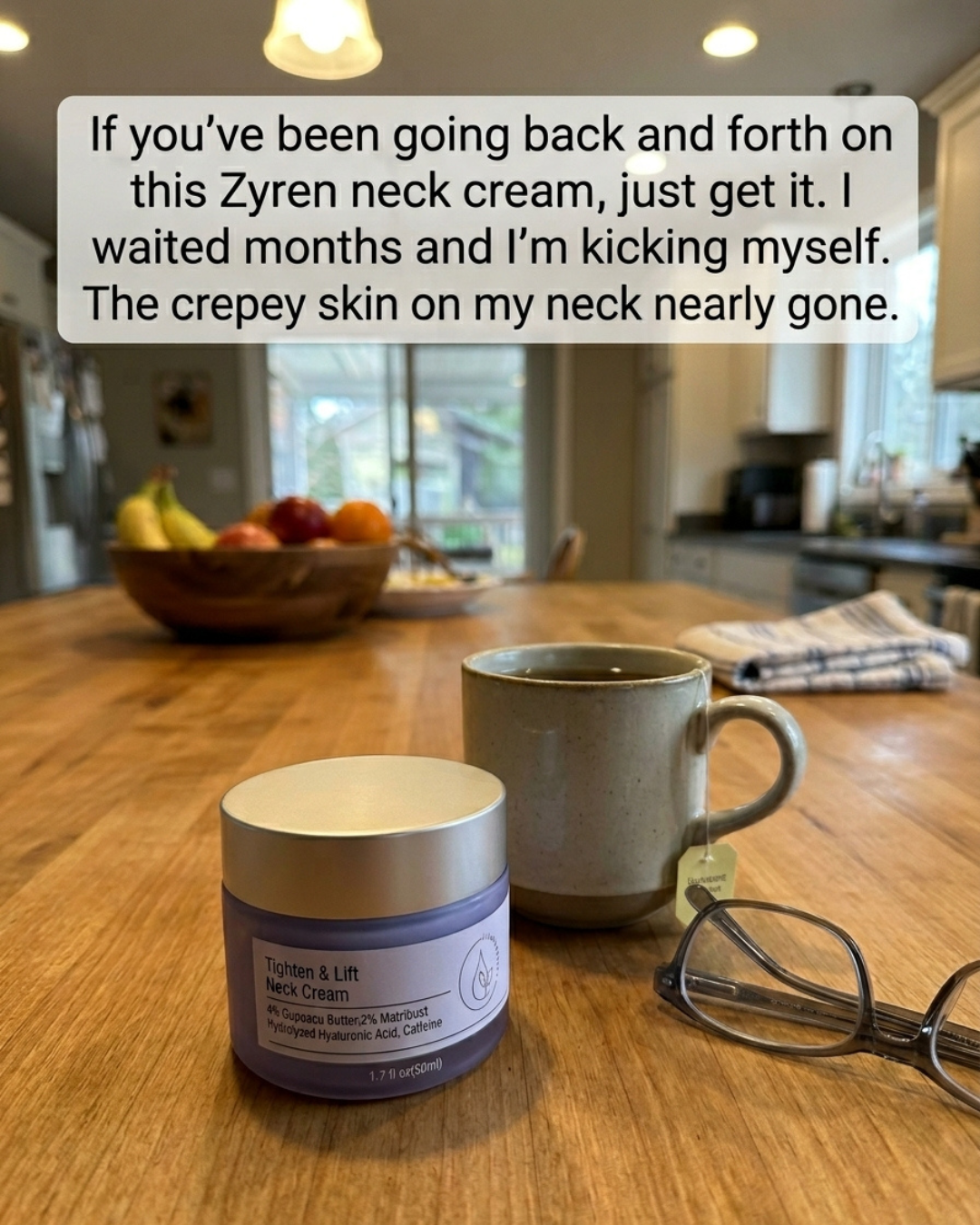
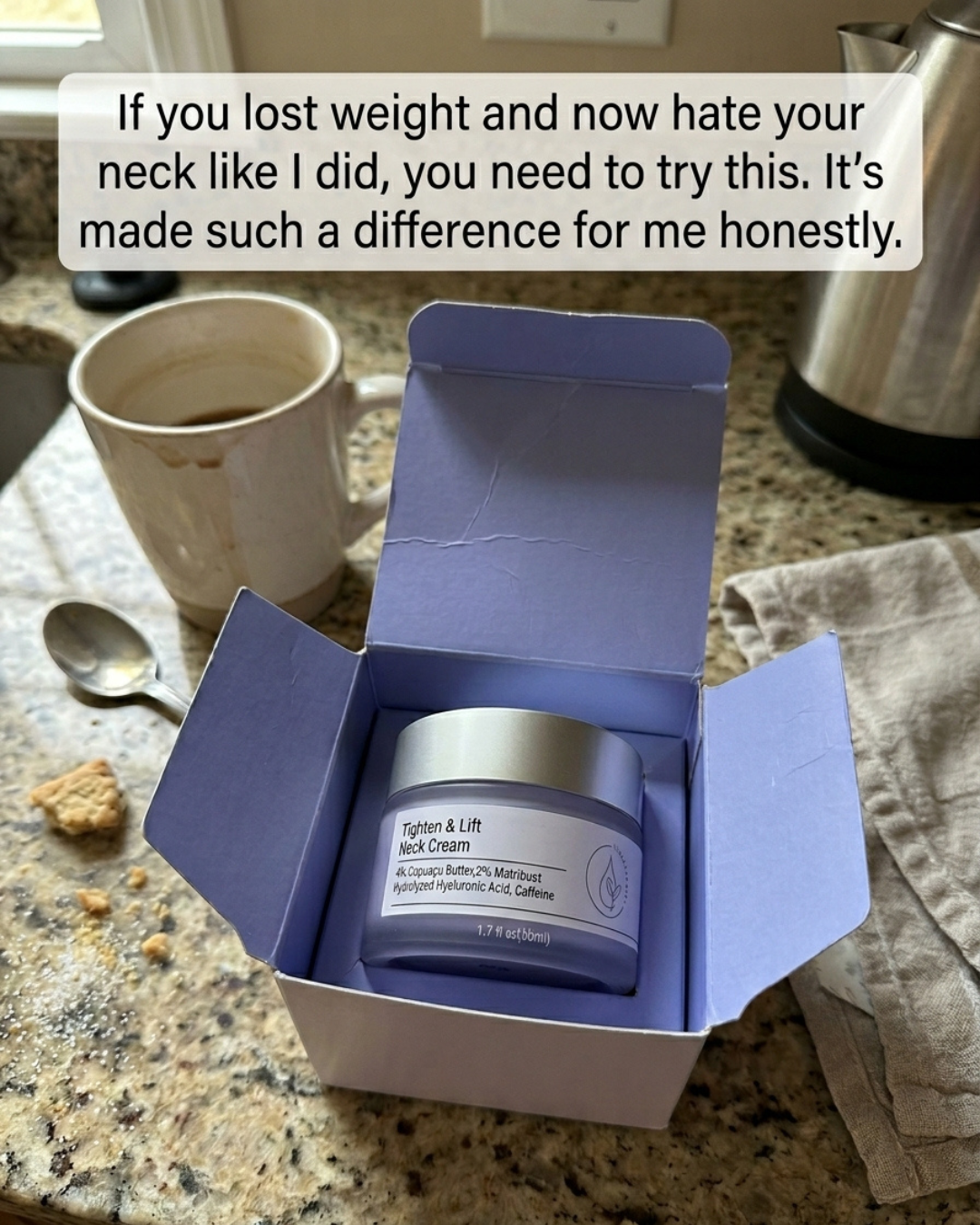
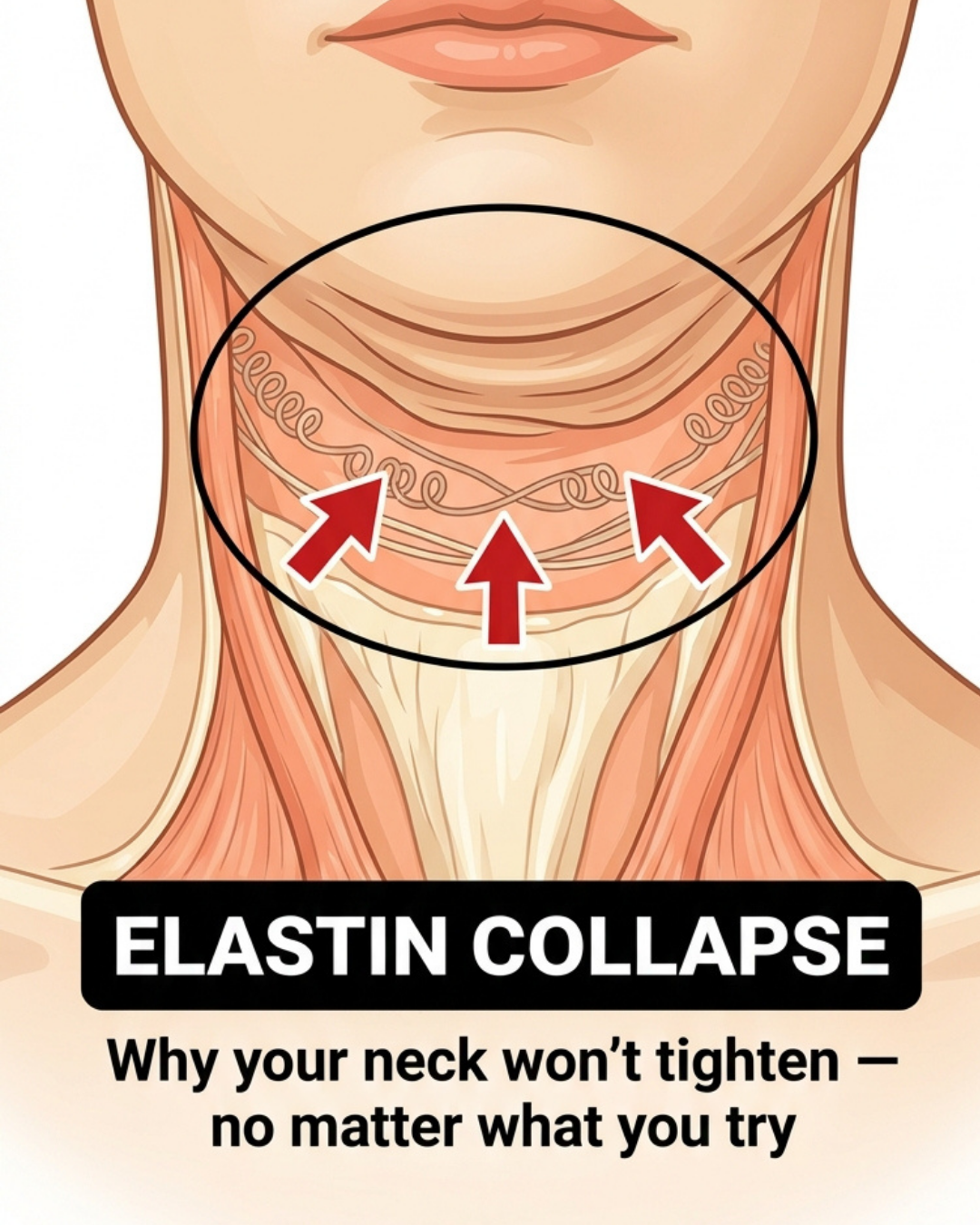
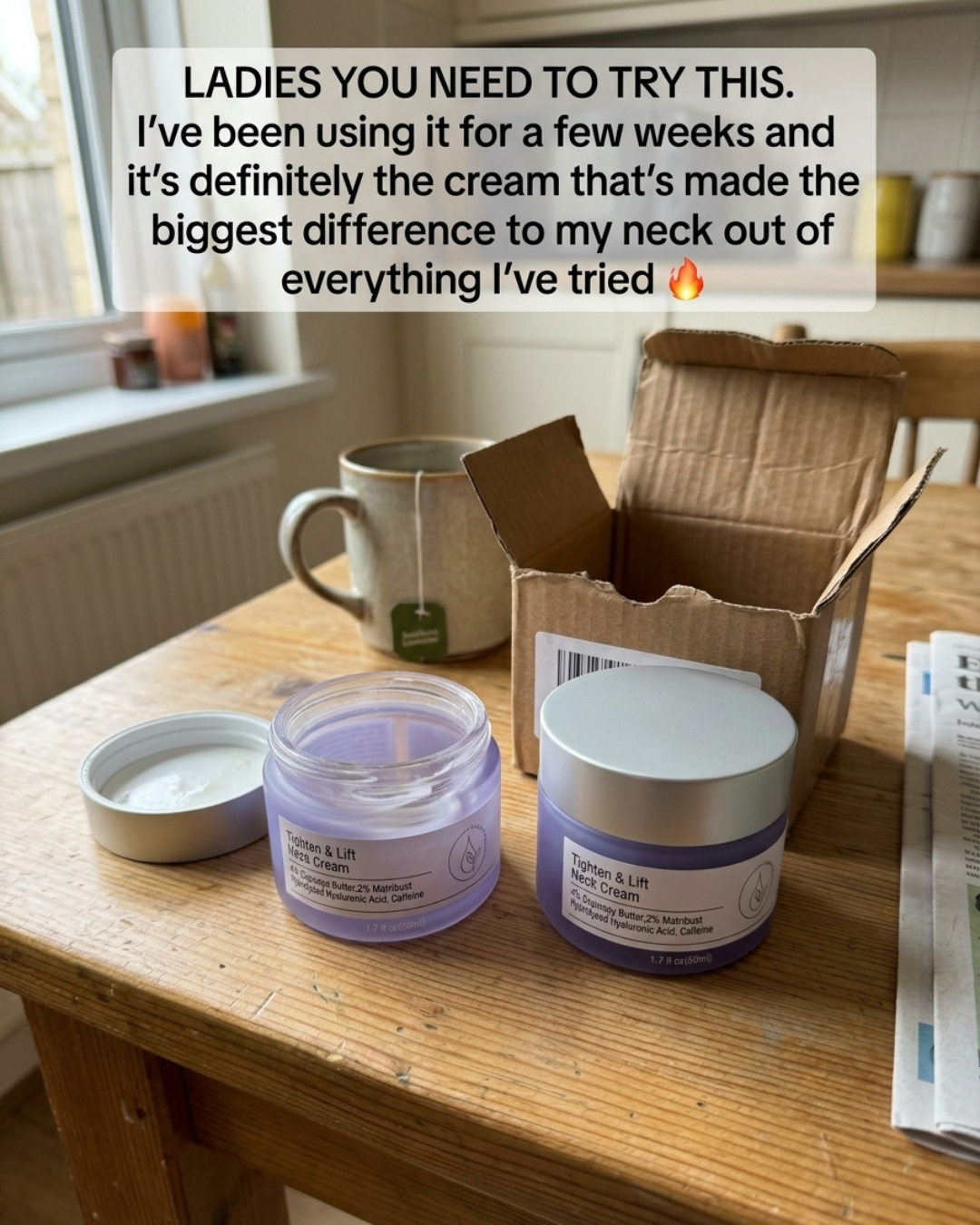
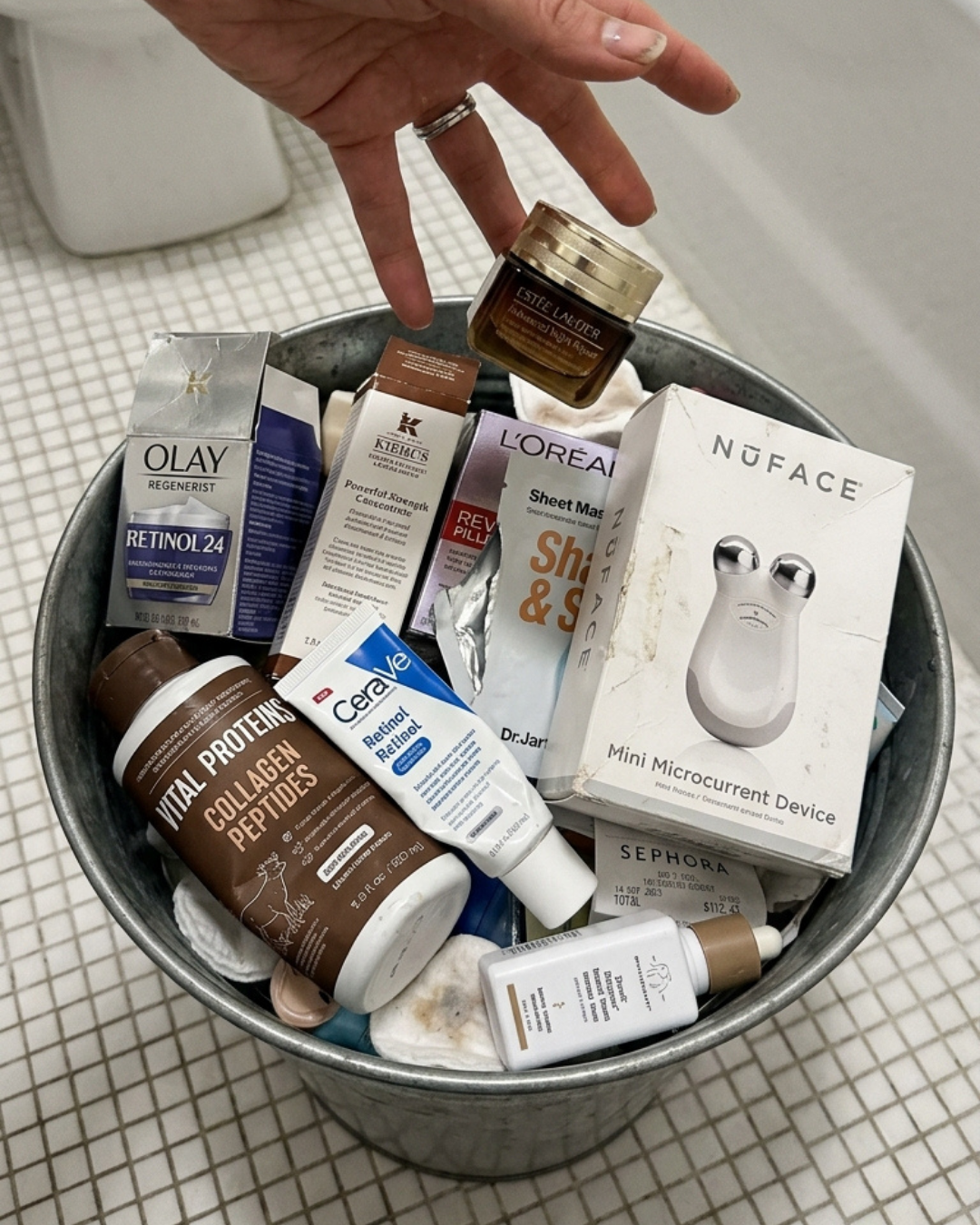
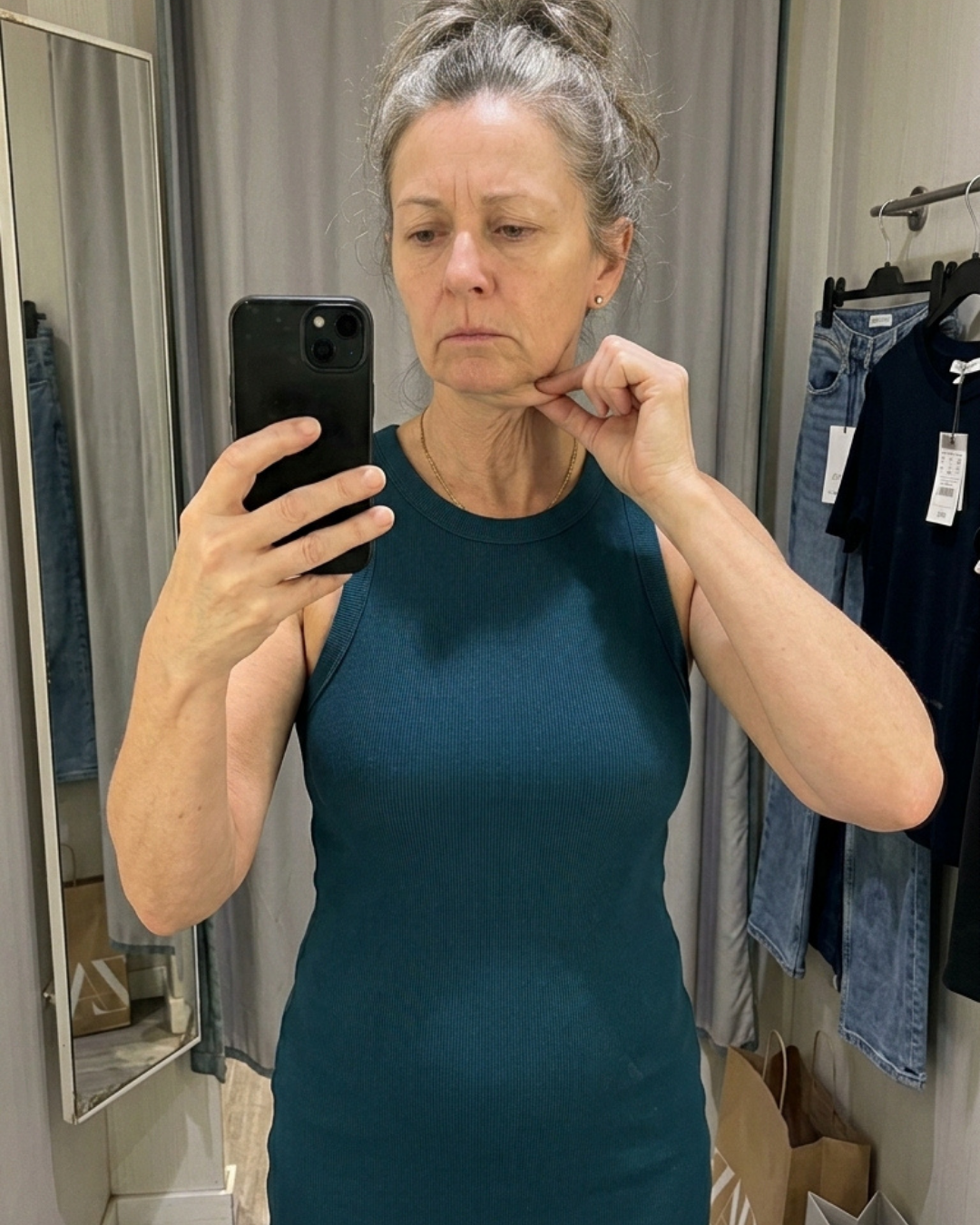
Please STOP trying to fix your turkey neck after menopause. I know that sounds crazy, but every time you rub in another collagen serum, spend £89 on another firming cream, or buy another trendy device — you might be chasing solutions that have nothing to do with what's actually happening under your skin. I used to be just like you. Bringing my face skincare routine all the way down to my neck every single night, convinced that if it worked on my face it would work there too. Trying retinol because everyone said it was the gold standard. Did nothing for the sagging. Got a prescription for tretinoin next. "That's what actually works," they said. It irritated my neck so badly I almost thought I'd made things worse. Taking collagen supplements every morning for four months because every wellness influencer swore they had transformed her skin from the inside out. My nails got stronger. My neck didn't change. Spending months with a red light device pressed against my face and neck every evening, because the reviews promised it would tighten everything. It was great for my face. Did nothing for my neck. Not a single millimetre of difference. Buying scarves and turtlenecks in every colour, even summer ones, telling myself it was a style choice. It wasn't. Lying in bed at night scrolling through before-and-after photos of neck lifts, saving quotes from surgeons I knew I couldn't afford and didn't want, telling myself it might be the only way out. I tried everything. I mean everything. Every cream, every device, every supplement, every hack the forums recommended. Every "solution" someone swore had transformed their neck. I did exactly what I was told to do. And my turkey neck got worse. Not better. Worse. I started avoiding mirrors. I stopped being in photos with my kids, told myself I just wasn't into that sort of thing anymore. Three years now without a single picture of us together, because I couldn't stand what the camera caught below my chin. And the clothes I used to love wearing, the open necklines, the V-necks, the dresses I felt like myself in, started being replaced one by one with scarves and high collars and anything that kept it hidden. Here's the thing nobody prepares you for about menopause. I expected the hot flushes. The mood swings. The weight that clings to your middle. I knew about those. But nobody warned me that I would wake up one morning and not recognise the woman in the mirror. I was 51. I had always looked younger than my age. Not model-gorgeous, but I turned heads. I took care of myself. I exercised. I drank my water. People regularly guessed I was in my early forties. And then suddenly, out of nowhere, my neck changed texture in a 30-day period. No joke. One day it was fine. The next I did a double take in the mirror and thought, what the hell happened? It didn't creep up on me slowly. It fell. Like it just gave up one morning. My face still looked like mine. But my neck looked like it belonged to someone fifteen years older. The skin was loose, crepey, hanging in a way it simply hadn't been doing a few months before. I felt like a 35-year-old woman trapped in the saggy, crepey body of someone I didn't recognise. I started avoiding the mirror in our hallway. Positioning myself carefully in every photo so the camera wouldn't catch my neck. Dreading video calls at work because no matter what angle I tried, I couldn't make it disappear. And the worst part? I felt like I was being ungrateful. Because I know women who didn't make it to my age. I have friends fighting real illness. I got to see my children grow up. I got to watch my daughter get engaged. I am healthy. I am here. And every time the grief about my neck surfaced, a voice in my head would say: you should be grateful. You're ageing. It's a privilege. But knowing that didn't make the grief smaller. It just made me feel guilty for having it. But it wasn't vanity. It was grief. Because what I saw in the mirror didn't match how I felt, at all. Inside I still felt like me. The same woman who used to catch her reflection and feel good. The same woman who wore open necklines without thinking about it. The same woman who didn't position herself carefully in every photo to hide what was underneath her chin. I felt 35 on the inside. My neck made me look 65 on the outside. And the gap between who I was and what the mirror showed was a kind of grief I wasn't prepared for. Not for someone else. For myself. For a version of me I had lost, seemingly overnight, without any warning or any say in it. When I'd reach out for help, people told me I needed to accept the new normal. And it made me furious. I wasn't looking for acceptance. I was looking for solutions. After a year of trying everything and getting nowhere, I told myself to stop fighting it. Maybe if I just gave it time, things would settle. Maybe my skin would adjust. Maybe I would adjust. For twelve months I waited. I moisturised every morning and every night. I checked weekly. I took photos in the same light from the same angle, comparing, looking for signs it was stabilising. It wasn't. And somewhere in that year of waiting, a darker thought started to settle in: it was only going to get worse. Not slow down. Not stabilise. Get worse. Because menopause doesn't pass like a cold. The hormones don't come back. And whatever was happening to my neck was going to keep happening. I felt trapped. Like I was being forced to accept a version of myself I didn't recognise. A version I dreaded catching in mirrors and shop windows. A version that felt invisible to the world, even though inside I still felt like the woman who used to walk into a room and feel seen. I made an appointment with an aesthetician, hoping she might have something that wasn't a £10,000 surgery with six weeks of recovery and a year of numbness. I sat in her chair and explained everything. The treatment they recommended was Ultherapy. Ultrasound energy delivered deep into the skin layers. £800 for a single session on the neck and jaw. I booked it. It was one of the most painful things I have ever experienced. I gripped the sides of the bed and counted the minutes. Afterwards they told me to expect gradual improvement over three to six months as the collagen rebuilt. I waited. I checked weekly. I took photos in the same light from the same angle. Six months later, my neck looked exactly the same. I stared at the photos side by side and wanted to cry. £800. The most painful thing I'd put my body through since labour. And nothing. It didn't feel fair. It felt cruel. I posted in the forums again, desperate for something I hadn't tried yet. The responses were the same as always: "You just need to give it more time, skin bounces back slowly." "You need to rebuild your collagen — it takes months." "You should have started taking care of your neck in your thirties." "Acceptance is the only realistic option after 50." But here's what kept bothering me. If it was going to get better, wouldn't it have done so already — after more than a year of waiting? If it was a collagen problem, wouldn't retinol have worked? Or tretinoin? Or the collagen supplements? Or red light therapy? Or the Ultherapy that cost me £800 and was so painful I nearly walked out — all of which are supposed to rebuild collagen. Why did every single one of them make zero difference to the sagging? Nothing added up. And I was running out of hope. Then one night — 2:34 AM, I remember the exact time because I had been lying awake for hours — I grabbed my phone and started searching. Not the same generic searches I'd done a hundred times before. This time I typed something different: "Why does nothing work for saggy neck skin after menopause" That's when I found an article that changed everything. It wasn't about skincare routines or surgery alternatives. It was about what actually happens to the structural layers of your skin when oestrogen drops during menopause. The article explained that your skin has three distinct layers. The outermost layer is what creams and serums touch. But below that are the layers where the actual structure of your skin lives — held together by two proteins working in combination. Collagen and elastin. Collagen is the one everyone knows. It's in every cream, every serum, every treatment I had tried. And collagen matters. But for sagging skin, collagen alone is not enough. Elastin is what gives skin its ability to snap back. To recoil. To return to its shape after being stretched. Think of it like the elastic in a waistband — pull it and let go, and it snaps back. But once that elastic wears out, the waistband goes slack. It stays loose. It doesn't return. When oestrogen drops during menopause, your body doesn't just lose collagen. It loses elastin too. And elastin is the protein that keeps skin taut against gravity. That's why so many women describe their neck "falling" in a 30-day period. It's not slow ageing. It's a structural collapse triggered by a hormonal shift. And suddenly, everything made sense. That's why retinol didn't work. Retinol stimulates collagen — but it can't do anything about the lost elastin. That's why collagen supplements didn't work. Same reason. That's why red light didn't work. Same reason. That's why Ultherapy didn't work. Eight hundred pounds to rebuild collagen deep in the skin — but not a single thing for elastin. I wasn't crazy. I wasn't doing something wrong. My body had lost the proteins that held it together — both of them — and every solution I had tried was only targeting one. For the first time in over a year, I felt like I could breathe. Because if the problem was structural — if it was about restoring both collagen and elastin — then there might be a solution I hadn't found yet. Something that actually addressed what was happening underneath, not just what was visible on top. I spent the rest of that night reading. Everything I could find about elastin restoration. About what science had actually demonstrated works at a structural level, not just a surface level. That's when I kept finding the same ingredient coming up, over and over, in clinical literature I had never seen mentioned in any forum or skincare blog. It was called Matribust — a peptide complex developed by SILAB, a French biotech laboratory, specifically engineered to restore both collagen and elastin deep within the skin. Not on the surface. In the layers where the actual damage lives. The reason most skincare ingredients don't reach those layers is simple: neck skin has smaller pores than facial skin. Most ingredients are physically too large to penetrate. They sit on top, do their work on the surface, and evaporate. That's why face creams don't fix neck skin. That's why retinol doesn't reach far enough. The molecules are too large for the pores. Matribust was engineered to be small enough to pass through. In clinical studies, it increased collagen production by 74% and improved skin elasticity — elastin function — by 40%. Participants saw visible reduction in sagging within just a few weeks of consistent use. But the research also showed it worked best in combination with three other things. Hydrolysed hyaluronic acid — broken down into fragments small enough to actually penetrate and plump the skin from the inside, not just sit on top of it. A rich carrier butter — to repair the skin barrier and create the right environment for everything to absorb properly. And caffeine — which tightens on contact by boosting circulation, giving an immediate visible effect while the deeper restoration is happening underneath. But the key thing I kept seeing over and over was this: you cannot fix a sagging neck by targeting collagen alone. Because if elastin is what's gone, feeding your skin collagen is like repainting a wall that's lost its foundations. You have to rebuild what's underneath first. That's when someone in one of the forums mentioned they had been using a cream specifically made for women with sagging neck skin after menopause. Not a generic moisturiser. Something formulated around the elastin problem. I was sceptical. I had spent so much money already on things that didn't work. But I was also desperate. And for the first time, what I was reading actually matched what was happening in my neck. The cream had Matribust at the exact 2% concentration used in the clinical studies. It had hydrolysed hyaluronic acid, broken down small enough to actually penetrate neck pores. Cupuaçu butter to repair the barrier and help everything absorb properly. And caffeine to tighten on contact and boost circulation. All four ingredients. One cream. Designed specifically for people like me. I ordered it. Told myself not to get my hopes up. I had been disappointed too many times. It arrived two days later. A soft, non-greasy cream that absorbed within seconds — nothing like the thick creams I had used before that sat on top of my skin and made my clothing greasy. The instructions said twice a day, morning and evening. Easy enough. The first week wasn't dramatic. My skin felt noticeably softer, more hydrated. But it still sagged. I started thinking it was just another moisturiser. But I had already bought it, so I kept using it. What did I have to lose at this point? Week two is when I noticed the first change. Subtle enough that I almost talked myself out of believing it. But one morning after my shower, I looked in the mirror and the texture was different. Still a turkey neck. But the crepey, papery quality that had been there for over a year was softer. Smoother. Less fragile-looking. I told myself I was imagining it. That I wanted it to work so badly I was seeing things. But the next day, same thing. And the day after that. By week four, I wasn't imagining it. My neck felt genuinely different — firmer underneath, smoother on the surface. I had started looking at myself in the mirror without the immediate drop in my stomach. I started to feel a pull toward the clothes I hadn't touched in over a year. The ones with open necklines. The ones I used to wear without thinking twice, before menopause took that from me. Week six is when my husband noticed. And he never notices ANYTHING. This is a man who didn't comment when I cut my hair short. Who I genuinely believe could not tell you what colour our bathroom walls are. But he looked at me across the dinner table and said: "Is it just me, or does your neck look different?" I ran to the bathroom mirror. Lifted my chin. Looked at it under the light. He was right. The sagging wasn't gone. But it was noticeably less. The skin had more structure to it. Less hang. Less droop. Like something underneath had started to knit itself back together. That's when I started believing this might actually work. By week eight, the change was undeniable. I took a photo in the same light, from the same angle, as the ones I had been taking every week for the past year of waiting. I put them side by side. The difference was clear. Not a neck lift. But the kind of difference that made me stop dreading my own reflection. Month three, I finally booked a facial. The first one in years — I had been avoiding anything that required someone's hands on my neck and their eyes on my skin up close. The therapist was working on my neck and just stopped. Put down what she was doing. And said: "Whatever you've been using on your neck, keep using it. The texture is completely different to what I'd expect for someone your age going through menopause." I told her about the cream. About learning it was elastin, not collagen. About finally finding something that addressed what was actually broken. She was the one who told me to take a proper before and after photo. She said I'd want to remember where I started. It's been five months now. I still use the cream every morning and every evening. My neck doesn't look like I've had surgery. But the crepey texture is almost entirely gone. The sagging is there — I'm 52, not 32 — but it's gotten so much better. It doesn't look like a deflated balloon anymore. My face and my neck look like they belong to the same person again. But more than that, I feel like myself again. I let my daughter take photos of me at her engagement party. I wore a V-neck top. An open one, with a necklace sitting against my chest. I didn't position myself. I didn't think about my neck. I just stood there and smiled. The scarves are still in my drawer. I just don't need to wear them anymore. I can look in the mirror and recognise the woman looking back — not the version from my twenties, but me. The real me. Not hidden behind scarves and high collars and carefully angled photos. For the first time since menopause started, it actually feels like I have myself back. If you're reading this and you see yourself in my story — if your neck changed seemingly overnight during menopause and everyone keeps telling you it's a collagen problem or that surgery is your only option, but nothing you've tried actually works — I need you to understand something. It's not just a collagen problem. It's an elastin problem. And if elastin is what's gone, all the retinol and red light and collagen creams in the world will only ever get you halfway there. Because they're addressing one protein while completely ignoring the other. I wasted over a year trying to get my collagen back. Months of moisturising, burning my neck with tretinoin, taking supplements, sitting through a painful £800 Ultherapy session — all of it targeting collagen, none of it touching elastin. And my neck stayed exactly the same while everyone told me I just needed to be patient. But the moment I addressed both — the actual root cause — everything changed. I'm not a doctor. I can't tell you what's happening in your specific skin. But I can tell you what happened in mine. And I can tell you that if you've tried everything and nothing has touched the sagging, maybe it's time to ask a different question. Not "how do I rebuild my collagen?" but "what am I doing about my elastin?" The cream I found is made by Zyren. They built it specifically for women dealing with sagging neck skin during and after menopause — formulated around the elastin and collagen problem that happens when oestrogen drops, with Matribust at the exact concentration shown to work in the clinical studies. Not a generic firming cream making vague promises. Something built around the actual cause. They have a guarantee, so if it doesn't work for you, you're not stuck with it like I was with everything else that did nothing. I'm sharing this because I spent so many nights lying awake, desperately searching for answers, feeling like I was the only person whose neck wasn't responding to anything anyone recommended. And I don't want anyone else to waste a year like I did, trying to fix half of the problem. Your collagen routine might be doing something. But if you're not addressing the elastin, you will never fix the sagging. And there's something that finally does both. Click below to learn more about what worked for me, and why addressing the full picture made all the difference. You don't have to choose between accepting your neck and going under the knife. You just have to address what's actually causing the problem. And for me, that changed everything.
Like this ad? Make it yours.
Crush rebuilds this exact creative around your product — your brand, your colors, your offer — in about a minute.