Capsaicin Research Institute
Capsaicin Research Institute Facebook ad: “Doing Everything Right But Diabetes Keeps Advancing”
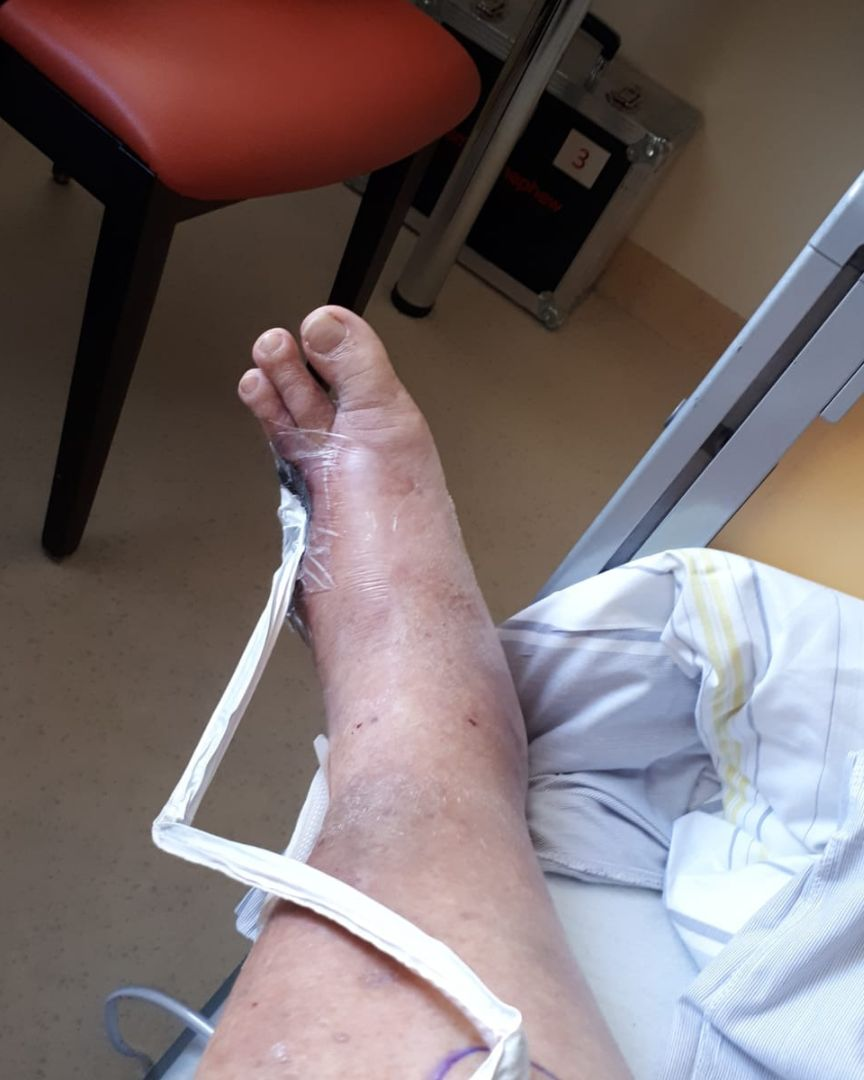
Ran for 37 days, from June 22 to July 29, 2026, the last day Crush saw it.
Run by Capsaicin Research Institute on Facebook. Crush is not the advertiser and does not verify its claims. See this ad in Meta's Ad Library(opens in a new tab)
Want an ad like this for your product?
Crush makes new ad images for your product from this ad: your logo, your product photo, your offer.
Trials from $19.95 USD, then $79.95 USD a month. Cancel anytime.
About this ad
- Meta Ad Library ID
- 4596163010666783
- Platforms
- Facebook, Instagram, Messenger and Threads
- Relaunches
- 0
Ad text
If you're already on metformin, already on a statin, and your feet are still burning at night, your wounds are still refusing to close, and your doctor just keeps adjusting doses and sending you home — I need to tell you something that took me 18 years of reading diabetic vascular imaging to fully understand. I'm Dr. Mike Harris, a cardiologist specialising in preventive cardiology and endothelial dysfunction. And I need to tell you about the canary. Coal miners used to carry canaries into the mine. Not as pets. As a warning system. When the canary died, there was toxic gas in the tunnel. The miners couldn't see it, couldn't smell it. But the canary felt it first — because it was the most sensitive creature in the room. Your burning feet are the canary. The arteries feeding the nerves in your feet are among the smallest in your body — measured in fractions of a millimetre. Your coronary arteries are 3 to 4 millimetres. Your renal arteries wider still. When endothelial damage progresses system-wide — which is exactly what years of elevated blood sugar does — it shows up in the smallest vessels first. Years before your heart feels a thing. Years before your kidneys show strain. Years before anything dramatic enough to show up in an 11-minute appointment. The burning in your feet at night is not nerve damage. It is the smallest arteries in your body failing first — the ones feeding the peripheral nerves in your feet, too small to have any redundancy, too fragile to sustain the endothelial destruction that diabetes advances silently for years. The wound that won't close is not a diabetic complication you have to accept. It is tissue that has lost its blood supply — tissue that cannot repair itself because the vessels delivering oxygen and nutrients to that tissue have been closing off, one cell at a time, while your A1C stayed in the range your endocrinologist called controlled. The canary has been dying in your feet for years. And metformin just turned down the volume. Most diabetic men I see are already doing everything right on paper. Metformin taken every morning. Glucose monitored. A1C in the range their doctor wants. They're compliant patients. And they're still getting worse. Still exhausted in a way that sleep doesn't touch. Still watching small cuts take three weeks to close. Still lying awake with burning feet while their quarterly bloodwork says they're managed. Because managing a number on a chart is not the same as fixing the circulation that feeds every organ in your body. Controlling an A1C is not the same as healing a vessel. And nobody in a standard endocrinology appointment has time to explain the difference. I know this because at 51, I was that man. My glucose was managed. My A1C was acceptable. My endocrinologist was satisfied with my numbers. But I was exhausted in a way that a full night's sleep never resolved. Cold hands and feet regardless of the season. An afternoon energy crash so reliable I had started planning my clinic schedule around it. And I knew — because I read vascular imaging every day of my working life — exactly what those symptoms meant underneath the managed numbers. My colleague looked at my glucose panel and said what endocrinologists say to every patient at this stage. "Standard protocol. Start with metformin 500mg twice daily. Should bring those numbers down. Come back in three months." I knew it would bring the numbers down. That wasn't the point. I'm a cardiologist. I ordered my own vascular imaging immediately. Because I know what these symptoms actually mean. Early endothelial dysfunction confirmed. Measurable reduction in nitric oxide bioavailability. The inner lining of my arterial walls was already beginning to fail — not dramatically, not urgently, just quietly and on schedule the way diabetic vascular destruction always proceeds. My A1C was manageable. My endothelium was not. And metformin was going to manage the measurement while the mechanism kept failing underneath it. That is what metformin was designed to do. It does it well. It was never designed to restore nitric oxide production. It was never designed to repair the endothelial lining. It was never designed to address the actual mechanism destroying my circulation. My endocrinologist would have managed my numbers. My vascular disease would have continued advancing, silently, on schedule. There is something else most diabetic men are never told. Metformin, statins, and glipizide all work by managing downstream consequences of endothelial failure. Metformin reduces hepatic glucose output. Statins reduce circulating LDL. Glipizide stimulates insulin secretion. Every one of them addresses a measurement that the endothelial destruction produces. Not one of them was designed to restore the endothelium itself. The endothelium is the single-cell lining inside every artery in your body. Its entire function is to produce nitric oxide — the molecule that tells your vessel walls to relax and open, that delivers oxygen to your peripheral nerves, that keeps your wounds supplied with the blood flow they need to close. When you were younger and your circulation worked, your endothelium produced it continuously and abundantly. What years of elevated blood sugar does to the endothelium is simple and irreversible if left long enough. The glucose molecules physically damage the endothelial cells through glycation and oxidative stress. The cells stop producing nitric oxide. The vessels stiffen. The smallest ones close off first. The tissue they were supplying starts going without. That is what the burning in your feet is. That is what the wound that won't close is. That is what the exhaustion that sleep can't fix is. They are not separate diabetic complications. They are the same failing endothelium at different points in your body. And your metformin does not stop this progression. Your statin does not stop this progression. Insulin does not stop this progression. They manage the measurements while the disease moves toward the complications you have been warned about since diagnosis. I wasn't willing to accept that. So I kept looking. November 14th. 11:52 PM. Reviewing endocrinology and vascular research after a late shift. My own endothelial function markers were not improving on follow-up imaging despite compliant metformin use. I was exhausted and genuinely angry about it. I was going through research on endothelial dysfunction interventions. Not looking for anything specific. Just determined to find something that made real biological sense. I found a study on capsaicin and nitric oxide release in endothelial cells. Capsaicin — the active compound in cayenne pepper — activates TRPV1 receptors inside endothelial cells. These receptors trigger sustained nitric oxide production. Continuous. Not forced. Not pharmacological override. The cells themselves begin manufacturing the molecule they stopped producing. The exact upstream mechanism that diabetes had been shutting down. It's the same pathway my endothelium needed to restore. But from the opposite direction from everything I had been taking. Metformin doesn't restore nitric oxide. It manages the glucose suppressing it — and then wears off. Your endothelium doesn't improve. The damage continues. Capsaicin activates the TRPV1 receptor that tells your endothelial cells to manufacture more nitric oxide in the first place. Not manage the measurement. Restore the mechanism. And then I read this: "Sustained capsaicin exposure reversed early atherosclerotic changes and improved endothelial function in 67 percent of subjects over 90 days." Not masked. Reversed. I ordered pharmaceutical-grade capsaicin softgels at 12:08 AM. Seven days in, my fasting glucose was 118 on the same metformin dose. I had not seen numbers like that without dietary intervention. Thirteen days in, the afternoon exhaustion that had been my reliable daily companion for two years started lifting. Not dramatically. The way light returns — gradually, then noticeably. I finished a full day of clinic without it for the first time since my diagnosis. Nineteen days in, I walked for forty minutes in the evening. Something I had been doing less and less as the fatigue made it feel like effort. I walked without thinking about stopping. I hadn't done that in over a year. Eight weeks in, I ran follow-up vascular imaging. Endothelial function markers measurably improved across every parameter. Nitric oxide bioavailability significantly up from baseline. Arterial compliance improving. The imaging showed vessels beginning to behave the way vessels behave when the endothelium is producing what it is supposed to produce. My vascular damage was reversing. Not managed. Reversing. I printed both scans and walked down the hall to my colleague's office. Dr. Morrison looked at the comparison imaging. Looked at me. Looked back at the scans. "Mike, what did you do? Endothelial function doesn't move like this on standard diabetic management." I walked him through the TRPV1 mechanism. The upstream nitric oxide restoration. The distinction between managing the glucose driving the damage and activating the mechanism that repairs the lining the glucose had damaged. He studied the images again and said quietly: "I need to start ordering vascular imaging in my diabetic patients instead of just watching the A1C." My endothelial damage wasn't reversing because a medication was managing the number. My circulation was actually healing. I'm not against metformin. It works exactly as designed. It manages blood glucose. It slows the rate of endothelial damage. In the early stages it buys time. But it does not restore your endothelium. It does not reverse the nitric oxide deficit closing off your peripheral circulation. It does not heal the vessel lining glucose has been destroying. It does not address the mechanism that will eventually take your feet, your wound healing, your energy, or your life. It manages the measurement while the canary keeps dying. Research confirms that diabetic peripheral neuropathy — the burning in your feet — precedes cardiovascular events by an average of 5 to 7 years in most diabetic men. Your body has been warning you for years. Every prescription you've been handed has been treating the measurement, not the problem. Your exhaustion, your cold hands and feet, your wounds that won't close, your burning feet at night — these aren't separate diabetic complications. They're the same failing endothelium at different points in your body. Diabetic men with endothelial dysfunction have a cardiovascular event rate multiple times higher than non-diabetic men. Every year of unaddressed endothelial damage is another year the smallest vessels close a little further, the tissue downstream gets a little less, the window to reverse what's happening narrows a little more. You have two choices. Keep managing the measurement while the mechanism keeps failing. Or fix what the measurement has been trying to tell you. The product I used is called Aurivita Capsaicin Power. 3mg capsaicin per serving dissolved in cold-pressed oil for bioavailability — formulated specifically to activate TRPV1 receptors for sustained nitric oxide production. Combined with berberine for hepatic glucose pathway support, beetroot extract for additional nitric oxide signalling, Vitamin K2 to clear arterial calcium deposits accumulating in diabetic vessels, Vitamin D3, hawthorn, cinnamon, turmeric, and Korean ginseng. If you're on metformin, statins, or any combination of diabetic medications — and your energy is still dropping, your feet still burn at night, your wounds are still slow to close — try this for 8 to 12 weeks alongside your current protocol. Do not stop your medications without your doctor's guidance. Aurivita offers a 120-day money-back guarantee. You can always go back to adjusting doses if it doesn't work. But you can't un-silence a canary that's been dying in your feet for years while your A1C stayed in the acceptable range. — Dr. Mike Harris, MD, FACC Cardiologist, 18 years board certified in Cardiovascular Disease P.S. The research on TRPV1 activation and endothelial repair has been in the scientific literature since the 1998 Nobel Prize. The mechanism is not speculative. What is not in the research is a pharmaceutical company willing to fund clinical trials for a compound they cannot patent. Your endocrinologist was never trained to look for it. I found it at 11:52 PM on a night I was too angry about my own imaging results to stop looking. Eight weeks later my vascular damage was measurably reversing. If your feet are burning tonight, your endothelium has been trying to tell you something for years. It is not too late to listen.
Where the ad sends people
aurivita.co
Doing Everything Right But Diabetes Keeps Advancing
Support strong circulation today with our powerful cayenne pepper formula. 180 softgels and 60 servings per bag.
Learn more: aurivita.co(opens in a new tab)