Artery Plaque Reset
 Facebook ad: “The #1 Cayenne for Artery Health”
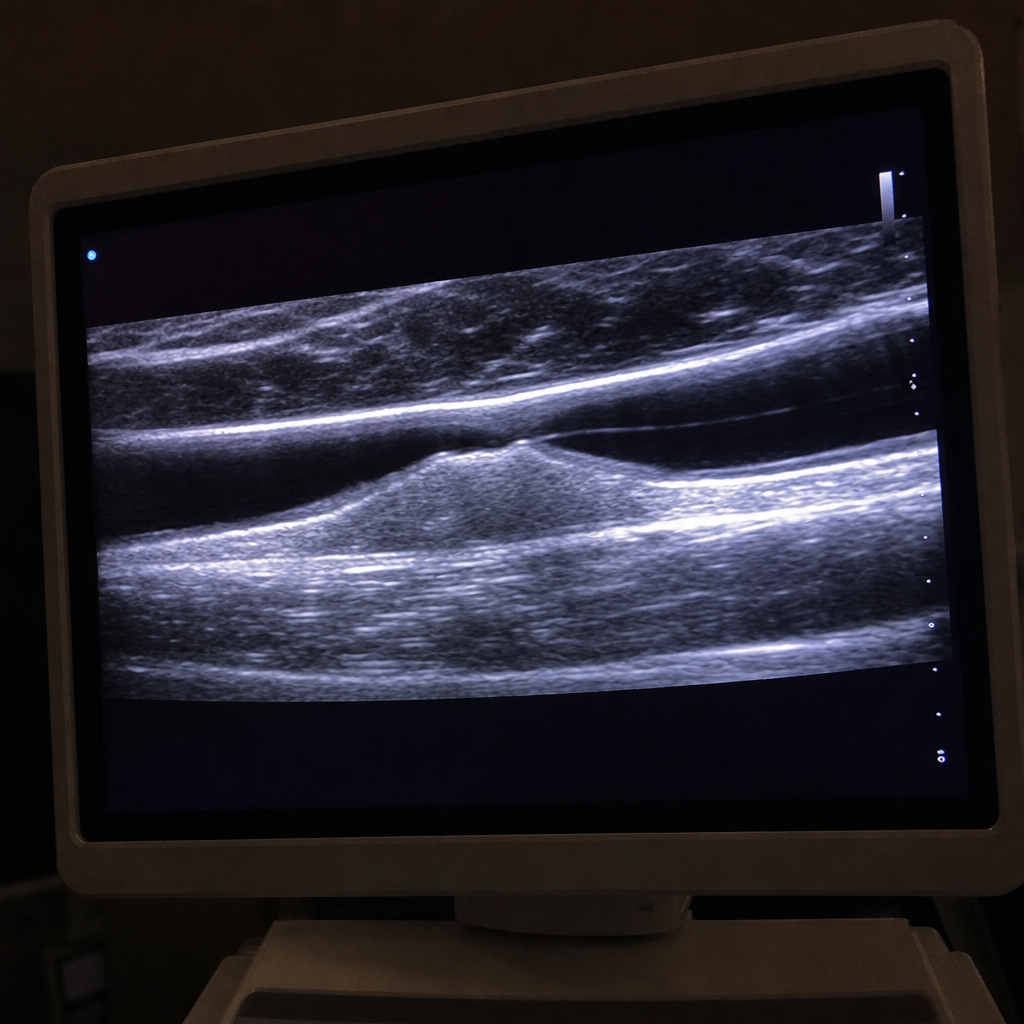
Ran for 1 day, from October 6 to October 7, 2026, the last day Crush saw it.
Run by Artery Plaque Reset on Facebook. Crush is not the advertiser and does not verify its claims. See this ad in Meta's Ad Library(opens in a new tab)
Make your own version of this ad
Crush makes it, launches it in your own Meta ad account, scales the winners and pauses the losers.
About this ad
- Meta Ad Library ID
- 4687323724829528
- Platforms
- Facebook, Instagram, Audience Network, WhatsApp and Threads
- Relaunches
- 0
Ad text
I retired as a surgical pathologist six weeks ago. 29 years. Over 4,000 arterial tissue samples. And I'm about to say something publicly that would have gotten me fired any time in the last three decades. I almost didn't say it. My wife told me to leave it alone. My former colleagues will call me a disgrace. The NHS trust I spent my career inside could still challenge my pension. But I'm 63 years old. I've been carrying this for 29 years. And I watched too many men walk into operating theatres they never needed to enter while I kept my mouth shut. So here it is. Almost every arterial tissue sample I examined in 29 years showed the same thing. And I was never once allowed to put it in my final pathology report. Not the blockage. Every surgeon expects that. That's what they're cutting for. The vessel wall itself. What it looked like under the scope. The smooth muscle in the wall clenched down like a fist that had been squeezing for years. The lining that was supposed to keep the vessel open scarred over and dead, the channel narrowed to a thread, some of them nearly closed. Tissue that should have been soft and elastic, grey and stiff and starving. Not clogged. Suffocating. And every single one of those men had a chart that said "stable, managed." Every one had been through the supplement aisle. Every one had been on a prescription. Every one had been told this was just what happens to men. Every pathology report I signed said the same thing. Atherosclerotic plaque, consistent with age-related changes. Never what I actually found. Never the truth. I want to tell you about the one time I tried to tell the truth. And what happened when I did. It was 2008. Thirteen years into the job. I was experienced enough to know exactly what I was looking at under the microscope and still naive enough to think documentation mattered. His name was Earl. Earl was 54. Retired station commander. Fire brigade. Married 27 years. Two grown sons and a granddaughter who called him Pop. Built like a man who'd spent thirty years carrying people out of burning buildings. Hands like leather. The kind of man who walked into a room and everyone stood a little straighter. His cardiologist had sent the tissue to my lab after a bypass. Standard graft. "Routine." The surgical notes said Earl had been symptomatic for four years. Stopping to rest five, six times on a flat walk. Chest so tight he'd stand on the pavement for ninety seconds waiting for it to pass. Fatigue so bad he'd stopped coaching his grandson's youth football team because he couldn't stand through a full match. He'd taken garlic pills for eighteen months. Nothing. His GP put him on a prescription to thin the blood. Bruising so bad he'd bleed from a shaving nick for an hour. They switched him to something else to bring the numbers down. Aching legs. Crushing fatigue. His wife called the office crying because Earl wouldn't talk about it and wouldn't leave his chair and she didn't know what was happening to her marriage. After two and a half years of this, the cardiologist said the word. Surgery. The tissue came to my lab in a specimen container on a Tuesday afternoon. I prepared the slides. Put the first one under the scope. Adjusted the magnification. And I saw what I always saw. The smooth muscle in the wall wasn't just thickened from disease. It was contracted. Clenched. Under high magnification, the individual fibres looked like cables pulled to their breaking tension. Not resting. Not healing. Gripping. The lining inside the vessel was the part that stopped me. The endothelium that should have been keeping the wall soft and the channel open was scarred and silent, the passage narrowed to a thread. Some of them had walls so thickened they'd nearly closed. The tissue around those vessels was hypoxic. Oxygen-starved. Turning grey. This wasn't a pipe that had simply clogged shut. This was a vessel that was strangling itself from the inside. The smooth muscle was contracting because something upstream had failed. The lining was collapsing because something upstream had stopped working. And the wall was thickening because starved, inflamed tissue is tissue that scars. I had seen this pattern in over 800 samples by then. Not occasionally. Not sometimes. In virtually every single one. I decided, for the first and only time in my career, to document it fully. I wrote a supplementary pathology note. Not long. Two pages. I described the smooth muscle contraction patterns. The narrowed lining. The tissue hypoxia. I cited four published studies linking reduced nitric oxide signalling at the vessel wall to smooth muscle stiffness. I noted that the tissue findings were consistent with a failure of the wall to make its own nitric oxide, not merely cholesterol building up in a passive pipe. I suggested that the surgical department consider screening for the wall's own nitric oxide function before scheduling operations. I attached the note to Earl's pathology report and submitted it on a Wednesday. By Friday, the chief of pathology called me in. He didn't raise his voice. That would have been easier. He was calm. Professional. Almost gentle about it. "This supplementary note is going to create problems." "It's what I found." "I don't doubt what you found. I doubt the wisdom of documenting it this way." He laid it out for me. Earl had been a patient in the system for four years. He'd seen his GP, a cardiologist, and a surgical team. Every one of them had documented atherosclerotic disease and recommended a standard treatment cascade. Supplements, prescriptions, then surgery. If my note stood, it implied the surgical team had operated on a wall problem with a plumbing solution. Earl's wife could sue. The cardiology department would face a review. Every bypass performed in the last three years would come under scrutiny. The department performed eleven to fourteen operations a month. Each one generated between £8,000 and £14,000 in facility revenue. He didn't say those numbers casually. He let them sit in the room. "You're telling me to remove the note." "I'm telling you to reconsider its placement. The standard pathology finding is atherosclerotic plaque. Your microscopic observations are... contributing context. Not all contributing context needs to appear in the clinical file." "The cardiologist should know what's driving the tissue changes. The next patient should benefit from this." He looked at me for a long time. "The cardiologist knows the tissue is diseased. Which it is. Your role is to confirm the diagnosis, not to perform retroactive vascular assessments that create liability for the surgical team." I sat there. "And if I see this pattern again?" "You document atherosclerotic plaque. Like every pathologist in this hospital. Like every pathologist in every hospital in this country." He stood up. Meeting over. "You're a good pathologist. Don't make this a pattern." That was the sentence. The one I heard under the professional language. Do this again and you're done. I went back to my lab. Removed the supplementary note from Earl's file. Changed the report to read atherosclerotic plaque, consistent with age-related changes. Deleted every reference to the contracted smooth muscle. Every mention of the dead lining. Every photograph of the starving tissue. Earl's cardiologist got the same report every cardiologist gets. Plaque. Blockage. Expected findings. I saw Earl once after that. In the parking lot of a hardware store. He was loading his truck one small bag at a time, resting between each. He walked with the careful, measured gait of a man who knew exactly how far he was from the next place he could sit. He didn't see me. I went home and sat in my car in the driveway for twenty minutes. And then I kept signing pathology reports for 16 more years. That's the thing people don't understand about a system like this. They imagine some dramatic cover-up. Men in suits. Shredded documents. It's not like that. It's one conversation in an office. One sentence. "Don't make this a pattern." And you understand. You adjust. You write atherosclerotic plaque. You go home. Nobody orders you to lie. They just make it clear what happens if you tell the truth. And so you stop telling it. After Earl, I never documented the wall findings again. Not once in 16 years. But I never stopped finding them. Every week. Sample after sample. The same contracted smooth muscle. The same dead lining. The same starving tissue. In men whose charts were full of managed numbers. Supplemented. Prescribed. Reassured. Men in their 50s. 60s. Some in their late 40s. Every one of them with years of dismissed symptoms in the record. Every one of them told this was "just ageing." Every one of them told the supplements would help, then the prescriptions would help, then the surgery would fix it. Every one of them with tissue that told a completely different story than the one the surgical team was telling the family in the waiting room. I'd prepare the slides, see it, take my own notes, photograph everything for myself, not the file, and write atherosclerotic plaque, age-related. Then I'd go home. I kept a private log. Off the record. Just dates, ages, and what I actually found under the microscope. The contracted fibres. The narrowed lining. The tissue hypoxia. The pattern that repeated and repeated and repeated. By the time I retired six weeks ago, that log had over 2,100 entries. 2,100 men whose families were told "routine surgery, the artery was blocked, everything went well" when I knew exactly what had driven the blockage, and why the supplements had failed, and why the prescriptions hadn't held, and why a good number of them would be back in theatre within five years because nobody had addressed the thing I was seeing under the scope. That's what I carried for 29 years. Here's the part where it stopped being something I carried and became something I could not ignore. My own body. I'm 63. Six foot one. 14 stone. I've walked the Riverside Trail four mornings a week since my 30s. Never smoked. I have one whisky on Christmas Eve and one on my anniversary and that's it. I've never had a serious health problem in my life. About two years ago, I started having to stop on my walk. Once at first. I barely registered it. Then twice. By 61, three times. By the time I turned 62, it was four. Sometimes five. I stood on the trail and waited. Thirty seconds. Forty-five. A tightness across my chest that came and went and came again. The feeling afterward that it wasn't done, that if I pushed on it would come back, so I turned around early. Then the crash. Sitting in the car driving home from the lab and suddenly so drained my jaw clenched. Pulling into a petrol station. Reclining the seat. Sitting there waiting for the strength to come back before I could drive on. Then the mapping. Every bench and every place to sit within range. The supermarket, the library, the petrol station on the A40, the burger place on the way to my daughter's house. I carried a mental blueprint everywhere I went. I stopped fishing. The River Trent, every Saturday from April to October since 2002. I stopped because four hours on a bank meant a long walk back to the truck I could no longer count on making. I stopped going to the football matches with my son. Three and a half hours climbing to a stadium seat. I couldn't do it. I stopped carrying the shopping in from the car in one trip. I stopped drinking coffee. I'd had two cups every morning since med school. I gave it up because it set my heart racing and every skipped beat felt like the start of something. My wife, Diane, noticed before I admitted any of it. She heard me stop on the stairs. She saw me sit down to catch my breath. She watched me pick the table nearest the door at restaurants so I wouldn't have to walk far. "You should see the cardiologist," she said. I didn't need to see the cardiologist. I'd been processing that cardiologist's tissue samples for 29 years. I knew exactly what the cardiologist would say. I could have written the chart notes myself. Plaque in the coronary arteries. A shadow on the scan. My blood work borderline. All of it within range. Start with a prescription to bring the numbers down. If that doesn't hold, add another to thin the blood. If both fail, we talk about the procedure. I knew the procedure from the inside. I'd held the tissue in my hands. I knew Earl's face in the parking lot. I knew the small bag and the rest between each trip. I knew the 2,100 entries in my private log. I knew what happened next. I was not going to end up on my own slides. I tried what every man tries first. Garlic pills. I bought a bottle at the pharmacy and stood in the aisle looking at six different brands with the word HEART in big red letters and a picture of a smiling 55-year-old man on the label. The same brands I'd seen listed in the pre-surgical charts of men whose tissue ended up in my lab anyway. Four months. Nothing. Not a suggestion of change. Nattokinase. Two months. Nothing. A "cardio complex" with CoQ10, magnesium, potassium, hawthorn. £46 a bottle. Three months. Nothing. I stood in the kitchen at 3 AM after the eleventh month of supplements and looked at myself in the dark window and I thought about my log. 2,100 men. Every one of them had the same smooth muscle contraction. The same starved lining. The same tissue suffocation. And every one of them had a medicine cabinet full of supplements that targeted one thing. The clog. Specifically dissolving it. Garlic. Nattokinase. The enzyme that was supposed to dissolve the cement. Every single one aimed at the same idea. The theory was that arteries are dumb pipes and a clog is just sludge, so something to flush it should help. The biggest online thread on the enzyme had a heart surgeon in the comments. He said what I'd been seeing for 29 years. There is no real unclogging, no supplement that dissolves what's on that scan. Not at any dose. I had watched that play out under my microscope for 29 years. The tissue told the same story every time. And not once did the flush-the-pipe theory explain what I was actually seeing. Because what I was seeing wasn't a clog. It was the wall. That's when I called Leonard. Leonard Voss. Retired vascular research pathologist. 36 years at a university medical centre in Manchester. Old school. The kind of man who said exactly what he thought and let the room deal with it. Leonard was the only pathologist I'd ever known who talked openly about what we both saw in arterial tissue. Not publicly. But between us, over coffee at conferences. "Another batch today," he'd say. "Seven samples. Every one of them starving. Smooth muscle clenched like a cramp that never released. Wrote plaque, age-related." He'd shake his head. Take a sip. Move on. I called him and told him everything. The symptoms. The supplements. The eleven months of nothing. He was quiet for a long time. Then: "You've been looking at this wrong for 29 years." "What do you mean?" "You keep watching the clog. Everybody does." "The cardiologist measures it, the patient worries about it, and now you're standing in a pharmacy buying four different things to dissolve it." "One supplement, one herb, one formula. Every one of them chasing the same target. The clog. And the clog was never what's driving what you and I have both been seeing under the scope for three decades." "Then what is?" "The same thing you documented in that note you wrote for Earl's file. The note they made you delete. The wall that stopped making its own signal. The smooth muscle contraction. The tissue starvation." I didn't say anything. "Listen to me. Your arteries are lined with smooth muscle. The blood runs right through the centre of them. When that muscle is relaxed, the channel stays open. Flow is easy. No tightness. No fatigue. No standing on the trail counting seconds." "The muscle stays relaxed because of one molecule. Nitric oxide." "Your blood vessel walls produce it. Every blood vessel. It's a signal molecule. It tells smooth muscle to unclench. It tells blood to flow. It keeps every tissue in your body supplied with oxygen and nutrients and circulation." "After 40, production drops. Not a little. By 50, most men have lost roughly half their capacity. By 60, even more." "When nitric oxide drops, three things happen at the same time." "The smooth muscle in the artery tightens. That's the stiffness. That's the tightness in your chest. That's the crash in the afternoon." "The blood flow through the vessel declines. The tissue downstream starts starving. That's the hypoxia you and I have both seen a thousand times under the scope. Starved tissue inflames. Inflamed tissue scars. The wall thickens not just because of cholesterol but because it's suffocating." "And the same wall dysfunction that's strangling that one artery is happening in every other vessel bed. The legs. The hands. Everything." "Research has documented that in men with arterial disease, the nitric oxide signalling at the vessel wall is reduced compared to healthy tissue. The lining that's supposed to release nitric oxide into the wall is diminished." "That's the pattern, Marty. That's what you've been photographing in your private log for 29 years. That's what they told you to stop documenting. Not clogging. Strangulation. The wall is clenching because the molecule that kept it relaxed has been disappearing for twenty years. And the tissue is starving because the flow that kept it healthy has been collapsing for just as long." I sat there holding the phone. "And not one thing on that supplement shelf touches it?" "Not one. Garlic tries to thin the blood. Nattokinase tries to eat the clot. The enzyme tries to dissolve the cement. CoQ10, magnesium, potassium, all aimed at the same idea. They're all trying to flush the pipe while the wall itself keeps clenching because the nitric oxide is still gone. You can flush a pipe that's still wrapped in a contracting fist and wonder why the symptoms don't change." "So what actually works?" "You need to support the production of the molecule the body stopped making enough of. You need to reopen the road. Get blood flowing back through the vessel. Let the smooth muscle remember how to relax." "There's a compound in cayenne pepper. Capsaicin. It's what makes the pepper hot. Research has documented that capsaicin activates a specific switch on your blood vessel walls that turns on nitric oxide production. The switch is called TRPV1. Capsaicin hits it directly." "Not through beet or arginine. Not through the same door you already knocked on. Through a direct hit on the switch your vessel wall already has. The one that's been going quiet since your early 40s." "Cayenne." "I know. I said the same thing. Cayenne. Like the hot sauce." "But it's not a spice on your eggs. Not the way anyone understands that word. The capsaicin in the right form of cayenne switches on nitric oxide production right at the wall. Multiple clinical studies have documented support for healthy blood flow, healthy vessel flexibility, healthy smooth muscle function. In every tissue bed where nitric oxide matters." "Including the heart." "Especially the heart. The coronary bed is one of the most nitric oxide-dependent vascular territories in the male body. When NO drops there, everything tightens. When it's supported, the muscle can relax. The tissue can breathe. The blood can flow." "Leonard. How long have you been doing this?" "Four years. I'm 68. I was stopping five times crossing my own garden. Now I walk it without a break. My wind is what it was at 45. I haven't seen a cardiologist in three years." "And you never told me." "A retired tissue pathologist telling men to take cayenne every morning for their arteries. Who's going to listen to the man who spent his career staining slides?" He was right. If he'd told me five years ago I'd have laughed. But I wasn't laughing now. I was 62 years old, stopping four times on a flat walk, standing on the trail counting, with a private log of 2,100 men whose tissue told the exact story Leonard was describing. And everything else I'd tried had failed. I went to the store that night and bought a bottle of "cayenne capsules." The kind in the vitamin aisle. Cheap. Said pure cayenne right on the front. I swallowed two of them every morning for three weeks. Nothing. Not a flicker of change. Not even a suggestion. I called Leonard. He laughed before I finished the sentence. "Yeah. Everyone starts with the dry cayenne capsules. I went through three different brands before I figured it out." "What's wrong with it?" "Everything. The cayenne in those capsules is dry ground powder. Pressed into gelatin. It just sits in your stomach and burns and most of it never gets where it needs to go. The capsaicin, the whole reason cayenne is relevant for this, barely reaches the bloodstream that way. Most of it. Gone." "So the dry capsule..." "Sits there because the form is wrong. Properly made cayenne is delivered in a liquid softgel, absorbed, alive. When it's just dry powder in a shell, it lands in the stomach and the compound never arrives. You're swallowing a burn. Not a signal." "And the hot sauces and the spicy food?" "Same problem. Mild, medium, hot on the label. Those words measure flavour, not what reaches the wall. They tell you nothing, absolutely nothing, about how much capsaicin gets absorbed. A man could pour hot sauce on everything for a year and never get a meaningful dose into the bloodstream." "And here's the part that should make every man on the supplement shelf furious. Almost no commercial cayenne product tells you how much actually gets absorbed. Because most of it doesn't get absorbed at all." I threw the dry cayenne capsules in the trash. "So what do you use?" "There's one company I found that makes it the way it has to be made. Liquid softgels. Never dry powder. Never pressed into a shell that just sits in the stomach. Made from 30,000 fresh cayenne peppers per bag. Not the cheap ground stuff the way commercial cayenne is. A full 12-in-1 formula with everything published on the label for anyone to see. No sugar. No dairy. No fillers." "You take three of them in the morning. Just three softgels. They go down easy with water, no burn, no heat on your tongue. But it's not a spice anymore. It's the whole compound, in the bloodstream and alive." He gave me the name. GetJacked. https://get-jacked.co/products/cayenne-pepper-softgels I ordered it that night. When it arrived, I understood the difference the moment I opened the bag. A red zip-seal bag, heavier than I expected. Inside, rows of deep red liquid softgels that looked nothing like the chalky capsules I'd thrown out. Not the dusty powder rattling in a cheap bottle. Full. Almost alive. I took the three softgels with my water the first morning. The dry capsules had burned going down. Chalky. Like swallowing dust. These went down clean, and within the hour I felt a warmth spread through my chest. I told myself it didn't matter what I felt at first. What mattered was what happened on the trail. Day three. The stop at the halfway mark didn't happen. I got to the bend where I always turned around, and my chest was quiet. Not the tightness. Not the clamp across my ribs that made me stop and put my hands on my knees. A normal breath. A calm ease. The kind of walk I remembered from years ago. I told myself it was coincidence. Week one. The walk changed. Not dramatically. But the tightness eased. The stretch I could cover before stopping went from a hundred yards to a quarter mile. Then more. It didn't seize and stop. It settled. And it held. Diane noticed. She didn't say anything for four days. Then, sitting at breakfast, without looking up from the paper: "You're not stopping to rest as much." "Made it to the bend and back." "That's half what it was." She turned the page. Kept reading. But I saw her jaw relax. Week two. I walked the whole trail. Start to finish without stopping once. I stood at the trailhead catching my breath from nothing more than the walk and I couldn't remember the last time that had happened. The next day, one short pause. Day after that, straight through again. The pattern was breaking. The pattern that had been tightening for two years, the one I'd been mapping benches around, the one I'd surrendered my mornings and evenings and Saturday fishing and football matches to. It was breaking. Week three. The afternoon crash transformed. I could feel the tired come on and it was quiet. Not the five-alarm drain that made my jaw clench and my hands grip the steering wheel. A suggestion. A normal, manageable tiredness. I drove to my daughter's house in Guildford. Forty minutes. No stops. No petrol station. No calculation. I sat in her kitchen for two hours. I drank coffee. Two cups. The thing I'd given up nine months ago because it set my heart racing and turned every quiet moment into a countdown. My daughter watched me pour the second cup and her face did something. Not surprise exactly. Something softer. "Dad. You're drinking coffee." "Yeah." "You stopped drinking coffee." "I started again." She looked at me the way Diane looks at me when something changes and she's afraid to name it in case naming it makes it stop. Week four. The pressure in my chest, the constant low-grade feeling that something was tight even when I was resting, the background hum that had become so constant I'd stopped noticing it, went quiet. I noticed its absence the way you notice silence after a motor you forgot was running finally shuts off. I climbed the stairs that morning and got to the top in one go. Full. Steady. Easy. No stopping. No waiting. No leaning. I stood there and I thought about Earl. I thought about his tissue under my microscope. The clenched fibres. The dead lining. The starving wall. I thought about the supplementary note I'd written and then deleted because one conversation in one office taught me what happens when you document what you actually find. I thought about 2,100 entries in a log nobody was supposed to see. And I stood at the top of my own stairs at 6 AM with a breath that hadn't come this easy in over two years and I understood that what I was feeling, what I was experiencing, was the smooth muscle doing what smooth muscle does when the molecule it needs to relax is finally present again. I was not flushing the pipe. I was not thinning the blood. I was not forcing a systemic relaxation that drops blood pressure and causes dizziness and falls. I was supporting the production of the one molecule that keeps the muscle relaxed on its own. The molecule I'd been watching disappear in tissue samples for 29 years. Week six. I went fishing. The River Trent. First time in fourteen months. I packed my softgels in the tackle box and took them at dawn. Sat on the bank for five hours. Walked the long way back to the truck, around hour four, up the rise. And it was easy. Normal. The way walking up a hill is supposed to work for a man who is alive and healthy and standing on a riverbank with a line in the water and nowhere else to be. I sat on that bank and I cried. Because I have prepared over 4,000 arterial tissue samples. I have seen the clenched fibres under high magnification more times than I can count. I have photographed the dead lining and the suffocating tissue and the evidence of a vascular catastrophe that nobody was screening for, nobody was addressing, nobody was even naming. And I was six weeks away from walking into an operating theatre and becoming one of them. Diane started taking it the following week. Not for her arteries, obviously. For her own reasons. She'd been feeling the afternoon fatigue, the heaviness after meals, the brain fog she blamed on retirement. Within two weeks she said the fog had lifted. She said she felt awake for the first time in a year. She said, "What is this stuff?" "Cayenne. The real kind." "It feels like something turned back on." "It is." Now let me tell you about the men I know. My brother Gordon. 64. Benched by a stent in Sheffield. His cardiologist had him on two prescriptions. The dizziness from one of them was so bad he'd stopped driving at night. His wife told Diane he'd fallen in the hallway last month. I sent him a bag of GetJacked with a note that said: "Three softgels every morning. Don't argue with me. Call me in five weeks." He called me in three. Back to walking the block. Sometimes twice. Wind stronger than it had been in years. The dizziness, the one his prescription was causing by forcing every smooth muscle in his body to relax instead of supporting nitric oxide production locally, had started to ease as his specialist began reducing the dose. He said, "Marty, I mowed the whole lawn last Thursday. The whole thing. Sheila looked out at 6 and I was still going. She thought something was wrong." He laughed. Then he stopped laughing. "Why didn't my cardiologist tell me about this?" I didn't answer. Because I'd been part of the system that never told any of them. For 29 years. My neighbour Gary. 57. Just got the plaque diagnosis. His GP told him to "start with fish oil" and wrote it on a pad like it was a real intervention. I thought about the surgeon in that thread. The men clutching at straws. The scans that never changed. I gave Gary a bag. He started three weeks ago. Called me yesterday. Rest stops on his walk already down from three to one. Said the constant low-grade tightness in his chest, the one he'd been carrying for a year, had gone quiet. "It's like my body stopped yelling at me," he said. My fishing buddy Roy. 60. Had the bypass two years ago. The tightness came back after fourteen months. His cardiologist said grafts can close. Talked about a repeat procedure. Roy started GetJacked six weeks ago. He's back to walking most mornings. He told me last Saturday on the riverbank that for the first time since the surgery, he feels like his body is working with him instead of against him. He said, "I wish somebody had told me about this before the surgery." I wish somebody had too. I am not writing this because I am against standard treatments. Prescriptions manage numbers. Surgery reroutes the pipe. If your specialist has recommended something, that conversation belongs to you and your specialist. But the standard protocol does not address the upstream cause. The supplement aisle targets a clog that the surgeons themselves admit no pill can dissolve. The prescriptions force a systemic relaxation that comes with dizziness and falls. The surgery reroutes the pipe without asking why the wall stopped working in the first place. None of them support the production of the one molecule the body needs to keep the smooth muscle relaxed on its own. I saw the evidence of that depletion under my microscope for 29 years. I documented it 2,100 times in a private log. I was told to stop documenting it after the first and only time I put it in an official report. The upstream cause is nitric oxide depletion. The upstream cause is that the molecule your body uses to keep smooth muscle relaxed, to keep blood flowing through the vessel, to keep the artery from clenching down on itself, has been quietly disappearing since you were in your early 40s. And three properly made, liquid, high-capsaicin softgels every morning deliver the capsaicin that hits the switch that produces the molecule that was missing. Not blocking. Not forcing. Not cutting. Supporting. That's the difference between what I watched happen to 4,000 men and what I take every morning now. GetJacked Cayenne Pepper Softgels. Liquid softgels. 30,000 fresh peppers. Never dry powder. A full 12-in-1 formula with everything disclosed. No sugar. No fillers. No shortcuts. 120-day money-back guarantee. If nothing changes, you get every penny back. https://get-jacked.co/products/cayenne-pepper-softgels In 29 years, nobody ever offered Earl a refund for the cracked chest or the thirteen weeks of recovery or the marriage that changed in ways the consent form didn't mention. Nobody offered a refund to the 340 men in my log whose grafts closed and ended up back in theatre. The system doesn't do refunds. But GetJacked is a small company. They source fresh peppers and a liquid softgel that most producers don't use because it costs more than pressing dry powder into a shell. They sell out. If it's available when you check, I'd order more than one bag. Every day you wait is another day the nitric oxide drops a little further. Another day the smooth muscle tightens a little more. Another day you sit in the chair counting the steps to the post box and wondering how long before someone says the word. Surgery. I spent 29 years looking at what happens after that word. I prepared the tissue. I examined the slides. I documented the pattern 2,100 times in a notebook nobody was ever supposed to see. I'm not carrying it anymore. I'm 63. I'm retired. I went fishing last Saturday. I drank coffee at my daughter's kitchen table. I walked the whole trail this morning. And for the first time in 29 years, I'm telling the truth. The supplement aisle won't fix this. The prescription manages it. The surgery reroutes it. But none of them restore the one molecule that was keeping everything relaxed and open and flowing before age took it away. Three softgels. Every morning. That's what 29 years and 4,000 tissue samples and 2,100 private log entries taught me was the one thing nobody was willing to try. It was the only thing that worked. Stop chasing the clog. Start restoring the flow. https://get-jacked.co/products/cayenne-pepper-softgels
Where the ad sends people
get-jacked.co
The #1 Cayenne for Artery Health
Controversial "artery breakthrough" is making nattokinase look obsolete and may soon be pulled from shelves. Men over 55 who've discovered it say they're finally walking the whole trail again without stopping once to catch their breath.
Learn more: get-jacked.co(opens in a new tab)