The Thyroid Journal
 Facebook ad: “Feel like yourself again”
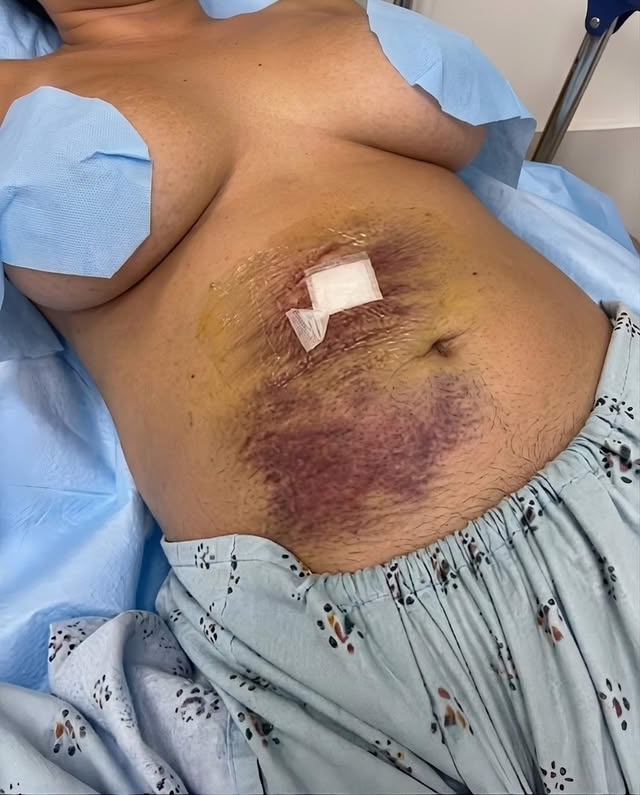
Ran for 17 days, from September 19 to October 6, 2026, the last day Crush saw it.
Run by The Thyroid Journal on Facebook. Crush is not the advertiser and does not verify its claims. See this ad in Meta's Ad Library(opens in a new tab)
Make your own version of this ad
Crush makes it, launches it in your own Meta ad account, scales the winners and pauses the losers.
About this ad
- Meta Ad Library ID
- 4813642912298869
- Platforms
- Facebook, Instagram, Audience Network, WhatsApp and Threads
- Relaunches
- 0
Ad text
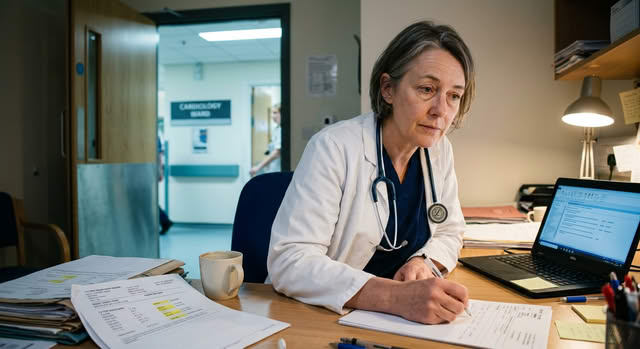
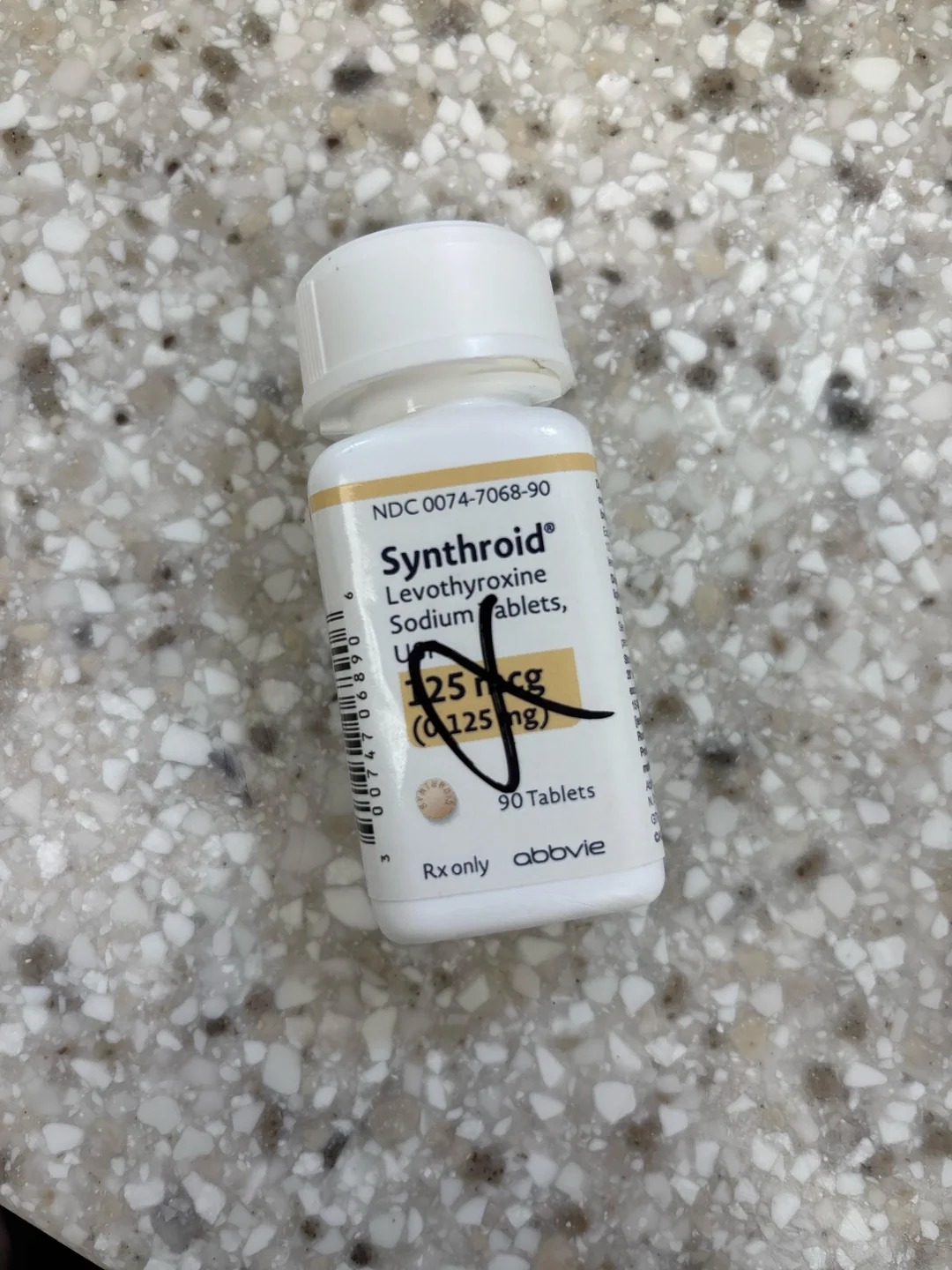
I nearly killed my granddaughter on the way home from school last Tuesday. I want to say that out loud because I have not said it out loud, and I am fifty-four years old, and I have driven for a living for twenty-two years, and I have never in my life come as close to something as I came at twenty past three on Tuesday afternoon on the Chorley New Road. I'd picked Evie up from school. She's five. She was in the back in her seat telling me about a boy called Rafferty who had been sent out of assembly. I came up to the junction by the church. I stopped. I know I stopped, because I remember the handbrake. And then I was out on the main road with a horn going and a black car swerving round me so close that I saw the driver's face turn towards me, and I did not know how I had got from the give way line to where I was. I don't know how long I went. Two seconds. Maybe four. I hadn't fallen asleep. That's the thing I need you to understand. I was awake. I was sat up. My hands were on the wheel. I just wasn't there. Evie said, "Nana, that man beeped." I said, "I know, love." I drove the rest of the way to my daughter's at about twenty miles an hour. I got her out of her seat. I did her book bag and her water bottle and I handed her over and I said everything was fine and I did not tell my own daughter what had happened, and I have not told her since, and she is going to find out by reading this. I got as far as the petrol station on the way home and I pulled onto the forecourt and I did not get out. I sat there with my hands in my lap for a long time. When I looked at the clock it had been twenty-five minutes and I hadn't put any petrol in. I'm going to tell you what a woman called Pat said to me on that forecourt at about four o'clock that afternoon, because it probably saved more than my licence. And because I think there's somebody else reading this who needs to hear it. My name's Angela. I'm fifty-four. I'm a carer — the community sort, not the home sort. Fifteen calls a day, sixty-odd miles between them, in and out of people's houses from seven in the morning. I've been married to Mick for thirty-one years. We've got one daughter, Sophie, and one granddaughter, Evie, who is five and calls my car the little red one and asks after it on the phone like it's a dog. I started doing this in 2003, when Sophie was at school and Mick's hours had been cut. I have never had so much as a parking ticket in twenty-two years of driving to other people's houses. I've driven in snow that shut the schools. I am a careful driver. I'm a boring driver. I'm the one who annoys everybody on the bypass. But I'd been losing bits of the day. That's the only way I know how to put it. Not falling asleep. Not nodding off in front of the telly. Just going somewhere else for a few seconds and coming back. I'd been arriving at Mrs I's on Turton Street with no memory of the drive from Mrs C's. Fifteen minutes of road, gone. I'd stand on her step with the key safe code in my hand and not be able to bring the four numbers up, and I've been going to that house for six years. It started around Christmas before last. And the tiredness wasn't normal tiredness either. It was like somebody had turned me down. Not off. Down. Everything still worked. It just came through quieter and slower and about half a second behind everybody else. I'd been blaming the job. Twenty-two years of other people's stairs. The early starts. My knees. I'd been blaming being fifty-four and the change. And there was a list by then, if I'm honest, and I'd found a reason for every single thing on it. The two stone since I turned fifty, on less food than my husband eats. I'd blamed that on my age. Being cold. I have a cardigan on in the car in June with the heating on and the girls at work take the mick out of me for it. I'd blamed that on being run down. Shattered all day, and then the second my head hits the pillow my body flips on and I'm awake at half three looking at the ceiling. I'd blamed that on the shifts. The hair in the plughole. The puffiness in my face first thing. My rings, which I stopped trying to get on about a year ago and put in the drawer. Losing the word in the middle of my own sentence, in somebody's front room, while they wait for me to find it. And I look absolutely fine. That's the worst part of the whole thing. Everybody tells me I look well. Mick asked me twice if I was sleeping properly. I told him I was fine. I'd not been blaming any of it on one single thing I could actually do something about. And before anybody says it: I'd been to the doctor. I've been on levothyroxine for nine years. My bloods get done every year and every year the surgery rings and says no action needed, your levels are fine. I asked, at the last one, whether the tiredness and the forgetting could be the thyroid. She said my TSH was 1.6 and that it was probably my age, and had I thought about how much I was taking on with Evie. And it isn't as if I'd sat there doing nothing about it for nine years. I asked for my dose to be put up. I got it. I felt a bit better for about a fortnight and then I was exactly where I'd started. I did the two Brazil nuts a day for the selenium, because everybody in every group swears by it. Months of it. Nothing. Gluten-free for a year. That was a miserable year and I lost about four pounds and put five back. Vitamin D, B12, magnesium, iron. There is a cupboard over my microwave with about eleven tubs in it and I could not tell you what half of them are for. Slimming club twice. Every single one of those things was about putting more in. More tablet, more vitamins, more effort, less food. Not one of them had anything to do with what was actually stopping it working. Which I did not know at that point, because nobody had ever said it to me. So that's who was sat on that forecourt on Tuesday afternoon with her hands in her lap. There was a woman filling up at the next pump. Sixties. Bodywarmer, glasses on a chain, one of those little dogs in the passenger seat. She finished, and then instead of going in to pay she came and knocked on my window. I put it down about two inches. She looked at me for a second and she said, "You're not fit to drive, love. Come on. Come and sit down." She didn't ask me what was wrong. She just said come and sit down. There are two plastic chairs inside that garage by the window where they keep the coffee machine. She bought me a tea I didn't ask for and she sat down next to me and she didn't say anything at all. And I told a complete stranger something I had not told my husband, my daughter, or my doctor. I told her about the junction. About the handbrake. About the horn and the black car and the man's face. About Evie in the back saying that man beeped. I cried in a petrol station at four o'clock in the afternoon in front of a woman whose surname I still don't know, and I wasn't embarrassed, because it was the first honest thing I'd done in eight months. She let me finish. Then she said, "How long have you been on the tablet?" I said, "Nine years. How did you know?" She said, "Because my sister did eleven." Her sister's called Kath. She's sixty-four now. She was a school cook for twenty-six years and she gave it up at fifty-eight because she couldn't trust herself with the trays and the timings any more. Pat said Kath had been putting things in the wrong cupboards. Losing whole conversations. Going up the stairs and standing on the landing. She'd been to the doctor about it four separate times. Her bloods were fine every time. Pat said, "We all thought it was her age. She thought it was her age. Her doctor thought it was her age." Then she said, "It wasn't her age, love. It was that the tablet wasn't getting where it was meant to go." She gave up the job. Then she gave up driving, because she'd frightened herself on a roundabout. Then she more or less gave up going out, because everything needed driving to. And she started apologising all the time. For being slow, for asking twice, for being there. Pat said, "That wasn't my sister. My sister used to run that kitchen like a ship." It was Kath's daughter who got it in the end. She's a nurse. She'd got sick of hearing her mum say she was fine and she went and read about it properly, and then she sat her mum down at the kitchen table on a Sunday and told her what she'd found. Kath didn't want to hear it. She'd had enough people telling her what was wrong with her. Her daughter kept at her. What she'd found was a root. Rhodiola rosea. I'd never heard of it in my life. Pat had to say it twice and I still had it wrong. It grows on cliffs in the Arctic and up the west coast of Scotland, in salt wind and frost, in places where nothing else will grow. It's the main adaptogen that Europe's own medicines people recognise, and it isn't sold for thyroids at all. It's been studied for one thing. The stress signal. Pat said Kath started taking it and about seven weeks in she rang Pat to tell her she'd driven to the garden centre. Just that. She'd driven to the garden centre. Pat said, "I'm not telling you a plant's going to fix you, love. I'm telling you what my sister got back. And you've got the same face on you she had." I asked her how you spell it. She wrote it on the back of my own petrol receipt, in capitals, and pushed it across the table. I drove home at about twenty-five miles an hour with the radio off and both hands on the wheel and I have never been so frightened of a car in my life. I told Mick that night. All of it. The junction, the horn, the twenty-five minutes on the forecourt. He went very quiet and then he said, "You're not going in tomorrow." I didn't. I rang in and took the rest of the week, which I have done twice in twenty-two years. Then Sophie came round and the three of us sat at my kitchen table with her laptop, and we read. I'm going to tell you what we found, because I'd have said I understood my own condition. Nine years. I take that tablet every morning of my life. I didn't understand it at all. The hormone in the tablet is not the hormone your body uses. Levothyroxine is T4. T4 is the storage form. It does nothing on its own. Before a single cell in your body can use any of it, your body has to convert it into a different hormone called T3. T3 is the working one. It's what your muscles run on. Your gut. Your heart. And your brain — which is about two per cent of you and takes about a fifth of everything you make. The tablet fills the store. The tablet does not do the converting. My body has to do that part itself, every hour of every day. And when the converting isn't happening properly, the blood test still comes back perfectly normal. Because the test measures the store. The store is full. So the surgery rings and says no action needed, and they are reading it correctly. And your brain is running on a fraction of what it needs. Which is what a fifteen-minute stretch of road you can't remember actually is. It isn't your age. It's the lights going down because there isn't enough coming through. Then we found what switches the converting off. Long-term stress keeps a hormone called cortisol raised. Not dramatic stress. The low, constant, never-quite-switches-off kind. Fifteen calls a day. Somebody's mum dying on your round. Nine years of being told you're fine while you feel like that. Constantly raised cortisol gets in the way of the converting in three places at once. One. It drives fat to settle around the liver, and in that fatty, inflamed tissue the enzyme that turns T4 into active T3 can't do its job. So the hormone from the tablet sits in your blood, reads perfectly on the test, and arrives at your cells as a spare part nobody can fit. Two. It quietly turns down the signal from the brain that tells the thyroid how much to make. Often not enough to move a TSH out of normal. Enough to leave you short. Three. It floods your cells with something called reverse T3. A molecule shaped almost exactly like the working one. It sits in the same locks and turns none of them. A key that fits every door and opens not one. It's like filling the tank every morning while something has the fuel line pinched shut. The gauge reads full. My blood test reads the gauge. My doctor is pleased because the gauge reads full. And the engine starves. Your bloods are fine. Your levels are fine. Your doctor isn't being lazy and she isn't lying to you — she is reading the number in front of her correctly. The problem is one layer underneath the number anybody is measuring. I'm not telling you this as a medical person. I'm a carer from Bolton who left school at sixteen. Sophie had to read half of it out to me twice. I'm telling you what I read at my own kitchen table four days after I nearly took my granddaughter out at a junction. Sophie ordered it that night, and I'll tell you why she picked the one she picked, because I'd have bought the cheapest tub going. She wouldn't have it. She said if I was going to put something in me twice a day at fifty-four after what had happened on Tuesday, we were having the one that matches what was actually in the research. The trials use rhodiola standardised to a set ratio of the two compounds that do the work — 3% rosavins and 1% salidroside — at a proper dose. Most tubs just say rhodiola extract on them. No ratio, no dose worth having, and that's why so many people try it, feel nothing and decide it's rubbish. The one she found is called Rosewyn. It prints the ratio on the label. One ingredient, every milligram listed, third-party tested, and black pepper extract in the same capsule so it actually absorbs instead of going straight through you. It's got 60 days money back. Send the tub back, empty is fine, and they refund you. That's what settled it for me. If a plant does nothing for me in two months I get my money back, and that seemed fair. It came on the Thursday. I took the first one on the Friday morning with my tea. The first eleven days I felt nothing at all. I told Sophie I thought we'd wasted our money. She told me to keep taking it. Day sixteen I did the key safe at Mrs I's without stopping to think about it. Four numbers, straight in, first go. I stood on that step afterwards feeling like I'd passed an exam. Day twenty-four I got to the end of my round and I could remember the drives. All of them. That sounds like nothing written down and I promise you it is not nothing. Day thirty-three I drove Evie home from school again for the first time. I'd not had her in the car since. Mick offered to follow me in his van and I told him not to be daft and then I asked him to anyway. I did the junction by the church. I stopped at the give way line. I looked right, and I looked left, and I looked right again, and I pulled out. And I was there for all of it. I've been taking it four months now. I have not lost a stretch of road since. Not one. Mick says I've stopped repeating myself, which he'd apparently noticed a year ago and said nothing about, which we have since discussed. My bloods were done a fortnight ago. Same dose of levothyroxine I've been on for nine years, not changed by a milligram, and the surgery rang and said everything looks good. I went back to that garage a fortnight ago. I filled up when I didn't need to. Pat wasn't there, obviously. I don't know why I thought she would be. I sat in the car for a bit like a fool and then I went in and bought a tea from the same machine. I don't know her surname. I don't know where she lives. She has no idea what she did. If you're a woman on that tablet, and you've been telling yourself that the fog and the forgetting and the going-somewhere-else is just your age, I'm telling you it might not be. It might be one layer underneath what your doctor knows to look for. You know exactly what I'm talking about. Arriving somewhere with no memory of getting there. Losing the word in the middle of the sentence. Reading the same line four times. Standing on the landing. And being told, kindly, by somebody who means it, that your levels are fine. I am not a woman who puts things on Facebook. Sophie is typing this for me because I dictate faster than I type and because I wanted it said properly. I made myself a promise on that forecourt that if this worked the way Pat said it worked for Kath, I'd tell somebody else what she told me. So this is me telling you. It's called Rosewyn. One capsule in the morning. Nothing else in it. They do 60 days money back — you send the tub back, empty is fine, and you get your money back. So you're not gambling anything except two months of taking a capsule with your tea. Keep taking your tablet exactly as you do. Mine hasn't changed by a milligram and any change to your dose is a conversation with your GP, full stop. https://rosewynhealth.com/pages/thyroid P.S. The black car at the junction. I think about him every single day and I will for the rest of my life. If that's you reading this, I am sorry. I am so sorry. I have spent every day since trying to be somebody who deserved the horn instead of what could have happened. P.P.S. The 60 days is what made me do it rather than think about it. I am not a woman who buys things off the internet. Mick will tell you. Two months and your money back if nothing happens is a fair offer and I've not seen many like it. P.P.P.S. Kath and I have spoken. She rang me on a Sunday and we were on the phone for an hour and ten minutes, two women who have never met. She's driving again. She goes to the garden centre on Wednesdays. P.P.P.P.S. To the woman reading this who's sat in her car on her own drive right now because she can't remember the last ten minutes of the journey and she's too frightened to say it to anybody. Tell your daughter. Tell your husband. Tell somebody tonight. Don't wait for the horn.
Where the ad sends people
rosewynhealth.com
Feel like yourself again
Rosewyn
Learn more: rosewynhealth.com(opens in a new tab)