Aeskyn
Aeskyn Facebook ad: “Read If You're Spending $400 Every 3 Months”

Started on January 19, 2026.
Run by Aeskyn on Facebook. Crush is not the advertiser and does not verify its claims. See this ad in Meta's Ad Library(opens in a new tab)
Want an ad like this for your product?
Crush makes new ad images for your product from this ad: your logo, your product photo, your offer.
Trials from $19.95 USD, then $79.95 USD a month. Cancel anytime.
About this ad
- Meta Ad Library ID
- 4866993826860252
- Platforms
- Facebook, Instagram, Audience Network, Messenger and Threads
- Relaunches
- 0
Ad text
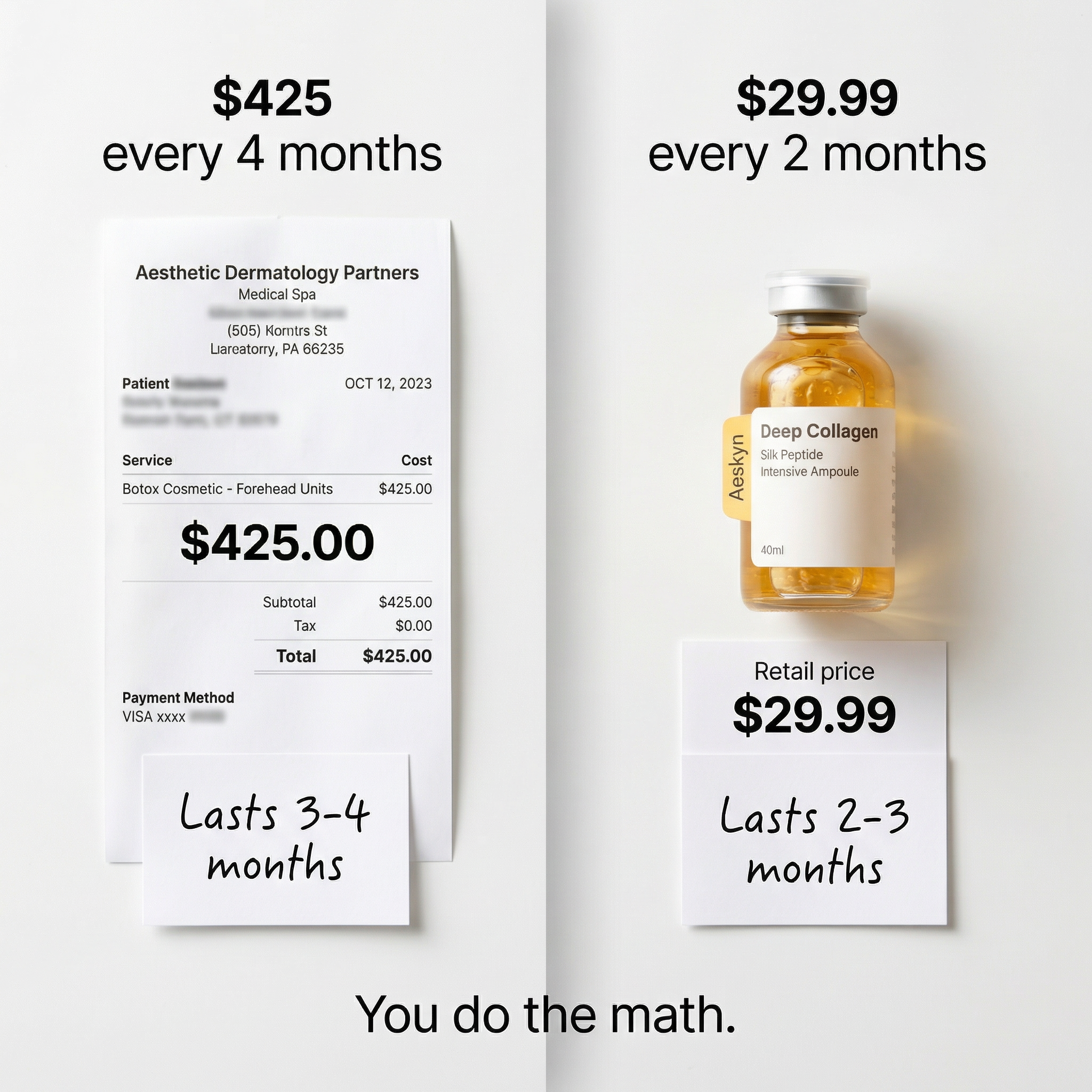
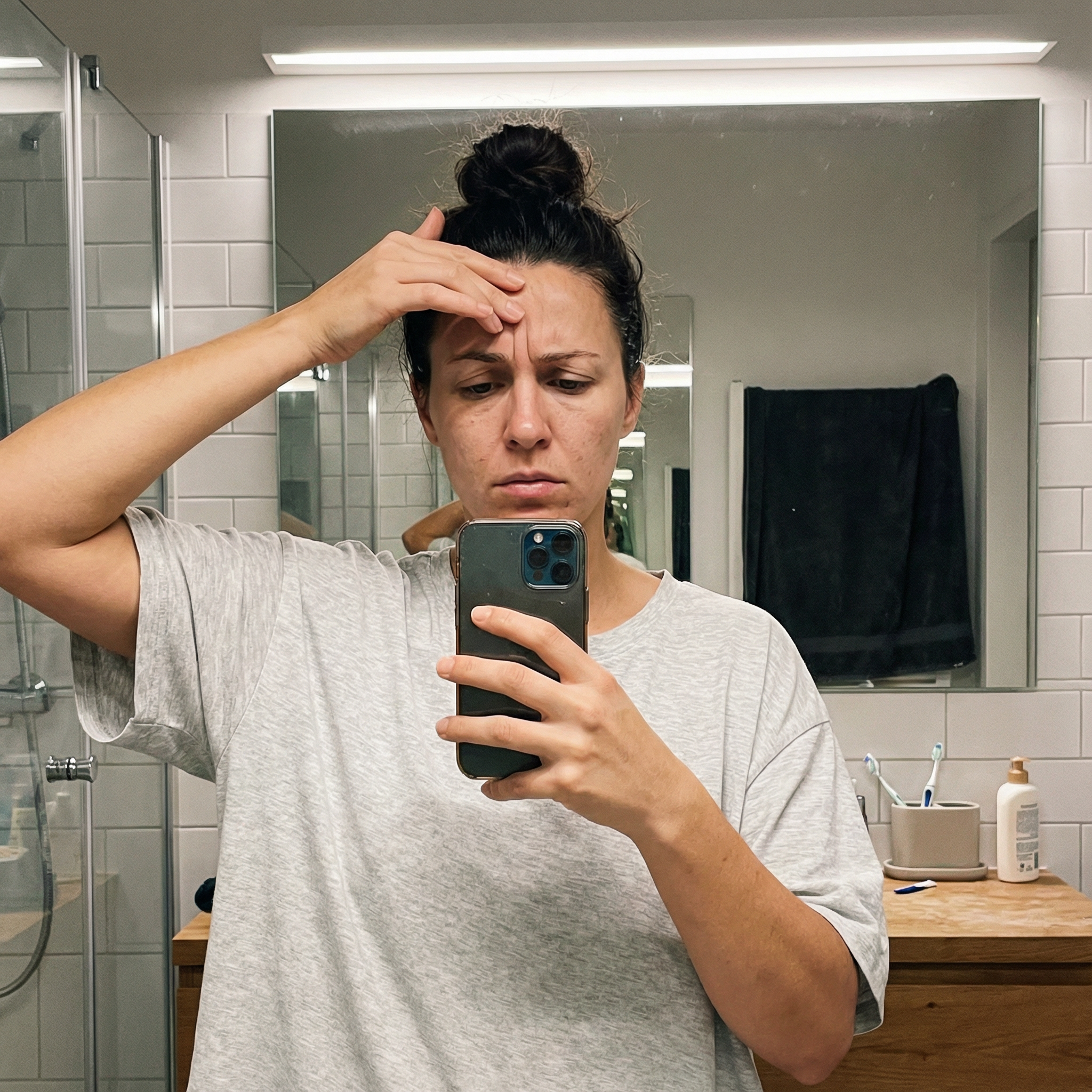
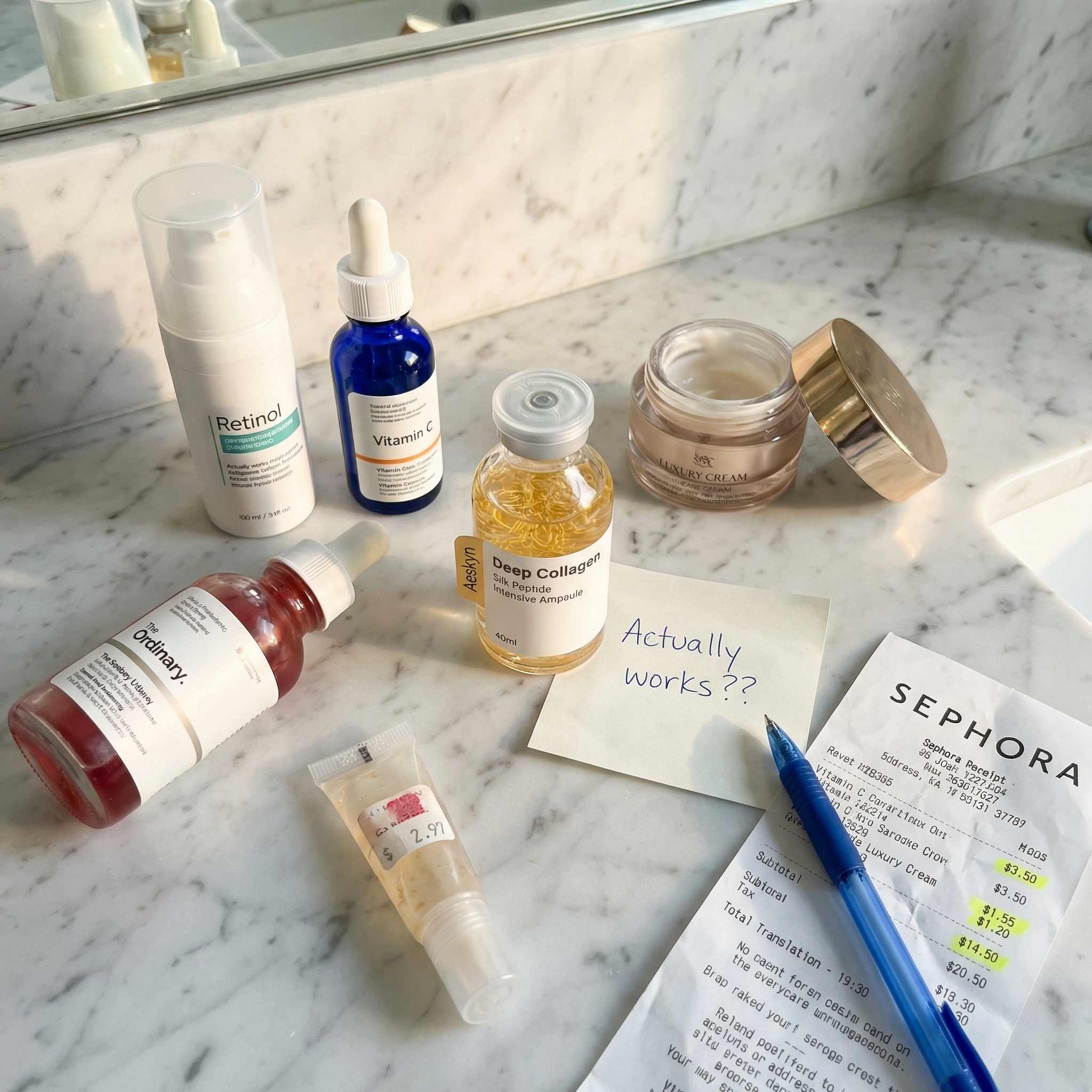
I spent $4,800 on Botox last year. Let that sink in. That's a vacation. A car payment. My daughter's preschool tuition for six months. But every 12 weeks, like clockwork, I'd book another appointment. Because the alternative of watching those lines come back deeper than before felt worse than the cost. I'm Amanda. I'm 41. And I started getting Botox at 36 when a single deep line between my eyebrows made me look perpetually angry. That first appointment was supposed to be a one-time thing. "Just to see if it helps," I told myself. Five years and $24,000 later, I was trapped. The Appointment That Changed Everything Three months ago, I was sitting in my injector's office for what should have been a routine visit. But this time, something felt different. Sarah, my injector, seemed... distracted. Less enthusiastic than usual. "Everything okay?" I asked as she marked up my forehead. She paused. "Can I be honest with you?" My stomach dropped. "What's wrong?" "Nothing's wrong," she said carefully. "But I've been doing this for 15 years, and I'm starting to see something in my long-term patients." She pulled out her tablet and showed me photos of women who'd been getting Botox consistently for 5+ years. "See how the forehead looks... flatter? Almost deflated in some areas?" I looked closer. She was right. The skin looked smooth but somehow... wrong. Thin. Slack. "When you paralyze a muscle repeatedly for years," Sarah explained, "it eventually atrophies. Gets smaller. And when that happens, you lose volume in your face." She looked me straight in the eye. "You're starting to show early signs." I felt sick. "So what do I do? Just... stop? Let all the lines come back worse than before?" "Not necessarily," she said. "But I think you should talk to a dermatologist about other options. Before you're in so deep that Botox becomes the only thing holding your face up." What My Dermatologist Told Me About "Botox Dependency" Dr. Martinez listened to my story and nodded like she'd heard it a thousand times. "This is exactly why I don't push Botox on every patient who walks in," she said. "It works. But it creates a cycle that's very hard to break." She explained something I'd never considered: When you paralyze a muscle, your body adapts. Over time, you need more units to get the same result. The muscles that still work compensate, creating new wrinkles in different areas. And if you ever stop, the lines come back with a vengeance because your skin has lost elasticity from years of not moving naturally. "It's like putting a cast on a broken leg," Dr. Martinez said. "Yes, it immobilizes everything while it heals. But if you leave the cast on for years, the muscles atrophy and you can't walk properly anymore." "So I'm stuck," I said, feeling defeated. "Not stuck," she corrected. "But you need to transition off Botox strategically. And that means addressing why the lines formed in the first place." The Korean Research That Changed My Mind Dr. Martinez pulled up a study on her computer. "Korean dermatologists have been working on this exact problem," she said. "How to give women the benefits of Botox—muscle relaxation, wrinkle reduction—without the dependency or atrophy." She explained that instead of paralyzing the muscle externally with injections, they developed topical peptide formulas that signal the muscle to relax from within. "Think of Botox like hitting the off switch," Dr. Martinez said. "The muscle can't move at all. This peptide approach is more like turning down the volume. The muscle still functions, but it's not contracting as intensely." The specific peptide—Acetyl Hexapeptide-8—mimics the mechanism of botulinum toxin but in a gentler, non-permanent way. "Studies showed that daily use reduced dynamic wrinkles by 30% within 8 weeks," she said. "Not as dramatic as Botox initially, but sustainable long-term without the atrophy risk." But here's what really caught my attention: The formula also rebuilds collagen that Botox can't address. "Botox only stops movement," Dr. Martinez explained. "It doesn't improve skin quality, elasticity, or thickness. This peptide combination does both—relaxes the muscle AND rebuilds the structural support your skin needs." She recommended Aeskyn Deep Collagen Serum. "It's the only formula I've seen that combines the muscle-relaxing peptides at clinical strength with collagen-rebuilding proteins," she said. "Most peptide serums are too weak to actually reduce movement. This one uses the concentrations we see in clinical trials." I was skeptical. I'd tried peptide serums before while still getting Botox, and they did nothing. "How is this different from the peptide products I've already tried?" "Those were designed for fine lines," she said. "This is formulated for people transitioning off Botox or avoiding it altogether. The concentration is 3-4 times higher than retail peptide serums." "Here's what I suggest," Dr. Martinez said. "Get one more round of Botox, but half your usual units. Start using the serum daily. In 12 weeks, see how you look before booking another appointment." The 12-Week Transition I left her office with the Aeskyn serum and one final round of Botox at half my normal dose. The serum came in concentrated ampoule tubes—clinical-looking, almost pharmaceutical. I used it morning and night, focusing on my forehead and between my brows where I normally got injected. Week 4: My Botox was still holding, but I noticed my skin looked... better. Thicker. Less papery. Week 8: I could feel the Botox starting to wear off. Normally by this point, I'd be panicking, booking my next appointment. But the lines weren't coming back as aggressively as they usually did. Week 10: I took a selfie and compared it to photos from 12 weeks earlier (when I had full Botox). The lines were definitely more visible than at week 2. But they were softer than I expected. Less harsh. Week 12: I had my follow-up with Dr. Martinez. She examined my forehead carefully. "Your Botox is completely worn off now," she said. "But look—the lines aren't as deep as they were before you started the serum." She showed me measurements from her skin analysis tool. "Your skin thickness has increased by 18%. That's significant. You're rebuilding the structural support that years of Botox didn't address." She asked the question I'd been dreading: "Do you want to book another Botox appointment?" I said no. For the first time in five years, I didn't feel like I needed it. Three Months Later I'm not going to lie and say I look exactly the same as I did with full Botox. I don't. There are lines on my forehead when I raise my eyebrows. The vertical line between my brows is faintly visible when I concentrate. But here's what's different: My face moves naturally again. When I'm surprised, my eyebrows lift. When I'm concerned, my forehead furrows slightly. I look like myself. Not a frozen version. Not a filtered version. Just... me. And the lines that are there? They're softer than they were before I ever started Botox. Because my skin is actually healthier, thicker, more resilient. Last week I got this text from my friend Michelle (43): "Amanda—I just had my Botox appointment and told my injector I wanted to start spacing them out more. She asked what changed. I told her about the Aeskyn serum you mentioned. She said THREE of her patients have mentioned it in the past month. I think you started something 😂 Ordering mine today." If you're spending $400+ every few months on Botox… If you've thought about stopping but you're terrified the lines will come back worse… If you're worried about what years of Botox might be doing to your face long-term… What Dr. Martinez showed me might be exactly what you need to finally break the cycle. Right now, Aeskyn is offering first-time customers 60% off because they want women to experience the difference before committing. But because it's formulated at clinical peptide concentrations (not the watered-down retail versions), production is limited to small batches. I just checked and there's still inventory available this morning. Think about it: $400 every 12 weeks = $1,600/year, every year, forever. Or $59 once (at 60% off) to see if you can break the dependency. → See if the 60% discount is still active here
Where the ad sends people
aeskyn.com
Read If You're Spending $400 Every 3 Months 💉
Learn more: aeskyn.com(opens in a new tab)