
Inactive· since May 8, 2026
- 40
- days it ran
- 0
- relaunches
Ad copy
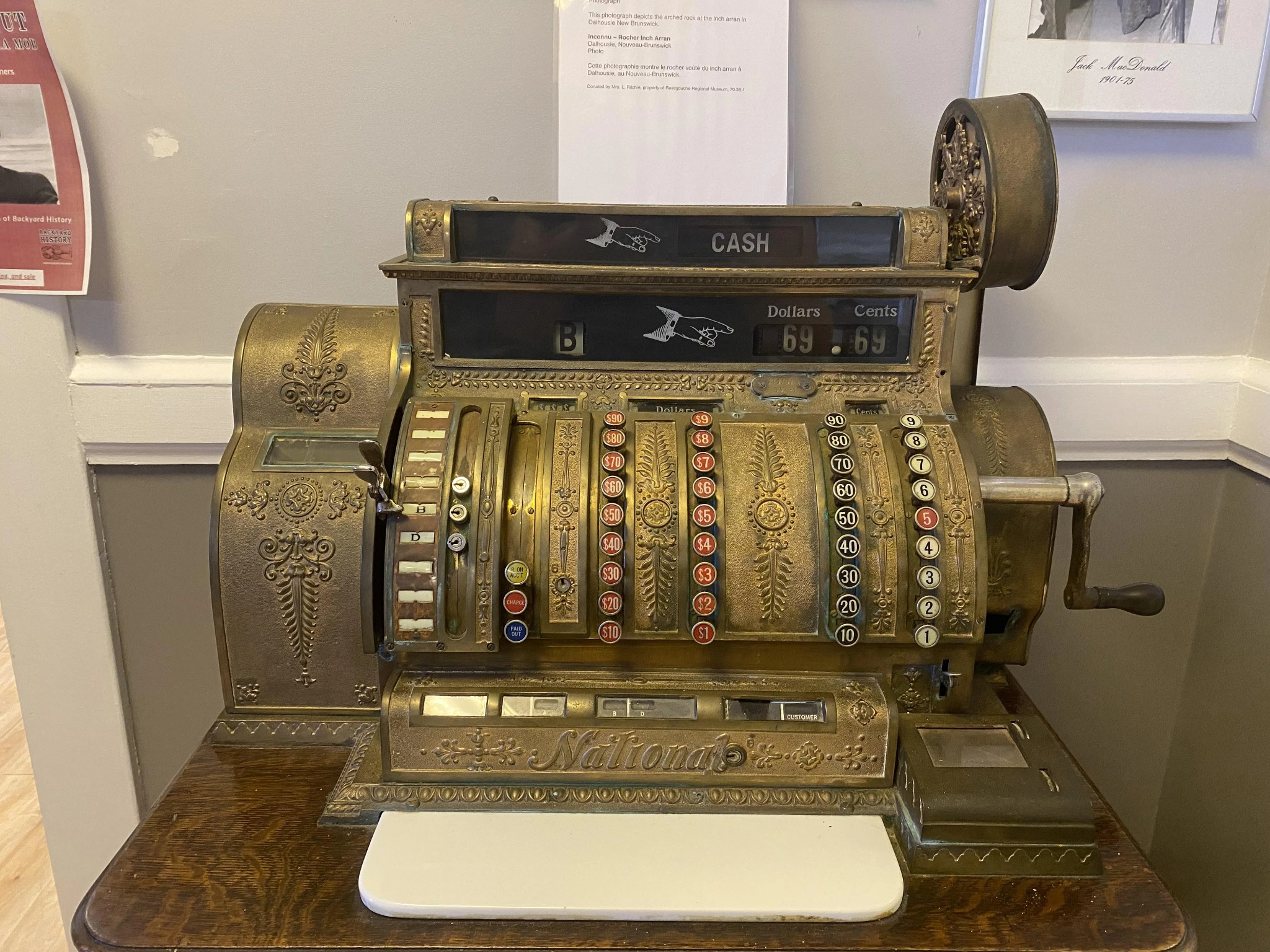
My dad couldn't open the register at the pizza shop last Tuesday and I had to pretend I didn't see it. He's been opening that register since 1987. It's the same brass-plated NCR my grandfather bought when he opened Marino's on Wyoming Avenue in Scranton, and it has a key that turns about a quarter inch and a drawer that pops out hard. You have to brace your other hand against the counter or it'll knock the wind out of you. My dad's name is Frank Marino Sr. He's 67. He's been making pizza for 51 years. He has hands that could palm a 16 inch dough ball when he was 30 and now he can't grip the key. I watched him try three times. His thumb just slid off it. He looked up and saw me looking and he laughed it off and said the lock was sticky and went into the back to start the sauce. I stood there pretending to count the cannolis in the case and I felt something crack open in my chest that I haven't been able to close since. I'm Frank Jr. I'm 54. I've been running the front of the shop with my dad since I was 19, and I've been waiting my whole adult life for the day he hands me the keys and goes home and watches the Phillies in his recliner like he earned. That's the deal. That's the deal every son makes with his father in a family business. You work shoulder to shoulder for 30 years and then one day he tells you it's yours and he goes home. But I don't want him to go home like this. I don't want him to go home a man who can't open his own register. So I went home that night and I did something I've never done in my life. I opened my laptop at the kitchen table and I started reading. My wife Donna was already in bed. The dog, a 12 year old beagle named Pepper who sleeps on the heating vent, was snoring under the radiator. I had a cup of decaf I didn't drink and I sat there and I typed in the search bar: "Why are my dad's hands getting weak." I want to back up. Because what I found that night, and what I'm about to tell you, only makes sense if you understand what my dad was like before. This is a man who used to walk from our house on Mulberry Street to the shop every morning at 4:30 AM. In the snow. In July heat. In a thunderstorm so bad in 1998 that a tree fell on the Buick across the street. He walked. He could carry a 50 pound sack of 00 flour on each shoulder up the basement stairs. He used to bench press the chest freezer with my uncle Joey at Christmas as a joke. He once broke up a fight outside the shop between two construction guys twice his size, with one hand, holding a slice of sausage in the other. That was 12 years ago. Today he can't open a jar of olives. My mom opens them for him in the kitchen and pretends she doesn't, and he pretends he doesn't see her doing it, and they've been doing this little dance for about two years now. It started small. He stopped going up on the roof to clean the gutters at the shop. Said his shoulder. Then he stopped lifting the flour sacks. Said his back. Then he started sitting down between orders. Said his hip. Then his memory started slipping. He'd forget the names of regulars he's known for 30 years. Vinny Petrocelli walked in one Sunday and my dad called him Tony. Vinny laughed about it and my dad laughed too but I saw his eyes and he didn't know. He'd lose his train of thought halfway through a sentence. Stop in the middle of mixing dough and stare at the bowl like he forgot why he was holding the spoon. His balance got bad. He tripped on the floor mat at the front door three different times last winter. We took him to his doctor. His doctor is a nice man. Dr. Ahmed. We've been going to him for years. He ran some blood work and he said everything looked good, except the cholesterol. He said the cholesterol was a little elevated, and at my dad's age, with his family history, it would be smart to put him on something to keep it down. My dad has been on a statin for 11 years. The dose has been raised twice. His cholesterol numbers, on paper, look beautiful. His LDL is, in Dr. Ahmed's words, "a textbook number." Dr. Ahmed shows my dad the chart at every annual visit and says "Frank, you're doing everything right." And my dad nods and smiles and goes home and can't open a jar of olives. I didn't know any of this was related. I thought it was age. Everyone thinks it's age. My mom thinks it's age. My dad thinks it's age. He says "I'm 67, Frankie, what do you want from me." He says it with a little smile and he walks back to the dough station. But I'm telling you, the man I watched try to open that register on Tuesday is not a 67 year old man. My uncle Joey is 71 and he's still hauling cinder blocks for his retaining wall in the backyard. My dad's friend Sal Rinaldi is 69 and he plays softball on Sundays with a senior league at McDade Park. My dad has aged 20 years in 8. Something is wrong. So I sat at the kitchen table that Tuesday night until almost 2 in the morning. And what I found, I'm not going to pretend I understood all of it. I'm not a doctor. I make pizza. But I can follow a pattern. I've been reading the same yeast packets and flour bags and tomato can labels for 35 years. I know how to read. And the pattern I started seeing was something my dad's doctor never told him. Something my doctor never told me. Something I think a lot of men our age have never been told. Here's what I learned. Your body makes cholesterol on purpose. It's not a glitch. It's not a flaw. Every cell in your body has cholesterol in its outer wall. Your brain is something like 25 percent cholesterol. Your hormones are made out of it. Your nerves are wrapped in it. When the doctor tells you "your cholesterol is high," he means one number on one chart is above one line, and the standard move is to push that number down with a pill. But here's the thing nobody had ever explained to me. Not all LDL cholesterol is the same. Regular, normal LDL is just doing its job. Carrying material around your body, repairing cells, building things. It's only a problem when it gets damaged. When it gets oxidized. Oxidation is what happens when free radicals attack a molecule. It's the same thing that turns a sliced apple brown on the counter. It's the same thing that rusts a wrench in a shed. Your body is dealing with oxidation every minute of every day, from stress, from processed food, from pollution, from just being alive. When your LDL gets oxidized, it changes. It becomes sticky. It starts grabbing onto the inside walls of your arteries. That's what builds plaque. That's what causes the trouble. Regular LDL doesn't do that. Oxidized LDL does. But the standard cholesterol test? It doesn't tell you how much of your LDL is oxidized. It just counts all of it. Good and damaged, lumped together. If the total number is high, you get a prescription. And here's where it got me. The pill that lowers your cholesterol doesn't sort the good from the damaged. It can't. It just shuts down your body's ability to make cholesterol in the first place. All of it. The kind your brain needs. The kind your nerves need. The kind your muscles need to keep their walls intact. It uses the same pathway your body uses to make something called CoQ10. CoQ10 is the molecule that lives inside your mitochondria. Your mitochondria are the little engines inside every cell that turn food into energy. They run everything. Your heart, your muscles, your brain, your hands. When you shut down that pathway, the cholesterol number drops. But the CoQ10 drops with it. And when CoQ10 drops, the engines in your cells run slower. They produce less energy. The cells that use the most energy, your heart, your muscles, your brain, are the ones that feel it first. I sat there at the kitchen table and I thought about my dad's hands. I thought about the jar of olives. I thought about the register. I thought about him stopping mid sentence at the dough station, staring at the bowl. I thought, oh my God. I'm not saying the pill caused all of it. I'm not a doctor. I'm not telling you what to do with your medicine. But I sat there at 1:30 in the morning and for the first time in 8 years, I had a frame for what was happening to my dad. And the frame wasn't "he's old." The frame was "the engines in his cells are running on fumes." So I kept reading. And the question I kept coming back to was the simplest one in the world. If the real problem is oxidized LDL, what stops the oxidation in the first place? What protects the LDL from getting damaged before it ever has a chance to stick to anything? That's where I found Amla. I'd never heard the word before. I'm a guy from Scranton. The most exotic thing in our pantry is the dried oregano my aunt sends from her cousin in Calabria. Amla is a fruit. It's a small green fruit, about the size of a golf ball, that grows on a tree in India. They've been using it for over 3,000 years in their traditional medicine. The translation of its old name is something like "the nurse," because of how broadly it supports the body. But what stopped me cold was what the research has been finding about it. Amla has been studied for its effects on lipid handling and oxidative stress in ways most fruits haven't. It's loaded with compounds called emblicanins, which are some of the most potent natural antioxidants ever measured. And research suggests these compounds work on the actual mechanism of LDL damage. Not the number on the chart. The damage to the particle itself. Studies have looked at how Amla extract influences the same pathway in the liver that the standard pills target, the HMG-CoA reductase pathway, but in a more gentle, modulating way. Not by shutting it down. By dialing it. The body keeps making the cholesterol it needs. The liver keeps clearing what it doesn't. It's also been associated with supporting LDL receptor activity. Those are the little docks on your liver cells that pull LDL out of your bloodstream. The more active they are, the more your liver clears on its own. And here's the part that hit me hardest, sitting there at 1:47 in the morning. Because Amla works upstream of the damage, it doesn't deplete CoQ10. Your mitochondria keep their fuel. Your cells keep their power. Your hands stay strong. Your memory stays sharp. Your balance stays under you. That's the difference. One approach forces a number down by shutting off the factory. The other approach supports the factory and protects the product so it doesn't get damaged in the first place. I'm not a doctor. I want to keep saying that. I'm a guy who runs a pizza shop. But once I saw the picture, I couldn't unsee it. I went to bed at 2:15 that morning. I didn't sleep much. I lay there next to Donna and I thought about the register. Two days later, on a Thursday, I drove to my dad's house after lunch service. He was in his recliner watching a Phillies replay from 1980. He always watches the 1980 World Series. Tug McGraw on the mound, ninth inning. He's seen it a thousand times. He says it relaxes him. I sat down on the couch and I told him what I'd found. I didn't tell him to stop his medicine. I'm not crazy. I told him I wanted him to talk to Dr. Ahmed about adding something. About supporting his system underneath what the pill was doing. I told him about the oxidation. About the mitochondria. About CoQ10. About Amla. He listened. My dad is a quiet man. He listens with his whole face. When I was done he said, "Frankie, I trust you." That's all he said. He talked to Dr. Ahmed the next week. Dr. Ahmed didn't have any objection. He said it was reasonable. He said a lot of his patients are taking it now. So my dad started taking Alevia Amla. Two capsules in the morning, with his coffee, before he walks to the shop. I want to be careful here, because I don't want to oversell this. I don't want to be the guy on Facebook telling you about a miracle. There are no miracles in my family. We're Italian and we're tired. But here's what I've watched happen over the last 4 months. The first month, I didn't notice anything. Honestly. I almost stopped buying him the second bottle. Donna said give it time. In the second month, my mom called me on a Wednesday and said "your father carried the laundry basket up the stairs yesterday." I said okay. She said "Frankie, he hasn't carried the laundry basket up the stairs since the Bush administration." In the third month, my dad opened the register. I didn't say anything. I just watched it from the cannoli case. The key turned. The drawer popped. He braced his hand on the counter the way he used to. He took a breath. He looked up at me and he didn't laugh it off this time. He just nodded. And I had to walk into the back and stand by the walk in cooler for about 5 minutes before I could come back out. Last week, on a Sunday, my dad and my uncle Joey hauled the new chest freezer down the basement stairs of the shop. I tried to help. They told me to get out of the way. I want to tell you about a moment from yesterday. Yesterday was Wednesday. The shop was slow. My dad was at the dough station, hand mixing a batch the old way like his father taught him. He was telling a story to Vinny Petrocelli about a delivery run he made in 1991 in a snowstorm where the car slid into a snowbank and he had to walk the pies the rest of the way. He told the whole story. Start to finish. He didn't lose the thread once. Vinny was laughing. My dad was laughing. I was standing by the oven pretending to check a pie that didn't need checking. I want to say something to you, if you're still reading. If you have a father, or a husband, or a brother, or you yourself are a man over 50 who's been told for years that everything is fine because the numbers on the chart look good, but the man you used to be is fading anyway, I want you to think about what I learned that night at the kitchen table. The numbers on the chart aren't the whole story. The damage to the particle, not the count of the particle, is what matters. And the engines in your cells need their fuel to keep running. I am not telling you to stop your medicine. I am not your doctor. Talk to your doctor. Show him this if you want. But the thing I wish I'd known 8 years ago, when my dad first stopped going up on the roof to clean the gutters, is that "getting old" is sometimes a story we tell ourselves about something that has a different name underneath. Alevia Amla is what worked for my dad. It's a clean, standardized extract of the Indian gooseberry, made in the USA, two capsules a day. They send you a bottle and if it doesn't do anything for you in 90 days, you send it back and they refund you. That's their guarantee. No questions, no fight. I bought my dad his fifth bottle this morning. I'm going to keep buying them as long as he's behind that counter. And if you're a son like me, watching your father fade and being told it's just age, I want you to at least look at it. Because my dad opened the register on Tuesday. He opened it like he was 47 again. And I almost missed the chance to see that, because I almost let myself believe the story everyone told me. If you want to look at it, here's where you can. P.S. The 90 day guarantee is the part that mattered to me. I wasn't sure when I bought the first bottle. I figured if it did nothing, I'd send it back. I never sent it back. I just kept buying more. P.P.S. My dad still watches the 1980 World Series in his recliner. Some things don't need fixing. P.P.P.S. If you've got a father like mine, don't wait until you watch him fail at something he's done his whole life to start asking questions. I waited too long. Don't wait as long as I did. 👉 https://alevia.com/amla/33
Like this ad? Make it yours.
Crush rebuilds this exact creative around your product — your brand, your colors, your offer — in about a minute.