Children Parenting Advices
Children Parenting Advices Facebook ad: “read this if you have a child or grandchild”
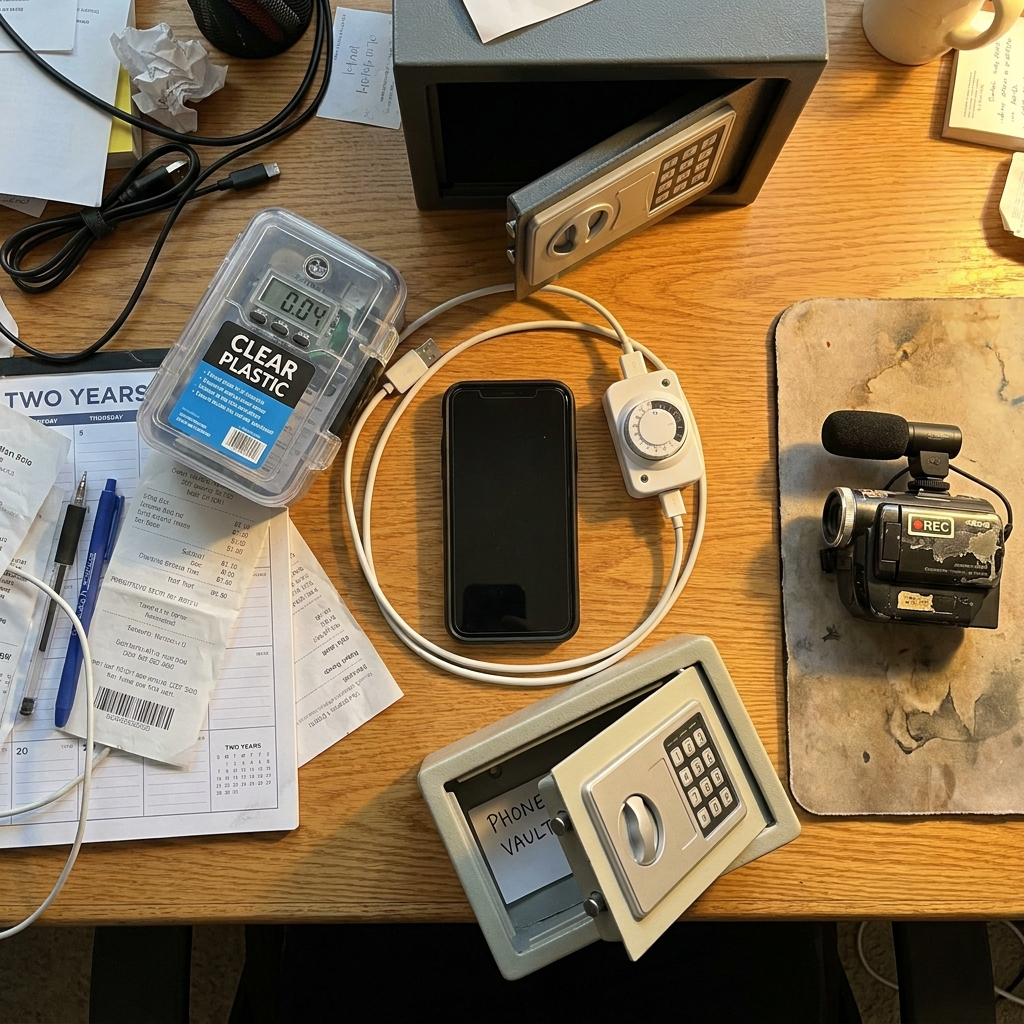
Ran for 18 days, from May 4 to May 22, 2026, the last day Crush saw it.
Run by Children Parenting Advices on Facebook. Crush is not the advertiser and does not verify its claims. See this ad in Meta's Ad Library(opens in a new tab)
Want an ad like this for your product?
Crush makes new ad images for your product from this ad: your logo, your product photo, your offer.
Trials from $19.95 USD, then $79.95 USD a month. Cancel anytime.
About this ad
- Meta Ad Library ID
- 814308788059583
- Platforms
- Facebook, Instagram, Audience Network, Messenger and Threads
- Relaunches
- 0
- Niche
- Parenting & Kids
Ad text
I give talks to schools about screens stealing childhood. Last month my son's counsellor told me what he'd said in a session. That he was always on his phone because there was nothing at home worth putting it down for. I have been fighting my son's screen addiction for two years. I didn't know I was the problem. I've been a child behavioural psychologist for seventeen years. Sam is fourteen. I specialise in technology overuse and screen addiction in children. I have given forty-three talks to schools in the last three years. I know what screens do to developing brains. I know the dopamine loops. The attention fragmentation. The social comparison algorithms. I know all of it. Sam has been on his phone every waking hour since he was twelve. I have been fighting it for two years. The parental controls. The screen time limits. The phone-free dinner rule that lasted eleven days before I gave up enforcing it. The digital detox retreat I sent him on last Easter. He came back from the retreat and picked up the phone before we left the car park. Last month his school counsellor called. Mrs. Davies. She'd been seeing Sam once a week. I had asked her to. She said there was something he'd said that she thought I should hear. She was careful on the phone. She said Sam had been asked what he found hardest about being at home. He said: "My dad is always trying to take my phone. He never asks why I need it." She said the group facilitator had asked him why he needed it. He said: "Because there's nothing else worth being present for." I sat at my desk. Nothing worth being present for. My home. My son. Nothing worth putting the phone down for. That evening I sat with Sam and asked him the questions that actually mattered. What do you do on your phone that you can't do without it? What would you need at home to put the phone down? What do you want from me that you're not getting? What would make home somewhere you wanted to be? My fourteen-year-old son looked at the kitchen table. Sam: "Stuff. Just stuff." Sam: "I don't know." Sam: shrug. Sam: long pause. "You're always trying to fix the phone thing. You never ask about me." You never ask about me. I had been a child psychologist for seventeen years. I had given forty-three talks about what screens do to children. I had spent two years fighting my son's phone. I had not once asked what was behind it. That night I sat at the kitchen table. I thought about every dinner where I'd asked Sam to put the phone down. Every conversation that started with the phone and ended in an argument. Every intervention designed to remove the thing he was reaching for. Not one conversation about why he was reaching for it. Not one question about what it was giving him that home wasn't. I had been treating the symptom for two years. The cause was sitting across from me every night. I had spent £2,900 on the symptom. Parental controls. The screen management app. Two sessions with a digital wellness coach. The detox retreat. Every penny spent removing the phone. Not one penny spent giving him a reason to put it down. The following Tuesday I gave a talk at a secondary school. Two hundred parents in an auditorium. I gave them my usual presentation. The science of dopamine loops. The attention economy. How to set healthy boundaries around technology. How to make the conversation less adversarial. Afterward a father named David approached me. His son is sixteen. I recognised him from a talk I'd given eighteen months ago. He'd been one of the most worried parents in the room. "I wanted to thank you," he said. I looked at him. He seemed different. "Your talk last year helped me realise I was fighting the wrong thing," he said. "How do you mean?" "My son was the same as yours. Phone every second. Argued about it every day. After your talk I went home and instead of taking the phone I asked him a question. A real one." "What did you ask?" "What would make you want to be here." He paused. "He looked at me for a long time. Then he said: if you actually wanted to talk to me. Not about the phone. About anything." He reached into his jacket pocket. A small card deck. "I found these a few weeks later. Conversation cards. QuestKids. We do them three times a week now. He puts the phone down himself. I've never asked him to once in six months." He held one out. "What's something happening in your life right now that I don't know about?" His son had answered that one for an hour. "He had a whole life I didn't know about," David said. "Because I'd been so focused on what he was doing on the phone I never asked what else he was doing." He paused. "The phone was never the problem. The problem was there was nothing competing with it." I ordered them in the car park before I drove home. I was sitting outside the auditorium where I'd just told two hundred parents how to handle screen addiction. My son was at home. On his phone. Because there was nothing worth being present for. I ordered them before I started the engine. Week 1: Wednesday evening. Sam on the sofa. Phone in hand. I sat on the other end. No mention of the phone. I put the box on the cushion between us. "Want to try one? Just a question. Nothing serious." He looked at the box. Then at me. Waiting for the trap. He picked it up. Read the first card he pulled. "What's something you're genuinely good at that has nothing to do with school?" He put the card down. "Editing," he said. "Video editing. I make stuff on my phone actually." I looked at my son. Two years of fighting his phone. He had been making things on it. "Show me," I said. He looked at me. "Seriously?" "Yes." He unlocked his phone. Not to scroll. To show me. He showed me seven videos he'd made. Short films. Properly made. Colour graded. Scored with music he'd chosen. I sat next to my son for an hour watching what he'd been building on the device I'd been trying to take away. Week 3: Sam started picking cards without being asked. Friday evening he had one ready. He asked me first. I was learning too. At 47 years old a child psychologist who specialised in screen behaviour was learning something his seventeen years of practice had been circling without landing on. The phone was never the problem. The phone was the answer to a problem he'd never asked about. Sam asked me what I found hardest about being his dad. I told him the truth. That I had been so focused on what he was doing that I'd stopped being interested in who he was. That I had seventeen years of knowing what screens did to children and hadn't once asked what this specific screen was doing for this specific child. He was quiet for a moment. "The editing stuff," he said. "I learned it myself. I've been doing it for a year." "I didn't know." "You never asked what I was doing on the phone," he said. "Just that I was on it." "I know," I said. "I'm asking now." He picked up the next card. "Yeah," he said. "You are." Week 5: Sam came downstairs on a Sunday morning. No phone. He sat at the kitchen table. He said: "Can we do some cards?" No phone. He'd left it upstairs. His own decision. I didn't mention it. I just put the box on the table. We did six cards. He told me about a project he'd been working on. A short documentary about his school. Eight minutes. He'd been filming it for four months. He pulled out his laptop. Not his phone. His laptop. He showed me the rough cut. Eight minutes. His voice doing the narration. His editing. His vision. I watched it twice. "Sam," I said. "What?" "This is genuinely good." He looked at the screen. "I know," he said. Not arrogant. Just: I know. I've known. I've been waiting for someone else to know. Week 7: His media studies teacher Mr. Patel called on a Tuesday. "Mr. Walsh, I wanted to reach out about Sam. I've been teaching him for two years. He handed in a project last week that I have to tell you about. A short documentary about school life. Eight minutes. It's the strongest piece of student filmmaking I've seen in twelve years of teaching." He paused. "He said he'd been working on it for months but only recently felt like it was worth finishing. He said his dad had started asking about his work and it had made him want to complete things." He paused again. "I'm recommending it for a regional student film competition. I wanted you to know. Whatever changed at home — it changed everything about how he approaches his work." I sat in my car. He only recently felt like it was worth finishing. Two years of fighting the phone. Six weeks of asking what was on it. He finished the film. Last Sunday: Sam came downstairs at nine. He had the card box. He had his laptop. He put them both on the table. "Cards first," he said. "Then I want to show you the final cut." I made us both tea. We sat at the table for two hours. He answered questions about what he wanted his life to look like. About what he was afraid of. About what making things felt like from inside. About what it was like to be good at something and not have anyone ask about it for a year. That last one he sat with for a long time before answering. "Lonely," he said. "It felt lonely. Like I was making things into a void." I looked at my son. Fourteen years old. Making films nobody was watching. Because nobody had asked to. "I'm watching now," I said. "I know," he said. "That's why I finished it." He turned his laptop toward me. The final cut. Nine minutes. His name in the credits. I watched every second. A present dad isn't one who wins the screen war. It's one whose son puts the phone down without being asked. If you've been fighting the phone for years and getting further away with every battle... If you've spent money on controls and limits and interventions and the phone is still winning... If your son has been building something on the device you've been trying to take away and you didn't know... The phone was never the problem. The phone was the answer. To a question you hadn't asked. What do you need that you're not getting here? What are you building that nobody has asked to see? What would make home somewhere worth being present in? Before another year of battles that push him further into the screen. Before he grows up believing the most interesting thing about him lived on a device his dad spent two years trying to confiscate. Before the film goes unfinished because nobody asked to see it. I spent £2,900 fighting my son's phone. A £34.90 card deck showed me he'd been making films on it. The cards that gave me my son are called QuestKids. 150 questions that give him something worth putting the phone down for. The ones that ask what he's building instead of what he's consuming. The ones that make home the place where someone wants to know. The ones he'll answer with his laptop on the table and his phone upstairs. You don't need to win the screen war. You need to give him something worth losing it for. He's been building something this whole time. Ask to see it.
Where the ad sends people
eduquestkids.com
read this if you have a child or grandchild 👆
INTELLECTUAL ADVANTAGE DAILY QuestKids 150 Cards ➡ Children's Emotional Development Report Top Educator Warns: Stop "Interviewing" Your Kids. Why Most Parent's Daily Questions are Actually Building a Wall of Silence (And How to Reach Your Kid Before Age 10) By David Sterling, Retired Academy Direc...
Shop now: eduquestkids.com(opens in a new tab)