Alexander Throne
Alexander Throne Facebook ad: “Read this if you have an RV”
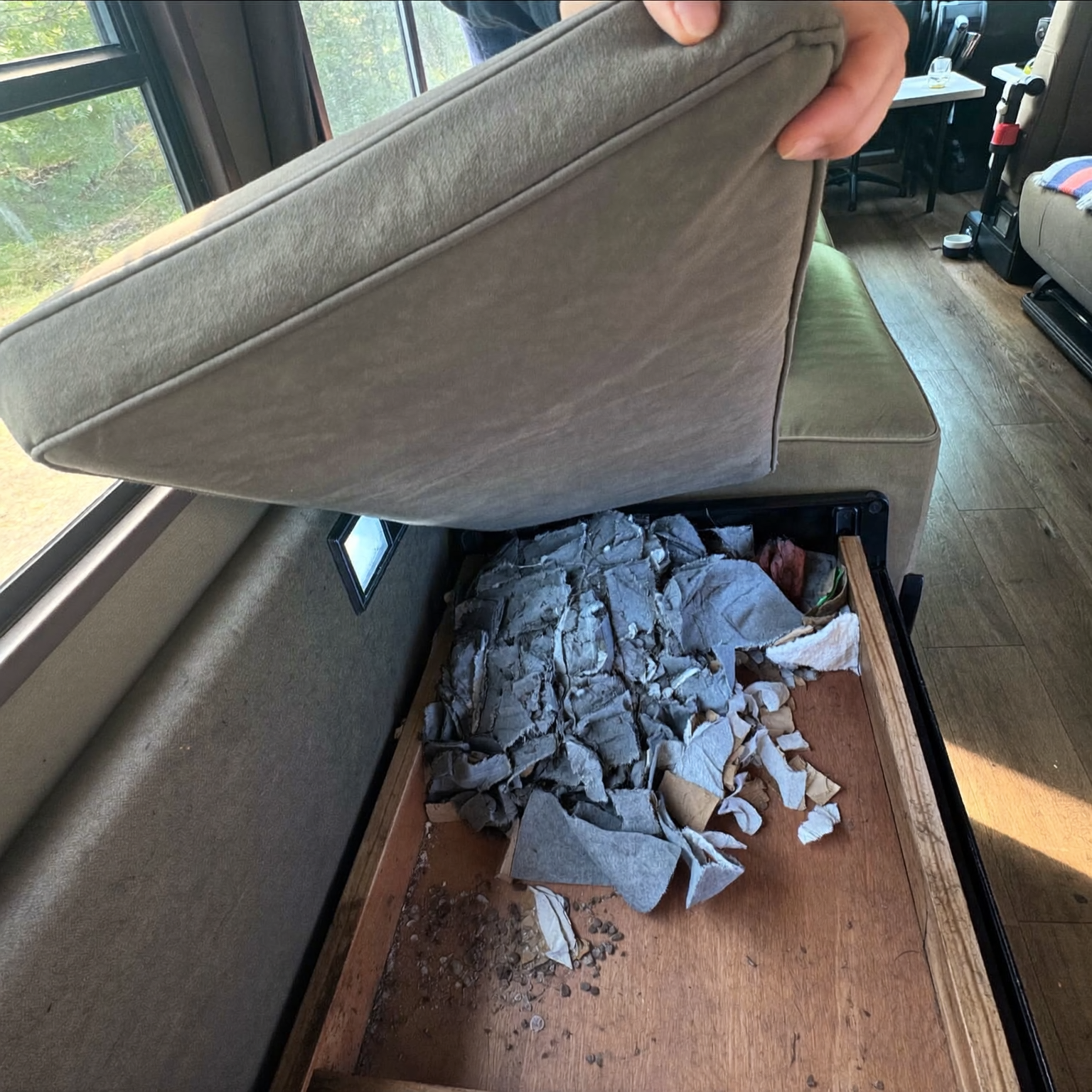
Ran for 21 days, from June 26 to July 17, 2026, the last day Crush saw it.
Run by Alexander Throne on Facebook. Crush is not the advertiser and does not verify its claims. See this ad in Meta's Ad Library(opens in a new tab)
Want an ad like this for your product?
Crush makes new ad images for your product from this ad: your logo, your product photo, your offer.
Trials from $19.95 USD, then $79.95 USD a month. Cancel anytime.
About this ad
- Meta Ad Library ID
- 841786402091328
- Platforms
- Facebook, Instagram, Audience Network, Messenger and Threads
- Relaunches
- 0
Ad text
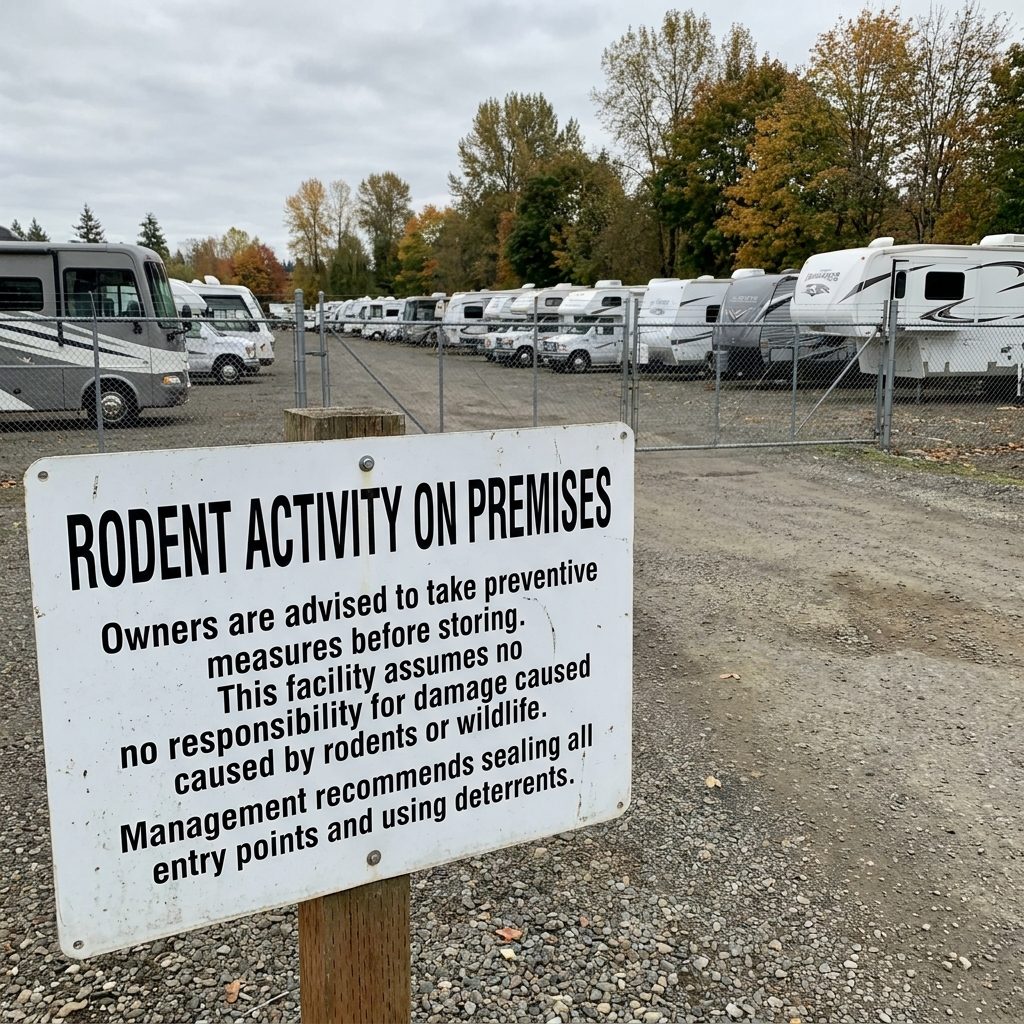
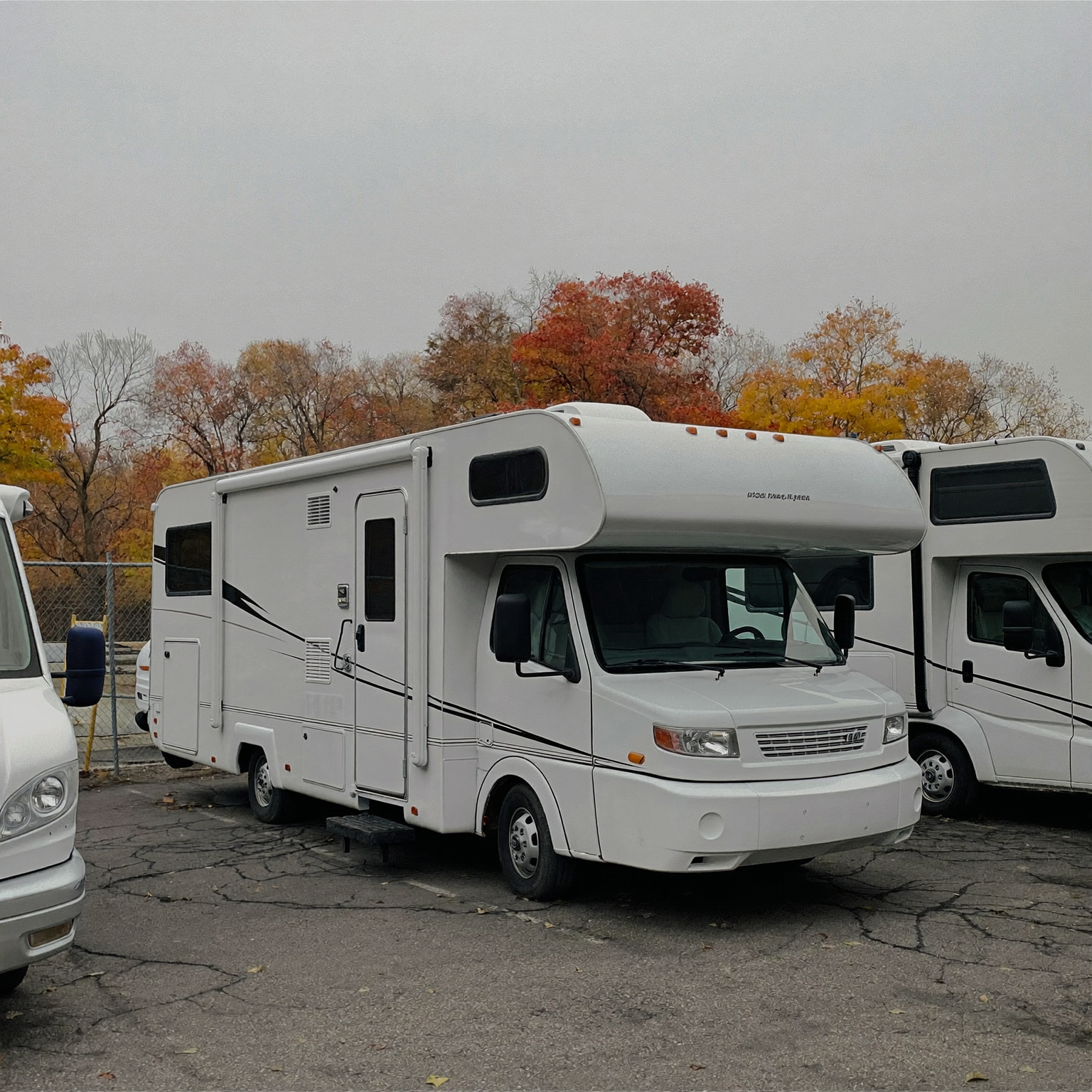
I've been fixing RVs for 22 years. I told every single customer who asked: don't waste your money on rodent repellers. I was wrong about one of them. My name is Ron Callahan. I run a one-bay RV service shop in Flagstaff, Arizona, and I have seen more rodent damage than most people will see in ten lifetimes. Chewed brake lines. Nesting inside slide-out motors. Wire harnesses stripped down to bare copper. One Class A last spring — a $340,000 Newmar — came in with a mouse nest built directly on top of the engine block. Owner had been running three plug-in ultrasonic repellers all winter. I pulled that nest out with my bare hands and I thought, same as I always do: these devices are theater. I'd been saying that for two decades. To every owner who asked. Every time somebody mentioned they'd bought a plug-in repeller, I gave them the same look I give people who buy fuel additives that promise to double their mileage. Polite. Patient. Quietly certain they'd wasted their money. What changed my mind wasn't a product. It was a question I couldn't answer. I was at a service conference in Phoenix two years ago — one of those all-day continuing education events where half the sessions are worth attending and half are excuses to eat a free lunch. One of the speakers was a wildlife biologist who'd spent fifteen years doing pest management research for the Department of Agriculture. Not an RV guy. A scientist. He wasn't there to talk about repellers. He was talking about why traditional pest control cycles keep repeating — why people treat, get relief, and then have the same problem six months later. He said something that stopped me cold. He said the single biggest mistake people make in pest control is confusing a stimulus losing effectiveness with the pest becoming resistant. He said most animals don't become resistant to anything. What they become is habituated. Those are not the same thing. I've been in the trades long enough to know when I'm hearing something that matters. Resistant means the animal changed. Its biology adapted. That takes generations. Habituated means the brain changed. A specific brain, in real time, classifying a repeated input as non-threatening and filtering it out permanently. He put it in terms I've never forgotten. He said imagine you move into a house next to a fire station. First week, every siren wakes you up. By the third month, you sleep through them. Your ears still work. The sound is still loud. Your brain simply decided it wasn't worth waking you for anymore. Mice do this faster than we do. Much faster. And here's what he said next that made me set down my coffee and just listen. He said every fixed-frequency ultrasonic device on the market is essentially a fire station siren. Loud at first. Genuinely disruptive. And then, within days to weeks depending on the animal's stress level and available alternatives — completely, neurologically invisible. The mice aren't ignoring it because it's cheap. They're ignoring it because it never changes. I drove home from Phoenix thinking about twenty-two years of repair orders. Thinking about every owner who'd come in and said their repeller stopped working and I'd nodded like I'd known all along it would. I had known it would stop working. I just didn't know why. There's a difference. If it fails because the technology is junk, you throw it away and move on. If it fails because the signal never changes — that's a fixable problem. I spent the next few weeks looking into whether anyone had actually built a device on variable frequency instead of fixed. Something engineered so the signal never repeated — constantly shifting in frequency, timing, interval — so the mouse's brain never got the stable input it needed to habituate. Most of what I found was fixed-frequency with better marketing. Same fundamental flaw, nicer box. But there was one that was built differently. I want to be careful here about how I say what I'm about to say. I am not a salesman. I do not get paid to recommend products to my customers. I get paid to fix their rigs when products fail them, which is a reasonable living and one I expect to keep having. So when I tell you I started recommending this device to customers, understand what I'm trading away by doing that. I started recommending it anyway. Not to every customer. Specifically to the ones who came in for the second time with rodent damage. The ones who'd already paid one repair bill and couldn't afford another. The ones with dogs in the rig. The ones with kids. The ones who told me they'd tried everything natural they could find and nothing held. These are the customers I care about most. The ones for whom another infestation isn't an inconvenience — it's a financial crisis or a safety problem or both. I told them what I'd learned in Phoenix. I explained the difference between habituation and resistance. I told them fixed-frequency devices fail not because ultrasound is useless, but because a sound that never changes becomes silence to a mouse within two weeks. And I told them there was one device I'd found that was engineered around this problem specifically. I've now had enough of those customers come back — for regular service, not rodent damage — that I feel comfortable telling you what I'm seeing. The ones who switch to variable frequency and cover all three zones of their rig don't come back with chewed wires. That's not a guarantee. I don't make guarantees about anything in this business except that the bill is due when the work is done. But I can tell you that in two seasons of recommending this approach, I have not written a single repair order for rodent damage on a rig that was running variable frequency coverage on all zones. Not one. Here is the part I want you to hear most clearly. I still think most rodent repellers are theater. I have not changed that position. What I changed was a more specific belief — that all ultrasonic devices fail for the same reason. They don't. Fixed-frequency devices fail because the mouse's brain adapts to anything that stays the same. That is not an opinion. That is neuroscience, and it applies to every smell, every sound, and every deterrent you have ever tried that worked for two weeks and then stopped. Peppermint oil. The Irish Spring. The moth balls. The dryer sheets. Every single one of them is a fixed, non-varying stimulus. And every single one of them becomes background noise to a mouse faster than you'd believe. If you have pets in your rig and you won't use poison — I understand that, and I respect it. Poison creates problems I deal with professionally and I wouldn't recommend it in a living space either. If you've tried the natural solutions and watched them fail — now you know why they failed. If you've written off ultrasonic devices because the cheap ones didn't work — I wrote them off too. For twenty years. I was wrong about the specific reason they failed, which meant I was wrong about whether a better-designed version could work. One can. [Learn how Varying Ultrasonic Pulsing works — and why it's the only design that doesn't give the rodent brain a pattern to adapt to →] No poison. No chemicals. No traps. Safe for pets and children. Runs on your RV's existing shore power.
Where the ad sends people
safeplug.store
Read this if you have an RV
SafePlug
Learn more: safeplug.store(opens in a new tab)