Linda Lawson
Linda Lawson Facebook ad: “What Is On Your Keys?”
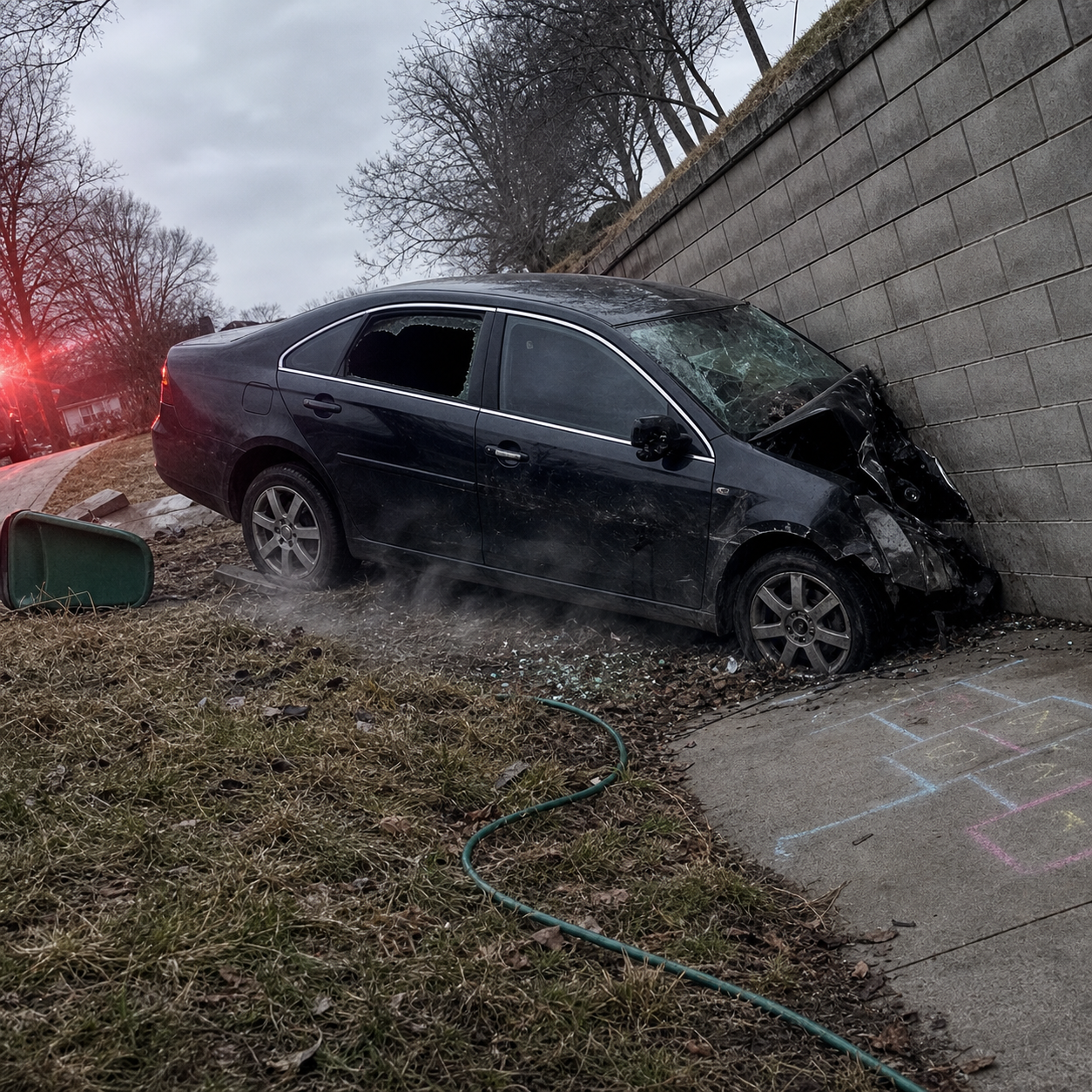
Ran for 5 days, from June 21 to June 26, 2026, the last day Crush saw it.
Run by Linda Lawson on Facebook. Crush is not the advertiser and does not verify its claims. See this ad in Meta's Ad Library(opens in a new tab)
Want an ad like this for your product?
Crush makes new ad images for your product from this ad: your logo, your product photo, your offer.
Trials from $19.95 USD, then $79.95 USD a month. Cancel anytime.
About this ad
- Meta Ad Library ID
- 845002168380287
- Platforms
- Facebook, Instagram, Audience Network, Messenger and Threads
- Relaunches
- 0
Ad text
Three boys lived through that crash and died waiting for a door. I was on the truck that pulled up four minutes later. The handles were dead because the hit took the power. The one window already broken was the work of a friend with his bare hands. We cut the rest open, and for three of them it didn't matter anymore. The twenty-year-old by the mailbox kept saying there were three more boys in the car. He said it like he had misplaced them and our crew could still go get them. The borrowed T-shirt around his hands had already gone dark. He kept stepping around my captain's arm. Each time he pointed at the car, smoke slid low across the grass. The back-door handle wore a black glove mark from the first officer's last pull. I stepped off the engine with the Halligan in my right hand and crossed the yard. The car sat sideways against the block wall with the nose folded into the engine bay. The driver's door had a crease through it that ran right across the handle. The passenger side was tight against the wall. The back door on our side looked clean enough that a neighbor tried it before we got there. That handle moved in his hand and did nothing. The first officer on scene had pulled on it hard enough to leave his glove mark in the paint. The car gave him nothing back. The boys inside were not thrown around the road. They were still inside the shell. One boy was out because the left rear window was gone. The glass from that window was spread across the curb like road salt. The friend had broken that window before our engine reached the yard. He kept lifting both wrapped hands toward the one broken window. My captain put one hand on his shoulder and moved him behind the engine. My name is Ray Calder. I have been a firefighter and EMT for almost twenty years. I have cut open cars in ditches, in driveways, on bridges, and in water up to my belt. I have heard people scream from inside a car. I have heard people stop screaming from inside a car. I still remember that one because the car did not look like the worst one. The roof was not flattened to the seats. The engine was not burning through the hood yet. The windshield was cracked but still there. The passenger compartment had held. The first boy we reached still had his school hoodie bunched under his shoulder. There was a fast-food cup wedged under the brake pedal. There was a paperback on the floorboard with a bookmark sticking out halfway through it. Those small things made the car feel worse. They made the boys look like they had been interrupted, not destroyed. We had all the gear people picture when they picture a rescue crew. We had cutters. We had spreaders. We had cribbing. We had saws. We had men who knew which post to cut and which hinge to take first. We also had the clock. The call came in after the crash had already happened. The friend had already run to the door. The neighbor had already pulled the handle. The first officer had already tried his baton on the glass and watched it bounce. The friend had already put his hand through one window before anybody in turnout gear reached the yard. When I say four minutes, I do not mean four minutes from the crash. I mean four minutes from the call. Four minutes from the time somebody got a phone out and told dispatch where to send us. Those boys had already used the only minutes they had on their side of the glass. I did not know their names on the lawn. I knew the driver had braces because I saw the rubber bands when we tilted his head. I knew one of the back-seat boys had a plastic wristband from a school event. I knew one had a cheap watch that kept lighting every time his arm moved under our hands. I knew the living boy outside had broken the window because the glass had his skin oil on it. The rag on his hands was already dark. The deputy kept him near the mailbox. The boy kept trying to step back toward the car. He had come in another vehicle behind them. He was twenty, maybe a little older than the boys in the car. He had heard the crash from the street. He had run before anyone told him to run. He had tried the driver door. He had tried the back door. He had picked up a landscaping brick and hit the glass. The brick bounced out of his hands and landed in the mulch. He picked up the brick again and tried the corner. The window did not go. He wrapped one hand in his shirt and hit the glass with his fist. The first hit made a sound that everyone in the yard heard. The second hit made the window go white. The third hit opened the back seat. He reached through the hole and dragged one boy toward the grass. Then he tried the next window. His hands would not do it again. By the time we took the door, that second window still had a long smear where his palm slid down. I saw it under my helmet light. I saw it again two days later in the tow yard. The report called the crash survivable. That word came from the investigator, not from me. He meant the cabin had not collapsed. He meant the boys were not killed at impact. He used the word the way investigators use words. He pointed to the roof line. He pointed to the seats. He pointed to the belts. He pointed to the fact that one boy got out through the window his friend broke. Nobody in that room used the word like a mother would use it. The mothers were not in the room when the investigator used it. The fathers were outside with paper cups of coffee they had not touched. The living boy sat in a chair near the wall with both hands wrapped from knuckle to wrist. His mother stood behind him and kept rubbing the back of his neck. He stared at the floor while adults talked about roads, speed, power loss, and impact angle. Then he lifted his wrapped hands and said, "I got one." Nobody answered him. He looked at me because I still had my station shirt on. He said, "Why couldn't I get the other windows?" I had a radio on my belt. I had a duty phone in my pocket. I had a captain two chairs away who had already told us not to answer questions beyond our lane. I still moved my chair closer to that boy. I told him he did what most grown men would not have done. I told him he put his hands through glass for his friends. I told him the car did not give him a fair job. His mother started crying before he did. I crossed the first line when I moved that chair closer to him. The next morning, my truck turned toward the tow yard instead of my driveway. I was supposed to go home after shift. My wife Marla had left a plate for me in the microwave. My boots were still wet at the hem. The station smelled like coffee, diesel, and the wet canvas from our gear. I signed my run sheet and stood by the back door with my keys in my hand. The tow yard was only a few miles off my route. I drove there before I drove home. I did not tell my captain first. I did not have a form to fill out. I had a boy's question in my head and a car sitting behind a chain-link fence. The tow yard owner knew our department. He saw my shirt and let me walk back with him. The car sat under a floodlight between a pickup with no hood and a minivan with the airbags hanging out. The one broken window was covered with plastic. The other windows still held the night inside the car. I put my gloved hand on the driver handle and pulled. Nothing moved but the handle. I put my shoulder against the back door and pulled again. Nothing moved but my jacket. The tow yard owner stood ten feet away and watched me try all four doors. He said the battery was gone. He said the whole side was locked up when they loaded it. He said his driver had to winch it by the control arm because nothing rolled right. I asked him to let me look at the glass. He pointed his flashlight through the plastic. The inside of the broken window was full of tiny cubes. The seat had those cubes packed into the seam. The frame around the glass still held little teeth of the window. The smear from the friend's hand was still there on the next pane. It was not blood like people imagine. It was a dull mark where skin, dirt, and panic had slid over glass that would not open. The tow yard owner said an emergency escape tool was in the center console. The deputy found it when they inventoried the car. That tool stayed under that cracked console while the boy used his hands. It had been in the car. It had not been in a hand. The console lid was cracked and jammed halfway under the dash. The belt over the driver's seat was still tight. The buckle sat deep against the crushed plastic by the seat. I stood there long enough for my phone to buzz three times from Marla. I took a picture of the outside handle for the investigator. I took a picture of the unbroken window for myself. The tow yard owner finally said, "Ray, you good?" I said no because I was standing beside a car that had kept its shape and kept three boys inside it. He closed the gate behind me when I left. The chain hit the post hard enough that I heard it over my truck engine. The living boy left his question on my passenger seat. The guys at the station put the next question on the kitchen table. Nobody at my station wanted to sit with that call at the kitchen table. We all had ways to put bad calls back in the locker. One man scrubbed the saw until the blade looked new. One man washed the mud off the step of the engine even though rain was coming. Captain Paul made coffee and lined the mugs up by the sink. I put the tow-yard picture on the table. The picture showed a clean window with a hand smear down the middle. The room got quiet. One of our younger firefighters, Mike, said he had emergency gear in his truck. He pointed toward the parking lot when he said it. Another firefighter asked where. Mike said center console. Nobody made fun of him. Nobody called it dumb. Most of us had something like that somewhere in a truck, a bag, or a garage. Captain Paul opened his locker and pulled out a pouch with rescue pieces in it. He kept it on his gear, not on his body. I opened my turnout coat and showed the trauma shears in my pocket. They lived on my gear too. The living boy had not had our gear. The mothers in that waiting room had not had our gear. The boys in that car had had pockets, belts, phones, and keys. Mike dumped his pockets on the kitchen table. Out came a phone, a wallet, a pocketknife, a receipt, and keys. Another firefighter did the same thing. Out came keys, a lighter, a folded grocery list, and two screws from a job he had done at home. The table filled with ordinary things. None of those ordinary things could open that side window. None of them could cut a belt if the buckle sat under bent plastic. Captain Paul picked up his own key ring and turned it over in his palm. He said his wife drove a car with electronic handles. He said she kept a blanket in the trunk and a roadside kit under the floor. He said none of it would help if she could not get out of the seat. Mike looked through the bay window at his own truck. Captain Paul set his key ring beside the tow-yard photo. Mike stopped looking through the bay window and patted his own pockets. I drove home after that meeting with my gear still in the bed of the truck. The microwave plate was cold. Marla had fallen asleep in the recliner with a quilt over one shoulder. Her keys were in the ceramic bowl by the door. My truck keys landed beside them when I came in. Our daughter Jess had keys there too, on a lanyard from her college. Three rings sat in that bowl. Three drivers lived in that house. The bowl held house keys, car keys, a grocery-store tag, and a little flashlight Marla never used. I stood there in my socks and put each ring in my hand. Marla's car key had a plastic fob and a mailbox key. Jess's lanyard had a rubber charm from school and the key to a hatchback she drove home on weekends. My truck key had a bottle opener from a beach trip and a brass house key with the teeth worn smooth. I had rescue gear in my truck. I had roadside gear in my truck. I had two decades of training in my hands. None of that sat in the bowl. None of that would be clipped to Jess if she slid off a wet road and the car spun into a ditch. None of that would be in Marla's hand if a side impact killed the power and her phone went under the seat. I picked up the lanyard and pictured Jess reaching for a handle that moved and did nothing. I put the lanyard back down because my hand was shaking. Marla woke up and asked if I was hurt. I said no. Then I told her about the hand smear on the window. I told her about the boy with his wrapped hands. I told her about the unused tool in the console. I told her about the three rings in our bowl. She got up and stood next to me in the hall. She picked up her own keys and looked at them like they belonged to somebody else. She asked what a person is supposed to do if the power dies. I gave her the answer we teach in classes. I said you get out fast, break the side glass, cut yourself free if the belt is stuck, and get away from the car. She held the keys and asked me what she was supposed to use. I had no object in the house to put in her hand. That Saturday, I asked Jess to sit in my parked truck outside the bay. I clipped the belt across her lap and told her to keep her back against the seat. I put my phone under the passenger seat. I put the roadside pouch in the console. I shut the door and told her to reach both items without taking the belt off. Jess laughed at first because the truck was parked and the bay door was open. Then the belt locked when she leaned. Her left hand hit the console lid and slid off. Her right hand could touch the phone with two fingers and still could not pull it out. Marla stood by the bumper with her arms folded. Jess stopped laughing and looked at me through the side glass. She said, "That is stupid." I opened the door and unlatched the belt for her. The pouch had been less than an arm's length from her knee. The phone had been under a seat in a truck that was not upside down. The bay floor was dry. The lights were on. No smoke was in the cab. No stranger was yelling at her through a broken window. That little parking-lot test made Marla's keys look worse in the bowl that night. I carried Marla's question back to the station. I heard it in the bay while I checked the air bottles. I heard it on a rollover call where the driver got out before we arrived. I heard it in a rainstorm where a sedan hydroplaned into a drainage ditch and the woman inside kept saying the door would not open. She lived. Her husband arrived in a work shirt and hugged her against the side of our ambulance. I watched her point at her car and show him where she had tried the handle. Her hand went back to the handle while she talked. Her fingers closed on it. The handle moved. The door stayed shut. Her husband put both hands on her shoulders. I saw the same motion from an older man whose belt buckle jammed under his hip after his pickup rolled into a shallow ditch. He kept apologizing because he could not help us help him. His wife stood behind our engine with her purse clutched to her chest. She kept saying his name every time the roof made a new sound. Those drivers stood beside the ambulance afterward. I wrote handles, belts, glass, and keys on a pad at the station. The older man's utility knife sat in a cup holder on the far side of his hip. The boys' backup stayed in the cracked console while the second window kept the hand smear. A few days later, I stopped writing the crash in my head as an electronic-door call. The dead battery was one piece. The tight belt was one piece. The unbroken glass was one piece. The console, trunk, pouch, and glove compartment kept showing up on the wrong side of a locked belt. A phone can slide under a seat. A backup piece can stay in a console. A knife can sit in a work bag in the back. A trained firefighter can be four minutes away from the call and still arrive after the useful minutes are gone. The living boy did not need a lecture about preparedness. He needed a tool in the first hand that reached the car. The boys inside did not need better instructions in the owner's manual. They needed a way to open side glass without the car's power, without a clear head, and without a perfect grip. Marla did not need another kit in the trunk. Jess did not need a checklist in the dash. The drivers in my family needed the answer where their hands already went before every drive. They needed it with the keys. I started asking other firefighters what was on their keys. Not in their trucks. Not in their gear bags. Not on the shelf by the garage. On their keys. Most of them had nothing that could help a trapped driver. One had a small flashlight. One had a pocket pry bar that could open a paint can but not side glass. One had a folding knife sharp enough for rope but slow to open with wet hands. One had a bottle opener shaped like a fish. The joke died as soon as we laid those rings on the table. Every man at that table could name a car we had cut open. Every man at that table had a pouch, knife, tool, or cutter somewhere away from his keys. Every object on that table depended on a hand reaching the right pocket, console, locker, or bag. The next month, we cut a driver out of a better-trim sedan after a side hit killed the power. He kept pulling the chrome interior handle while we set the cribbing. The handle clicked under his fingers and gave him nothing. His phone was lit on the floorboard under the pedals. His roadside pouch was in the trunk. His right hand stayed on that dead handle until my partner touched his wrist and told him we had the door. The answer I wanted had to pass the boy's question. It had to help the first person at the window before the truck arrived. It had to sit on the body because the console, trunk, pouch, and glove compartment could all be on the wrong side of the crash. It had to work when the car gave no power back. It had to cut belt webbing if the buckle disappeared under bent plastic. It had to be small enough that Marla would actually keep it with her keys. It had to be simple enough that the living boy outside the car could have used it with both hands shaking. I did not want another object for a trunk. I did not want another plan that started after somebody found a phone. I wanted the thing that should have been in the first hand at that window. I found TerraStrike at my kitchen table after a late shift. The tow-yard photo was open on my phone. The key bowl was on my left. Marla's keys were in it because she had gone to bed early. Jess's lanyard was still hanging over the side like it had been dropped by somebody in a hurry. The TerraStrike page showed a keychain-sized vehicle escape tool. It was not a dashboard gadget. It was not a tool that needed the car to help. It had a spring-loaded tungsten striker on one end. It had a recessed stainless cutter on the other. The body was small enough to sit beside a fob. The spec line said 34.5 grams. The length was 105 millimeters. That meant Marla could carry it without feeling like I had hung shop hardware on her purse. That meant Jess could clip it next to her school lanyard without turning her keys into a brick. The striker did the part the boy's hand had tried to do. The spring stores the force and drives the tungsten point into the glass. The point hits one small spot instead of throwing a whole fist at a whole window. The tungsten point turns the corner into cubes while a palm slides down the glass. The page said to use it on passenger-vehicle side windows, best on tempered glass. It said to check your vehicle's window stamp because side glass can vary. I kept my thumb on that line and read it to Marla from the kitchen table. I kept reading because the page named real side glass instead of promising every window in every vehicle. The cutter sat inside a narrow slot where fingers could not reach the edge. The belt webbing slides into the slot. The tool does not ask a trapped driver to find a buckle buried under bent plastic. It gives the hand a place to pull. No battery sat inside it. The same failure that killed the doors could not kill the tool. I ordered six before I talked myself into sleeping on it. One for Marla. One for Jess. One for my truck. One for Captain Paul's wife. One for the living boy. One for his mother to keep by the door until he was ready to carry it. I am not a survivalist with shelves of canned food and code words. I am a firefighter who has knocked on family doors after a crash. I am a husband who watched his wife hold her empty keys in the hall. I am a father who made his daughter sit in a parked truck and reach for a phone she could not grab. That night I bought the rescue tool because the keys were the only object every driver in my house actually carried. The box came on a Tuesday. Marla found it on the porch before I got home. She had set it on the kitchen table without opening it. The six TerraStrikes sat in a row beside the ceramic bowl. Three black. Three red. Jess picked up a red one first. She weighed it in her palm. She said, "This is it?" The red tool looked small in Jess's palm beside the tow-yard photo on my phone. I took an old seatbelt strap from a training bin in the garage. I put the strap on the kitchen table. I showed Jess the cutter slot. She pulled the webbing through it once. The strap opened with a rough little sound. Marla touched the cut edge and went quiet. I took Jess outside to my truck. I pointed to the lower corner of the side window from outside the door. I said, "Corner." I held the tool against a scrap test panel from the station, not the truck window. The spring snapped in my hand. Jess flinched. Then she took it from me and pressed it against the same test panel. Snap. Jess lowered her shoulders after the spring snapped twice in her own hand. Marla clipped the black one to her keys while we were still standing in the driveway. She held the ring up and shook it once. The TerraStrike clicked against her fob. She said, "I will keep it there." I watched the black TerraStrike stay on Marla's ring when she walked back into the house. Marla did not make a big scene. Marla did not make a speech. Marla dropped the ring back into the ceramic bowl beside the door. The next morning, Jess picked up her lanyard from the bowl before class. The red TerraStrike bumped the ceramic side and made a new sound. She heard the sound too. She rolled her eyes because she saw me looking. Then she shoved the keys into her jacket pocket instead of tossing them into her bag. Jess patted that jacket pocket once before she opened the front door. The red TerraStrike left with Jess, not with her backpack. I gave Captain Paul the black one for his wife at the station. He did not make a joke. He put it on the table where he had put his own keys the week before. He picked it up and pressed the striker against a folded shop towel. The spring snapped. He turned it over and looked at the cutter. He said, "This lives on the ring." Mike walked in with a grocery bag in one hand and a radio clipped to his belt. He saw the tools on the table and set the bag down. Mike had been the one who pointed toward his truck and said his gear was in the console. He picked up a red TerraStrike. He pulled his own keyring from his pocket. The fish-shaped bottle opener came out with it. He clipped the red tool on without asking me what it cost. Then he carried the grocery bag to the fridge and came back for the training strap. He cut the strap twice. The second time he used his left hand. He said, "If my wife can do that, I want it." Captain Paul took the training strap to the bay. He made every firefighter on our shift use the cutter with gloves on. He made every firefighter press the striker against the test panel with the wrong hand. He made everyone put their own keys on the table afterward. After the drill, three more key rings landed beside the training strap. The men who had pouches in trucks ordered for the keys. The men who had kids ordered for the keys. The men who had wives driving cars with electronic handles ordered for the keys. Nobody used the word fear. They used names. Marla. Jess. Paul's wife Karen. Mike's son Ben. The grocery receipt and fish-shaped bottle opener stayed on the table while the names went around the room. The living boy did not take his right away. His mother called me first. She said he still kept his wrapped hands in his sweatshirt pocket when he walked through a room. She said he had not driven since the crash. She said his father had opened the garage and offered to ride with him. The boy stood by the car and said no. I drove over after shift with one red TerraStrike and the old seatbelt strap in my coat pocket. His mother met me on the porch. The porch light was on even though it was still afternoon. He sat at the kitchen table with a glass of water in front of him. Both hands were unwrapped by then. The skin across his knuckles was pink and stiff. I put the red tool on the table. I kept my mouth shut about the three boys. I did not say the three boys' names in his kitchen. I put the strap next to it. I said, "This is the tool I wish you had been holding before you ever touched that glass." He looked at the tool for a long time. Then he picked it up with his left hand. He pressed the striker against the folded towel I had brought. Snap. His right hand twitched on the table. He turned the tool over and pulled the old belt strap through the cutter. The webbing opened. His mother put one hand over her mouth. The boy set the tool beside his keys. He did not clip it on. He just set it there. The red tool beside his keys was enough for that day. Two weeks later, his mother sent me a picture. The red TerraStrike was on his keyring beside a house key and a bent bottle opener. His hand was on the steering wheel. The message said, "He drove around the block." I sat on the tailboard of the engine and looked at that picture until Mike asked if I was coming inside. Our extrication instructor, Dale Mercer, came through the station for a county drill with a clipboard under his arm. Dale has a voice like gravel and no patience for gadgets. He has cut more practice cars than most people have owned. He saw the TerraStrike on Mike's keys during a break. He held out his hand. Mike gave it to him like a kid handing over a phone in class. Dale turned it over. He pressed the striker against the test panel. Snap. He looked at the tungsten point. He pulled the training strap through the cutter. The strap opened. Dale looked at the ring. He said, "Passenger side glass, lower corner, teach them before the crash." Dale put the tool back in Mike's hand after that review. Dale tapped Mike's key ring twice with one finger. Then he looked at me. He said, "It won't replace us." I said I knew. He said, "Good. It buys the person inside a first move." I wrote Dale's words on the whiteboard over the coffee pot. TerraStrike does not replace 911. It does not replace a crew. It does not change a crushed roof or a car under ten feet of water. It gives the person in the seat a first move while the crew is coming. Those boys had reached for that first move from the wrong side of the glass. Now I think about your keys when I hear mine hit the bowl. Maybe you run a crew and every driver in your yard has a key ring but no escape tool on the body. Maybe you drive forty minutes through hill roads before sunrise. Maybe your wife keeps an emergency kit in the trunk and has never tried to reach it with the belt locked across her chest. Maybe your son keeps his phone in the cup holder and his keys in his pocket. Maybe your daughter drives a car with electronic handles and you have never pulled that handle with the battery dead. Maybe you bought responsible gear already and put it somewhere that made sense on a normal day. I am not wagging my finger at that gear. I have a truck full of gear. I also have a tow-yard photo of a clean window with a hand smear down the middle. Tonight, pick up the keys before you inspect the car. Pick up the ring your spouse drops in the bowl. Pick up the ring your teen carries to school. Pick up the ring your driver takes at the start of a shift. Ask the ugly question while everybody is still walking through the house. If the door will not open and the belt will not release, what is on that ring? TerraStrike answered that question in my house and at my station. Spring-loaded tungsten striker for passenger-vehicle side glass. Recessed stainless cutter for a jammed belt. Small enough to stay beside the fob. No battery inside it to die with the car. No fist-against-glass contest. No hand searching a dark console while smoke or water takes the room. Teach lower corner. Teach strap. Check the window stamp on the cars your people actually drive because glass types can vary. This tool is best on tempered side glass, and it is made for passenger vehicles, not bus, train, or aircraft windows. The company behind it is Quiet Protector, the emergency-preparedness team trusted by more than 50,000 families across the brand. I am telling you that because I did not want a novelty keychain from a stranger's warehouse. I wanted a rescue tool that looked ordinary enough for Marla to keep on her keys and simple enough for Jess to remember under stress. The multi-packs made sense in my house because I was not buying units. I laid the order against the names in my house and at the station. Marla. Jess. My truck. Captain Paul's wife. The living boy. His mother. If you outfit drivers, picture their key rings laid across your desk. I do not buy one for the vehicle. I buy one for the person who carries the key. It costs less than a tank of gas. It comes with a 120-day money-back guarantee and a 2-year warranty. If you clip it on, teach corner and strap, and decide it does not belong on your family's keys, you can send it back. I cannot give you a fake warehouse count from a firehouse table. I can tell you Quiet Protector sells direct in batches, and emergency gear moves fast when one story starts making people check the key bowl. If the page is still taking orders, this batch is available. P.S. -- When TerraStrike arrives, do not toss it in a drawer and call the job done. Clip it to the keys while the person is standing there. Put the keys in their hand. Point to the lower corner of the side window from outside the car. Say corner. Slide an old strap or piece of webbing through the recessed cutter if you have one. Say strap. Do not give the whole panic speech in the driveway. Give the hand two words and one object. P.P.S. -- Before you close this, go to the key bowl. Leave the big kit where it is. Leave the phone charger in the console. Leave the tools in the truck. Pick up the keys. If the ring has nothing for the first useful minute, fix that while the people you care about are still walking through the door. https://www.tryterrastrike.com/lead4
Where the ad sends people
tryterrastrike.com
What Is On Your Keys?
The keychain tool that gets your family out of a crashed car in under 60 seconds. TerraStrike breaks tempered glass and cuts jammed seatbelts with zero strength required. Clip one to every set of keys.
See details: tryterrastrike.com(opens in a new tab)