Willis Judd
Willis Judd Facebook ad: “For about two years I told everyone I'd gone off knitting.”
Ran for 35 days, from August 19 to September 23, 2026, the last day Crush saw it.
Run by Willis Judd on Facebook. Crush is not the advertiser and does not verify its claims. See this ad in Meta's Ad Library(opens in a new tab)
Want an ad like this for your product?
Crush makes new ad images for your product from this ad: your logo, your product photo, your offer.
Trials from $19.95 USD, then $79.95 USD a month. Cancel anytime.
About this ad
- Meta Ad Library ID
- 856720270727754
- Platforms
- Facebook, Instagram, Audience Network, Messenger, WhatsApp and Threads
- Relaunches
- 0
- Niche
- Jewelry & Watches
Ad text
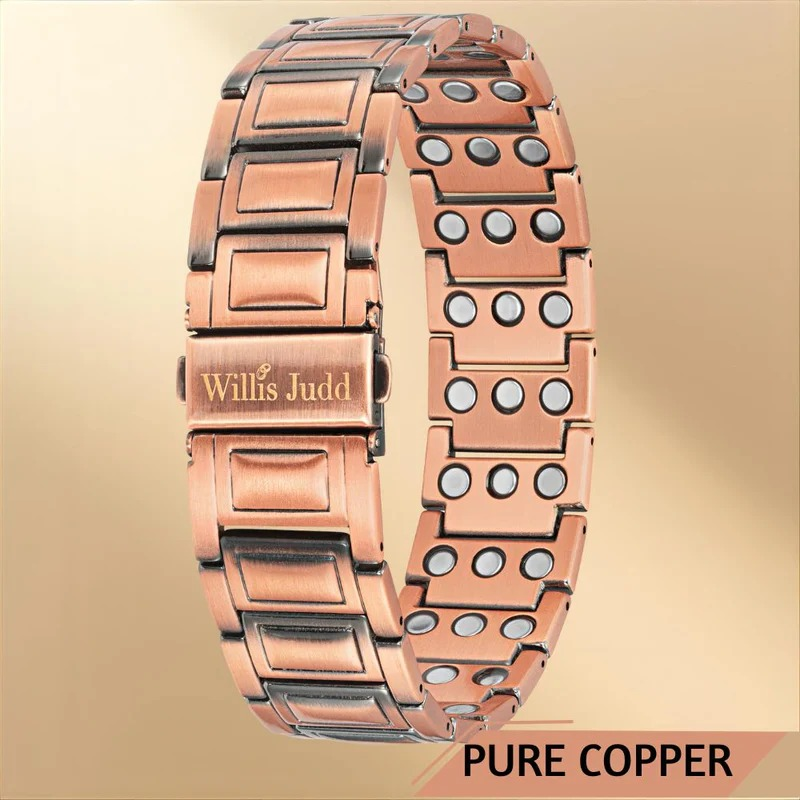
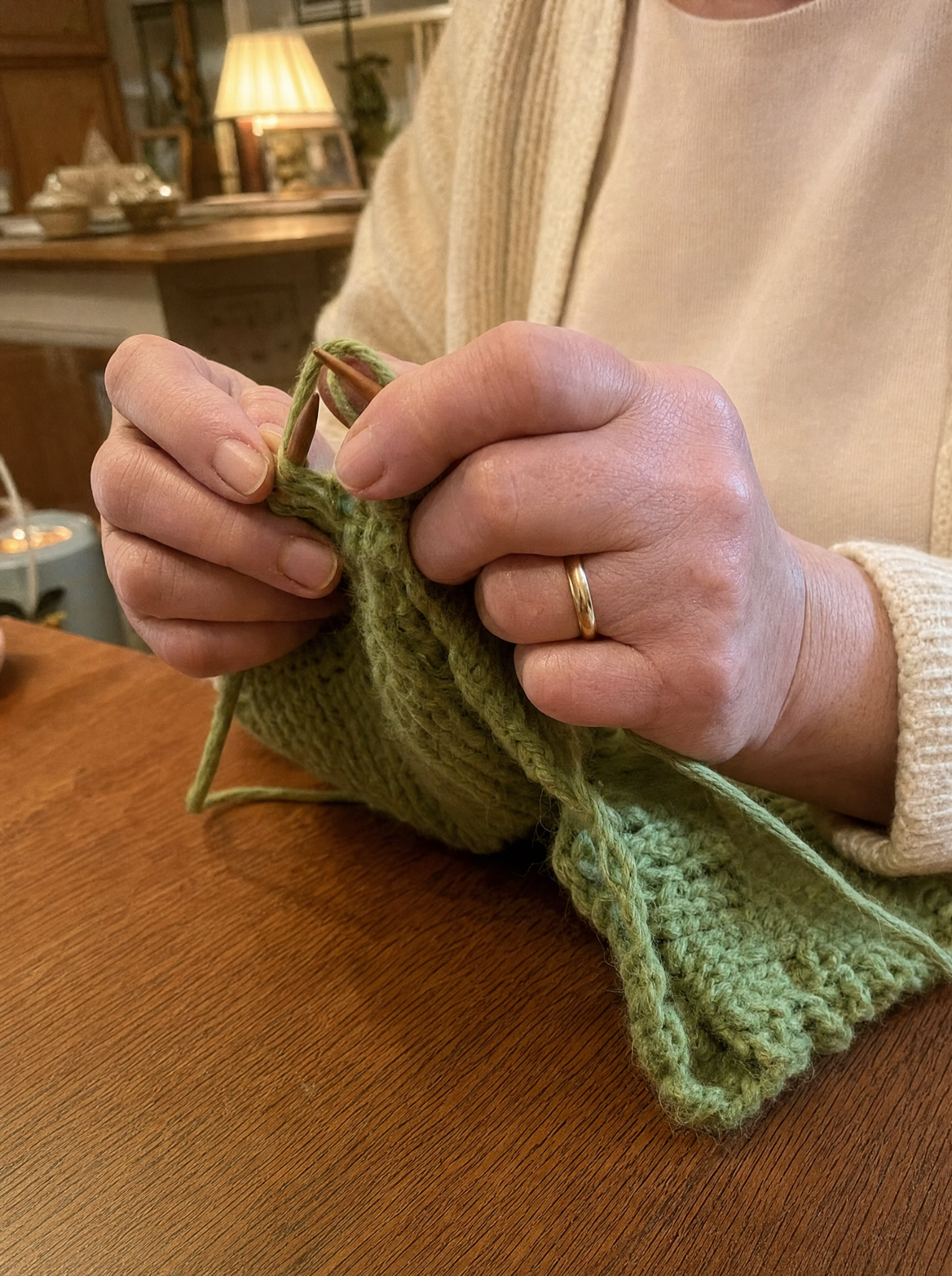
For about two years I told everyone I'd gone off knitting. I said it so many times I believed it. Then a woman in a wool shop in a town I'd never been to before asked me one question, and I had to sit down. Let me tell you who I was before, so you understand. I was the knitter. Not a knitter. The knitter. If someone in the family was having a baby, they didn't buy a blanket, they rang me. If a friend's husband had a bad winter, a scarf turned up. I did the school fete. I did the church stall. I did the hats for the premature baby unit every November for eleven years, forty a year, and I have the thank-you cards in a shoebox. I had a wool room. Not a cupboard. A room. The small bedroom, after our youngest moved out. Floor to ceiling shelves. Sorted by weight, then colour. My husband used to say if the house caught fire I'd save the wool room and then come back for him. He was mostly joking. I'm sixty-six now. I don't remember deciding to stop. That's what I keep coming back to. There was no day. There was no moment where I put the needles down and said, right, that's that. It was more like… I stopped picking them up. I'd sit down in the evening with the telly on and reach for the bag by the chair, and think, oh, I can't be bothered tonight. Then it was most nights. Then I moved the bag into the wool room so it wasn't in the way. Then I stopped going into the wool room. I still had a project on the needles. A cardigan for my sister. Half a back and one sleeve. It's still on the needles. That was two years ago last April. People asked, of course. At first I said I was busy. Which I wasn't especially. Then I said I'd lost my mojo, and everyone laughed, and I laughed. Then I settled on the line that stuck. I've just gone off it. I said it to my sister. To my daughter. To the woman at the wool shop in town, who looked at me the way you'd look at someone who's said they've gone off breathing. I said it to myself, in the mirror, more than once. I've just gone off it. People do. I started doing crosswords in the evenings instead. I got quite good at crosswords. Here's what I did notice, but never connected. I noticed I'd started holding my mug of tea with two hands. I told myself it was cosier. I noticed I'd stopped wearing my rings, and I told myself they'd got a bit tight, and I'd sort it when I got round to it. I noticed I'd started buying the pre-chopped vegetables, and I told myself it was because I was cooking for two now and it wasn't worth the bother. I noticed I'd wake up in the mornings and my hands would feel like a pair of gloves someone else had left on the radiator. Stiff, warm, wrong. For a good half hour. I told myself that was sixty-six. I noticed I'd get a dull ache at the base of my thumbs by the evening. Not a pain exactly. Just there. Like a low hum. I told myself everybody's got something. I noticed my daughter had started opening jars for me without being asked. And I noticed that I let her. I didn't tell myself anything about that one. I just didn't look at it. I want to be really clear. I did not think I had a hand problem. If you'd asked me, two years ago, do you have arthritis in your hands, I'd have said, oh, a bit, doesn't everyone. I'd have said, it's not bad enough to bother the doctor with. I'd have said, I've just gone off knitting. And I would have meant every word. Last September my husband and I went to visit his brother in a town about three hours away. We got there early. His brother wasn't back till two. We walked down the high street to kill an hour, and there was a wool shop. A proper one. Bay window, wool in baskets, a chalkboard sign. My husband said, go on, and I said, I don't knit anymore, and he said, go on anyway, and I went in because I couldn't think of a reason not to. The woman behind the counter was about seventy. Reading glasses on a chain. Cardigan she'd obviously made herself. Grey, cabled, beautiful. The shop smelled the way wool shops smell. I stood in the middle of it and something in my chest went tight and I didn't know why. I picked up a skein of merino. Soft grey-green. Just to feel it. She said, that's a lovely one, what are you thinking of making. I said, oh, nothing, I don't really knit anymore. She said, oh, that's a shame. What happened. Not why. What happened. Like it was a thing that had happened to me. I said, nothing happened. I just went off it. She looked at me over her glasses for a second. Then she said the thing. She said, love, when did your hands start hurting. I said, they don't. She didn't say anything. I said, well. Mornings. A bit. She said, and the base of your thumbs by teatime. I said, how do you know that. She said, because I've had this shop for twenty-six years and I've watched about four hundred women go off knitting, and not one of them went off knitting. She said, they went off the way it made their hands feel afterwards. And they didn't want to say so. So they said they'd gone off it. She said, sit down a minute. There was a chair by the window. I sat down. I felt like I'd been caught out at something. Because she was right, and I'd known she was right, and I'd never once said it, not even to myself. I hadn't gone off knitting. Knitting had started to hurt, and it hurt more afterwards than during, and I hadn't wanted to be a person whose hands were going, so I'd quietly stopped, and made up a reason. I sat in her chair and I said, I've got a cardigan on the needles. I said, half a back and a sleeve. I said, it's been two years. And I started crying in a wool shop three hours from home in front of a woman whose name I didn't know yet. Her name's Bev. She made me a cup of tea. There's a kettle in the back. She said, I'm going to tell you something and you can take it or leave it. But nobody told me for a long time and I wish they had. She said, hold your hands out. I held them out. She said, see how the knuckles on your right hand are a bit fuller than the left. And the base of the thumb's a bit thick. She said, that's not damage. Well, some of it is, wear and tear, we've all got that. But mostly what you're looking at is swelling. She said, when a joint's irritated your body sends fluid to protect it. The fluid pushes on everything around it. That's the ache. That's the hum you get by teatime. She said, now think about what knitting is. She said, it's the same tiny movement, thousands of times, with the wrist bent and the thumb and finger pinched, for an hour, and you don't move anything else. She said, and where's your hand. I said, what do you mean. She said, in relation to your heart. Where is it. I said, it's the furthest away. She said, right. It's the end of the line. It's the last place the blood gets to and the hardest place to get it back from. She said, so you sit still, wrists bent, for an hour, and the flow to those little joints drops right off, and the fluid that should be clearing doesn't clear. It sits. She said, that's why it's worse after than during. That's why it's worse in the mornings. You've been still all night. Everything's pooled. That's why it's worse in the cold. She said, it's not your knuckles that stopped you knitting, love. It's the traffic. I sat there with the tea going cold. She said, and I'll tell you the other thing, because I've watched it four hundred times. She said, the reason women don't say anything is because the first thing everyone reaches for doesn't really work, and then they think there's nothing to be done, so they stop talking about it. She said, you'll have tried the gloves. I said, no. I never even tried anything. I told you, I didn't think I had a problem. She said, well, you're ahead then. Because I'll save you the money. She said, the gloves squeeze the swelling. That's real. But you take them off to knit and you take them off to sleep, so. The creams. Voltaren and the like. They numb the top for a couple of hours and then you're back where you were. You're rubbing something onto the outside of a thing that's happening on the inside. The tablets. Fine now and then. Not every day at our age, and your doctor'll tell you the same. The wax baths, the heat packs. Twenty minutes of lovely, then it cools down. She said, do you notice what all of that's got in common. I said, you put it on and take it off. She said, you're a quick one. She said, your hands are the problem all day and all night. Everything people try is twenty minutes at a time. I said, so what's the answer then. She said, I don't know that there's an answer. I've got arthritis in both hands and I still make a cardigan a month, so. She said, I can only tell you what I do. And she turned her wrist over. She was wearing a bracelet. Copper. Dark, warm-looking. Fine links, not chunky. It sat under the cuff of her cardigan and I hadn't even noticed it. I said, oh, one of those. I said it the way you'd say it. You know the way. She said, yes. One of those. I know. She said, I thought exactly the same. My sister-in-law gave me one for Christmas about six years ago and I said thank you and put it in a drawer. She said, then I had a bad winter. Really bad. I had to stop teaching my Wednesday class because I couldn't get through the demonstrations. She said, and I found it in the drawer and I thought, well, nothing to lose, and I put it on. I said, and it worked. She said, no. She said, not for about a fortnight. I'd forgotten I had it on. She said, and then I noticed I'd done my Wednesday class, and it was about the third week, and I got home and I hadn't had to sit with my hands in warm water after. She said, I'm not going to tell you a story where the clouds parted. It wasn't like that. She said, it was more that I stopped noticing my hands. Which, when you think about it, is the whole point. I said, but why. What is it doing. She said, I'm going to be honest with you, because I'd rather be honest than sell you something. She said, nobody's proved it. There's small studies that say it helps and big reviews that say not proven, and I've read them, and I still don't know. She said, what I know is it's solid copper against the skin, on the wrist, right where the blood goes down into the hand. And it's got magnets in every link. Not one little one on the clasp. Six a link on this one. She said, people say the magnets help the flow, and the copper's got something to do with inflammation, and some of it gets in through the skin. She said, that might all be right. It might be half right. I'm a wool shop, not a doctor. She said, but here's what I can tell you for certain. It's the only thing I've ever tried that's still doing whatever it does at three in the morning while I'm asleep. She said, everything else, you put on and take off. This, you put on. I said, all right, but the copper ones I've seen go green. She said, ah. Now this is the bit that matters. She said, real copper marks your wrist a bit green sometimes. It washes off. That's the copper. It's supposed to do that. It's actually how you know it's real. She said, the ones that go green in a week and then the bracelet itself goes dull, that's the opposite. That's plating coming off zinc. That's not a copper bracelet, that's a copper-coloured bracelet. She said, nine out of ten you'll see are that. She said, so it's not that copper bracelets don't work. It's that most copper bracelets aren't copper. I said, so where do you get a real one. She said, mine's from a company called Willis Judd. Australian. Been going years. She said, it's solid copper and it says so and it is. Six magnets a link. They send you a little tool to take links out so it fits your wrist properly instead of flopping about. She said, it's about eighty dollars. She said, and I'll tell you the reason I'm happy to say the name, which is that they give you sixty days. Wear it, and if it does nothing for you, you send it back and get your money. She said, I've had women from my Wednesday class do exactly that. No fuss. She said, so it's eighty dollars to find out. And the worst that happens is you're where you are now. She looked at me. She said, and where you are now is telling people you've gone off knitting. My husband came and found me. We'd been an hour and a half. I bought the grey-green merino. Four skeins. I didn't have a pattern in mind. I just wanted it in the house. I ordered the bracelet that night on his brother's wifi, sitting on the edge of a spare bed, and I felt a bit foolish, and I did it anyway. I want to tell you honestly what happened after, because I hate the ones that say three days. Week one. Nothing. It's heavier than it looks. Took me a few days to stop noticing it on my wrist. I did like the look of it. That surprised me. It doesn't look like anything medical. It just looks like a bracelet I'd chosen. Week two. I can't honestly say anything changed. Except I noticed on the Thursday that I'd made the tea, and I was halfway through drinking it, and I'd picked the mug up with one hand without thinking about it. I stood in the kitchen and looked at my hand for a bit. Week three. I went into the wool room. I hadn't been in for months. It smelled of dust and lanolin. I found the cardigan. Half a back and a sleeve. Two years on the needles. I sat on the floor and I did four rows. I didn't hum that night. My hands. The hum wasn't there. I lay in bed waiting for it and it didn't come. Week four. Twenty minutes, most evenings, back in the chair with the telly on. The bag came back out of the wool room. Mornings still stiff. But stiff isn't the same as sore, and I'd forgotten there was a difference. Week five. I put my rings back on. I'd told myself for two years they'd got tight. They hadn't got tight. My fingers had got thick in the evenings and I'd stopped trying. They went on. I stood at the sink and cried a bit and my husband came in and had the sense not to ask. Week six. My daughter came for Sunday lunch and I did the roast potatoes, which means peeling, which I hadn't done in over a year, and I put a jar of mint sauce on the table and she reached for it, to open it for me, like she does. I said, I've done it. She looked at the jar. She looked at me. She said, Mum, are you knitting again? I hadn't told her. She'd just seen my hands and known. Week eight. I finished the cardigan. Two years and eight weeks. I posted it to my sister with a note that said, sorry it's late, and she rang me and said, I thought you'd gone off knitting, and I said, so did I. I've started the merino. A shawl. For me. First thing I've made for myself in about fifteen years. I'm doing about an hour, most evenings, and an hour and a half on a good one. Then I stop, not because I have to, but because it's bedtime. I've still got arthritis. I'll have it till I die. I've still got mornings. But I've got my evenings back, and I've got the wool room back, and I've got the thing my hands do when they're not doing anything else. I don't fully understand why. Bev doesn't either. She said so. I've decided I don't need to. Here's why I'm writing this. I think there are a lot of women out there who've gone off knitting. Or gone off crochet. Or gone off the piano, or the garden, or the sewing machine, or the crossword in pen. And I think most of them haven't gone off it at all. I think their hands started to hurt more afterwards than during, and they didn't want to be a person whose hands were going, so they quietly stopped and made up a reason. Because that's what I did. And I said it so many times I believed it. If that's you, I'm not going to tell you what to do. I'll tell you what I wish someone had said to me two years before Bev did. You didn't go off it. And it's not going to fix itself. Everything you rub in wears off. Everything you put on, you take off. The bracelet's about eighty dollars. Solid copper, not plated. Six magnets a link. It comes with the tool to make it fit. Sixty days. If it does nothing, you send it back and they give you the money. The worst that happens is you're exactly where you are now. I've had two years of exactly where I am now. Ask yourself what you told people you'd gone off. Then go and find it.
Where the ad sends people
quiz.willis-judd.com
For about two years I told everyone I'd gone off knitting.
Take the 2-minute assessment to find out if pure copper therapy could work for your pain and discomfort.
See details: quiz.willis-judd.com(opens in a new tab)