
Active· since May 20, 2026
- 120
- days running
- 0
- relaunches
Ad copy
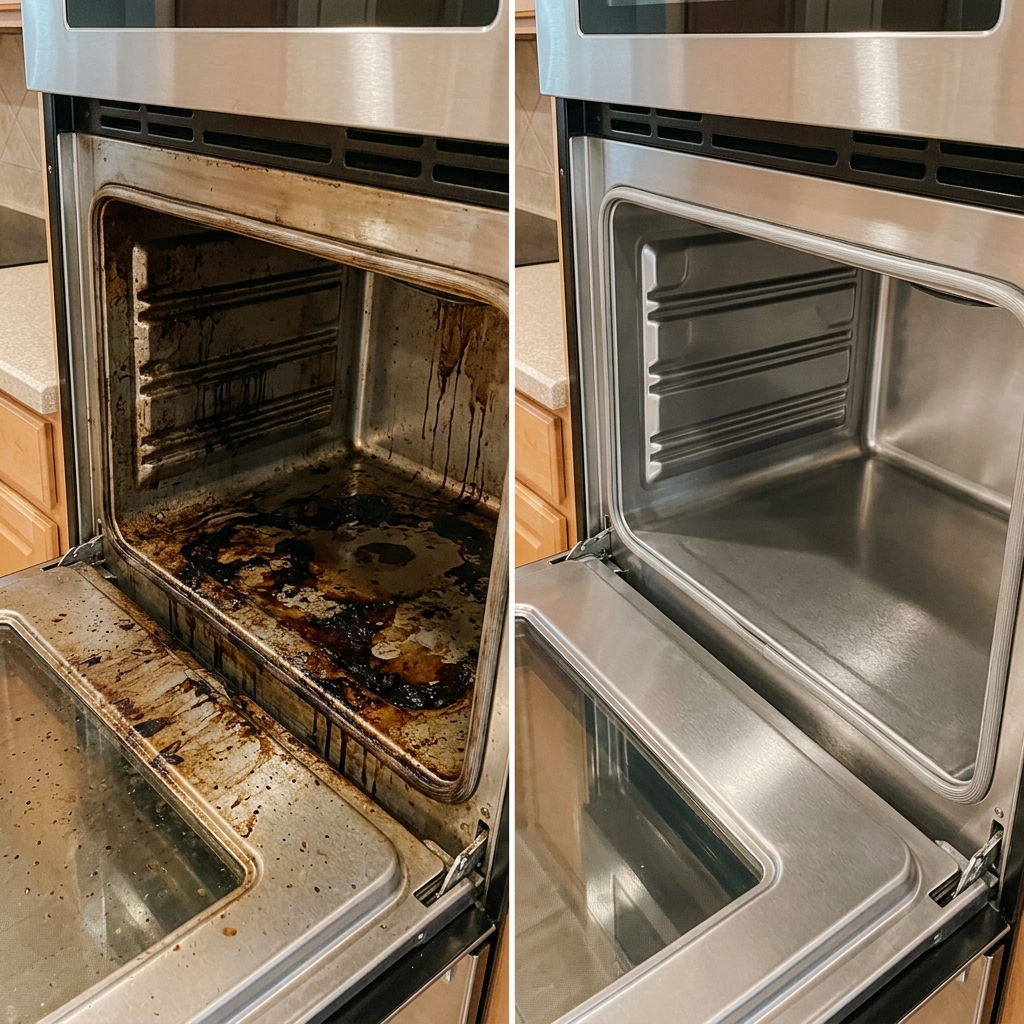
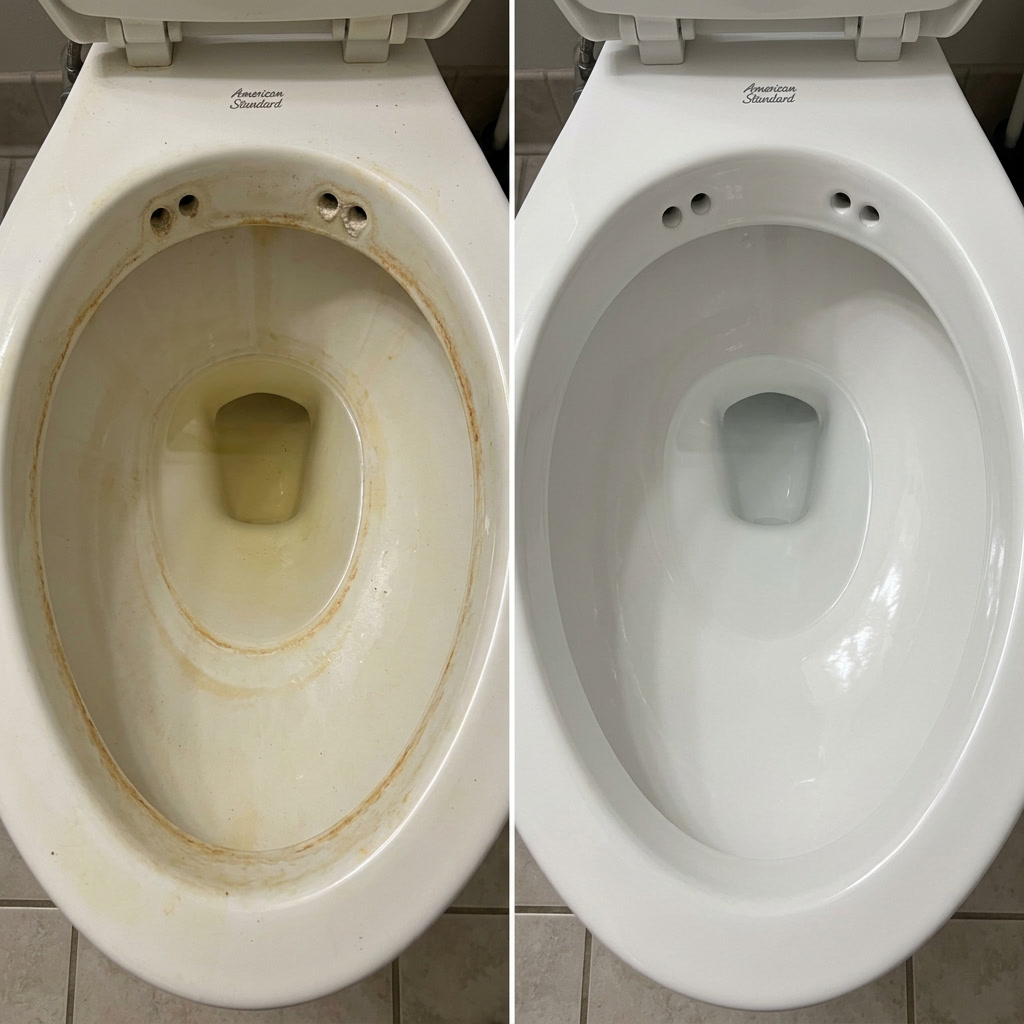
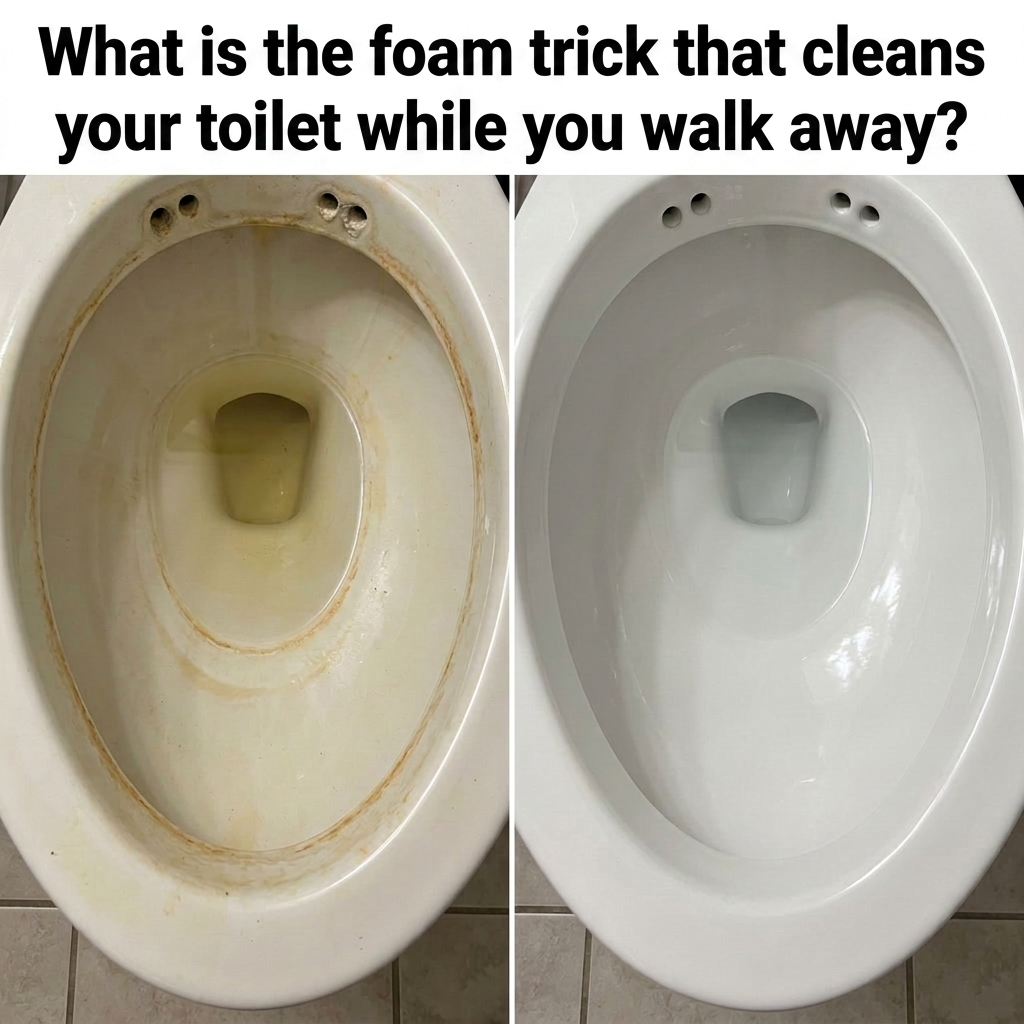
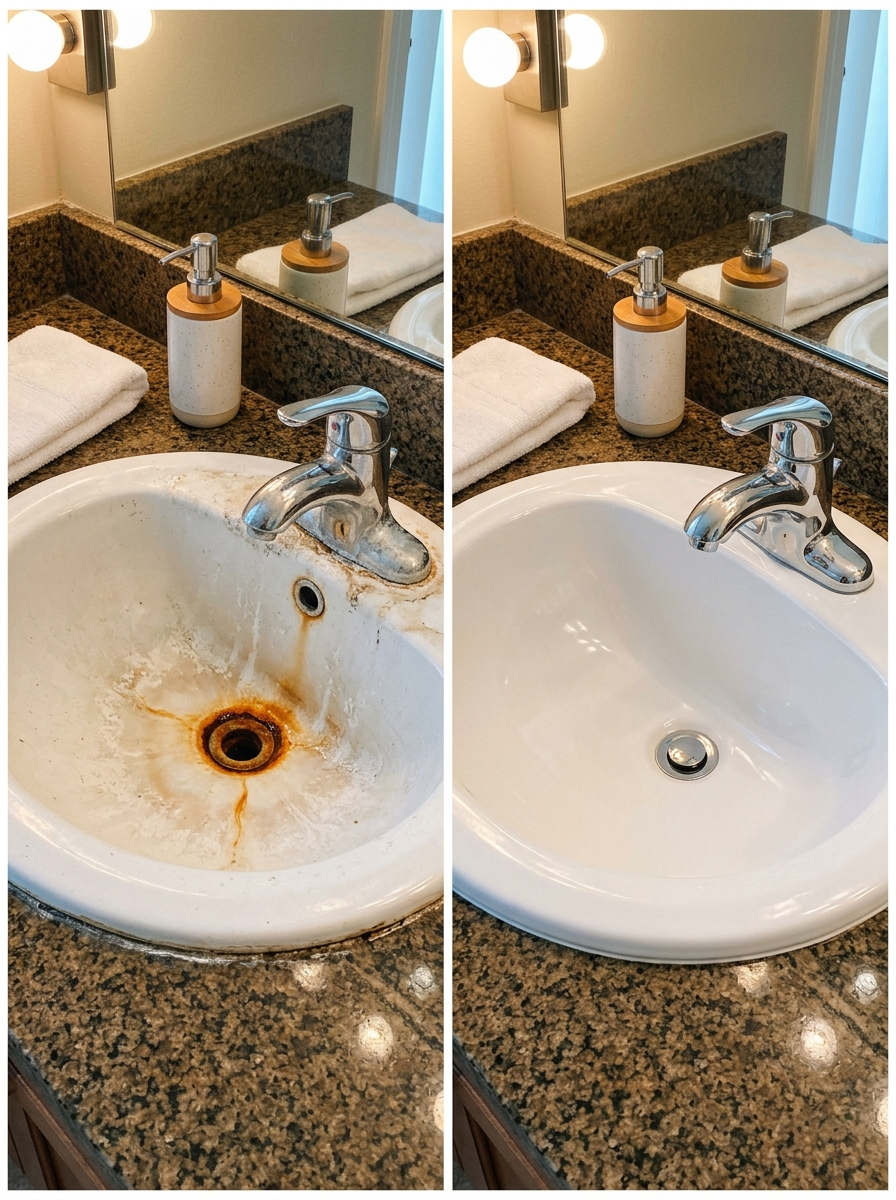
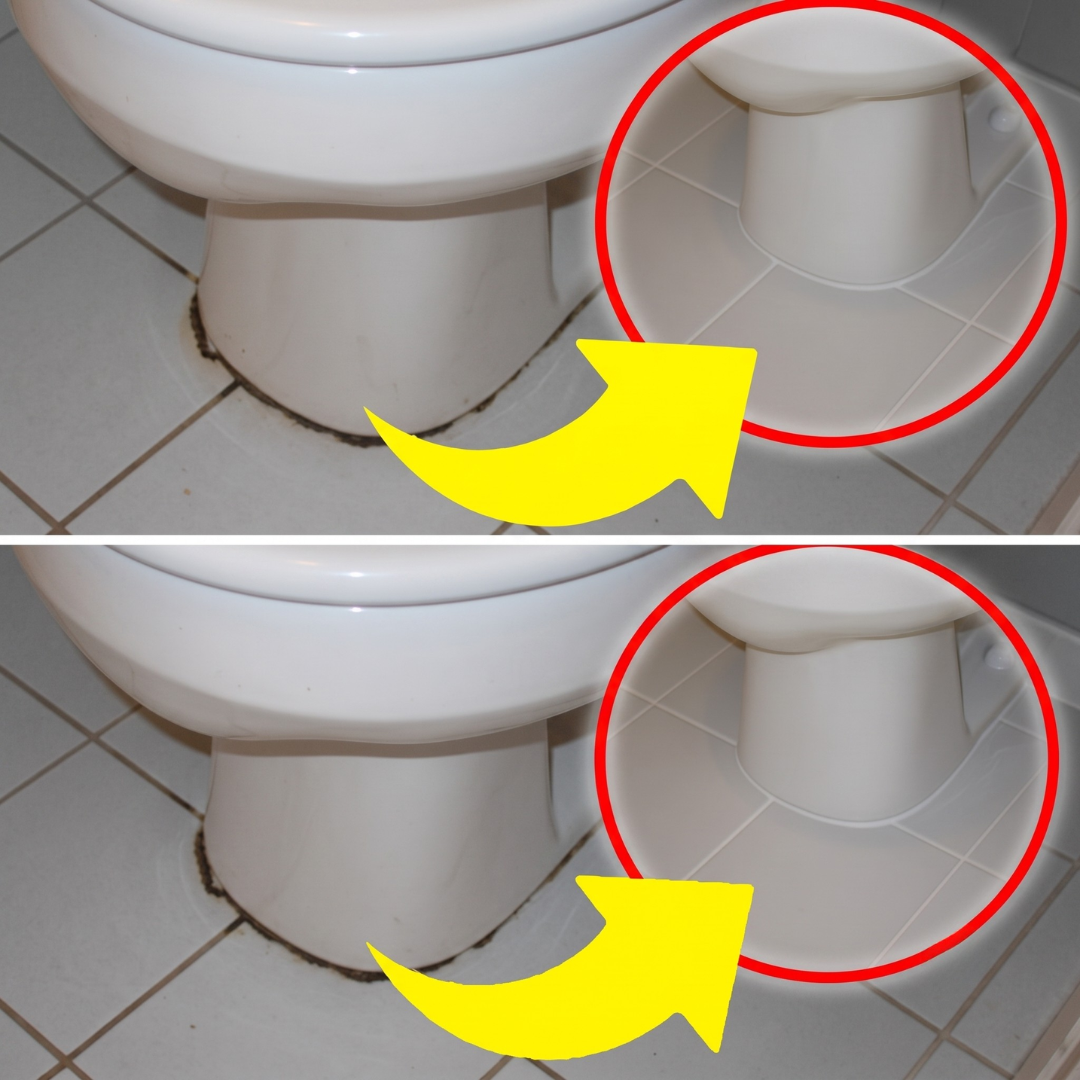
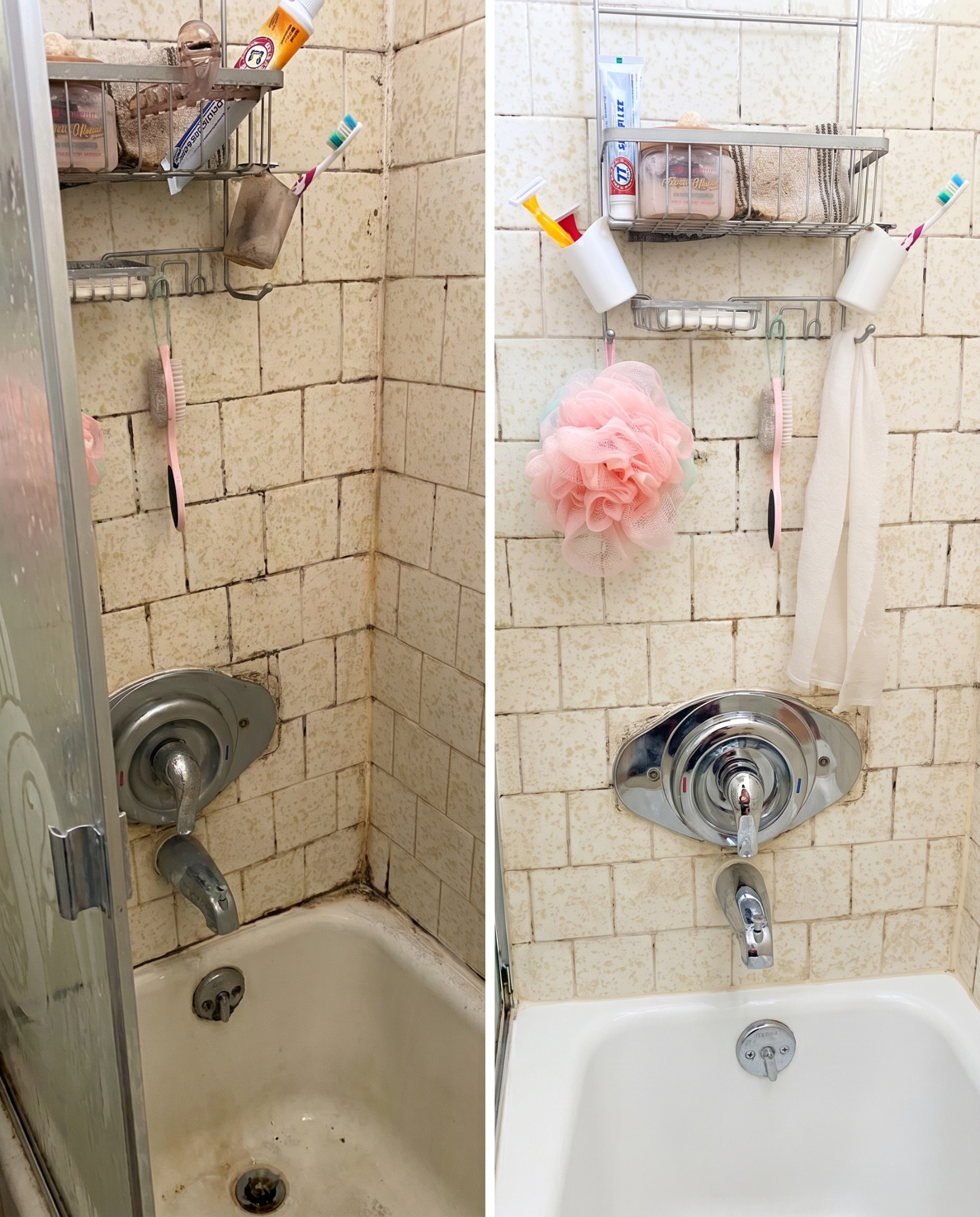
33 years old, master's degree, and my mother had been hiding her cleaning supplies from me for 11 years 😳 I want to start with what that sentence actually means before I tell you what I figured out. I am a working professional. I have a job with a 401k. I read books. I file my taxes on time. By every external metric of being a functional adult woman, I am one. I am also somebody who grew up in a house where the bathroom always looked like the picture above. Cream tile with black streaks in every grout line. Chrome fixtures the color of old nickels. A tub with a yellow ring around the drain that I genuinely believed, until I was about 22, was the natural color of the porcelain. I moved out at 19 thinking I would do better. I did, kind of. My living room is magazine-presentable. My kitchen has a marble cutting board and a single lemon on it for ambiance. My bookshelf is organized by color. I have spent the last decade carefully constructing the appearance of a woman who has her life together. The bathroom I have not fixed. I have spent the last 7 years dreading the moment my friends ask where my bathroom is. 😳 The dread starts about 90 minutes into any visit. Around the point when somebody finishes their second drink. I start mentally tracking their water intake. I start trying to remember if I rinsed the sink that morning. I think about whether I closed the shower door. I wonder if the bathmat is visible from the door. I calculate the angle from the doorway to the grout. Somebody asks where the bathroom is. I point. I say "down the hall on the left, sorry about the mess." I have said that exact sentence so many times that I have started to physically wince when it comes out. She comes back out 4 minutes later. She does not say anything. The conversation continues. I cannot tell if she noticed. I cannot stop thinking about it for the rest of the evening. I have lived like that for 7 years. I noticed it on a Sunday in March. I was at my mother's apartment helping her clean out a kitchen drawer she had been meaning to organize since 2019. She is 61. She raised me and my sister on a paralegal's salary in a two-bedroom apartment in the same neighborhood where she still lives. Her bathroom, when I was growing up, looked the same as mine looks now. Except when I walked into her bathroom that Sunday to wash my hands, it did not look like mine. 🤯 The tile was bright. The grout was uniform light gray. The chrome handle on her shower was polished silver. The mirror was streak-free in a way I had not seen on my own mirror in 4 years. I came back to the kitchen and asked her, half-jokingly, when she had redone her bathroom. She said she had not redone her bathroom. I asked her what she was using to clean it. She paused for too long. She said "the usual stuff." I knew her well enough to know what the pause meant. My mother is a person who answers questions directly. The pause was a tell. I asked her again. I told her I had been struggling with my bathroom for years and that if she had figured something out I genuinely wanted to know. She looked at me for a long moment. Then she walked into her bathroom and came back with a small unmarked spray bottle and a foil pouch with a tablet inside. She said, "I have been using this for 11 years. I never told you because I did not want to embarrass you." 😳 I want to walk you through what she explained, because the order of it matters. My mother grew up in a house where her mother cleaned other people's houses for a living. My grandmother, who I called Abuela and who died when I was 14, cleaned houses on the Upper West Side from 1971 until she retired in 2003. Houses with marble. Houses with antique brass. Houses with hand-painted Spanish tile in the entryways. My grandmother used to tell my mother that the products you buy at the grocery store are not the products professional cleaners use. The products at the grocery store are for women who think their houses are already clean and who want to keep them that way. The products professional cleaners use are for women whose houses cost more than the cleaner's annual salary, and who cannot afford a product that fails on a $40,000 piece of marble. Abuela had a rule, which my mother told me she learned from the older Dominican women who had trained her when she first started cleaning houses in the 1970s. You never tell the client what is in your bottle. If the client knew, the client would buy it themselves. The client would stop needing you. The product was what kept you employed. My mother said that when she started cleaning her own apartment as a young adult, she had used the regular products from the grocery store, the way she had been taught to do as a daughter. Tide. Pine-Sol. Comet. The pretty bottles. She used those products for 30 years. About 11 years ago, my Abuela's old friend Rosa, who had also cleaned houses on the Upper West Side and who was then in her 70s, came over to my mother's apartment for coffee. Rosa used the bathroom while she was there. When she came out, she sat down across from my mother and said, gently, "Mija, why are you cleaning your own bathroom with the products you bought your daughters?" My mother said she did not understand the question. Rosa explained. The products at the grocery store are for surfaces that are already clean. They are maintenance products. They do not undo years of accumulation. They were never designed to. If you want to clean a real bathroom, you use what we used. She told my mother about a category of cleaning product that the housekeepers in her network had been using for 40 years. A category that had been quietly kept alive among working women who cleaned wealthy people's homes, because nothing else worked on the surfaces those homes had. Marble. Travertine. Antique chrome. Hand-painted tile. The active ingredient was something called undecylenic acid, a fatty acid derived from castor oil. It had been the standard antimicrobial cleaning agent in American households before World War 2. After the war, the petroleum industry replaced it with synthetic detergents because synthetics could be patented and a natural fatty acid could not. The chemical companies put their advertising money into the synthetics. The original molecule quietly disappeared from supermarket shelves. 🫧 It survived in two places. Pharmacy textbooks, where it remained the medical-grade treatment for fungal infections. And the cleaning caddies of working women who had been taught by their mothers and grandmothers to use what actually worked. Rosa told my mother where to order it. My mother had been ordering it ever since. I asked my mother why she had not told me. She looked away for a moment. She said, "You have a master's degree. You have a job. You buy Mrs. Meyer's because you like the way it smells. I did not want to be the mother who told her grown daughter that her cleaning supplies were embarrassing." She said, "Also, the women in this network have been keeping this quiet for 80 years. I felt like I was telling a family secret. I wanted to be sure you would not roll your eyes at me." 😳 I did not roll my eyes. I asked her to give me a tablet. I tried it Wednesday night. Not because I had a plan. Because my friend was coming over Saturday for the first time in 4 months and I wanted to at least try. I dropped a tablet in warm water in a spray bottle. Watched it fizz for 30 seconds. Sprayed the chrome handle of my shower. Walked away for 4 minutes to fold a towel. Came back. Wiped with a microfiber cloth. The chrome came up. 🤯 Not "lifted slightly." Not "a little better." Came up. The handle underneath was bright polished silver. I had not seen that handle polished silver in 4 years. I sat down on the edge of the bathtub and just looked at it for probably 30 seconds. I did the tub spout. Same result. I did the trim ring. Same result. I tested the spray on the worst section of tile, the corner near the bathtub where the hard water staining had built up the most. The staining lifted. The cream tile underneath was almost glowing. I want to be honest with you about what happened next because the truth matters. I sprayed the grout. The grout is the part I want to be careful about. The tablets lightened the grout. The black mold on the surface came off and the grout went from "obviously moldy" to "looks like aging grout, not great but not horrifying." The deep mold inside the grout was still there. I could see it because I knew what I was looking at. This is the part most cleaning content will not tell you. Mold that lives inside porous grout cannot be fully removed by a surface spray. It can be lightened, the surface presentation can be improved, but the mold itself lives inside the grout like a colony. I called my mother. I told her what the grout looked like. She said, "Yes. The tablets do not fix deep grout. For deep grout you need to seal the grout after you clean it. I have been doing that every 18 months for 11 years. I forgot to tell you the sealing part." She told me what to buy. A $14 clear grout sealer from Home Depot. Hydrogen peroxide. Baking soda. A stiff brush. She walked me through what to do. Total time: 3 hours on Wednesday night plus an hour of dwell time. Total spend: the box of tablets my mother had given me, $14 for the grout sealer, $3 for peroxide, $6 for a brush. $42 of new products. For something I had been deferring for 4 years and that I had spent over $300 trying to fix with products from the regular shelf. My friend came over Saturday for the first time in 4 months. We had coffee. We caught up. About 90 minutes in, she asked where my bathroom was. I pointed. I did not say "sorry about the mess." I had practiced not saying it. I just pointed. She came back out 4 minutes later and she said, and I am quoting her exactly, "your bathroom looks really nice." 🫶 I almost cried at my own kitchen counter. She was not commenting on a renovation. She was not saying I had done a good job. She was making the kind of mild compliment people make about a bathroom they have used. The same kind of compliment she would have made about any normal person's normal bathroom. For 4 years I had been having a different kind of bathroom moment with everyone who visited my apartment. That Saturday was the first time I had a normal one. She used my bathroom 3 more times that day before she left. I want to tell you the thing that actually changed. It was not the product. The product was the unlock. The product was the tool I had been missing for 15 years. The thing that changed was that my mother had finally trusted me with the thing she had been keeping from me. She had been ordering it for 11 years and using it in her own bathroom and not telling me because she had been worried I would be embarrassed by the recommendation. She had grown up watching her own mother carry this knowledge as a working-class secret, and she had carried it the same way, and she had decided I was the kind of woman who would not want to hear it. She was wrong about that. But she was wrong for a reason that I understand. I have ordered 5 boxes since my mother gave me that first one. I keep one under the sink in my bathroom. I gave one to my sister, who is 28 and has been having the same private bathroom struggle without telling anyone. I gave one to my friend who has a 2 year old and a husband who never picks up after himself. I gave one to my college roommate, who I had not talked to in 3 years but whose bathroom I had used once and remembered. The brand name on the foil pouch is X-All. My mother orders hers from the company website directly. There is now a public site where anyone can buy it, which is apparently a relatively recent development. My grandmother's old friends in the network are not happy about the public site. The rule from 1971 is becoming harder to keep. If you are an adult woman who grew up in a household where nobody knew this, and if your living room is magazine-perfect and your bathroom is a private shame you have been hiding from your guests for years, I want to give you 3 honest things. One. You are not the only one. The professional cleaners who have been keeping this category alive for 80 years did not do it because they are clever or special. They did it because they could not afford a product that failed. The number of women like you, with good jobs and bad bathrooms, is much larger than you think. Two. The product is the unlock, not the fix. The unlock is one Saturday and $42. After the unlock, a 10 minute weekly wipe keeps the bathroom maintained, and you can stop tracking your friends' water intake forever. Three. If your mother is still alive and you have not asked her what she actually uses to clean her own bathroom, you should. There is a meaningful chance she has been keeping a secret from you for the same reasons my mother kept hers from me. 🫶 👉 X-All is 60% off for new customers right now and stock goes fast. Link is in the post. I gave my mother a box of imported coffee and a check for $200 the following weekend. I told her she should have charged me for the recommendation. She told me to put the check away. She said the rule from 1971 was that you did not charge family for what your grandmother taught you. 🫶
My mother hid this from me for 11 years!!!
Most people would agree that today’s housing market is nuts. Which meant, if we really wanted to buy a home, we had to consider homes we would normally pass on.
SEE DETAILSLike this ad? Make it yours.
Crush rebuilds this exact creative around your product — your brand, your colors, your offer — in about a minute.