
Inactive· since Jul 12, 2026
- 17
- days it ran
- 0
- relaunches
Ad copy
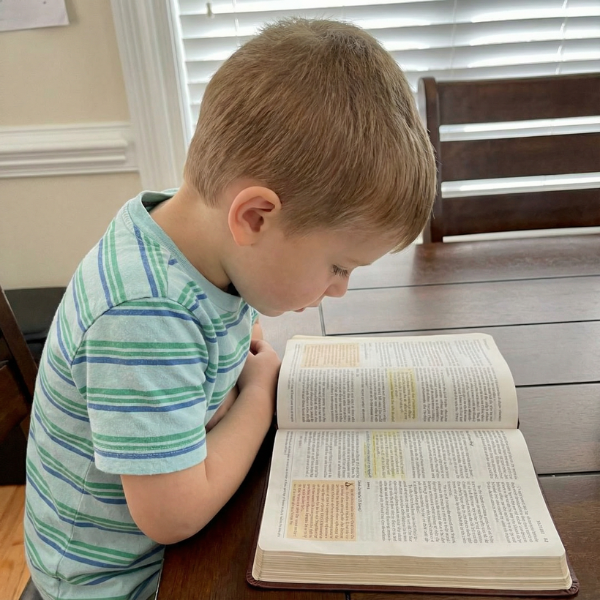
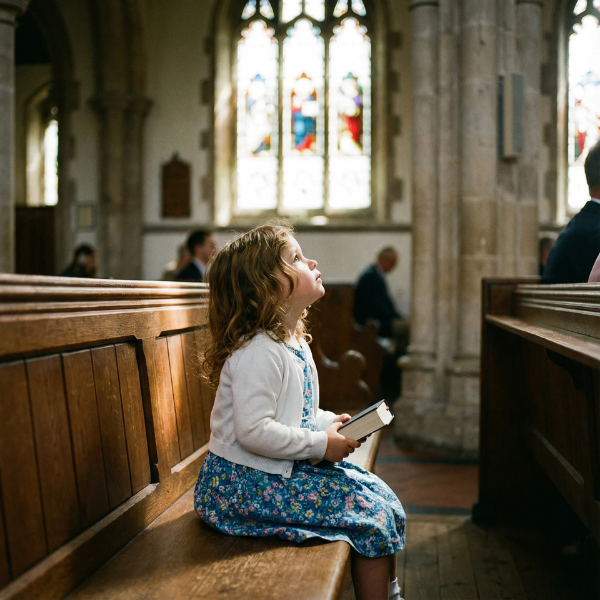
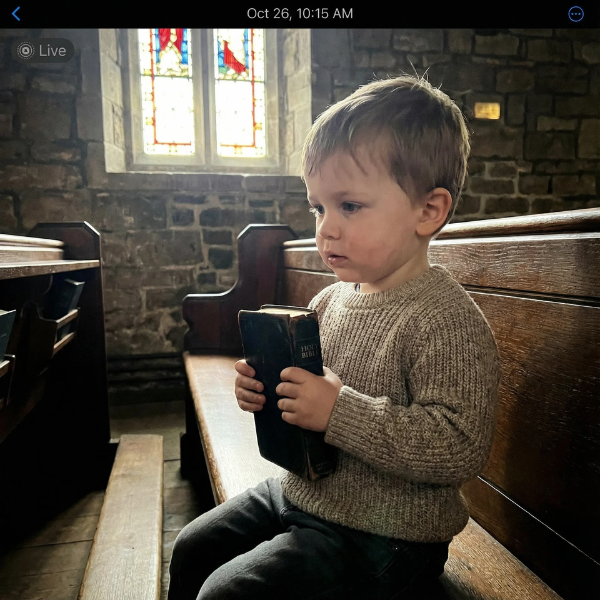
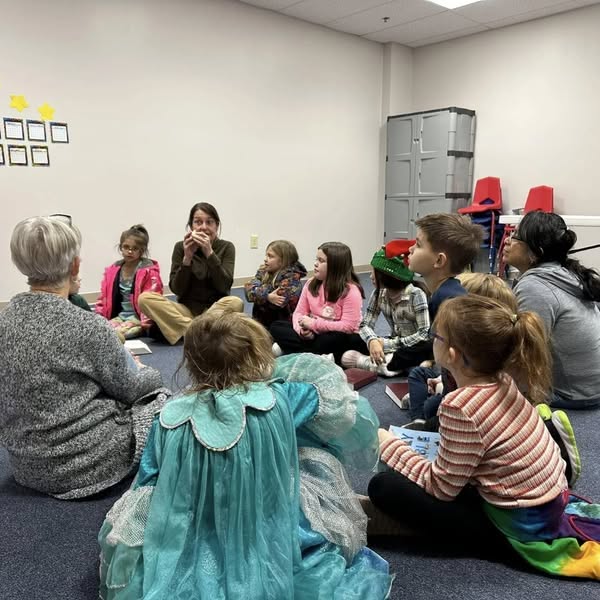
The Hendersons gave twenty-two years of their lives to the mission field — and last month, standing at the front of our church, Mrs. Henderson broke down and told us their own daughter no longer believes any of it. And I sat there in the third row looking at my 10-year-old, and it hit me like a truck: my son can pray out loud in front of the whole family, but he can't tell me why he believes a single thing he's praying to. Let me back up. It was Missions Sunday. The Hendersons were home on furlough. If you don't know them — they spent more than two decades overseas planting churches in places most of us couldn't find on a map. They gave up careers. Comfort. Being near family. They buried themselves in the Great Commission and never looked back. They were supposed to share testimonies from the field. Instead, about ten minutes in, Mrs. Henderson stopped. Set down her notes. And you could see her deciding whether to say it. "I need to be honest with you all," she said. "Because I'd rather you learn from us than repeat us." The sanctuary went completely still. Their daughter. Grace. Raised on the mission field. Fluent in two languages by twelve. Grew up watching her parents lead people to Christ with their own eyes. Prayed with more conviction at ten than most adults ever manage. "She saw the faith lived out every single day of her childhood," Mrs. Henderson said. "There was never any hypocrisy for her to point at. We did everything right." Grace came back to the States for college. And within two years, she was done. Mrs. Henderson told us the conversation. Grace said, "Mom, I watched you believe it my whole life. I just never learned how to believe it for myself. The second someone gave me a real reason to doubt, I realized I'd never had a real reason to believe. I only had yours." I watched a woman who gave her entire life to spreading the Gospel stand up in front of a hundred people and admit her own daughter walked away — not because of sin, not because of some wound, but because nobody had ever taught her why it was true. She'd inherited the faith. She'd never owned it. And here's the thought that grabbed me by the throat and wouldn't let go. If a missionary's kid — a kid raised inside the mission itself — could walk away... what possible chance did mine have, growing up in the suburbs with a phone in his hand? I couldn't shake it. So that night, around 9:30, I tried something. My son Micah was building something out of Legos on the living room floor. I sat down next to him. "Hey bud. Let me ask you something. Why do you believe the Bible is true?" He didn't even look up. "Because it's God's Word." "Right. But how do you know it's God's Word?" "Because it says so in the Bible?" "Okay — but how do you know THAT part's true?" He looked up now. Paused. "Because... you and Mom believe it?" My stomach dropped. I nudged a little further. "Say a friend told you the Bible was just made up by people forever ago. What would you tell him?" Long silence. His ears went red. "I'd just... tell him he's wrong, I guess?" That was it. The whole defense. "I'd just tell him he's wrong." I told him he did awesome, because I didn't want to put fear in him. But inside I was spinning. This is a boy who's been in AWANA since kindergarten. He's got more verses memorized than I do. He can rattle off the Christmas story and the Easter story without missing a beat. And he just defended his entire faith with circular reasoning. The Bible's true because the Bible says so. That's the whole argument. A smart college kid would dismantle it over lunch. Then it hit me. Neither could I. I'm thirty-nine years old. Raised in the church. And if Micah had flipped it back on me — "okay Dad, YOU tell me why it's true" — I'm not confident I'd have gotten past "because I have faith." We were raising kids who could talk about God fluently but couldn't defend the first thing about Him. And we never caught it, because talking about God LOOKS exactly like knowing Him. I mentioned it that week at men's small group. I braced myself to get laughed off. Nobody laughed. Steve went home and tried it on his twins. Both of them. Same answers. Ray's oldest — fifteen, leads worship for the youth group — couldn't get past "I just feel it." Four of us. Four kids who aced every Bible study. Four kids who got baptized. Four kids who couldn't explain why they believed one word of it. We weren't discipling the next generation. We were handing them a faith with no floor under it and hoping they never had to stand on it. I fell down a hole after that. 12:40 AM on a Wednesday, I was reading everything I could find about young people leaving the church. And the pattern is brutal. Most of them don't leave angry. They leave quietly, the first time faith runs into a wall it can't answer — and nobody ever built them a foundation that could take the hit. 2:10 AM, I did something I probably shouldn't have. I found Grace's account. The Hendersons' daughter. I just needed to see it for myself. Scroll back a few years: verses. Photos from the field. "So grateful for this life." Then it slowly goes silent on faith. Fades out. And a few months ago: "Spent my whole life surrounded by belief. Turns out I could describe it perfectly and never once defend it. That gap is where I fell through." I closed the laptop and just sat there. Because that wasn't somebody else's daughter anymore. That was a preview. That was Micah in eight years if I didn't move now. And it's not like there's an easy fix out there. I looked. It's all dense apologetics books written for adults with seminary degrees, or picture books that stop at "God loves you." Nothing that takes a normal kid and actually teaches him to think it through. Then that Saturday, something happened I keep replaying. I took Micah to a homeschool co-op event across town — my sister's kids go, and she'd invited us. While the kids ran around, I ended up next to a dad watching his son, maybe fourteen, get grilled by an older teenager about whether the resurrection actually happened. And the younger kid was handling it. Calmly. Something about how the earliest sources are dated close to the events, how you'd need the eyewitnesses to all stay silent for a legend to take hold, and they didn't. He wasn't nervous. He was almost enjoying it. The older kid gave up. The dad next to me chuckled. I leaned over. "Sorry — how does he know all that? He's what, fourteen?" "Yeah," the dad said. "And it's not me, trust me. We've been working through the Systematic Theology Workbook for Kids by Valorrea. One lesson a week. He's ahead of me now." The kid overheard and grinned. "I just like knowing WHY things are true. It's like solving puzzles." Knowing why. That was the exact thing Micah couldn't do. The exact thing Grace never learned, standing right in the middle of the mission field. The exact thing quietly emptying out a whole generation of church kids. And this kid treated it like a hobby. I put the name in my phone before I left the parking lot. We started that week. Lesson 1, Micah eyed it like a chore. "Is this school or church?" By the end he was asking me things I couldn't answer — which, it turns out, is the entire point. Week 2, he came downstairs and said, "Dad, did you know there's actual evidence people think the resurrection really happened? Like history evidence?" Genuinely excited. I'd never seen faith excite him before. Week 5, he came to me frustrated. Really stuck. "Dad, I don't get it — if God can do anything, why doesn't He just stop all the bad stuff?" And I realized: he was wrestling. Not just accepting. Not memorizing for a sticker. Actually working through the hardest questions there are — the ones that pick kids off one by one when they leave home. That's when I knew. Not because he had every answer. Because he'd finally started demanding that real answers exist. Week 8, Micah started debating me at dinner. Respectfully — but with reasons. My wife stared at him like a stranger had sat down at our table. Then came the afternoon with our neighbor Karen. Karen's lovely and doesn't believe any of it — grew up in church, walked away decades ago, and gently pokes at us over the fence about it. I usually just smile and change the subject, because I never had anything solid to say back. She made some comment about how the Bible's just old stories people rewrote over the centuries to control folks. Before I could redirect, Micah — ten years old — piped up. "Actually the earliest copies are dated really close to when the events happened. If people changed the stories later, the ones who were there would've said something. So it's kind of hard for that to be true." Karen looked at him, then at me. "Huh. Where's a ten-year-old learn that?" I just smiled. But here's what matters most to me. I was scared this would turn faith into a subject. All head, no heart. That Micah would get good at arguing about God and quietly stop actually loving Him. The opposite happened. Micah prays differently now. He talks to God like He's genuinely there — not out of habit, but out of knowing. Because now he doesn't just believe God is real. He knows why he believes it. Head and heart, finally moving together instead of pulling apart. Head and heart. Together. And it spread. His buddy Dylan started tagging along on workbook nights — Dylan's family doesn't go to church at all. He keeps coming back. And my father-in-law — seventy-four, deacon for forty years — thumbed through Micah's workbook over the holidays, got quiet, and finally admitted, "You know, I don't think anybody ever taught me this part either. Where do I get one?" That's when it fully hit me. This was never just a kids' thing. It's the thing most of us never got handed ourselves. I keep seeing Mrs. Henderson at the front of that church. Twenty-two years on the mission field. Watching her own daughter walk away — because she showed her the faith lived out but never taught her why it was true. I don't want to be her. And I don't think you do either. Because our kids are going to hit that question. Maybe from a professor. Maybe from a friend. Maybe from a video at midnight. Not if — when. And when it comes, "I'd just tell them they're wrong" won't survive it. A house built on sand looks identical to a house built on rock — right up until the storm proves which is which. One sharp question. One confident skeptic. One 2 AM doubt. That's all it takes if there's nothing underneath. Every week we wait is another week our kids get better at circular reasoning. Another week nearer to the moment somebody asks them why — and all they've got is "because my parents did." Micah has his own reasons now. And it started with one lesson on the living room floor. Don't let yours become another Grace. The workbook that changed everything for us — the Bible Study Workbook for Kids by Valorrea — is still available.
If you have a child read this..☝️
This is about a fundamental flaw in how we teach faith to children. A flaw that starts destroying their belief when they're just 8 years old.
SEE DETAILSLike this ad? Make it yours.
Crush rebuilds this exact creative around your product — your brand, your colors, your offer — in about a minute.