Mark Callahan
Mark Callahan Facebook ad: “Take back control of your blood sugar naturally”
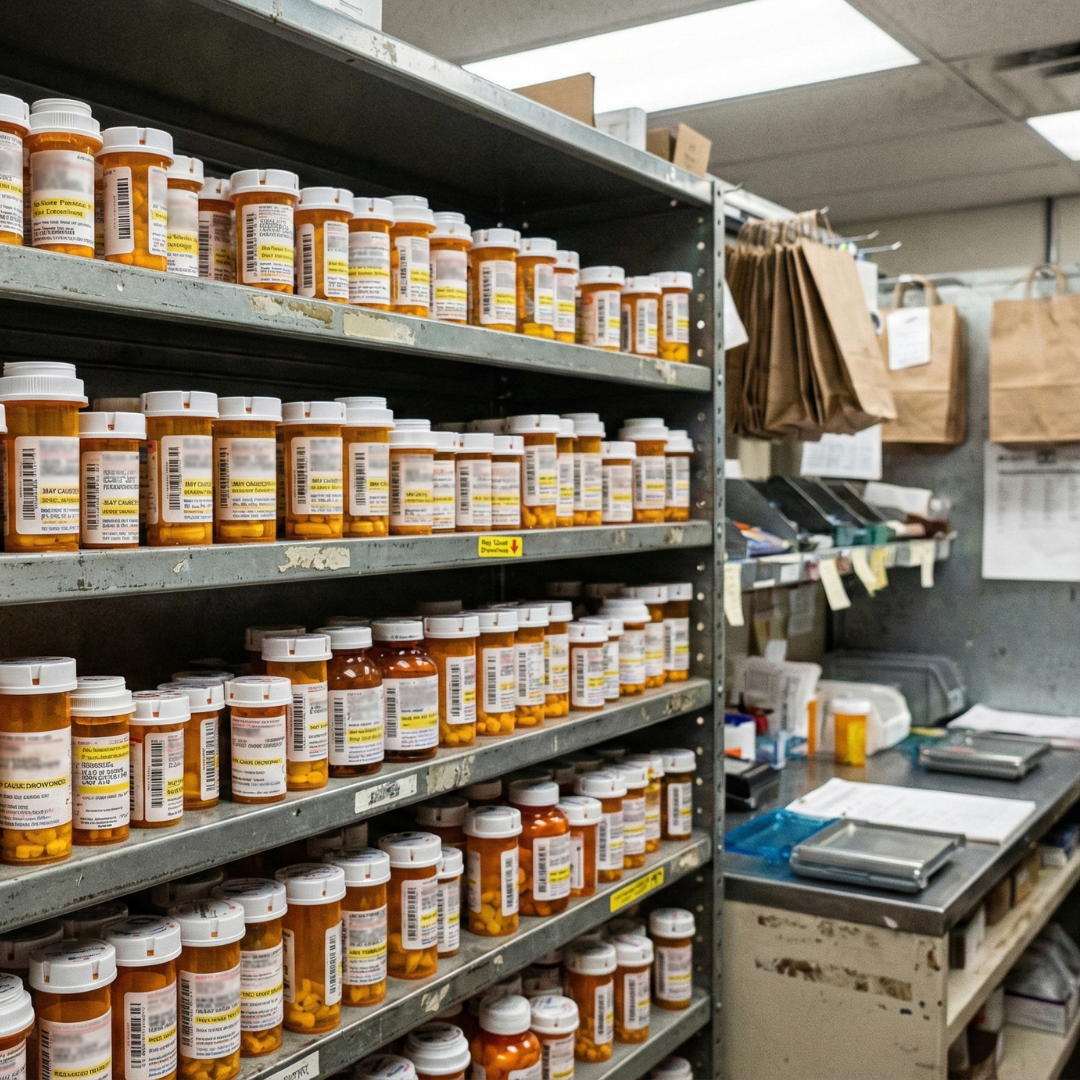
Ran for 30 days, from February 16 to March 18, 2026, the last day Crush saw it.
Run by Mark Callahan on Facebook. Crush is not the advertiser and does not verify its claims. See this ad in Meta's Ad Library(opens in a new tab)
Want an ad like this for your product?
Crush makes new ad images for your product from this ad: your logo, your product photo, your offer.
Trials from $19.95 USD, then $79.95 USD a month. Cancel anytime.
About this ad
- Meta Ad Library ID
- 883976021138701
- Platforms
- Facebook, Instagram, Audience Network, Messenger and Threads
- Relaunches
- 0
Ad text
My A1C Was 6.3. My Doctor Said Metformin in Six Months. Four Months Later, It's 5.6. I Never Filled the Prescription. I've been a pharmacist for 28 years. I've filled thousands of Metformin prescriptions. Thousands. Watched the bottles go out the door every single day. "First line treatment for Type 2 diabetes," the guidelines say. I've also watched what happens to the people who come back. The stomach problems that never fully go away. Nausea every morning. Diarrhea that comes without warning. I've had patients whisper to me at the counter, embarrassed, asking if it ever gets better. Most of the time, I have to tell them their body "should adjust." Knowing full well that for many, it never does. The fatigue. Patients who were sharp, active, present — now dragging themselves through the door looking ten years older. Picking up their refill and a coffee, trying to get through another day. The neuropathy that creeps in anyway. Even with "controlled" A1C. Tingling that becomes numbness. Numbness that becomes falls. Falls that become fractures. And I'm the one handing them yet another prescription — now for nerve pain on top of the diabetes medication. The vitamin B12 depletion that nobody warns them about. Metformin blocks B12 absorption. So now they're tired, foggy, and their doctor adds another pill. Then another. I've watched patients go from one medication to four in three years. Then six. Then a plastic organizer, Sunday through Saturday. So when my own blood work came back — A1C 6.3, fasting glucose 118 — and my doctor said "prediabetic, six months to bring it down or we start Metformin," I smiled politely and said I'd work on lifestyle changes. But I already knew I wasn't going to take it. I'd seen too much from the other side of the counter. I wasn't going down that road. So I researched alternatives. Everything pointed to Ceylon cinnamon. Polyphenols that mimic insulin. Improved cellular glucose uptake. Slowed carbohydrate breakdown. Studies from the USDA showing cinnamon compounds increased glucose metabolism 20-fold. A 2019 UCLA clinical trial — specifically on prediabetics — showing significant improvements in fasting glucose and glucose tolerance. Real science. Real universities. Not fringe supplement hype. This was my way out. My alternative to the medication I refused to take. I ordered a Ceylon cinnamon supplement. Top-rated on Amazon. 1200mg. Took it every day for six weeks. Fasting glucose: 114. Down from 118. Four points. Switched brands. Nature's Bounty, 2000mg plus Chromium. Six more weeks. Didn't miss a single dose. Fasting glucose: 110. Better. But still prediabetic. Still in the danger zone. My follow-up was in seven weeks. If my numbers weren't below the threshold, I knew exactly what was coming. The prescription. The pharmacy. Me on the other side of the counter, filling my own Metformin. I almost gave up. Almost concluded that cinnamon just wasn't enough. That maybe I was foolish to think I could reverse this without medication. That maybe I should just accept it. But after 28 years as a pharmacist, I know something about treatments that don't deliver. Usually, it's not that the compound doesn't work. It's that something about the formulation, the dose, or the delivery is wrong. So instead of giving up on cinnamon, I started asking a different question. Not "does cinnamon work?" The research already answered that. But "why isn't THIS cinnamon working?" What I found made me furious. Most cinnamon supplements are dry powder in a capsule. Ground cinnamon bark, packed into a gelatin shell. Your body absorbs maybe 15-20% of the active compounds. The rest passes through your digestive tract untouched. But that's not even the real problem. Cinnamon's most important compounds — the polyphenols that improve insulin sensitivity — are fat-soluble. They require a lipid carrier to cross cell membranes and enter cells. A dry powder capsule contains no fat. Zero. So the active compounds that are supposed to help your cells absorb glucose? They're floating in your digestive system with no vehicle to deliver them where they need to go. You're taking what you think is a therapeutic dose. But your cells are receiving a fraction. Maybe 15%. Maybe less. And it gets worse. Half the brands on the market use Cassia cinnamon — not Ceylon. Cassia contains high levels of coumarin, a compound that causes liver damage with daily long-term use. The very thing you're taking to avoid medication is quietly damaging your liver. But here's what really made my blood boil. They don't have to tell you. The label just says "cinnamon." No species disclosed. No absorption data. No indication of whether you're getting Ceylon or liver-toxic Cassia. So you're buying a supplement. Taking it faithfully. Watching your fasting glucose barely move. Watching your follow-up appointment get closer. Feeling the Metformin becoming inevitable. Blaming yourself. Concluding cinnamon "doesn't work." When really, you've been taking capsules that never had a chance of working because the active compounds couldn't reach your cells. I'd spent three months on supplements that were fundamentally flawed. Three months closer to the prescription I was desperate to avoid. But I also felt something I hadn't felt in weeks. Hope. Because if the problem wasn't cinnamon — if the problem was formulation and delivery — then maybe there was a version that actually worked. Maybe I wasn't out of options. I started researching which brands used True Ceylon cinnamon. Which ones provided a lipid carrier for absorption. Which ones dosed at levels that could actually move the needle. Which ones published their testing. One name kept appearing. In forums. In reviews. In recommendations from people who'd actually seen their numbers reverse. Primal Remedies. True Ceylon Cinnamon from Sri Lanka. Not Cassia. Negligible coumarin — safe for daily long-term use. 7,200mg equivalent per serving. Not 500mg. Not 1200mg. 7,200. And the critical difference: every softgel infused with organic MCT oil. Medium-chain triglycerides from coconut — a lipid carrier that shuttles the fat-soluble cinnamon compounds directly across cell membranes and into cells. The delivery system that every other cinnamon supplement is missing. Third-party tested. No fillers. No garbage. You could verify exactly what was in it. I ordered it. My follow-up was five weeks away. This was my last chance before the prescription pad came out. The bottle arrived on a Wednesday. I took the first dose that morning. Three softgels. Expected nothing. Three months of disappointment had killed my optimism. But that afternoon, something was different. The 3 PM crash didn't come. I worked until 5:30 and still felt sharp. Not wired. Not caffeinated. Just... clear. I checked my fasting glucose the next morning. 108. Could be a fluctuation. Don't get excited yet. But I kept taking it. And I kept checking. One week: 104. Then 101. Then 99. Under 100. For the first time since the diagnosis. Two weeks: Consistently mid-to-high 90s. I checked three mornings in a row. 97. 95. 98. Post-meal spikes — the ones I'd been tracking obsessively — were flattening. Where a sandwich used to spike me to 175, I was seeing 140. Then 135. Three weeks: Fasting glucose 94. The afternoon crash was gone. Energy stable all day. Four weeks: 92. Consistently. The same compound. The same mechanism. The same science. But this time, actually delivered in a form my cells could absorb. I went to my follow-up. Blood drawn. Results back the next day. A1C: 5.6. My doctor pulled up my chart. Looked at my history. Looked at the new number. Looked at me. "What changed?" I told her. The fat-soluble compounds. The MCT oil delivery. The difference between dead powder and cinnamon that actually reaches cells. She typed notes. Nodding. "These numbers are excellent. A1C 5.6, fasting glucose 93. You're no longer in the prediabetic range." She closed her laptop. "No need to discuss Metformin." No prescription. No nausea. No B12 depletion. No neuropathy. No plastic organizer. Just "keep doing what you're doing." That was four months ago. My fasting glucose this morning: 91. I check it every week now. Not out of anxiety. Out of confirmation. The numbers stay consistent. No medication. No side effects. No becoming the patients I've served for 28 years. Here's what I want you to understand. If you've tried cinnamon and it didn't work, it probably wasn't you. It probably wasn't that your body is different, or that cinnamon is overhyped, or that natural solutions can't compete with Metformin. It was probably that you were taking dry powder with no absorption system. Cassia instead of Ceylon. A fraction of the dose your cells actually needed. You were doing everything right. You just had the wrong product. And every month you spent on dead powder was another month closer to the medication you're trying to avoid. The science on Ceylon cinnamon is real. The mechanism is proven. Polyphenols mimic insulin. Cells open up. Glucose enters. Blood sugar drops. But only if the compounds reach your cells. And only if the dose is high enough to matter. Primal Remedies is the only brand I've found that gets both right. True Ceylon. 7,200mg. MCT oil delivery. Third-party verified. No dead powder. No Cassia. No mystery about what you're actually taking. If you've tried cinnamon before and given up — if you're running out of time before your doctor prescribes Metformin — try the version that's actually formulated correctly. You might be surprised what happens when your cells get the real thing. 👉 https://primal-remedies.com/pages/adv1-news-cinnamon — Mark Callahan, RPh P.S. — You'll know within days if it's working. The first sign is the post-meal spikes flattening — if you have a glucose meter or CGM, check after meals. Then fasting glucose drops over 2-3 weeks. If you've taken other cinnamon supplements and seen nothing, that's because the compounds never reached your cells. This is different. P.P.S. — Primal Remedies has a money-back guarantee. If your numbers don't improve, you get your money back. I wish I'd found this before wasting three months on supplements that were never going to work — three months I spent getting closer to a prescription I didn't want. P.P.P.S. — They're a small company and they've been selling out. If you have a follow-up appointment coming and you're trying to get your numbers down before it, check if they have stock now rather than waiting. The link is below. 👉 Check if Primal Remedies is in stock here: https://primal-remedies.com/pages/adv1-news-cinnamon
Where the ad sends people
primal-remedies.com
Take back control of your blood sugar naturally
Primal Remedies
Learn more: primal-remedies.com(opens in a new tab)