Amanda Grace
Amanda Grace Facebook ad: “Reactivate your body.”
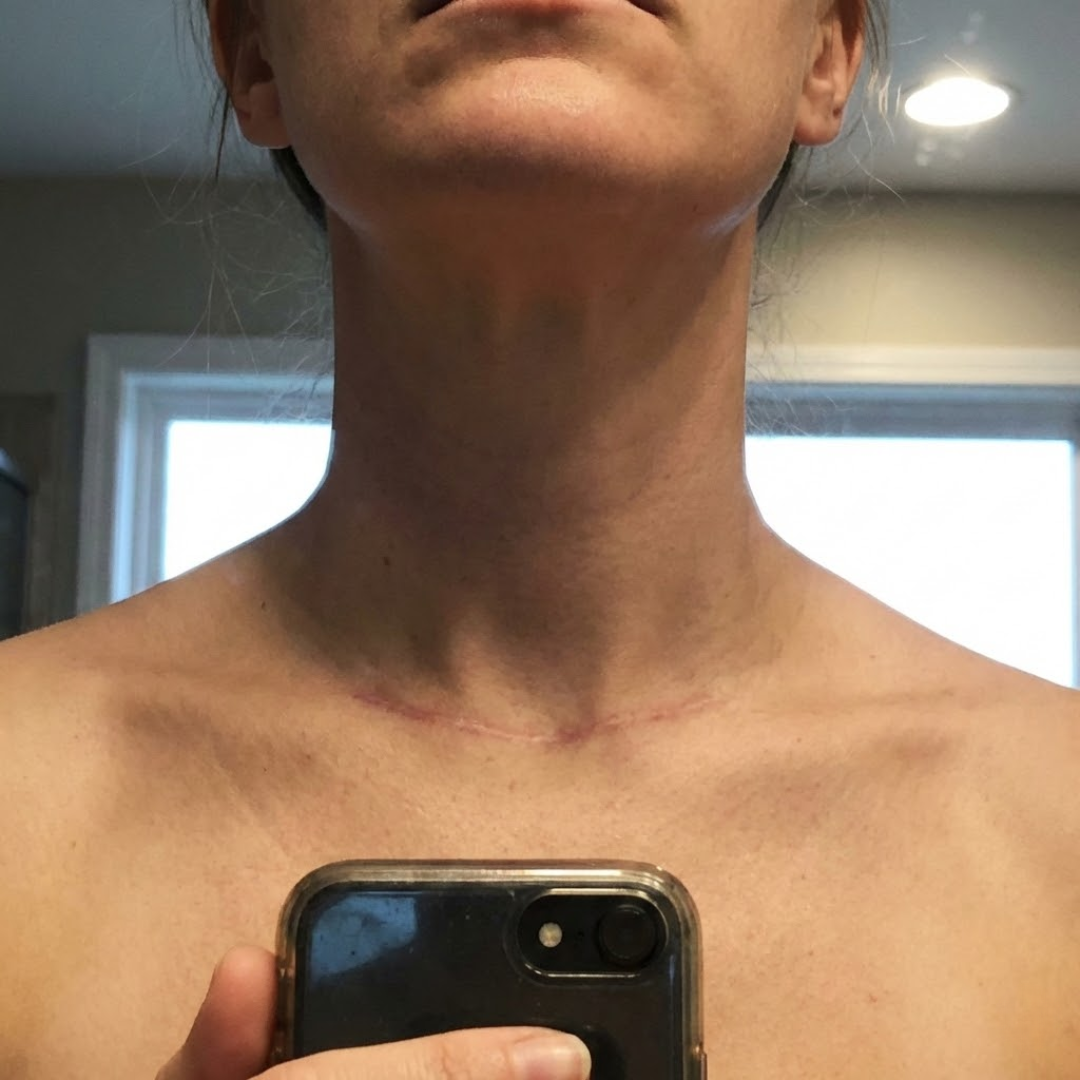
Ran for 11 days, from March 18 to March 29, 2026, the last day Crush saw it.
Run by Amanda Grace on Facebook. Crush is not the advertiser and does not verify its claims. See this ad in Meta's Ad Library(opens in a new tab)
Want an ad like this for your product?
Crush makes new ad images for your product from this ad: your logo, your product photo, your offer.
Trials from $19.95 USD, then $79.95 USD a month. Cancel anytime.
About this ad
- Meta Ad Library ID
- 902672352402562
- Platforms
- Facebook, Instagram and Messenger
- Relaunches
- 0
Ad text
Okay so I had my thyroid removed 3 years ago and I just found out something that kind of blew my mind… …It's about why I've been exhausted this whole time even though my labs are "normal" and my dose is supposedly "optimized." Turns out there's a system in my body that was DAMAGED during surgery... and NOBODY told me it needed to be fixed. And if this system isn't working properly... you could be taking your medication every single day and your cells might only be receiving a fraction of it. I'm going to explain everything but first let me back up. ======== My thyroid was removed 3 years ago. Nodules. They were growing. Doctor said it was safer to take it out. The surgery went well. Recovery was slow but manageable. I started levo a few weeks later. And then I waited to feel normal again. I'm still waiting. For 3 years I've been living in this strange in-between. Not sick enough for anyone to take seriously. Not well enough to live my actual life. My labs come back "normal." My endo says I'm "optimized." But I can't stand for more than a few minutes without needing to sit down. The fatigue isn't tired. It's... hollow. Like my body forgot how to make energy. If you've had a thyroidectomy... you know exactly what I mean. We don't have a thyroid that's "sluggish" or "underperforming." We have NO thyroid. 100% dependent on a little pill to do what an entire organ used to do. And when that pill doesn't seem to work... There's this helpless feeling. Like... this is just my life now?? I saw 4 different doctors over those 3 years. One adjusted my dose. One suggested antidepressants. One switched me to Tirosint. One put me on selenium and zinc for 4 months. Nothing worked… After that... I kind of gave up. Figured this was just what life without a thyroid looked like. Until... ======== Then three months ago my sister sent me an article. Some women's health site. Written by a doctor who specializes in post-thyroidectomy patients. I almost didn't read it. I was so tired of getting my hopes up. So tired of trying something new and feeling the same disappointment. But my sister kept texting me. "Just read it please." So I did. The doctor started explaining and within 60 seconds I felt my chest tighten. She wrote... "If you've had a thyroidectomy and you're on levo but you still feel exhausted... there's something you need to understand that most endocrinologists never explain." I leaned closer to my screen. "Your levothyroxine puts T4 into your bloodstream every morning. Your labs measure what's in the blood. It looks fine. But that T4 has to travel from your blood through the tissue in your neck to reach the cells that actually use it." Okay. I'd heard about T4 and T3 before. Sort of. But then she said something that made me stop reading and sit up straight. "During thyroidectomy, the surgeon cut through the cervical fascia — the tissue surrounding your thyroid. And that tissue contains one of the densest lymphatic drainage networks of any organ in your body." "That drainage system is the pathway your medication uses to reach your cells. And your surgery damaged it." I re-read that three times. Your surgery damaged the pathway your medication needs. In 3 years and 4 doctors... no one had ever said that to me. She explained it with a diagram. "When you had a thyroid, it sat inside this drainage network naturally. Lymphatic vessels surrounded it from every angle. They kept the tissue clear, moved fluid, flushed waste, and let hormones travel smoothly from blood to cells." "But thyroidectomy doesn't just remove the gland. It cuts through the cervical fascia. It disrupts blood supply. And it damages the lymphatic vessels embedded in that tissue." "After surgery, scar tissue forms. Fibrosis develops along the surgical site. And that fibrosis physically compresses and seals the lymphatic drainage channels that your medication depends on." She cited a study from the journal In Vivo that found surgical dissection of the thyroid area directly hampers lymphatic drainage, resulting in lymphatic stagnation in the tissue. "So now you have THREE things blocking that pathway. First — the pre-existing inflammation from whatever caused your thyroid problems in the first place. Nodules, Graves', Hashimoto's — all of these involve chronic inflammation that was already congesting the drainage before surgery. Second — the surgical trauma itself. Cutting through tissue triggers an inflammatory healing response. Immune debris accumulates. Fibrin deposits form. Third — the scar tissue. Post-surgical fibrosis physically compresses and seals the drainage channels. This isn't temporary. Without intervention, it becomes permanent." "Triple blockage. Pre-existing inflammation. Surgical damage. Scar tissue." "So the T4 from your levothyroxine enters your bloodstream every morning. Reaches the cervical tissue. And hits a wall of congestion and fibrosis that was created by the very surgery that removed your thyroid." "Your labs look perfect because the hormone IS in your blood." "But your cells are starving because it can't get through." I sat there staring at my screen. THIS explained everything. Why I still felt terrible. Why my labs looked "fine." Why nothing was working. The medication was there. My cells just couldn't RECEIVE it. And here's why it matters so much for those of us without a thyroid. She explained that every cell in your body has tiny power plants called mitochondria. And T3 — the active form of thyroid hormone — is what controls how much energy those mitochondria produce. T3 is literally the on/off switch for your cellular power plants. When you had a thyroid, it produced both T4 AND some T3 directly. It adjusted your levels throughout the day based on what your body needed. After thyroidectomy? You get T4 from a pill. That's it. Your ENTIRE T3 supply now depends on T4 reaching the tissue where conversion enzymes can turn it into T3. And if that tissue is blocked by fibrosis and drainage congestion... Your cells are running on almost nothing. She said someone with a sluggish thyroid can still produce some hormone on their own. We can't produce anything. If the delivery pathway fails for us... we have nothing. ======== Then she explained why everything I'd tried before didn't work. "Most thyroid supplements focus on selenium and zinc. Which are important... they power the conversion enzymes. But here's the problem. Those enzymes sit in tissue. If the tissue is congested with scar tissue and inflammatory debris, the T4 can't reach the enzymes. And the selenium can't reach the enzymes either. It's like pouring premium fuel into a car where the fuel line was physically cut during surgery and never reconnected. The fuel isn't the problem. The damaged line is." I thought about the 4 months I spent taking selenium and zinc. Almost nothing happened. Now I understand why. "Adjusting your dose doesn't fix this either," she said. "If the drainage pathway can only deliver 30% of what's in your blood to your cells... Going from 100mcg to 125mcg just means you're getting 37mcg instead of 30mcg at the cellular level. You're still operating at a fraction." I thought about all the dose adjustments. All the "let's try increasing it a little" conversations. None of them addressed the real problem. The medication wasn't failing. The pathway was blocked. ======== Then she explained what actually works. "For thyroidectomy patients, the drainage damage is more severe than for Hashimoto's patients who still have their thyroid. You have scar tissue compressing the channels on top of whatever inflammation was there before." "So the first priority is dissolving that fibrin and scar tissue buildup. Opening the channels physically." Bromelain — a proteolytic enzyme with over 1,600 published studies. It dissolves fibrin deposits and post-surgical scar tissue. Used in European post-operative protocols specifically for this purpose. She said for thyroidectomy patients, this is the most important compound because the fibrin and fibrosis from surgery is the HARDEST blockage to clear. Cleavers — classified as THE lymphatic tonic. Sweeps stagnant waste through the reopening channels once bromelain breaks through the hardened deposits. Dandelion leaf — flushes the trapped fluid that's been pooling in the tissue. The puffiness in the face and neck that many thyroidectomy patients have — that's fluid with nowhere to go. Echinacea — modulates immune function at the cervical lymph nodes. If your thyroidectomy was for Graves' or Hashimoto's, the autoimmune attack may still be generating debris even without the gland. Then the second step — repair and support. Rutin — seals the leaking capillaries that are flooding tissue with fluid. Strengthens the vessel walls that were damaged during surgery. Burdock root — supports gut and liver conversion pathways. Because once T4 finally reaches the tissue through cleared drainage, 60% of conversion happens in the liver and 20% in the gut. Those pathways need to be working. Lemon Peel — stimulates lymphatic flow. Kelp with Fucoxanthin — cools the NF-kB inflammation driving ongoing tissue damage. Not for iodine — trace amount only, safe for post-thyroidectomy. No iodine overload. Which matters because many of us had our thyroids removed for autoimmune reasons. She said most of her thyroidectomy patients start noticing something shift around week 2 or 3 as the drainage begins to clear and the medication starts reaching the cells. ======== After I read the entire article, I ended up researching. Reddit. Facebook groups. Thyroid forums. I typed "thyroidectomy still exhausted" and started reading. Thread after thread. Women who'd had the same surgery. The same frustration. The same "your labs are fine" dismissal. And in some threads, women mentioning they'd found something that helped with the drainage. "I had my thyroid removed 6 years ago and this is the first thing that actually helped..." "Nobody told me the surgery damaged the drainage. Why didn't anyone tell us this?" "My endo kept adjusting my dose. Nothing worked. Two months in and I finally feel like my medication is doing something..." ======== I ordered it that night. Week 1... honestly not much. I felt the same. Maybe slightly less foggy in the mornings but I wasn't sure if I was imagining it. Week 2... I noticed I wasn't hitting the wall at 2pm like I usually do. Still tired. But not that crushing, hollow exhaustion. Something was shifting. My neck felt different. Less tight. Less swollen. I don't know how to describe it except... like something was moving that hadn't been moving. Week 3... I slept through the night. First time in months. Woke up and actually felt like I'd rested. The puffiness in my face was going down. My husband noticed before I did. Week 4... I cooked dinner. Standing up. The whole time. Didn't need to sit down once. I actually cried a little after. Because that kind of physical activity demands energy from your mitochondria — those cellular power plants. And for the first time since my surgery, my mitochondria were getting the T3 they needed. Because the T4 was finally reaching the tissue through cleared drainage. Week 6... my husband said I seemed "lighter." Not my weight. My energy. He said I was laughing more. Making jokes again. I hadn't realized how flat I'd become. Week 9... I went for a walk with my neighbor. 30 minutes. Came home tired but not destroyed. The kind of tired a normal person feels after exercise. Not the "I need to lie down for 3 hours" tired. I'd lost 9 pounds. Not from a diet. From the fluid finally draining and from my metabolism restarting as T3 reached my cells. Week 12... I planned a weekend trip to see my daughter. Packed a bag. Drove 4 hours. Spent two days actually DOING things instead of watching everyone else do things. On the drive home I called my sister. "I feel like myself again," I told her. She started crying. "I've been waiting 3 years to hear you say that." ======== Now, I'm not saying it cured me. I still have no thyroid. I still take levothyroxine every morning. That won't change. But for the first time since my surgery... I feel like my medication is actually REACHING my cells. Like my body can finally USE what I'm giving it. My doctor looked at my Free T3 at the three-month mark. It had risen into the upper third of the range — on the same dose of levothyroxine. "Your conversion improved significantly," she said. "Whatever you changed, keep doing it." Same medication. Same dose. Different pathway. I'm not running on 30% anymore. ======== So… If you've had your thyroid removed... And you've been told your labs are "fine" but you still feel like you're barely functioning... This might be the piece no one told you about. Your surgery didn't just remove your thyroid. It damaged the drainage system surrounding it. Scar tissue sealed the channels your medication needs to reach your cells. Your medication provides the hormone. The drainage system has to DELIVER it. If that system is blocked by surgical fibrosis, pre-existing inflammation, and trapped debris... you're only receiving a fraction of your dose at the cellular level. The formula is called Sculptique. Eight botanical compounds targeting cervical lymphatic drainage. Bromelain to dissolve post-surgical fibrin and scar tissue. Cleavers to sweep the waste. Dandelion to flush the fluid. Echinacea, Rutin, Burdock, Lemon Peel, Kelp with Fucoxanthin. Not gland support — you don't have a gland. Drainage restoration — so your medication can reach the cells it was always meant to reach. P.S. I spent 3 years thinking this was just my life now. That losing my thyroid meant losing myself. But it wasn't the medication that was failing me. It was the DELIVERY. The surgery removed the problem. Nobody fixed the damage the surgery left behind. Once I cleared the drainage... everything changed. You're not broken. Your medication doesn't need to change. Your dose doesn't need to go up. The pathway it travels through needs to be cleared. Here is the link if anyone needs it: https://trysculptique.com/products/sculptique-lymphatic-drainage-capsules-otp
Where the ad sends people
trysculptique.com
Reactivate your body.
Clinically formulated 7 active ingredient formula developed to make you feel good about your cellulite. First ever solution for thighs that works from within. 🍑 Strengthens skin and connective tissue, smoothing out the appearance of cellulite.❤️ Enhances blood flow to help tighten and firm yo...
Learn more: trysculptique.com(opens in a new tab)