Lenny Robinson
Lenny Robinson Facebook ad: “This tool would've saved me 800 pounds of shrimp”
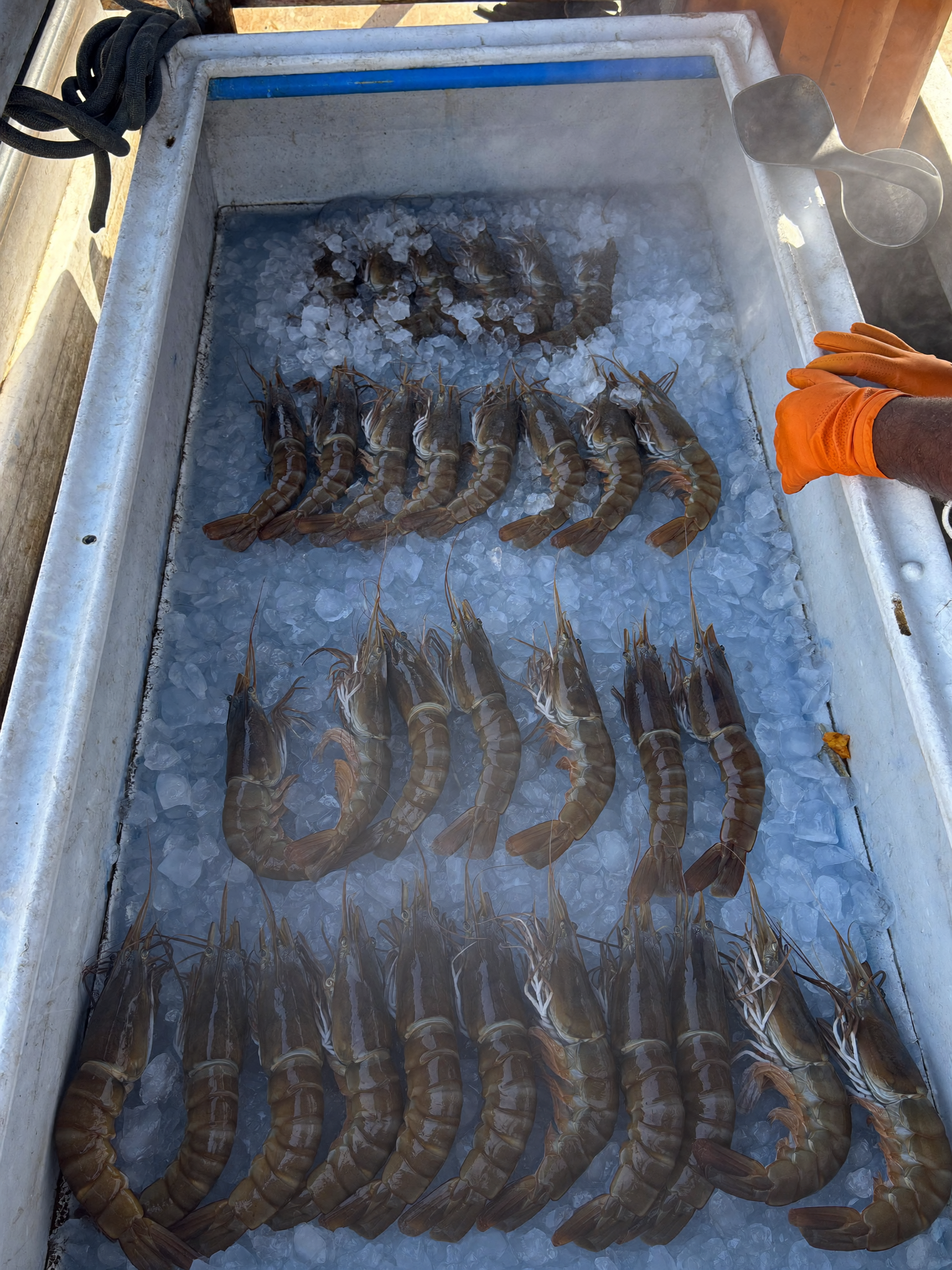
Ran for 3 days, from February 23 to February 26, 2026, the last day Crush saw it.
Run by Lenny Robinson on Facebook. Crush is not the advertiser and does not verify its claims. See this ad in Meta's Ad Library(opens in a new tab)
Want an ad like this for your product?
Crush makes new ad images for your product from this ad: your logo, your product photo, your offer.
Trials from $19.95 USD, then $79.95 USD a month. Cancel anytime.
About this ad
- Meta Ad Library ID
- 916120451149408
- Platforms
- Facebook, Instagram, Audience Network and Messenger
- Relaunches
- 0
Ad text
Every pound of brown shrimp that swims past your boat while you're tied to the dock is $4.80 you'll never see again. At 800 pounds a day, that's $3,840 per day of lost fishing. We sat at the dock for an extra day because one bolt on the starboard winch gearbox had backed out into a pocket two inches wide, salt crusted, unreachable with anything in our toolbox. Eight hours on the back deck. Tropical system building in the Gulf. Passes closing in 48 hours. And the brown shrimp running at peak, migrating south through the channels, the money swimming past while we bled on a bolt we could touch but couldn't turn. Let me tell you what happened. We run a 65 foot steel hulled shrimp trawler out of Chauvin, Louisiana. Down in Terrebonne Parish where Bayou Petit Caillou meets the marsh and the land stops pretending to be land and admits it's been water all along. Third generation. My grandfather built his first boat in 1958, a 36 foot wooden hull he planked himself in the yard behind his house on the bayou. Hand stitched his own nets. Ran trawls in Terrebonne Bay and out past the islands when the weather allowed, back when the islands were still islands and not sandbars that disappeared at high tide. My father went steel hull in 1981, doubled the range. I've been running the Marie Elise since I was twenty two, the year my father's hands finally surrendered to forty years of pulling nets in salt water and his knuckles swelled shut for the last time. My son Beau went to LSU. Petroleum engineering. Graduated near the top of his class. Had an offer from a deepwater drilling company before his last finals were posted. Starting salary and rotation bonus that would've had him making more at twenty three than this boat has netted in any year except the two we hit the white shrimp run in the fall when the price spiked to $6.40 a pound. He took it. Worked offshore for two years and four months. Twenty eight days on the platform, fourteen days off. Helicopter rides to a steel island eighty miles into the Gulf where the water is a thousand feet deep and the work never stops and the money is the kind of money that makes a young man believe he's building something. Called me on a Tuesday evening from the heliport in Houma after his hitch, sitting in his truck in the parking lot, still wearing his coveralls, and said, "Dad, I've been standing on a platform in the middle of the Gulf staring at the same water you're fishing in. I can see the shrimp boats from the deck at night, their lights on the horizon. I want to be on one of them. I want to come home." He was on the boat the next morning. Didn't drive to his apartment in Lafayette first. Drove straight down the bayou, past the shrimp docks and the ice houses and the net shops, past the boats tied up three deep at the wharves, and was standing on the back deck of the Marie Elise before I'd finished my coffee. Spent his first week going through every system on the boat the way a petroleum engineer goes through a wellhead. Documented every component, every fitting, every fastener. Rebuilt the hydraulic schematic from scratch because the one taped to the wheelhouse wall was from 1996 and hadn't been updated through three overhauls. Found a hairline crack in the port outrigger boom pivot pin that was invisible from the outside but that his ultrasonic thickness gauge, a tool he'd brought home from the platform, showed had lost thirty percent of its cross section to internal corrosion. Calculated that the pin would have failed under load within two more seasons, and when it failed it would have dropped the port boom, the net, and the trawl doors into the Gulf, a $14,000 loss in gear alone plus the structural damage to the hull from the boom breaking free. Had the pin replaced before the season opened. Deepwater inspection protocols applied to a shrimp boat in a bayou. That's Beau. Sees the failure before it fails. Fixes what nobody knew was broken. Here's what you need to understand about shrimping in the Louisiana Gulf. The Gulf of Mexico off Terrebonne Parish is not like any other fishing ground in America. It's not the deep blue water of New England or the cold gray swells of Alaska. It's shallow, warm, brown, and alive. The continental shelf extends south for a hundred miles, the water rarely deeper than sixty feet where we trawl, a flat muddy bottom fed by the Mississippi and the Atchafalaya where the river sediment has been building shrimp habitat for ten thousand years. The brown shrimp come in from the offshore spawning grounds in the spring, ride the currents into the estuaries and the marsh, grow in the warm shallow water through the summer, and begin their migration back to the Gulf in the fall, moving through the passes and the channels in a pulse that lasts weeks and that every shrimper on the coast is waiting for because the fall migration is where the money is. The shrimp are big. The count is low. The price is high. And the window is short. Brown shrimp season opens in the spring. But the real season, the season that pays the bills and makes the boat payment and covers the fuel and the ice and the insurance and leaves enough to carry you through winter, is the fall run. September through November. When the water temperature drops and the browns start moving and the trawl nets come up heavy and the deck is covered in shrimp and the ice hold fills and you run for the dock to unload and turn around and go back out because the shrimp are running and every day you're tied up is money swimming past you. And then there are the storms. Hurricane season runs June through November. The same months as shrimp season. Every year, every shrimper on the Louisiana coast runs the same calculation: how many days can I fish before the next system forms in the Gulf and I have to run for the bayou and tie up and wait while the shrimp keep migrating and the window keeps closing. Some years the storms stay away and you fish through October. Some years a system parks in the Gulf for a week and you lose ten days of prime fishing. And some years, the year I'm about to tell you about, a storm doesn't hit you. It doesn't have to. It just has to sit in the Gulf long enough to close the passes and shut down offshore trawling for the exact ten days when the fall brown shrimp run is at its peak. Last September, we were three weeks into the fall run. Fishing south of the islands, running double trawls, averaging about 800 pounds of heads on brown shrimp per day. Grade was running 16 20 count. Beautiful shrimp. Firm tails, clean shells, the kind of product that the dock buyers fight over because the restaurants in New Orleans pay premium for Gulf browns that size. Price was holding at $4.80 a pound heads on. At 800 pounds a day, that's $3,840 gross per day of fishing. The fuel burns about $600 a day. Ice and supplies another $150. Net of expenses, we were clearing over $3,000 a day, the kind of money that makes the months of preparation and maintenance and the years of boat payments feel worth it. Then the National Hurricane Center updated the tropical outlook on a Monday morning. A tropical wave had organized east of the Yucatan. Not aimed at Louisiana. But tracking north northwest into the central Gulf, forecast to develop into a tropical depression or tropical storm, and the models were showing it stalling. Not making landfall. Just sitting. A large slow moving system pulling moisture off the warm Gulf water and generating seas of eight to twelve feet across the offshore fishing grounds for potentially five to seven days. Eight to twelve foot seas don't sink a 65 foot trawler. But they make it impossible to fish. You can't set trawls in twelve foot seas. The nets tangle. The doors won't track. The boat rolls so hard the outrigger booms dip into the waves. And the Coast Guard closes the passes when the seas build, which means even if you wanted to try, you can't get out. Five to seven days of lost fishing during the peak of the fall brown shrimp run. Two days to fish before the seas built enough to shut us down. We could make two more offshore trips. Maybe three if we ran hard and turned fast at the dock. Every pound of shrimp we put in the hold before the system shut us down was $4.80 we'd keep. Every pound we didn't catch was $4.80 that swam past while we sat at the dock watching the weather. Monday evening, Beau was on the back deck running through the pre trip check before our Tuesday morning departure. The Marie Elise uses a hydraulic trawl winch system. Two main winches, port and starboard, that deploy and retrieve the trawl cables, the heavy steel cables that connect the boat to the trawl doors and the nets. The winches are the arms of the boat. Without them, you don't fish. Period. At 7 PM, the starboard winch wouldn't spool. The starboard trawl winch is driven by a hydraulic motor through a planetary gearbox that multiplies the torque and controls the spool speed. A mounting bolt on the gearbox output shaft bearing housing had worked loose from the constant cyclic loading of setting and retrieving trawls. Every time you set the nets, the winch pays out cable under tension. Every time you retrieve, the winch hauls in thousands of pounds of cable, doors, nets, and shrimp against the drag of the water. Hundreds of load cycles per trip. The bolt had backed out far enough to let the bearing housing shift, the output shaft lost alignment with the spool drive, and the gearbox locked up. Not a motor failure. Not a gearbox failure. A single mounting bolt. Beau had the bolt. He had every bolt. The month he came home, he inventoried every critical fastener on the boat, the winches, the hydraulic system, the engine, the refrigeration, the outrigger booms. Built the inventory in a spreadsheet because two years of offshore engineering had made meticulous documentation a reflex that overrode any instinct to "just remember where things are." Every bolt had a part number, a size, a torque spec, a replacement interval estimated from the hydraulic system's cycle counter, and a location photograph that he'd taken with his phone so he could find the bolt in the dark on a moving deck in the Gulf. The winch gearbox bolt had been scheduled for inspection at the mid season haul out. We hadn't reached mid season yet. The bolt sat in a pocket between the gearbox housing and the winch frame. Less than two inches of clearance. Gearbox casting on one side. Winch frame structural member on the other. Hydraulic supply line for the motor running across the top. Cable guide sheave bracket bolted along the bottom. And every surface, every bolt head, every thread, every hex recess was covered in salt. Not salt as a seasoning. Not salt as a concept. Salt as a corrosive agent that never stops, never sleeps, never takes a season off, and that works on every piece of metal on the boat twenty four hours a day, three hundred sixty five days a year with the patient, relentless determination of an ocean that has been dissolving things since before anything on this boat was manufactured. Gulf salt water doesn't just rust steel. It transforms it. It penetrates the grain structure of the metal and converts it from the inside out. The surface starts as rust. The rust becomes scale. The scale becomes crust. The crust becomes something that is no longer recognizable as the original metal, a calcium salt iron compound that bonds to the bolt head and fills the hex recess and welds the bolt to the housing with a chemical bond that a socket can't break because the socket can't reach the hex because the hex no longer exists. It has been replaced by a rough, crystalline, mineral deposit that looks like the bolt head was dipped in concrete mixed with seashell and left in the sun for a decade. And where the salt doesn't reach, the marine growth does. In the humid salt air of the Gulf coast, every surface below the waterline and most surfaces above it develop a biofilm layer. Algae. Barnacle spat. Slime. A living coating that traps moisture against the metal and accelerates the corrosion underneath. Inside equipment gaps where salt spray collects and condensation drips, the biofilm and the salt corrosion create a layered deposit of living material over mineral crust over corroded metal that makes every bolt head into a geological excavation. You scrape through the biofilm to find the salt crust to find the corrosion to find what might have once been a hex recess, and by then your scraper is coated in the same compound and your fingers smell like the bottom of the boat and the bolt hasn't moved. Beau could see the bolt hole. Could start the bolt a half turn with his salt crusted fingertip. He spent four hours on it alone before he came to find me in the wheelhouse. Four hours. On the back deck. In the September Gulf heat that doesn't end at dark because the humidity holds the temperature at eighty five degrees and the air is so thick with moisture that your shirt is soaked before you start working and stays soaked until you take it off and it doesn't dry because nothing dries on a shrimp boat in Louisiana in September. The mosquitoes from the marsh finding him at the stern. The gnats swarming his headlamp. The deck rolling gently on the tide even tied to the wharf. And the bolt sitting in its pocket of salt crust and marine growth, visible, touchable, immovable. That's Beau. On the platform, he once spent sixteen straight hours troubleshooting a subsea blowout preventer control system that the drilling superintendent said should be deferred to the next maintenance window, because Beau found an intermittent pressure anomaly in the control pod that was within spec but that his instinct said would fail outside spec within the next hundred cycles, and a BOP that fails outside spec eighty miles offshore in a thousand feet of water is the kind of failure that makes the evening news. Same refusal to leave a known problem unfixed makes a son who will work on a winch gearbox on a shrimp boat deck in the heat and the bugs for four hours while the tropical system organizes in the Gulf. He walked into the wheelhouse at 11 PM. Hands dark with the salt corrosion compound that coats everything on the boat, the mixture of rust scale and salt crystal and biofilm and hydraulic fluid that creates a paste on your skin that soap won't cut and that leaves your hands smelling like the Gulf for days. A gash across his forearm where the cable guide sheave bracket had caught him, the wound sealed with the salt compound in a way that stung with a specific, deep, saline burn that every shrimper knows. Sweat running from his hairline into the collar of his shirt. His headlamp still on, throwing a cone of light into the dark wheelhouse. Voice level. Measured. The voice he used on the platform during a well control situation when the toolpusher was on the phone and the company man was watching the monitors and showing anything other than calm precision would escalate the situation. "Starboard winch gearbox output bearing mount. I can thread the bolt with my finger. Can't get a tool past the frame member. Everything is salt and scale." I was on the back deck in five minutes. Full socket set. Every extension and adapter. Wire brush, penetrating oil, pick set for cleaning hex recesses. Tried everything Beau had tried. Tried things from thirty eight years of shrimping in the Gulf that petroleum engineering on a deepwater platform doesn't cover. Standard ratchet. Handle hit the winch frame before the socket found the bolt. The ratchet mechanism was already contaminated with salt compound that had worked into the pawl through the reversing switch and made the action feel like grinding sand. Stubby ratchet. Got into the pocket. Couldn't reach the bolt depth. Short by two inches. The chrome was pitted with salt corrosion that made it feel like gripping a file. Flex head ratchet. Flexed into the hydraulic supply line the instant I loaded it. No engagement. The flex joint was packed with salt crust and moved in jerks, no smooth travel. Wobble socket on a shorter extension. The wobble combined with the salt crust surface meant the socket couldn't find the hex. I'd wire brushed the hex recess three times, but the calcium salt deposit reformed almost as fast as I cleared it, the ambient salt moisture recrystallizing on the exposed metal. Socket bounced on the crust like pressing a wrench into rough concrete. Universal joint adapter. Torque went everywhere. The joints were packed with salt compound and grit and moved like they were set in sand. Couldn't feel the bolt. Couldn't feel the tool. Could only feel the universal joint grinding through crystalline salt deposit while sweat ran down my arm into the pocket and mixed with the salt and stung every cut on my hands. Crow foot wrench. Wrong profile. Body hit the gearbox casting before the jaws reached the bolt. Cut my forearm on the cable guide bracket. Scraped both wrists raw on the winch frame. Pinched my thumb between the gearbox and the hydraulic fitting, the salt crust on both surfaces acting like sandpaper against my skin, grinding through the top layer and leaving a raw patch that the salt air immediately found and burned with the particular intensity of an open wound in a salt environment. Beau stood beside me through every attempt. Handing tools from the deck box in the dark, organizing the sequence despite the salt compound that made every tool look and feel the same, a rough dark mass of corroded metal indistinguishable from the boat structure it was supposed to be working on. Ratchet. Extension. Stubby. Flex. Wobble. Universal. Crow foot. All tested. All failed. All returned to the deck box with additional salt crust that would need to be wire brushed before they'd work again, if they'd work again, because the Gulf eats tools the way it eats boats and docks and pilings and everything else man puts in its water. None of them worked. By 1 AM, we had eight combined hours on one bolt. That's when Beau stepped back from the winch. Stood on the deck. Leaned against the outrigger boom cradle. Looked south, down the bayou, toward the Gulf he couldn't see in the dark but could smell, the warm salt and sediment smell that every person who grew up on the Louisiana coast carries in their memory the way other people carry the smell of their childhood kitchen. And that's when I saw it. Not in his face. Beau doesn't show things on his face. He learned on the platform that showing doubt during a well control situation makes the floor crew doubt the procedure, and a floor crew that doubts the procedure makes mistakes, and mistakes on a deepwater drilling platform are measured in lives and environmental catastrophe. I saw it in his hands. He'd crossed his arms, but his right hand had found the left bicep and was gripping it, squeezing rhythmically, the unconscious motor pattern of a man whose hands have spent two years gripping pipe tongs and control handles under extreme pressure and whose fingers now, when the problem has no tool and no solution, seek the only resistance available and grip it the way they gripped the tongs, steady, rhythmic, compressive. Gripping nothing. Testing the resistance of his own body. A father reads these things. A father who has watched his son trade a platform for a trawl deck reads them like a shrimper reads water color, not by the surface but by what's moving underneath. He'd turned down the platform. Walked away from the offshore salary and the rotation bonus and the career path that had him on track for a drilling engineer position by twenty eight. Left the predictable schedule and the helicopter rides and the catered meals on the platform and the apartment in Lafayette where the air conditioning worked and the trucks in the parking lot were new and nobody's hands were ever crusted with salt and bleeding at 1 AM on a boat deck in the bayou. Left the woman he'd been seeing, an engineer at the same company who understood rig schedules and rotation calendars and never had to ask why he smelled like the ocean when he came home. Left because he believed this boat and this bayou and this Gulf and the nets his grandfather had stitched by hand were worth more than any platform he would ever stand on. Because he believed his hands and his mind and his willingness to lie on a deck in the heat and the bugs could keep this boat fishing for one more generation in an industry where the number of independent family shrimp boats drops every year as the imported shrimp gets cheaper and the fuel gets more expensive and the insurance gets higher and the young people move to Lafayette or Baton Rouge or Houston or anywhere that doesn't require you to spend six months a year on the water doing work that breaks your body and barely pays the note. And here he was. Eight hours into a bolt he couldn't turn. Watching his father bleed on the same one. Eight hundred pounds a day of Gulf brown shrimp out there in the dark water beyond the marsh, moving south, migrating, swimming past the boat while we sat at the dock with one dead winch and a tropical system organizing four hundred miles to the southeast. Called the marine mechanic in Houma. "Everyone's trying to get out before this system closes the passes. I've got three boats ahead of you. Maybe Thursday." The seas were building Wednesday. Called two more mechanics who worked on shrimp boats. First one was already on a boat at the docks in Dulac. Second one was up in Morgan City working on a crew boat. Said he could maybe come down Friday if the weather cleared. That's when the running lights appeared around the bend in the bayou, slow, and the old wooden hulled boat nosed up to the wharf beside us and the lines went over and the engine shut down with the particular diesel rattle of a Detroit two stroke that hasn't been manufactured since 1987 but that will run until the boat rots out from under it, which in the Gulf means approximately forever. Noel Cheramie. Eighty one years old. Shrimped the Gulf out of Chauvin for fifty six years before his son told him the insurance company wouldn't cover the boat anymore with a captain over eighty and Noel told his son the insurance company could go to hell but his son had hidden the boat keys and Noel knew his son was right because his son was the only person alive more stubborn than a Cheramie and stubbornness was the family's only inheritance worth claiming. Still ran the bayou at night during season. Still checked the docks. Still smelled the weather and read the water and told anyone who would listen that the brown shrimp were running early this year and everyone was fishing too far south. Somebody at the ice house told him we were sitting. He tied up alongside us the way old bayou shrimpers tie up, one handed, feeling the current, the line going around the cleat in a pattern so practiced it happened in the dark without thought, fifty six years of muscle memory in a single throw hitch. Stepped onto our deck without asking permission because on the shrimp docks in Chauvin, boarding a boat that's in trouble isn't a social call. It's an obligation. Looked at the winch. Looked at the pocket. Looked at the tools on the deck, every one of them dark with salt compound. Looked at Beau. "Rig hand?" he asked, nodding at the faded offshore safety orientation sticker on Beau's hard hat that was sitting on the deck box. "Petroleum engineering. Two years on a deepwater platform. Came home last fall." Noel made a sound in his throat, the Cajun French sound that isn't a word but that communicates more than any English sentence, the sound that means he has heard this story before, the young one leaving for the oil field money and coming back to the water, and he respects it but he also knows what comes next, which is the bolt or the pump or the hull or the net or the weather or the price or one of the thousand things that make a man question whether the water wants him back. "Platform boys know every system on the rig. Just don't always pack what fits on the boat." Walked back to his boat. Came back with a flat steel tool. About 15 inches long. Thin as a knife blade. Socket fitting on one end. Square drive on the other. Housing dark with the permanent patina of Gulf work, a layer of salt corrosion and hydraulic fluid and shrimp residue that had been applied and worn and reapplied over years until the tool's surface looked like it had been dredged from the bottom of the bayou, a dark bronze green that said this tool had lived its entire life in salt air on a boat that never docked for more than a day. A wrap of rigger's tape around the middle where the original grip had been eaten by the salt and the heat, because Louisiana shrimpers fix everything with rigger's tape and stainless safety wire and the specific kind of Cajun stubbornness that keeps a man on the water when every accountant in the parish says the numbers don't work. "Offset extension wrench," he said. "Boy I used to sell bait shrimp to, runs a charter boat out of Cocodrie, he showed me one of these six, seven years ago. I've used it on every machine I've touched since. Doesn't matter if it's salt crusted, doesn't matter if the bolt head looks like a piece of reef, doesn't matter if every surface on the boat has been trying to dissolve itself since the day it was welded. Goes in. Seats. Turns. On a shrimp boat in the Gulf, that's the only prayer that works." He knelt on the deck the way old shrimpers kneel, one knee on the boards, the other foot braced against the scupper, his body automatically balancing against the gentle roll of the boat on the tide, eighty one years of deck work encoded in his knees and his hips and his center of gravity. Angled the socket end into the pocket between the gearbox housing and the winch frame. Past the hydraulic line. Under the cable guide bracket. Into the recess where the bolt sat in its bed of salt crust and marine growth and impossibility, and he scraped the calcium deposit off the hex with his thumbnail, the casual precision of a man who has been excavating bolt heads from salt deposits since before Beau's father was born, the way a man opens an oyster, the tool finding the crack by feel. Socket slid in. Found the hex through the crust. Seated. He looked at Beau. "Your boat. Your bolt." Beau took the drive end. Applied rotation. Steady. Measured. The same incremental, verified input he used controlling a BOP stack from the platform, one step at a time, no forcing, no rushing, trusting the mechanism to execute what his hands were telling it. The bolt turned through the salt crust in its threads with a gritty, mineral resistance, the sound of metal advancing through crystallized ocean. Bolt seated. Housing realigned. Shaft aligned. Gearbox freed. Forty seconds. Forty seconds for a bolt we'd spent eight hours fighting. On the deck. In the heat. In the bugs. With a tropical system building four hundred miles southeast. Beau held the tool. Turned it over in his salt dark hands. Felt the internal chain transfer the rotation from one end to the other. Ran his thumb along the housing, his right hand finally releasing his left bicep, no longer gripping nothing, finally holding something that had given his hands a problem they could close. "Chain driven parallel torque transfer. One to one ratio. Zero swing arc requirement." Noel was sitting on the gunwale, bare feet on the deck because old Chauvin shrimpers work barefoot on the boat for the same reason they sleep with the windows open, because the boat and the bayou and the body are all part of the same system. "Son, I've been calling it the thing that turns the bolt for six years. That's the first time anybody told me the engineering." Winch was spooling by 2 AM. We ran Tuesday. Set trawls at dawn south of the Timbalier Islands. Ran four drags. Beau worked the back deck, picking up shrimp, culling bycatch, icing the catch, working with the systematic speed of a man who processes tasks the way he processed well data on the platform, each action optimized, each motion serving the next. I ran the boat. We pulled 900 pounds on Tuesday. A good day. Ran Wednesday morning. Got one drag in before the seas built past the point where the doors would track clean. By noon, six foot seas and building. Coast Guard closed the offshore passes at 2 PM. We ran for the bayou. The system sat for eight days. Not a direct hit. Just a large, slow, warm, wet mess spinning in the central Gulf, generating swells and wind and rain for over a week. The passes stayed closed for six days. When they reopened, the seas took another two days to lay down enough to trawl. Eight days of lost fishing during the peak of the fall brown shrimp run. At 800 pounds a day and $4.80 a pound, eight days of lost fishing is roughly $30,700 in gross revenue. Net of fuel and ice we didn't burn, call the actual lost income around $24,000. But here's what the eight hours cost us on top of the storm days. The Monday we spent fighting the bolt was a day we should have been fishing. If the winch had been running, we'd have made one more full trip before the seas built. Another 800 pounds. Another $3,840 gross. And we'd have been first to the dock buyer Tuesday evening instead of running our last drag Wednesday morning in deteriorating conditions, which means we'd have gotten the premium early delivery price instead of the discounted late season before storm price that every dock buyer drops to when twenty boats are unloading simultaneously trying to beat the weather. Total damage from the bolt: one lost fishing day plus the price differential on our last delivery, roughly $5,200 in additional lost revenue on top of the storm losses. From one bolt we couldn't turn for eight hours on a Monday night while a tropical system organized in the Gulf. That weekend, Beau ordered the same tool Noel had used. Ordered five. One for the back deck toolbox on the Marie Elise. One for the engine room. One for the dock box where we keep the shore side maintenance tools. One for the truck. One for the shop at the house, mounted on a bracket he welded from a piece of stainless flat bar with the part number etched below it and sealed in marine epoxy because Gulf coast humidity will eat any other label material before the season ends. Eighty nine dollars each. Adapters not included. Runs a standard half inch square drive. You use your own sockets. Since then, we've used them more times than either of us can count. Three times on the winches. That same gearbox bolt again mid season, same failure mode, same cyclic loading. A cable levelwind guide bolt buried behind the spool housing in a space that the winch manufacturer apparently designed assuming shrimpers have arms that bend in directions not available to human anatomy. A brake band adjustment bolt recessed behind the winch frame where salt spray collects in a permanent pool and the bolt head had essentially become a salt crystal. Twice on the engine. Raw water pump mounting bolt wedged between the pump housing and the engine block on our John Deere 6068, in a space so tight and so salt corroded that the marine mechanic in Houma charges four hours of labor just to access it. Beau did it in thirty minutes on the back deck while I held a flashlight. Injector pump timing bolt crammed behind the fuel filter housing where salt and diesel residue had created a compound that was part mineral and part petroleum and entirely resistant to every wrench in the engine room tool drawer. Once on the outrigger boom. Boom pivot pin retainer bolt buried behind the boom cradle where salt and shrimp residue and sun had baked the bolt into the housing like pottery in a kiln. Once on the refrigeration compressor. Mounting bolt recessed behind the condenser frame in the engine room where the combination of salt air, bilge moisture, and compressor vibration had loosened and corroded the bolt simultaneously. Once on my truck. Exhaust manifold bolt on the old Duramax that sits between the turbo and the firewall in a gap that Chevy apparently designed for mechanics who have been dead for forty years and therefore have no physical limitations. And three weeks ago, a young guy who'd just bought his grandfather's boat in Dulac called the dock. First season on his own. Twenty two years old. His port winch gearbox bolt had backed out mid trip. Lost the drag. Shrimp on the deck from the starboard net but the port side dead. Brown shrimp still running. Tropical disturbance in the five day. His voice was steady but underneath it was the sound of a twenty two year old standing on the back deck of a boat he'd mortgaged everything to buy, watching half his fishing capacity sit dead while the shrimp migrated past and the tropical forecast updated every six hours. Beau didn't ask a question. Pulled the wrench from the deck toolbox. Said "Which dock" and was in the truck before the kid finished giving directions. Drove to Dulac. Twenty minutes down the bayou road. Bolt seated in under ninety seconds. The young man stood on the deck watching the winch spool up, the cable winding smooth and tight, the hydraulic motor humming. Looked at the tool. Then at Beau. Then out at the Gulf, south, where the shrimp were. "How does every shrimper on this bayou not have one of these?" Beau texted him the link from the dock. Clean. No speech. Platform efficiency. Deploy the solution. Move to the next well. The kid ordered three that night. Here's what nobody tells you when your child gives up their career to come home to the water. This equipment isn't built for a boat deck in the Gulf. It's engineered in climate controlled facilities and tested in marine service shops by technicians who charge $225 an hour and are booked solid during the exact weeks when every shrimp boat on the coast is trying to get one more trip in before the next tropical system forms and the passes close and the season shrinks and your entire year's margin is determined by whether the winch spools and the nets deploy and the shrimp come up and the ice hold fills before the weather shuts you down and everything above the waterline starts dissolving in salt air while you sit at the dock watching the forecast. Every bolt that matters is buried behind a gearbox, a frame member, or a hydraulic line. Every bolt that matters is crusted with salt and corroded to the housing. Every breakdown during the fall run is a race between your toolbox and the tropical forecast. And every hour you can't fix it is another hour your son stands on the deck gripping his own arm, silently measuring the distance between the career he left on the platform and the one that just stopped him with a bolt he can see but cannot turn while the shrimp migrate south and the tropical outlook updates and the dock buyer drops the price another nickel because everyone's unloading at once. But when you've got something that reaches into those impossible pockets. Something thin enough to slide past the gearbox and the frame and the hydraulic line and the cable guide. Something with a chain drive inside that transfers real torque without needing swing room or an arc. Something that works through salt crust, works through marine growth, works in the heat, works when every surface on the boat has been trying to dissolve itself since the hull was welded and the bolt head looks like a piece of reef and the socket bounces on the crust like pressing a wrench into concrete. Those "call the marine mechanic, wait for the yard" breakdowns become forty minute deck fixes. And deck fixes mean the winch spools. The nets deploy. The shrimp come up. And your kid sees the problem solved. Sees the boat fishing. Sees that the decision to come home, the platform he walked away from, the code he stopped running, the future he traded for salt air and deck boots and the chance to keep his grandfather's boat fishing the Gulf for one more generation, all of it was right. It's called the PRO Offset Extension Wrench. About 15 inches long. Half an inch thick. Chain drive inside transfers rotation where ratchets can't swing. Adapters not included. Runs a standard half inch square drive. You use your own sockets. Eighty nine dollars. Less than the ice for a single trip. Less than ten minutes of marine mechanic labor. Less than two percent of what those eight hours cost us when the storm sat in the Gulf. I'm not going to tell you this tool will save your season. But there's going to come a night. Probably the worst night of the tightest window of the run. When your son climbs up from the engine room with salt crust to his elbows and a bolt he can't reach. Or your deckhand radios from the stern in the middle of a drag. Or you're lying on the deck yourself, bleeding from your knuckles, reaching into some pocket crusted with salt and scale that mocks every ratchet and socket and extension in your toolbox, while the tropical outlook updates and everything, the shrimp, the weather, the price, the boat payment, the kid who chose this water over the one that was waiting for him on a platform where nobody's hands ever bleed at 1 AM, all of it comes down to one bolt in one impossible space. When that night comes, you either have the tool or you don't. We didn't. Now we do. Every station on the boat. Every toolbox on the dock. Mounted, labeled, and exactly where you can grab it at midnight when the tropical outlook is building and one bolt is all that's standing between you and getting one more trip in before the passes close. Link's below. I hope you never need it the way we did.
Where the ad sends people
thesavary.com
This tool would've saved me 800 pounds of shrimp👆
Savary
Shop now: thesavary.com(opens in a new tab)