Eczema Mom
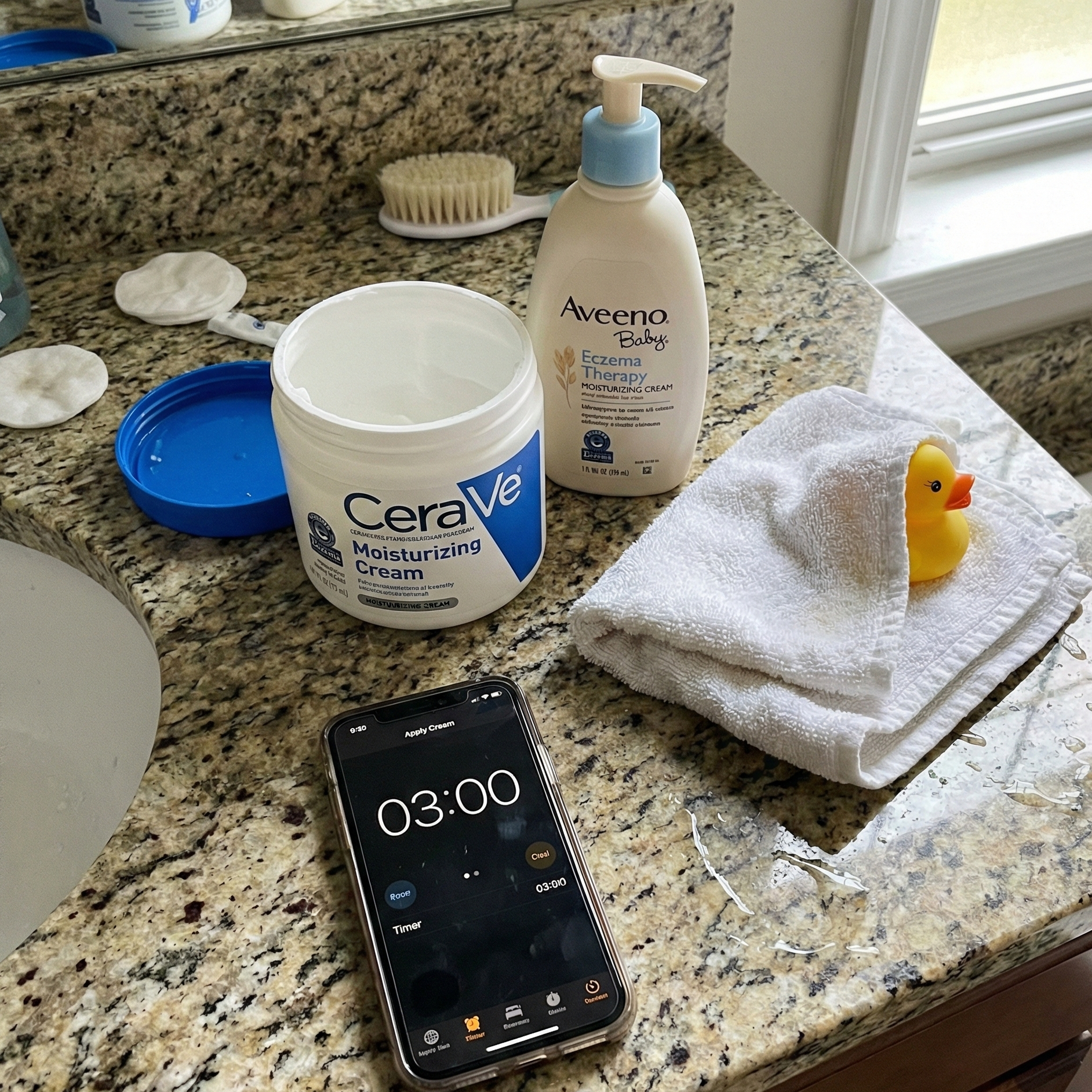
Eczema Mom Facebook ad: “Read this if your baby has eczema”
Ran for 3 days, from February 17 to February 19, 2026, the last day Crush saw it.
Run by Eczema Mom on Facebook. Crush is not the advertiser and does not verify its claims. See this ad in Meta's Ad Library(opens in a new tab)
Want an ad like this for your product?
Crush makes new ad images for your product from this ad: your logo, your product photo, your offer.
Trials from $19.95 USD, then $79.95 USD a month. Cancel anytime.
About this ad
- Meta Ad Library ID
- 918179257391466
- Platforms
- Facebook, Instagram, Audience Network, Messenger and Threads
- Relaunches
- 0
- Niche
- Parenting & Kids
Ad text
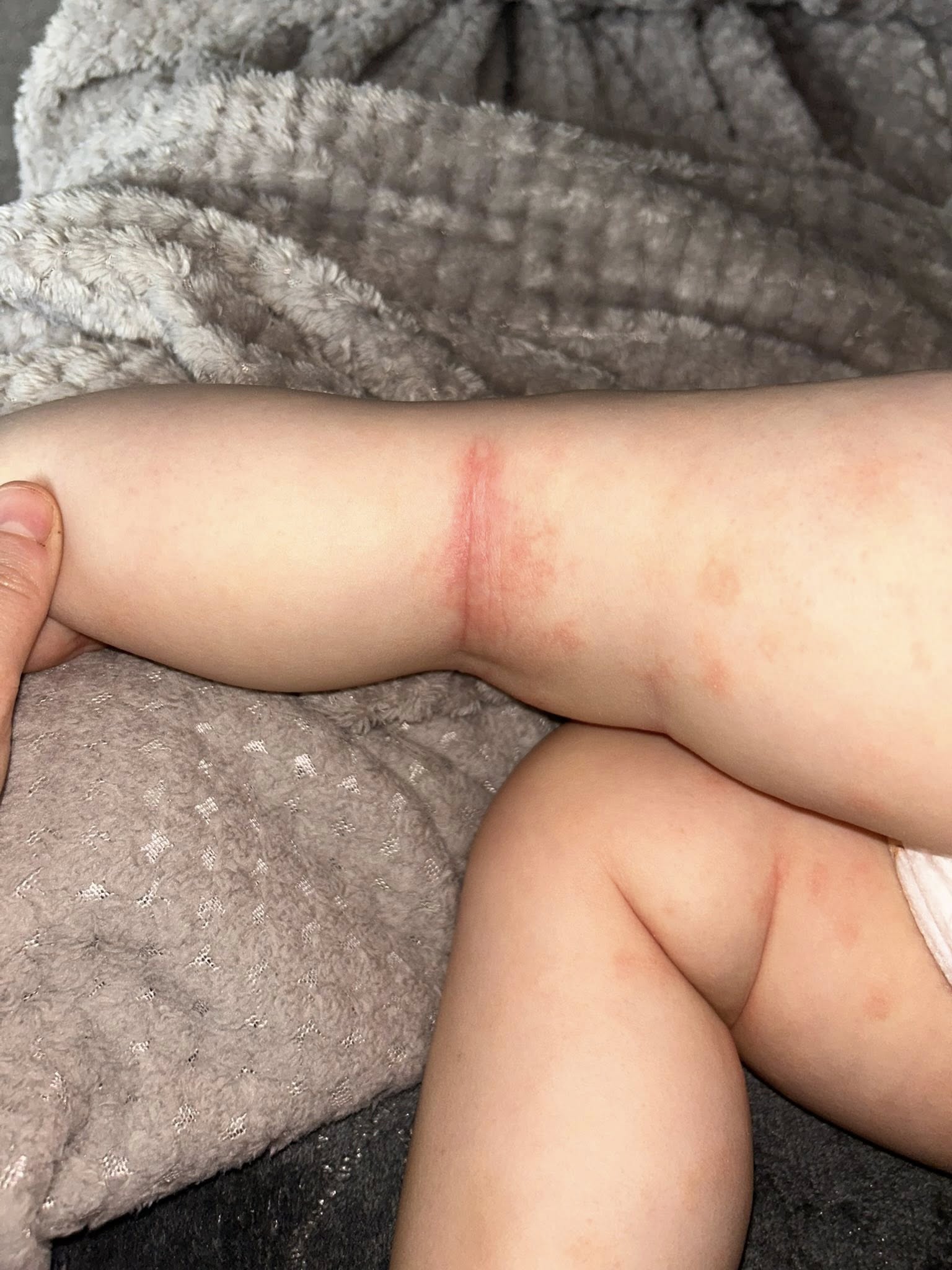
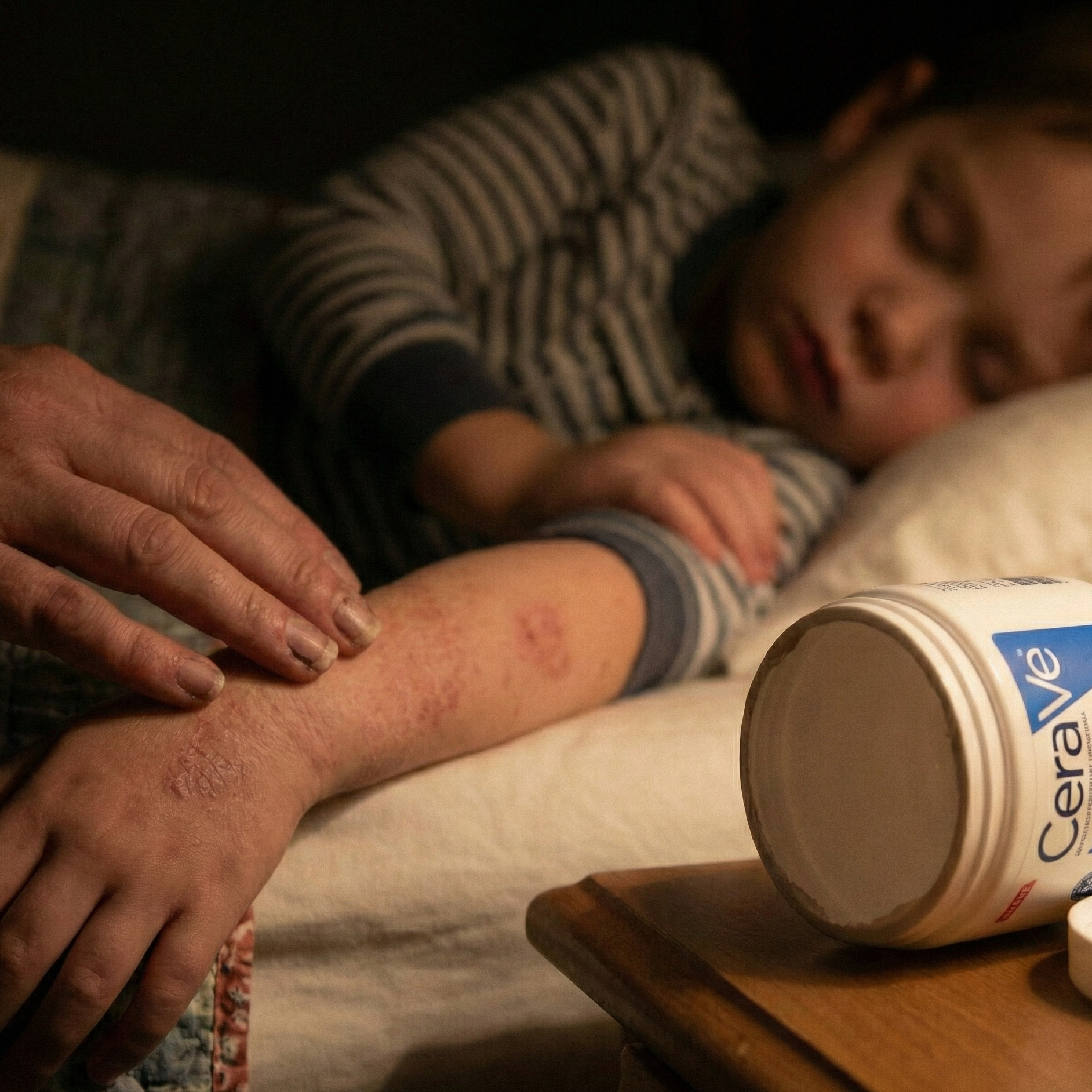
Please STOP Applying Cream To Your Baby Right After Bath Time The Way I Did. I Didn't Know I Was Making The Eczema Worse Every Single Night. For six months I did everything right. Towel ready on the side of the tub before I even started the water. CeraVe on the counter with the lid already loose. The moment my daughter came out of the bath I was patting her dry and reaching for the cream within three minutes. Every single night without fail. I had a timer on my phone. I applied it carefully. Face, neck, inside the elbows, behind the knees. Every patch covered. Every inch moisturized. Then pajamas on and into bed. And every single night, an hour later, the scratching started. I would lie in bed listening to the monitor, waiting for it the way you wait for something you already know is coming. That soft rhythmic sound of little nails dragging across skin that should have been calm by now. I would go in and her cheeks would be red and angry again, the patches that looked quieter after the bath now inflamed and irritated, and my daughter awake and uncomfortable despite everything I had done. I ran through the checklist every time. Bath temperature was right. Fragrance free wash. Patted dry, did not rub. CeraVe applied within three minutes. I had been doing this exact routine for six months. So why was it not working. Maybe I needed to be faster. Maybe two minutes instead of three. Maybe I needed more cream, or a thicker formula, or a different version of CeraVe because there are six of them and nobody explains which one is actually for eczema. Maybe I needed to apply it twice. I tried all of those variations. I stood in the drugstore staring at the wall of Aveeno and Eucerin and Cetaphil and Tubby Todd options trying to figure out which one would finally make the routine work the way everyone promised it would. None of them changed anything. The scratching still started an hour after bath time. Every night. Like clockwork. Here is what I did not know and what nobody told me for six months of timers and carefully chosen fragrance-free formulas and cream applied within three minutes every single night. The three-minute rule is real advice. The principle behind it is completely valid and well researched. When your baby gets out of a lukewarm bath, their skin has absorbed water. That water is sitting in the upper layers of the skin and if you do nothing, it evaporates within minutes and pulls some of the skin's own deeper moisture with it as it goes, leaving skin drier than before the bath even started. The whole point of the three-minute rule is to trap that absorbed bath water before it can escape. Apply something immediately that creates a seal over the top of it. Lock it in before it evaporates. That is sound dermatology. That advice is correct. But here is the part that never appears in the pamphlet or the Facebook post or the pediatrician visit. That advice was designed for water-free formulas. When dermatologists originally developed the lock-in-moisture concept, they were talking about petrolatum. Vaseline. A product that is essentially 100 percent oil with zero water content. When you apply Vaseline to damp skin, it sits on top as a physical barrier. It does not introduce any new water to the system. It simply prevents the water already there from escaping. That is exactly what the advice is supposed to do. Apply a water-free barrier over damp skin and trap the moisture already absorbed. Now here is where everything falls apart. CeraVe is not water-free. It is approximately 70 percent water. Aveeno Eczema Therapy is not water-free. Cetaphil is not water-free. Eucerin is not water-free. Tubby Todd is not water-free. Every one of the products sitting on your bathroom counter right now with the lid already loose so you can grab it within three minutes contains water as its primary ingredient. When you apply a product that is 70 percent water to skin that is already wet with bath water, you are not creating a barrier over existing moisture. You are adding a second source of water to a surface that already has water in the process of evaporating. And then both water sources start evaporating simultaneously. The bath water absorbed into the skin. And the water from your CeraVe or Aveeno sitting on top of it. Both evaporating at the same time. And as water evaporates from the surface it pulls additional moisture from the deeper skin layers with it as it goes. The technical term is transepidermal water loss. And what you have been creating every night by applying a water-based cream to your baby's damp skin is a greater moisture loss effect than if you had applied nothing at all. You are not locking moisture in. You are adding more water to an already evaporating system and making the drying process faster. That is why the scratching starts an hour after bath time despite the three-minute rule. Not because you are doing it wrong. Not because your baby's eczema is uniquely resistant. Because water-based creams cannot physically execute the lock-in-moisture advice the way it was designed. The chemistry does not allow it. Think about what that means for every night you set that timer. You were not failing at the three-minute rule. You were following advice that was always designed for a different product type and nobody told you that part. Now here is what changes everything. The three-minute rule with an actually water-free formula works exactly the way it was always supposed to. When you apply an anhydrous formula, meaning a formula with absolutely no water in it at all, to damp skin right out of the bath, the oil and wax sit on top of the skin and create a physical seal. The bath water that was absorbed stays trapped underneath it. It cannot evaporate because there is a barrier over it. The skin stays genuinely hydrated not for thirty minutes while the cream water evaporates but for hours because nothing is evaporating at all. This is not new science. This is the original mechanism the lock-in-moisture advice was built around. You are just finally using a product type that can actually do what the advice requires. I know what you are thinking right now. If water-free formulas work better, why does every single dermatologist and pediatrician recommend CeraVe. Why does every eczema pamphlet have CeraVe on it. The honest answer is that CeraVe and Aveeno and Cetaphil are genuinely useful products for everyday dry skin maintenance. For babies with mild eczema and a skin barrier that is only slightly compromised, they provide enough surface benefit that the advice seems to work reasonably well. But for babies with chronic eczema where the skin barrier is significantly compromised and transepidermal water loss is already a serious ongoing problem, applying a water-based cream post-bath is actively working against the thing you are trying to do. The dermatologists recommending CeraVe are not giving you bad advice about the three-minute rule. They are not explaining clearly enough that the rule only works with a specific type of formula. And in the gap between that incomplete explanation and your bathroom counter full of water-based creams, you have spent months believing the problem was you. It was never you. You had the right routine. You had the right timing. You had the right intention. You just had the wrong formula type for the method you were trying to execute. And nobody told you those two things were incompatible. The formula that finally made the three-minute rule work the way everyone always said it would was WildRoot Eczema Honey-Soothing Cream. Manuka honey base with colloidal oatmeal and beeswax. No water. No phenoxyethanol. No parabens. No preservatives of any kind because a formula without water does not need them. Genuinely anhydrous in a way that CeraVe and Aveeno and Tubby Todd are not. The beeswax creates exactly the kind of physical occlusive barrier the lock-in-moisture advice was always describing. Applied to damp skin within three minutes of bath time, it traps the absorbed water underneath and holds it there. The manuka honey draws the body's own deeper moisture upward to the surface rather than adding external water that evaporates. The colloidal oatmeal contains compounds called avenanthramides that quiet the nerve hypersensitivity driving the itch signal at the cellular level. It is not a gentler version of what you have been using. It is a completely different category of product that can actually execute the advice you have been following correctly for months. The first night I used it I did my exact same routine. Towel on the side of the tub. Timer on my phone. Patted her dry and applied it within three minutes. The only thing I changed was reaching for WildRoot instead of the CeraVe that had been sitting on that counter for six months. I put her pajamas on and went to bed and lay there waiting for the monitor to tell me the scratching had started. The one-hour mark came and went. Silence. Two hours. Still sleeping. I got up twice just to check that she was okay because the absence of the sound I had been hearing every night for six months felt wrong somehow. Like something must be the matter if it was not happening. She was fine. She was sleeping. Her cheeks when I touched them in the dim light felt soft in a way they had not felt since before the eczema started. I did the same routine the next night. And the night after. And every night for the next four weeks. By week two the nightly scratching had almost completely stopped. By week three the patches that had been weeping and cracking for months were visibly healing. By the end of the first month I had a daughter whose skin looked like it belonged to a baby who had never had eczema at all. And I had a routine that finally worked exactly the way I had been trying to make it work for six months. Nothing about the timing changed. Nothing about the technique changed. The towel was still on the side of the tub. The timer was still on my phone. I was still applying within three minutes to damp skin. The only variable was the formula. Water-based out. Water-free in. Six months of failure became one month of healing because of that single change to a single variable that nobody had ever told me mattered. You have already done the hard part. You learned the routine and you stuck to it. You set the timer every night even when it felt pointless. You tried different brands and different formulas and different variations of the same advice looking for the thing that would make it finally work. You did all of that correctly and you kept doing it even when the results kept telling you it was not working. That is not failure. That is a mom who refused to stop trying. You just need a formula that can actually do what you have been trying to do with it. You can find WildRoot here: https://wildrootco.shop/products/wildroot-eczema-honey-soothing-cream Your routine was never the problem.
Where the ad sends people
wildrootco.shop
Read this if your baby has eczema 👆
After trying CeraVe, Aquaphor layering, Tubby Todd, and DIY beeswax salves - this is what finally worked. Honey-based, not water-based. Nothing evaporates. National Eczema Association Seal of Acceptance. Professional formulation of the ingredients that almost worked. 60-day guarantee.
Learn more: wildrootco.shop(opens in a new tab)