
Active· since Apr 28, 2026
- 90
- days running
- 0
- relaunches
Ad copy
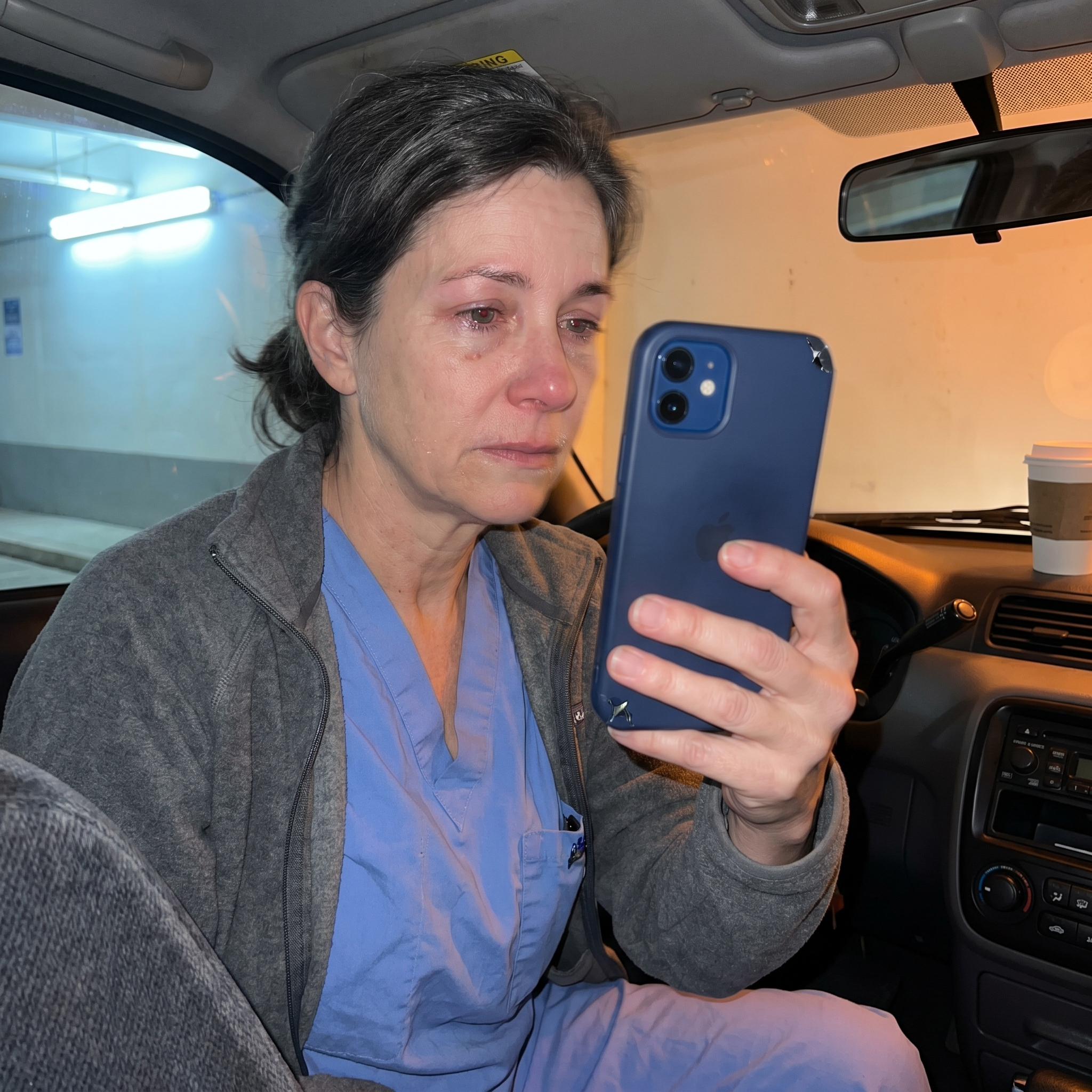
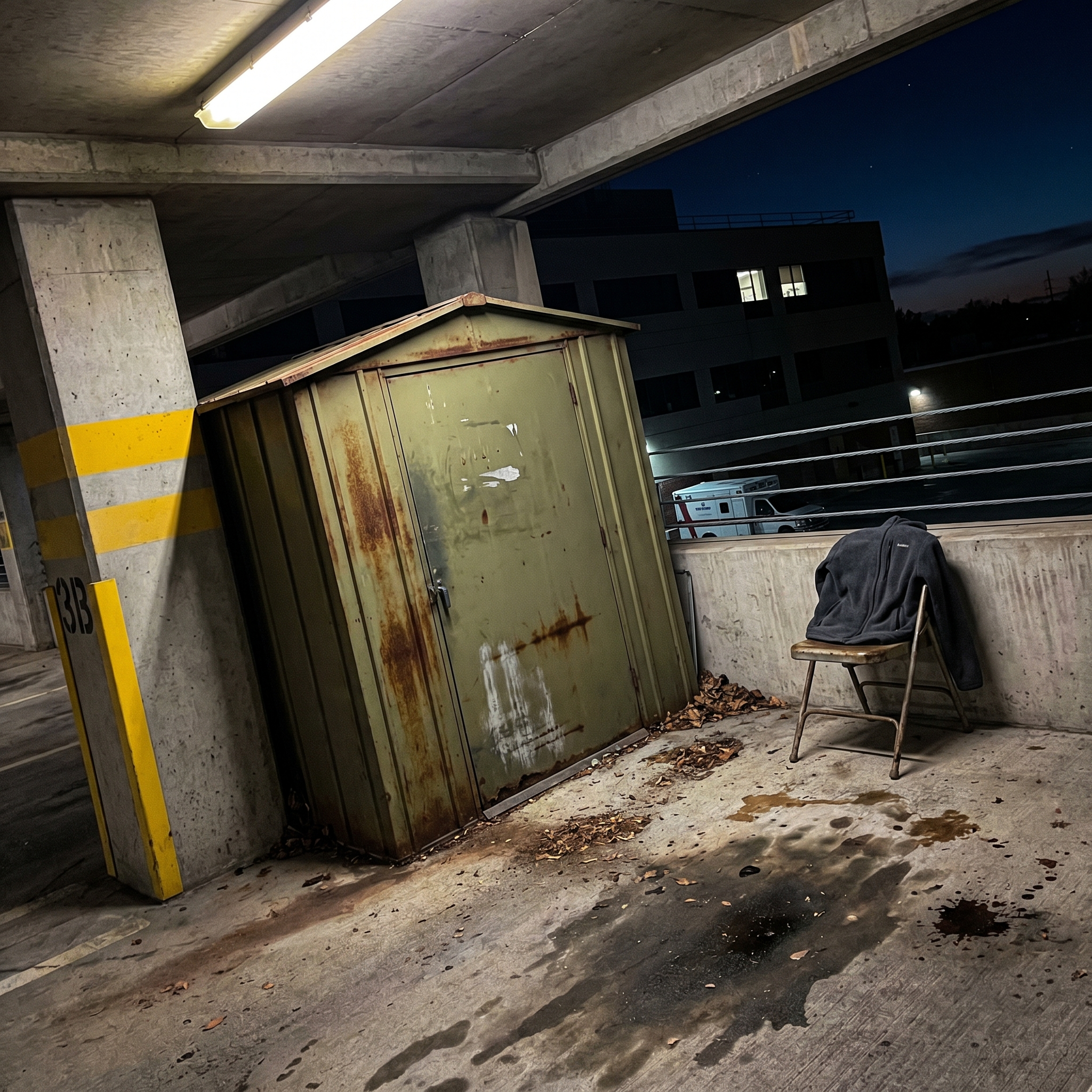
I quit smoking after 26 years. I'm a hospice nurse who's been hiding cigarettes in her car since 1998. If you knew me, you'd know that sentence is impossible. Everyone in my unit knew I smoked. They'd watched me try to quit four times. Patches. Gum. Chantix. Cold turkey for 9 days during one bad winter. I always went back. Because what I needed wasn't nicotine. It was something nobody at my hospital ever explained to me. Let me tell you what finally broke the loop. I've been a hospice nurse for 18 years. Before that, oncology. Before that, regular med-surg. In hospice, you watch people die. That's the whole job. Most of the time it's beautiful — families gathered, comfort care done right, last words said, hands held until the breathing stops. Sometimes it's not. Sometimes you've got a patient who's terrified and a family that's fighting and a doctor who won't sign the order to titrate up the morphine. I've sat with somewhere between 700 and 800 dying patients. About a quarter of them died from smoking. COPD. Lung cancer. Emphysema. Stage IV by the time they got to me. Mr. Carlson. Mrs. Bhatt. Mr. Hendricks. I still remember most of their names. And after every single shift, I went to the parking deck and smoked. Two cigarettes. Three minutes. The corner by the gardener's shed where nobody walked. Body spray. Breath mints. Hand sanitizer. Mints again. Then back inside or back to my car or home to my husband who quit smoking 22 years ago and never asked. The irony should have killed me. I'd watch a man drown in his own lungs and then go feed the same poison into mine. I tried to quit four times. The first time was patches. 21 milligrams. I broke on Day 5 in the parking deck after a shift where a 41-year-old mother of two coded twice before we got her stable on comfort care. The second time was gum. I made it three weeks. Then we lost three patients in one week and I bought a pack on the way home. The third time was Chantix. The nightmares were so vivid I'd wake up shaking. My doctor said it wasn't supposed to do that. I stopped after 6 weeks. Started smoking again the same day. The fourth time was cold turkey. I made it 9 days. The 10th day was a teenage car accident victim — not a smoker, just a tragedy — and I lost it walking out of the hospital. Four serious attempts. 14 years between the first and the last. Total cost including copays, therapy for the Chantix nightmares, and replacement nicotine I couldn't keep down: over $1,800. And every time I went back, I told myself the same thing. I'm too weak. The job is too hard. I'll try again next year when things calm down. Things never calmed down. Last summer something shifted. A patient — Mr. Kowalski, 67, emphysema, stage IV, on hospice for two weeks — looked up at me as I was checking his oxygen. He said: "I can smell it on you, dear." I froze. I'd been so careful. Mints, sanitizer, the change of scrubs. He said: "Don't end up like me." I said something automatic. About taking care of myself. About appreciating the warning. The kind of thing you say to a dying patient. I went to the parking deck after my shift and smoked anyway. That night I cried in my car for an hour and tried to figure out why a dying man's warning couldn't break the pattern. Why I'd watched 700 people die — many from this exact thing — and still couldn't stop. I'd read all the cessation literature. I knew nicotine cleared the body in 72 hours. I knew patches and gum had a 93% failure rate over 12 months. I knew the relapse statistics. I'd taught some of them to families. What I didn't know was why I personally couldn't stop. After 26 years, after 700 deaths, after Mr. Kowalski. So I started looking for someone who could explain why someone like me — someone with all the medical knowledge in the world — still couldn't quit. Not another doctor handing me another patch. Not another nurse telling me to white-knuckle it. Someone who actually understood what was happening in my nervous system. I found a behavioral addiction specialist whose practice focused on healthcare workers. His reviews were full of nurses, doctors, and EMTs saying things like "first person who explained why working in trauma makes quitting different" and "he understood that the smoke break wasn't a habit — it was the only nervous system reset I had between codes." One review from a trauma nurse said: "I'd been trying to quit for 14 years. He explained in 30 minutes what nobody in healthcare ever told me. The cigarette wasn't the addiction. The 3-minute window was." That was my exact problem. I booked a video call. Told him about Mr. Kowalski. About the 700 dying patients. About the four failed quit attempts. About the parking deck. He said: "Right. That's what I thought." I expected another lecture about willpower. About using it for my health. About replacing it with deep breathing or yoga or whatever. Instead he said something that made 26 years of failure suddenly make sense. He said for someone working in high-stress, high-trauma medical environments, smoking isn't a simple chemical addiction. It's a nervous system regulation tool. The hand-to-mouth motion. The deep inhale. The 3-minute pause where your body isn't watching someone die. He said the nervous system learns to use that exact motion as decompression. Especially when there's no other tool available between traumatic moments. The cigarette becomes the only socially acceptable way to step outside, breathe deeply, and reset. For 18 years in hospice, I had no other reset. I'd go from a dying patient to a code to a grieving family to charting to another dying patient. The 3-minute parking deck visit was the only time my body wasn't bracing for the next death. He called the underlying pattern the Ritual Gap. The motion. The breath. The pause. Your body learns to use it. And every patch, every gum, every Chantix prescription completely ignores the motion and only treats the chemical. You can clear the nicotine. The motion stays. And the motion is what your nervous system is actually addicted to. Suddenly all four failures made sense. The patches gave me nicotine but no break. The gum gave me something to chew but no inhale and no pause. The Chantix blocked the receptors but did nothing for the parking deck. Cold turkey took everything away and left me with no tool at all to get through a teenage car accident. It wasn't that I lacked willpower. I have plenty of willpower. You don't last 18 years in hospice without it. I lacked a replacement for the only nervous system regulation tool I'd built in 26 years of high-stress work. See how that works? Then he told me about the herbs. Mullein. He explained it slowly because I asked questions — I'm a nurse, I needed to understand the mechanism. Mullein has been used for centuries for respiratory health. It's a demulcent — soothes irritated tissue. And an expectorant — loosens buildup in the airways. Two actions in one plant. He said combined with thyme for its antiseptic properties and peppermint for the cooling sensation on the inhale, the three herbs address the chemical damage from years of smoking. But he said the format matters. Mullein in a tea doesn't replace the nervous system tool. It's not portable. It doesn't give you the hand. The inhale. The visible exhale. The 3-minute pause. Mullein in a diffuser you can hold — something you slip into your scrub pocket and step outside with — that addresses both problems at once. The motion stays. The chemicals go. The lungs heal. The nervous system gets its tool. I asked about a thousand questions. He answered every one. I tried to do it myself first. Ordered loose mullein from a herbal supplier I trusted from my oncology days. Got a basic herbal vaporizer. Tested it during three shifts. It worked. Sort of. The motion was right. The pause was right. But the vaporizer was clunky, the mullein quality was inconsistent, and I was spending more time managing equipment than actually decompressing. A coworker on my unit — Janelle, who'd quit two years earlier — saw me struggling with the setup in the parking deck. She said: "Linda, you know there's a product that does exactly this, right?" She told me about QuitRitual. Same three herbs — mullein, thyme, peppermint. In a single diffuser. No nicotine. No PG. No chemicals. Visible vapor. The hand. The inhale. The exhale. The 3-minute pause. I almost didn't try it. Another product on the internet. I'd already spent close to $2,000 on cessation that failed. But it was exactly what I'd been trying to build with the loose herbs. So I ordered it. Told myself if it didn't work I was done. Genuinely done. Some people just smoke until something kills them. Day 3 was the test. We had a patient actively dying. Family in the room. Husband holding her hand. I needed my break. I went to the parking deck. Stood in my corner by the gardener's shed. Pulled out the diffuser. Took the inhale. Felt the peppermint cool the back of my throat. Exhaled visible vapor into the cold morning air. And for the first time in 26 years, my 3-minute parking deck break didn't include a cigarette. I went back upstairs. Sat with the family. Held the wife's hand when she stopped breathing. Walked them through what to expect over the next hour. Did my job. And I didn't break. Week 1. The cough got worse — which I expected because the mullein is an expectorant and there were 26 years of buildup to loosen. I told my charge nurse I was getting over a cold so she didn't worry. Week 2. Janelle hugged me in the break room. She'd known me for 6 years and she said "you smell different." Week 4. My husband — who's never said a word about my smoking in 22 years — kissed me at the kitchen counter and said "your hair smells like you again." I had to walk into the laundry room and cry for a minute. That was 8 months ago. I still go to the parking deck on my breaks. Same corner by the gardener's shed. Same 3 minutes. Same hand-to-mouth motion. Same deep inhale. Same visible exhale. The motion is the same. What goes into my lungs is different. The Ritual Gap is still real. My nervous system still needs that 3-minute reset between dying patients. I'm not going to pretend that 18 years of trauma can be processed away by a meditation app or a yoga class. The 3-minute parking deck break is keeping me functional. And now it's not killing me at the same time. I think about Mr. Kowalski sometimes. He died 11 months ago, three weeks after he told me to not end up like him. I'm not going to. Because somebody finally explained why his warning alone wasn't enough. The warning addresses the chemical. The Ritual Gap is what actually kept me there. So if you smoke and you work in healthcare or trauma or any high-stress job. And the cigarette break is the only 3 minutes of decompression you get. And you've tried to quit and walked yourself right back to the parking lot every time... It's not willpower. It's not weakness. It's the Ritual Gap. And there's a way to keep the nervous system tool without keeping the poison. Hope this helps somebody who's where I was. Standing in a parking deck after losing a patient, smelling like body spray and mints, hating themselves and not knowing why nothing works. I was skeptical too — I'd done four full attempts and spent close to $2,000 on cessation that failed. But they have a 60-day guarantee so you're not risking anything. 📢EDIT: Getting a lot of messages asking what I'm using. It's called QuitRitual. Here's their page that explains the science: quitritual.co/pages/6-reasons-why — you can also just tap the link below this post
Like this ad? Make it yours.
Crush rebuilds this exact creative around your product — your brand, your colors, your offer — in about a minute.