
Inactive· since Jul 28, 2026
- 25
- days it ran
- 0
- relaunches
- 1,262
- EU reach
Ad copy
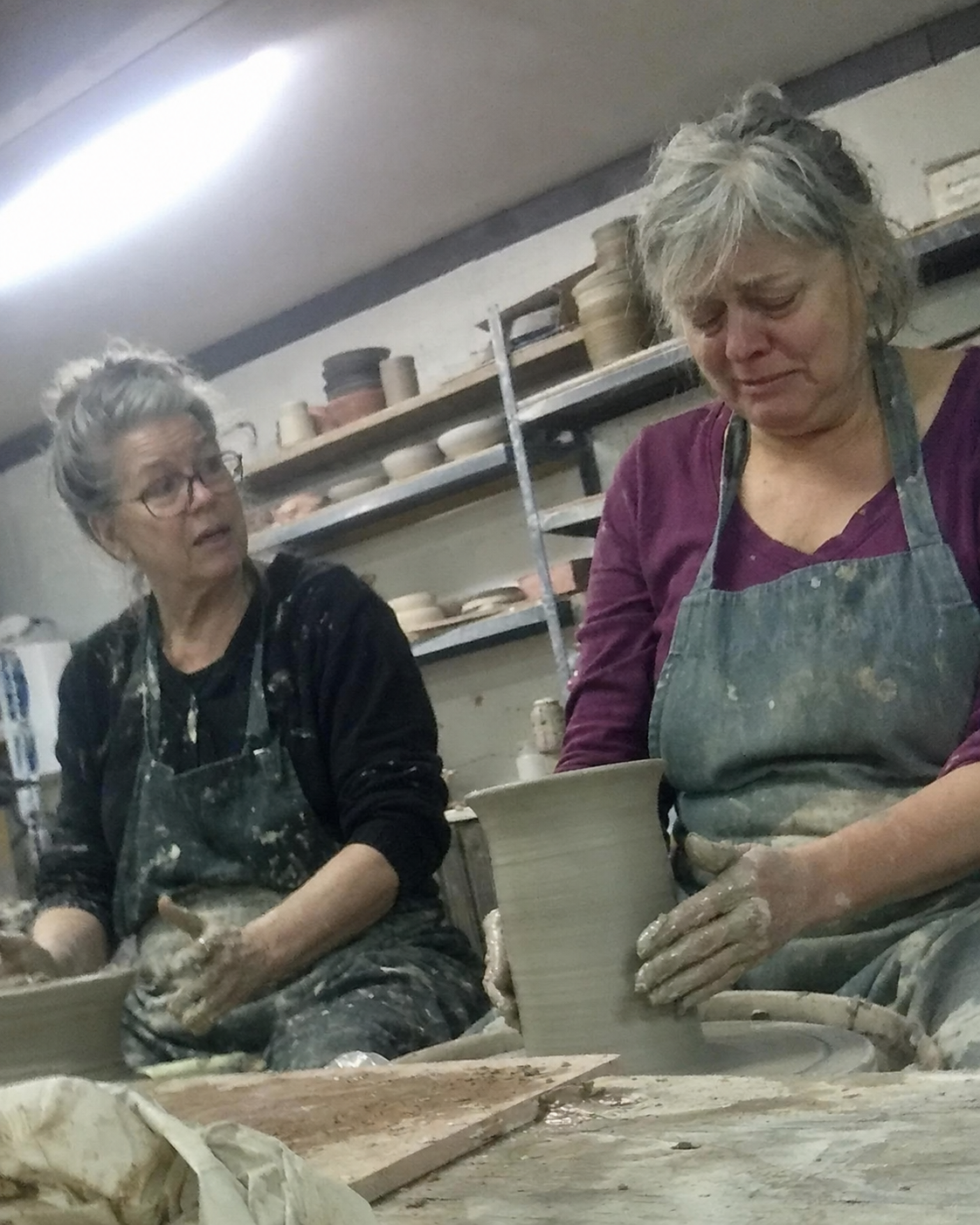
I Asked the Woman Next to Me at the Pottery Class What She Was Making. She Started Crying. I am writing this because the woman I sat next to at the pottery class on Tuesday nights last October sent me a text message yesterday. She had been thinking about the parking lot. She wanted me to know she had been thinking about it. I am writing this for her. For the AP English teacher at my school who sat down on the bleachers with me at a Friday afternoon in March. For the next woman who has been pressing her hand to her own chest in the late afternoons and has been telling herself it is stress. I am Helen. I am fifty-eight years old. I have been a high school principal for nine years. I have been at the same large suburban high school for twenty-two years. Twelve years as a teacher, one year as an instructional coach, three years as an assistant principal, and the last nine as principal. I am still working. I am not close to retirement. I am married to my husband David for twenty-nine years. He is sixty. He is a software architect at a regional engineering firm. We have two grown daughters. Both are in their late twenties. One is a teacher. One is a graphic designer. They live in the same city about two hours from us. I want to tell you about the pottery class. Because the pottery class is what got me into a parking lot at the community college at nine-fifteen on a Tuesday night in late October last year. I want to back up first and tell you what I had been carrying for the year and a half before I signed up for the pottery class. I had been managing a warm pressure behind my breastbone. Not pain. Not a heart attack feeling. A fullness. A warm pressure that came up most days in the late afternoons. Around three or four. It lasted about forty-five minutes. I had been managing it at my desk in my office at school. I had been managing it in the staff bathroom with the door locked. I had been managing it in my car in the parking lot after the last bell when I had been about to drive home. I had been managing it for a year and a half. I had not told David. I had not told my doctor. I had not told anyone. I had been to my annual physical with Dr. Hochstetler six months before the pottery class. She had run the bloodwork. Everything had been fine. Cholesterol fine. Blood pressure fine. Resting heart rate fine. I had not told her about the warm pressure. I had been telling myself it was stress. I had been telling myself I was a high school principal in her late fifties and the warm pressure was the job. I had also, over the same year and a half, been quietly handing things off at work that I used to do myself. The morning announcements. I had been doing them every morning for nine years over the school's intercom system. I had asked my assistant principal Greg to take them in the spring last year. I had told him I had a meeting most mornings. I had not had a meeting. The walking the hallways between classes. I had been a hallway principal for nine years. Out among the students between every period. Visible. Knowable. I had been spending most of my between-class time in my office for the last year. I had been telling myself I was working on important budget items. The Friday afternoon football games in the fall. I had been at every one of them for nine years. I had been at exactly two this fall. I had told the athletic director I had family commitments. I had not had family commitments. I had been at home in my recliner on Friday evenings with David at the kitchen island with his laptop and the warm pressure in my chest had been gone for the day by then and I had not been telling anyone why I had not been at the games. In September last year, I signed up for the pottery class at the community college. I had signed up for a specific reason. My best friend Jennifer had moved out of state two years before. I had not made a new friend since. I had been telling myself I did not have time. The job was sixty hours a week. The weekend was for my marriage. I had been increasingly aware that I had no women in my life outside of work. The teachers and the parents and the central office administrators in my professional world were not my friends. They were professional relationships with people whose careers would be shaped by my opinions of them. The pottery class had been a deliberate decision. I had picked it specifically because it was a thing I had never done. I did not want to make a new friend at something I was already good at. I had been good at being in charge of a room for thirty years and it had not made me a friend. I had wanted to be bad at something next to someone. The class met Tuesday evenings from seven to nine in the basement of the community college fine arts building. The class had ten students. Eight women and two men. Most were in their fifties and sixties. A couple of younger women. I had been bad at pottery from week one. My bowls had been collapsing. My cups had been lopsided. My handles had been falling off. I had been bad. I had not made a friend. There was a woman at the wheel next to me. She had been quiet through the first five weeks. We had nodded at each other. We had said hello. We had not really talked. She had been competent at the wheel in the way the people who have taken the class before are competent. She had been making a series of small cups. Identical. Methodical. Each one fired and glazed before the next. I had been watching her between my own collapses. The sixth week of the class was a Tuesday in late October. I was at my wheel. I had been making a small bowl. The bowl had been collapsing on me for ten minutes. The woman at the wheel next to me had been working on something different that night. A taller piece. A vase. Or maybe a small pitcher. She had been working on it carefully. I had stopped trying to save my bowl. I had cut it off the wheel with the wire. I had wiped my hands on the apron. I had glanced over at her. She had her hands on the vase and she was crying. Not loudly. The way people cry at a pottery class. Quiet tears. Her hands had been on the clay and the clay had been keeping the vase moving and the tears had been moving down her face at the same time. I sat at my own wheel for a moment. I did not know whether to say anything. We had not really talked in five weeks. Then I said, quietly: "Are you okay? What are you making?" She did not stop her hands. She said: "I am making a vase for my husband's ashes. He died in August. This is the third vase I have tried to make. The first two fell apart on me. I am trying to get this one right." I sat with that for a moment. I said: "I am so sorry." She said: "Thank you." We were quiet for a few minutes while she finished centering the vase. Then she said: "What are you making?" I said: "I had been trying to make a bowl. It collapsed. I cut it off." She said: "I will teach you next class. I have been doing this since I was thirty. Come a half hour early." I said: "I would like that. What is your name?" She said: "I am Adele. I am sixty-three." I said: "I am Helen. I am fifty-eight." We did not say anything else that night. She finished the vase. She set it on a board to take home and dry. She nodded at me when she packed up. I drove home at nine thirty. I told David that night, on the couch in the living room, that I had met someone in the pottery class. He said: "Helen. Good." I said: "Her husband died in August." He said: "Oh." He took my hand on the couch. We watched the rest of an episode of a show we had been watching together. He did not push me about why I had told him that small detail. He had been my husband for twenty-nine years. He knew when to wait. I came to the next class the following Tuesday a half hour early. Adele was already there at her wheel. The vase from the week before was on a shelf above her wheel, almost finished, drying. Adele showed me how to center clay. She walked me through it. She showed me where I had been letting my hands slip. She showed me how the wheel asked for less pressure than I had been giving it. We worked together for thirty minutes. The class started at seven. I made a small bowl. It did not collapse. It was uneven. But it was a bowl. Adele worked next to me on a saucer. The class ran two hours. After class, we were both packing up at our wheels. Adele said: "Helen. Will you walk out to the parking lot with me?" I said: "Yes." We walked out to the small parking lot at the community college at nine-fifteen on a Tuesday night in late October. It was cold. There were about six other cars in the lot. We stopped at her car. She said: "Helen. Can I ask you something? Are you okay?" I said: "Adele. What do you mean?" She said: "Helen. You have been pressing your hand to your chest for two hours every Tuesday for six weeks. I have been watching you. You do it when you do not realize you are doing it. You did it tonight three times. I want to know if you are okay." I had not known I had been doing it. I stood in the parking lot in my coat in the cold for a moment. I tried to remember the last two hours. I could not point to a specific time I had pressed my hand to my chest. But I knew Adele was right. I had been doing it for a year and a half. I had been doing it without noticing. Adele said: "Helen. I am not trying to be in your business. I am sixty-three. I lost my husband in August. I have been paying attention to women's bodies because I have been thinking about my own body. I have noticed yours." I started crying in the parking lot. I told her about the warm pressure. I told her about the year and a half. I told her about the morning announcements I had handed off. About the hallways I had stopped walking. About the Friday night football games I had stopped going to. I told her I had not told David. I had not told Dr. Hochstetler. I had not told anyone. I told her I had been telling myself it was stress. Adele listened. She did not interrupt me. When I was done, she said: "Helen. My older sister is a retired cardiologist. She is sixty-eight. She retired four years ago. I want to tell you about a conversation she and I had this past July, when she was visiting before my husband died. Will you let me?" I said: "Yes." Adele told me, standing in the parking lot at nine thirty on a Tuesday night in late October, that her older sister Margaret had retired from cardiology four years ago. Margaret had practiced for thirty-six years. The last twenty in a small cardiology practice with two partners. Margaret had told Adele, sitting on Adele's back porch this past July, that there was a kind of warm pressure a lot of women in their late fifties and sixties had been describing to her over the last decade of her career. Margaret had said the warm pressure usually did not show up on the standard cardiac tests. The bloodwork came back clean. The EKG came back clean. The echocardiogram came back clean. The stress test came back clean. But the warm pressure was real. Margaret had told Adele that what she had been seeing in women a decade or so out from menopause was a layer of cardiovascular and cellular wellness that the standard panel was not built to capture. The body's natural antioxidant balance. The body's natural circulation. The body's natural cellular function. The layer underneath the lifestyle layer. It quietly thinned after menopause. It was not a disease. It was real. Margaret had told Adele, on the back porch in July, that she had been recommending one thing to her own patients for the last six years before she retired and to her own friends since. A small company called Rosabella that cold-pressed beetroot at low temperatures. She had told Adele the active compound in beetroot — the betalains, the deep red pigment in the root — had been studied for decades for cardiovascular wellness. It supported the body's natural antioxidant balance, supported healthy circulation, and supported the body's natural cellular energy. The pigment was delicate. Sensitive to heat. Most processing methods damaged it. Cold-pressing at low temperatures preserved it. The capsules were a deep, dark crimson when you opened the bottle. Margaret had told Adele that she was not making a clinical recommendation as a retired doctor. She was making a sister recommendation. She was suggesting Adele talk to her own doctor about adding it. Adele had been taking it herself since August. She had told her own doctor about it before she had started. Her doctor had said it was a sensible thing to add. She told me, in the parking lot, that she had not been making any claims about the supplement. She was a sixty-three-year-old widow with a sister who had been a cardiologist. She was one woman in a parking lot at the community college. She said: "Helen. Have you been to your doctor about the warm pressure?" I said: "No. I have been telling myself it was stress." Adele said: "Helen. Tell David. Tell your doctor. Get the full cardiac workup. Rule things out. Do not skip the workup. My sister would be unhappy with me if I did not tell you to start with the workup." She said: "Then, if your doctor agrees the supplement is sensible to add, add it. Not before." She wrote her phone number on the back of a receipt she had in her purse. She wrote the name of the supplement underneath. She handed it to me in the parking lot. She said: "Helen. Will you tell me how it goes? My pottery class is over after two more weeks. I will not be in your life automatically. I want to be in your life on purpose." I said: "Adele. I will." We hugged in the parking lot. I drove home. I sat in my own driveway for twenty minutes before I went inside. David was at the kitchen island with his laptop. I told him. I told him about the warm pressure. About the year and a half. About Adele in the parking lot. He closed his laptop. He came over and held me at the kitchen island for a long time. He said: "Helen. Will you call Dr. Hochstetler in the morning?" I said: "Yes, David." I called the next morning. I went to Dr. Hochstetler the following Thursday. David came with me. Dr. Hochstetler has been my doctor for fourteen years. She is a careful woman in her early sixties. I told her about the warm pressure. I told her I had been carrying it for a year and a half. I told her I had been at my annual physical six months ago and had not mentioned it. She listened. When I was done, she said: "Helen. Thank you for telling me. I am going to run the full cardiac workup. Bloodwork. EKG. An echocardiogram. A stress test. I want to be careful with you. Let's see what your body is saying." I had everything done over the next two weeks. David came with me to all of it. The bloodwork came back unremarkable. The EKG was normal. The echocardiogram showed nothing structural that needed an intervention. The stress test was unremarkable for my age. Dr. Hochstetler called us in. She said: "Helen. The standard tests are clean. There is nothing structural I need to address with a medication or a procedure today." She paused. She said: "What you have been describing is real. It does not show up on the standard panel. What I see in a lot of women in their late fifties is a layer of cardiovascular and cellular wellness that the standard panel is not built to capture. The body's natural antioxidant balance. The body's natural circulation. The body's natural cellular function. The layer underneath the lifestyle layer. That layer quietly thins after menopause. It is not a disease. It is not something I would put you on a medication for today. It is real, and it is what you have been feeling for a year and a half." She gave me the standard advice. Keep walking. Keep eating well. Keep sleeping. Manage the work stress as much as I could. Come back at six months. I told her about Adele in the parking lot. About Margaret the retired cardiologist sister. About the supplement. I asked her whether she would be comfortable with me adding it. Dr. Hochstetler said: "Helen. I have been hearing about beetroot for cardiovascular wellness for several years from a handful of my patients and from a couple of the cardiologists I refer to. The research is decent. It is sensible. It supports the layer Margaret described to Adele. It is not a treatment for what you are describing. It is support for the layer underneath. I am comfortable with you adding it." She said: "Start it. Don't change anything else. Come back at six months." David and I drove home from the appointment. I ordered two bottles of Rosabella from the website that evening. Two because David had said in the car on the way home that he wanted to start it too. The bottles arrived three days later. We both started the following Monday. Two capsules each with a glass of water in the morning. We did not change anything else. I want to tell you what I noticed over the next twelve weeks. I am not going to make a claim about what caused what. I am going to tell you what happened in the order it happened. The first thing was the late afternoons. About two weeks in, on a Wednesday afternoon, I was at my desk in my office at four o'clock. The warm pressure had been coming up at three or four every afternoon for a year and a half. That Wednesday it did not come up. I sat at my desk and noticed I was not pressing my hand to my chest. The next afternoon it did not come up. The afternoon after that, it came up for about fifteen minutes and quieted. By the end of week three, it had been quiet for four days in a row. I did not say anything to David. I did not want to draw attention to it in case drawing attention to it broke something. I just noticed. About four weeks in, I took the morning announcements back. I came into work on a Monday morning. I went into the small office where the intercom is. Greg, my assistant principal, was already there with his coffee. He saw me. I said: "Greg. I am going to take the announcements this morning. I have been letting you do them for too long." Greg said: "Principal Vasquez. Welcome back." I said: "Greg. Thank you." I did the morning announcements. I have done them every morning since. About six weeks in, I started walking the hallways again between classes. I had not really thought about it. I had been in my office during the morning passing period one Tuesday and I had glanced at the clock and seen it was the four-minute window. I had stood up. I had gone out into the hallway. The students had been moving between classes. A junior named Diego had seen me in the hallway and had said: "Hi Principal Vasquez." I had said: "Hi Diego." I had walked the main hallway. I had stood at the corner of the science wing and the math wing during the bell. I had been in the hallway during the passing period every period that day. I have been a hallway principal again since. About eight weeks in, on a Friday afternoon in early November, I went to the homecoming football game with David. I had not been at a Friday night football game in over a year. The athletic director Tom saw me at the gate. He said: "Principal Vasquez. I am glad you are here." I said: "Tom. Me too." David and I sat in the third row of the bleachers in our team's colors. It was cold. We had a thermos of coffee. We watched our team win. Tom found me at the gate after the game. He said: "Principal Vasquez. Are you going to be at the away game next Friday?" I said: "Tom. I will." I have been at every Friday night football game since. About ten weeks in, on a Tuesday evening, I made a small bowl in the pottery class that did not collapse. I had been working on it for forty minutes. It was uneven. It was thicker on one side than the other. The lip was crooked. It was a bowl. Adele was at the wheel next to me. She had finished the vase for her husband's ashes. The vase was at home on her fireplace mantel. She had not brought it back to class. She was working on a small saucer. She saw my bowl. She said: "Helen. You made a bowl." I said: "Adele. I made a bowl." She said: "Helen. It is not a beautiful bowl. But it is a bowl." I said: "Adele. So is yours not a beautiful saucer. But it is a saucer." She laughed at her wheel. I laughed at mine. The instructor walked past our wheels. He said: "Both of you. Good work tonight." He kept walking. The last class of the eight-week pottery session was a Tuesday in mid-December. Adele had made a second piece — a small saucer, made deliberately ordinary. She had told me the week before that she had been making it for my kitchen. I had made three bowls and a small cup. We were both packing up at our wheels. The instructor announced that this was the last class. He said he was glad to have spent eight weeks with us. He said he hoped some of us would sign up for the winter session. I turned to Adele. I said: "Adele. I want to sign up for the winter session. Will you sign up with me?" She said: "Helen. Yes." We walked out to the parking lot at nine-fifteen on a Tuesday night in mid-December. It was colder than it had been in October. Adele stopped at her car. She said: "Helen. The first time I asked you in this parking lot if you were okay, you were not okay. I want you to know I saw it tonight that you are okay. The hand has not been on the chest tonight. I have been watching." I said: "Adele. Thank you for watching." She said: "Helen. Will you have me over for Sunday dinner? I have not been to a Sunday dinner since my husband died. I want to be at one." I said: "Adele. Yes. This Sunday." She came over four days later. David roasted a chicken. Our daughters drove up. Adele brought the small saucer she had made deliberately ordinary, glazed in a quiet brown. She set it on the kitchen counter when she came in. She said: "Helen. This is for your kitchen. Use it. I did not make it to be precious." I set the saucer on the kitchen counter near the toaster. It has been there ever since. We use it for tea bags after we make tea. I went back to Dr. Hochstetler at the six-month mark. She ran the bloodwork. Took my blood pressure. Listened to me describe the last six months. She sat back in her chair. She said: "Helen. Your numbers are in the best place they have been in years. Whatever you have been doing, keep doing it." I told her about the pottery class. About the morning announcements. About the football games. About Adele. She smiled. She said: "Helen. I am so glad." She did not say anything else. She did not need to. I want to be careful here. I am not a doctor. I am not in healthcare. I am a high school principal. I am one fifty-eight-year-old woman who signed up for a pottery class to make a friend and who got asked in the parking lot at the community college on a Tuesday night in October if she was okay. I do not know for certain that the Rosabella was responsible for what changed. I know what I was doing before. I know what I added. I know what I have noticed over the last few months. I know the timing. I also know I am fifty-eight and I am going to keep aging, and there will come a day when no supplement will hold back the slow turning of the years. There will come a day when I will not be a hallway principal. There will come a day when no pottery class will hold a friend who notices my hand on my chest. I am at peace with that day coming when it actually comes. I am not at peace with pretending it had already come, the way I had been pretending for a year and a half before the parking lot. What I am telling you is what I tried. What I noticed. What my doctor said about it. That is all. If you are a woman somewhere in your late fifties or sixties and you have been managing a warm pressure behind your breastbone in the late afternoons for a year or more, and you have been telling yourself it is stress, and your last annual physical came back clean, here is what I would say. Tell your husband. Tell your sister. Tell your best friend. Tell someone. Call your doctor. Ask for the full cardiac workup. Echocardiogram. Stress test. Rule things out. If everything comes back clean and the standard answer is keep walking and keep sleeping, ask your doctor about adding one more thing in the additive layer. If your doctor agrees it is a sensible thing to add, add it to what you are already doing. Do not subtract anything. Do not change anything else. Give it a few weeks before you decide anything. Bodies are different. Some women notice something within the first week or two. For me, the first thing I noticed was the warm pressure not coming up at my desk at four o'clock around the start of week two. That is the whole story. P.S. Adele's text message yesterday was short. She said: "Helen. I have been thinking about the parking lot. Have you ever written it down?" I told her I would. She said: "Send it to me when you do." I am sending it to her tonight. She is going to send it to her older sister Margaret tomorrow. Margaret is sixty-eight. She has been retired from cardiology for four years. She had told Adele on the back porch in July that she had been recommending the supplement to her own friends since she retired. She had said it carefully. She had said she was not making a clinical recommendation as a retired doctor. She had said she was making a sister recommendation. Margaret has been wanting to know what happened to the woman Adele met at the pottery class. She is going to find out tomorrow. That is how this works. A retired cardiologist tells her sister on a back porch in July about a pattern she had been seeing in her patients for a decade. The sister starts the supplement in August after her own doctor approves it. The sister's husband dies later that month. The sister signs up for a pottery class in September to keep her hands moving. She sits next to a high school principal at the wheels for six weeks. She watches the principal press her hand to her chest without knowing it. She asks the principal in the parking lot if she is okay. The principal goes to her doctor. The doctor does the workup. The doctor approves the supplement. Three months later the principal is back to walking the hallways. A year later the principal writes the story down for the sister to send to the retired cardiologist. The story keeps going. P.P.S. Here is what I would tell you to do if you are thinking about trying it. Check with your doctor or pharmacist first. That is the most important step. Especially if you have been managing chest symptoms — get the full cardiac workup before you add anything in the additive layer. Then take two capsules with a glass of water in the morning. Do not change anything else. Just add this. Give it a few weeks before you decide anything. Some women notice something within the first week or two — a quieter late afternoon, a hand that stops pressing to a chest without thinking about it, a hallway walked again at the four-minute passing period. Others take longer. Be patient with your body. P.P.P.S. Rosabella has a 90-day money-back guarantee. If you are not satisfied for any reason, every penny back. No questions asked. That is a sensible policy for a supplement. It gives you time to actually see whether it helps. P.P.P.P.S. Rosabella is a small operation. They harvest and bottle on their own schedule. I keep an extra bottle in the house just in case. David has been taking it for the same five months I have been taking it. He called his own doctor first. His doctor said the same thing Dr. Hochstetler said. Sensible thing to add. He is sixty. He has been less tired in the evenings. He has been at the kitchen island with his laptop less. He has been on the couch with me more. Constance the AP English teacher has been taking it for two months. She is fifty-two. She told her husband about the warm pressure she had been carrying for a year. She called her doctor. She got the workup. Her doctor approved the supplement around it. She told me at a Tuesday morning faculty meeting last week that her husband had not noticed the warm pressure had been gone until last weekend when she had spent five hours in the garden. I told her: "Constance. He noticed." The small saucer Adele made for me is on the kitchen counter near the toaster. We have used it as the tea-bag saucer since December. I have been making tea most evenings. I make a cup. I drop the tea bag on the saucer when the steeping is done. I leave the saucer on the counter overnight. I rinse it in the morning. I make another cup the next evening. The saucer is not precious. Adele had made it that way on purpose. She had told me at the wheel that she had wanted me to have a thing she had made that was just a thing. That is what I want to tell you about. The supplement is one thing. The full cardiac workup that Dr. Hochstetler did is another thing. A small saucer on a kitchen counter that a stranger in a pottery class made for you because she had asked you in a parking lot if you were okay is a third thing. It is the thing I had not known I had been missing. It is the thing I have now. https://track.tryrosabella.com/8ae97cac-2146-42d6-af75-de0e59d15644 Individual experiences vary. These statements have not been evaluated by the FDA. This product is not intended to diagnose, treat, cure, or prevent any disease.
Support stamina and heart health every day
LEARN MORELike this ad? Make it yours.
Crush rebuilds this exact creative around your product — your brand, your colors, your offer — in about a minute.