
Inactive· since Mar 2, 2026
- 11
- days it ran
- 1
- relaunches
- 13
- EU reach
Ad copy
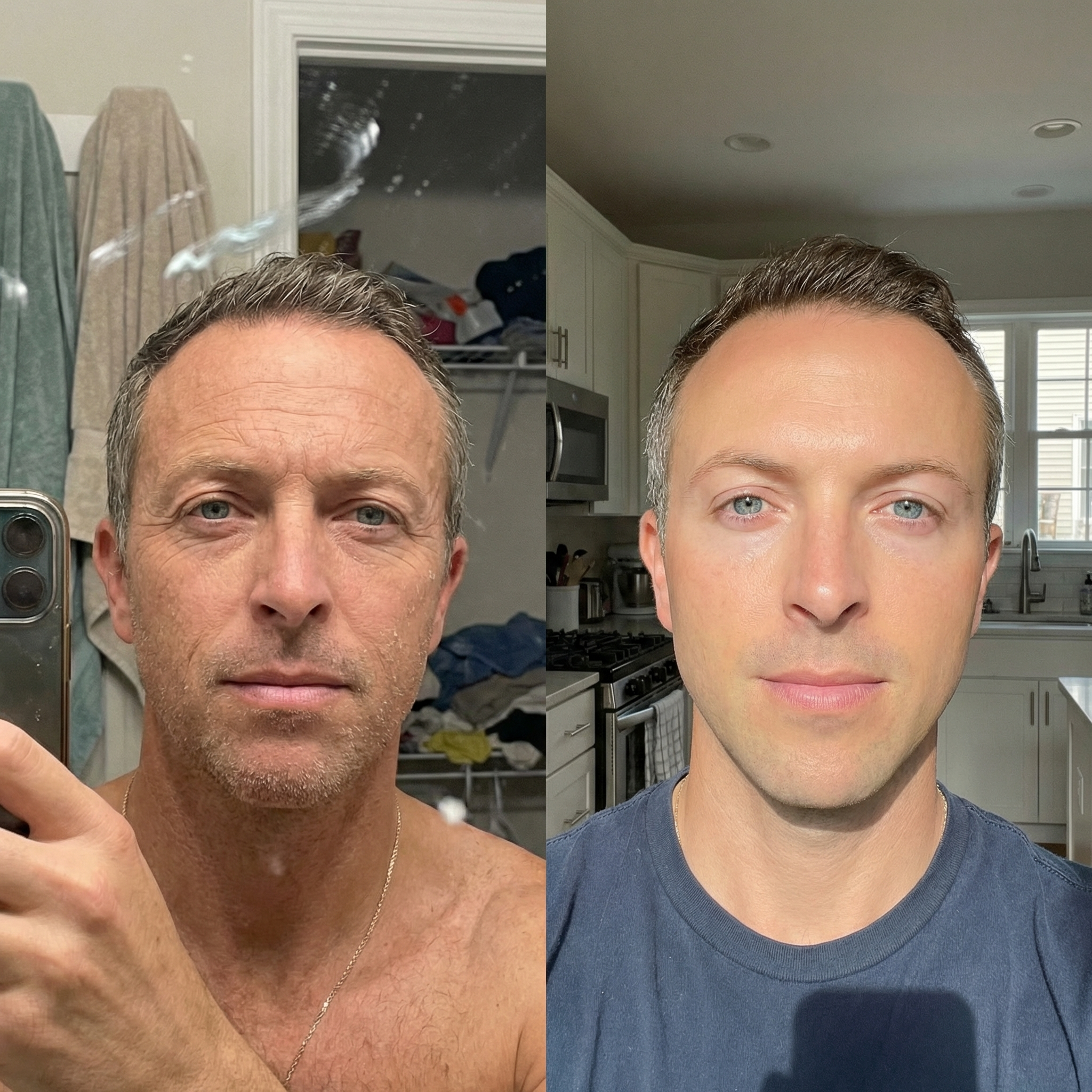
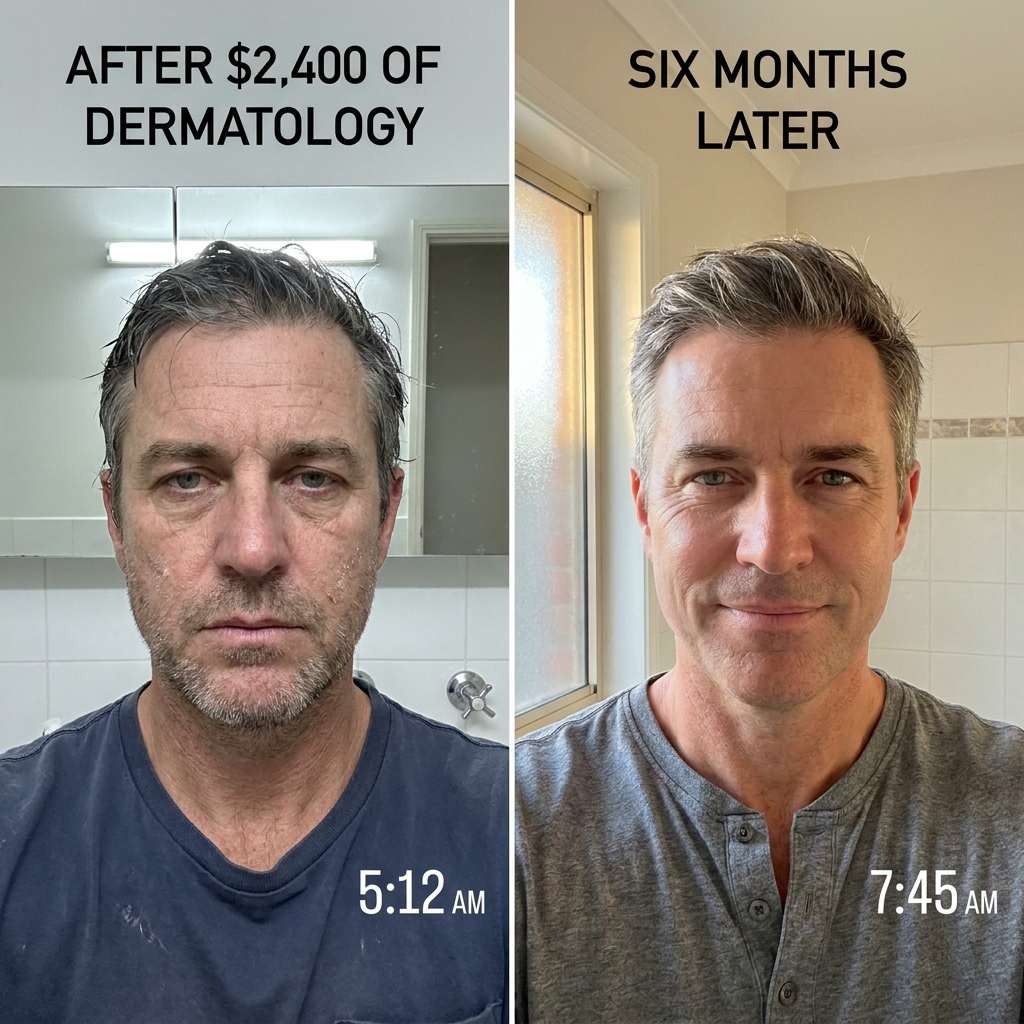
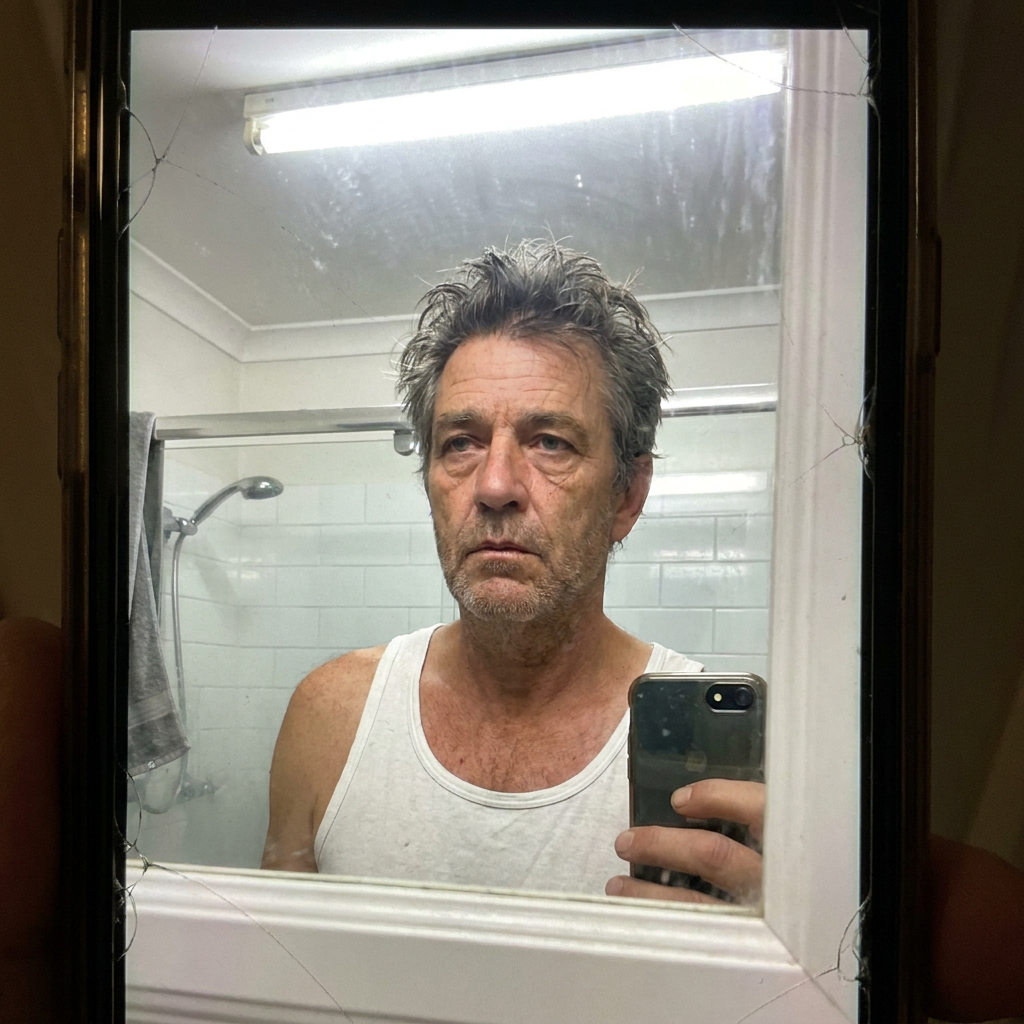
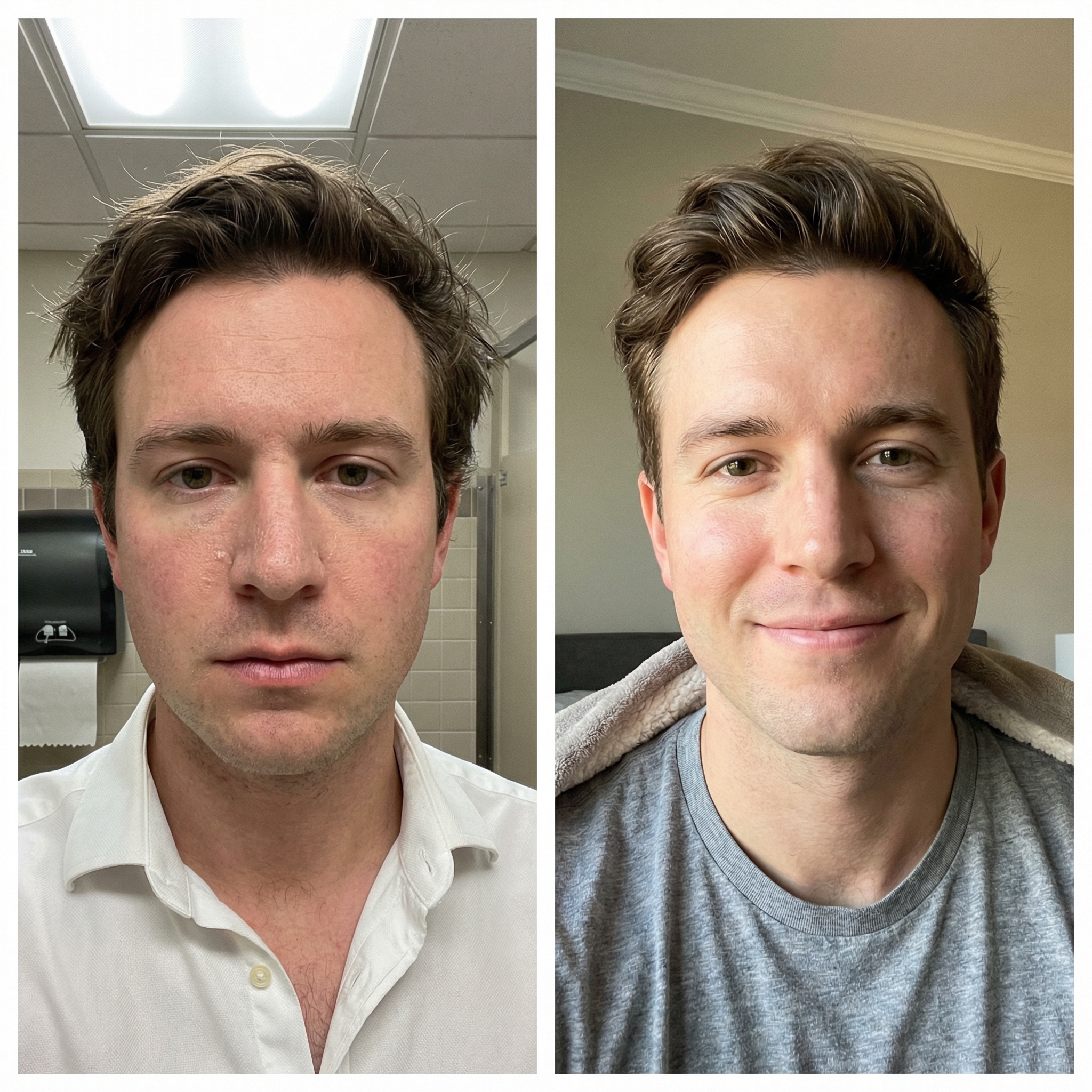
I took that photo on the left in a work bathroom mirror on a Tuesday afternoon. I hadn't planned to take it. I just caught my reflection walking past and stopped. I stood there for probably thirty seconds just looking at myself. Red. Blotchy. Dry patches around my nose. Skin that looked irritated and inflamed for no reason I could explain. I was 34. I had a good job. I was about to walk into a client meeting. And I looked like I'd spent the weekend doing things I shouldn't have. I hadn't. I'd had an early night and a green smoothie for breakfast. I took the photo so I couldn't pretend it wasn't happening anymore. Because that's what I'd been doing for the better part of two years. Pretending. Telling myself it wasn't that bad. That people probably didn't notice. That it would sort itself out. It didn't sort itself out. I'd tried everything the internet recommended. Niacinamide. Hyaluronic acid. A $90 cleanser a bloke on Reddit swore by. A dermatologist who prescribed me something that made it worse before she told me to "give it more time." I gave it more time. My skin gave me more redness. The thing that finally broke me was a job interview. Senior role. Company I really wanted. I'd prepared for weeks. Knew the brief inside out. I walked in, shook hands, sat down. And spent the entire interview aware that the panel could see my skin. Not paranoid. Aware. There's a difference. I didn't get the job. Maybe it had nothing to do with my skin. Probably it didn't. But I couldn't stop thinking about it. That night I went looking. Not for another product recommendation. For an actual answer. Why was my skin like this. What was actually causing it. Not what to put on top of it — what was driving it underneath. What I found took me completely by surprise. The products I'd been using to fix my skin were most likely making it worse. Here's why. Your skin has a barrier. It's made of natural oils — saturated fats your body produces called sebum. That barrier is what keeps moisture in and irritants out. When it's intact, your skin is calm, clear and balanced. Most skincare products — especially the ones marketed for "problem skin" — are full of synthetic compounds your skin doesn't recognise. So it works overtime trying to flush them out. In doing so it strips its own barrier oils faster than it can replace them. The more you treat the problem the worse the barrier gets. The worse the barrier gets the more inflamed and reactive your skin becomes. I'd been in that cycle for two years without realising it. The answer wasn't a better synthetic product. It was something your skin already knows. I nearly kept scrolling when I read what it was. Beef tallow. Animal fat. On my face. I read everything I could find. Couldn't find a reason it shouldn't work. The science was straightforward — beef tallow has the same saturated fat structure as human sebum. Molecularly identical to what your skin barrier is already built from. Your skin doesn't fight it. Doesn't react to it. Just absorbs it completely — because as far as your skin is concerned it's already familiar with this. No synthetic compounds. Nothing to flush out. Nothing to react to. I ordered it feeling slightly ridiculous. Used it every morning and night for six weeks. Week two the redness started calming down. Week four a colleague I'd worked with for three years stopped me in the corridor and said — "Have you done something different? You look really well." I'd done one thing different. Week six I took the photo on the right in my bathroom at home on a Saturday morning. Same man. Same face. Same life. I still think about that job interview sometimes. I don't think about my skin anymore. Four ingredients. Sixty seconds. That's the whole routine. If your skin has been getting worse despite everything you've tried — It might not be your skin. It might be what you've been putting on it.
Read This If Your Skin Gets Worse in Winter 👆
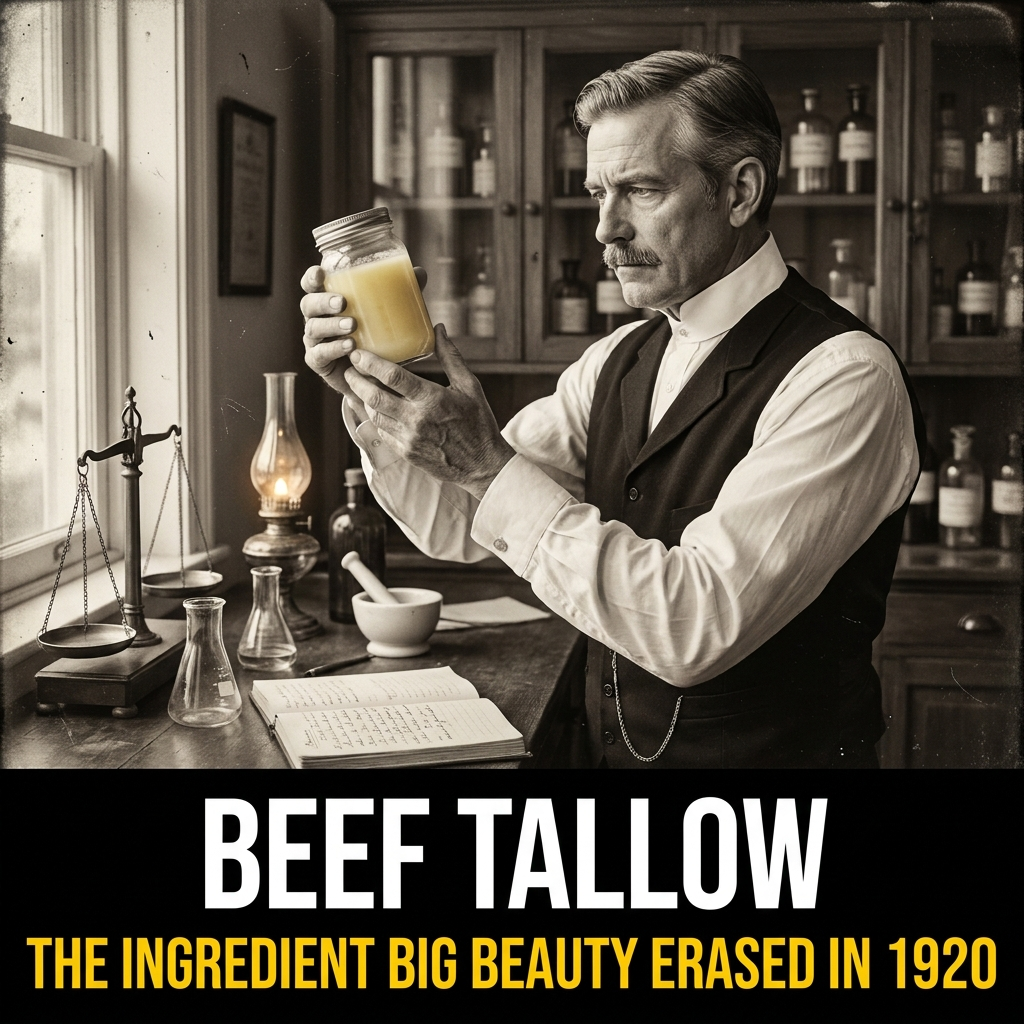
The problem? Most men have never heard of it. And the $500 billion skincare industry has zero incentive to tell you about a 4-ingredient solution.
LEARN MORELike this ad? Make it yours.
Crush rebuilds this exact creative around your product — your brand, your colors, your offer — in about a minute.