
Active· since Jun 11, 2026
- 46
- days running
- 0
- relaunches
Ad copy
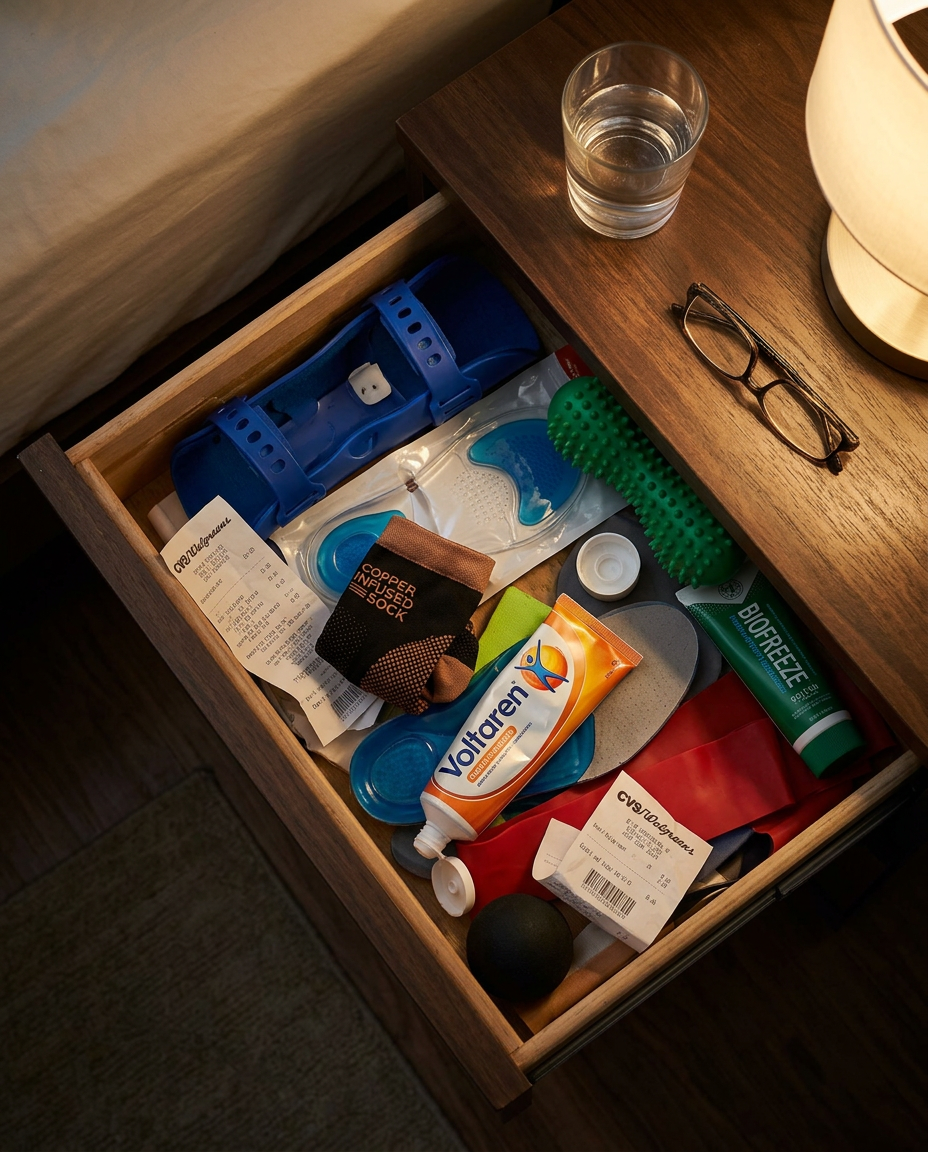
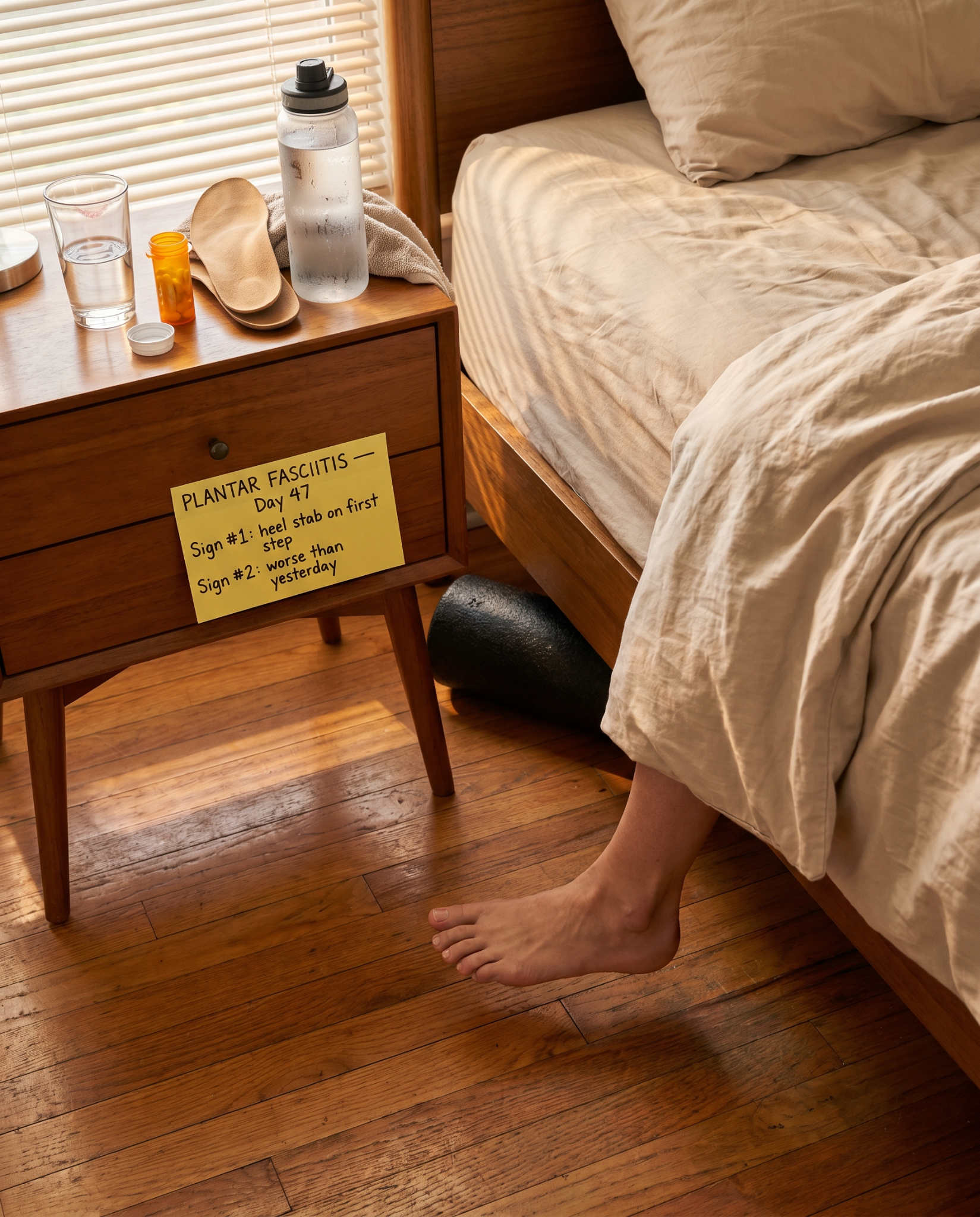
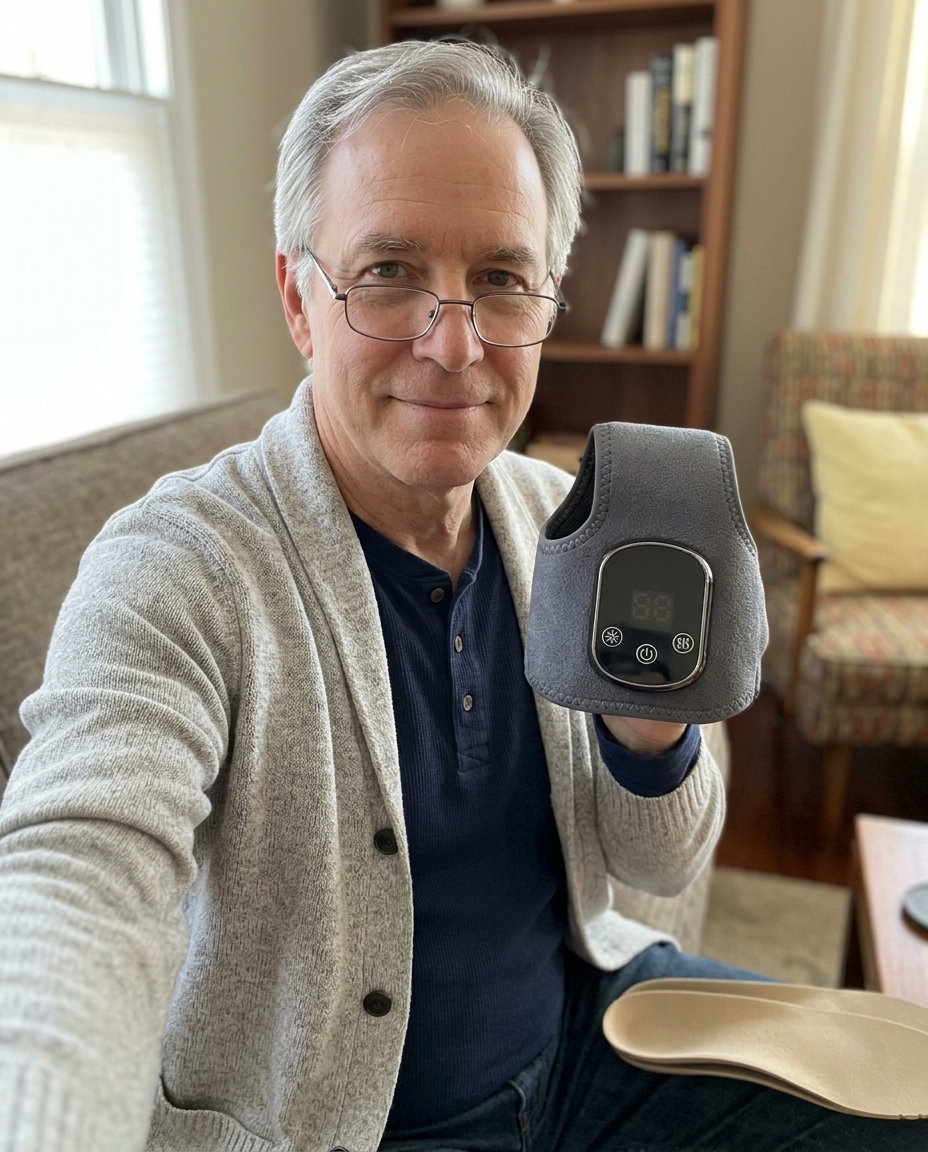
After 30 years of prescribing orthotics, stretches, and cortisone shots for plantar fasciitis — do you know what I never once told a patient? That the tissue they're trying to heal has almost no blood supply. I retired from orthopedic surgery fourteen months ago. I'd been in practice since 1994. And in those three decades, I followed the same protocol for plantar fasciitis that every orthopedic surgeon follows: Start with stretches. If that doesn't work, try orthotics. If that doesn't work, cortisone injection. If that doesn't work, more cortisone. Maybe physical therapy. Maybe a night splint. And if all of that fails — and for a lot of patients, all of it fails — I'd say "give it more time." I said that a lot. — — — I never questioned the protocol. It was standard of care. Every colleague I knew prescribed the same things in the same order. Some of my patients got better. Plenty didn't. The ones who didn't would come back every few months. Same limp. Same morning pain. Same frustration. I'd try the next thing on the list. What I never did — and I think about this now — was stop and ask a simple question: Why isn't this tissue healing? A strained muscle heals in weeks. A bone fracture heals in six to eight weeks. Why was the plantar fascia taking months, sometimes years, and often never fully recovering? — — — Six months after I retired, I got plantar fasciitis myself. I want to be honest about this. There's an irony to spending 30 years treating something and then experiencing it for the first time from the other side of the desk. The first morning I stepped out of bed and felt that sharp jab in my heel — like someone had pushed a thumbtack into the bottom of my foot — I thought: so that's what they've been trying to describe to me. I did the stretches. I know how to do them correctly. I bought good orthotics — not the $20 drugstore ones. I iced it. I rested. Eight weeks later, the thumbtack was still there. Every single morning. — — — A former colleague sent me a paper. A vascular study on connective tissue blood supply. I almost didn't read it — I was retired, I was done with journals. But I opened it. And within ten minutes, I understood something that reframed 30 years of my clinical practice. The plantar fascia has one of the poorest blood supplies of any tissue in the human body. Unlike muscle — which is packed with blood vessels and heals quickly when damaged — the fascia receives almost no direct blood flow. When you develop micro-tears from standing, walking, being on your feet — your body tries to send repair cells to the damage site. But the blood can't get there. The vessels feeding that tissue are sparse and, in most people over 50, further narrowed by age and reduced circulation. That's why it doesn't heal. Not because you did the stretches wrong. Not because your orthotics weren't expensive enough. Because the tissue literally cannot get the blood it needs to repair itself. — — — I sat with that for a while. Then I went back through the protocol I'd prescribed for 30 years and looked at every single intervention through this lens: Stretches — loosen the tissue. Don't improve blood supply. Orthotics — redistribute pressure. Don't improve blood supply. Ice — constricts blood vessels. Actually reduces blood supply. Cortisone — reduces inflammation. Doesn't address the reason the inflammation keeps returning. Compression socks — squeeze from outside. Don't open the micro-vessels or push blood through to the fascia. Night splints — hold the tissue in position. Don't improve blood supply. Every one of them. The same category. Work around the problem, never on it. I had prescribed the same category of wrong answer for three decades. — — — My colleague — the one who'd sent the paper — told me his wife had been dealing with plantar fasciitis for over a year. Same story. Podiatrists. PT. Cortisone. The whole sequence. She'd started using something called the SOLEUS Foot Therapy System. I almost didn't look into it. I had 30 years of prescribing things that belonged to category one. I wasn't eager to evaluate category two. But the mechanism made sense to me immediately — and I'm not someone who says that easily. It's a wearable foot wrap. Cordless. You put it on before bed. Fifteen minutes. It delivers three therapies simultaneously: Targeted heat — opens the micro blood vessels feeding the fascia. The small vessels that have narrowed from age, inactivity, and poor circulation. Rhythmic compression — pumps blood through those opened vessels. The same circulation benefit your feet get from walking, except you're lying down. EMS nerve stimulation — gentle electrical pulses that activate nerve signaling around the fascia and sustain the increased blood flow. Heat opens the vessels. Compression pushes blood through. EMS keeps the signaling active. That's the approach. Get blood to the tissue that can't get blood on its own. — — — I ordered one. $49.99 — it was on sale from $99.99. I used it that night. The next morning, the thumbtack was still there. But it wasn't a 7. It was maybe a 5. By the end of the first week, I was noticing it less. By week three, I was walking to the kitchen in the morning without bracing for that first step. I'm not going to make a medical claim about this device. It's a wellness device, not a prescription. I spent my career being precise about language like that, and I'm not going to stop now. But I will say this: in 30 years of practice, I never once prescribed anything that addressed the blood supply problem. Not once. And I wish I had. — — — If you've been through the cycle — the stretches, the orthotics, the cortisone, the drawer full of things that were supposed to work — I'd encourage you to read the research on fascial blood supply. Ask your doctor about it. And consider whether everything you've tried belongs to the same category. The SOLEUS Foot Therapy System is 50% OFF right now. It comes with a 30-day money-back guarantee. I'm not your doctor. But I was someone's doctor for 30 years. And this is the conversation I wish I'd had with every one of them.
Why Your Plantar Fasciitis Keeps Coming Back
A retired orthopedic surgeon ranks the 5 most common plantar fasciitis treatments — and reveals why 4 of them share the same fatal flaw.
SEE DETAILSLike this ad? Make it yours.
Crush rebuilds this exact creative around your product — your brand, your colors, your offer — in about a minute.