What did Olivia find?
What did Olivia find? Facebook ad: “Learn more”
Ran for 1 day, from July 14 to July 15, 2026, the last day Crush saw it.
Run by What did Olivia find? on Facebook. Crush is not the advertiser and does not verify its claims. See this ad in Meta's Ad Library(opens in a new tab)
Want an ad like this for your product?
Crush makes new ad images for your product from this ad: your logo, your product photo, your offer.
Trials from $19.95 USD, then $79.95 USD a month. Cancel anytime.
About this ad
- Meta Ad Library ID
- 932170589920303
- Platforms
- Facebook, Instagram, Audience Network, Messenger and Threads
- Relaunches
- 1
Ad text
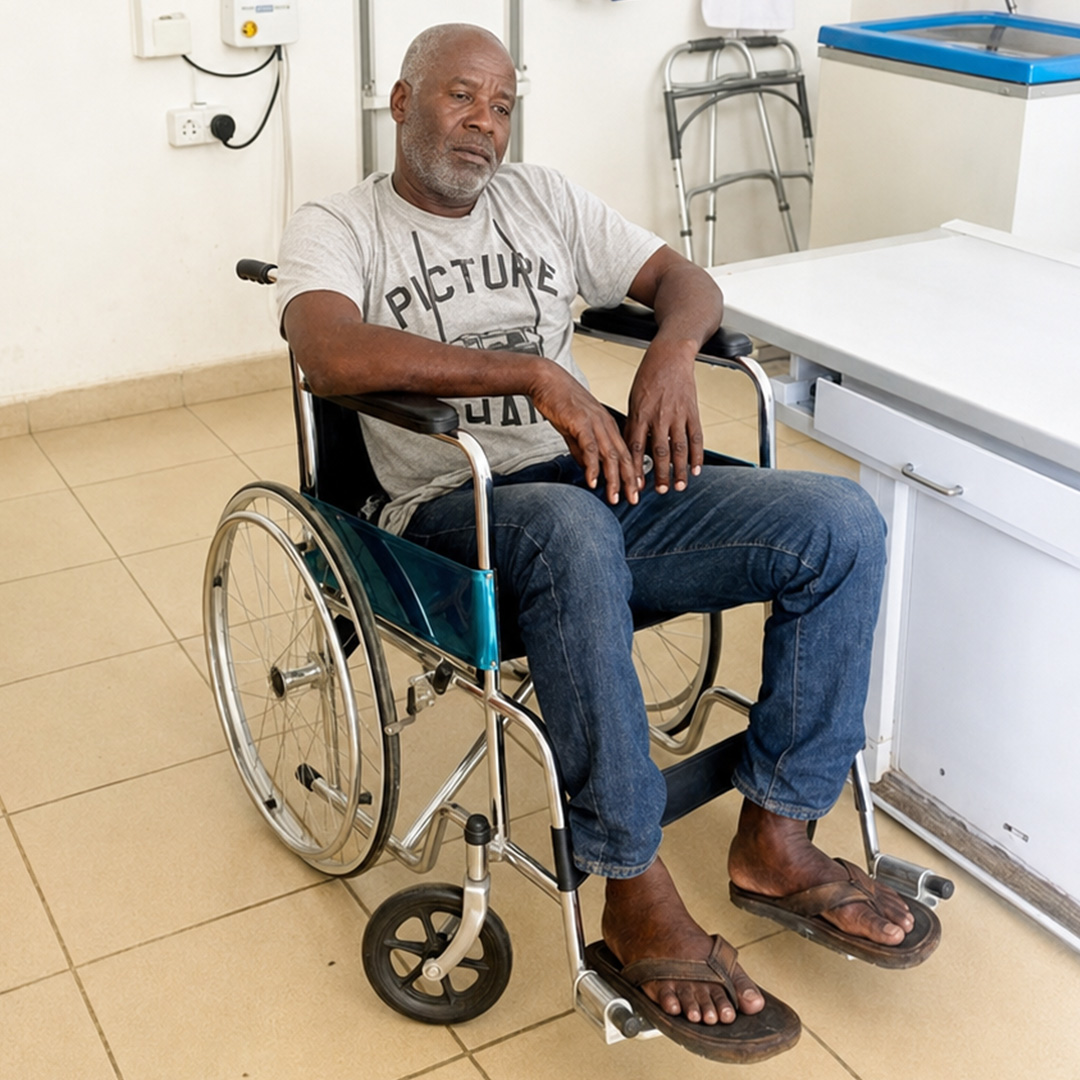
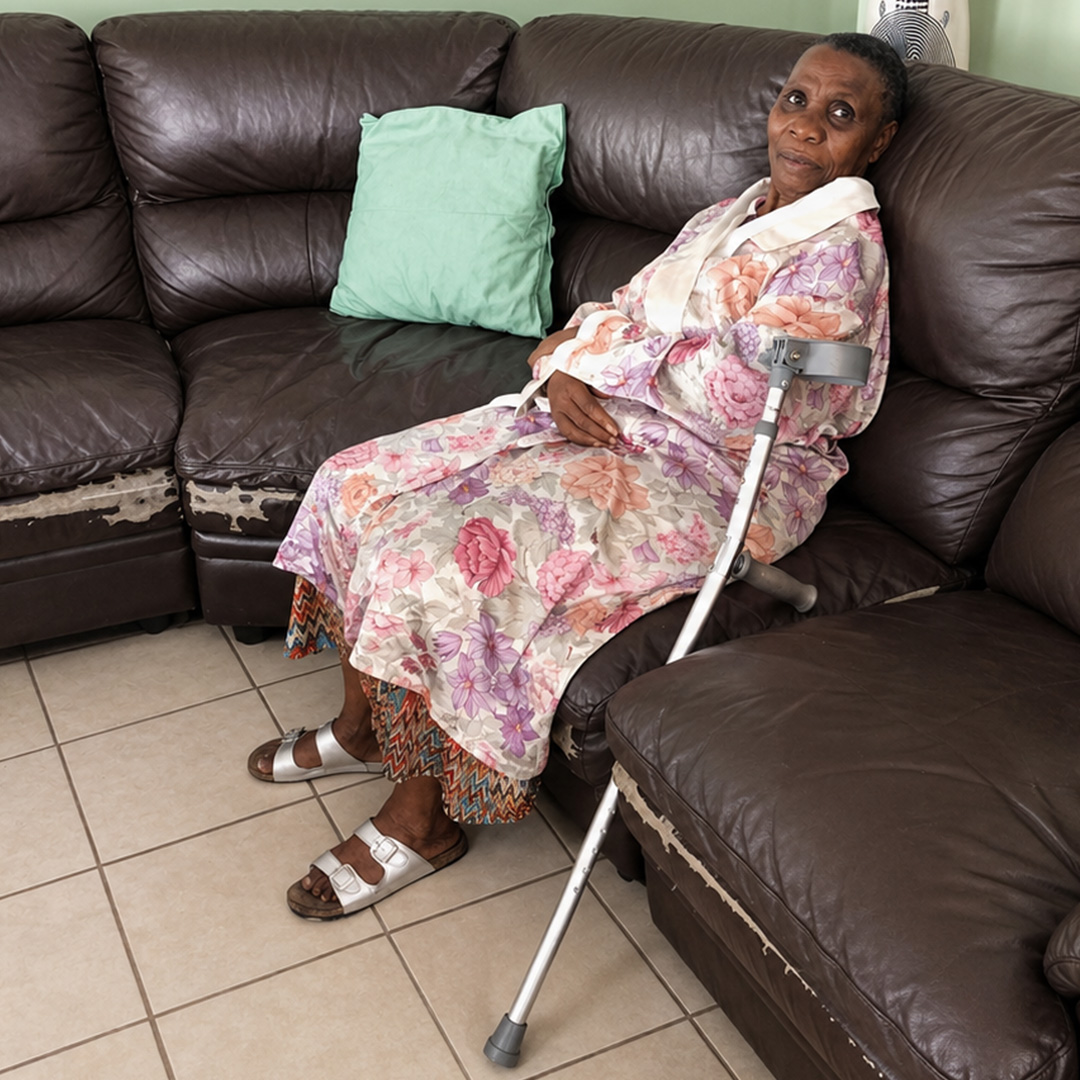
I am sixty-six years old. My husband didn't leave me, cheat on me, or move in with another woman. Still, one morning came when I realized that we had been living as strangers in the same house for half a year. My name is Ruth Wambui. My husband, Samuel, and I have been married for forty-two years. We live in Nakuru in a small house with a garden and a small maize farm. Samuel inherited the farm from his father. We worked together in it from a young age. We didn't have a perfect marriage. We argued about money, raising children and who left the gate open. But we always had dinner together, we went to bed together, and every year we spent at least a few days at Lake Naivasha. Samuel worked as a carpenter all his life. He lifted heavy planks, bent over machines, made stairs and doors. He was proud of his hands and his ability to fix anything. His hip started hurting six years earlier. At first, only after long periods of work. He said he pulled a muscle. Later, the pain spread to his lower back and thigh. He limped in the morning, and in the evening he could barely get up from the armchair. I asked him to see a doctor. "When I have time." "You're retired. You have time." "Then when it gets worse." It got worse. He woke up every night. First just once, then three or four times. He rolled over, sat up, walked around the bedroom. When I asked what was wrong, he said nothing. I didn't sleep either. I woke up to his every move. We woke up tired in the morning and became increasingly impatient with each other. Samuel finally went for an examination. The scans showed advanced hip joint arthrosis, lumbar spine changes and inflammation. He was given medication and recommended exercise and physical therapy. At first he did it conscientiously. Then it still hurt after the treatments and he gave up. The pills helped for a few hours, but they hurt his stomach. He took larger and larger doses. "You can't take that much," I said. "Then you feel it for me." It was the first time he spoke to me like that. Later, there were more and more such occasions. If he dropped something, he got angry. If I tried to help, he told me. If I didn't help, he said I didn't care what happened to him. The pain slowly took everything from us. First the evening walks. Then the friendly visits. Later, he didn't even come out to the garden with me. One Sunday we were invited to our daughter Anne's for lunch. Samuel got dressed, but stopped at the entrance. "I'm not going." "They are already waiting." "I don't want to be seen like this." "How?" "Like a cripple." I went alone. Anne asked where her father was. I said he had a headache. I already lied for him. The nights became the worst. Samuel hissed at every turn. Sometimes he cried out in his sleep. The next day I could hardly stand on my feet due to fatigue. One night I grabbed my pillow and went over to the guest room. "Where are you going?" "To sleep." "It can be here too." "No, Samuel. None of us sleep here anymore." He didn't say anything. I thought it would only be a few nights. It took half a year. We slept in separate rooms and had dinner at separate times. He was watching TV in the living room, I was reading in the kitchen. Sometimes all day we only exchanged the necessary sentences. "Do you want coffee?" “No.” "Did you take the medicine?" “Yes.” After forty-two years, that's all that's left of us. Our friends called us at first. For a birthday, a harvest dinner, a meeting before Christmas. Samuel always found an excuse. Later he encouraged me to go alone. I went a few times, but the whole evening I watched how the married couples sat next to each other. On the way home I felt guilty for having a good time for a few hours. Meanwhile, Samuel sat in the dark living room and said he didn't miss anything. They called less and less. Not out of malice. They are simply used to us always saying no. Pain isolates us not only from each other, but also from everyone else. We planned a trip to Lake Naivasha every year. When we were young, we went with a tent, later we rented a room. That summer I had already booked a small apartment in Naivasha. When I showed it to Samuel, he only asked: "How am I going to get up the stairs?" "I asked for a ground floor room." "And what am I doing there? Watching you walk?" I cancelled the trip. The reservation is lost. I didn't cry about the money. Because for the first time I felt that we might not go anywhere together anymore. Samuel was already walking with a stick. He hasn't been out to the maize farm for months. Weeds started to overgrow the area. I tried to keep it in order, but I didn't understand all the work. One day I found documents on the kitchen table. It was a real estate agent's appraisal of the maize farm. “What is this?” Samuel did not answer for a long time. "I'm selling it." "You inherited it from your father." "I can't go out. There's no use keeping me." "Anne's would help." "I don't want everyone to work for me." I asked what the money was for. It turned out that he was looking for a private operation. The wait for state care was long, and he thought he could pay for the operation by selling the maize farm. "Why didn't you tell me?" "Because you already carry enough for me." "I'm not carrying your body, Samuel. Your silence." It was then that he told me for the first time that he had been afraid for months. From the fact that he will fall, from the fact that he won't be able to walk even after surgery, and from the fact that one day I will have to dress him. And I admitted that I was not only tired, but also angry with him. "I'm not angry because you're in pain. It's because you've closed all the doors to me and then you say I'm gone." We sat in the kitchen for a long time. We didn't resolve anything, but we said real sentences to each other for the first time in months. We had a big fight that night. I said you can't secretly sell the place where we spent half our lives. He replied, I can't understand what it's like to feel pain with every step. "You'd be better off without me," he said. That sentence scared me. Not because he wanted to leave. Because he really believed it. The next day I called Anne. I told her everything, including the separate rooms and the sale of the farm. Our daughter was silent for a long time. "Mum, Dad isn't just sick. He's completely withdrawn." One of Anne's colleagues previously participated in a joint rehabilitation programme. We heard about Dr. Daniel Mwangi through him. Samuel did not want to hear about another doctor. "That's enough. They all say the same thing." "Then listen to this one for me." "Why?" "Because I'm still your wife. Even though we haven't been living like that for half a year now." It affected him. Dr. Mwangi came a few days later. He examined Samuel's hips, knees and spine, looked at the findings, and asked in detail when the pain was the strongest. He explained that wear and tear of the hip cartilage, inflammation and lack of synovial fluid combine to make movement painful. Changes in the spine further increase the complaints. Painkillers can dampen the signal for a short time, while the joint is not supported. He talked about a natural complex called Penetrex Oral. After absorption, the active ingredients of the capsules reach the hips, spine and other affected joints with the bloodstream. The formula contains glucosamine sulfate, chondroitin sulfate, Boswellia serrata extract, low molecular weight hyaluronic acid, type II hydrolyzed collagen, white willow bark extract, MSM, turmeric and ginger. "Take one capsule in the morning and in the evening, after meals. Improvement should not be judged on a single day. Follow the programme and perform the exercises shown." Samuel asked: "And if that doesn't help?" "Then we'll talk honestly about the next step. But first, give yourself a chance at what you haven't tried properly." Samuel started taking Penetrex. Not because he believed in it. Because he promised me. Not much has changed in the first few days. However, on the fourth night, he woke up only once. I slept in the guest room, so he told me this in the morning. “Maybe I was just tired.” After a week he was sleeping better again. He was less irritable during the day and got up from the armchair more easily. After two weeks, he asked if I would go out with him. We only got to the corner. He walked slowly, with a cane, but we walked together for the first time in months. He held my hand on the way home. He didn't say anything. Me neither. We went out every afternoon for the next few days. It wasn't the distance that mattered. In the first week, we got to the mailbox on the corner, and later to the small park. At first, Samuel sat down at every bench and was angry with himself. Dr. Mwangi told him not to compare himself to his old performance, but to the previous week. From then on, he wrote down the time traveled. Twelve minutes, fifteen, then twenty. If he had a bad day, he didn't stop the programme, he just walked less. Before, he always wanted to do everything either perfectly or not at all. Now he has learned that slow progress is progress. After three weeks we went out to the maize farm. Samuel stopped at the gate and looked at the overgrown rows for a long time. "I shouldn't have left it like this." "We'll fix it." "Not you. Us." We only stayed twenty minutes that day. The next week he already cut some dry branches. Anne and her husband also came out to help. No one felt sorry for him. We worked together like we used to. After a month, Samuel no longer took strong painkillers every day. He reduced them in consultation with his doctor. His heartburn also eased. His voice also changed. He didn't answer all the questions with irritation. One morning he made coffee and brought it into the guest room. "It's not a peace offer," he said. “Just coffee.” "Good. Because peace requires more." He sat down on the edge of the bed. "I know." We started talking. First ten minutes, later whole evenings. Not only about his hip and the medicines, but also about Anne, the farm, money and what we still want to experience together. One night he stopped at the door of the guest room. "How long do you want to sleep here?" "I don't know." "Would you like to try with me tonight?" I went back to the bedroom. We didn't sleep well. Samuel woke up once, and so did I. But in the morning we opened our eyes in the same bed. We drank coffee together for the first time in a long time. After six weeks, he went for another examination. The possibility of surgery was not completely ruled out, but he did not have to sell the farm immediately. He continued taking Penetrex, doing the exercises and attending check-ups. At the end of the summer, I booked a ground-floor apartment again in Naivasha. I didn't tell about it right away. When I showed it, Samuel looked at the picture for a long time. "And if I can't walk much?" "Then we walk a little." "And if I have to stop?" "We'll stop." He didn't cancel this time. We didn't go on long trips at Lake Naivasha. We walked down to the lakeshore in the morning, rested in the afternoon, and sat on a bench in the evening. On the last day, Samuel asked: "You know what I regret the most?" "What?" "Not that it hurt. It's that I didn't let you near me when it hurt." I also apologized for seeing only my own tiredness for months and not saying in time how far we had drifted apart. On the way home, we stopped at the roadside café where we always ate mandazi in our youth. Samuel slowly got out of the car, but he didn't ask for help, and I didn't hurry. We sat at the same table where we had once, forty years before, fought over which of us had left the wallet at home. "I thought this was our biggest problem at the time," I said. Samuel smiled: "We still don't know who left it at home." It was this everyday laughter that I missed the most. Not the big promises. That we could laugh at the same thing again. Today Samuel is sixty-nine years old. He no longer spends all day working on the maize farm, but goes out several times a week. He uses a walking stick only on longer outings. At night, he mostly sleeps through the night, and we sleep in the same room again. We are not young again. We didn't even need that. We wanted our life together back. Samuel takes Penetrex in courses, morning and evening, after meals. He is careful not to overexert himself and exercises regularly. When he feels pain, he no longer stays silent or shuts me out. We did not sell the farm. Last year's harvest was small, but we gathered it together. Anne and her family came too. In the evening, we had dinner in the garden, and Samuel took out the old bottle that his father had put away. Anne later said that for months she was afraid that we would divorce. We didn't talk about divorce ourselves, but from the outside it already looked like we were living two separate lives. That's when I realized that our silence scared our children too. Today, we no longer try to hide everything from them. If Samuel is having a bad day, he tells us. If we need help on the maize farm, we ask them. This did not make us less independent. We're not alone with the problem. For a long time I thought that pain was only a problem for the person who felt it. Today I know that pain moves into the whole house. It takes away sleep, patience, conversations and finally closeness. How nice it would have been to hear about Penetrex earlier, before I moved to a separate room, before we cancelled the Lake Naivasha trip, and before Samuel wanted to sell the maize farm inherited from his father. In six years, we spent hundreds of thousands of Kenyan shillings on medicines, treatments, examinations and travel. Still, the pain became stronger, and the pills damaged his stomach. Penetrex and consistent exercises helped restore his mobility and our daily life together. If your partner walks at night because of pain, is increasingly irritable, cancels joint programmes and withdraws, don't wait until they only exchange the necessary sentences. Joint problems do not only affect the hips, knees or spine. It changes the life of the whole family. You can learn more about the Penetrex programme by clicking the "More information" button below. The capsules can be ordered by courier, and payment is made only when the package is delivered. There is nothing to pay in advance. After forty-two years, we have almost become strangers. Now we wake up together again. Ruth Wambui, Nakuru
Where the ad sends people
healthinfo.luma-care.pro
Learn more
Learn more: healthinfo.luma-care.pro(opens in a new tab)