Innertune Affirmations
Innertune Affirmations Facebook ad: “The Law of Attraction works, but not for the reasons you…”

Ran for 32 days, from February 23 to March 27, 2026, the last day Crush saw it.
Run by Innertune Affirmations on Facebook. Crush is not the advertiser and does not verify its claims. See this ad in Meta's Ad Library(opens in a new tab)
Want an ad like this for your product?
Crush makes new ad images for your product from this ad: your logo, your product photo, your offer.
Trials from $19.95 USD, then $79.95 USD a month. Cancel anytime.
About this ad
- Meta Ad Library ID
- 948992280977921
- Platforms
- Facebook, Instagram, Audience Network and Messenger
- Relaunches
- 0
- EU reach
- 341
Ad text
I got fired on a Friday. Not laid off. Not "let go." Fired. My manager sat me down in a glass conference room — the one where everyone on the floor could see in — and told me my performance had been "consistently below expectations" for the past six months. I wanted to argue. I wanted to say something. But the truth is, I knew. I'd known for a while. I just didn't know why. It wasn't laziness. That's what people assume when you're not performing — that you're not trying hard enough. But I was trying. God, I was trying. I'd get to the office early. Prep for every meeting. Stay late reviewing my numbers. But something always happened when it mattered most. A sales pitch where I knew the product inside out — and my voice would crack the moment the client asked a tough question. A team meeting where I had a great idea — and I'd watch someone else say it first because I hesitated too long. A promotion opportunity — and I'd convince myself I wasn't ready before even applying. It was like there was a version of me that knew what to do, and another version — louder, faster — that shut it down every time. The loud version always won. And it always said the same thing: "You're not good enough." Here's the thing about self-doubt — it doesn't look like what you think it looks like. From the outside, I was fine. Decent job. Decent apartment. I showed up. I smiled. I said the right things at happy hour. But inside, there was a constant background noise. A low hum of inadequacy that colored everything I did. Every email I sent, I'd reread four times wondering if it sounded stupid. Every compliment I received, I'd immediately discount. "They're just being nice." Every success felt like a fluke. Every failure felt like confirmation. I was thirty-four years old, and I'd spent my entire career operating from the belief that I was one mistake away from being exposed as a fraud. And on that Friday, sitting in that glass conference room, it finally happened. The thing I'd always feared. I failed publicly. Undeniably. In front of everyone. The months after getting fired were dark. I applied for jobs but couldn't bring myself to sell myself in interviews. Every question felt like a trap. Every "tell me about yourself" was met with a voice in my head saying, "Don't. They'll see through you." I'd prep for hours. Know the company. Know the role. Walk in confident. And then something would shift. A look from the interviewer. A pause that lasted a beat too long. And the doubt would flood in like water through a cracked dam. I'd leave the building knowing I'd blown it. Again. My savings started to shrink. I moved to a cheaper apartment. Ate cheaper food. My friends stopped asking about the job search. I think they could sense I didn't want to talk about it. I started turning down invitations. Staying home. Watching other people's lives move forward on social media while mine felt frozen. One night, I sat on the floor of my new apartment — the one with the stained carpet and the window that didn't close all the way — and thought, "Maybe this is just who I am." Maybe some people are built for success. And maybe I'm not one of them. A few weeks later, my cousin André sent me a podcast episode. "Listen to this," he said. "Not when you're busy. When you can really listen." I almost didn't. But André wasn't the type to send things casually. If he said listen, it mattered. So that night, I put on my headphones and pressed play. It was an interview with a neuroscientist who was explaining how the subconscious mind drives performance — not motivation, not talent, not hard work. The subconscious. He said something that stopped me: "Ninety-five percent of your behavior, your decisions, and your emotional responses are driven by subconscious programming — most of which was installed before you were seven years old." Seven. He explained that the things we believe about ourselves — "I'm not good enough," "I don't deserve success," "I'm going to fail" — aren't rational thoughts. They're programs. Neural patterns laid down in childhood by parents, teachers, environments, and experiences that our young brains couldn't process critically. And those programs don't go away with age. They just go underground. They become the invisible operating system that runs your life. Then he explained the Law of Attraction in a way that made everything click. Not the mystical version. The neuroscience version. He said your brain doesn't attract what you want. It attracts what it expects. And what it expects is based on your dominant subconscious programming. If your programming says, "You're not enough," then your brain will filter reality to confirm it. It'll notice every rejection and minimize every win. It'll make you hesitate at the exact moment you need to act. It'll keep you stuck — not because you lack ability, but because your subconscious doesn't believe you deserve to move forward. Thoughts create emotions. Emotions create actions. Actions create results. Results reinforce the thoughts. A loop. My whole career — every cracked voice in a pitch, every hesitation in a meeting, every interview I bombed — it was never about skill. It was my subconscious running a thirty-year-old program that said, "You will fail." And I kept proving it right. Not because it was true. Because it was the only pattern my brain knew how to run. The neuroscientist explained that the key isn't positive thinking. It isn't affirmations in the mirror. It isn't willpower. It's subconscious reprogramming. Using specific techniques — repetition, emotion, and the right mental state — to rewrite the neural patterns that run beneath conscious awareness. He compared it to overwriting a file on a computer. The old file doesn't disappear on its own. You have to deliberately replace it with something new. I listened to that podcast three times in a row. Because for the first time in my life, someone had explained why I was stuck — not with vague motivational advice, but with actual science. A few days later, I mentioned the podcast to André. He smiled and said, "Now you're ready. Try this." He showed me something called Innertune. His wife had been using it for months — she'd started a side business and told him it completely changed how she showed up in sales calls. "She used to freeze on the phone," André said. "Now she closes deals like it's nothing. She says it rewired something in her." That night, I opened the site. It invited me to take a test — an introspective assessment designed to reveal the subconscious patterns running beneath my conscious decisions. I took it. Answered honestly about my confidence, my career, my inner dialogue. The results hit me in the chest: "You've been operating under a subconscious loop of self-doubt and unworthiness, formed during early experiences of perceived inadequacy. Your brain has encoded 'not enough' as your baseline identity." I stared at the screen. That was it. That was the voice. The one that had been running my life. Right after, it gave me a Mind Reprogramming Plan — a personalized audio program built around my specific patterns. Calm soundscapes layered with targeted, empowering messages designed to overwrite the old programs. Fifteen minutes a day. I started that night. Headphones on. Lights off. Lying in bed in my crappy apartment with the broken window. I pressed play. The sounds wrapped around me — warm, immersive, layered. Not like meditation music. More like being inside a frequency. And the messages were specific. Not generic "you're amazing" affirmations. Things like, "You are capable of more than your fear allows you to see." And, "Your value is not determined by other people's recognition." Something inside me softened. I didn't believe the words yet. But I didn't fight them either. And that, I'd learn, was the beginning. The first week, I noticed the inner voice getting quieter. Not gone. Just... quieter. Like someone had turned the volume down on the critic inside my head. I'd catch myself about to spiral — "You're going to bomb this interview" — and something new would interrupt: "What if you don't?" It was small. But it was different. The second week, I had an interview. A company I actually wanted to work for. I prepped the same way I always did. But when I walked in, something felt different. My chest wasn't tight. My voice didn't shake. When the interviewer asked, "Why should we hire you?" I answered without hesitating. Not with arrogance. With calm certainty. I got a callback that same afternoon. By the third week, the changes were stacking. I stopped rereading emails four times. Sent them once and moved on. I started speaking up in conversations — not just with friends, but with strangers. At the coffee shop. In line at the store. Small moments where the old me would have stayed silent. I wasn't performing confidence. I was starting to feel it. From somewhere deep. Like a foundation I didn't know I had. I got the job. Not just any job. A better one than the one I was fired from. Better title. Better pay. A team that actually wanted my input. On my first day, I walked into the office and thought, "I belong here." Not "I hope I belong here." Not "I'll try not to mess this up." I belong here. That thought — so simple, so quiet — felt like the most radical thing I'd ever experienced. Because six months ago, I didn't believe I belonged anywhere. I kept listening. Every morning. Fifteen minutes while getting ready. And the results kept compounding. By my second month at the new job, I closed my first major deal. Then another. Then three in a row. My manager pulled me aside and said, "Whatever you're doing, keep doing it. You have a presence about you." Presence. Six months ago, my presence was made entirely of doubt and apology. By month four, I was outperforming people who'd been there for years. Not because I was smarter. Not because I worked harder. Because my subconscious had stopped sabotaging me. For the first time, the version of me that knew what to do — and the version that showed up — were the same person. It's been a year now. I was promoted last month. My manager said it was the fastest trajectory she'd seen. I make more money than I ever have. I walk into rooms with people who used to intimidate me and hold my own. But that's not the real change. The real change is inside. I don't hear "you're not good enough" anymore. I hear, "You've got this." And I believe it. Not because I'm faking it. Because my brain finally runs a different program. Now I understand what happened. I was never lacking talent. Never lacking intelligence. Never lacking potential. I was running a broken program — one that was installed before I could even question it. And no amount of effort, preparation, or willpower could override it. Because you can't outwork your subconscious. You have to reprogram it. That's what Innertune did for me. Through repetition, sound, and targeted messages delivered in the mental state where the subconscious is most open, it helped me replace "not enough" with something true — that I was always capable. My brain just needed new instructions. Now, when people tell me they feel stuck, I don't tell them to work harder or think positive. I tell them the truth: It wasn't luck. It wasn't a motivational speech. It was Innertune. A powerful tool trusted by over one million users worldwide, helping people reprogram their minds for confidence, focus, success, and calm. You can reprogram your mind for anything — even becoming the person you always knew you could be — just like I did. Fifteen minutes a day is all it takes to start teaching your brain to work for you, not against you. Take the Innertune Test today. Discover the subconscious patterns silently holding you back, and get your personalized Mind Reprogramming Plan. Because the confidence you've been searching for isn't something you build — It's already in your mind, waiting to be reprogrammed. *Inspired by true Innertune reviews.*
Where the ad sends people
start.innertune.com
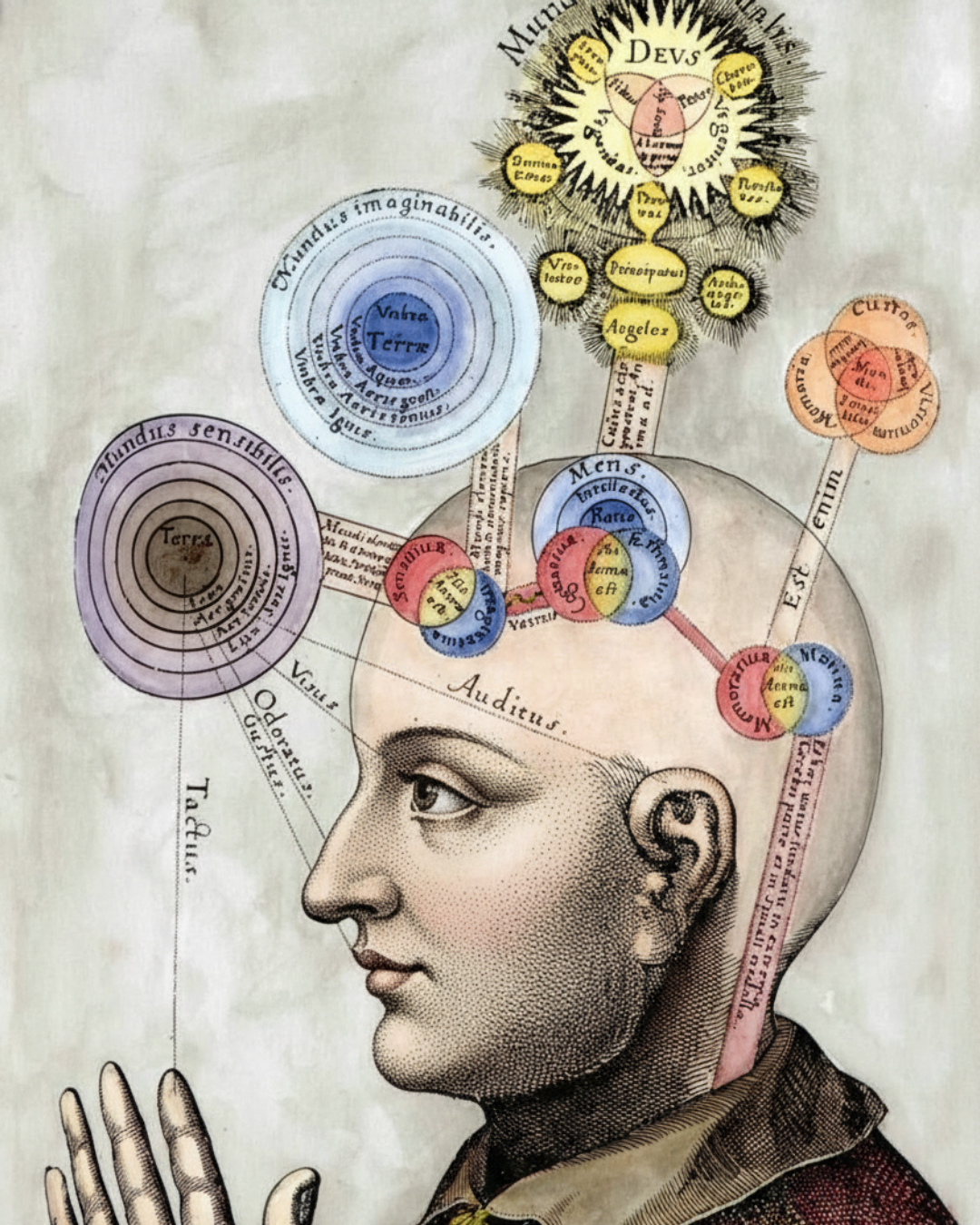
The Law of Attraction works, but not for the reasons you think. Neuroscience explains it better than any spiritual book.
Inspired by a true story. Take the free Innertune test.
Learn more: start.innertune.com(opens in a new tab)