Laura Hayes
Laura Hayes Facebook ad: “THIS IS what you need to do”
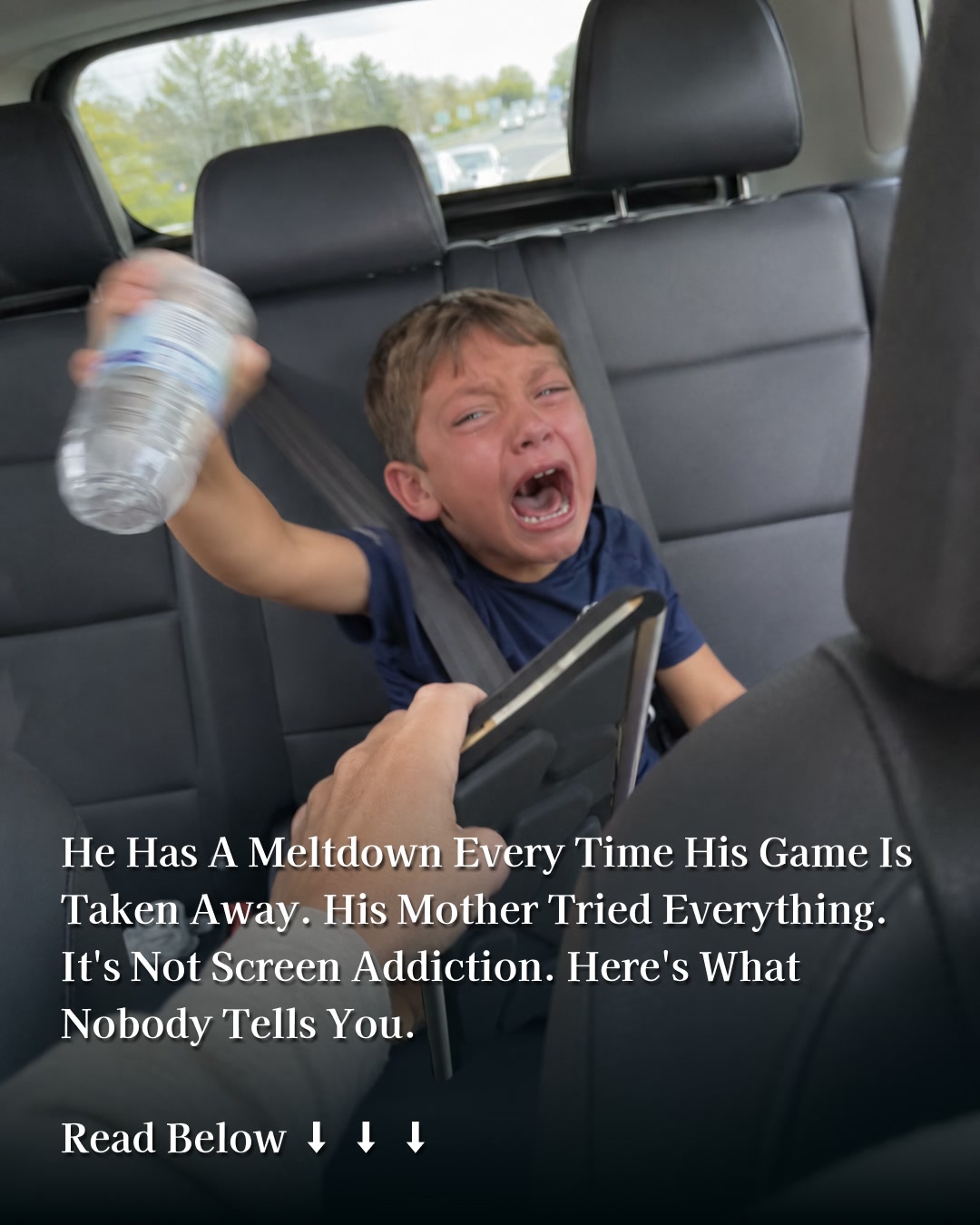
Ran for 4 days, from June 6 to June 10, 2026, the last day Crush saw it.
Run by Laura Hayes on Facebook. Crush is not the advertiser and does not verify its claims. See this ad in Meta's Ad Library(opens in a new tab)
Want an ad like this for your product?
Crush makes new ad images for your product from this ad: your logo, your product photo, your offer.
Trials from $19.95 USD, then $79.95 USD a month. Cancel anytime.
About this ad
- Meta Ad Library ID
- 949769361440318
- Platforms
- Facebook, Instagram, Audience Network, Messenger and Threads
- Relaunches
- 0
- EU reach
- 47
- Niche
- Parenting & Kids
Ad text
I watched my best friend's son stop wanting to do anything. Anything at all — except Minecraft. Not overnight. Slowly. The way a kid disappears into something and by the time you notice, the boy you knew is gone and there's someone on a couch with an iPad who used to love the lake. That's the confession I need to start with. Because I'm not the mom in this story — I'm the friend whose son is the same age, who used to play with him every weekend, and who watched it happen. And I waited too long to say something. Rachel and I have been close since our boys were three. Soccer Saturdays, backyard barbecues, the kind of friendship where you show up without texting first. Our boys — her Oliver, my Sam — were inseparable. Building forts. Riding bikes. Catching frogs at the creek. Oliver is eight now. And for the past year, I've watched all of that disappear. The first time I noticed: last spring. I brought Sam over on a Saturday. Oliver was on the couch. iPad in his lap. Minecraft. "Ollie, Sam's here. Go play." "After this level." Twenty minutes later, Sam was still waiting in the hallway, looking at Oliver on the couch. They used to run to each other screaming. I thought: he's into a new game. It'll pass. It didn't pass. I started tracking it the way you track something when the pattern is already too obvious to ignore. Six months ago, Oliver would play for an hour after school and then go outside. Rachel would say "screens off" and he'd grumble but go. Four months ago, an hour became three. "Screens off" got an argument. Then a negotiation. Then a fight. Two months ago, the first word out of his mouth every morning was "can I play?" Before breakfast. Before getting dressed. And when Rachel said no — not a grumble. A meltdown. Screaming. Throwing things. Once he kicked a hole in his bedroom wall. He's eight. But the meltdowns weren't even the worst part. The worst part was everything in between. I'd come over. "Ollie, want to ride bikes? Go to the creek?" One-word answers. Eyes never leaving the screen. Sam would stand there and eventually come sit with me in the kitchen. Two boys who used to be best friends — one staring at a screen, the other staring at the floor. Rachel would force him off. Take the iPad away. And Oliver would wander the house like a ghost. Couldn't find anything to do. Couldn't play with Sam for ten minutes without saying "this is boring." The creek was boring. Bikes were boring. His own best friend was boring. That scared me more than the tantrums. Not the rage — the emptiness. A kid who used to have ideas about everything couldn't generate a single one without a screen. And it wasn't just play. Homework was impossible — not because it was hard, but because Oliver couldn't focus. He'd stare at the page, ask every three minutes if he could play after. Dinner: he'd rush through it without talking, just trying to finish so he could go back. When Rachel's family tried to do something on a weekend — the zoo, the lake — Oliver fought it. "Why can't I just stay home?" They stopped planning. Rachel had a line: "I feel like I lost him to a screen. He's right there on the couch and I can't reach him." Matt — her husband — had his: "Just take it away. Problem solved." She did. For a week. Oliver was miserable — but not just miserable. Lost. Wandered around. Couldn't play. Couldn't sit through a board game or a meal without looking like he was somewhere else. Taking the screen away removed the symptom but exposed the real problem: his brain couldn't do anything at normal speed anymore. The internet said: "Set limits." "Be consistent." Every parenting blog had a strategy for managing screen time. None explained why nothing else worked anymore. The evening I almost said something: Rachel's kitchen. Sam was in the yard. Oliver was sitting on the porch steps doing nothing. Not sad. Just empty. Like his brain only ran one program and someone closed it. "He used to build forts," Rachel said quietly. "Now he can't play for ten minutes without saying he's bored. What did I do to him?" She thought she'd broken him by letting him play. I should have said something. The evening I did: Two months later. Oliver in bed. "We tried to go to the lake Saturday. He screamed for forty minutes. We turned around. Sam's birthday party — he sat in the corner because there were no screens. His teacher says he can't focus for two minutes. Matt took the Xbox away and Oliver threw a chair." Then she said the thing I think about constantly. "He doesn't enjoy anything anymore. Nothing makes him happy except the game. And when the game is gone, he's just empty. How does real life compete with that?" How does real life compete with that. I typed it into my phone that night. A couple of weeks later, scrolling at midnight, I found a post from a mom whose son sounded exactly like Oliver. She explained: some kids' brains get so used to the constant stimulation of screens — the speed, the rewards, the instant feedback — that everything else feels unbearably slow. The brain stops being able to generate focus or enjoyment from normal-speed activities. It's not that the kid is "addicted." It's that the brain hasn't learned to regulate at real-world speed. It can't transition from high stimulation to low. Can't find satisfaction in things that don't deliver a hit every three seconds. Taking the screen away doesn't fix that. It just leaves a brain that can't do anything else sitting in an empty room. The post mentioned Brain Activation Exercises. Not screen time rules. Not taking devices away. Short exercises that train the brain to focus, regulate, and find engagement at normal speed — so the screen isn't the only thing that works. Seven minutes a day. The kid thinks they're games. I texted Rachel at 12:30 AM. "Read this before he wakes up tomorrow." She read it at 5:45 AM. Called me at 6. "This is him. The brain only working at screen speed. Not enjoying anything else. The emptiness when it's gone. This is Oliver." "Take the quiz. Then start the exercises." She took the quiz. Said yes to almost everything. Started that morning. Here's what I saw over the next few months. Week one: Rachel texted: "Day 5. We do them before school, 7 minutes. He thinks they're games. Still asks for Minecraft the second he wakes up. Keep going." Week two: "He played outside with the dog for twenty minutes after school. Without me suggesting it." Week three: "Sam came over. They played in the yard for an hour. AN HOUR. No screen. Oliver didn't say he was bored once." I was there. Oliver and Sam building something out of sticks. Oliver laughing. Having ideas. I hadn't seen that kid in a year. Week four: "Screens off after dinner. No meltdown. He said 'okay' and went to his room and drew a dragon. On paper. With his hands." Week six: Saturday. I brought Sam over. Oliver was in the driveway when we pulled up. "SAM! Come see what I built!" No iPad. No screen. A kid in a driveway excited about something he'd made with his own hands. Rachel was in the doorway. She didn't say anything. But I saw her face. Week eight: Voice note from Rachel. "We went to the lake. The whole family. Oliver swam for two hours. Didn't ask about the game once. Matt said 'who is this kid?' Same kid. He was always in there." It's been four months. Oliver still plays Minecraft — he's eight, he loves it, and that's fine. But it's not the only thing anymore. He rides bikes. He plays outside. He sits through dinner and talks about things that aren't the game. He can focus on homework. Rachel told me last week: "He came home and said 'Mom, can Sam come over? I want to show him the fort.' Not the game. The fort. In the backyard. Made of sticks and blankets. He spent two hours on it." His brain can do that again. That's the whole story. Not that the screen is gone — but that his brain learned to work without it. To focus at normal speed. To enjoy things that don't flash and reward every three seconds. I'm posting this because I know there's a version of me reading this who has a Rachel. Or an Oliver. Someone whose kid doesn't want to do anything except play. Someone who's watched every hobby, every friendship, every family plan disappear into a screen. Say something. Be the friend who texts the link at midnight. And if YOU are Rachel — if your kid can't enjoy anything without a screen. If turning it off means a meltdown. If real life can't compete — It's not an addiction. It's not your fault. It's a brain that learned to run at screen speed — and never learned to come back down to real life. Brain Activation Exercises has a quiz. A few minutes. It doesn't ask about screen time — it asks about what's behind it. Read this before he picks up the iPad tomorrow. Link below. 💙 P.S. — Rachel knows I'm posting this. She read it first. She said: "Tell them about the lake. Tell them about the fort. Tell them he still plays Minecraft — but he also plays outside now. And tell them he called Sam his best friend again last week. Out loud. Like he remembered." I'm telling you. 💙
Where the ad sends people
tryleaply.com
THIS IS what you need to do
Leaply VGN quiz
Learn more: tryleaply.com(opens in a new tab)