
Inactive· since Mar 21, 2026
- 4
- days it ran
- 2
- relaunches
Ad copy
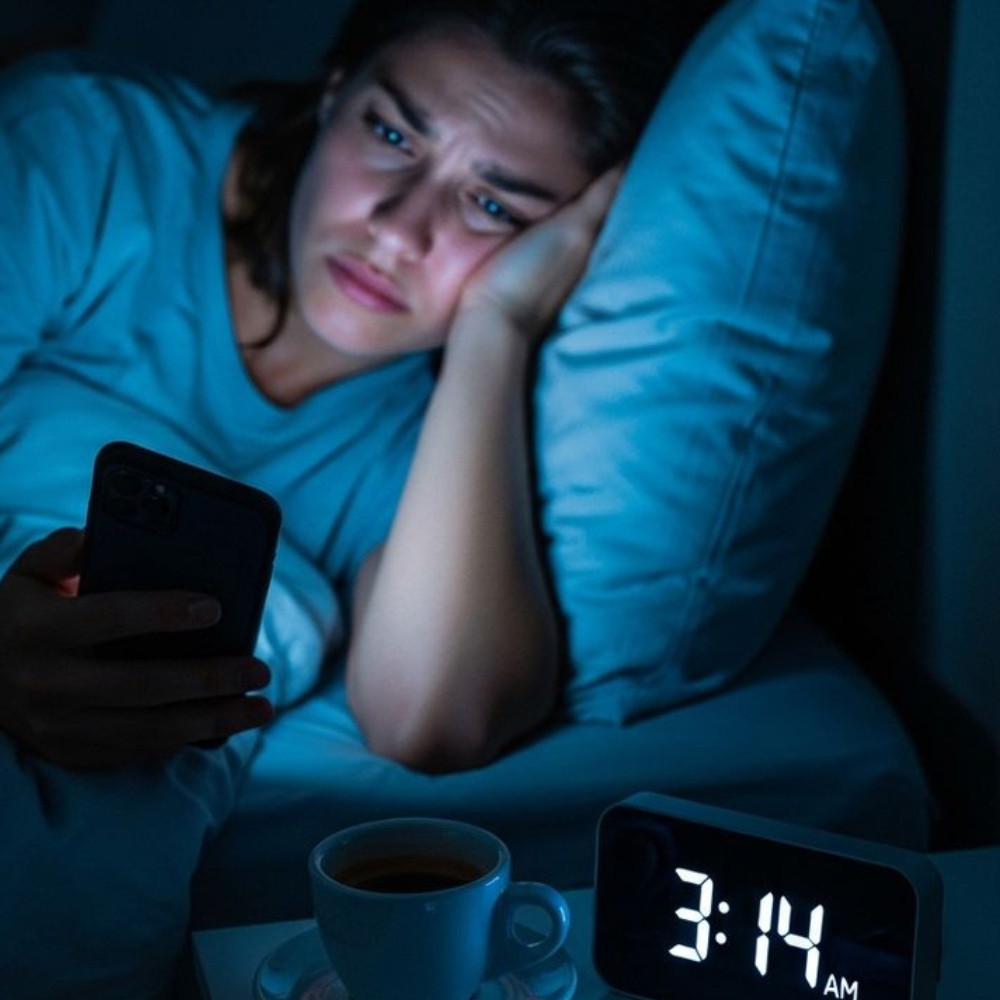
It was 2am when I woke up to get a glass of water, but as I walked past the living room, I heard something that stopped me cold. The blue glow of a phone screen. I pushed the door open. And there she was. My sister Renee, curled up on the couch in the dark, scrolling through nothing. Eyes glazed. Face completely blank. Not watching anything. Not reading anything. Just... scrolling. "Renee," I said. "It's 2am." She looked up at me, and what I saw in her eyes wasn't laziness or rebellion. It was exhaustion so deep it had its own weight. "I know," she said quietly. "I just can't go to bed." "What do you mean you can't go to bed? You look destroyed." She set the phone down and put her face in her hands. "Every time I lie down, my brain just... starts. It won't stop. My heart starts pounding. I start going through everything — work, the kids, money, everything. And then I'm just lying there in the dark for two hours getting more and more anxious until I give up and come back out here." She looked up at me. "It's been like this for over a year. I dread going to bed. I literally dread it. How messed up is that? I'm so tired I could cry and I'm still out here at 2am because going to bed feels worse than staying up." I sat down next to her. "Have you talked to your doctor?" She laughed. Not a real laugh. "He told me to put my phone in another room. Cut caffeine after noon. Try melatonin gummies." She picked up an empty bottle from the coffee table and held it up. "Ate the whole bottle over two weeks. Helped for about four days. Then nothing. Woke up at 3am anyway. Still couldn't fall asleep without fighting myself for two hours first. Still on the couch at 2am." She set the bottle down. "I don't think this is a phone problem. I don't think this is a caffeine problem. Something is actually wrong and nobody will tell me what it is." She was right. And I didn't know it yet — but what happened over the next three months was going to change both of our lives. I couldn't stop thinking about what Renee said. Something is actually wrong. Because she was right. This wasn't laziness. This wasn't bad habits. This was a woman who was desperate for sleep, dreading bedtime, and physically unable to make herself go to bed even when she was running on empty. I started researching. Not "sleep hygiene tips." Not "how to fall asleep faster." I wanted to know why a person who was completely exhausted would be physically incapable of initiating sleep. Why lying in a dark quiet room felt threatening instead of restful. Why the brain would rather scroll through nothing at 2am than do the one thing the body needed most. And I found something that stopped me cold. Sleep researchers have a name for what Renee was doing. They call it sleep procrastination. And it is not a willpower problem. It is not a screen addiction. It is what happens when the brain has been in a state of chronic nighttime hyperarousal for so long that it has learned — at a deep biological level — that going to bed means lying awake anxious with a racing mind. So it avoids it. It finds anything else to do. Scrolling. Snacking. TV. Anything that provides a small, reliable reward to substitute for the rest that sleep stopped providing months ago. The body isn't being lazy. The body is protecting itself from a nightly experience it has learned to dread. But why was the brain hyperaroused in the first place? That's where it got real. I ended up down a research rabbit hole that led me to a functional medicine doctor's blog. She explained something I had never heard explained properly before. When you're under chronic stress — not dramatic stress, just the relentless low-grade pressure of modern life — your cortisol stays elevated. And chronically elevated cortisol triggers neuroinflammation. Inflammatory signaling inside the brain tissue itself. Silent. Cellular. Invisible on a standard blood test. And here's where it becomes a disaster. Your brain produces melatonin — the sleep signal — in a tiny structure called the pineal gland. And the pineal gland is one of the most inflammation-sensitive tissues in the entire brain. When neuroinflammation takes hold, it suppresses the enzyme your brain needs to convert serotonin into melatonin. Block the enzyme, block the signal. No sleep signal means the nervous system never receives the chemical instruction to power down. The threat-detection system stays primed all night. The brain stays in high alert. This is the hyperaroused state. This is why Renee couldn't shut her brain off. This is why lying in a dark room felt like punishment instead of rest. And this is why sleep procrastination happens — the brain isn't choosing the phone over sleep. It's avoiding an experience it has been biochemically conditioned to associate with anxiety, racing thoughts, and two hours of lying awake waiting for relief that doesn't come. And here's the catastrophic loop nobody explains. The hyperaroused state releases more cortisol. More cortisol drives more neuroinflammation. More neuroinflammation blocks more melatonin production. Less melatonin means deeper hyperarousal the next night. Which means the sleep procrastination gets worse. Which means later bedtimes. Which means less sleep. Which means higher cortisol the next day. Every single rotation makes it harder to break. I called Renee the next morning and explained everything I'd found. She was quiet for a long time. "So it's not in my head." "It's literally in your brain," I told her. "But it's biochemical. It's the melatonin pathway being blocked by inflammation. And the melatonin gummies didn't work because they were supplementing around the blockade instead of removing it." Another long pause. "So what removes it?" That's when I started looking for something that actually addressed the mechanism. Not melatonin supplementation. Not sedation. Actual upstream support — clearing the neuroinflammation blocking the pathway, lowering the cortisol driving it, restoring the enzyme that converts serotonin into melatonin, and rebuilding the GABA signaling that tells the nervous system it's safe to power down. I spent two weeks going through every sleep supplement I could find. Most of them were melatonin in a fancier package. Some had one or two relevant compounds buried in a proprietary blend with no real doses listed. None of them addressed all the layers simultaneously. Then I found Wellim. I went to their website expecting to be let down like every other product I'd looked at. I was not let down. Wellim combines ten compounds that target every layer of the neuroinflammation-melatonin blockade cycle simultaneously. Not one. Not three. Ten. Here is what that means for the cycle: Korean Ginseng attacks the cortisol driving the whole thing — lowering it at the source before it triggers inflammation. This is the root cause layer. You cannot break this cycle without addressing the cortisol powering it. Berberine crosses the blood-brain barrier and shuts down the NF-κB inflammatory pathway directly — the master switch that's been keeping the nervous system in threat-detection mode at midnight. Alpha-Lipoic Acid clears the specific inflammatory cytokines — IL-6, TNF-alpha — that are suppressing the enzyme converting serotonin into melatonin. This is the layer the melatonin gummies completely skip. Zinc restores GABA receptor function — the brain's literal off-switch. When this pathway is restored, lying in a dark room stops feeling threatening and starts feeling like somewhere the brain actually wants to be. Milk Thistle protects the pineal gland cells that produce melatonin from further inflammatory damage — stopping the blockade from destroying the production source itself. Resveratrol activates SIRT1 — a repair enzyme that reverses oxidative damage to the melatonin-producing cells, restoring production capacity that has been quietly declining for months. Chromium stabilizes blood glucose through the night — removing one of the key triggers for the 3am cortisol spike that jolts people awake even after they've finally fallen asleep. Banaba Leaf suppresses the cytokine cascade that blocks melatonin synthesis — going after the exact inflammatory compounds research has identified as the primary suppressors of the sleep signal. Green Tea Extract protects the serotonin-to-melatonin conversion enzyme from oxidative damage in real time — keeping the pathway open even while the inflammatory cycle is still unwinding. Cayenne Pepper dramatically improves absorption and cerebral circulation — making sure every compound actually reaches the brain tissue where it needs to work. No proprietary blend. No hidden amounts. Every ingredient and every dose listed transparently on the label. I ordered two bottles that same day. One for Renee. One for myself — because the more I'd been reading, the more I recognized my own evenings in everything I'd been describing. Here is what happened in the first four weeks. Week 1: Renee texted me three days in. "I went to bed before midnight last night. Didn't even plan to. I just wasn't dreading it the same way." I noticed I was finishing what I was doing in the evenings and going upstairs without the usual resistance. Week 2: Renee called me. "The 3am thing happened twice this week instead of every night. I actually slept through twice." I was waking up later than I had in months — closer to my alarm instead of an hour before it. Week 3: Renee said the words I had been waiting to hear. "The dread is gone. I'm actually tired at 10pm and I'm just... going to bed. Like a normal person." She said the scrolling had almost completely stopped — not because she was disciplining herself but because she just didn't need it anymore. The avoidance behavior dissolved because there was nothing left to avoid. I noticed the same thing. The low-level resistance to bedtime that I'd been white-knuckling through for over a year had quietly disappeared. Week 4: Renee went to her doctor for a routine checkup. He commented that her stress markers looked better than they had in years. She told me on the phone afterward, laughing: "I didn't tell him what I'd changed. I already knew he'd have no idea why it worked." Why am I telling you this? Because most people dealing with sleep procrastination, 2am scrolling, and wired-but-exhausted nights don't realize it's neuroinflammation blocking their melatonin pathway that's driving the whole thing. Not screens. Not caffeine. Not discipline. A biochemical blockade that the melatonin gummies, the sleep hygiene tips, and the "just put your phone in another room" advice will never touch. And some people who know something is wrong are trying single-ingredient solutions — melatonin alone, magnesium alone — without addressing the inflammation suppressing the pathway, the cortisol driving the inflammation, or the GABA signaling that makes bedtime feel safe instead of threatening. They're fighting a ten-layer cycle with one ingredient. That's why nothing works. But if you want to actually break the neuroinflammation-melatonin blockade and stop dreading your own bed — you need all ten layers addressed simultaneously. And as far as I've found, Wellim is the only formula built to do exactly that. Now here's the thing. Normally Wellim runs at full price. But right now they're offering up to 55% off. And because I know that if one person in a household is dealing with this, someone else usually is too — they're running a bundle deal that makes it easy to get it for yourself and someone you care about. They're practically giving it away because they know once you feel what it's like to actually want to go to bed again — to lie down and fall asleep instead of lying there waiting for anxiety that doesn't come — you'll never go back to the 2am couch scrolling. So if you'd like to give it a try — 👉 https://trywellim.com/ And the best part — every order is backed by a 60-day money-back guarantee. Try Wellim for a full month. If the sleep procrastination doesn't dissolve, if the 3am wake-ups don't ease, if you're still fighting yourself to go to bed at a reasonable hour — every dollar comes back to you. No questions. No hassle. So don't wait until another year passes of dreading your own bed. Don't wait until the 2am scrolling is just your normal. Don't wait until the exhaustion has been running so long you can't remember what rested actually felt like. We have to fix the root cause — because another pack of melatonin gummies isn't going to break the cycle. Click the link below to check if Wellim still has stock available. 👉 https://trywellim.com/
Like this ad? Make it yours.
Crush rebuilds this exact creative around your product — your brand, your colors, your offer — in about a minute.