Melissa Hayes
 Facebook ad: “Everyone with sleep issues needs to see this”
Running for 32 days since October 20, 2026. Crush last saw it on November 21, 2026.
Run by Melissa Hayes on Facebook. Crush is not the advertiser and does not verify its claims. See this ad in Meta's Ad Library(opens in a new tab)
Make your own version of this ad
Crush makes it, launches it in your own Meta ad account, scales the winners and pauses the losers.
About this ad
- Meta Ad Library ID
- 958010220408615
- Platforms
- Facebook, Instagram, Audience Network and Threads
- Relaunches
- 0
- Niche
- AI & Software
Ad text
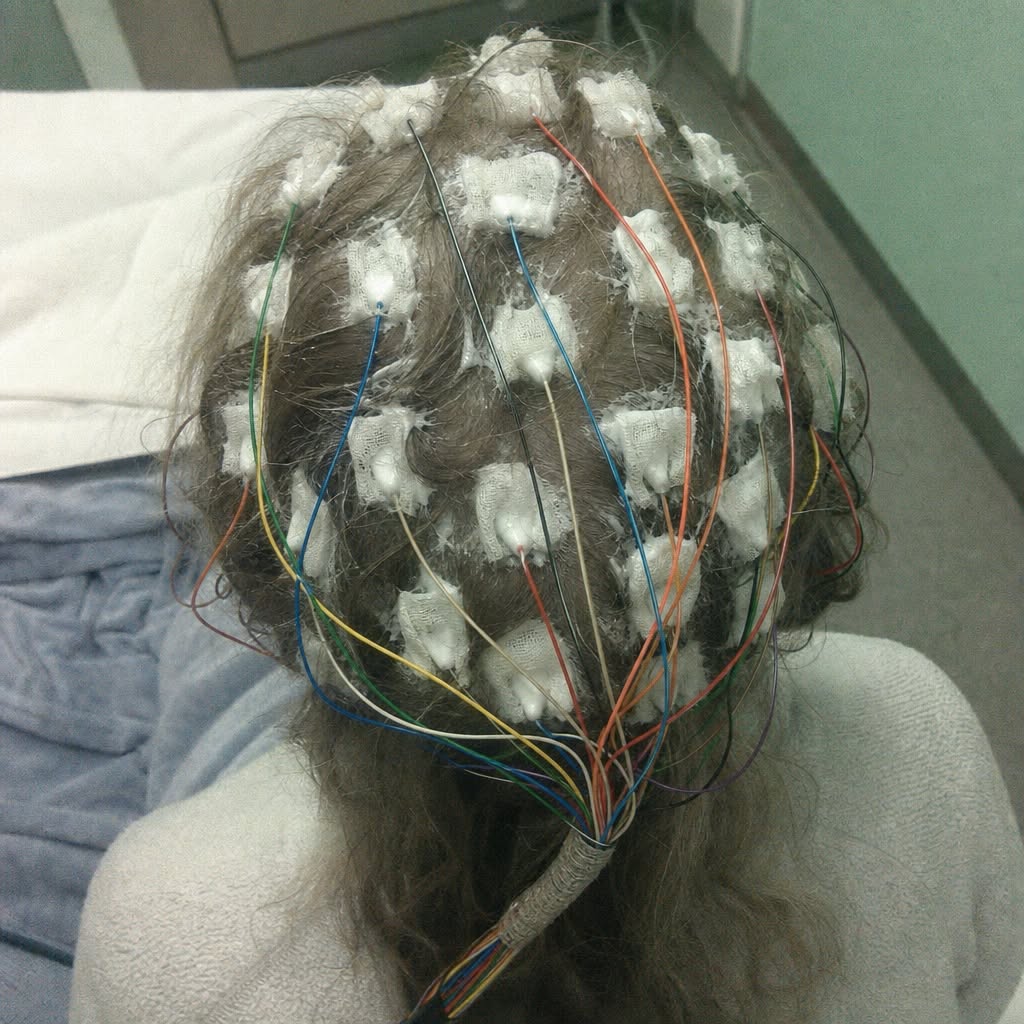
I am a sleep physician. I sit in a dark room and watch your brain all night on a screen. I have done this 912 times in twenty-two years. The patients with insomnia keep turning up in the memory disorders clinic down the hall. Last March I found out why. On my own study. I am writing this because I owe it. Not to a company. Not to a colleague. To the 912 people whose brains I watched all night without ever asking why the deep part was missing. I know what the director of our sleep center will say when he reads this. I know what the pharmaceutical representatives who walk through our department every week will say. I have spent twenty-two years not saying it. I am done. If you take something to sleep right now — or someone you love does — and you have been told your sleep is fine, please read all of it. I know it is long. I will not waste a sentence of your time. My name is Melissa Hayes. I am 58 years old. Board-certified in neurology and sleep medicine. Twenty-two years running the sleep laboratory at a hospital that records over 900 overnight studies a year. I am the doctor you see after your family doctor says your sleep is fine. I am the one who watches. Nine hundred studies a year come through that laboratory. Software scores most of them and somebody signs off in the morning. The 912 are the ones I sat with myself, wave by wave, all night, in the room — because I have never trusted software to see what I can see. I chose this specialty because of my mother. She was 63. Retired postmaster. Insomnia from her early fifties. Ambien for eleven years. Never missed a dose. Her doctor told her at every six-month visit that her sleep was fine. Seven hours most nights. Memory a little foggy, but they were watching it. The chart was perfect. On a Sunday evening in October she walked out of her own front door in her nightgown and did not come back. My father found her at first light, face down in a pile of red oak leaves in the neighbor's yard. He thought she was resting. She was not resting. Exposure. She had been out for six hours. Dead before anyone knew she was gone. Diagnosed at 61. Gone at 63. Eleven years of the pill. Eleven years of "her sleep is fine." The chart was perfect. The woman was gone. I was 29 years old. Third year of my neurology residency. I stood in the hallway of a hospital I did not work at, looking at the chart of a woman I could not save, and I made the decision that shaped my entire career. I would become the doctor who watches the night itself. Who sees what actually happens in there. Not the report of it. Not the log. The night. Because if the word on a chart could not protect my mother, I would protect people with my eyes. Twenty-two years later I have done that 912 times. And I need to tell you what I saw. When I run an overnight study I am looking at a live tracing on a screen. Electrodes on the scalp, and every wave the brain makes for seven or eight hours rolling across in front of me. I can see exactly when you go under, exactly how far down you go, and exactly how long you stay there. But there is something else I see. Something that does not appear on a sleep log. Something your doctor will never see because your doctor reads the hours you reported. I read the night itself. I see the depth. A healthy night has mountains. Long, slow waves rolling through the first half of the night — twenty minutes at a stretch, sometimes forty. That is stage three. That is the deep part. On the screen it is unmistakable. A medicated night is something else entirely. It is flat. Fast. Shallow. Busy in all the wrong places. There are no mountains. The patient lies unconscious for seven hours and the tracing never once goes down where it is supposed to go down. I have printed these pages. I have held them. I have laid them side by side under a lamp. It does not look like sleep. It looks like anesthesia. We even have a word for it in the lab. Efficient. Sleep efficiency — the percentage of your time in bed that you were actually asleep. Ninety-four percent is excellent. I have typed that number into a thousand reports on people whose brains did not go down once all night. Not once in twenty-two years did anyone teach me to report the other number. I said it out loud to a colleague once, during a study. Early in my career. He was watching the screen over my shoulder at two in the morning while we ran a 61-year-old woman who had been on Lunesta for nine years. "Look at the tracing," I said. "That's not sleep. That's a building with the lights off and nobody inside doing the cleaning." He nodded. We finished the study. We wrote the report. We never talked about it again. But I saw it again. And again. And again. Over twenty-two years and 912 nights I developed a pattern recognition that nobody trained me to develop, because nobody trained me to look at the depth. They trained me to score the hours. Here is the pattern. The patients with insomnia — the ones on a nightly sleeping pill, the ones whose sleep logs were fine, the ones whose doctors were satisfied, the ones who came to me after years of a medication they had been told was the safe choice — their tracings looked different from the patients who had never taken anything at all. Not better. Different. The unmedicated insomniacs had a broken night. Visible. Fragmented. Awake at 2, awake at 4, and I could see exactly what was wrong and exactly what to do about it. The long-term sleeping pill patients had something else. A long, smooth, shallow, unbroken tracing straight across the whole night. Not broken sleep — sleep with the floor taken out. Seven hours of it. And the deep part was not reduced. It was absent. And it had been absent, on every study I could find in their chart, for as long as they had been on the pill. I mentioned this to the director of our sleep center once. At a departmental meeting. Carefully. As an observation, not a conclusion. He said: "They're sleeping, Melissa. Their efficiency is excellent. What you're seeing is age-related change in sleep architecture." I did not bring it up again. But I kept a count. Not officially. In my head. How many of my 912 overnight patients were already on a nightly sleeping pill, with a sleep log their doctor called fine, when the deep part came back absent. I stopped counting at 500 because the number made me sick. More than half. And every time — every single time — the referring physician's note said some version of the same sentence: "Chronic insomnia, well controlled on current regimen." Well controlled. In my lab. With twenty-two electrodes on their head and no stage three all night. I put that pattern in a drawer in my mind and I left it there. Because I did not know what to do with it. I run a laboratory. I record and I report. I do not question the medications that the family doctors and the psychiatrists prescribe. That is not my role. Then six years ago my own internist sat me down with my own sleep diary. Sleep onset over an hour. Awake at 3 most nights. Five and a half hours on a good one. "Melissa, you know what the guidelines say." I did. I had watched 500 patients follow those guidelines into my lab. But I also knew that my mother's sleep log had read seven hours on the week she died, and her doctor had been calling it fine for eleven years while her mind quietly emptied out. I filled the prescription anyway. Zolpidem. Ten milligrams. Because I am a physician, and I could not keep running a sleep lab on five and a half hours, and I did not yet understand why the hours were not the right thing to watch. The drug worked beautifully on paper. Within four nights I was logging seven hours. Seven hours, every night, for the first time in a decade. My internist said the word "textbook" and smiled. I took it for six years. Six years of seven-hour nights. Six years of my internist smiling. Six years of feeling progressively worse and telling myself it was aging. The fatigue that hit me by 3 PM every day. I blamed the schedule. Sleep medicine is a nocturnal specialty. I have been keeping other people's hours for two decades. The names that stopped arriving on time. I blamed the volume. I see forty new patients a month. Nobody holds forty names. The fog that started settling over my thinking by late afternoon. I blamed stress. I blamed my age. I blamed the fact that I was 57 years old and running a laboratory that never closed. My husband noticed before I did. David is not a physician. He is a high school biology teacher who has been married to a sleep physician for twenty-six years and knows more about the brain than most residents. He said it once, in February, sitting across from me at dinner. Quietly. Like he had been holding it for months. "You're disappearing, Melissa. You're here but you're not here. You come home and you sit down and you don't get back up. That's not you." I told him I was tired. He didn't argue. He just looked at me the way he used to look at students who gave him the wrong answer and knew it. Last March I ran a study on myself. I do not know why I did it that week. I had never once done it in twenty-two years. Something in me — the part that had been counting medicated patients in my own lab for two decades and never saying anything — needed to see the tracing. I stayed after the last patient left. Wired my own scalp at the mirror in the tech room. Lay down on the bed in room two and slept seven hours and eleven minutes. I read it myself at six the next morning, alone at the workstation, in the same room where I have watched 912 other people sleep. Sleep efficiency 94 percent. Textbook. Total time in stage three: fourteen minutes. My hands went still on the keyboard. I could feel my pulse in my fingertips. A woman my age should get sixty to ninety minutes. I have called patients at home with forty and told them to come in that week. I have scheduled follow-ups on thirty. I have looked at families across a desk and used the word "significant" for anything under twenty-five. I got up and walked into the lab. Empty. The bed still unmade from my own night in it. I stood in the room where I have done 912 studies and I looked at the bed where people lie down and let me wire their heads and trust me to know what I am doing. Six years of zolpidem. Six years of seven hours a night. Six years of a sleep log my internist called textbook while she smiled. And fourteen minutes of the only part of the night that does anything. I was looking at my own brain and I was seeing the same pattern I had seen on a screen 912 times. The floor gone. Quietly, every night, for six years, while every log and every chart said everything was fine. That night I did not go home. I went to my office and I ordered the workup I should have ordered five years ago. Not the standard panel. The full workup. Every organ that runs on the night. The results came back over the following two weeks. I read each one alone, in my office, with the door closed. Brain. MRI, and a neurocognitive battery — a test I have never ordered on myself in twenty-two years. Processing speed in the 34th percentile for my age. It had been in the 90th when I was tested during a research study eight years ago. The afternoons I had been blaming on the schedule were measurable. And the MRI came back with an estimated brain age of 71. I am 58. My mother died at 63. The brain in my head was older than my mother ever got to be. Heart. Blood pressure 146 over 92 — the number my internist had been calling borderline for three years. We were watching it. Resting heart rate 84. Blood pressure is supposed to fall at night, and it falls in the deep part. Mine had been running at daytime pressure around the clock for six years. Kidneys. eGFR 71. It had been 94 five years earlier. Early decline. I had been getting up twice a night since the previous autumn. I told David it was a bladder thing — something every woman my age deals with. I never considered my kidneys because my creatinine was still technically in range and the algorithm does not trigger a referral until it drops further. Nobody had flagged it. I had not flagged it myself. Peripheral vessels. I had been getting a cramping ache in my right calf when I walked from the parking garage to the hospital — six minutes, slight uphill. I had blamed my shoes. I ordered an ankle-brachial index. 0.87 on the right. Below normal. The arteries feeding my legs were narrowing. Eyes. I scheduled a retinal exam. Dilated fundoscopy. The ophthalmologist found early microvascular changes in both eyes. Small vessel damage. The kind of thing she told me she sees in patients with long-standing metabolic stress. She asked me if I was diabetic. I said no. She noted it and moved on. Five organs. My brain. My heart. My kidneys. My legs. My eyes. Every one of them showing the same pattern. The same quiet deterioration. The same waste nobody rinsed out. And my sleep — the one thing anyone had been looking at for six years — logged seven hours a night. Stable. No significant change. And if I had gone through the system the way my patients do, each one would have sent me to a different specialist who would have prescribed a different drug. A neurologist and a cognitive medication for the brain. A cardiologist and a blood pressure pill for the heart. A nephrologist and an ACE inhibitor for the kidneys. A vascular surgeon and a blood thinner for the legs. An ophthalmologist and prescription drops for the eyes. Five specialists. Five drugs. Five measurements. Five charts in five offices. None of them talking to each other. And not one of those five drugs would touch the thing that was doing this to all five organs at the same time. What is doing this to five organs at the same time? I drove home that night with the reports in my briefcase. David was reading in the living room. He looked up when I came through the door and the book came down from his lap. "Melissa. What happened." Not a question. He could see it on my face. I sat down across from him and I told him. The fourteen minutes. The brain test — 34th percentile, down from the 90th. The number on the MRI. The kidneys. The legs. The eyes. Five organs. I watched his face go white. I watched his hands close slowly around the arm of the chair. When I got to the brain age he put his hand over his mouth and held it there. "How bad?" he said. "It's early. All of it is early. But it is all moving in the same direction." He was quiet for a long time. Then he said: "Your mother was 63." I could not answer that. That night David went to bed and I sat at the kitchen table and opened my laptop and did something I had not done since my residency. I searched for the mechanism. Not the prescribing data. Not the efficacy trials. Not the guidelines I had followed for twenty-two years. The mechanism. The biology of what I had been watching on a screen for 912 nights and reading on five reports now sitting in my briefcase by the front door. I read until 3 AM. What I found was not hidden. It was sitting in Sleep and Neurology and Science Translational Medicine, journals I had been subscribing to for my entire career. The thing I had been trained to call sleep — the seven hours, the 94 percent, the log my internist smiled at — was not the thing that keeps a brain alive. The thing that keeps a brain alive only happens at a depth I had not reached in six years. The next morning was a Saturday. David was making coffee. I had not slept. He took one look at me and knew I had been up all night. He set a mug in front of me. Sat down across the table. He had been crying — I could see it around his eyes. He had gone to bed knowing his wife's brain, heart, kidneys, legs and eyes were all quietly failing, and he had spent the night with that. "Did you find anything?" he said. "I found what's doing it. To all five." He wrapped both hands around his mug. Steadied himself. "Show me." "There's a stage," I said. "One stage of the night. It's the thing that connects all five reports. It's the thing I have not reached in six years. And it is the only window your brain gets to clean itself." He was watching me the way he watches a complicated experiment unfold in his biology lab. Not interrupting. Just tracking. "The clinical name is slow-wave sleep. Stage three. You only need to know the name once. What matters is what happens in it." I got up and ran the tap and stacked the dinner plates in the sink. Left them there, in the water, and sat back down. "Every cell in your body makes waste," I said. "You teach this. What happens to a cell that can't clear it?" He didn't have to think about it. "It poisons itself. That's day one of the unit." "Right. And every organ you have has a drain. Lymph. It carries the waste out while you go about your day. Every organ except one." I pointed at the ceiling, at nothing, the way you point at your own head. "The brain doesn't have a drain. The brain has a night shift. The channels open, fluid washes through the tissue, and everything the brain made that day gets rinsed out and carried away. Like doing the dishes before bed instead of leaving them in the sink." "And here is the part nobody told my mother. That night shift only clocks in at the depth. Stage three. It does not run while you are lying there at 2 AM. It does not run in the shallow part. It runs at the bottom, and only at the bottom. Skip the bottom and the waste just sits there. One night, you notice nothing. A thousand nights, and it isn't dishes anymore. It's hardened on. And that buildup is the thing they eventually put a name to." I looked at him. "That's the night shift, David. That's what I have been looking at on a screen for twenty-two years and calling a sleep disorder. Not sleep that's too short. Sleep with no bottom. In the brain that holds who my patients are. And the heart that never gets the one stretch of the night where the pressure comes off. And the kidneys. And the legs. And the eyes. The same missing stage. Five organs." He was staring at the sink. "And the pill?" I reached over and hit the light switch on the wall. The kitchen went half dark. "Look at the sink." "I can't see it." "Right. The room looks clean. The dishes are exactly where you left them." I turned the light back on. "That is what the pill does. It does not run the night shift. It turns off the light so you stop noticing that nobody did." He was quiet for a long time. Then he said it. "So your pill has been turning off the light for six years. And the dishes have been stacking the whole time. That's what the fourteen minutes is showing." "Yes." "And the fog? The fatigue? The names?" "Different cost. Same pill." I got up and unplugged the toaster from the wall. Set it on the table. "This is the switch. Zolpidem works on one system in the brain — it turns the whole thing down. That's how it makes you unconscious. But the circuits that generate the slow waves run off the same system. Same assembly line. Same switch. You cannot turn one down without turning the other down. The pill flattens the depth on the way to putting you out." I pointed at the cord, lying loose on the table. "That's what fourteen minutes is. That is not my age. That is a documented effect of the thing I have swallowed every night for six years." He looked at the unplugged toaster. Then at me. "So the drug that's supposed to give you sleep is taking away the only part of sleep that does any work." "Every night. Every organ. For six years. The 3 PM fatigue. The names. The fog by four o'clock. The trips to the bathroom. That wasn't aging. That was six years of nights with the floor taken out." He reached across the table and put his hand over mine. I want to be clear about something before I go further. Your doctor is not the villain in this. Neither was mine. Neither was my mother's doctor who called her sleep fine for eleven years. They prescribed the best tool they were trained to use. The training is the problem. Every physician in the country learned the same textbook I learned, and that textbook measures the hours. Not one of them told us to look at the depth. "Is there anything that gets you back down without flattening it?" That was the question I had been up all night trying to answer. David got up and opened the cabinet above the refrigerator. The one where we keep supplements. He set four bottles on the table between us. "Valerian," he said, pointing at the first one. "My sister has taken this for eight years. Her doctor told her it's a safe way to sleep." "It takes the edge off getting to sleep in some people. Modestly. It does nothing about the depth. Your sister's brain is still not being rinsed. The valerian cannot reach it." He pointed at the second bottle. "Magnesium. You have been taking this for three years. Your internist recommended it specifically because of the insomnia." This one mattered. Because he was right — I had been taking magnesium since year three of the zolpidem, specifically to get myself to the edge of sleep without raising the dose. "Magnesium settles the nervous system. It gets me to the door. I am not going to stop taking it. But it does nothing about the depth. Nothing. You can walk somebody to the front door all night long and if the stairs to the basement are gone, they never get down there. Both problems have to be solved. Getting down, and getting deep. Magnesium addresses one. Nothing in this cabinet addresses the other." He picked up the third bottle. Drugstore melatonin. "This was my idea. I read about it." I got up and walked into the hall and put my hand on the thermostat. "Your body has one of these for melatonin. Your brain makes its own supply — it is what carries you down into the depth in the first place, and by itself it is one of the strongest protectors your brain has. Every night it mops up the exact damage that builds toward the diagnosis. But somewhere in your forties the part of your brain that makes it starts making less. Every year a little less. By your fifties you are running on a fraction of what you had at thirty. That is not a lifestyle problem. That is just biology." I turned the dial down and let him hear the furnace click off. "And when you bring the supply in from outside, from a bottle, the thermostat reads the room as warm and turns your own furnace down further. You feel drowsy for three weeks. Then you need more. And your own supply — the only one that actually reaches the depth — is lower than it was the day you started." He looked at the fourth bottle. An over-the-counter sleep aid I had bought myself two years ago, for the nights the prescription wasn't enough, and stopped taking after a month. "And that one?" "Same story as the prescription, and then some. It turns off the light in the kitchen. The dishes don't move. And that class of drug has its own bill where memory is concerned, and that is not a debate anymore." He looked at the four bottles on the table. Then at the sink. Then at the unplugged toaster. "So nothing reaches the depth." "One thing does." At 3 AM I had found a body of research from Japan. Published in the same journals I had been subscribing to for twenty-two years. Not hidden. Not suppressed. Sitting in plain sight the way the tracings on my own screen had been sitting in plain sight for two decades. Orchards in the highlands of Yamagata, in the north of the country. Cold winters. Volcanic soil. The trees have been there for generations, and what comes off them is not the sweet cherry you put in a bowl. It is small, and dark, and sour enough to make your jaw ache. The villages in those valleys have some of the lowest rates of cognitive decline ever recorded in an aging population. Scientists spent twenty years testing everything — the fish, the genetics, the walking, the soil. Then they looked at what the grandmothers put up in jars every June. For centuries before any researcher arrived, the grandmothers in those villages had been giving it to their husbands at night. Not for dessert. Not for tradition. Because they watched their husbands take it and they watched their husbands sleep — and they watched them stay. Stay sharp. Stay strong. Stay present. The men worked into their 80s and 90s. Carried loads. Climbed hills. Remembered their grandchildren's names. The women outlived everyone, but the men lived far longer and far better than anyone could explain. Over 2,000 peer-reviewed studies on the pigment that makes that fruit dark. Published in the same journals behind my desk. In professional sport — where nobody cares what a thing is called and everybody cares whether the athlete recovers overnight — tart cherry is part of the standard sleep and recovery protocol. Not as a folk remedy. As protocol. And it has been through the one test that counts in my field — put a person in a laboratory, wire their scalp, and measure what actually happens to the night. Not a questionnaire. Not a diary. Electrodes. And the mechanism is the thing I could not stop reading at 3 AM. The pigment is not a sedative. It does not push on the switch my prescription pushes on. It does not touch the assembly line the pill clamps shut. It does something else entirely. It gives the body what it needs to make its own melatonin again. Not a dose poured in from outside. Its own. The way it used to. And your own melatonin is the only key there is to the depth. It finds the supply that has been falling since your forties. And it restarts it. It does not put you under. It takes you down. I stopped reading when I hit that line. I read it again. Then a third time. The stage I had not reached in six years — the stage where the brain rinses out what it made that day, where the pressure finally comes off the heart, where the kidneys do their slowest and most careful work, where the small vessels in the leg and the eye get the one long stretch of quiet they are built for — comes back. Not as a drug. As the thing my body used to do on its own, every night, before it stopped. The night shift clocks back in. The waste gets carried out. The buildup stops. And because it restarts your own supply instead of overriding the system, it reaches every place your own melatonin was ever supposed to reach. The brain. The heart. The kidney filters. The retinal vessels. The five organs. Every one of them. The places I can see on a tracing and no pill has ever gotten to, because no pill was ever going to the depth. It was going to the light switch. And because it does not push on the switch — because it has nothing to do with the circuit the pill turns down — it leaves the floor exactly where it is supposed to be. Restart the key. Run the rinse. Two things the pill was never built to do. Two things the brain demands. "It gives you back your own?" David said. "Not a dose of it. Your own." "At the depth. At the bottom of the night. Where nothing else reaches." He looked at the plates sitting in the sink. Then at me. "Then why doesn't everyone know about this?" I did not have a good answer. I still don't. I drove to the grocery store that afternoon. Bought two bottles of tart cherry juice at $9 each. The one with the nicest label. I drank a glass every evening for two weeks. I felt something. Slight. A little easier getting down. Enough to notice. Not enough to measure. After two weeks I wired myself up and ran the study again. Stage three: seventeen minutes. I drank the juice for a third week. Ran it again. Nineteen. Barely moved. That is when I found the research on dose — and understood why the American supplement industry had turned a genuine clinical finding into a product that barely works. The studies that worked used a real dose. Thirty-six hundred milligrams of anthocyanin-standardized extract. Concentrated. Cold-pressed. That is the therapeutic threshold. The amount at which the pigment reaches the tissue at a rate that produces measurable change on a tracing. I read the label on the bottle in my refrigerator door. From concentrate. Pasteurized. Twenty-eight grams of sugar. Pasteurized means cooked. Heated to survive shipping and six months on a shelf. And heat destroys the pigment. By the time that bottle hit the shelf, what mattered was already gone. Cooked out of it in a vat before it was ever bottled. Then they cut what was left with apple juice and water. I looked into tart cherry capsules. Same problem. I ordered three brands and twisted one of each open onto a white saucer at my kitchen counter. Brown. Brown. Brown. Fruit powder, dried at high heat, the pigment cooked out of it before it ever went into the capsule. You are swallowing a label with a memory of what you needed. The American supplement industry found a fruit backed by 2,000 studies and did what it always does. Made the cheapest possible version. Slapped a label on it. Sold the name without the dose. Turned a grandmother's jar into a marketing category. There is only one form that delivers the clinical dose. An extract. Pressed cold, never heated, concentrated until two capsules carry what the studies used. The pigment survives because nothing ever cooked it. No heat loss. No shelf decay. The full dose reaches you. I searched for a product made that way that matched the clinical dose. One product met every requirement. GoodGrove. David wrote the name down on the back of a napkin. His hand was shaking. Thirty-six hundred milligrams equivalent per serving. An extract — not a juice, not a fruit powder. The label says so. Cold-pressed, never heated, so the pigment is alive when it reaches you. Third-party tested for purity and potency. Made in the USA. David asked me — standing in the kitchen looking at the grocery-store bottle on the counter — why something this simple could work when everything complex had failed. I told him the truth. "Everything complex is profitable. A prescription sleeping pill is a manufactured molecule that requires a prescription and a lifetime of refills. The bottle on the counter is a manufactured product that costs $9 and delivers a fraction of a therapeutic dose. The supplements in that cabinet are complex formulations that never get anywhere near the depth." "The simplest thing there is — the color in a sour fruit that grandmothers have been putting in jars for three hundred years — reaches where nothing complex can. That is not a limitation. That is the breakthrough. It does not override the system. It restarts it. It gives your own brain back the one key that opens the one stage where the cleaning happens. And it does it without touching the switch that flattens everything on the way down. That is not simple — that is elegant. And there is no patent on a fruit. No pharmaceutical company will fund the research or the marketing for something they cannot own. That is why you have never heard of this from your doctor. Not because the science is weak. Because the business model does not exist." I ordered three bottles of GoodGrove that night. They arrived on a Tuesday. I twisted the first capsule open onto the white saucer at my kitchen counter, because I had to see it. Red. The red a cherry leaves on a cutting board. Nothing like the brown from the week before. I swallowed two capsules with a glass of water at nine o'clock and I sat down on the back porch and waited. Eighteen minutes. I need to be precise about this because I am a physician and I will not overstate anything. What I felt at eighteen minutes was not the depth. The depth does not come back in eighteen minutes. That takes weeks and shows up on a tracing. What I felt was the pull. A weight behind my eyes. The heavy, unhurried, unmistakable tug of a body that has decided the day is over — the thing your brain is supposed to do to you every night, and mine had stopped doing somewhere around 50. Not the flattened, underwater thing the pill does. Not sedation. Pull. At 9:18 PM. After two capsules. That was my own system coming back online. Reaching something no pill I had swallowed in six years had ever reached, because the pill was never going to my melatonin. It was going to the light switch. Something had arrived where it needed to go. David was watching me from across the kitchen. He didn't ask. He could see it. Week one. On day four I did not see the clock at all. I went down before eleven and the next thing I knew it was light out, and I lay there for a full minute trying to work out what was different. Three nights that week I slept straight through. The 3 PM fatigue disappeared on day five. I read an hour of journals at my desk at four in the afternoon without my eyes going heavy. I had not done that in three years. Week two. The names started arriving on time. By day twelve I walked into the reading room and said good morning to all four of my techs by name without the half-second stall I had stopped noticing I was making. That Saturday morning David asked me who the couple was that we'd had dinner with in April. I had it before he finished the sentence. I stood there holding a dish towel, feeling the name arrive on time, and something tightened in my chest that had nothing to do with my brain. Week three. Sleep onset under twelve minutes — and I had cut the zolpidem in half the day I started GoodGrove. Six years earlier I had sat in an internist's office and told her it took me over an hour to get down. I was going down faster on half the pill than I had ever gone down on the whole one. That same week I walked from the parking garage to the hospital — six minutes, the same slight uphill — without the cramping in my right calf. It simply was not there. Week four. I ran the study that changed everything. On grocery juice: nineteen minutes of stage three. On GoodGrove for four weeks: fifty-two. I ran it again three days later. Fifty-five. The floor was back. Not creeping back. Back. For the first time in six years, the part of the night that actually does the work was happening in my head while I lay there and did nothing. Week six. David said something I was not expecting. We were walking from the car to a restaurant — a place we had not been to in over a year because I had stopped wanting to go out by evening. He was a half step behind me. He said it casually, like he was commenting on the weather. "You stopped saying the thing." "What thing?" "The thing. You'd say 'hand me the thing' and point. Every day. For two years. You didn't even know you were doing it." I had not known. "You haven't done it once since March. You just say the word now." I stood on the sidewalk and I felt something shift in my chest. Not a clinical observation. Not a number on a tracing. My husband had been tracking a symptom I did not know I had — and it was gone. Week eight. Full panel. My internist ran it — the same internist who had said "textbook" six years earlier. Blood pressure 122 over 78. Down from 146 over 92 in March. Resting heart rate 68. hs-CRP — the marker of systemic inflammation — 0.8. Down from 3.4 in March. eGFR 78, climbing back from 71. My kidneys were recovering. And I had slept through the night without getting up for three weeks straight. The twice-a-night trips I had been blaming on my age had simply stopped. She read it twice. Scrolled back. Looked at me. "Melissa. What did you change?" I told her. She wrote it down. Then she took the nightly zolpidem off my chart herself and left it as needed. A bad night is a bad night, she said. Otherwise keep doing whatever you're doing. That evening David asked me how the labs looked. I showed him. He read them, then read them again. "Melissa. The kidneys." "I know." "And the inflammation number." "I know." He put the paper down. Looked at me for a long time. Then he said something so quiet I almost missed it. "You look like you again." Week twelve. I ordered the scan I had been afraid to order. A second MRI. The report gives an estimated age for the brain it is looking at. A number built from volume and white matter, measured against thousands of other scans. It is not a diagnosis. It is a mirror. And brain age does not typically fall. A stable number is a good outcome. A decrease is rare enough that most neurologists will tell you not to expect one. 71 in March. 64 in June. Seven years in twelve weeks. I showed David that evening. He looked at the two numbers side by side. He did not say anything for a long time. I knew what he was thinking. I was thinking it too. My mother was 63. In March the brain in my head had been older than she ever got to be. And for the first time the trajectory was not pointing toward her. It was pointing away. He did not say it. Neither did I. He just put his hand on the back of my neck and held it there. I also re-ran the neurocognitive battery. Processing speed back to the 71st percentile, up from the 34th. The fog had not just lifted — it was measurable. The brain that had gone six years without a night shift was measurably recovering. And I ran one more study on myself that week. Sixty-eight minutes of stage three. Fourteen in March. Sixty-eight in June. I printed all of it — both MRIs, the panel, the three tracings — and walked it down the hall to my colleague Anne. A neurologist who runs our memory clinic. Sixteen years of telling families what I was told about my mother. I put everything on her desk and I did not say anything. She read through it twice. Slowly. Flipped back to the two brain ages. Looked at the dates. "Melissa. These are yours?" "Yes." She was quiet for a moment. "What happened between March and June?" I told her everything. The pattern I had been seeing for twenty-two years. The five reports. The 3 AM research. The night shift and the switch. The dishes in David's sink. The pigment that gives you back your own key. The juice that didn't work. The dose gap. GoodGrove. All of it. She listened for the better part of an hour. When I finished she sat back and said something I think about every day. "I see it too. I go back through the charts of the women who come to me at 62 with a memory complaint, and half of them have been on a sleeping pill for a decade with a log that says seven hours. I thought I was the only one who noticed." She paused. "Send me the name. I want to run it alongside standard care in my early-stage patients. If you're right — if the missing depth is what's been bringing them to me — this is the first thing I've seen in twenty years that might actually change the slope." She has been running it with twenty-three of her patients for three months. She called me nine days ago. Seventeen have shown measurable improvement on their cognitive screens. Eleven have had their sleep medication reduced by their prescribing doctors based on the repeat studies. Not one of them has come back to my lab with a flat night. Last Sunday I ran four miles. I have not run four miles in two years. My legs did not cramp. My head did not fog over by the time I got home. I came up the driveway and I could have told you the name of every person I passed. David was on the porch. He watched me walk up the steps without pausing, without gripping the railing, without the negotiation my body used to make with every incline. "You're back," he said. Not a question. A verdict. And last Tuesday Anne stood in my office doorway with my latest tracing and used the word I have been waiting twenty-two years to hear a colleague use about a patient — and never thought I would hear about myself. Improving. Not controlled. Improving. You are at a crossroads right now. I know because I stood at the same one. One path: you fill the prescription. Or you keep taking the one you are already on. The hours go up. The doctor smiles. And the night shift never runs — not in your brain, not in your heart, not in the filters of your kidneys, not in the small vessels of your eyes, not in the arteries that carry blood to your legs — silently, night after night, while every log says you are fine. The fatigue gets a little worse each year. You blame aging. The fog settles a little thicker each afternoon. You blame stress. The names stop arriving. You start saying "the thing" and pointing. You slow down in ways you cannot quite name but your husband can see. He watches the chart. He also watches the woman. And he knows which one is telling the truth. And one evening — maybe five years from now, maybe three, maybe next spring — you walk out your own front door into the dark and the street you have lived on for thirty years is a street you have never seen before, the way it caught up with my mother at 63 with seven hours a night and eleven years of "your sleep is fine" in her chart. That is one path. I have watched 912 people lie down in my lab and show me they were on it. More than half of them were on a sleeping pill, and a log that said seven hours, and a doctor who was satisfied. Another path: you get the depth back. You take the one thing that reaches where no pill, no tea, no bottle of drugstore melatonin has ever reached. The pigment that restarts your own supply instead of overriding it, and leaves the floor of the night exactly where it is supposed to be. I am not telling you to throw your prescription in the trash. A bad night is a bad night, and that is between you and your doctor. But understand what it is. It turns off the light. It never runs the rinse. You get the depth back, and you run your numbers. You watch them move. Not just the hours your doctor has been smiling at. The stage three nobody has been measuring. The blood pressure. The kidney function. You feel the fog lift. You feel the names come back. You watch the chart start telling the same story your husband has been telling you for two years. And when you walk into your next appointment, your doctor does not say "looks fine, keep taking it." Your doctor says something different. Something new. Improving. The 90-day guarantee removes every dollar of risk from that second path. Try it for three months — the shortest honest window for real change to show up. If nothing has moved, you pay nothing. Every penny back. Your sleeping pill does not come with a guarantee. Your sleep study does not come with a guarantee. The "your sleep is fine" reassurance your doctor gives you every six months does not come with a guarantee. Twenty-two years of "well controlled" does not come with a guarantee. My mother had eleven years of a chart that said seven hours and nobody offered to give anything back when they buried her. I chose the second path. It gave me back my nights, my brain, my kidneys, my legs, my names, my clarity, and the man sitting across from me at dinner who said I looked like myself again. GoodGrove. Tart cherry extract. 3,600 milligrams equivalent per serving. Cold-pressed, never heated. Third-party tested. Made in the USA. Two capsules. One glass of water. Every night. 👉 https://trygoodgrove.com/cherry-sleep P.S. — My mother took Ambien for eleven years. Her sleep log said seven hours at every visit. She was diagnosed at 61 and she died at 63 in a pile of leaves in the neighbor's yard, in her nightgown, one house from the front door she had walked through for thirty years. I built my entire career on the belief that if I could watch the night itself instead of the report of it, I could prevent what happened to her. I have watched 912 nights. More than half of those 912 people were on the same class of pill my mother was on, with the same log that said seven hours, when the deep part came back absent. It was missing every time. I just did not know what I was looking at until I saw it on my own tracing. Please do not wait for yours. Do not forget about their 90-day money-back guarantee. P.P.S. — You will feel it within eighteen minutes of your first two capsules. Not the depth coming back — that takes weeks and shows up on a tracing, not on a porch. What you will feel is the pull. A weight behind your eyes. The heavy, unhurried tug of a body that has decided the day is over, which is a thing your brain is supposed to do to you every night and probably stopped doing somewhere around 50. That is your own system coming back online — somewhere your pill has never gone, because your pill was never going to your melatonin. It was going to the light switch. If you have taken supplements before and felt nothing, it is because they never arrived where the problem is. This is different. You will know the first night you take it. But the feeling is not the proof. The proof is the depth. Run the numbers. P.P.P.S. — About your prescription. Do not stop it. Start GoodGrove alongside whatever you are currently taking, exactly as prescribed. Never stop a prescribed medicine on a stranger's say-so, and I am a stranger. That is also how this is done correctly in the literature — people keep their conventional treatment and add on top, and the combination outperforms either alone. After your nights start changing — and you will feel it before anything is measured — bring it to your doctor and ask for the one number nobody has given you: minutes of stage three. Anne is working with twenty-three patients right now, all still on their prescriptions, all monitored monthly. Eleven of their prescribing doctors have voluntarily brought the sleep medication down based on the repeat studies. That decision came from their doctors, not from them. Mine took my nightly pill off my chart at week eight and left it as needed. That is how you do this correctly. P.P.P.P.S. — For the daughter reading this whose mother is the one on the sleeping pill. Or the one whose mother's sleep log said seven hours right up until the year everything changed. The missing depth does not care how good the log looks. If your mother is the one who has been taking something to sleep for a decade, give her the bottle. If she is on it and you can see the fatigue taking her, the fog settling in by four o'clock, the names starting to fail, the woman who raised you slowly dimming while her doctor says her sleep is fine — trust what your eyes are seeing. The doctor watches the chart. You watch the woman. You are closer to the truth than the chart is. P.P.P.P.P.S. — If you have tried tart cherry before and nothing happened, there is a specific reason. The pigment that does the work is destroyed by heat. Grocery juice is pasteurized — cooked — so it can survive shipping and six months on a shelf. By the time a bottle reaches your kitchen the majority of what mattered is gone, and what is left has been cut with apple juice and water. I spent $9 on a bottle and moved my stage three by five minutes in three weeks. Fruit powder in a capsule is the same story — twist one open onto a white saucer and it is brown, because it was cooked before it went in. A real one is red. The American supplement industry found a fruit backed by 2,000 peer-reviewed studies and did what it always does — made the cheapest version and sold the name without the dose. GoodGrove is an extract, pressed cold, never heated, at 3,600 milligrams equivalent per serving. The dose used in the actual research. Worth knowing before you dismiss tart cherry based on a product that was never going to work in the first place. P.P.P.P.P.P.S. — GoodGrove is a small company. They refuse to cook the extract to scale production faster, which means they sell out. Cold extraction is slow and the third-party testing adds time to every batch. I tried to reorder after my first month and waited eleven days for a restock. I keep two bottles in my house now. They have 50% off on the official page right now — full price is nearly double. If you have a follow-up in the next 30 to 60 days and you want to walk into that appointment with something real instead of the same "looks fine, keep taking it" conversation you have been having for years — check availability now. Do not forget about their 90-day money-back guarantee. P.P.P.P.P.P.P.S. — I have no financial relationship with this company. Nobody pays me anything. I am writing this in my office on a Wednesday night because a woman lay down in room two last week — 64 years old, on a sleeping pill for nine years, referred to me for a repeat study after her family complained about her memory — and her stage three came back at sixty-one minutes. Her first study, fourteen months ago, was eleven. She told me she found GoodGrove on her own after reading something a physician in another state had written. That is the third time this year someone has come through my lab with a tracing I cannot explain by the standard protocol. I am done being quiet about the pattern. Please send this to anyone you love who takes something to sleep and has been told their sleep is fine. I have watched 912 nights. A log that said seven hours did not protect a single one of them. 👉 https://trygoodgrove.com/cherry-sleep ~ Dr. Melissa Hayes, MD, FAASM, age 58, neurology and sleep medicine
Where the ad sends people
trygoodgrove.com
Everyone with sleep issues needs to see this ☝️
GoodGrove Tart Cherry Extract is a daily dietary supplement made for adults who want to support healthy uric acid levels already within the normal range, joint comfort, and recovery after physical activity using a simple, plant-based formula.* Each serving delivers 3,600 mg of cold-processed tart ch...
Learn more: trygoodgrove.com(opens in a new tab)