Dr. Mike Harris
 Facebook ad: “The Meta-Analysis The Garlic Industry Does Not Put On Its…”
Ran for 9 days, from September 22 to October 1, 2026, the last day Crush saw it.
Run by Dr. Mike Harris on Facebook. Crush is not the advertiser and does not verify its claims. See this ad in Meta's Ad Library(opens in a new tab)
Make your own version of this ad
Crush makes it, launches it in your own Meta ad account, scales the winners and pauses the losers.
About this ad
- Meta Ad Library ID
- 958447713511435
- Platforms
- Facebook, Instagram and Threads
- Relaunches
- 0
Ad text
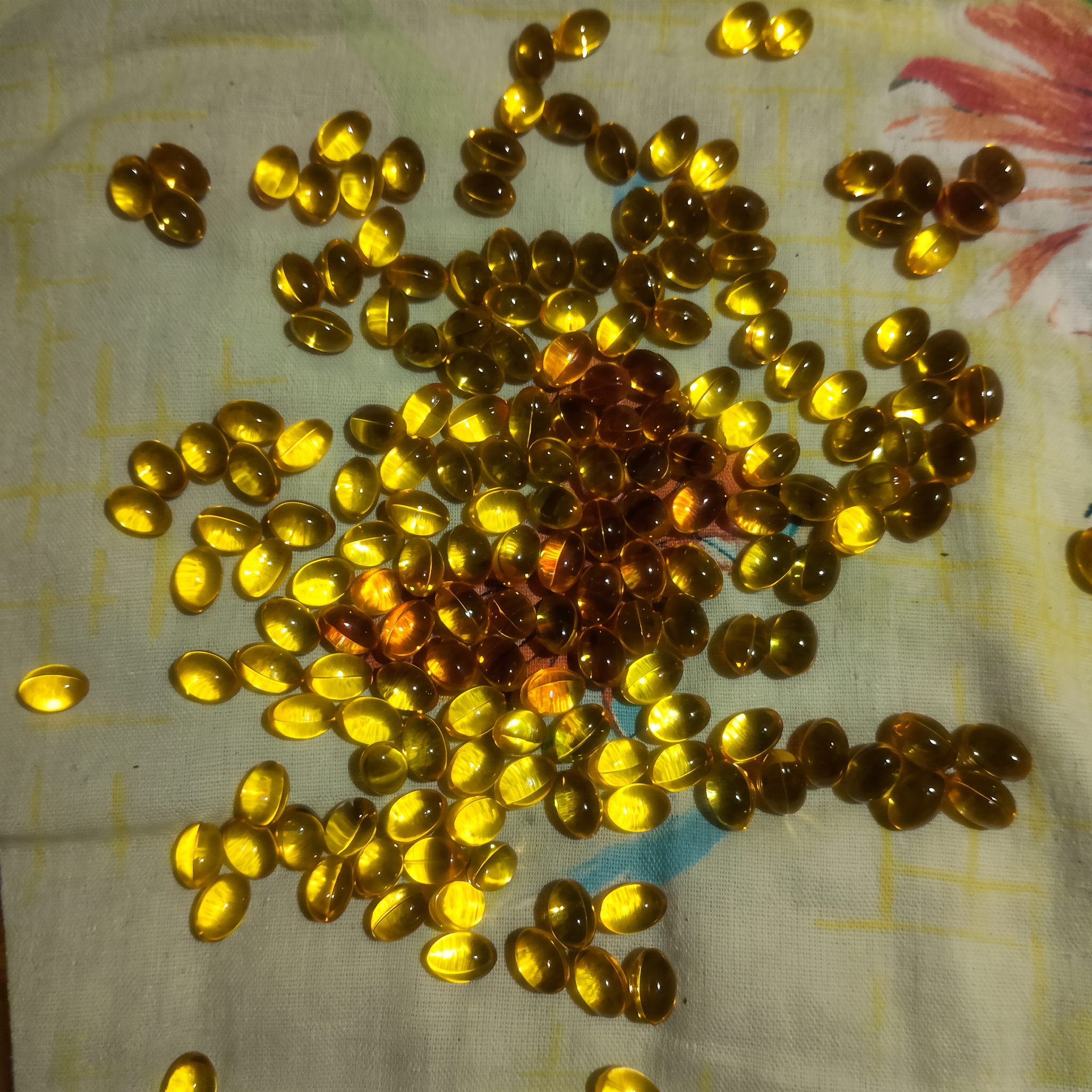
NEVER take garlic supplements if you are on a blood thinner. Not because garlic is dangerous in food. Because garlic at the concentrated doses in supplements significantly inhibits platelet aggregation — the same mechanism as aspirin — and the combination can produce bleeding risk your cardiologist did not factor into your prescription. Most garlic supplement labels carry the warning in fine print. Most customers do not read fine print. And most doctors do not ask whether their patient is taking garlic before adjusting their anticoagulation dose. But that is not the main reason I am writing this. I am writing this because garlic supplements have a second problem that has nothing to do with blood thinners and everything to do with the reason you are taking them in the first place. They do not work for cardiovascular health. Not because garlic has no biological activity. It does. Fresh raw garlic, crushed minutes before consumption, produces allicin — a sulfur compound with documented effects on platelet activity and mild vascular function. The clinical studies that showed garlic reducing blood pressure and improving lipid markers were built on fresh garlic. Specific doses. Raw. Consumed immediately after crushing, before allicin degradation begins. Allicin has a half-life of less than 1 hour in the human body. By the time the capsule you swallowed this morning has been digested, the allicin it contained has already degraded into less active sulfur compounds. The garlic that lowered blood pressure in those trials was not a capsule from a supplement store. It was food, prepared specifically and consumed immediately, at doses equivalent to several raw cloves per day. The capsule on your shelf is not that garlic. A 2012 meta-analysis published in the Journal of Nutrition reviewed 39 randomised controlled trials on garlic supplementation and found no statistically significant reduction in LDL cholesterol. A systematic review of garlic and blood pressure found average reductions of 3 to 5 mmHg in the trials that showed the strongest effects — approximately what your doctor achieves by asking you to reduce your sodium intake. 3 to 5 mmHg. If that is the return on your cardiovascular supplement, you have paid supplement prices for a dietary change you could have made for free. I am not writing this to dismiss garlic. I am writing it because the person taking garlic capsules every morning for their blood pressure, their LDL, or their circulation deserves to know that the compound those capsules are marketed around degrades before it reaches the cells it was supposed to reach. And because there is a mechanism that actually does what garlic was supposed to do — that the research supports at the cellular level in a way the garlic literature cannot match — that is almost certainly not in your current supplement routine. Let me explain both things. What garlic was supposed to do. And what actually does it. The goal was always the endothelium. The endothelium is the single continuous sheet of cells lining every blood vessel in your body — from your coronary arteries to the smallest capillaries feeding the tissue of your feet and hands and eyes. When these cells are healthy and functioning correctly, they produce nitric oxide continuously. Nitric oxide is the molecule that signals the surrounding smooth muscle of every vessel to relax and stay open. Blood flows freely. Pressure stays controlled from within the vessel rather than requiring medication to override it from outside. LDL particles that enter the arterial space pass through without catching against the wall. When the endothelium is damaged — by chronic inflammation, by elevated glucose, by years of metabolic stress — it stops producing nitric oxide. Vessels constrict. Blood pressure rises. LDL gets trapped against an inflamed wall. Circulation falters to the tissue depending on it. The modest blood pressure effects seen in fresh garlic studies were, at their best, a mild and indirect nudge toward nitric oxide production through organosulfur compound activity in the bloodstream. A nudge that was present in fresh raw garlic at high doses, largely absent in the degraded compounds of a supplement capsule, and not remotely sufficient to initiate the cellular repair of a damaged endothelium. The reason your garlic supplement has not moved your numbers is not that the dosage was wrong or the brand was inferior. It is that garlic was never the mechanism. It was a dietary source of compounds that produced mild vascular effects under very specific conditions that no capsule can replicate. And the thing that actually repairs the endothelium — that restores nitric oxide production from within the cells themselves rather than nudging the system from outside — is a different compound entirely. That compound is capsaicin. Inside every endothelial cell lining every blood vessel in your body sits a receptor called TRPV1 — transient receptor potential vanilloid 1. Discovered and characterised over 30 years by Dr. David Julius at the University of California, San Francisco. Recognised by the 2021 Nobel Prize in Physiology or Medicine. When capsaicin activates TRPV1 at therapeutic concentration, the damaged endothelial cells initiate a repair sequence that no garlic compound — fresh, aged, extracted, or encapsulated — has ever been documented to produce. SIRT1 rises. This is the protein that protects endothelial cells against the premature senescence driven by chronic inflammation. The accelerated deterioration of the vessel lining slows. p21 falls. This is the marker that causes damaged endothelial cells to stop functioning and stop replicating. When p21 falls, cells that had stopped working begin to recover. eNOS activates. The enzyme that produces nitric oxide from within the cells themselves. Not from a sulfur compound in the bloodstream producing a mild downstream effect. From the endothelial cell doing what it was designed to do — producing nitric oxide directly from within restored cellular machinery. When eNOS restores, nitric oxide production recovers from the source. Vessels relax on their own rather than being overridden by medication. LDL stops catching against a wall that is no longer inflamed. Blood pressure normalises from within the vessel wall. Circulation improves to every tissue the endothelium was failing to supply adequately. This is the repair mechanism. Not the 3 to 5 mmHg nudge. The cellular repair. Now I need to tell you what I told everyone who tried cayenne supplements from the pharmacy before finding the correct formulation. Because the delivery problem that makes garlic supplements ineffective has an equivalent in the capsaicin category that has misled millions of people into concluding that capsaicin also does not work. Capsaicin is fat-soluble. In a dry powder capsule — which is what the overwhelming majority of cayenne supplements on the market contain — the liver clears approximately 96% of the active compound during first-pass hepatic metabolism before it ever reaches systemic circulation. The TRPV1 receptors in the endothelial cells never receive a meaningful dose. The repair sequence never initiates. 4% bioavailability. 96% destroyed before arrival. The capsaicin needs to be dissolved in a lipid carrier before swallowing — dissolved, not mixed — so it absorbs through the lymphatic system and bypasses hepatic first-pass metabolism entirely. The carrier oil matters: soybean and sunflower oil, used by most manufacturers because they are cheap, are high in omega-6 fatty acids and actively pro-inflammatory. A formula targeting vascular inflammation should not be suspended in an oil that promotes it. The carrier needs to be avocado oil — anti-inflammatory, high in oleic acid, working with the capsaicin rather than against it. BioPerine — a patented piperine extract — must be included to extend capsaicin plasma half-life. Without it, even correctly oil-delivered capsaicin clears the bloodstream within approximately 1 hour before the TRPV1-mediated intracellular repair cascade can fully propagate. BioPerine inhibits CYP3A4 and P-glycoprotein and extends the active window to the duration the mechanism requires. And Vitamin K2 — menaquinone-7 — must be in the formula. Arterial calcification — calcium migrating into the arterial wall and hardening it independently of LDL and independently of endothelial inflammation — requires Matrix Gla Protein activation to begin reversing. K2 activates it. Nothing in the standard garlic or cayenne supplement category addresses this. The calcification that has been stiffening your vessel walls continues unaddressed regardless of what your blood pressure supplement does to the endothelial component. There is 1 product formulated around all of these requirements. Aurivita Cayenne Pepper. A resealable pouch — 60 softgels per bag, 30 servings. Pharmaceutical-grade capsaicin from the equivalent of 30,000 peppers per serving. Dissolved in cold-pressed avocado oil — enabling lymphatic absorption that bypasses hepatic first-pass metabolism entirely. BioPerine at a clinically relevant dose to extend the active window. Vitamin K2 as menaquinone-7 for arterial calcium management. Vitamin D3 for endothelial structural support. Third-party tested per batch. Certificate of Analysis available. Made in the USA. This is what cellular endothelial repair looks like in practice. Week 1 to 2. The low-grade vascular tension that chronic endothelial dysfunction produces — a tension so normalised it stopped registering as tension — begins to ease as nitric oxide production starts restoring systemically. Sleep improves. The sympathetic nervous system activation that a failing endothelium drives begins to quiet. Week 2 to 3. Blood pressure readings begin to move on the same medication dose. Not because a drug is overriding the vessel from outside. Because the vessel is beginning to regulate its own tone. Week 3 to 4. Energy holds through the day. The cerebral and peripheral microcirculation that had been delivering insufficient oxygenated blood to tissue under demand begins to improve. Week 6 to 10. The panel changes. LDL environment improving. Triglycerides normalising. Blood pressure holding at the lower readings consistently. eGFR stabilising in patients whose kidney markers had been drifting. The garlic capsule you have been taking every morning was targeting the same endpoint — a healthier endothelium, better nitric oxide production, improved circulation — through a mechanism that cannot reach it in the form you were taking it. The allicin was degraded before it arrived. The dose was insufficient even if it had arrived. And the 3 to 5 mmHg reduction that the best garlic trials produced at doses you were not taking is not the repair the vessel wall actually needed. Aurivita reaches the receptor. At therapeutic concentration. In the delivery format that bypasses the clearance problem. With the clearance extension that keeps it active long enough to do the job. With the K2 that addresses the calcification component the rest of the category ignores. 120-day money-back guarantee. If your blood pressure does not move, if your LDL does not shift, if your energy does not improve, if nothing changes — return the pouch and every dollar comes back. No questions. No forms. Get your panel before you start. Get it again at 10 weeks. The 3 to 5 mmHg the garlic was offering is not the number you are going to see. 👉 https://aurivita.co/pages/7-benefits — Dr. Mike Harris P.S. If you are currently taking garlic supplements alongside a blood thinner — aspirin, warfarin, clopidogrel, or any anticoagulant — tell your physician before continuing. The platelet inhibition of garlic at supplemental doses combined with anticoagulant therapy is a documented interaction that most patients are not warned about at the point of purchase. This is not a reason to avoid garlic in food. It is a reason to treat garlic supplements with the same pharmacological awareness you apply to any other compound with documented drug interactions. P.P.S. The 4% bioavailability figure for dry powder capsaicin is not contested. It is from peer-reviewed pharmacokinetic literature. If you have previously tried cayenne capsules from a pharmacy or from Amazon and noticed nothing, you experienced 4% bioavailability in practice. The mechanism was never wrong. The delivery format was. Aurivita dissolves pharmaceutical-grade capsaicin in cold-pressed avocado oil with BioPerine to extend the active window and K2 to address the calcification component no garlic supplement has ever touched. That is the difference between the supplement that moved your neighbor's blood pressure 18 points and the 1 that sat on your shelf for 3 months and did nothing. P.P.P.S. Do not stop any existing medication on your own. Aurivita is designed to work alongside whatever your physician has prescribed. Every adjustment to existing prescriptions should be made by your physician based on what your panel data shows. Add Aurivita to what you are already taking. Let the 10-week panel make the argument. Then let your doctor make the call.
Where the ad sends people
aurivita.co
The Meta-Analysis The Garlic Industry Does Not Put On Its Labels
Join 150,000+ Happy Customers!
Learn more: aurivita.co(opens in a new tab)