
Inactive· since May 7, 2026
- 70
- days it ran
- 1
- relaunches
Ad copy
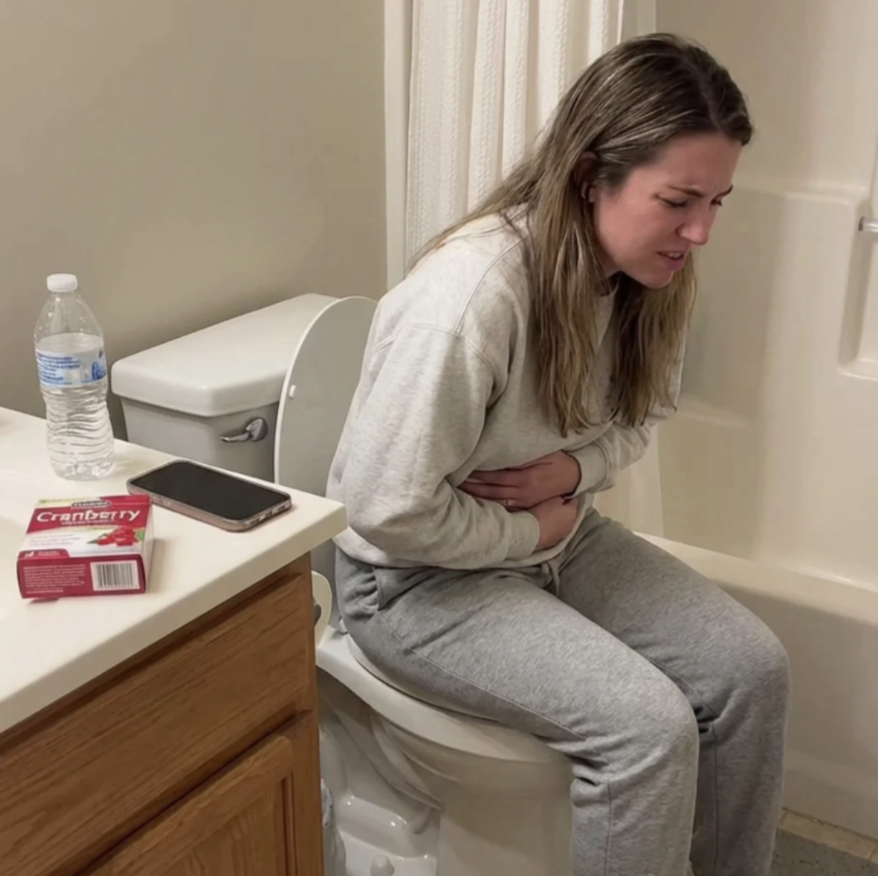
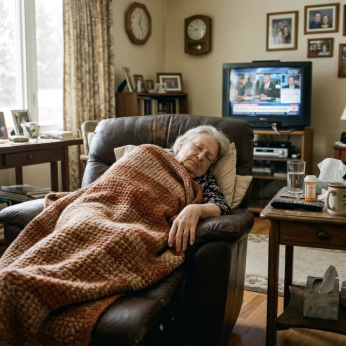
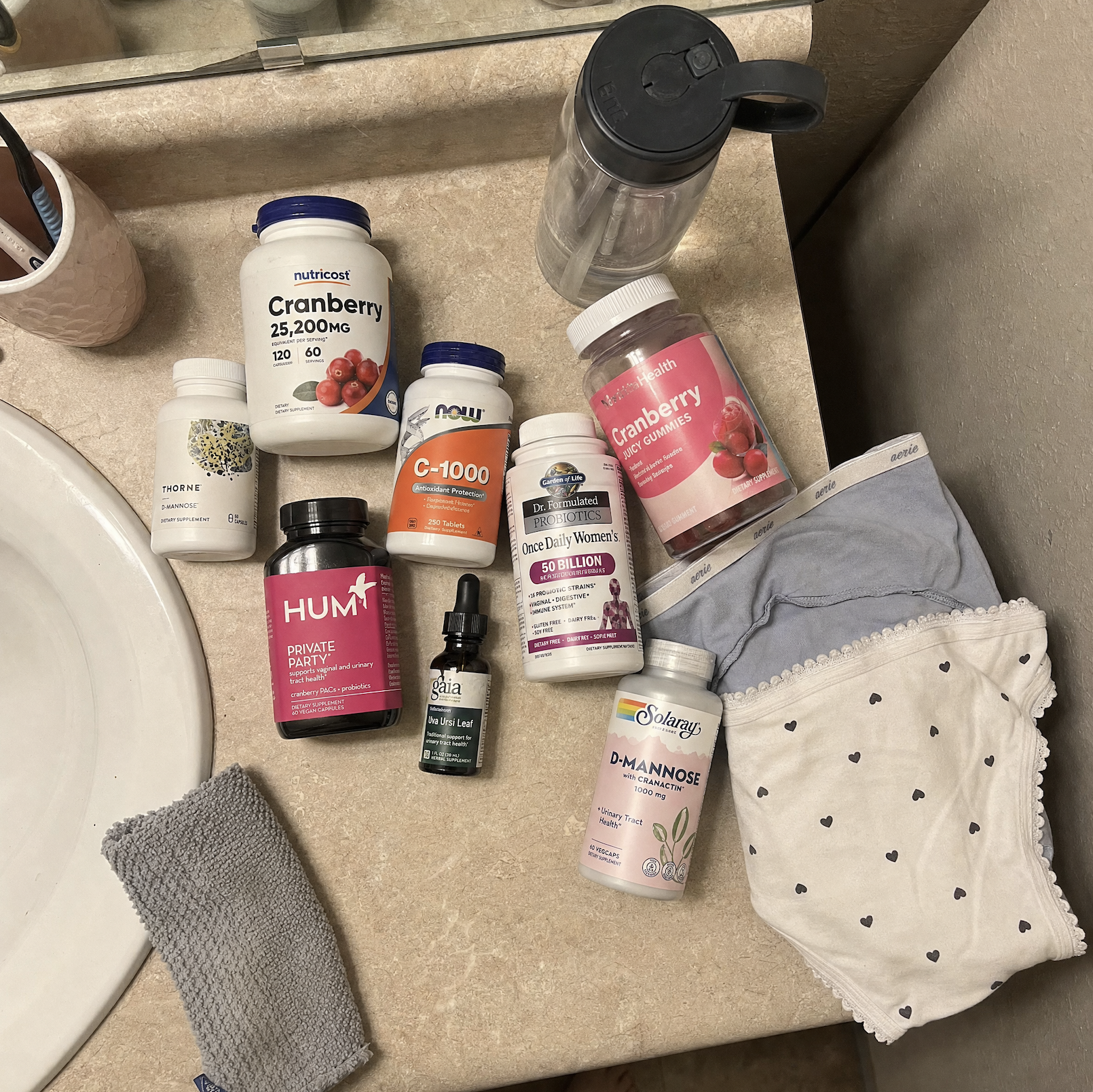
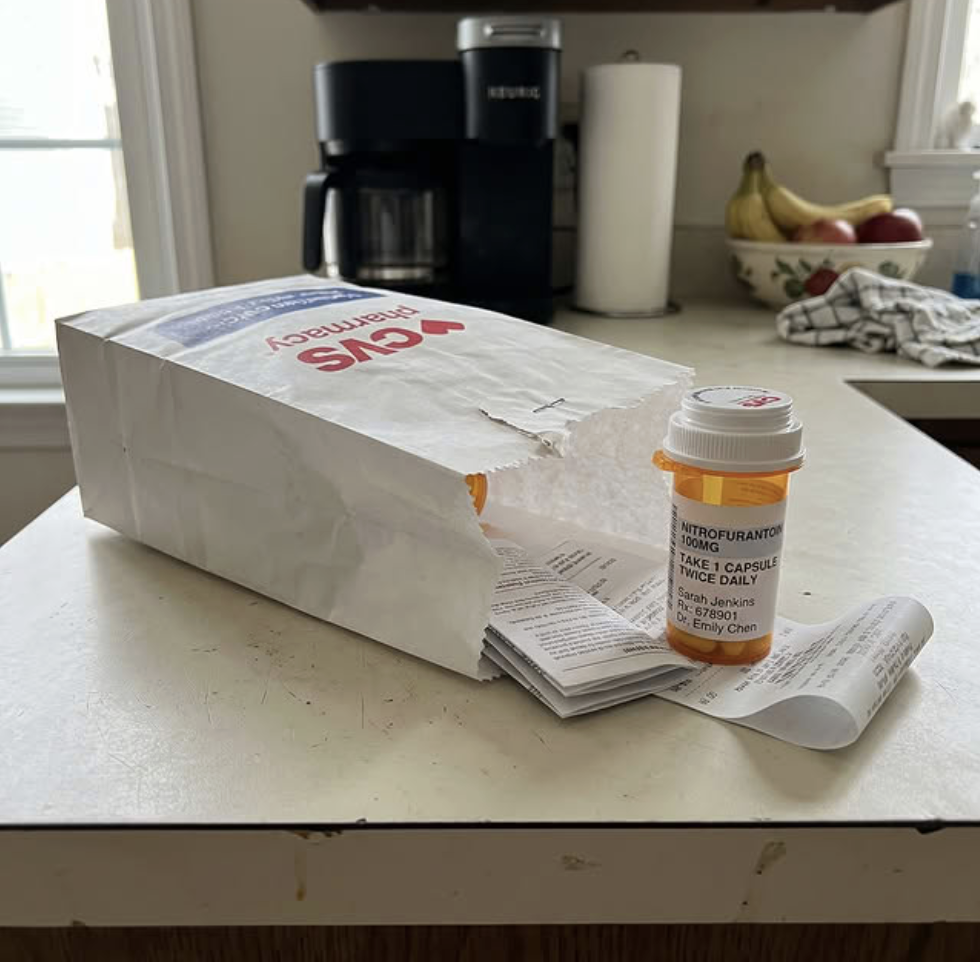
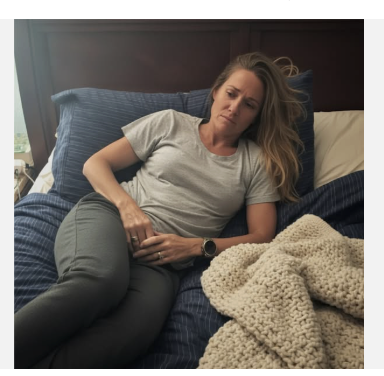
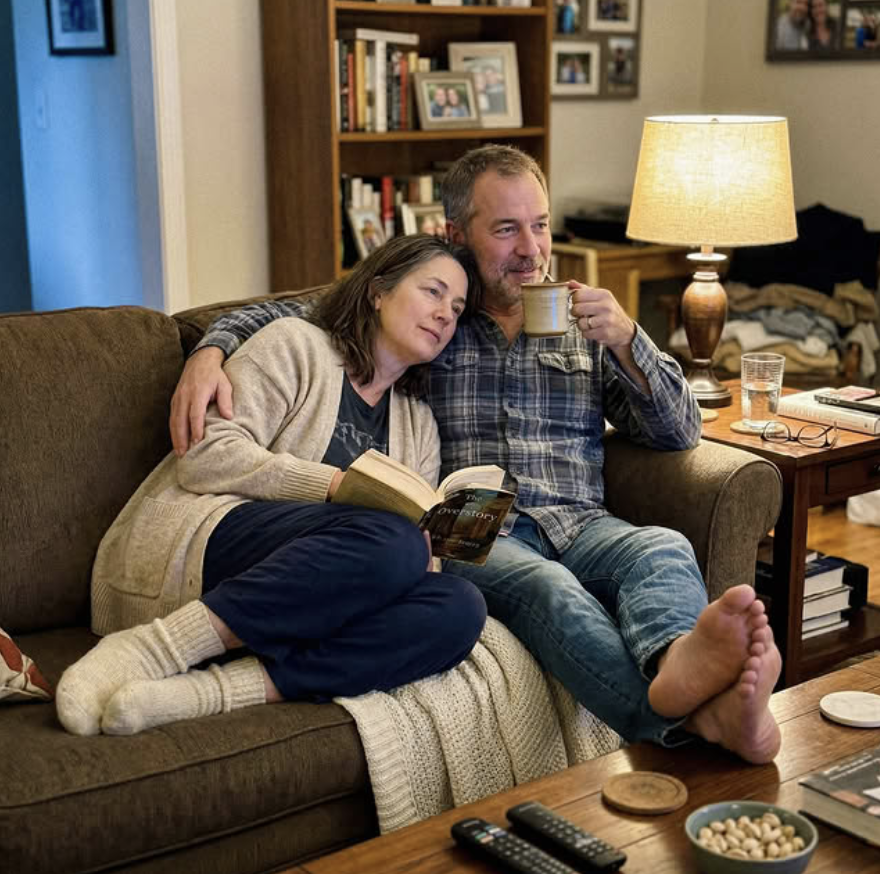
My mom was on and off antibiotics for 14 years. The recurring infections and the anxiety destroyed her. And I refused to follow that path. So let me tell you what happened to my mother. Because her story is going to change the way you see this problem. ======== For almost 14 years, my mother was trapped. Her doctor told her it was simple. Take the antibiotic, finish the whole prescription, and it'll clear right up. "Just make sure you're peeing after sex and wiping front to back, and you'll be fine." She did exactly what they told her. She had seven UTIs in the first year. Seven. In twelve months. And it wasn't like she was being careless. She was obsessive. Only cotton underwear. Unscented everything. A post-sex routine that looked like a surgical protocol. Cranberry juice by the gallon. She changed her diet three times. She even tried every supplement her friends recommended. And none of it helped. But the infections weren't even the worst part. The worst part was watching her disappear. She used to be this force of a woman. Always moving. Always doing. The kind of mom who had dinner on the table, helped us with homework, and still had energy to sit up laughing at the end of the night. And slowly, over those 14 years, that woman just… faded. She started planning her whole life around bathrooms. Canceled trips. Skipped dinners out. Turned down weekends away because she didn't know if she was going to wake up in a flare. She stopped going out with friends. She stopped dressing up. She stopped being close with my dad because she was scared that every time they were intimate, she'd be paying for it for the next two weeks. And every time she went back to the doctor, it was the same conversation. "Your culture came back negative." "Are you drinking enough water?" "Maybe it's your hygiene." Another test. Another culture. Another prescription. Another two good weeks. Another infection. Every appointment, the finger pointed right back at her like she was doing something wrong. For 14 years. Not once — not ONE appointment — did anyone stop and ask what was actually causing the infections to keep coming back. They just treated every new one like it was the first. I watched my mom go from the woman who raised four kids and ran a household like a machine to a woman who wouldn't leave the house without knowing where every bathroom was between home and wherever she was going. She carried spare underwear in her purse. She carried antibiotics in a little ziplock bag "just in case." She kept a heating pad on her nightstand permanently — it just lived there, like a piece of furniture. She was 67 years old, and she had organized her entire life around a problem her doctors had been failing to solve since she was 53. ======== So fast-forward to four years ago. I'm 51. And I've just gotten my fourth UTI in eight months. I'm sitting in the same kind of exam room my mother sat in dozens of times. My doctor is running through the same checklist. Are you drinking enough water? Are you peeing after sex? Have you thought about switching soaps? And I want to scream. Because I'd done my homework. I was already taking D-mannose after sex. Standardized cranberry with 36mg PACs. Vaginal probiotics. I was even on HRT and vaginal estrogen — I'd found a doctor who actually listened, and I'd started all of it two years earlier. My hygiene routine was a full-blown ritual. I was doing everything right. And here I was, still sitting in that chair. My doctor pulled out her notepad. "I think we should talk about putting you on a low-dose prophylactic antibiotic. Daily. Long term." I couldn't breathe for a second. Because I had watched my mom walk into that exact recommendation. I had watched the 14 years that came after. I was not going to hand my 50s over to a daily antibiotic that I'd probably still be on when I was 65. "No," I said. She wasn't happy. Gave me the whole speech about staying ahead of infections and not taking chances. But I held the line. I am NOT becoming my mother. There had to be an actual reason this was happening. And I was going to find it. ======== So I doubled down on everything, thinking maybe I just wasn't doing enough. More D-mannose. Higher-dose cranberry. A different probiotic. Garlic capsules and oregano oil because someone in a Facebook group swore by them. Clean keto for six weeks because an article said sugar was feeding the bacteria. Three more months of being perfect. Three more months of doing literally everything right. Two more infections. And each time, I'd sit in the bathroom at 3am with that familiar burning and feel the same hopelessness I'd watched swallow my mother for over a decade. Because I knew I wasn't doing anything wrong. There was something nobody was telling me. So I started searching. Really searching. Not the usual "how to prevent UTIs" Google search that gives you the same five answers — cranberry, D-mannose, probiotics, water, hygiene. I'd done all of that. I could have written those articles myself at this point. I was reading forums. Research papers. Anything from women who had actually solved this, not just managed it. And most of it was the same recycled advice wearing different packaging. Another cranberry brand. Another probiotic strain. Another hygiene tip I was already following. I was ready to give up. I was actually about to close my laptop and call my doctor and just agree to the daily antibiotics. Let myself become my mother. Accept that this was my life now. But then I found something I almost scrolled past. It was buried in a medical journal — a footnote in a study out of São Paulo. Researchers had surveyed women in remote rural communities in the interior of Brazil — communities so isolated that many of them didn't have regular access to clinics, pharmacies, or antibiotics. The kind of places where the nearest doctor might be a full day's travel. And what they found didn't make sense to me. These women — even postmenopausal women in their 60s and 70s — had almost no incidence of recurring urinary infections. Not lower rates. Almost none. Women with no access to antibiotics. No D-mannose. No cranberry supplements. No gynecologists. No HRT. Nothing that any of us have been told is necessary to manage this problem. And they just… didn't have it. The study documented that it was happening. But it didn't explain why. It noted a possible connection to "traditional bee-derived preparations" used in these communities, but that was it. One sentence. No follow-up. I spent the next two weeks trying to find more. I searched for the researchers. I looked for follow-up studies. I tried to find the communities referenced in the paper. But these weren't places with websites and contact pages. There was no email to send. No phone number to call. These were families living hours from the nearest paved road, in a part of Brazil where the forest is still thicker than the infrastructure. If I wanted the answer, I was going to have to go find it myself. My husband thought I was losing it. "You're flying to Brazil? For what?" I didn't have a good answer. I just knew that I had watched my mother give 14 years to every doctor, every antibiotic, every piece of advice modern medicine had to offer — and none of it worked. And now I was watching the same thing happen to me. And somewhere in the Brazilian interior, there were women my mother's age who had never dealt with this at all. I needed to know why. So I went. ======== After a flight, a bus, and a ride in a truck with a man who spoke almost no English, I arrived in the kind of place that makes you realize how loud your normal life is. No highway noise. No industrial hum. Just birds and wind and this thick, green stillness. Hills rolling into forest rolling into more forest. I couldn't see a building in any direction. And then I saw her. Dona Lúcia came out of the farmhouse wiping her hands on her apron and waved me in like I was a neighbor returning a dish, not a stranger who had just traveled 5,000 miles. She had to be in her late seventies. Brown skin, strong hands, bright eyes. She moved the way my mother used to move before all of this started — easy, unhurried, like her body was a place she felt comfortable living in. She sat me down at a long wooden table on the porch and put a cup of coffee in front of me before I could say a word. Her granddaughter translated. "So you're the American with the infections that won't stop," she said. Not unkindly. Like she'd heard this before. I nodded. And then I told her everything. My mother. The 14 years. The antibiotics. My own infections. The supplements that didn't work. The doctors who kept blaming my hygiene. The 3am bathroom visits. All of it. She listened without interrupting. When I finished, she nodded slowly. "I know why they keep coming back," she said. "And it is much simpler than your doctors have made it." She picked up her coffee cup. "The bacteria that cause your infections — they don't just sit there waiting to be killed. They build a wall around themselves. A protective wall, inside your bladder." She paused and said something in Portuguese to her granddaughter. A back and forth. The granddaughter pulled out her phone, typed something, and showed me the screen. *Biofilme.* "Biofilm," I said. Lúcia nodded. "Yes. This is what your doctors would call it. We just call it the hiding. But it is the same thing. The bacteria hide behind this wall, and your antibiotics were never made to break through it. They kill what's floating around on the outside, and you feel better for a little while. But behind the wall? The bacteria are still there. They wait. They come back." She took a sip of her coffee. "And every time you take the antibiotic, it also kills the good bacteria — the ones that were supposed to keep the bad ones from coming back. So each time, it gets a little worse. A little easier for them to return." She set down her cup. "Your doctors are not bad people. They just don't have a tool that can reach behind the wall. So they use the only tool they have. And it was never the right one for this problem." "So what breaks the wall?" I asked. She smiled and stood up. "Come." ======== She walked me past the house, past a garden, and into a grove of low trees with small white flowers and silvery-green leaves. "Alecrim-do-campo," she said, touching one of the branches. "This is the only plant that produces the green propolis. It grows here and nowhere else." She led me to the hives — white wooden boxes along the edge of the grove. Bees drifting in and out. "My grandmother used to say the bees figured this out long before any doctor. The bees make propolis to protect the hive. When something tries to invade — bacteria, fungus, anything — the propolis breaks down the walls it builds. That is what propolis is for. That is what the bees made it to do." She scraped a piece of dark green resin from the edge of a frame. Dense. Almost black. "It does the same thing inside your body. The bacteria build their wall. The propolis breaks it. That's the whole thing. That is why the women in this family — my mother, my daughters, myself — have never had your problem. We've been taking propolis our whole lives. Three generations. It's not a mystery to us. It's just what we do." I looked around. Green in every direction. Hills, forest, more forest. Not a road. Not a fence. Not a power line. "How far is the nearest farm?" I asked. She laughed. "Maybe 80 kilometers. There is nothing here. That is why what we make is clean. No chemicals. No pesticides. The bees eat what has always been here." She held up the piece of propolis. "What they sell in your country — in stores, on the internet — it comes from bees near farms. Near crops that have been sprayed. The chemicals end up in everything the bees produce. And then they grind it up, heat it, fill a capsule with wax, and put it on a shelf." She shook her head. "Women take it and nothing happens. And they think propolis doesn't work. But that was never propolis. That was dust with a label." She handed me the piece. It smelled like resin and pine and something deep underneath, like the forest floor itself. "But you also need to rebuild what the antibiotics destroyed," she said. She went inside and came back with a small jar — something golden and thick. "Bee bread. The bees ferment pollen inside the hive. It's alive with the good bacteria your body has lost. One breaks the wall. The other rebuilds what was taken. We've always used both. That's why it works." ======== Before I left, I asked her the question I'd really come for. "Where can I get this? The real thing. In a form I can take every day at home." She nodded. "My son-in-law. He spent years trying to find a company that would do it properly. Most companies wanted to buy our propolis and cook it — process it with heat, turn it into powder, put it in a cheap capsule. He refused all of them." She paused. "One company — Melliva — they agreed to do it the right way. Cold extraction. No heat. The compounds stay intact. They use our propolis and our bee bread, and they don't ruin it. That is the only one we work with." I ordered it on my phone sitting on that porch. I didn't even wait to get back to the hotel. ======== Week one. Nothing obvious. I kept waiting to feel something. I didn't. Week two. Still nothing I could point to. I was starting to wonder. Week three. Still no infection. That wasn't normal for me. Three weeks was usually the outer edge before the next one started. Week four. Four full weeks. Nothing. I didn't want to get my hopes up yet. Week six. My husband put his hand on my lower back in the kitchen and I didn't flinch. I didn't even realize it until afterward — he said something about it. For two years, every time he touched me, some quiet part of me had been calculating. Anticipating the next infection as the price. That calculation had just… stopped. Week eight. Two full months. No infection. No antibiotics. I sat on the couch one night and cried, and I couldn't fully explain why. It was like I'd been carrying a weight I'd stopped noticing — this low, constant hum of worry underneath everything. Is another one coming? Did I do something wrong this time? Am I going to lose next weekend to this? That hum had been the background noise of my life for so long that silence felt strange. Month four. Still no infection. I said yes to a dinner out without the whole mental checklist running. I finally said yes to that trip to Italy we'd put off for two years. I hadn't been present like that with my husband in three years. Neither of us had really admitted what this problem had been doing to us until it started lifting. Month six. I went back to my doctor. She pulled up my chart and looked at the gap where the infections used to be. She asked what I was doing. I told her. She actually pulled out her phone and started typing notes. She said she had other patients she didn't love the idea of putting on daily prophylactic antibiotics, and she wanted to understand what was in this. No notepad. No prescription. A doctor actually listening to me for once. ======== Eleven months later. I have not had a single UTI. But honestly? That's the smallest part of it. The biggest part is that I have my marriage back. Not in the dramatic way — we were always going to stay together. But there's a closeness that had quietly gone missing that I didn't even let myself name at the time. Because naming it would've meant admitting how much this problem had taken from us. My husband and I are touching each other again. Laughing in the kitchen again. He puts his hand on my hip when he walks past me at the stove, and it doesn't make me think anything except that he loves me. Three years ago, that gesture used to make my chest tighten. And the thing I really didn't expect? I feel young again. I don't mean I turned back the clock. I mean there's this feeling I hadn't had since I was maybe 38 — this lightness, this sense that my body is mine, that I'm in charge of it instead of negotiating with it every day. I used to catch myself in the mirror and see a woman who was managing a condition. Now I catch myself in the mirror and I just see me. The me from before any of this started. I'd forgotten how much that feeling was worth. I'd forgotten I used to have it. The recurring UTIs took it from me so slowly that I didn't notice it leaving. And for the last year, it's been quietly coming back. I'm traveling again. I'm making plans months out without wondering if I'll be able to keep them. I'm wearing things I'd stopped wearing because I'd stopped feeling like the kind of woman who wore them. And I'm not my mother. I'm not spending my 50s watching my life shrink around a problem everyone kept treating the wrong way. I found the actual reason. And I fixed the right thing. ======== If you're reading this and you're caught in the same cycle — the infections, the antibiotics, the cranberry, the hygiene lectures, the slow disappearing — I'm not going to give you a checklist. You've had enough of those. I'll just tell you what I wish someone had told me four years ago. The bacteria aren't just floating around waiting to be killed. They're hiding behind a wall that nothing you've been taking can reach. Every round of antibiotics kills the ones you can get to and wipes out the defenses that were keeping the rest in check. That's why it keeps getting worse. That's why nothing has worked. It was never your hygiene. It was never how careful you were being. Melliva is what broke the cycle for me. Brazilian green propolis — the real kind, from bees deep in the Atlantic Forest where there isn't a pesticide for 80 kilometers — to break through the wall. And fermented bee bread to rebuild the defenses that years of antibiotics destroyed. They have a 90-day money-back guarantee. Take the full protocol. Use everything. If it doesn't work, you get every penny back, no questions asked. Every month you stay in this cycle, it gets harder to break. The wall gets thicker. Your defenses get weaker. You have a window right now to get ahead of this before you spend another year — or another decade — on the same path. Don't do what my mom did. Don't give 14 years to a solution that was never solving the right problem. The link is below. — Linda P.S. — My mom started taking it four months ago. I didn't even ask her to. She saw what it did for me and ordered it herself. She called me last week and said, "I went three months, Linda. Three months. I haven't gone three months in twelve years." She was crying. I was crying. Fourteen years of her life. I can't get those back for her. But I can make sure the next fourteen look nothing like them.
I hope this helps :)
Introducing the only formula that breaks down bacterial biofilms and restores your vaginal ecosystem — so you can finally stop worrying about odor, infections, and discomfort.
LEARN MORELike this ad? Make it yours.
Crush rebuilds this exact creative around your product — your brand, your colors, your offer — in about a minute.