
Inactive· since Jun 27, 2026
- 19
- days it ran
- 3
- relaunches
Ad copy
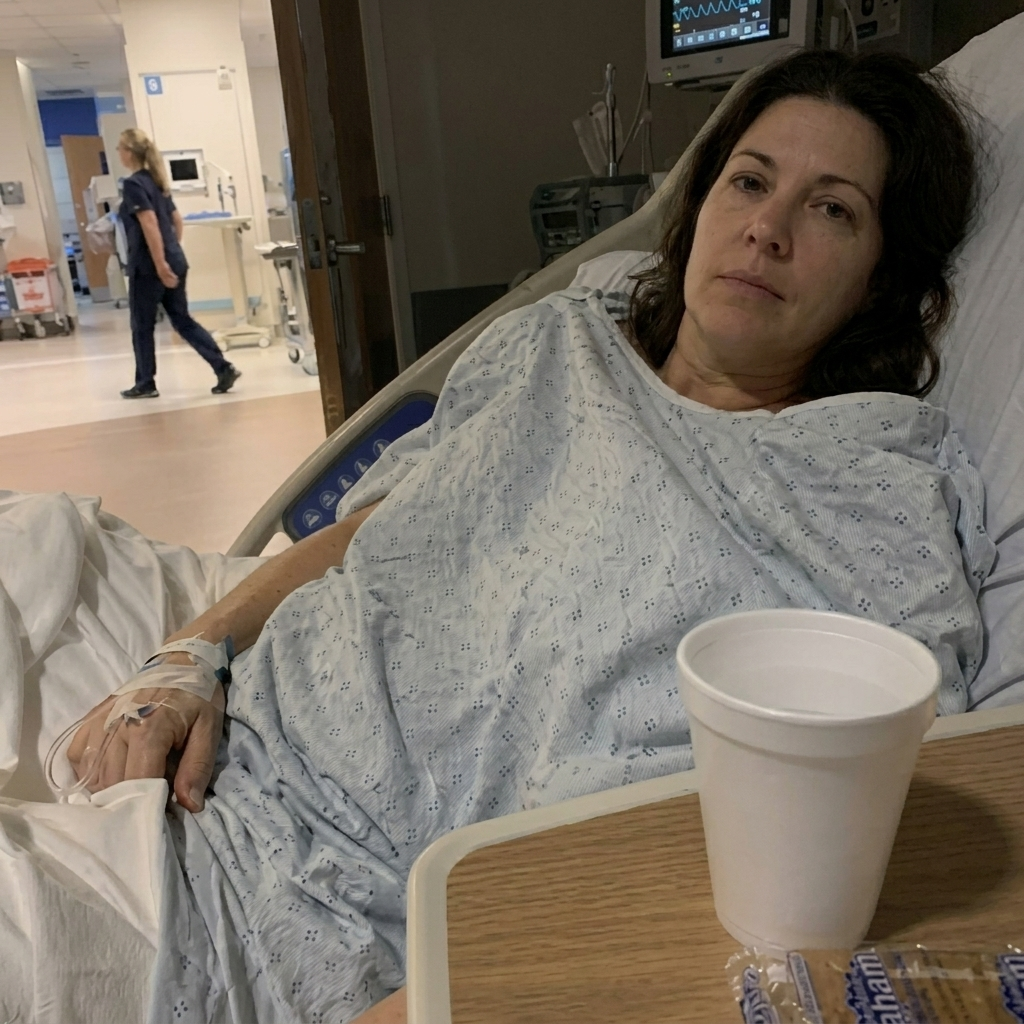
I had a constipation crisis on a Mediterranean cruise. The ship's doctor was from Austria. She asked me ONE question that made my American gastroenterologist look 15 years behind. I'm 56 years old. My husband and I saved for two years for this cruise. Two weeks through the Mediterranean. Greece, Italy, Spain. Day four, we're walking through Santorini. Cobblestone streets. Steep hills. Beautiful. But my belly is killing me. Five days into the trip, I haven't gone. Not once. The rich ship food, the late dinners, the schedule disruption, all of it has shut me down. The bloat is so bad that even loose clothes feel tight against my abdomen. By the time we get back to the ship, I'm doubled over. The cramping is sharp. I'm sweating through my blouse. There's a hard knot under my ribs that wasn't there yesterday. My husband looks worried. "We need to get that looked at." I don't want anyone looking at my belly. I haven't talked openly about being backed up in four years. Not with a friend. Not with a doctor I didn't have to see. Not with my husband in detail. But the pain is bad enough that I don't have a choice. The next morning, I go to the ship's concierge. "I need to see a doctor about my stomach." She makes a call. Gets me an appointment that afternoon with the ship's physician. Her office is small. Clean. On Deck 3 near the medical center. Dr. Weber. Austrian accent. Maybe mid-50s. She examines my abdomen. Presses gently along the sides. Asks me to lie back. "The immediate issue is the buildup from five days of low-fiber food and travel stress," she says. "But this is more than the cruise. How long have you been chronically backed up?" "About five years," I say. "My gastroenterologist back home has me on MiraLAX. Every morning." "Has she ever measured your transit time or the makeup of your gut bacteria?" I stare at her. "What's that?" She looks at me for a moment. Then sets down her stethoscope. "Your colon doesn't move on its own," she says. "It moves on a signal from a specific crew of bacteria that live in the lining of your colon wall. They produce a short-chain fatty acid called butyrate, the go-signal that tells the muscle to contract. In chronic cases like yours, that population has thinned. The signal has gone quiet." "And the bigger issue is what years of MiraLAX does to that population. Each scoop pulls water into the load and washes more of the worker bacteria out. The signal weakens. The colon stops firing on its own. You need more scoop. It works less. The lining thins. You're treating today's load while the population that should be running your rhythm keeps shrinking." I'm listening. But I don't understand why my gastroenterologist never explained this. "My gastroenterologist never said anything about a bacterial signal." Dr. Weber nods slowly. "It's not commonly discussed in American GI practice," she says. "Most focus on osmotic laxatives and prescription escalation to Linzess or Motegrity. But in Austria and Germany, we've been treating chronic constipation as a microbiome problem for over a decade." "So what do I do?" I ask. "There's extensive research on feeding the worker bacteria directly," she says. "Anthocyanins, the dark pigment found in heirloom elderberry, are the specific food those bacteria eat. When you deliver intact pigment to the colon, the population comes back. The signal returns. The colon starts firing on its own. It's been showing significant results for chronic slow-transit constipation, especially in patients who've failed laxatives and fiber." "My gastroenterologist never mentioned anything like that." "It's well-established in European clinical practice," she says. "But not standard protocol yet in the US. If I were you, I'd look into it when you get home." She paused. Then added: "Five years on a scoop that manages today's load is not treatment. It's monitoring the decline." I thank her and leave. But I can't stop thinking about it. For the rest of the cruise, it's in the back of my mind. Five years. My gastroenterologist had been prescribing MiraLAX. Checking my labs every few months. Watching my dose creep from one scoop a day to two. Telling me to keep scooping. But she never once mentioned that the scoop washes out the bacteria my colon needs to run on its own. Or that there's a specific crew of workers, Faecalibacterium prausnitzii and Bifidobacteria, that produce the go-signal. Or that there was research on feeding them with anthocyanins. When we got home, I couldn't let it go. The night we unpacked, I opened my laptop. It was 11:45 PM. I started searching. "butyrate colon signal bacteria" "anthocyanin chronic constipation" "European microbiome protocol slow transit" At 1:30 AM, I found it. Peer-reviewed microbiome research. Published in clinical journals. Study after study confirming exactly what Dr. Weber had told me. Worker bacteria in the colon lining produce butyrate. Butyrate is the go-signal that tells the colon to contract. Chronic laxative use thins the population. Anthocyanins from cold-extracted heirloom elderberry are the precise food those bacteria eat. Zinc supports the colon lining where they live. Buffered vitamin C calms the inflammation that built up while things sat. The research was there. Published. Peer-reviewed. Some of it over a decade old. I read the studies three times. I felt something rising in my chest. Not anger. Something else. Disbelief, maybe. My gastroenterologist had been prescribing MiraLAX since 2019. Five years. And there was published microbiome research, from before she even started treating me, showing that chronic laxative use thins the worker population and that feeding the bacteria directly could restore the signal. Why hadn't she mentioned it? I kept reading. More studies. European research. Clinical data. All showing the same mechanism. Same results. At 2:50 AM, I started looking for products. Most elderberry supplements were garbage. Cooking-grade syrup. Heat-processed gummies. Generic powder at 1 to 3% anthocyanins. Nowhere near the standardized 10% concentration the research used. But I found one company making a cold-extracted formulation. Elvera. Cold-Extracted Heirloom Elderberry, standardized to 10% anthocyanins. Zinc citrate. Buffered vitamin C. Capsules for morning delivery. I read the reviews. Women describing exactly what I was going through. Years of MiraLAX that never restored their rhythm. Then daily mornings on their own within weeks of feeding the worker bacteria. I ordered a bottle at 3:15 AM. When it arrived, I started immediately. Two capsules with a glass of water in the morning. No scoop in the coffee. No magnesium at night. No prune juice. No Squatty Potty acrobatics. Sixty seconds. Done. Week one, the constant cramping, that hard pressure I'd carried for years, was calmer. Something was reaching the colon from inside. Week two, I sat in the bathroom one morning and went on my own. No scoop. The first time in five years. It happened again two days later. And again. Week four, daily morning movement. Visible. The bloat was gone by 9 AM, not 9 PM. My pants fit. The hard knot under my ribs was gone. Week eight, I took a photo of my profile and compared it to one from two months earlier. The difference was visible. A flat belly by 9 AM. Daily rhythm on my own. The cramping had stopped. The dose had dropped to nothing. No more dependency. At three months, I went back to my regular gastroenterologist. She reviewed my chart. Then she stopped. "Your transit time has normalized," she said. "Actually, your bowel habits are significantly improved. That's unusual after five years of slow-transit." "I stopped the MiraLAX three months ago." Her head came up. "You stopped?" "I found something else. A capsule. Cold-extracted heirloom elderberry. Standardized to 10% anthocyanins. With zinc and buffered vitamin C. Feeds the worker bacteria that the MiraLAX was washing out." My gastroenterologist looked at my chart. "I'm not familiar with that approach," she said. "But the results speak for themselves. Keep doing whatever you're doing." I left her office feeling something I hadn't felt in years. Not angry. Not betrayed. Just aware. My gastroenterologist wasn't hiding anything from me. She just didn't know. The research existed. The studies were published. The results were documented. But it wasn't part of her training. It wasn't standard protocol in American GI practice. So she did what she was taught, prescribe MiraLAX, monitor the dose, escalate to Linzess or Motegrity if it gets severe. Meanwhile, in Austrian and German microbiome clinics, they'd been feeding the worker bacteria as a treatment approach for over a decade. I'm 57 now. My mornings are daily. On my own. And I think about that cruise ship doctor all the time. The one who took ten minutes to explain what my colon needs. What the worker bacteria do. Why the scoop washes them out. Something my gastroenterologist had never mentioned in five years. If your gastroenterologist is prescribing MiraLAX and telling you to "be patient" with no improvement after months or years, you need to know something. The research exists. Published microbiome studies. Peer-reviewed clinical data. Showing that chronic laxative use thins the worker bacteria and that feeding them with cold-extracted anthocyanins at standardized concentration can restore the signal. Your gastroenterologist probably hasn't seen it. Not because she's incompetent. But because American GI training focuses on osmotic laxatives and prescription escalation. Feeding the bacterial signal with plant pigments isn't standard protocol yet. So when your gastroenterologist says "keep scooping the MiraLAX," she's telling you what she was trained to recommend. But she's not telling you about the research that could actually address why the colon stops firing on its own. The brand I use is Elvera. Cold-extracted heirloom elderberry. Standardized to 10% anthocyanins. Zinc citrate. Buffered vitamin C. Two capsules with a glass of water in the morning. I don't get anything from sharing this. I just know what it's like to scoop powder into my coffee every morning for five years with no real improvement. And I know what it's like to have a doctor on a cruise ship, someone I met by accident because my belly was a knot in Santorini, explain in ten minutes what my gastroenterologist never mentioned in five years. If you're being told to "just keep scooping," you deserve to know there's research your gastroenterologist might not have seen. Research that could restore your morning rhythm without prescription escalation or surgical referral. Research that's been understood in European microbiome clinics for over a decade. You don't have to wait for your gastroenterologist to learn about it. You can look into it yourself. https://tryelvera.com 30-day money-back guarantee. If you don't see your morning rhythm returning, full refund. P.S. My husband took a photo of me in Santorini. Bent over a low stone wall, hand pressed against my belly, while everyone else looked at the view. Last month, we went to dinner and I ate a three-course meal. He looked at me afterward and said, "You're not bracing." I'd been bracing for so long I didn't know I was doing it. I haven't braced since I started feeding the workers my colon was missing.
Like this ad? Make it yours.
Crush rebuilds this exact creative around your product — your brand, your colors, your offer — in about a minute.