
Inactive· since May 25, 2026
- 80
- days it ran
- 0
- relaunches
- 31,949
- EU reach
Ad copy
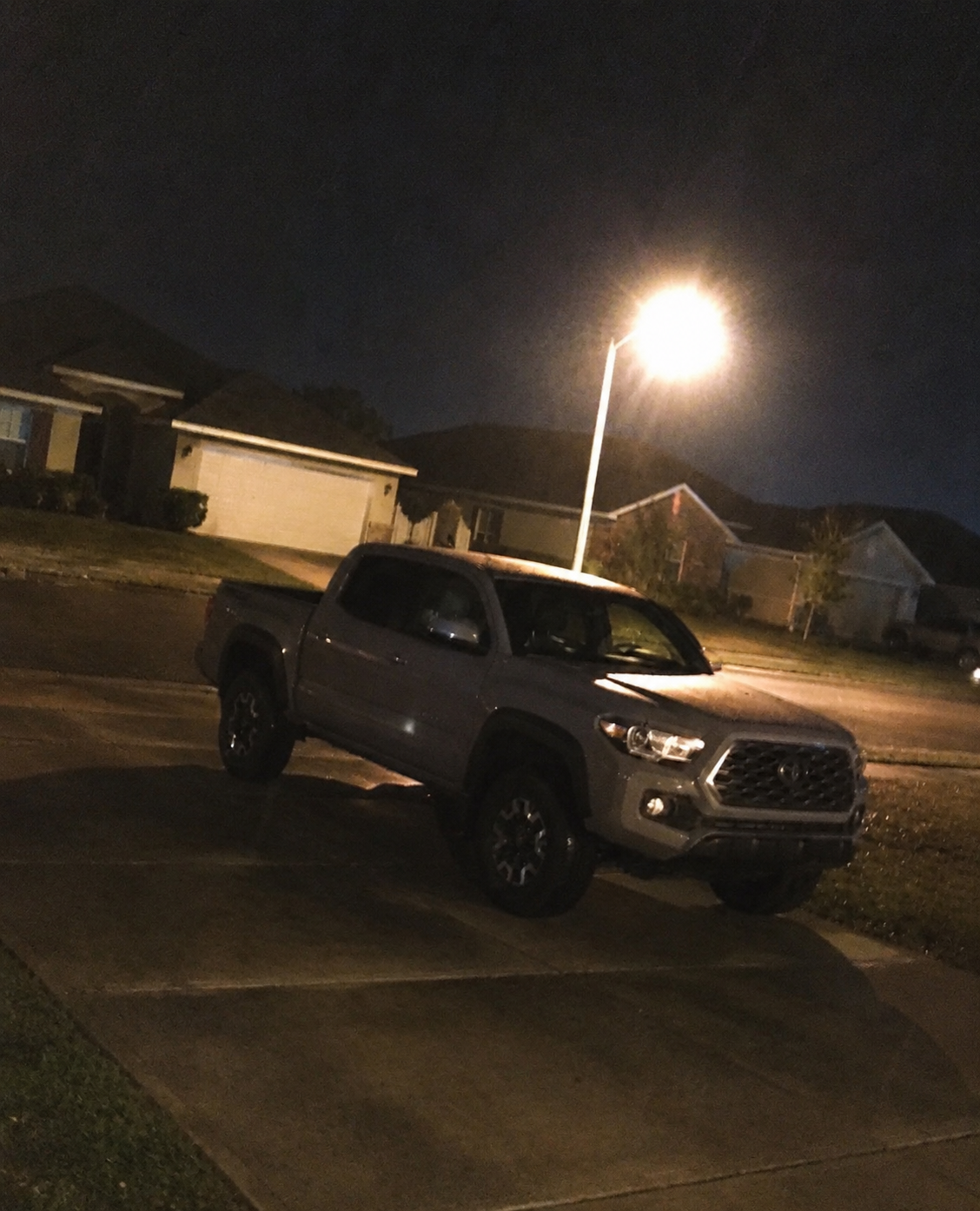
I Lied to My Doctor Last March. I've Been Trying to Decide Whether to Tell Him. I'm 59. Married thirty-four years. Two kids. Two grandkids with a third on the way. I drive a 2014 Tacoma with 187,000 miles on the odometer and a dent in the rear quarter panel from a deer in 2019. I'm telling you that because I want you to know I'm a real person before I tell you the rest of this. I lied to my doctor about the walks. He asked me how often I was walking. I said four times a week. The real number was zero. I hadn't walked the hill behind my house in about fourteen months. Not because anything was wrong with my legs. Because by the time I got home from work and ate dinner, the chair had me. The chair always had me. I'm writing this down because I made a change about ten months ago and I haven't told anyone the whole story. I think writing it down is how I'm going to be able to look my doctor in the face at my next appointment. So. The thing I want you to understand first is that nothing was wrong with me. That's what made it hard. My bloodwork was fine. Blood pressure a little high — he flagged it, I flagged it back, we agreed to watch it. Cholesterol "creeping" was the word he used. He's a good doctor. He didn't push pills at me. He said the basics first. Walking. Sleep. Eat better. I said yes to the basics and lied about doing them. I want to tell you what was actually happening, because if I don't tell you, this whole thing is going to sound like every other ad you've ever scrolled past. I'd come home from work and sit in the chair. I'd sit through dinner. I'd sit after dinner. My wife would say something to me from the kitchen and I'd realize a minute later she'd been talking and I hadn't answered her. I'd say "what?" and she'd say "never mind." I wasn't depressed. I want to be careful about that word. I know what depression is — my brother Dale had a stretch of it after his divorce in 2007 and I sat across a kitchen table from him through most of it. This wasn't that. I was just turned down. Like somebody had walked into the basement of me and put a dimmer on the whole house. The hill. I've walked that hill since 1991. The hill behind the house. It's not a serious hill. It's the kind of slope you walk up to look at the sunset over the fields. I'd started having to stop halfway up. Then I started not going. Then I started not noticing I wasn't going. The garage. There was a workbench in the garage that I'd been "planning" since 2021. I had the lumber. I had the bracket kit from Rockler still in its box on the shelf — the receipt was on top of the box and it was dated 11 March 2021. I'd open the garage door on Saturdays and look at the lumber and close the garage door. I told myself I was going to do it next weekend. For about three years. The bedroom. I'd wake up at 3:40 in the morning and lie there for an hour and a half before I could get back to sleep. I'd wake up cold. Hands cold, feet cold, even in July. I'd lie there listening to my wife breathe and thinking about whether the dimmer was something I was supposed to be doing something about. I never did anything about it. I'd just go back to sleep around 5:15 and wake up at 6:15 feeling like somebody had hit me in the face with a phone book. My wife didn't say anything about any of it for a long time. That was the part that started to bother me. Thirty-four years of marriage and there's a thing she does when she's worried about me where she gets very polite. Like a houseguest in her own house. She started being polite to me around month nine of the chair. I noticed it on a Tuesday. She handed me a cup of coffee and said "thank you" instead of me saying it. I hadn't done anything. She'd made the coffee. She said "thank you" anyway. It sounds like nothing. It wasn't nothing. She started asking me what I wanted for dinner three days in a row. She'd been making dinner for thirty-four years and she'd never asked me three days in a row what I wanted. She'd just make it. The "what do you want" was a sign she was running out of guesses about how to reach me. I noticed all of this and didn't do anything about it. Because the dimmer was on the part of me that would have known what to do. Here's the part I haven't told anyone. I went out to the truck one night in October. About 10:30. I told her I needed to grab something from the glovebox. I didn't need anything from the glovebox. I just sat in the truck in the driveway for about forty minutes with the engine off and the dome light off and the radio off. I'm not a man who sits in trucks at night. I'm a man who fixes things and goes to bed at 10:15 and reads three pages of a Louis L'Amour novel and falls asleep. What I was doing in the truck was trying to figure out when exactly I'd left. I wasn't talking about leaving a marriage. I wasn't talking about leaving the house. I was talking about the part of me that used to want to build the workbench, and walk the hill, and listen to my wife when she said something from the kitchen. I was trying to find the date. I couldn't. It hadn't gone all at once. It had drifted out over probably two years. And I'd been so busy not noticing it was going that I'd missed the actual going. I sat in the truck and tried to come up with a month. I couldn't get closer than "sometime in 2023." Two years of my life had blurred together because there hadn't been enough of me there to mark the time. I went back inside at 11:10. My wife was asleep. I stood in the bedroom doorway and watched her sleep for a minute. I'm not somebody who does that either. I stood there long enough that I started to cry a little, and I didn't even know what I was crying about. I'm not a man who cries. I cried at my daughter's wedding and at my father's funeral and that's the list. This was a third thing. I went and brushed my teeth and got in bed and didn't sleep until 4:15. The next morning at work I closed my office door and I typed three words into Google. I'm not going to tell you what they were because they were the kind of three words a man types when he's at the bottom of something and doesn't know the technical term for it. They weren't medical words. They were complaint words. The first thing that came up was an article about circulation. Not the thing I thought I was looking for. But I read it anyway, because the office door was closed and I had an hour before my 10 a.m. I'm going to try to tell you what I learned, and I'm going to be honest that I'm not a doctor and I might have half of it wrong. What I think I understood is this. A lot of what shows up in a man's life in his late fifties — energy, sleep, the way he wakes up, the way he carries himself through a day, the things I'm not going to be more specific about because I'm trying to keep this clean — comes back to circulation in ways that don't always announce themselves. The body has a thousand small systems and they all want blood. When circulation gets quieter, a lot of small lights go dim at the same time, and you don't notice because they all dim together. The kitchen at dusk doesn't feel dark. It just feels like the time of day where it's hard to read the newspaper. That made sense to me in a way nothing else had. I'd been trying to find one thing wrong. There wasn't one thing wrong. There were forty things slightly off. The article mentioned beetroot. Not as a miracle. Just as a thing that's been studied for decades for cardiovascular wellness. The compounds in real beetroot — betalains, I'd never heard the word before — appear to play a role in supporting the body's natural antioxidant balance and the systems that keep blood moving the way it's supposed to. I read for another forty minutes. I went down what I'd call a respectful rabbit hole. I'm not the kind of guy who falls for things. I run a parts department. I read warranties for fun. If something doesn't pencil out I close the tab. The rabbit hole landed me on a small brand called Rosabella. What got my attention about them was a boring thing. They cold-press their beets at low temperatures. The reason that matters is that betalains are heat-sensitive — faster processing methods can degrade them. Rosabella decided to do it the slow way. A small farming community in Lancaster County, Pennsylvania. Cold-pressed at low temperatures. Two capsules with water in the morning. I read every page of their site, including the part most people skip — the one about their testing. Then I closed the laptop. Then I opened it back up and read everything one more time, because I am a man who reads warranties for fun, and I wanted to be sure I wasn't being charmed. I wasn't being charmed. The thing held up. Before I ordered anything, I called my doctor's office. I left a message with the nurse. Her name is Cheryl. She's been at his practice longer than he has — she was working for the doctor who retired and sold him the practice in 2009. She remembers patients' kids' names. I told her what it was. I told her the brand. I told her I wanted to know if it was a sensible thing to add to what I was already doing. She said she'd ask him and call me back. She called me back the next afternoon. She said: "He looked at it. He said it's a food-based supplement, and there's good research on antioxidant support for cardiovascular wellness. He's fine with you adding it. He said tell us at your next visit and to keep doing the basics." I said: "Thanks, Cheryl." She said: "Tom. You been walking?" I didn't answer for a second. She said: "I'm not telling him. I'm asking you." I said: "No." She said: "Get on it. The supplement's fine. The walking's the part." She hung up. That was the second time in a week somebody had seen the dimmer. The bottle came on a Friday in November. I opened the box on the kitchen counter while my wife was at her sister's. I read the label twice. Two capsules with a glass of water in the morning. I put the bottle on the counter next to the coffee maker so I'd see it. I started Saturday. Now. I'm going to tell you about one morning. Because if I write you a list of small wins it'll sound like every supplement ad you've ever read and you'll close the tab and I won't blame you. It was a Thursday in January. About six weeks in. I woke up at 5:52 a.m. without an alarm. The alarm was set for 6:15. I'd been waking up at 3:40 every night for over a year and lying there until 5. So 5:52 felt like a foreign country. I lay there for a minute trying to figure out what was wrong. Nothing was wrong. That was what was wrong. I got up. I went downstairs. The kitchen was dark. I made coffee. And then I did something I hadn't done in fourteen months. I put on my Carhartt jacket and the boots I keep by the back door — the brown ones, the ones I'd worn out a pair of and bought new in 2018 and then barely worn since — and I walked out the back door and up the hill behind the house. In the dark. In January. Without thinking about it. I got to the top of the hill. Stood there. The sun wasn't up yet. There was just gray light coming up over the field behind the Henderson place, and a heron standing in the irrigation ditch the way herons stand — like they're embarrassed to be seen. I stood there for a while. Long enough that my coffee went cold and my fingers got cold around the mug. I'm a man who fixes things. I'm not a man who stands on hills at sunrise. I'm not going to tell you I had a spiritual experience. I didn't. I'm telling you I got back to the house at 7:05 a.m. and my wife was in the kitchen in her bathrobe, and she looked at me with my cold coffee cup and my muddy boots and the dirt on the cuffs of my jeans where I'd come back through the wet grass. She said: "Where were you." I said: "I went up the hill." She didn't say anything for a second. Then she sat down at the kitchen table. She put her hand over her mouth. She didn't cry — my wife doesn't cry, that's a different woman in a different movie. She just sat there for about a minute with her hand over her mouth. Then she said: "I thought you weren't coming back." I said: "From the hill?" She said: "No." That's the moment I'd write down if I had to write down one moment. That's the one I keep coming back to. She'd known before I had. I sat down at the table across from her. I said: "How long." She said: "About two years." I said: "Why didn't you say anything." She said: "I didn't know what to say. Every time I started to ask you, you weren't there to ask." That landed hard. I sat there for a while. Eventually I said: "I'm here now." She said: "I can see that." We sat at that table until 8:15. I was late to work for the first time in eleven years. I didn't care. I went back to my doctor at the three-month mark. He took my blood pressure. He looked at the bloodwork. He said things were in better shape than they'd been in March. He didn't say it like a miracle had happened. He said it the way a doctor says it when he's been quietly watching a patient and sees the patient's choices showing up on a page. I told him about the walks. Truthfully this time. I told him about the diet. I told him about the beetroot. He nodded. He said the beetroot was reasonable. He said he was glad I'd checked with Cheryl before adding it. He said: "Whatever combination of things you're doing, keep doing it. I'll see you in six months." I didn't tell him about the lie. About the fourteen months of nothing. About the truck in the driveway at 10:30 at night. About standing in the bedroom doorway crying at the sight of my wife asleep. I walked out of his office and got in the truck and sat there for a minute before I started it. I sat there thinking about how a year ago I'd sat in this same truck at night and tried to find the date I'd left. That date doesn't matter anymore. The date I came back is March 14th of last year. The Thursday I went up the hill in the dark. I'm going to tell him at my next appointment. That's why I'm writing this down. So I'll have written it somewhere and won't be able to soften it before I get to his office. Here's what I want to say about the beetroot, and I want to be careful about it. I added it to a bigger set of changes. I started walking again. I started eating better. I started going to bed at a reasonable hour. I started actually being in conversations with my wife instead of being a chair across the table from her. I can't tell you which part of all of that did what. Bodies are complicated. I'm not a scientist. What I can tell you is that the combination worked. I don't know which capsule, which walk, which conversation, which Thursday morning tipped it. I know that ten months later I'm the man my wife married, and I wasn't a year ago. If something I've said sounds familiar — and you'd know if it did, I think the men this is going to land on already know — the thing I'd encourage you to do first is what I did. Call your doctor's office. Tell whoever answers the phone what you want to add. Ask whether it's sensible to add to what you're already doing. If they say yes, you have a place to start. If they say something different, you have a piece of information about your own body you didn't have before. That's worth something too. I'm not a doctor. I'm not in healthcare. I'm one 59-year-old guy with a Tacoma, a workbench that finally got built last March, a wife who saw me before I saw myself, and a nurse named Cheryl who told me to "get on it." I'm writing this down so the next man who sits in his truck at 10:30 at night doesn't have to find out from three words in a search bar. ~ Tom W. P.S. — Rosabella has a 90-day money-back guarantee. If you're not satisfied for any reason, every penny back, no questions asked. That's a sensible policy. Give it at least a month before you decide anything. Bodies are slow. Anything promising a switch-flip in 48 hours is promising more than it can deliver. I gave it six weeks before I told anybody. P.P.S. — I built the workbench in March. The whole thing, in one Saturday. From breakfast to dinner, with one break for lunch. My grandson Owen was here and he handed me screws. He's four. He calls a Phillips-head screwdriver a "twisty" because that's what I called it when I was teaching him. I had to stop working for a minute around lunch because I realized I was about to cry in front of a four-year-old over a piece of plywood, and I didn't want to have to explain that to him. He handed me a granola bar. He said: "You okay, Pop?" That's what he calls me. I said: "Yeah, buddy. I'm good." That was the truth for the first time in two years. He nodded and went back to lining up screws in a row on the workbench by size. He learned that from me too. The lining up by size. He didn't get that anywhere else. I watched him do it and I thought: he's got me. Not the dim me. The actual me. I'm in him. That's worth standing on a hill in the dark in January for. P.P.P.S. — Rosabella is a small operation. The farms they work with harvest on their own schedule. I waited eight days for my second bottle because they were between bottlings. I keep an extra one in the cupboard now. If you decide to try it, that's worth knowing — they're not Amazon. They don't have a warehouse with a million bottles. They have what they have. I respect that, actually. The bigger an operation gets, the more shortcuts it has to take. P.P.P.P.S. — One thing I want to say to wives, if any wives are reading this. If your husband has been quiet for a while. If you've noticed yourself being polite to him. If you've started asking him what he wants for dinner three days in a row because you're running out of guesses about how to reach him. If he's been spending more time in the chair than he used to. If you've started watching him from the kitchen and you're not sure when you started watching him from the kitchen. You don't have to figure out the right thing to say. You just have to say something. My wife asked me one night if I was happy. She didn't get an answer for a week. She probably thought she'd asked the wrong question. She didn't ask the wrong question. She just asked it first. And the asking is what eventually got the answer out of me. Not that night. Not that week. But months later, on a hill in January at sunrise, in front of a heron in an irrigation ditch. The question was sitting on my shoulder the whole time. If you've been thinking about asking — ask. You might not get an answer for a while. But you'll have asked. And the asking is the part that does the work. P.P.P.P.P.S. — One more thing, and then I'll stop. I don't know who's reading this. Probably mostly women, if I had to guess. That's who reads things like this, in my experience. My wife reads things like this. She's the one who would forward it to her sister. If you're a woman and you're reading this and your husband has been in the chair for a while — print it out. Leave it on the kitchen table. Don't say anything about it. Don't underline anything. Just leave it. Men like me don't take advice. We're terrible at taking advice. But we will read a thing if it's sitting on the table and nobody's making us read it. That's how I would have wanted to find this a year ago. I would have read it once and closed it and pretended I hadn't. And then I would have thought about it for three weeks. And then I would have ordered a bottle. That's how it works for us. We don't change our minds in front of people. We change them in the truck. At 10:30 at night. With the engine off. https://track.tryrosabella.com/bfcb877b-9f52-4175-9be6-9bc1a89ce3a8 Individual experiences vary. These statements have not been evaluated by the FDA. This product is not intended to diagnose, treat, cure, or prevent any disease.
Support stamina and heart health every day
LEARN MORELike this ad? Make it yours.
Crush rebuilds this exact creative around your product — your brand, your colors, your offer — in about a minute.