
Active· since Jun 17, 2026
- 86
- days running
- 0
- relaunches
Ad copy
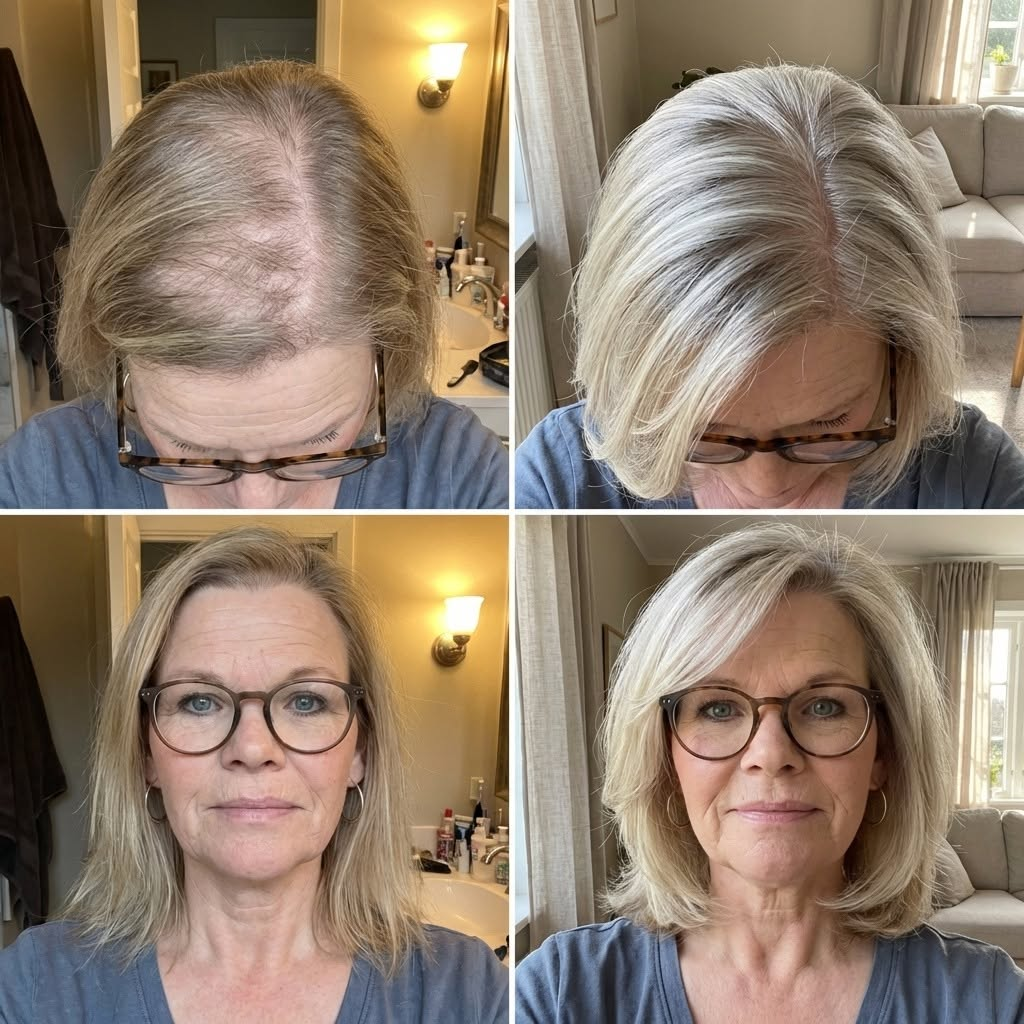
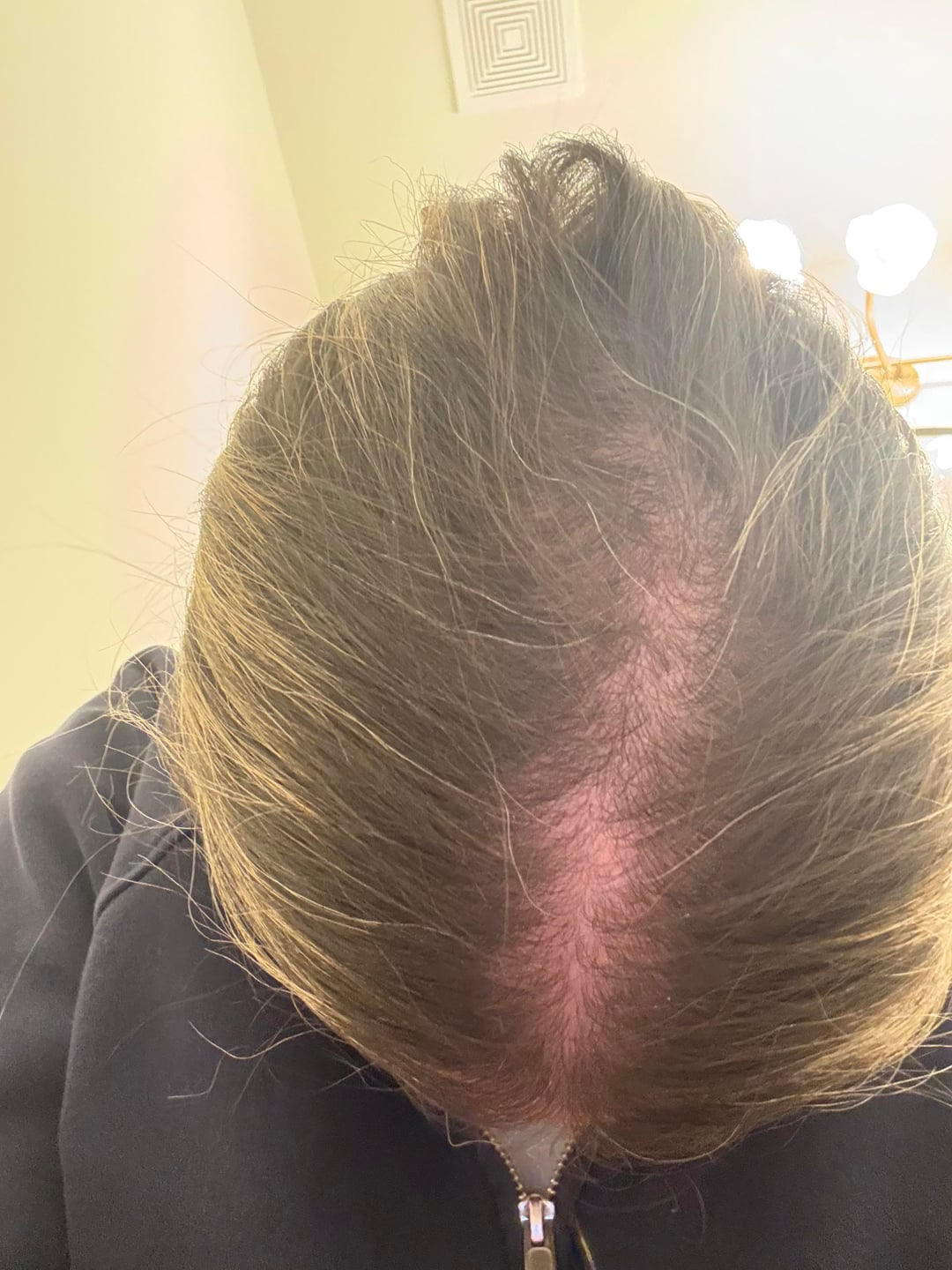
Biotin didn't work. The collagen powder didn't work. The $60 "thickening" shampoo didn't work. If you're watching your hair thin out after 40 and nothing you're taking is slowing it down — the problem isn't a vitamin deficiency. Here's what's actually attacking your follicles from the inside and what I give my patients instead. For TWO YEARS my best friend Diane was watching her hair disappear. It didn't happen all at once. That's what made it so cruel. It happened slowly enough that she could pretend it wasn't happening — until she couldn't. She noticed it first at 46. Pulling more hair out of her brush than usual. Not alarming. Just more. She mentioned it to her doctor at her annual. "Normal part of aging. Try biotin." She tried biotin. Six months. Nothing changed. By the time she was 47 she could see her scalp through her part. Not in certain lighting. In every lighting. She'd catch it in the rearview mirror. In store windows walking past. In photos where she used to look and think she looked fine and now the first thing her eyes went to was the top of her head. She started positioning herself differently. Sitting with her back to the light. Tilting her head in photos. Finding the angle where it was least visible. Planning around it. That's the part nobody talks about — the amount of mental energy that goes into hiding something that keeps getting worse. And then came the other things. The bladder. Getting up twice a night. Sometimes three times. Then the daytime urgency — that sudden desperate need that comes from nowhere and gives you thirty seconds. She started mapping every bathroom in every store. Chose the aisle seat. Stopped drinking water after 6pm even though she knew she should. She was 47 years old turning down dinner plans because she wasn't sure she could make the drive without stopping. The sleep. Not just the bathroom waking her up. A restlessness that set in around 2am like clockwork. Lying there with her mind running and her body exhausted and the ceiling she'd been staring at for months staring back. She'd tried melatonin. Magnesium. Chamomile tea. Meditation apps. The sleep kept fracturing and nothing she tried put it back together. And underneath all of it — this low hum of anxiety she'd never had before. Not panic attacks. Not diagnosable. Just a constant unsettled feeling in her chest that made everything feel slightly urgent and slightly wrong. Like her nervous system was running at a frequency it had never run at and she couldn't find the dial. Her gynecologist told her it was perimenopause. Put her on a low-dose HRT. Said it would help. Some of the hot flashes eased. The hair kept thinning. The bladder kept waking her up. The sleep stayed broken. The anxiety hummed on. --- And every single provider told her the same thing. "Hair thinning is normal during menopause. Have you tried biotin?" "Some bladder sensitivity is expected. Try Kegels." "Sleep disruption is very common at this stage. Have you tried limiting screen time?" "Your hormone levels are within range. The HRT is doing its job." One of them — and this still makes me furious — told her to "embrace the transition." She was pulling clumps of hair off her pillow every morning and a medical professional told her to embrace it. She saw three different providers over two years. Not one of them — NOT ONE — ever explained what was actually attacking her hair follicles. Not one of them ever mentioned the three-letter hormone that was quietly destroying her hair, her bladder, her sleep, and her peace of mind from the inside while they managed her "transition." --- So here's what they kept telling her to do. And I need you to pay attention because you've probably tried every single one of these. Biotin for hair growth — nine months — not a single visible change. Biotin feeds the hair growth cycle nutrients it needs, but nutrients can't grow hair in a follicle that's being actively strangled shut by something biotin doesn't touch. Collagen peptides — five months — her nails got slightly harder and absolutely nothing happened to her hair. Collagen supports the structure. But you can't build a house on a lot where someone is pouring cement into the foundation. The "thickening" shampoo — three different brands, one at $62 a bottle — coated the existing strands to make them look fuller while the actual hair count kept dropping. Cosmetic trick. Not a solution. Saw palmetto on its own from a grocery store shelf — four months — a 250mg capsule with no standardized extract, no fatty acid profile listed, no absorption support. Nothing changed. She'd later find out why. Kegel exercises for the bladder — twelve weeks of daily practice — marginal improvement that disappeared the moment she had coffee. Strengthening the muscle while the tissue irritation driving the urgency went completely unaddressed. Melatonin for sleep — made her groggy in the morning without actually keeping her asleep past 2am. Pushing the brain toward sleep while the hormonal disruption pulling it out of sleep ran underneath. Between the supplements, the specialist appointments, the shampoos, the dermatologist visit, the pelvic floor therapist — she'd spent over $2,400 in two years. Still thinning. Still getting up three times a night. Still lying awake at 2am. Still scanning for bathrooms. Still hiding her part from the light. And every provider telling her it was just menopause and she should manage expectations. --- At this point I wasn't sad for her anymore. I was angry. Because I'm watching my best friend — who is doing everything she's been told, spending thousands, taking every supplement, doing every exercise — get worse every three months while her providers look at her hormone panel and call it managed. Managing. The. Symptoms. Not stopping the thing causing them. Not reversing it. Not even identifying it. Just telling a 47-year-old woman that losing her hair, her sleep, her confidence, and her ability to sit through a movie without running to the bathroom is a normal part of aging that she should learn to accept. And that's when I started asking the questions nobody was asking. Why does every hair supplement focus on feeding the follicle nutrients when the follicle isn't starving for nutrients — it's being attacked by something no nutrient can stop? Why does every bladder protocol strengthen the muscle without asking what's irritating and thinning the tissue the muscle is trying to protect? Why does every sleep supplement push the brain toward sleep without addressing the hormonal signal that keeps pulling it out? And why does NOBODY talk about what DHT is doing to three separate systems simultaneously — right underneath labs that show hormones "within range"? --- So I went down a rabbit hole. A deep one. I started researching not how to support hair growth — that had been tried six different ways — but why a woman on HRT with hormones "in range" was losing her hair faster every single month. And every mainstream health site gave me the same recycled answers. Take biotin. Eat protein. Manage stress. Be patient. Then I found a line in a research paper that stopped me cold. When estrogen declines during perimenopause and menopause, the enzyme 5-alpha reductase becomes more active. This enzyme converts testosterone — which women have in small amounts — into dihydrotestosterone. DHT. And DHT doesn't just thin hair. It attacks three systems simultaneously. I had to read that three times. Three systems. Simultaneously. All invisible to standard hormone panels. All running underneath labs that look fine. --- Here's what I learned. System one — the hair follicles. DHT binds to androgen receptors on the hair follicle. Once bound, it triggers a process called follicular miniaturization. The follicle physically shrinks. Each growth cycle produces a thinner, shorter, weaker strand. Then a finer one. Then a transparent one. Then nothing. The follicle closes. Not because it lacked biotin. Not because it lacked collagen. Because DHT literally strangled it shut over successive growth cycles while you were feeding it vitamins it couldn't use because the follicle was under hormonal attack. That's why the part kept widening. That's why the brush kept filling. That's why the biotin and the collagen and the $62 shampoo did nothing. You cannot grow hair in a follicle that DHT is actively shrinking to death. It's like fertilizing a garden while someone is paving over the soil. System two — the bladder and pelvic tissue. DHT thins and irritates the smooth muscle tissue of the bladder wall and the urethral lining. As estrogen drops and DHT rises, the tissue that maintains bladder tone and urethral closure loses its integrity. The bladder becomes hyperreactive. The signal to urinate fires before the bladder is full. The urgency comes from tissue degradation, not muscle weakness. That's why the Kegels barely helped. She was strengthening a muscle sitting on top of tissue that was being thinned by a hormone nobody had mentioned. That's why the bathroom mapping. That's why the night waking. That's why she stopped drinking water after 6pm. Not a weak pelvic floor. A DHT-driven tissue breakdown that no Kegel exercise can reach. System three — sleep architecture. DHT disrupts GABA receptor sensitivity — the neurotransmitter system responsible for initiating and maintaining deep sleep. When DHT rises and estrogen drops, the brain's ability to stay in restorative sleep deteriorates. The 2am waking isn't random. It's neurochemical. DHT is altering the receptor environment that melatonin and magnesium are trying to work within. You can push the brain toward sleep all you want. If the receptor landscape has been remodeled by DHT, the brain cannot hold the sleep state. That's why the melatonin didn't work. That's why the magnesium didn't work. That's why the meditation apps didn't work. She was trying to sleep in a neurochemical environment that DHT had remodeled against sleep. No supplement targeting the sleep side can fix a problem running from the DHT side. Three systems. All running from the same DHT signal. All invisible to standard panels because standard panels don't measure DHT in women. They check estrogen, progesterone, FSH, and call it managed. That's why her hormones were "in range" while her hair fell out, her bladder woke her up three times a night, and her brain couldn't hold sleep past 2am. She wasn't losing hair because of aging. She wasn't losing sleep because of stress or screen time. She wasn't losing bladder control because of a weak pelvic floor. She had a DHT signal running three simultaneous attacks on three separate systems that nobody had identified — and three providers treating each symptom in isolation while the single hormone driving all of them went completely unaddressed. --- And here's the part that made me furious. The role of DHT in female pattern hair loss is in the dermatological literature. The effect of DHT on bladder smooth muscle and urethral tissue is in the urological research. The relationship between DHT and GABA receptor disruption affecting sleep architecture is in the neuroendocrine literature. The increase in 5-alpha reductase activity during estrogen decline has been documented and replicated for over two decades. But the clinical protocol for a menopausal woman losing her hair, losing sleep, and losing bladder control doesn't include a DHT assessment. Doesn't measure 5-alpha reductase activity. Doesn't connect the three complaints to a single hormonal driver. Doesn't ask whether one signal is running all three at once. Because there's no blockbuster pharmaceutical for DHT reduction in women. Finasteride is prescribed off-label sometimes but carries side effects most women won't accept. There's no patentable solution. No recurring revenue in telling someone their testosterone is converting into a hormone that's destroying three systems simultaneously. There IS money in the $62 thickening shampoo she'll rebuy every month. The dermatologist visits. The pelvic floor therapy appointments. The sleep clinic consultation. The specialist for each symptom that all share the same root. Three co-pays. Three treatment plans. One hormone nobody mentioned. Treat the symptoms separately. Never connect them. Never address the driver. Keep the patient returning indefinitely. --- So I kept digging. Looking specifically for what blocks DHT at the source — not manages one symptom downstream, not cosmetically masks the damage, actually inhibits the 5-alpha reductase enzyme that converts testosterone into the DHT running all three attacks simultaneously. Two compounds kept appearing in peer-reviewed research — not wellness blogs — as the specific, clinically studied DHT inhibitors. Pumpkin seed oil. And saw palmetto. Not marketed together for menopause. Not sold as a hair vitamin. Researched specifically for 5-alpha reductase inhibition — and specifically for what happens to the three systems under attack when the DHT signal driving the damage is reduced at its source. The beta-sitosterol and delta-7-sterols in pumpkin seed oil directly inhibit the 5-alpha reductase enzyme — the enzyme converting testosterone into DHT. When that enzyme is inhibited, DHT production drops. The follicles under attack start receiving less of the hormone that was miniaturizing them. The shrinking cycle slows. Then it stops. Then the follicles that haven't closed permanently begin recovering. Saw palmetto's fatty acids work through a complementary mechanism — blocking DHT from binding to the androgen receptors even after it's been produced. A dual blockade. Less DHT produced. Less of what IS produced actually landing on the receptors. Not addressing one system. All three simultaneously. Because all three were running from the same DHT signal that both compounds interrupt at different points in the pathway. --- My friend tried to find a pumpkin seed oil supplement that matched what the research described. First — a grocery store brand. Pumpkin seed oil capsules. 1,000mg. Eight weeks. Nothing. Same hair in the brush. Same bathroom at 2am. The capsules were refined, heat-processed oil with the beta-sitosterol content degraded below therapeutic levels. The bottle said "pumpkin seed oil." The compounds responsible for 5-alpha reductase inhibition had been cooked out of it during manufacturing. Second — a saw palmetto on its own from a different brand. Ten weeks. Maybe slightly less urgency. Hair unchanged. Sleep unchanged. One mechanism without the other. The DHT was still being produced even if slightly less was binding. The dual blockade requires both pathways interrupted. Third — a combination product from a mid-range brand. No saw palmetto dose listed. "Proprietary blend." Twelve weeks. Nothing she could measure. Nothing she could feel. Nothing moved. She had no idea how much of either compound she was actually getting because the label hid it behind a proprietary blend that could have contained any ratio of anything. Between the biotin, the collagen, the shampoos, the standalone saw palmetto, the grocery store pumpkin seed oil, the proprietary blend, the Kegels, the melatonin, the specialists — she'd spent over $2,400 in two years. Twenty-four months of capsules that couldn't reach the mechanism at any level. --- I was in a menopause support group on Facebook — because at this point I was spending my evenings researching what her doctors wouldn't — and I saw a woman post something that made me stop scrolling. Different woman. Different state. Same story. Same widening part. Same bladder mapping every bathroom. Same 2am ceiling. Same biotin that did nothing. Same doctors calling it normal. She'd found the DHT connection. Tried a product called Everly. Posted her results. Her hair — visibly thicker at the part line in her eight-week photo. Not styled differently. Not angled. Thicker. Someone in the thread asked what was different about it. "3,000mg cold-pressed virgin pumpkin seed oil. Not heat processed — the beta-sitosterol is intact. Saw palmetto included at a real dose, not hidden in a proprietary blend. I tried three other pumpkin seed oil products before this one. The cheap ones don't have the active compounds at therapeutic levels. This one does." I went to their site. Ready to be disappointed like I had been every other time. Everly Pumpkin Seed Oil. Cold-pressed. Virgin. 3,000mg per serving — not the 1,000mg token dose most brands hide behind. Saw palmetto included for the dual-blockade mechanism. Every amount listed on the label. No proprietary blends. GMO-free. Gluten-free. Soy-free. 60 softgels. Made in the USA. Not a hair vitamin feeding biotin to a follicle that DHT is strangling shut. A DHT reduction formula that interrupts the enzyme producing it AND blocks what's produced from binding — across all three systems simultaneously. --- My friend started taking Everly. After two weeks? She wasn't sure anything was different. She told me that honestly. "I think I'm sleeping slightly deeper but it might be placebo." I told her to keep going. Two weeks isn't enough for the DHT levels to shift meaningfully. The enzyme inhibition needs time to reduce the circulating DHT that's already been produced. After three weeks? She slept until 4am without waking. She texted me at 6:30 in the morning. "I didn't get up until four. That hasn't happened in over a year." Then two days later she slept through until 5. The GABA receptor environment was beginning to normalize as the DHT signal disrupting it eased. The melatonin that never worked wasn't the problem. The DHT remodeling the receptor landscape was the problem. With less DHT pressing on those receptors, the brain was finally able to hold the sleep state. After four weeks? The bladder. She made it through an entire movie without getting up. She sat in the middle of the row. She texted me afterward: "I sat in the middle. I didn't even think about it until it was over." The tissue irritation was easing. The urgency signal wasn't firing on a half-empty bladder anymore. Not because she did more Kegels. Because the DHT thinning the tissue was being reduced at its source. After six weeks? The hair. She was brushing her hair and looked at the brush and there was less in it. Not dramatically. But measurably. She'd been unconsciously counting for two years. She knew what a bad day looked like. She knew what her brush looked like after a normal session. And there was less. The follicles under attack were receiving less DHT. The miniaturization cycle was slowing. The strands being produced were holding on instead of letting go. After eight weeks? She sent me a photo. Her part line. Taken in direct overhead lighting — the lighting she'd been avoiding for two years. There were new short hairs growing along the part. Baby hairs that hadn't been there. She'd been staring at that part in the mirror every morning for two years watching it widen and now it was filling in and she was standing in her bathroom crying. "It's growing back. It's actually growing back." Because the follicles that hadn't permanently closed were recovering. The DHT that was shrinking them had been reduced. The growth cycle was resetting. Not from biotin. Not from collagen. Not from a thickening shampoo coating existing strands. From interrupting the hormone that was killing the follicles in the first place. After ten weeks? The night waking had dropped to once — and that was a full bladder, not an urgent one. The difference between waking up because you need to go and waking up because your bladder is screaming at you with four ounces in it. She was drinking water after 6pm again. She was sleeping five and six hour stretches. The anxiety hum she'd had for over a year was quieter. Not gone but quieter. Her nervous system was no longer running at that revved-up frequency that DHT had been feeding. After twelve weeks? She went back to her gynecologist. The provider looked at her hair. Looked at her chart. Looked at her. "Your hair looks noticeably better. What changed?" My friend explained it. The DHT mechanism. The 5-alpha reductase enzyme. The three systems — follicle miniaturization, bladder tissue thinning, GABA receptor disruption — all running from the same signal. The pumpkin seed oil inhibiting the enzyme. The saw palmetto blocking the receptor binding. The dual blockade at therapeutic doses with cold-pressed extraction preserving the active compounds. Her provider was quiet for a moment. "The DHT-hair connection is well established in the literature. We see it prescribed as finasteride in men. In women it's more complicated because the hormonal picture is broader. But the mechanism you're describing — 5-alpha reductase inhibition through plant sterols — there's research supporting it. And your hair is visibly improved." "And my bladder. And my sleep." Longer pause. "Those would be consistent with reduced DHT as well. It's not something we typically assess in the standard panel." "I know," my friend said. "That's the problem." She walked to her car. Got in. Called me. "She could see the difference. She said it's consistent with reduced DHT. She said they don't typically assess it. Two years. Three providers. $2,400. Biotin and Kegels and melatonin. Every single one of them treating three symptoms separately while one hormone was running all of them." Her husband noticed the hair before she told him anything. Ran his hand over her head the way he used to and said, "It feels thicker." Before she'd said a single word. --- Total improvement at four months: Hair visibly thicker at the part. New growth along the hairline. Brush has less hair after every session. Sleeping six-hour stretches consistently. Night waking down from three times to one. Bladder urgency reduced — no longer mapping bathrooms, sitting where she wants, drinking water when she's thirsty. Anxiety hum quieter. Wearing her hair down again. Stopped tilting her head in photos. Not from another bottle of biotin feeding a follicle under hormonal attack. From stopping the attack. --- This is what they don't connect for you. Because the second you reduce the DHT running three simultaneous attacks you don't need their dermatologist appointments for hair loss that isn't nutritional. You don't need their pelvic floor therapy for urgency that isn't muscular. You don't need their sleep clinic for insomnia that isn't behavioral. You don't need their three separate co-pays for three symptoms that share one driver. The DHT drops. The follicles recover. The tissue rebuilds. The GABA receptors normalize. The hair grows. The bladder calms. The sleep holds. The anxiety quiets. The way they would have two years ago — if someone had measured DHT instead of telling her to try biotin and embrace the transition. --- Now here's what I need you to understand. The DHT doesn't decrease on its own. The enzyme converting it gets MORE active as estrogen continues to decline. Every month you wait is another month of follicles miniaturizing — and once a follicle closes permanently, no supplement reopens it. The window isn't infinite. The follicles that are thinning right now are still recoverable. The ones that closed six months ago may not be. Every month is another month of bladder tissue thinning. Another month of broken sleep compounding. Another month of looking at your part in the mirror and watching it widen. And every month your provider gets closer to a prescription you didn't need because nobody identified the hormone driving all of it. So if you're dealing with ANY of this — hair that's thinning no matter what you take, a bladder that runs your schedule, sleep that breaks at 2am regardless of what you've tried, that hum of anxiety that arrived with perimenopause and won't quiet down, a hormone panel that looks "fine" while everything downstream of it tells a different story — this is the time. Not next month when another row of follicles has closed. Not when your part is wide enough that you can't hide it anymore. Not when you're in the dermatologist's office hearing "Have you considered Rogaine?" Right now. Everly. Cold-pressed virgin pumpkin seed oil. 3,000mg. With saw palmetto. The dual DHT blockade — enzyme inhibition AND receptor blocking — at therapeutic dose. GMO-free. Gluten-free. Soy-free. Made in the USA. No proprietary blends. Every amount listed. Because your gynecologist isn't going to measure your DHT. It's not in the standard panel. There's no protocol for it. There's no pharmaceutical revenue in it. You have to block it yourself. 👉 https://try.shopeverly.shop/esl
🎃 Natural Support for Your Daily Routine
“I’ve been feeling stronger and more balanced since taking Everly Pumpkin Seed Oil. My bladder feels so much calmer, I’m sleeping through the night again, and my hair feels thicker than it has in years. I love how natural it feels — just pure support for my body.”
LEARN MORELike this ad? Make it yours.
Crush rebuilds this exact creative around your product — your brand, your colors, your offer — in about a minute.