
Active· since Jul 14, 2026
- 68
- days running
- 0
- relaunches
Ad copy
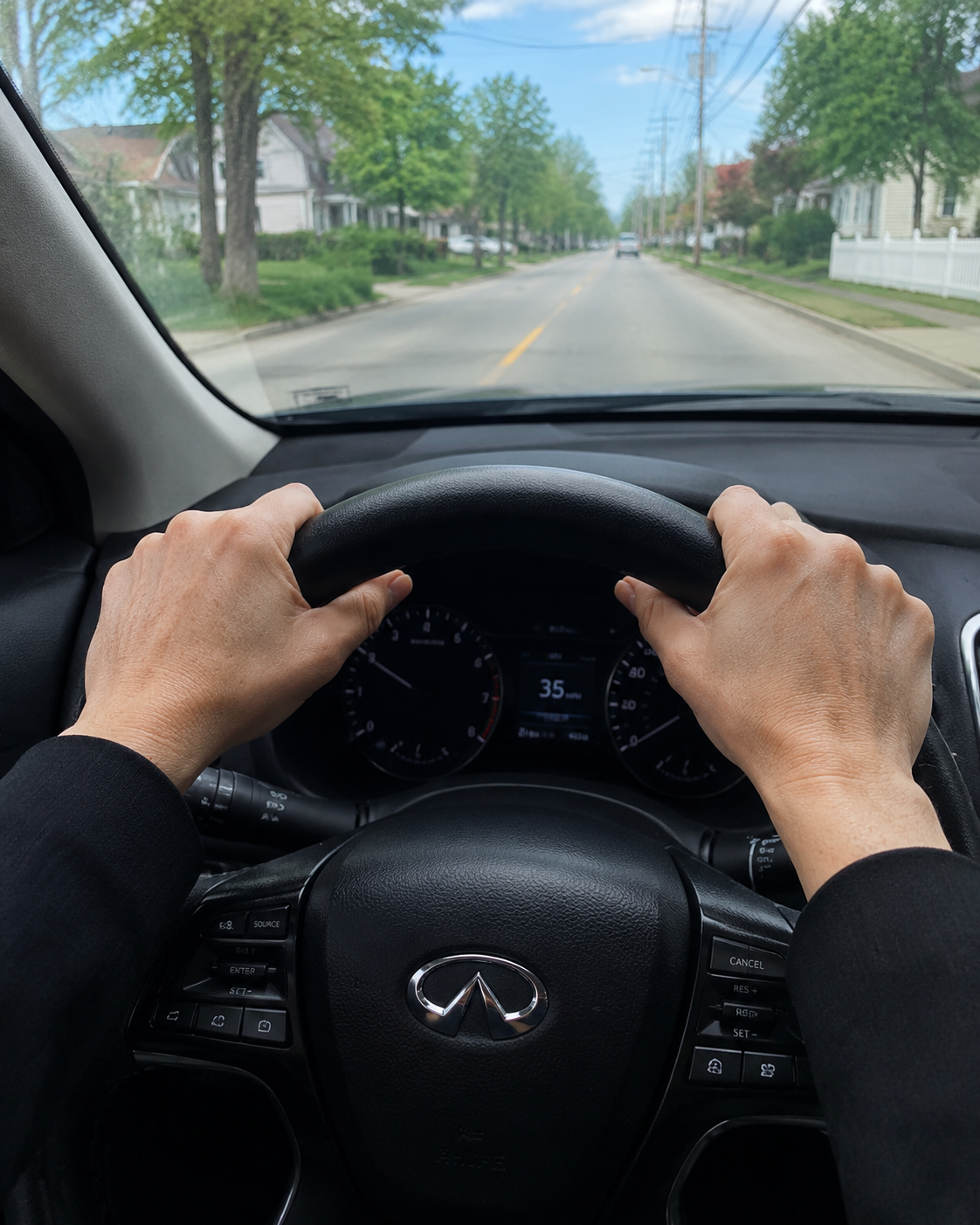
I was diagnosed with generalized anxiety disorder at 35. I've been medicated for eight years. I'm starting to think they got it wrong. My name is Rachel. I'm 43. I'm a real estate agent in Charlotte, North Carolina. I've sold 211 homes. I've walked into strangers' kitchens and convinced them to spend half a million dollars. I've negotiated inspections and appraisals and closing dates and I've done it all with a bottle of Xanax in my purse and my jaw clenched so tight my dentist made me a night guard. It started after my second kid. Not postpartum — at least that's what they said. Just anxiety. Generalized anxiety disorder. GAD. Three letters that are supposed to explain why your heart races when nothing is happening. Why your hands shake when you're just sitting in your car. Why you lie awake at 3am with your mind running through every worst-case scenario for things that have a 0.01% chance of happening. Dr. Patel gave me Xanax. 0.25mg. "Take it as needed." As needed became every morning. Then every morning and every afternoon. Then every morning, every afternoon, and before every showing because I couldn't walk into a house with clients without feeling like something terrible was about to happen. Within a year I was taking it four times a day and Dr. Patel said we should talk about that. He said I was becoming dependent. He said it like I'd done something wrong. Like I'd chosen to need a pill just to stand in a kitchen and talk about granite countertops without my chest tightening. He switched me to Buspar. The one that's supposed to be non-addictive. It takes six weeks to kick in. Six weeks of tapering off Xanax while starting Buspar while trying to sell houses while raising two kids while pretending everything is fine. The taper was hell. I don't have a better word for it. My hands shook. I couldn't eat. I woke up drenched in sweat every single night. My husband James slept in the guest room for three weeks because I'd wake up gasping and grab his arm so hard I left bruises. Buspar didn't work. Not the way Xanax did. It took the edge off. Maybe. Or maybe I just got used to feeling terrible and started calling that "better." I did CBT therapy. Cognitive behavioral therapy. $180 a session. Every Thursday for a year. My therapist was a lovely woman named Dr. Kim who taught me to identify cognitive distortions and challenge negative thought patterns and reframe catastrophic thinking. I could identify every distortion in the textbook. I could name them. Catastrophizing. Mind reading. Fortune telling. All-or-nothing thinking. I could spot them in real time. I could write them in my journal with the correct labels. My body didn't care. My body did whatever it wanted. My heart still raced. My jaw still clenched. My hands still shook before showings. Knowing the thought is irrational doesn't stop the cortisol from flooding your bloodstream. That's the part nobody tells you. I did breathing exercises. 4-7-8 breathing. Box breathing. Alternate nostril breathing. I breathed so intentionally for two years that I forgot how to breathe normally. I'd catch myself at a stoplight counting my exhale and think what has my life become. I did yoga teacher training. 200 hours. $3,400. I thought if I understood the body-mind connection deeply enough, I could fix myself. I got certified. I can teach a beautiful vinyasa class. I still had panic attacks in the Trader Joe's parking lot. Propranolol for the panic attacks. The beta blocker. It slows your heart rate so the physical symptoms of panic are less intense. It works. Sort of. Your heart stops pounding but the terror stays. You're just terrified more quietly. $22,000. That's what I've spent in eight years on anxiety that doesn't respond to anxiety treatment. I did the math one night at 2am because I couldn't sleep. Therapy, medications, the yoga training, supplements, books, apps, a float tank membership for six months because someone on Instagram said sensory deprivation calms the nervous system. It does. For 90 minutes. Then you get in your car and it's right back. The showing was in October. Newer build in Ballantyne. $485,000. The couple was relocating from Ohio. Nice people. Two kids. I'd been working with them for three weeks and they were ready to make an offer. We were in the kitchen. They were talking about whether they'd need to replace the backsplash. Normal conversation. Nothing stressful. No conflict. No pressure. And it hit me. Not a wave. A wall. My vision narrowed. My hands went numb. My heart rate went from normal to what felt like 180 in three seconds. I could feel sweat forming on my upper lip and the back of my neck and I knew if I didn't get out of that kitchen I was going to collapse in front of these people. I said "excuse me for one moment" and walked to the half bath off the hallway and closed the door and slid down the wall and sat on the floor hyperventilating. I texted James. "I think I'm dying." He texted back "breathe. You're okay. Where are you." I wasn't okay. I was sitting on the bathroom floor of a house I was supposed to be selling while my clients stood in the kitchen wondering where their realtor went. I could hear them talking through the wall. Murmuring. Probably wondering if they should leave. I waited four minutes. Splashed water on my face. Walked back out and said I'd taken a phone call. My voice was shaking. They noticed. I could tell they noticed because the wife's face changed. They didn't make the offer. I lost the sale. $14,550 in commission. Gone. Because my body decided a kitchen was a war zone. I drove home and sat in the driveway for an hour. Engine off. Hands on the wheel. I couldn't go inside because the kids would ask how my day was and I'd have to say fine and I didn't have the energy to lie. James came out after forty minutes. He opened the passenger door and sat down and didn't say anything. We sat in the driveway in silence for twenty more minutes. Then he said "this isn't working." He didn't mean us. He meant the medication. The therapy. All of it. Eight years and it wasn't working. I see an acupuncturist for my back. Diane. I've been going to her for three years. She's the kind of practitioner who doesn't rush. The appointments are 90 minutes and half of that is her asking questions and actually listening to the answers. I told her about the showing. About the bathroom floor. About James in the driveway. She didn't seem surprised. She asked me something nobody had asked in eight years of treatment. "Rachel. When do you feel most anxious?" I said always. Morning. Afternoon. Night. It doesn't stop. "That's the answer," she said. "A normal anxiety response has a trigger. Something happens, cortisol spikes, you feel afraid, the threat passes, cortisol comes back down. What you're describing isn't triggered anxiety. It's a body that never turns off." She explained it like this. Your adrenal glands produce cortisol. It's supposed to spike when there's danger and come back down when you're safe. But when the HPA axis gets stuck — from years of chronic stress, from pushing through, from being the person who handles everything — cortisol stops cycling. It stays elevated. All day. All night. "Your nervous system isn't broken," she said. "It's stuck in ON. Your body is chemically convinced there's a tiger in the room. Every room. Every kitchen. Every parking lot. And no amount of breathing exercises overrides a chemical signal." I stared at her. "Anti-anxiety medication dampens the alarm," she said. "But if cortisol keeps ringing it, the medication has to keep getting stronger. You're not anxious, Rachel. Your body is in a permanent state of fight-or-flight. That's not a psychiatric condition. That's a hormonal one." Eight years. Xanax dependency. A Buspar taper that nearly broke me. $22,000 in therapy and treatments. A yoga certification I never use. A sale I lost from a bathroom floor. And the problem might not have been my brain at all. It might have been my adrenal glands running a fire alarm 24 hours a day. She told me about Sensoril. A patented ashwagandha extract — not the generic root powder from Amazon. Sensoril uses root and leaf, standardized to 10% withanolides. Clinical trial — 64 adults, 60 days. Cortisol dropped 24.2%. Anxiety scores dropped significantly. Published, peer-reviewed. She said most ashwagandha supplements are underdosed and under-standardized. She said Sensoril is the only one she recommends because it's the only one with clinical data at a meaningful dose. I found a supplement with Sensoril, gynostemma, and magnesium glycinate. Three ingredients targeting the HPA axis from different angles. Cortisol regulation, adaptogenic support, nervous system calming. I didn't tell James. I didn't tell Dr. Patel. I was tired of announcing things. Tired of hope. Tired of the look people give you when you say "I'm trying something new" for the fifteenth time. Week one. Nothing obvious. Still clenching. Still waking at 3am with the chest tightness. Week two. I noticed I wasn't gripping the steering wheel as hard on my drive to the office. Small. Probably nothing. Week three. I slept until 5am. No 3am wake-up. No racing thoughts. I just slept. My body didn't ring the alarm. Week four. This is when I knew. I was showing a house in South End. Young couple. First-time buyers. We were in the kitchen — always the kitchen — and they were asking about the appliances and I was answering and halfway through the sentence I realized something. My jaw was relaxed. I wasn't clenching. I don't know when I stopped. I don't know if it was that day or the day before or three days ago. But my jaw — the jaw I'd been clenching so hard my dentist made me a custom night guard — was relaxed. During a showing. In a kitchen. With clients. I almost cried. I didn't, because I'm a professional and we were discussing a dishwasher. But I almost cried. Week six. James noticed. He said "you're different." Not better. Different. Like something had shifted underneath everything. I told him. He cried. Which made me cry. We stood in the kitchen and cried and the kids walked in and our son said "why are you guys being weird" and we laughed. Week eight. I showed four houses in one day. No propranolol. No Xanax in my purse. No escape plan. Just me in kitchens with people, doing the job I've done for fifteen years, without my body trying to convince me I was about to die. I'm not saying anxiety isn't real. It's the most real thing I've ever experienced. I'm saying that for eight years, every doctor treated it as a brain problem. A thought problem. A serotonin problem. And nobody checked whether my adrenal glands were flooding my body with danger signals 24 hours a day. If your anxiety doesn't respond to anxiety medication. If therapy teaches you to identify the thoughts but your body keeps panicking anyway. If you've had a panic attack doing something completely ordinary. If you're spending thousands treating the alarm and nobody's checking what keeps ringing it. It might not be your brain. It might be your cortisol. 🛡️ 50% OFF + 365-day money-back guarantee. If it doesn't work, you get every penny back. No phone call. No hassle. You have an entire year to decide. P.S. Don't expect it to work like Xanax. Xanax is a mute button. This isn't. This works on the system that's ringing the alarm in the first place. It takes time. I didn't notice real changes until week three. By week six it was undeniable. P.P.S. 365-day guarantee. My therapist charged $180 per session with no guarantee. My Xanax prescription came with a dependency warning, not a guarantee. This comes with both a guarantee and no dependency risk. P.P.P.S. Small company. They sell out. I have a subscription now because I refuse to go back to sitting on bathroom floors in strangers' houses. P.P.P.P.S. I still see Diane for acupuncture. I still think therapy has value. But I also think you deserve to know if your body is fighting a chemical war that no amount of reframing can win. Ask about cortisol. That's all.
Like this ad? Make it yours.
Crush rebuilds this exact creative around your product — your brand, your colors, your offer — in about a minute.