
Inactive· since Mar 26, 2026
- 11
- days it ran
- 0
- relaunches
Ad copy
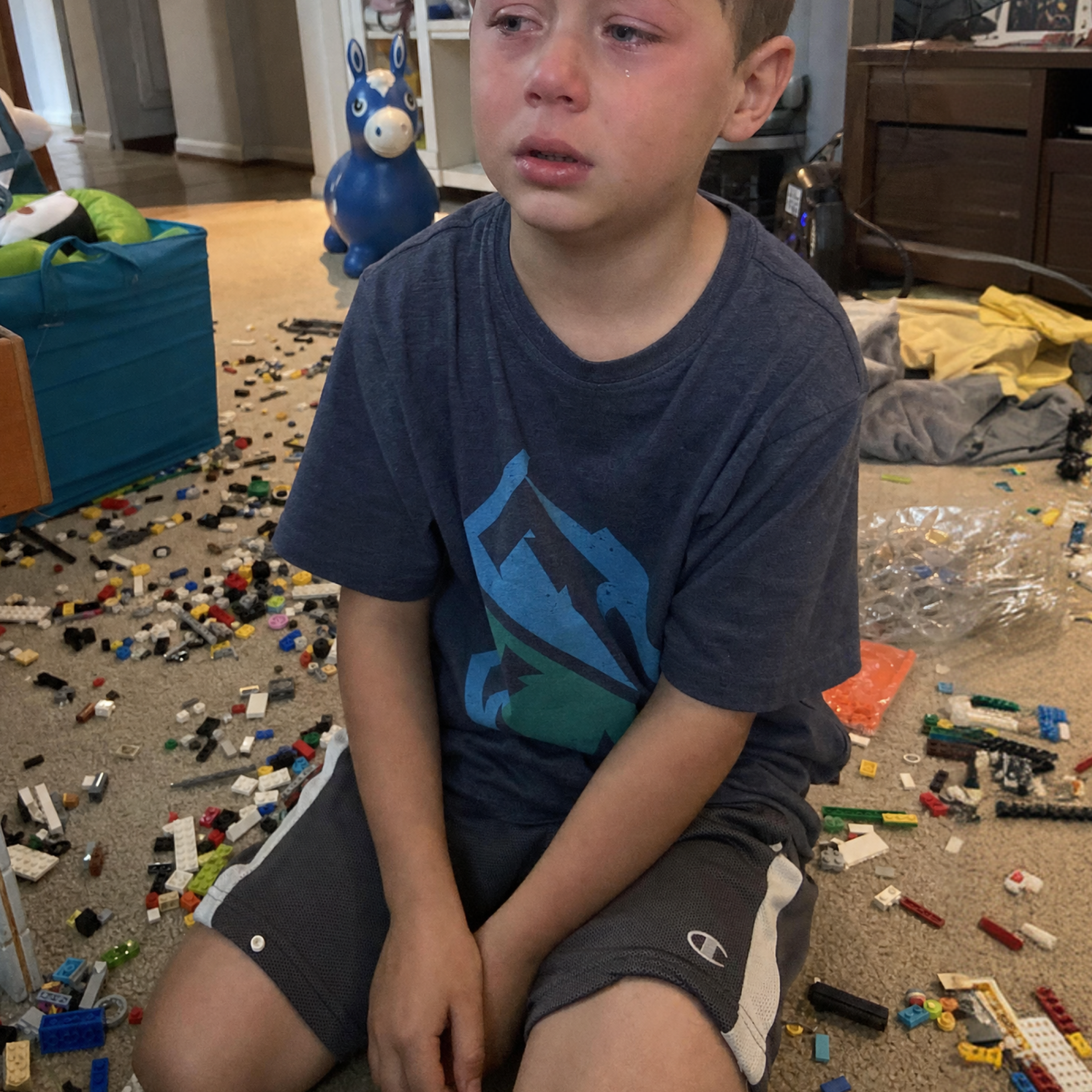
After my son's meltdown at Saturday's soccer game, he cried himself to sleep. Not sad crying. The kind where his whole body shakes and he whispers "I'm the worst at everything" into his pillow until he passes out. He's in the gifted program at school. He taught himself chess notation at seven. He can read two grade levels up. But he can't miss a single pass without his entire world collapsing. Nobody tells you that a gifted kid's brain can be years ahead and years behind at the exact same time. I stood in his doorway that night watching his chest rise and fall… his face still blotchy, his fists still clenched in his sleep. And the worst part wasn't the meltdown. It was knowing exactly what tomorrow would look like. Because this wasn't a bad Saturday. This was every Saturday. Every Tuesday practice. Every homework sheet. Every board game with his little sister that ends with him flipping the table because he's losing. Chess. Piano. Swim team. Now soccer. Four activities in one year. Same pattern every time. He obsesses. He dominates. He hits one wall. Then he detonates. And each time, he loses a little more of himself. I used to tell myself it was a phase. That he'd "grow out of it." That gifted kids are just "intense." But standing in that doorway… I couldn't lie to myself anymore. My son is ten years old and he's already running out of things he's willing to love. And I have no idea how to stop it. So I did the thing every parent of a gifted kid eventually does. I found a child therapist who "specializes in gifted learners." $200 a session. She taught him deep breathing. Counting to ten. "Name three things you can see, hear, and touch." You know what my son did? He intellectualized every single exercise. Told her the breathing technique was "statistically unlikely to change anything." He's ten. She smiled and said he was "very bright" and they'd "keep working on it." Eight sessions later… same meltdowns. Same rage-quits. Same sobbing into his pillow at night. Nothing changed because nothing she gave him was built for a kid like him. It was the same generic emotional regulation toolkit they hand every kid — anxious, gifted, ADHD, doesn't matter. One-size-fits-all. And it hit me like a truck: Every program, every therapist, every parenting book I'd read… they were all trying to fix his behavior. But his behavior was never the problem. I just didn't know what was. That night, after he cried himself to sleep again, I was deep in a Reddit thread for parents of gifted kids. Scrolling past the same useless advice I'd already tried. Then one comment stopped me cold. A mom described her son — same age, same pattern. Brilliant. Obsessive about new interests. Total emotional collapse at the first sign of imperfection. She said researchers had a name for it: Asynchronous Development. I'd never heard the term. But the second I read the explanation, my entire world shifted. Here's what it means: in gifted kids, the brain's intellectual centers develop years ahead of schedule. A 10-year-old gifted child can have the reasoning ability of a 15-year-old. But their emotional regulation system — the part of the brain responsible for handling frustration, tolerating failure, putting the brakes on a spiral — develops on a completely normal timeline. So you end up with a child whose mind is running at 15… but whose emotional wiring is still exactly where a 10-year-old's should be. Think about that for a second. My son's brain was generating 15-year-old problems — perfectionism, existential fear of failure, identity wrapped in performance — and handing them to a 10-year-old emotional system that had zero capacity to process them. No wonder he detonated. The overflow had nowhere to go. And suddenly every failed solution made sense. The therapist was talking to his intellect — which was brilliant. But the part that needed help was his emotional regulation… and that part was years behind where his intelligence made everyone assume it should be. It wasn't a discipline problem. It wasn't a parenting failure. It wasn't "just being gifted." It was a gap. A biological, measurable gap between what his mind could think and what his emotions could handle. And that gap — not the meltdowns, not the rage-quits — was the actual problem. I didn't need another therapist teaching him to count to ten. I needed something that could train the emotional skills his development had left behind. That same mom in the thread linked to a program called Legends. A daily confidence training system built on research from Harvard, Yale, and Duke — designed to build the three emotional foundations that gifted kids' development leaves behind: how they see themselves, how they treat themselves when they fail, and what they believe they're capable of. Not another breathing app. Not another parenting trend that'll be gone in six months. Actual science. Structured into five-minute daily workouts my son and I do together before bed. Five minutes. That's it. After months of $200 therapy sessions, sticker charts, and parenting books collecting dust on my nightstand… five minutes a night replaced all of it. And honestly? Those five minutes have become the best part of our day. He watches a story about a real person — an athlete, a leader, someone he actually looks up to — who went through something hard. Then we work through an exercise together. One night it's building a Mistake Ritual — a phrase and a physical action he can use to let go when things go wrong instead of spiraling. Another night it's Catch & Replace — where he learns to spot his inner critic mid-sentence and swap it for something that's actually true. He's learning Box Breathing to calm his nervous system before the meltdown even starts. He's identifying his "Three Legendary Words" — the qualities that define him beyond just being "the smart kid." For the first time, I'm not outsourcing my son's emotional development to a therapist who sees him for 45 minutes a week. I'm the one building it with him. Every single night. Unlike everything else we've tried, this is actually something that works. I'm starting to really see a difference. Here's what that difference actually looked like: Week 1: He lost a board game with his sister. I braced for the explosion. Instead, he clenched his jaw, whispered his Mistake Ritual under his breath — "shake it off" — did a little shrug with his shoulders… and asked for a rematch. No screaming. No flipped board. I almost cried at the dinner table. Week 3: He came home from school and told me a kid called his drawing "weird." Old version of my son? That's a two-hour spiral ending in "I'm the worst at everything." But this time he said, "My inner critic tried to agree with him. But I caught it and replaced it." He said it like it was nothing. Like it was just something he does now. Week 6: Saturday game. Second half. He sends a pass wide — almost the same play that destroyed him two months ago. My stomach dropped. But he didn't freeze. He clapped his hands once, said something to himself I couldn't hear, and sprinted back into position. After the game — a loss — he climbed into the car and said, "I messed up that one pass, but I had three good ones. That's a silver lining, right?" I couldn't speak. I just nodded and drove. That was the moment I knew: my son isn't "fixed." But for the first time in his life, his emotional skills are actually starting to catch up to his brain. Part of me wondered if we just got lucky. Maybe it was a good phase. Maybe he'd regress next week. So I dug into the Legends community online. And what I found floored me. A mom named Lisa started Legends for her 9-year-old son's negative self-talk — same spiral mine was stuck in. "We are about 6 months in and it has truly improved my son's ability to handle stressful situations and learn a wide range of techniques to apply to everyday life. His confidence has greatly improved." A dad named Brandon signed his son up after he confessed he felt scared talking to other kids at school — that same "I don't fit in" feeling gifted kids carry. "There was this switch that flipped where he's starting to really see that what he's thinking in his mind is just in his mind. 30 days, 40 days — he's changed significantly and for the better." A mom named Alisa, whose 10-year-old gets emotionally dysregulated just like mine, told me about the day the school called — not to complain, but to say her son had deescalated a situation on his own using the tools he'd learned. "He used breathing techniques. He used some of the inner critic self-talk. That was worth bazillions of dollars to me." Shannon, who'd been through therapy and meds and years of worrying, said it simply: "This app has been, hands down, one of the best things to happen to my kid. It's really made a difference in the way he sees himself." And Peter, 50-something days in with his 7-year-old daughter, called it what it is: "What this has done for my kid and me is nothing short of remarkable. It has taught her mindfulness, awareness, breathing, and so much more." Thousands of parents. Same impossible-sounding pattern. Same real results. This wasn't a fluke. This was a proven framework to develop my kid's emotional regulation. So here's where you are right now. You have two options. Option 1: Close this page and go back to the cycle. The meltdowns. The rage-quits. The walking on eggshells. The $200 therapy sessions that talk to your kid's intellect while their emotional skills stay years behind. The pit in your stomach every time they try something new because you already know how it ends. Option 2: Give your child five minutes a night with a program built on research from Harvard, Yale, and Duke — specifically designed to train the emotional skills that gifted kids' development leaves behind. Five minutes. Before bed. With you. And here's what makes this a no-brainer: Legends comes with a full money-back guarantee. If you don't see a difference in your child's emotional regulation, you pay nothing. Zero risk. Not a single dollar lost. Think about that. You've already spent hundreds — maybe thousands — on therapy, books, apps, and programs that were never designed for a brain like your kid's. This costs a fraction of one therapy session… and it comes with a guarantee none of them ever offered. If you're ready to stop managing the meltdowns and start building the emotional skills your gifted child is actually missing… Click the link below to get started with Legends today: https://try.buildlegends.com/listicle1/giftedKids It takes two minutes to sign up. Tonight could be your first five-minute session together. — A dad who finally stopped Googling "why does my gifted kid quit everything" at midnight… because we found the answer. P.S. — I keep thinking about my son standing on that soccer field two months ago. Shin guards on the ground. Screaming that he's done forever. That was the fourth activity he'd rage-quit that year. Last Saturday, he missed a pass and sprinted back into position. He found the silver lining on his own. He's still gifted. He's still intense. But now his emotions are finally starting to catch up to his brain. I just wish I'd found this sooner. Don't wait as long as I did. https://try.buildlegends.com/listicle1/giftedKids
Like this ad? Make it yours.
Crush rebuilds this exact creative around your product — your brand, your colors, your offer — in about a minute.